
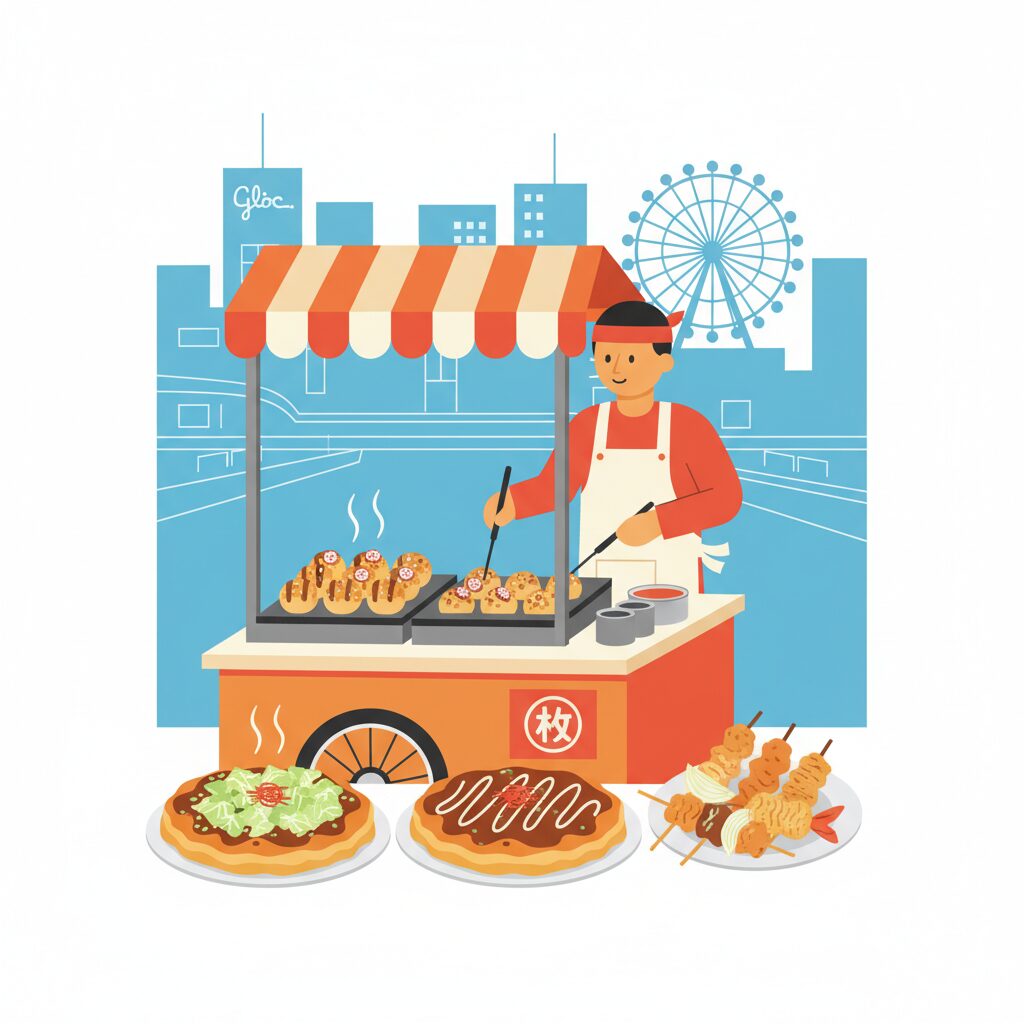
Welcome to Osaka, where the first question isn’t “How are you?” but “Did you eat something good?” This isn’t just a friendly greeting. It’s a diagnostic tool, a social password, and a window into the city’s soul. You hear about kuidaore, this famous phrase that gets translated as “eat until you drop” or “eat yourself into ruin.” Tourists think it’s a fun challenge, a checklist of takoyaki and okonomiyaki to conquer in a weekend. But when you live here, you quickly realize kuidaore isn’t a slogan. It’s the city’s operating system, a cultural current that pulls you along every single day. It’s the background hum of life, influencing friendships, business deals, and even your own sense of self-worth. It’s a magnificent obsession that makes Osaka one of the most exciting places to live, but it also casts a long, complicated shadow that most guidebooks never mention. To truly understand this city, you have to look past the neon signs of Dotonbori and see the philosophy that powers them. It’s a philosophy of abundance and high standards, but also one of relentless pressure and social expectation. This is the story of living with kuidaore, its glorious highs and its draining lows. It’s about what happens when a city’s greatest passion becomes your daily reality.
This relentless pressure to perform socially, even in mundane daily interactions, is a subtle but powerful force, much like the city’s unspoken rule about standing on the right side of the escalator.
The Bright Side: Food as Philosophy

To truly understand Osaka, you must first realize that food here is more than just sustenance. It serves as a language, a currency, and a reflection of one’s character. The positive side of kuidaore is a culture rooted in generosity, exceptional value, and a heartfelt passion for bringing happiness through food.
The Religion of ‘Kosupa’
In Tokyo, people might pay extra for ambiance, a celebrated chef’s reputation, or a prestigious location. In Osaka, however, the main criterion for judging a restaurant is kosupa, short for “cost performance.” This concept goes well beyond just being affordable. Kosupa represents the perfect harmony between quality and price. An Osakan will proudly share stories of places serving sashimi that melts in your mouth for prices barely enough to buy a bowl of edamame in a trendy Tokyo spot. This isn’t about cheapness; it’s about savvy judgment. Finding the best value, knowing where to get the most satisfaction for a decent price, is a sign of intelligence.
This mindset drives a fiercely competitive market. Wander through any district, from the bustling streets of Tenma to the quiet lanes of Fukushima, and you’ll witness it firsthand. Lunch sets for 800 yen including a main dish, rice, miso soup, pickles, and sometimes even a small appetizer. Standing bars, or tachinomi, where a draft beer and grilled skewers cost less than a fancy coffee. Shopkeepers know survival depends on offering outstanding value. This benefits everyone living here; eating well is not a special treat but an everyday right. You learn to sense it, to calculate internally. Balancing portion size, ingredient quality, and the chef’s skill against the menu price becomes second nature. This is the Osakan sixth sense.
The Social Superglue
In many cultures, socializing revolves around drinks. In Osaka, it centers on food, with drinks as a joyful accompaniment. Business meetings don’t just end at the office; they are sealed over plates of sizzling okonomiyaki. Friendships aren’t maintained by texts alone; they grow within the joyful, bustling atmosphere of an izakaya. Food is the stage where the city’s social narratives unfold.
This fosters a warm, inclusive culture. Inviting someone to share a meal is a fundamental act of friendship. Unlike Tokyo’s more reserved social scene, where plans can be made weeks ahead, Osaka thrives on spontaneity. A casual “I know a great spot for kushi-katsu, want to go now?” is a common and warmly received invitation. Sharing a meal breaks down barriers. You’ll find salarymen, students, and shop owners all packed at the same counter, united by their love of delicious food. This communal spirit is the city’s beating heart. The noise, the steam, the clatter of dishes—that is the sound of connection. Guidebooks describe Osakans as “friendly,” but that’s an understatement. Their friendliness is active and participatory, most often shown by sharing tables and plates.
The Culture of ‘Maido’
Step into a small, family-run eatery in Osaka, and you’ll likely be greeted with a loud, cheerful “Maido!” It roughly means “Thanks for your continued patronage,” but it carries much more weight. It’s a word of recognition, signaling belonging. It means you’re not just a customer; you’re part of the community. In Tokyo, service is often impeccably polite but a bit distant. In Osaka, it’s personal. The chef might ask how your day went, the server might remember your preferred drink. This is the essence of the ‘maido’ culture.
Becoming a regular in a local spot is a rite of passage for residents. It’s about forging relationships. The owner learns your preferences, maybe reserves a special cut of fish or recommends a secret dish you’ll adore. This isn’t transactional—it’s relational. Dining out becomes a communal experience. You’re not just buying a meal; you’re supporting a neighbor, and in turn, they take care of you. This deep loyalty between shopkeepers and patrons forms a cornerstone of Osaka’s identity. It transforms a large city into a network of small, interconnected villages, each with its beloved dining hall.
The Dark Side: The Pressure to Eat Right
For every bright, communal aspect of kuidaore, there is an accompanying shadow. When something is so deeply woven into a culture, it inevitably brings about expectations, anxieties, and a pressure to perform. This is the side of Osaka’s food obsession that locals experience but tourists seldom witness.
The Culinary Inquisition
Living in Osaka, you quickly learn to dread a seemingly simple question: “Where’s a good place to eat around here?” You might assume it would be an easy answer in a city with tens of thousands of restaurants. Yet, it’s not. The question is never just a request for information—it’s a test. Your response will be evaluated. Your taste, knowledge of the city, and kosupa sense—everything is under scrutiny. Recommending a generic chain or a place that’s merely “okay” can draw a subtle expression of disappointment or a polite but firm dismissal. It’s as though you’ve failed a basic civic duty.
Social conversations are peppered with these traps. When meeting friends, the first fifteen minutes are often dedicated to a thorough rundown of everyone’s recent meals. Someone will describe an incredible bowl of ramen in vivid detail—the broth’s consistency, the charring on the pork, the noodle texture. You’re expected to contribute. You need a story. You need an opinion. If you simply say, “I had toast for breakfast,” the conversation stalls. You haven’t contributed your share. This constant demand to have a compelling food story or a curated list of recommendations on hand can be draining. It transforms eating from a pleasure into a performance. You begin to feel like you’re not just eating for sustenance or enjoyment, but for social currency.
The Tyranny of Abundant Choice
While the vast number of options is a blessing, it can also be a burden. This is the paradox of choice, Osaka-style. Standing in Namba or Umeda, trying to pick a place for dinner, can trigger analysis paralysis. Within a ten-minute walk, there are hundreds, if not thousands, of restaurants. Each boasts a specialty and has its own reputation. Do you go for the okonomiyaki spot known for its yam-enriched batter, or the one famous for inventive toppings? The ramen shop with a rich tonkotsu broth, or the one with a lighter chicken-based soup? The pressure to make the “perfect” choice feels immense. A bad meal feels like a wasted opportunity, a personal failure in Japan’s culinary capital.
For a local, this isn’t a fun vacation dilemma; it’s an everyday challenge. It can lead to decision fatigue. Many end up defaulting to the same three or four trusted spots—not from a lack of adventurousness, but because navigating the sea of options is mentally exhausting. You scroll through reviews, sift through conflicting opinions, and finish more bewildered than when you began. The joy of discovering new places can become buried beneath the burden of expectation.
The Hidden Health Toll
Osaka’s most famous dishes—takoyaki, okonomiyaki, kushi-katsu—are collectively known as konamon, or “flour-based things.” They are delicious, satisfying, and affordable. Yet, for the most part, they’re heavy, oily, and rich in carbohydrates. The kuidaore lifestyle, when combined with the social custom of after-work drinking, can take a significant toll on health.
This reality rarely surfaces in the cheerful stories told about the city’s food culture. The nightly ritual of beer and fried snacks is deeply embedded in the work environment. It’s a key way people unwind and bond. But it’s also a lifestyle that can lead to weight gain, high cholesterol, and other health problems. There’s a subtle social pressure to join in. Declining another round of drinks or skipping the third plate of karaage can be seen as antisocial. Maintaining a healthy diet in a city that celebrates indulgence demands conscious, often difficult effort. You have to learn to navigate the culinary scene on your own terms, balancing participation in festivities with taking care of your well-being. It’s a personal challenge every long-term resident faces.
The Judgment of Taste
An unspoken hierarchy of taste exists in Osaka. At the top are small, slightly worn family-run establishments that have operated for decades. These are the authentic spots a true Osakan recognizes. At the bottom are the large, polished, well-known chain restaurants. As a resident, you soon realize that where you dine says something about you.
Admitting you enjoy a meal at a major chain may be met with a pitying glance. The implication is that you lack discernment, that you haven’t yet discovered the “real” Osaka. This breeds a form of food snobbery that can feel exclusionary. It discourages people from simply enjoying what they like. Sometimes you just want a predictable, convenient meal without the pressure of a culinary quest. Yet in Osaka, that simple wish can come across as a confession of poor taste. This subtle judgment enforces conformity. You find yourself seeking out obscure, highly rated places not only for the food but for the social approval they confer. Your dining choices become part of your identity, whether you want them to or not.
Life in Practice: Navigating the Culinary Maze

So, how do you live here? How do you embrace the joy of kuidaore without being overwhelmed by its demands? It’s a process of adjustment, of carving out your own place within the vast, all-encompassing food culture of the city.
Find Your Village
The key is to make the city feel smaller. Rather than trying to experience all of Osaka’s dining scene, focus on your own neighborhood. Get to know the local ramen shop owner. Discover the bakery that makes your favorite bread. Become a regular at the corner izakaya. This is how you build your ‘maido’ relationships. It gives you a sense of belonging and turns the overwhelming scale of the city into a comfortable, familiar environment. Your local spots become an extension of your own kitchen—places where you’re always welcome and understood.
Develop Your Own ‘Monosashi’
Monosashi means a ruler or measuring stick. Here, it refers to creating your own standards for what makes a meal “good.” Don’t let critics or friends dictate your tastes. Maybe the best restaurant for you isn’t the one with the longest line, but the quiet one where you can read a book. Maybe your idea of ‘kosupa’ (cost-performance) includes convenience and comfort, not just the price of the food. It’s about trusting your own preferences. It’s perfectly fine to love a chain curry restaurant. It’s okay to prefer a simple meal at home. Reclaiming your own monosashi is the key step toward a healthy relationship with the city’s food culture. It lets you engage on your own terms, without feeling judged.
Learn the Language Beyond the Menu
Understanding kuidaore means realizing a meal is rarely just about eating. When a coworker invites you out, they’re not just hungry; they’re building connection. When a neighbor brings you a small food gift, it’s a gesture of goodwill. Learning to read these social cues is essential. Participating in the food culture is a way to engage with city life. You don’t have to be an expert. You just need to be willing to share a table, listen to the story about the amazing gyoza someone found, and share your own simple discoveries in return. Enthusiasm, not expertise, is the true currency.
In the end, living in Osaka means making peace with its obsession. You learn to admire the passion that drives a chef to spend years perfecting a single bowl of soup. You learn to value the social ties forged over sizzling grills and cold beer. And you also learn to protect your own space within it all. Kuidaore isn’t a command to eat until you drop; it’s an invitation to engage with life wholeheartedly, to seek quality, to share generously, and to find joy in the everyday act of eating. It’s a complex, demanding, and ultimately beautiful way to live.








