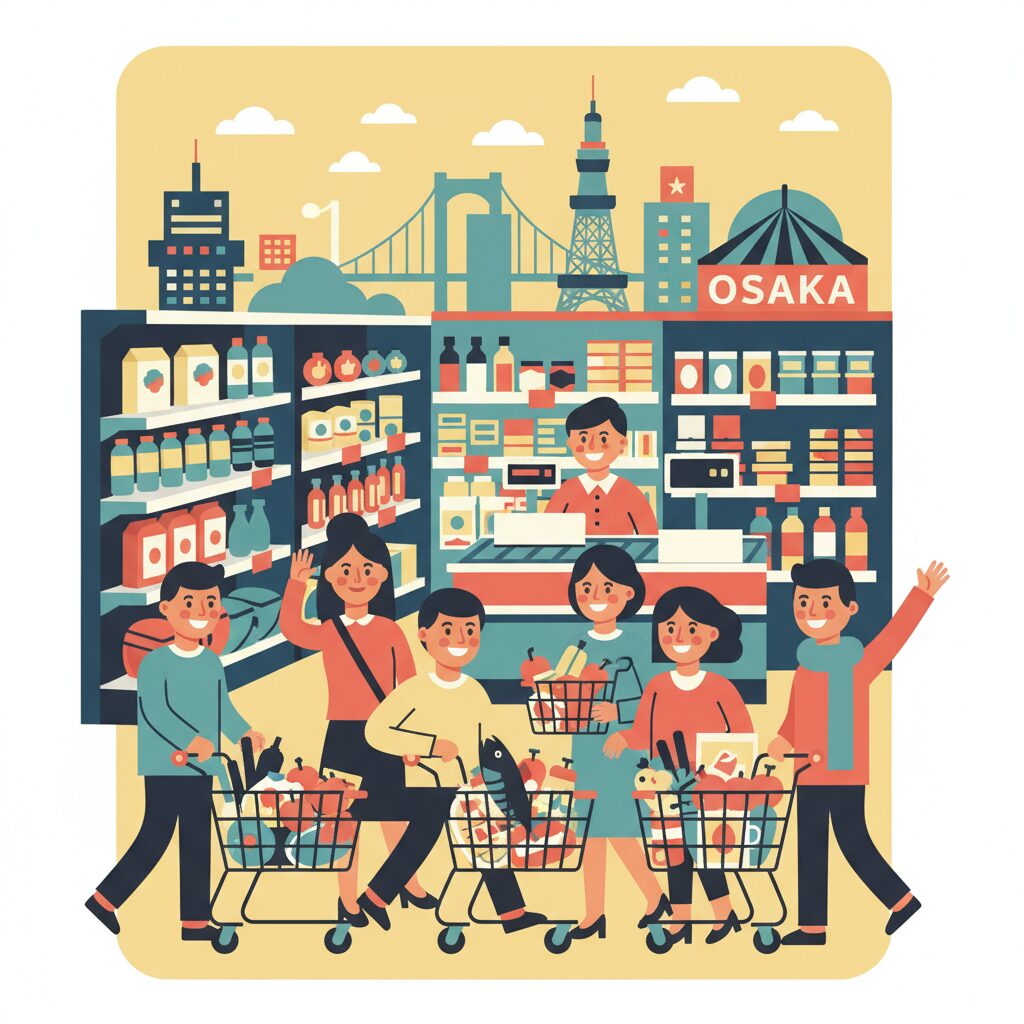
Your first encounter with a Supermarket Tamade is a full-sensory event. You’re walking down a quiet residential street in Osaka, past weathered apartment buildings and tiny, manicured gardens, when a sudden, jarring blast of color and light assaults your vision. It’s a riot of brilliant yellow and fire-engine red, framed by thousands of flashing, chasing light bulbs that belong more on a pachinko parlor than a grocery store. Huge, hand-painted signs scream prices in thick, black ink. It feels less like a place to buy milk and eggs and more like a portal to a forgotten 80s game show. The immediate questions that flood your non-Japanese brain are likely: What is this place? Is it a joke? And most importantly, should I go inside?
The answer is yes. You absolutely should. Because Supermarket Tamade is not just a store; it’s a living, breathing institution. It’s a masterclass in the Osaka mindset, an unfiltered look into the city’s relationship with money, food, and practicality. For any foreigner trying to understand the rhythm of daily life here, trying to make a budget work, or simply trying to grasp why Osaka feels so fundamentally different from the polished, reserved elegance of Tokyo, the journey begins under the neon glow of Tamade. This isn’t about glamorous food halls or artisanal markets. This is about the raw, unapologetic, and brilliantly efficient engine that feeds the city. It’s where you learn to shop, think, and even live like a true Osakan.
While this bustling supermarket represents the practical, everyday side of the city, the region is also experiencing a significant transformation, as seen in the recent luxury hotel boom in Kansai.
The Tamade Aesthetic: A Masterclass in Osaka Pragmatism
First, let’s discuss the appearance. There is no subtle branding here—no minimalist fonts, no warm wood tones, no carefully curated displays aimed at creating a calming shopping experience. The Tamade aesthetic is a direct, upfront bombardment of information. The philosophy is straightforward: function above absolutely everything else. Why spend money on interior designers when that budget can be used to reduce the price of tofu by five yen? This is not merely a business model; it reflects a core Osaka value. People here, descended from generations of merchants, have an innate sensitivity to fluff. They can tell when they are paying for ambiance, and they generally resent it. A fancy store, to them, means you’re covering its renovation costs.
Tamade, in its visual disorder, sends a message of deep honesty to its customers: “We spend zero yen making this place look appealing, and you benefit from it.” The lighting is flat and harsh, like something you’d find in a warehouse. The aisles often overflow with cardboard boxes of excess stock, forming an impromptu obstacle course. Signs aren’t professionally printed; they’re handwritten with thick markers on brightly colored paper, sometimes featuring crossed-out mistakes. Constant, looping announcements about the day’s specials mingle with a tinny, upbeat J-pop soundtrack, creating a cacophony of commerce. In Tokyo, a supermarket experience may be about `omotenashi`—thoughtful, elevated hospitality. In Osaka, the finest hospitality Tamade can offer is brutally low prices. The flashing lights aren’t decoration; they’re a signal to the neighborhood’s sharpest bargain hunters that this is their haven.
This rejection of aesthetic pretense is key to understanding the Osaka-Tokyo divide. In Tokyo, presentation is everything. It’s a city of beautiful packaging, serene design, and unspoken elegance. Osaka, by contrast, values directness and substance. It’s a city that demands, “Forget the box—what’s inside, and how much does it cost?” Tamade is the embodiment of that question. It is proudly, defiantly uncool, and by doing so, it has become a symbol of Osaka’s practical, no-nonsense spirit.
Cracking the Code: The Unspoken Rules of Shopping at Tamade
Walking into a Tamade for the first time can be overwhelming. It’s a maze of towering stacks of products and quick-moving shoppers who navigate the narrow aisles with a skill honed by years of experience. Yet, there’s a method to the madness—a set of unwritten rules and rituals that shape the Tamade experience. Learning them marks your entry into local life.
The Legendary 1-Yen Sale
Arguably the most well-known Tamade tradition is the 1-Yen Sale. This is no error. The store regularly offers a specific item—a carton of eggs, a bag of bean sprouts, a bottle of tea—for the astonishing price of one yen. There is, naturally, a catch: you must spend at least 1,000 yen on other products to qualify. To the uninitiated, this may seem like a mere marketing gimmick. For Osaka shoppers, however, it’s a challenge to be conquered.
The ritual starts with the daily flyer, or `chirashi`. Locals study this flyer with the intensity of stock market traders, planning their entire shopping trip around securing the 1-yen product. It determines what’s for dinner and what fills the pantry. The sale turns an ordinary errand into a strategic mission. It’s not just about saving a few hundred yen; it’s about the triumph. It’s the excitement of the chase, the satisfaction of outsmarting the system. You’ll observe seasoned grandmothers, sharp-eyed and efficient, assembling carts with exactly 1,000 yen worth of merchandise to claim their prize. This gamification of grocery shopping perfectly reflects the city’s merchant spirit—a passion for smart deals and great bargains. While sales are common everywhere, the boldness and regularity of the 1-yen sale are uniquely Osaka.
Navigating the Aisles: Organized Chaos
Tamade’s store layout follows its own distinctive logic. Forget the neatly arranged sections typical of conventional supermarkets. At Tamade, a pallet of soy sauce might block the refrigerated foods, or discounted socks might appear beside fresh fish without explanation. Products are rarely neatly shelved; often, they remain in their cardboard shipping boxes, fronts torn open for easy access. This isn’t negligence; it’s radical efficiency. It saves countless hours of labor, resulting in lower overhead and cheaper prices.
For shoppers, this means staying alert. You aren’t a passive consumer guided through a curated journey. You are an active hunter, scanning for bargains and navigating a constantly shifting environment. You learn to search everywhere—in boxes on the floor, on shelves piled high overhead. It’s a treasure hunt. This atmosphere also creates a unique, unspoken etiquette among shoppers. The aisles are narrow, so a careful rhythm of yielding and moving forward unfolds. There is a shared understanding that everyone is there for the same goal: to find the best deal quickly. It’s a silent, communal mission, contrasting sharply with the polite yet distant vibe of many Tokyo stores.
The Prepared Foods Section: Nourishment for the City
No conversation about Tamade is complete without recognizing its `sōzai`, or prepared foods, section. Here, the store’s reputation for unbelievably low prices reaches its peak. Complete bento boxes cost less than 300 yen, sushi packs are just a few hundred yen, and heaps of fried items like tempura and croquettes are sold for mere pennies. The prices are so low they can seem almost suspicious, and the quality of Tamade’s prepared foods is a topic of endless local debate and urban legend.
But to dismiss this section misses the true point. For a large portion of Osaka’s population—students on tight budgets, single office workers who get home late, elderly residents on fixed incomes, and families like my own trying to stretch the household budget—the Tamade `sōzai` section is nothing short of essential. It offers hot, satisfying meals for less than the price of a cup of coffee at a fancy café. It’s the great equalizer. It ensures everyone, regardless of income, has access to a ready meal. The super-cheap bento is not a gourmet product; it’s a social service. It’s Osaka’s practical solution to feeding a busy, hardworking, and budget-conscious city. It’s nourishment without judgment, a vital part of the everyday food economy.
Tamade and the Osaka Identity: More Than Just Groceries

To truly understand Tamade, you need to grasp the subtleties of the Osaka mindset toward money. Residents of the city are often stereotyped throughout Japan as being `kechi`, roughly meaning “stingy” or “cheap.” This label is one that Osakans themselves both playfully accept and internally reject. They don’t view themselves as stingy; rather, they see themselves as smart, practical, and highly averse to being overcharged.
The “Kechi” vs. “Shibui” Perspective
A more fitting term to capture Osaka’s approach to money is `shibui` in its older, colloquial meaning—wise, clever, or discerning when it comes to value. Being `kechi` means hoarding money simply for its own sake. Being `shibui` means ensuring that every yen spent delivers the greatest possible benefit. It’s about being a savvy shopper, not a cheapskate. Saving money carries no stigma; in Osaka, it is a source of great pride. People openly and enthusiastically share the bargains they’ve found, exchanging tips and strategies.
Supermarket Tamade is the ultimate sanctuary for the `shibui` shopper. Choosing Tamade over a pricier, more visually appealing store is a statement of financial savvy. You are deliberately avoiding paying for marketing, branding, and mood lighting. You are making a rational economic choice, a trait deeply admired in a city built by merchants. In Tokyo, where you shop can subtly reflect social status. In Osaka, bragging about scoring an amazing deal on vegetables at Tamade is a more common and relatable form of social currency. This reflects a fundamental difference in values: the appearance of wealth versus the reality of smart money management.
A Social Equalizer
Because of this shared value system, Tamade serves as a powerful social equalizer. Spend ten minutes by the checkout, and you’ll witness the full spectrum of Osaka society. You might see a university student whose entire basket is filled with instant noodles and discounted bread. Behind them stands a young mother with a toddler, carefully choosing ingredients for the family meal. Behind her is an elderly woman, moving slowly but purposefully, buying just enough for one. Then someone might pull up in a surprisingly nice car, running in to snap up a few loss-leader bargains. The pursuit of value here is a universal language, bridging class, age, and background.
This makes the store a true microcosm of the city. It’s a place free of pretense, where everyone is equal and engaged in the same practical endeavor. It nurtures a sense of shared community grounded in common sense. Tamade may not be glamorous, but it is profoundly, genuinely democratic. It serves all kinds of people and, in doing so, reveals the straightforward, egalitarian spirit that defines Osaka.
A Foreign Resident’s Survival Guide to Tamade
Alright, so you’re convinced and ready to face the flashing lights and plunge into the world of Tamade. As a seasoned veteran of its chaotic aisles, let me share some practical tips to help make your first visits a success.
When to Go (and When to Avoid)
Timing is crucial at Tamade. The store is most crowded in the hours immediately after the daily flyer is released, when the keenest bargain hunters rush to grab the best deals. Unless you enjoy elbow jostling and fierce competition for the last pack of 1-yen eggs, you might want to steer clear of this peak period. Late evenings, however, are a special time when the staff begin applying discount stickers to prepared foods. This process is an art: starting with a 20% off sticker, then 30%, and finally, the prized `hangaku` (half price) tag. It’s a risky game—do you buy the bento at 30% off, or gamble waiting for the 50% off sticker, risking it being snapped up first? This is the everyday drama of the Tamade `sōzai` section.
What to Buy (and What to Maybe Pass On)
Knowing what to buy at Tamade is a skill developed over time. It’s an excellent place for pantry essentials: sauces, oils, noodles, tofu, and canned goods are almost always cheaper here than elsewhere. Drinks, from tea to alcohol, offer great bargains. Basic vegetables like onions, potatoes, and carrots are usually reliable choices. However, you need to be a careful produce inspector. The quality can vary widely. Don’t just grab the first bag of peppers you find; take a moment to inspect them. This isn’t a store for shopping on autopilot. As for meat and fish, the prices are amazing, but it pays to be selective. Stick to items you plan to cook thoroughly the same day. The famous cheap sushi? It’s a must-try experience for locals, but keep in mind you’re paying for the price, not the quality. Eat it quickly.
The Checkout Experience
Tamade’s efficiency extends to the checkout. The cashiers are lightning-fast. They scan items at a dizzying speed. There’s no time for small talk. This isn’t rudeness; it’s the `sekkachi` (impatient, always-in-a-hurry) spirit typical of Osaka’s business culture. Time is money. Have your payment ready—many Tamade stores, especially older ones, still prefer cash. Bagging is usually self-service at a separate counter. The entire process is a smooth operation designed to move customers through quickly. Embrace the pace, be prepared, and you’ll fit right in.
Final Thoughts: Embracing the Neon Glow

Supermarket Tamade is noisy, flashy, and can be completely overwhelming. It stands in stark contrast to the calm, meticulously curated Japanese aesthetic that many foreigners anticipate. And that contrast is exactly why it matters so much. Tamade is one of the most genuine places in Osaka. It makes no excuses for what it is: a high-volume, low-margin operation committed to offering the city the cheapest food available.
Learning to shop at Tamade is a rite of passage for any foreigner establishing a life here. It’s a practical necessity for budgeting in a major city. But beyond that, it’s a cultural lesson. It teaches you to appreciate value from an Osakan perspective. It compels you to be an active, engaged shopper. It connects you to the daily pulse of the city and its residents, all under the glow of those wonderfully gaudy neon lights. The day you leave Tamade, your cart brimming with bargains and a 1-yen prize in your bag, feeling victorious rather than puzzled, is the day you can truly say you’re beginning to understand Osaka.