
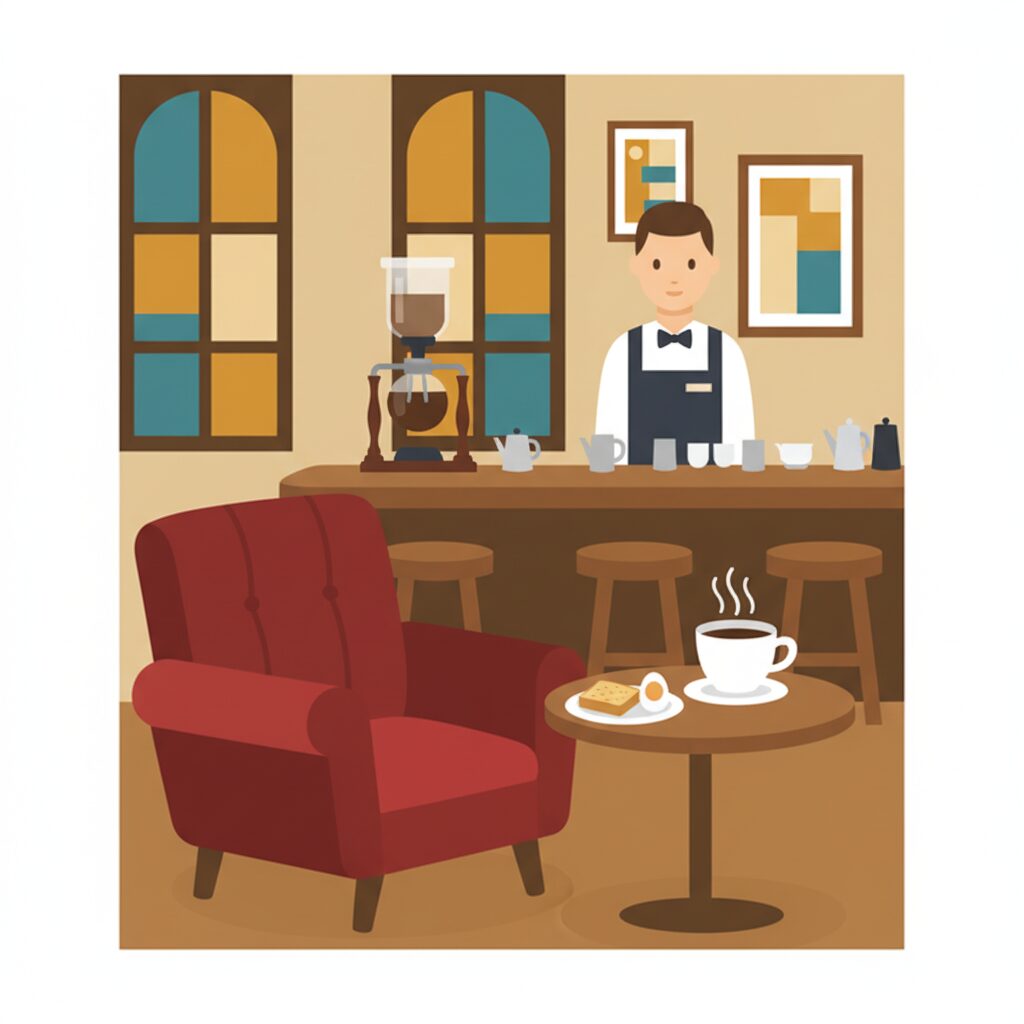
Walk through any Osaka neighborhood before 11 a.m. and you’ll see them. Propped up on sidewalks, tucked into the entrances of shopping arcades, or glowing softly in a basement window, the signs all offer the same alluring promise: モーニングセット, the ‘Morning Set’. For the price of a single cup of coffee, you’re offered a small feast: thick, fluffy toast, a hard-boiled egg, maybe a tiny salad, and of course, that cup of coffee. To a newcomer, it seems like an impossibly good deal, a simple breakfast special. But to dismiss it as just a cheap meal is to misunderstand Osaka entirely. This daily ritual is not about sustenance; it’s a complex social institution, a cornerstone of local life that reveals the city’s unique approach to community, work, and the very concept of public space. It’s where the lines between a living room, an office, and a cafe blur into something uniquely Osakan. In the quiet hum of these traditional coffee houses, or kissa-ten, you can find the city’s true rhythm, a rhythm that predates the modern coworking hub by half a century but serves many of the same essential functions. To understand the morning set is to begin to understand the soul of this merchant city.
This daily ritual is a perfect example of the city’s unique social fabric, where even a simple morning interaction can embody the spirit of Osaka’s ‘osekkai’.
The Anatomy of a ‘Morning Set’: More Than Just Toast and Coffee
A morning set is a lesson in deliberate generosity. The highlight is typically the shoku-pan, a thick slice of Japanese milk bread, toasted to a perfect golden brown and topped with a melting pat of butter or margarine. Occasionally, you’ll encounter variations: a spread of sweet red bean paste (ogura) or a scoop of egg salad. Alongside it rests a perfectly boiled egg, its shell still warm, ready to be cracked open. A small bowl of iceberg lettuce and cucumber, drizzled with sesame dressing, brings a refreshing touch. At the core of it all is a straightforward, no-frills cup of coffee. The cost for this entire tray? Usually between 400 and 600 yen—a price that barely covers the ingredients, much less rent and labor.
The ‘Otoku’ Principle: Smart Value, Not Cheapness
This is where Osaka’s essential mindset emerges: otoku (お得). Often translated as ‘deal’ or ‘bargain,’ this term doesn’t fully capture its cultural significance. Otoku isn’t about cheapness; it’s about being savvy. It reflects the deep satisfaction of getting value far beyond the price paid. An Osaka local will gladly share their favorite kissa-ten, not because it’s the cheapest, but because the toast is thick, the coffee is refillable, or the ‘Master’ (owner) includes a complimentary mini yogurt. The morning set isn’t a loss leader; it’s a social contract. It says, “Come in, I’ll look after you, offer great value, and in return, you’ll make my place part of your daily routine.” It’s a strategic, community-building gesture wrapped in a breakfast special—a fundamentally pragmatic, relationship-centered business approach.
A Tale of Two Cities: Osaka’s Set vs. Tokyo’s Specialty Brew
This philosophy sharply contrasts with the café culture found in much of Tokyo. In stylish areas like Daikanyama or Omotesando, you might pay 800 yen for a single-origin pour-over coffee alone. The emphasis is on aesthetic perfection, premium ingredients, and brand-conscious experience. The transaction is clean, efficient, and often impersonal. In Osaka, the value lies in the whole experience—the food, the drink, the seat, the atmosphere, the friendly face behind the counter. The morning set bundles many services. You’re not just buying coffee; you’re purchasing a space, a moment of calm, and a sense of belonging. While Tokyo’s experience is often about consumption, Osaka’s centers on participation.
The Kissa-ten as a ‘Third Place’: Osaka’s Original Coworking Space
Step inside a traditional Osaka kissa-ten, and you immediately step away from the modern world. The air is thick with the rich scent of dark roast coffee, sometimes blending with the subtle, sweet aroma of tobacco from a bygone era. Soft lighting emanates from ornate, Tiffany-style lamps. You settle into a booth with well-worn, plush velvet seats in hues of burgundy or forest green. The walls are paneled with dark, polished wood that has absorbed decades of whispered conversations and sincere business dealings. This is not a sterile, minimalist cafe designed for Instagram photos; it’s a space created for lingering. It is, in the truest sense, a “third place”—an essential social environment separate from the two usual spaces of home and workplace.
The Office Away From the Office
Long before WeWork and the digital nomad trend, the Osaka kissa-ten acted as an informal office for an entire class of workers. On any given weekday morning, you’ll spot a salesman in a slightly rumpled suit, his briefcase open on the table as he spreads out catalogs and order forms. He nurses a single coffee for an hour, making calls and planning his route for the day. This isn’t regarded as loitering; it’s accepted. The kissa-ten offers a neutral, quiet, and affordable space for him to conduct business. It serves as his mobile headquarters. The low cost of the morning set acts as his entry ticket, providing him with a desk and a moment to prepare for the day’s challenges in Osaka’s competitive merchant world.
The Neighborhood Living Room
At another table, a group of elderly women may be gathered, laughing over the morning newspaper, which the kissa-ten offers for free. This is their daily ritual, a crucial social lifeline connecting them to their community. For them, the kissa-ten extends their living rooms. It’s a safe, comfortable, and reliable place to meet. University students also find refuge here, highlighting textbooks under the soft light, seeking a quiet corner away from the distractions of home or crowded libraries. The space is fluid, effortlessly shifting from office to social club to study hall, all within the same four walls. It’s a shared resource, a public utility powered by private enterprise and mutual understanding.
The ‘Master’ and the Regulars: Building Community One Cup at a Time
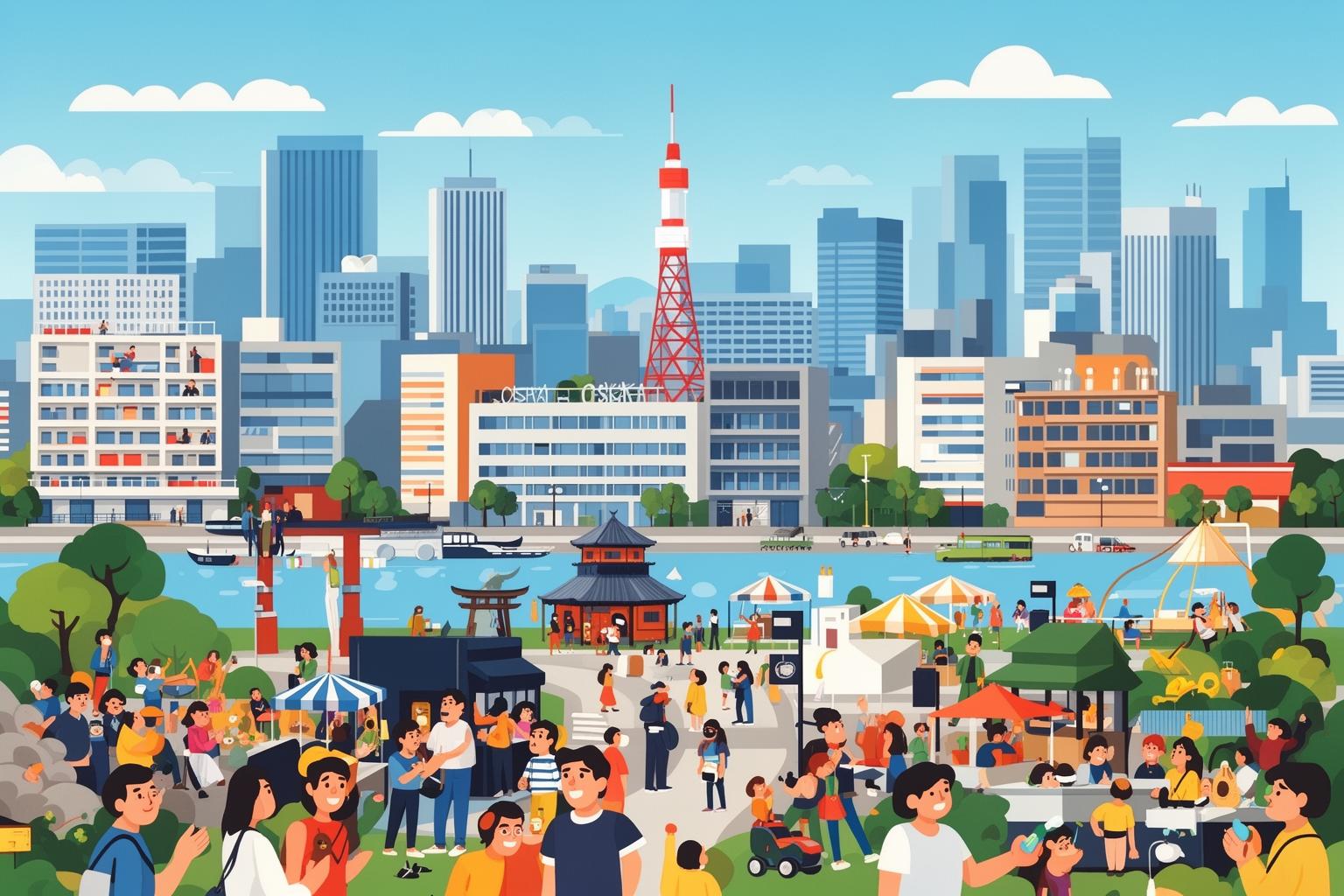
The heart of the kissa-ten isn’t the coffee or the toast; it’s the person behind the counter. Not just a temporary barista, but the ‘Master’ or ‘Mama-san’—the owner who has often managed the establishment for decades. They serve as the silent conductor of this daily symphony and the anchor of the community that gathers within their space.
More Than a Barista, a Pillar of the Community
The Master knows more than just customers’ coffee preferences. He’s aware that Mrs. Sato’s grandson has just started elementary school and that Mr. Tanaka from the trading company is feeling the pressure to meet his quarterly sales goals. He doesn’t pry but attentively observes. His role is to create a stable, welcoming atmosphere. The greeting comes as a familiar nod, the coffee is delivered without being ordered, and occasionally a small sweet treat appears on the saucer on particularly stressful days. This is the subtle, profound essence of Osaka hospitality—not the boisterous friendliness often shown in media, but a quiet recognition forged over years of shared mornings. The Master is a trusted confidant, a keeper of local knowledge, and a steady presence in his patrons’ lives.
The Unspoken Language of the ‘Jōren-san’ (Regular)
Becoming a regular, or jōren-san, at a kissa-ten is like joining a secret society. It’s a status earned through quiet consistency. After a few visits, the Master might ask where you’re from; after several, he might comment on the weather; after a year, you become part of the place’s fabric. A silent bond takes shape—you realize your patronage supports not just a business, but a person, a family, and a community institution. In return, you gain a place where you truly belong. This network of regulars creates an invisible safety net. It explains why an elderly person living alone can be checked on daily or why a small business owner can find a sympathetic ear. It’s a powerful form of grassroots social infrastructure, far more effective than many government initiatives.
Navigating the Velvet Seats: Unspoken Rules of the Kissa-ten
For someone unfamiliar with Japanese culture, a kissa-ten can feel intimidating due to its quiet ambiance and unspoken social rules. However, understanding the etiquette is straightforward once you grasp the fundamental idea: it’s a place of mutual respect. Here, you are not merely a customer in a transactional sense, but a guest in a semi-private setting.
Your Coffee is Your Rent
The morning set offers excellent value, but it carries an implicit agreement. Your single order is essentially “rent” for your seat for a reasonable duration, usually an hour or two. Staying for hours on just one 500-yen coffee, especially during busy periods, breaks this unspoken contract. If you intend to linger longer, it’s courteous to order another drink or a piece of cake in the afternoon. This simple act acknowledges the worth of the space you occupy. Unlike large chains, these small businesses operate on thin margins, so your consideration truly matters.
Reading the Air: When to Talk, When to Work
The social etiquette in a kissa-ten requires you to kūki wo yomu—to “read the air.” Some shops encourage lively conversation, where regular patrons engage with the Master and each other. Others serve as quiet sanctuaries for reading or reflection, often known as meikyoku kissa, where classical music plays and talking is discouraged. Before taking a business call or speaking loudly, pause to observe your surroundings. Are people speaking softly? Are they absorbed in books or paperwork? The goal is to blend in, not demand attention in the shared space. Additionally, many traditional kissa-ten still allow smoking, a holdover from past times. If you are sensitive to smoke, it’s wise to check beforehand.
The Soul of the City in a Coffee Cup
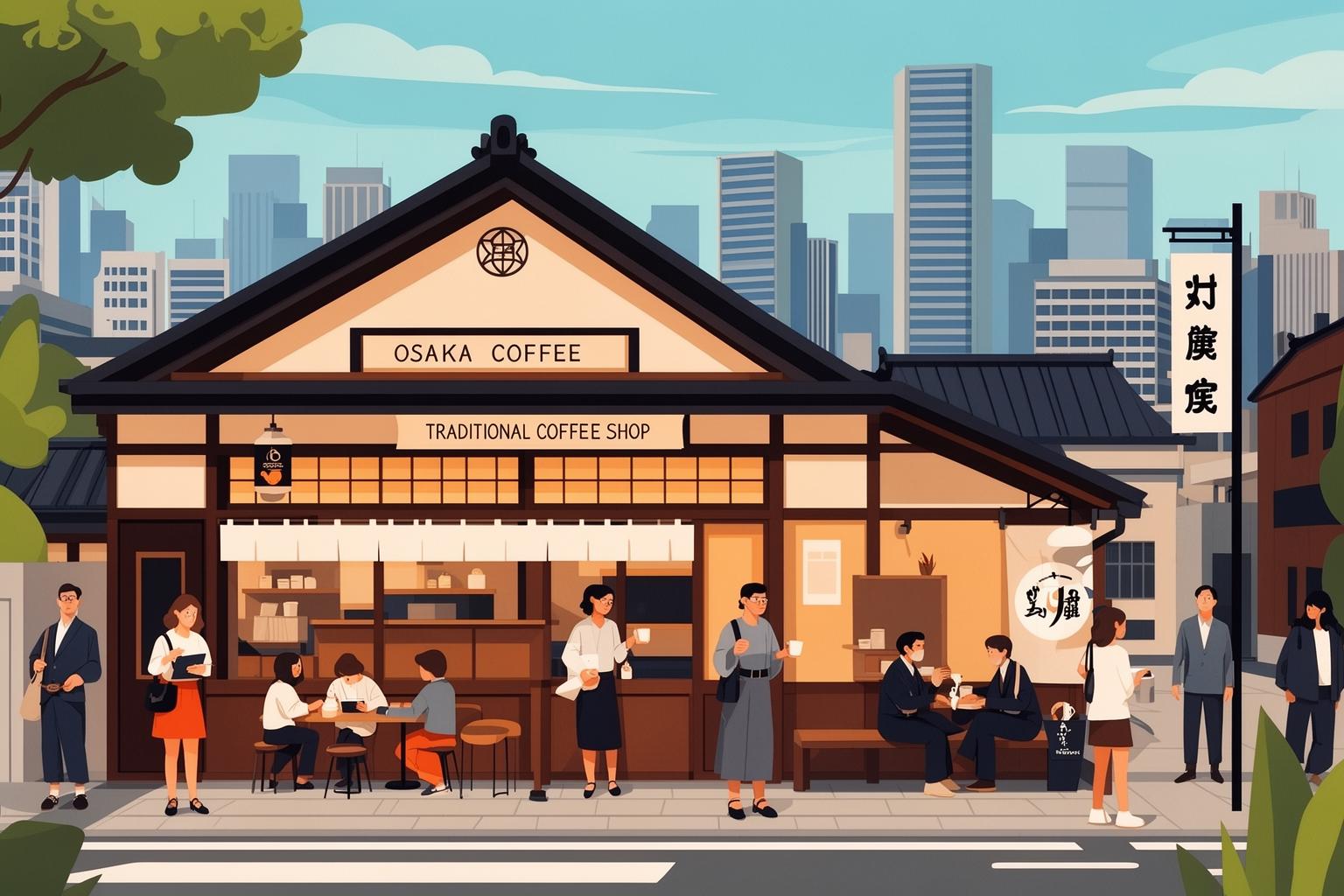
Ultimately, the enduring culture of the morning set and the kissa-ten directly reflects Osaka’s core identity. This city has always been shaped by its merchants, artisans, and a strong sense of local pride. The kissa-ten serves as the stage where these values are expressed every single day.
A Reflection of Osaka’s Merchant Spirit
The entire concept of the morning set is grounded in the practical, business-savvy mindset of the Osaka merchant. It offers high value, aimed at cultivating a loyal customer base. This service emerged from understanding the needs of a mobile workforce in a bustling commercial hub. The emphasis on relationships—between the Master and regulars—reflects how business has traditionally been conducted in Osaka: founded on trust, mutual benefit, and long-term connections rather than mere contracts. The kissa-ten acts as a microcosm of Osaka’s economic and social environment.
Preserving Local Identity in a Globalized World
In an era when city centers increasingly resemble one another with global chains, the enduring presence of independent kissa-ten represents cultural preservation. Choosing to spend your morning in one of these spots is more than a preference for a certain ambiance. It’s a statement for localism, a way to support a small business owner who is also your neighbor. It embraces a slower, more intentional, and connected lifestyle that resists the relentless pace of modern urban life. The morning set may be a simple plate of toast and egg, but it also stands as a declaration of identity: in Osaka, community remains the most treasured commodity.








