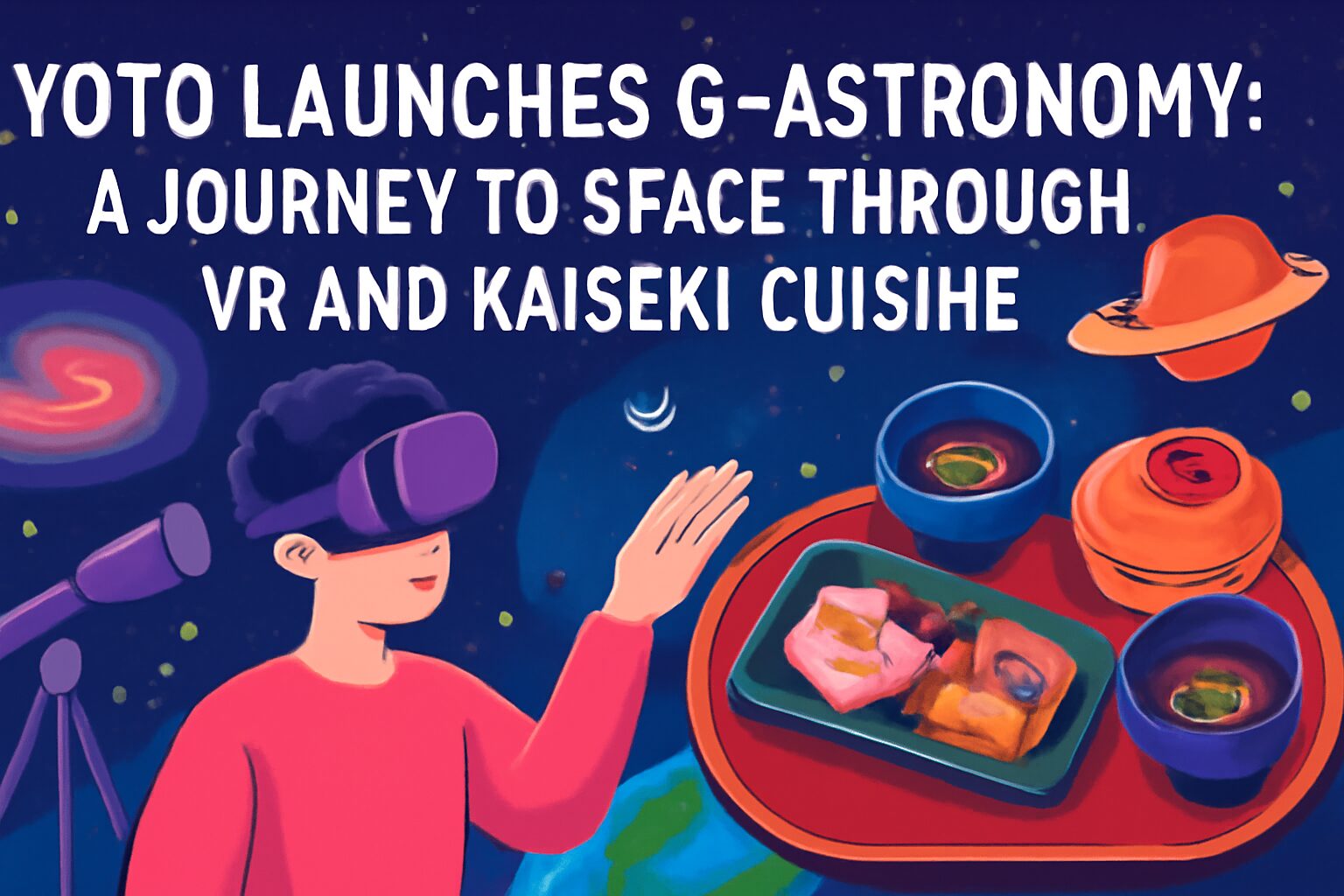
A groundbreaking fusion of tradition and technology is set to debut in Kyoto’s scenic Arashiyama district this April. The ‘G+Astronomy Experience’ promises a one-of-a-kind event, pairing a sublime culinary journey with a breathtaking virtual voyage to the stars, signaling a bold new direction for tourism in Japan’s ancient capital.
What is the ‘G+Astronomy Experience’?
At its heart, this innovative project combines two vastly different worlds: the centuries-old tradition of Japanese haute cuisine and the cutting-edge technology of virtual reality.
Guests will indulge in a multi-course kaiseki meal meticulously prepared by Kyo-ryori Toriyone, a revered restaurant with a history stretching back to the Meiji era. This traditional dining style is an art form, emphasizing seasonal ingredients and beautiful presentation. Simultaneously, diners will wear VR headsets that transport them on an immersive, simulated journey through space. The experience is designed to harmonize the earthly flavors of Kyoto with the awe-inspiring visuals of the cosmos, creating a multi-sensory narrative that explores the future of food and culture.
The Context: A New Demand in Post-Pandemic Tourism
The launch of ‘G+Astronomy’ is perfectly timed. As Japan’s tourism industry rebounds strongly, visitor expectations have evolved. The Japan National Tourism Organization (JNTO) reports that inbound visitor numbers are rapidly approaching, and in some months surpassing, pre-pandemic levels. More importantly, spending per tourist has significantly increased compared to 2019, indicating a growing demand for high-value, unique experiences over simple sightseeing.
Modern travelers, particularly those visiting cultural hubs like Kyoto, are seeking deeper engagement and unforgettable memories. This project directly answers that demand by offering more than just a meal; it offers a story and a futuristic perspective. It represents a strategic move by Kyoto’s tourism sector to blend its priceless cultural heritage with technological innovation, ensuring its appeal to a new generation of global visitors.
Future Implications: A New Frontier for Kansai Tourism
The ‘G+Astronomy Experience’ is more than just a novelty; it could be a blueprint for the future of cultural tourism in the Kansai region and beyond.
Pioneering Experiential Tourism
This project sets a new benchmark for what a cultural experience can be. By successfully merging the tangible (food) with the virtual (space travel), it opens the door for other traditional arts—such as tea ceremonies, noh theater, or calligraphy—to be re-imagined with technological overlays. This could solidify Kyoto’s reputation not only as a guardian of tradition but also as a hub of cultural innovation.
Attracting High-Value Tourists
An exclusive, high-concept event like this is poised to attract affluent travelers who seek luxury and originality. Such offerings encourage longer stays and higher overall spending, contributing significantly to the local economy. It helps position the Kansai region as a premier destination for sophisticated global tourists.
Enhancing the Kansai Itinerary
For visitors staying in Osaka, this experience provides another compelling reason for a day trip to Kyoto. It diversifies the region’s offerings, complementing Osaka’s vibrant urban energy and culinary scene with Kyoto’s blend of ancient tradition and futuristic vision. It encourages travelers to explore the rich tapestry of the entire Kansai area.
Event Details
- What: G+Astronomy Experience
- Where: Arashiyama, Kyoto (at Kyo-ryori Toriyone)
- When: Launching in April
- Cuisine: Traditional multi-course kaiseki
This visionary project connects the rich soil of Kyoto to the limitless expanse of space. It’s an invitation not just to taste the flavors of Japan, but to contemplate our place in the universe, offering a truly futuristic dining itinerary that promises to be one of the most talked-about experiences of the year.