
You see her before you really see her. A flash of leopard print, maybe a shock of purple-tinted, permanently waved hair. You hear her before you see her, too. A hearty, gravelly laugh that cuts through the polite hum of a crowded train car, a voice that doesn’t modulate for public space because, in her mind, all of Osaka is her living room. This is the Osaka Obachan, the city’s iconic middle-aged and older woman. For many foreigners, she is a walking, talking caricature—loud, a bit pushy, and clad in an aesthetic that screams confidence, or perhaps just a deep commitment to animal prints. When I first moved here from a much quieter Australian city, I found them equal parts fascinating and terrifying. They seemed to operate on a completely different social frequency, one that bypassed all the subtle codes of conduct I was so painstakingly trying to learn elsewhere in Japan. A Tokyo interaction is a carefully choreographed dance of bows and deferential murmurs. An encounter with an Osaka Obachan can feel like being pulled into a sudden, friendly, and slightly chaotic wrestling match.
My turning point came on a sweltering August afternoon on the Midosuji Line. My toddler, overheated and overwhelmed, decided to unleash a tantrum of epic proportions. The carriage fell into a pained silence, a collective holding-of-breath typical of public spaces in Japan. People stared at their phones, at the floor, anywhere but at the screaming child and his mortified mother. I was cycling through apologies and hushed pleas when a presence descended upon us. A woman with a formidable perm and a glittering tiger-striped blouse leaned over, ignoring my flustered apologies. She didn’t offer a word of judgment. Instead, she clicked her tongue, made a series of funny faces that momentarily stunned my son into silence, and then, with the speed of a magician, produced a small, cellophane-wrapped candy from the depths of her cavernous handbag. “Ametama, taberu?” (Want a candy?), she asked, her voice a low, comforting rumble. He took it. The crisis was averted. She gave me a conspiratorial wink, a gesture that said, “Kids, eh? We’ve all been there,” and got off at the next stop. In that small, powerful exchange, I realized I had it all wrong. The Osaka Obachan isn’t a caricature. She’s an institution. She is the city’s immune system, its social glue, and its unofficial welcome wagon, all rolled into one formidable, candy-dispensing package. To understand her is to understand the very heart of what makes Osaka tick—a city built not on quiet consensus, but on pragmatic, tough-love community.
This pragmatic, tough-love community is perfectly encapsulated in the local dialect, where a phrase like Shiran kedo can express everything from playful deflection to genuine solidarity.
The Unspoken Social Contract: Guardians of the Neighborhood
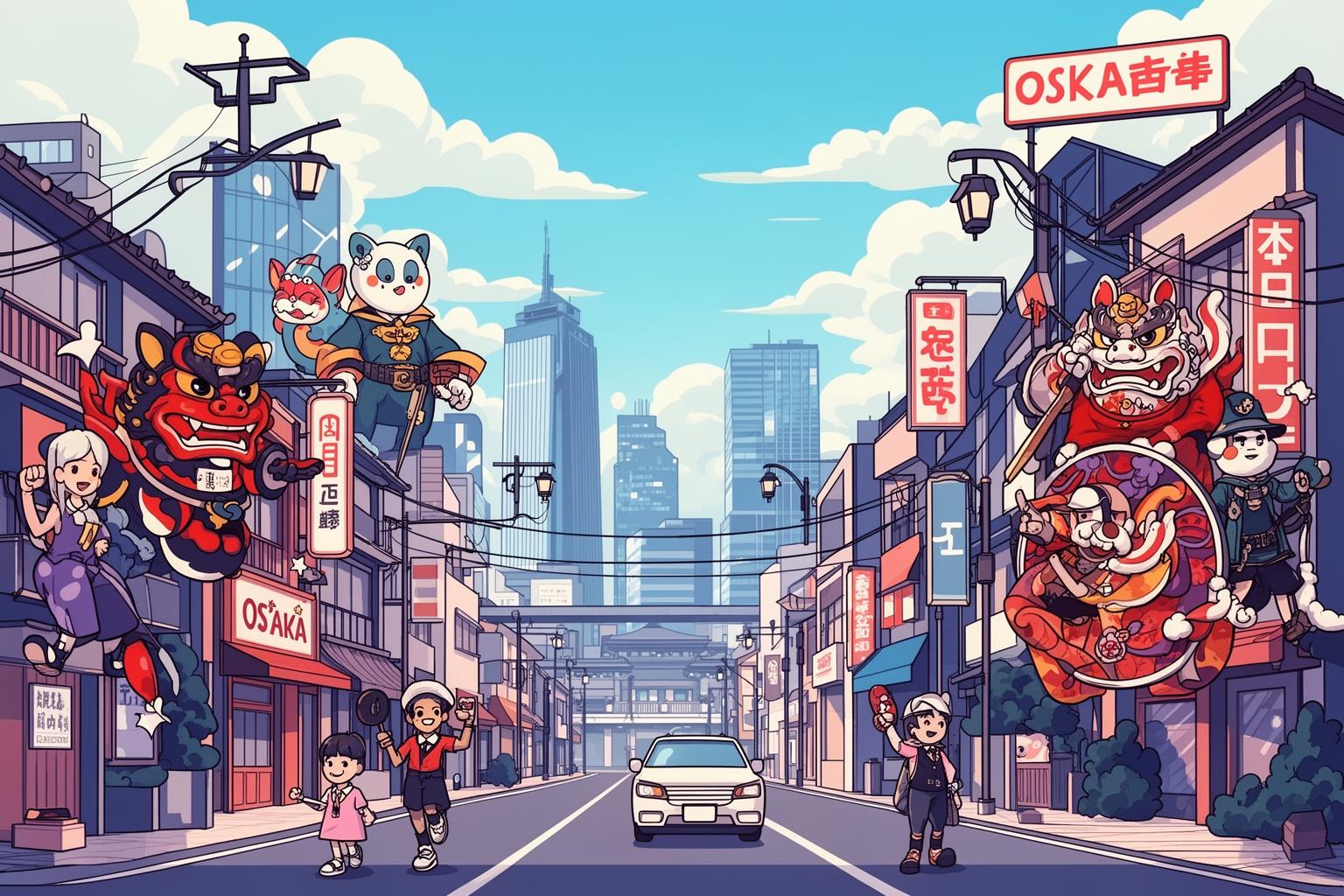
In many large cities, anonymity tends to be the norm. You might live in an apartment building in Tokyo for years without ever learning your neighbor’s name. This is a culture founded on respecting privacy and fostering a smooth, if somewhat impersonal, public environment. Osaka, however, operates on a different, older principle: community surveillance. The main agents of this system are the Obachan. Their watchfulness is not the intrusive, judgmental kind found in small towns, but a protective presence that keeps the neighborhood ecosystem balanced. They serve as guardians, sentinels stationed at the gates of daily life, and their headquarters are the city’s extensive, covered shopping arcades, known as shotengai.
The Eyes of the Shotengai
Stroll through any shotengai, whether the famous Tenjinbashisuji or a modest local arcade in a quiet suburb, and you will notice them. Sitting on plastic stools outside the fishmonger’s, chatting with the butcher, or gathered on a bench near the small pharmacy, they aren’t merely passing time—they are watching. They are a living, breathing database of neighborhood happenings. They know that the Sato family’s eldest daughter just started university, that the new couple in apartment 3B gets grocery deliveries on Wednesdays, and that the Suzuki boy has had a persistent cough for a week. To outsiders, this might seem nosy, but to Osakans, it feels like safety. If a child strays from their mother even for a moment, an Obachan will notice immediately. Before panic arises, she’ll gently intercept the child, ask, “Where’s your mum, little one?” and guide them back. She might shoot a sharp, wordless glance at the parent conveying, “You need to watch your child more closely,” but her actions come from a sense of collective responsibility. Every child in the neighborhood belongs to everyone. This proactive, engaged presence sharply contrasts with the passive bystander effect common in more anonymous urban areas. Here, someone is always watching—not to judge, but to assist. They are like a human neighborhood watch, but far more effective and powered by green tea and rice crackers.
The Gatekeepers of Local Etiquette
This guardianship also extends to the unspoken rules of civic life. While other Japanese cities depend on polite signage and social pressure to enforce rules, Osaka’s Obachan adopt a more straightforward approach. They are the frontline enforcers of everything from traffic safety to proper garbage disposal. For newcomers to Japan, the complex rules of sorting trash can be overwhelming. In Tokyo, a mistake might result in a politely worded notice from the building manager. In Osaka, an Obachan will correct your mistake on the spot, having declared herself the block’s official waste management consultant. As you approach the collection site, she will appear seemingly out of nowhere. With the keen eye of a bomb disposal expert, she will inspect your bag. “Ah,” she’ll say, pointing decisively, “That plastic bottle cap goes into ‘burnable waste,’ not ‘plastics.’ The bottle is fine, but you must remove the cap and label.” Her tone carries no malice, only a steadfast dedication to The Right Way of Doing Things. This can be startling, even feel like public shaming, but it works effectively. You’ll never forget to remove a bottle cap again. The same applies to jaywalking, cycling on the wrong side of the road, or letting your dog get too close to her prize-winning pansies. She will not hesitate to call you out, her voice ringing clear like a temple bell. This isn’t rudeness; it’s social upkeep. It reflects a belief that community harmony, or wa, is not a delicate state preserved by silence, but a resilient system that requires continuous, vocal adjustment.
The Currency of Kindness: Ametama Diplomacy
To grasp the engine driving social interaction in Osaka, you must appreciate the deep significance of a small, hard candy. The ametama serves as the Obachan’s secret weapon, her olive branch, her calling card, and the most vital tool in her diplomatic arsenal. Giving and receiving an ametama is a ritual that smooths the wheels of daily life in the city—a tiny exchange carrying great social importance. It is a gesture that says, “I see you. We share this space together. Let’s make it a little sweeter.”
The Ultimate Icebreaker
An ametama usually appears during moments of minor social tension. A baby starts crying on a crowded bus. A long line forms at the post office. Two people awkwardly reach for the same handrail on the train. In such moments, you’ll hear the soft crinkle of a cellophane wrapper. An Obachan will dig into her purse, a vast and mysterious universe, and pull out a candy. Often, it will be a classic like a salty-sweet milk candy or a throat-soothing herbal drop. She offers it to the mother of the fussy baby or perhaps to you, a foreigner looking slightly lost and overwhelmed. The offer comes with a simple nod and a quiet “douzo” (please, take it). Accepting is essential. It completes a circle of goodwill. It dissolves tension, forges a brief human connection, and turns strangers into a temporary micro-community. The candy itself is almost incidental; it’s the gesture that counts. It’s a nonverbal way of recognizing a shared experience, a small act of solidarity against the minor hassles of urban life. This is the foundation of Osaka’s renowned friendliness. It’s not about broad, superficial smiles; it’s about genuine, consistent, small-scale acts of kindness.
More Than Just Candy: The Philosophy of Small Gifts
The idea behind ametama diplomacy goes far beyond candy. It’s a philosophy that infuses daily interactions in Osaka, weaving a web of informal, low-stakes reciprocity that holds the community together. The Obachan who runs the local fruit stand might slip an extra mikan orange into your bag, pat your hand, and call it “saabisu” (a little something extra, on the house). The woman whose umbrella you share during a sudden downpour will insist you take one of her rice balls she packed for lunch. These are not calculated exchanges. There’s no expectation of immediate repayment. Instead, it’s a way of contributing to a collective emotional bank account. This steady stream of small gifts and favors builds a sense of mutual obligation and shared humanity strikingly different from the more transactional lifestyle in Tokyo. In Tokyo, the convenience store clerk performs duties with flawless, robotic politeness. In Osaka, the Obachan at the register will ask how your day is, comment on the weather, and might even point out which brand of instant noodles is on sale and a much better deal than the one you picked. It blurs the line between customer and acquaintance, creating a warmer, if messier, social fabric. Living here means learning to graciously accept and freely offer these small tokens. It means understanding that community is not an abstract idea but something actively built — one piece of candy, one extra orange at a time.
The Pragmatic Problem-Solver: Cutting Through the Nonsense
The stereotype of the loud, brash Osakan stems from a deep cultural preference for directness and pragmatism. In a country known for its layers of subtlety and indirect communication, Osaka stands out as a stronghold of straightforwardness. The Osaka Obachan embodies this philosophy. She has little patience for ambiguity, polite pretense, or the delicate balance of tatemae (public face) and honne (true feelings) that shapes much of social interaction in places like Tokyo. When she sees a problem, she calls it out and addresses it. This can be startling for those unfamiliar with it, but once the reasoning is clear, it feels remarkably refreshing and efficient.
A Distaste for Tatemae
In a typical Tokyo business meeting, disagreement might be conveyed through a long silence, a slight tilt of the head, and the phrase, “That is an interesting perspective; we will take it under consideration.” This is tatemae. What the person really means—their honne—is “That is a terrible idea and we will never do it.” An Osaka Obachan has no patience for such verbal gymnastics. If she thinks your idea is terrible, she will say so. “Sonna akan wa!” she’ll declare. “That’s no good at all!” She’s not being rude; she’s aiming to be efficient. Why waste time on pleasantries when there’s a problem to solve? This attitude is evident everywhere, especially in Osaka’s merchant culture. Bargaining, or at least playful negotiation, is part of many local shopping experiences. An Obachan will inspect a daikon radish, point out a minor flaw to the vendor, and demand a small discount with a dramatic flair. “Chotto makete!” she’ll say, the classic phrase for “Knock a little off the price!” It’s not an adversarial confrontation; it’s a performance, a social ritual that reinforces the relationship between buyer and seller. It’s a game with mutually understood rules. This preference for direct, honest exchange over performative politeness is a hallmark of Osaka life. It means you always know where you stand, which can be a huge relief after navigating the opaque social codes elsewhere.
The Human Network: Before Google, There Was Obachan
Long before the internet put the world’s information at our fingertips, Osaka had its own search engine: a city-wide network of connected Obachan. This network remains very active and, in many ways, more reliable than any algorithm. They are living archives of practical, ultra-local knowledge. Need to find a clinic open on Sunday? Skip the frustrating online search. Ask the Obachan who’s always sweeping the pavement in front of her house. She’ll not only know the clinic’s hours but also have a strong opinion on which doctor is best for children’s colds. Looking for a shoe repair? The Obachan at the public bath will know a guy who works miracles on leather from a tiny shop three blocks away and charges half what the department store does. This information isn’t based on sponsored ads or online reviews; it’s curated through decades of experience, personal trials, and word-of-mouth recommendations from trusted members of the network. Accessing this resource requires some social effort. You have to become a familiar face in your neighborhood. Greet them in the morning, make small talk about the weather, and generally be a good civic citizen. But once you’re accepted, you gain access to an invaluable repository of knowledge that makes daily life much easier. They are the original social network—a community-based, analog cloud of data that keeps the city running smoothly.
Misconceptions and How to Navigate the Obachan Ecosystem
For a foreigner, the initial encounters with a full-force Osaka Obachan can be quite bewildering. Their directness may be mistaken for aggression, their curiosity for intrusiveness, and their fashion sense, well, for something puzzling. Yet, successfully navigating this cultural landscape is essential to feeling at home in Osaka. It calls for a simple adjustment of your cultural expectations and a willingness to look beyond appearances to understand the intent behind their actions.
Loudness vs. Directness
A common misunderstanding is that Obachan are always angry. Their loud and emphatic tone can certainly give that impression. However, within the context of Osaka dialect and culture, volume often serves as a means of sincerity and emphasis, not anger. When an Obachan leans in and says, “You should really eat more! You’re too thin!” loudly enough to be heard across the supermarket aisle, she’s not criticizing you. She is expressing genuine concern in the most straightforward way she knows. The best response is not to retreat but to meet her energy with a smile and a lighthearted reply. A simple “Thank you, I’ll try!” will suffice. Demonstrating that you are not bothered by her directness and that you understand it comes from a place of care will earn you immediate respect. See it as engagement rather than aggression. She speaks to you because she sees you as part of her community, which is a compliment.
Nosiness vs. Concern
You will face personal questions like “Are you married?” “How many children do you have?” “How much is your rent?” These inquiries, which might feel intrusive by Western or even Tokyo standards, are not intended to invade privacy. They serve as data points. An Obachan is trying to build a mental map of her community, to figure out who you are and where you fit in. It’s her way of categorizing and connecting. She isn’t judging your life choices; she’s trying to find out if you have a child the same age as her grandchild or if you work near a place where her nephew lives. It’s a search for common ground. The best approach is to have simple, friendly answers ready. You don’t need to share your deepest secrets, but engaging with the questions shows you understand the spirit behind them. It signals that you’re open to being part of the community, not just a temporary, anonymous resident.
The Leopard Print and Perm: A Uniform of Confidence
Finally, let’s consider the aesthetic: the leopard print, the bright colors, the carefully maintained perm. It might be easy to dismiss these as gaudy or outdated, but that would miss the point completely. The Obachan’s style is not a fashion error; it’s a declaration of strength. In a society where women, especially older ones, are often expected to fade quietly into the background, the Osaka Obachan refuses to disappear. Her clothing is a uniform of confidence and presence. It says, “I am here. I have earned my place in this city. I’m not afraid to take up space.” The leopard print is more than just a pattern; it’s camouflage for an urban hunter, a bargain seeker, a neighborhood protector. The perm acts like a helmet, a crown symbolizing her role as a matriarch. To truly appreciate the Obachan, you must see her style for what it is: a bold, unapologetic celebration of a life lived with spirit.
Why the Obachan is the Heart of Osaka
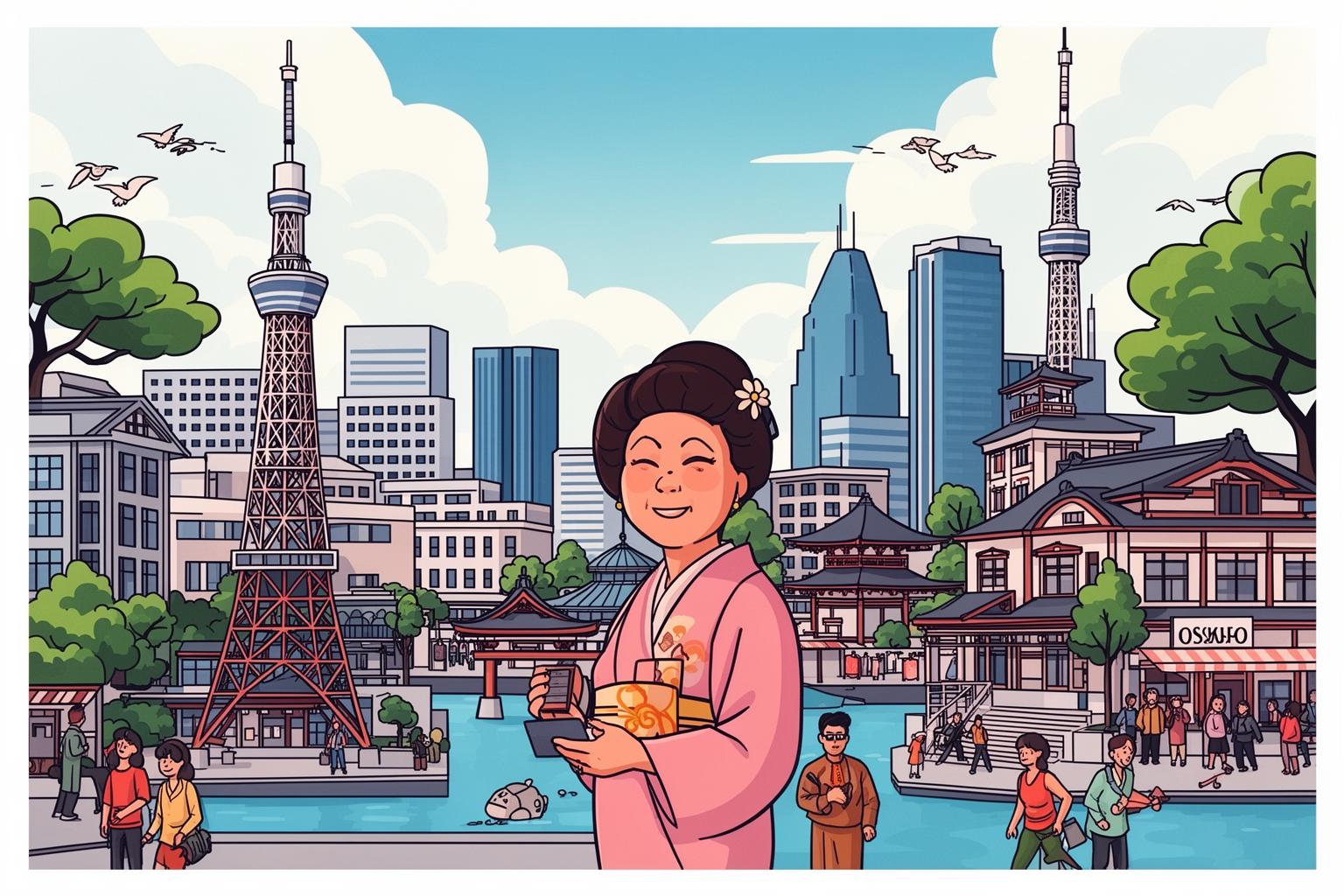
To truly settle into life in Osaka, you need to move beyond stereotypes and learn to understand the city’s unique social language. The Osaka Obachan serves as the Rosetta Stone. She embodies the city’s most treasured values: fierce pragmatism, steadfast community loyalty, a disdain for pretense, and a deep-rooted, tough-love kindness. She explains why Osaka feels fundamentally different from the cool, reserved elegance of Tokyo. While Tokyo is a city of smooth surfaces and polite distances, Osaka is marked by friction, engagement, and messy yet profound human connection.
The Obachan are the ones who foster and sustain this connection. They are the keepers of local stories, the enforcers of social order, and the generous givers of candy and wisdom. They hold neighborhoods together through networks of conversations, small favors, and watchful eyes. To be ignored by them is to be an outsider. But to be acknowledged, to receive an unprompted ametama, or to be gently scolded for forgetting an umbrella on a cloudy day—that signals you are beginning to belong. When the Obachan at the corner market starts saving you the best cuts of fish and greets you with a booming, familiar call, you will realize you are no longer just living in Osaka. You are becoming a part of it. And there is no greater feeling in the world.