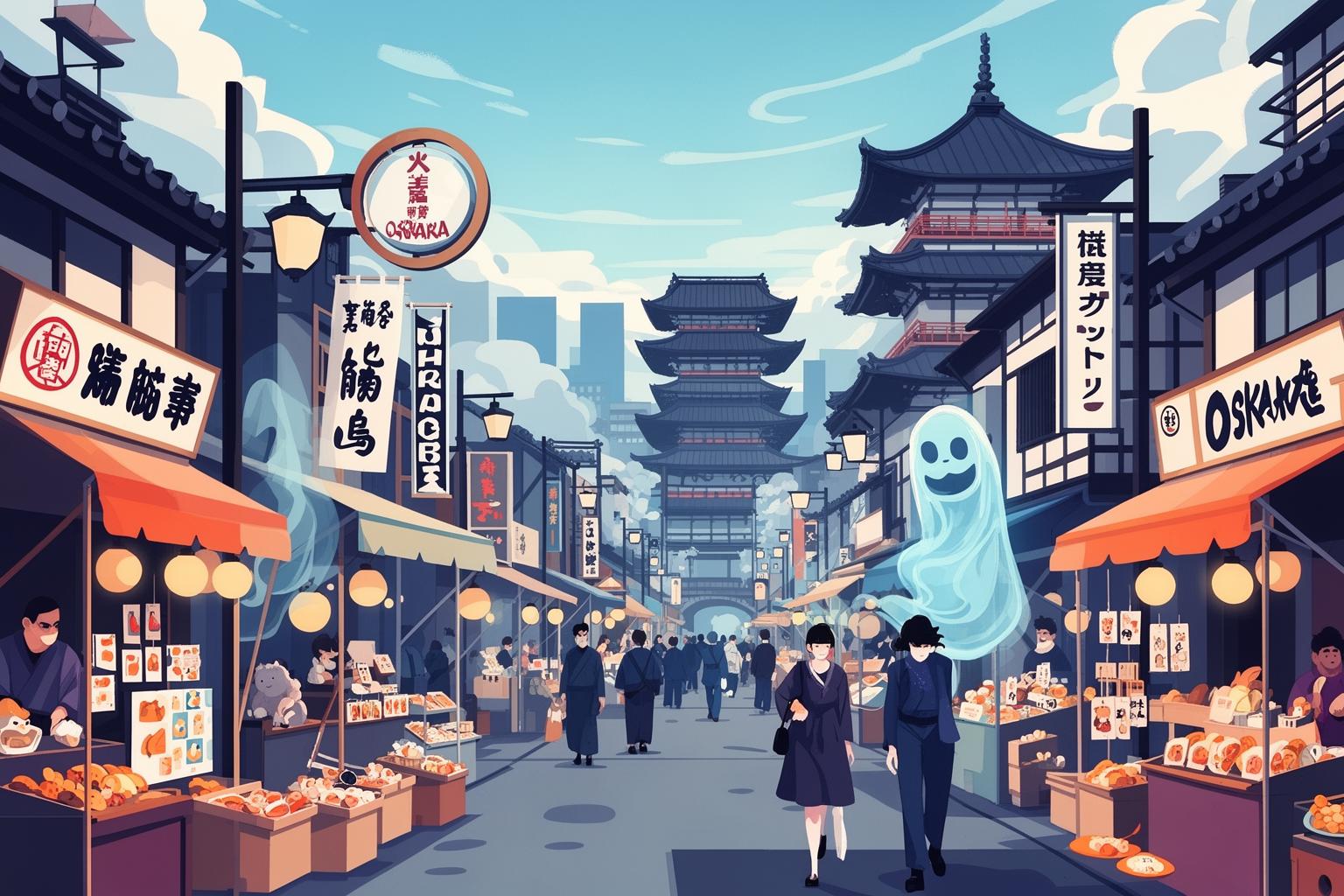
My first week in Osaka, I walked into a tiny shop in the Tenjinbashi-suji shotengai, a covered shopping street that feels like it stretches on forever. I was looking for a specific type of ceramic bowl. The owner, a woman who looked like she’d been running the place since the Showa era, immediately zeroed in on me. “You don’t want that one,” she said, pointing at my choice. “The glaze is weak. This one,” she grabbed another, “is from a better kiln. More expensive, but it will last you a lifetime. A real investment.” She wasn’t just selling; she was advising, appraising, and closing a deal all in one breath. The price was firm, but when I paid, she threw in a small sauce dish. “Omake,” she winked. A little extra. I left the shop feeling both expertly handled and genuinely cared for. This wasn’t the quiet, deferential Japan I’d read about. This was something else entirely. This was Osaka.
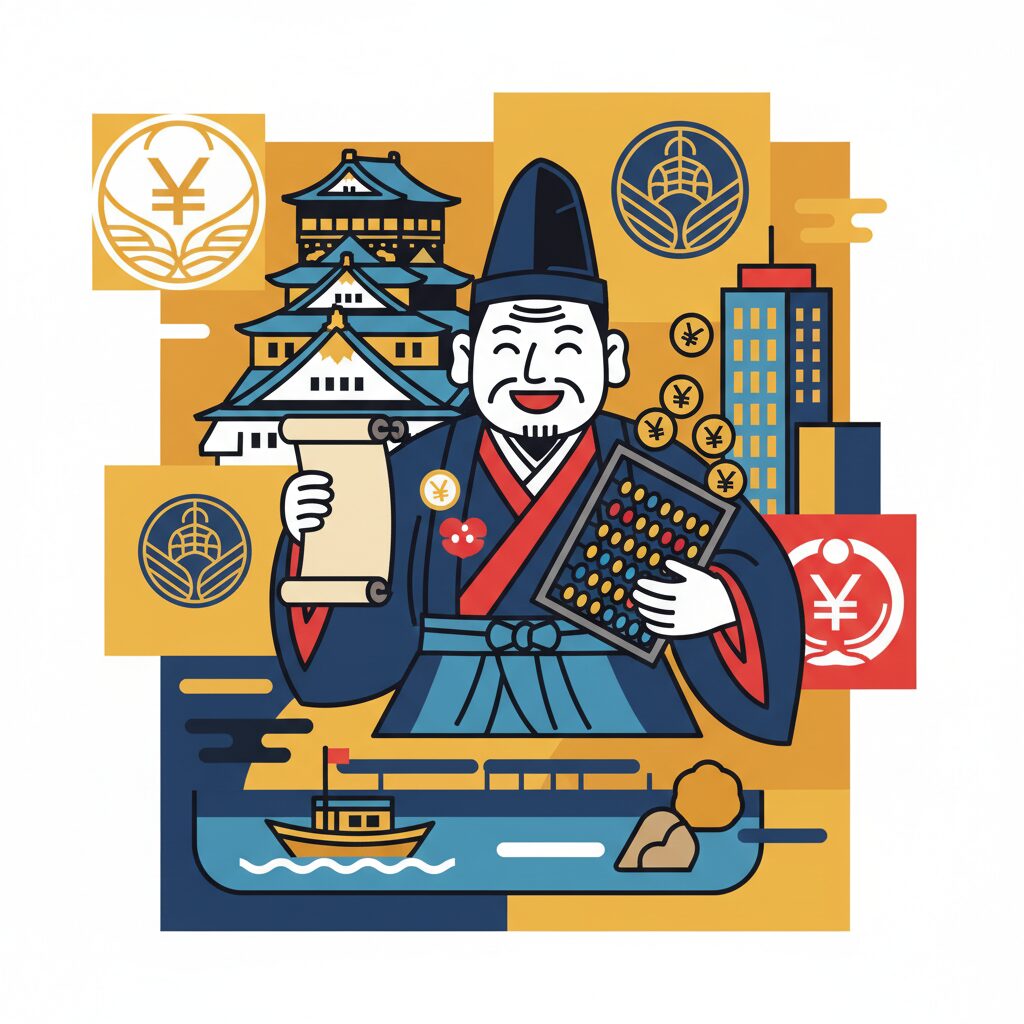
Living here, you quickly realize that this city runs on a different operating system. It’s a code written over centuries of trade, a philosophy born in the bustling markets where rice prices for the entire nation were once set. It’s the ‘Akindo’ mindset—the spirit of the merchant. This isn’t just about business in the corporate sense; it’s a worldview that permeates every interaction, from buying groceries to making friends. It’s pragmatic, efficient, and sometimes brutally honest. For foreigners, especially those coming from Tokyo or with a textbook image of Japan, it can be a source of constant confusion and surprise. Is this friendliness just a sales tactic? Is their directness just plain rude? The truth is, it’s a complex and fascinating dance, and understanding the steps is the key to truly living in and loving this city. It’s about learning to see the logic, the warmth, and the deep-seated humanity behind the city’s constant calculation of value.
Embracing the city’s unique approach to daily dealings, one quickly learns that even the trust-based rental market mirrors the pragmatic spirit that defines Osaka.
The Ghost of the Merchant Past: What is ‘Akindo’?
To truly understand Osaka, you need to grasp its history. This wasn’t a city of samurai and shoguns; it was a city of merchants and money. During the Edo Period, while Tokyo (then Edo) served as the political center, Osaka was the economic powerhouse, famously known as Tenka no Daidokoro—the Nation’s Kitchen. All the rice, sake, and goods passed through its ports and warehouses. Wealth was gained and lost not on the battlefield, but on the trading floor. This legacy didn’t just create commercial empires; it shaped the very essence of the Osakan people. The hero here wasn’t the stoic warrior but the savvy Akindo (商人), the merchant who could read people, strike a great deal, and build a network of trust lasting generations.
This Akindo spirit isn’t merely a relic of the past; it’s the living, breathing heart of the city. It embodies a philosophy rooted in pragmatism, rationality, and a sharp sense of value. You hear it in the city’s unofficial motto, Mokari makka? meaning “Are you making a profit?” Though used casually like “How’s it going?” the underlying message is clear: life is a kind of business, and success is measured by tangible results. The typical reply, Bochi bochi denna, or “So-so, can’t complain,” reveals the merchant’s cautious humility. You never want to appear too successful (which invites jealousy) or too unsuccessful (which invites pity). The aim is to be seen as steady, reliable, and quietly competent. This entire linguistic ritual is an expression of the Akindo identity—a constant, subtle negotiation of social standing based on perceived success and stability. Understanding this is the key to decoding the city’s everyday rhythm.
The Upside: The Pragmatic Advantages in Daily Life
When you first come across the Akindo mindset, you might focus only on the “money” aspect. However, that’s just a superficial interpretation. The true core is a deeply ingrained pragmatism that, once embraced, can make life remarkably efficient and pleasantly straightforward. It’s a culture centered on getting things done, which brings some definite advantages.
Directness and Honesty (That Can Feel Like a Hug)
In much of Japan, communication is an art of subtlety. You navigate a delicate balance of tatemae (public face) and honne (true feelings), where what’s left unsaid often matters more than what is spoken. Osaka discards this rulebook. Here, directness is a sign of respect. People speak plainly because they trust you’re capable of handling the truth and because it’s the quickest path to a solution. That shop owner telling me my bowl choice was inferior wasn’t trying to trick me into a sale; she was building trust. Her point was, “I’m an expert, I appreciate your business, and I won’t let you waste money. Listen, and you’ll get a good deal. Come back anytime.”
This approach appears everywhere. Ask for directions, and a Tokyoite might politely offer vague, cautious guidance to avoid error. An Osakan is more likely to grab your arm, walk you partway, and tell you straight that you were going the wrong way. It’s less about saving face and more about fixing the problem. In a meeting, instead of hours of careful consensus-building, you’re more apt to hear, “That idea won’t work. It’s too costly. Let’s try this instead.” Though initially surprising, you quickly see it as a gift. You always know your standing. Ambiguity disappears, replaced by clear, actionable reality. This honesty, once you attune to it, feels less like bluntness and more like practical kindness.
A Culture of Value and Generosity (‘Omake’ Culture)
The flip side of being extremely cost-conscious is being extraordinarily generous with value. The idea of omake (a little extra) is fundamental to Osaka’s commerce and social life. It’s the baker who adds a free pastry at day’s end, the bartender who pours a bit extra, or the butcher who throws in some additional pork slices. Omake isn’t random kindness; it’s a strategic gesture to build relationships. It says, “Thank you for your business. I value you as a customer. Please come back.” It turns a simple transaction into a genuine human connection.
This giving spirit extends well beyond shops. Neighbors drop off homemade dishes not just as friendliness but as deposits into a community bank of favors. “Here’s some curry today, and maybe when you have extra nikujaga next month, you’ll return the favor.” It’s a web of reciprocity that strengthens community ties. Living in Osaka means learning to take part in this exchange. Accepting omake graciously and returning the favor shows you speak the local language of value. This is why many foreigners find connecting with locals easier in Osaka; the road to bonding is paved with clear, tangible acts of goodwill—not just subtle social cues.
Problem-Solving and Flexibility
The merchant’s aim is to close the deal. This creates a culture of remarkable flexibility and creative problem-solving. Where a more rigid, bureaucratic mindset might see rules as unyielding barriers, Osakans view them as starting points for negotiation. This “get it done” mentality is a lifesaver daily. For example, if you need to move a piece of furniture too large for a doorway, in Tokyo you might get a polite refusal. In Osaka, the delivery team might ponder, take a quick break, and then say, “Okay, how about we lift it through the balcony window? It’ll cost you an extra beer, though.”
This mindset favors results over procedure. It’s about finding clever detours, practical shortcuts, and solutions that satisfy everyone. This applies from negotiating lease details to having a local shop order a hard-to-find specialty item. The prevailing sense is that where there’s a will and mutual benefit, there’s always a way. This makes facing life’s challenges as a foreigner much less intimidating. You feel like you have allies in problem-solving, not just officials enforcing rules.
The Downside: When Business Logic Feels Cold
Certainly, a worldview focused on transactions and value exchange carries its sharp edges. The very qualities that make Osaka efficient and vibrant can also come across as impersonal, calculating, and even tiring if you’re unprepared for the emotional detachment that sometimes accompanies this pragmatism.
The Transactional Nature of Friendships
This is likely the biggest culture shock for many Westerners. In many cultures, friendship is viewed as an emotional bond that exists beyond practical utility. In Osaka, the boundaries are much less clear. Relationships, even close ones, are often formed and maintained on the basis of mutual benefit. This doesn’t mean friendships lack sincerity, but rather that they are practical. When you meet someone new, conversations will almost inevitably steer toward what you do and what skills you possess. This isn’t mere small talk; it’s a subtle assessment of your “value.” Can you teach English? Are you skilled with computers? Do you have connections in a particular industry?
This can give the impression that you’re being evaluated for your usefulness rather than appreciated for who you are. A new friend might quickly propose a collaboration or request a professional favor. The key is to recognize that this is often how trust and closeness develop here. By successfully exchanging favors or skills, you demonstrate your reliability and worth within their network. The emotional connection comes after the practical one. The downside is that if you have little to offer, or if a relationship becomes unbalanced, it can fade away. Sometimes it feels like you must continually prove your value to remain part of the group, which can be draining if you’re seeking purely emotional support.
The Art of the ‘No’ and Navigating Bluntness
The same directness that feels refreshing can also sting. There’s very little sugar-coating in Osaka. If your Japanese is poor, someone will say so. If your business idea has flaws, they will point out every one. If they dislike your outfit, you might hear about it. This feedback is almost never meant to harm. In the Akindo mindset, honest, critical feedback is a valuable service. They’re providing data to help you improve. Why waste time on false praise when you could be fixing the issue?
However, for someone not used to this, it can feel like a constant stream of criticism. It can undermine your confidence and make you feel perpetually judged. Thriving here requires developing a thick skin. You have to train yourself to separate the message from its delivery. Hear the critique as practical advice from someone who values efficiency over feelings—not as a personal attack. It’s a tough adjustment, but a necessary one. You also need to learn to say “no” just as directly. A vague, polite refusal will be seen as a negotiating tactic. A clear, firm “Sorry, I can’t do that” is understood and, in most cases, respected.
The Constant Hum of Negotiation
Because every interaction is viewed through the lens of value, daily life can sometimes feel like a never-ending series of micro-negotiations. This isn’t just about bargaining over prices in a market, although that is part of the culture. It’s about negotiating time, attention, social obligations, and favors. Plans with friends might involve a more detailed discussion of cost-splitting and time efficiency than you’re used to. A neighbor’s request might come with an implicit expectation of future repayment.
This constant calculation of give-and-take can be exhausting. You cannot simply exist passively; you must actively manage your social and practical capital. It requires constant awareness of what you’re offering and receiving in each relationship. For those who prefer a spontaneous, less structured social life, this can feel confining. The upside is very clear expectations. You rarely have to guess where you stand with someone or what they want from you. The terms of any relationship, personal or professional, are usually clearly on the surface.
Osaka vs. Tokyo: A Tale of Two Mindsets
The contrast between Osaka and Tokyo provides the clearest lens through which to understand Japan’s internal diversity. It goes beyond just an accent or regional rivalry; it reflects a fundamental difference in philosophy that influences every aspect of daily life.
Communication Style
Tokyo epitomizes high-context communication. The city is structured around formal hierarchies and the preservation of group harmony (wa). Unwritten rules hold great importance. Hyper-polite language (keigo) is used, seniority is respected, and direct confrontation is avoided at all costs. Conversations often aim to affirm relationships and uphold the status quo. In contrast, conversation in Osaka focuses on achieving results. Communication there is low-context and straightforward. People prioritize clarity and efficiency over formal politeness. A joke or playful tease is a more common icebreaker than a formal bow. The hierarchy is flatter, and challenging a senior’s idea is more acceptable if you offer a better, more profitable alternative.
Social Currency
In Tokyo’s sphere of politics and major corporations, social currency is often linked to your title, the prestige of your company or university, and your powerful network. Image and adherence to protocol are paramount. You are defined by what your business card represents. In Osaka, known as the merchant city, social currency is more tangible. It revolves around your skills, reliability, and reputation for fairness. People are less impressed by fancy titles and more by your ability to fulfill promises. The key questions are, “Can you actually do the job?” and “Are you a person of your word?” Trust is built through actions, not granted by titles.
First Impressions
Imagine two first business meetings. The Tokyo meeting begins with a precise, ritualistic exchange of business cards (meishi), presented with two hands and examined carefully. There will be formal introductions, green tea, and lengthy small talk before the main topic is softly introduced. The Osaka meeting, however, might start with the host saying, “Right, thanks for coming. I’ve only got 30 minutes. What’s the bottom line? Can you do this for us and what’s your best price?” It’s not rude; it’s efficient. They get straight to the point to determine whether a deal can be made. If so, the relationship develops from there; if not, no time is wasted. This difference captures the essence of the two cities: Tokyo values process and harmony; Osaka values results and pragmatism.
How to Thrive in Osaka’s Akindo Culture
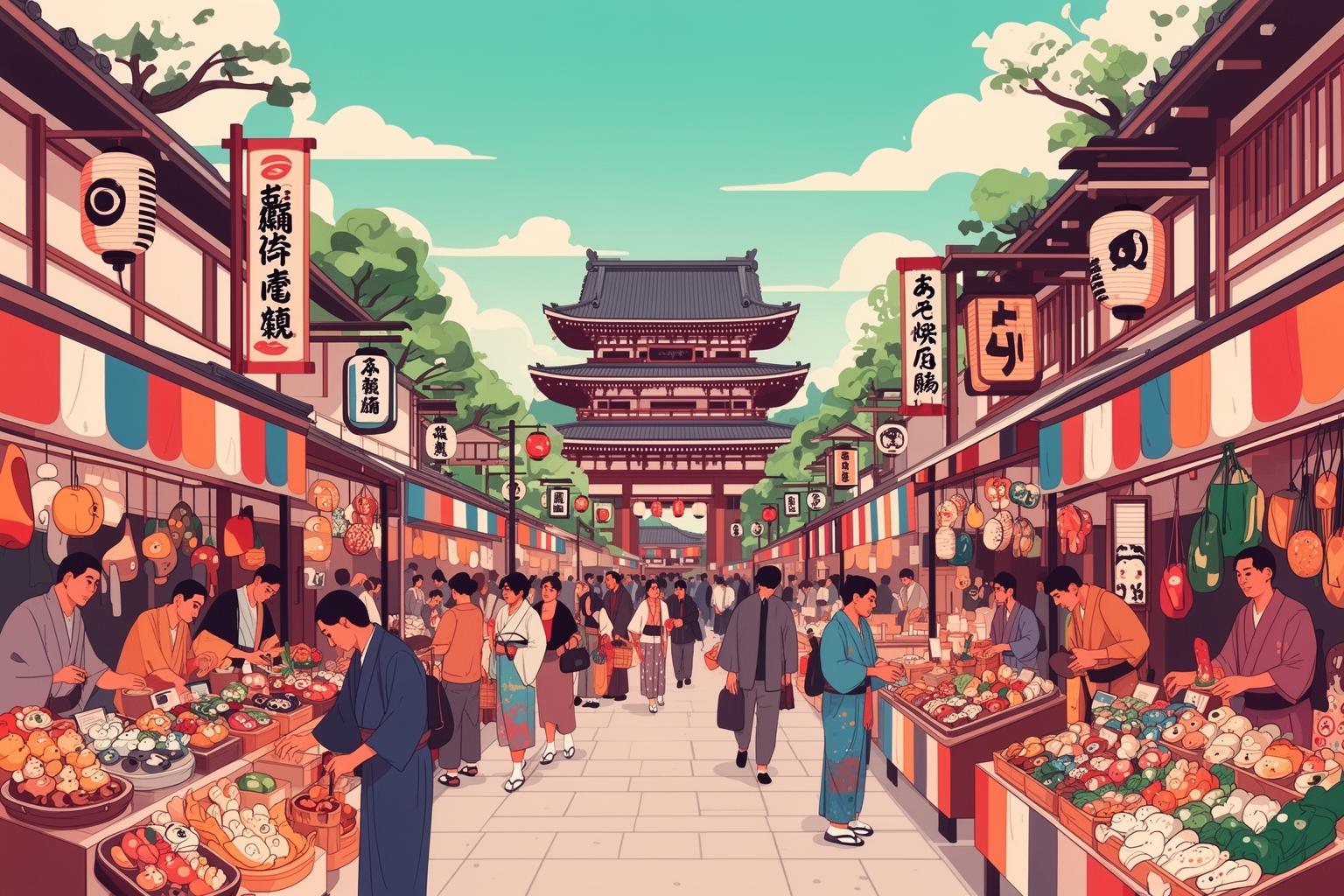
Adapting to the Akindo mindset doesn’t mean changing who you are. It’s about learning a new way to interact. Once you get comfortable with it, you won’t just survive but genuinely thrive in this vibrant city.
Embrace the Banter
Conversation in Osaka is like a sport—fast, clever, and full of playful teasing. Don’t just watch from the sidelines; join in. Pick up a few simple jokes in Kansai-ben. If a shopkeeper teases you, tease them back. This exchange, called nori-tsukkomi, is how bonds are formed. Showing you can engage in this verbal sparring signals that you’re not a fragile outsider but someone who “gets it.” It’s a sign of social savvy and deeply appreciated.
Understand ‘Value’ in a Broader Sense
To build a life here, consider what value you offer. This isn’t a cold, capitalist calculation but about being an active, contributing community member. Value can mean anything. Do you know the best ramen spots? Can you help your neighbor fix their computer? Do you bake fantastic bread? Share your skills and knowledge freely. Be generous with your time and talents. By positioning yourself as useful, interesting, and dependable, you create the social capital that underpins all relationships in Osaka.
Learn to Ask for a Deal (Respectfully)
Though you can’t haggle in department stores, at many of Osaka’s markets, small shops, and second-hand stores, light negotiation is expected. It adds to the fun of the transaction. The secret is to ask respectfully and with a smile. Don’t be pushy. A phrase like “Chotto dake makete kuremasen ka?” (“Could you give me a small discount?”) said in a friendly tone often works wonders. Even if the answer is no, asking shows you understand local customs. It’s a game, and playing it helps build rapport.
Don’t Take Directness Personally
This is the golden rule. You will hear your Japanese needs improvement. You’ll receive unsolicited advice. Your ideas might be shot down without fuss. Ninety-nine percent of the time, it’s not personal. It’s not an attack on your character, but a practical, efficient way to share information. Reframe it mentally. This isn’t criticism; it’s free consulting. It’s not rudeness; it’s a shortcut to growth. Viewing it this way will save you stress and help you appreciate the genuine desire to help that often hides behind a blunt exterior.
Conclusion: The Heartbeat of a Merchant City
Living in Osaka is like living in a city with a distinct and powerful character. It’s loud, it’s fast, and it’s always, always calculating. The Akindo spirit, shaped by centuries of commerce, is not merely a historical note; it is the city’s lifeblood, coursing through its covered shopping arcades, its tiny back-alley bars, and its gleaming corporate towers. To outsiders, this business-first mindset can appear mercenary, and its directness may come across as abrasive. It’s easy to misinterpret Osaka as a place where everything, and everyone, carries a price tag.
But that’s a failure of interpretation. You have to learn to read between the lines of the deal. The true “value” Osakans seek isn’t always monetary. It’s found in reliability, in shared laughter, in the trust built from a thousand small, fair exchanges. The omake from a shopkeeper is a gesture of friendship. The blunt advice from a colleague is a sign of respect. The transactional nature of relationships is a promise of mutual support. This is a city that builds its communities not on unspoken obligations and delicate formalities, but on clear, tangible proof of worth. It demands that you be useful, genuine, and engaged. It’s a challenging code to crack, but once you do, you’ll discover that beneath the pragmatic exterior lies a deep well of warmth, loyalty, and a fiercely human desire to connect—not just in spirit, but in practice. And in the end, that may be the best deal you’ll ever get.