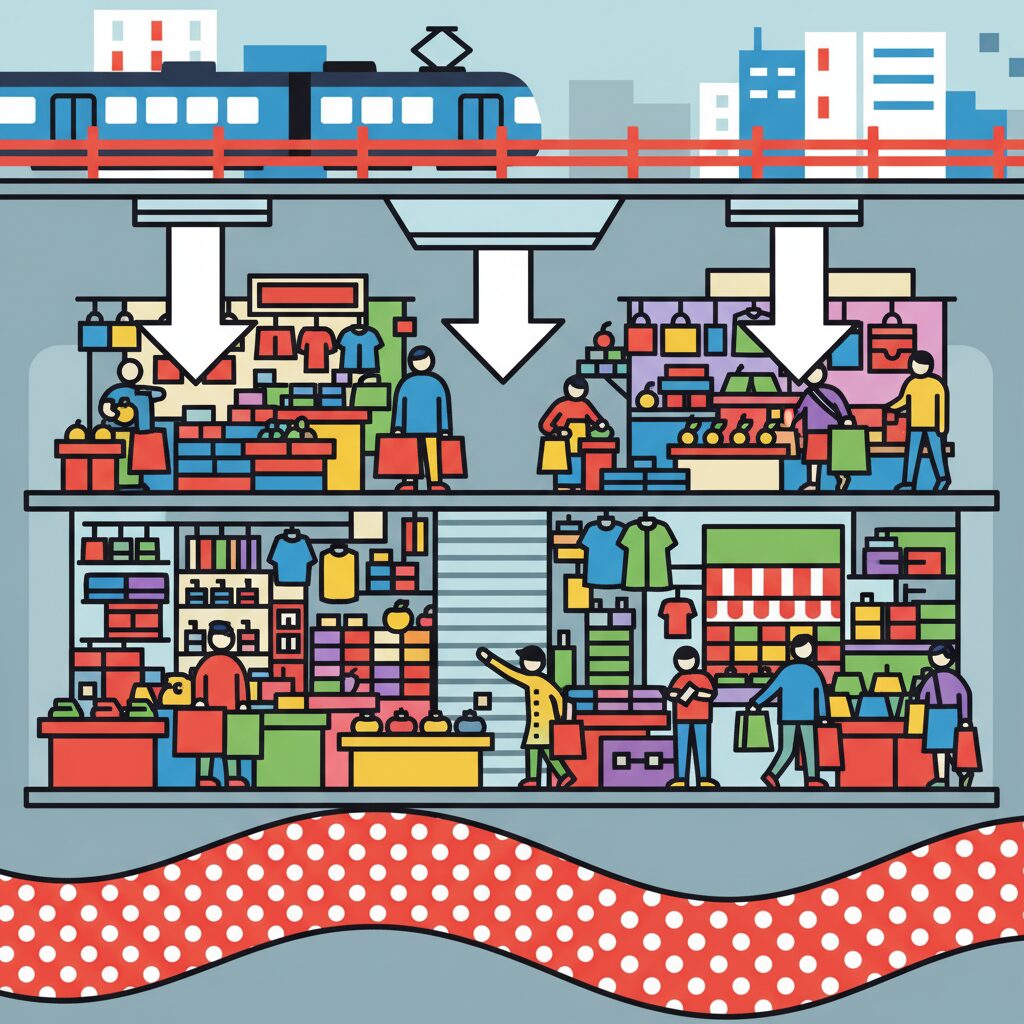
Step off the train at Umeda Station around seven-thirty on a Tuesday night. Descend into the basement of the Hankyu department store, a sprawling food hall locals call the depachika. During the day, this is a cathedral of cuisine. Gleaming glass cases display jewel-like cakes, perfectly marbled beef, and bento boxes so beautiful they could be art installations. The air is calm, filled with the polite murmurs of shoppers and the gentle calls of vendors. But right now, the atmosphere is different. There’s a current in the air, a low hum of anticipation. People aren’t just browsing anymore. They’re circling. They’re hovering. They’re waiting. Then, a staff member emerges from behind a counter, holding a small red sticker gun. In an instant, a polite but determined crowd converges on a display of gourmet salads, and the quiet food hall transforms into a strategic arena. This is the waribiki rush, Osaka’s nightly ritual of discount hunting. For a foreigner, it can look like chaos, a baffling frenzy over a few hundred yen. But for the people of Osaka, it’s a game, a skill, and a deeply ingrained part of the city’s identity. It’s not just about saving money; it’s about winning the daily battle for value. To understand this ritual is to understand the pragmatic, sharp, and spirited heart of Osaka itself. This isn’t just shopping. It’s a performance, a strategy, and a window into the soul of a city that has always known the art of the deal.
The strategic precision of the waribiki rush finds a broader cultural echo in how local community engagement weaves together the spirited social fabric of Osaka.
The Depachika Transformation: From Luxury Showcase to Discount Arena
Stroll through the Hanshin or Takashimaya depachika during lunchtime, and you’ll encounter a realm of immaculate culinary artistry. The lighting is soft, designed to make the food radiate. Each piece of tempura is carefully arranged. Salads are tossed and presented in generous, colorful heaps. Fresh sashimi sparkles on ice, while the air is filled with the scents of baked bread, savory dashi, and sweet pastries. This is food as a luxurious experience. A single bento box, packed with seasonal delicacies, can easily exceed two thousand yen. It’s a place to pick up a special treat, a gift, or a high-end meal when you’re ready to splurge. Shoppers move slowly, savoring the craftsmanship behind each dish. The staff are impeccably polite, bowing and offering samples with quiet grace.
But as the clock nears closing time, usually eight o’clock, a transformation begins. The calm, leisurely mood fades, replaced by a tangible sense of urgency. The key players in this nightly scene take their places. First, the shoppers. These aren’t just weary commuters grabbing a quick snack. They are veterans, regulars who know the depachika’s layout by heart. You’ll spot well-dressed businesspeople, young students, and elderly grandmothers, all sharing a common goal. They move with practiced ease, their eyes scanning the counters not for what looks tempting, but for what’s abundant. A large, untouched tray of fried chicken at seven o’clock signals a promising deal. A scarce selection of sushi means you’re likely too late for a good bargain there.
Next come the staff. Their demeanor changes as well. Gentle sales pitches give way to focused efficiency. They start consolidating trays, preparing for the main event. Then one of them appears, armed with the tool that marks the game’s start: the roll of red stickers, the waribiki shiru. These stickers are the evening’s currency, displaying the magic numbers: 20% OFF, 30% OFF, and the prized 半額 (hangaku), 50% OFF. Once the first sticker is pressed onto a plastic lid, the transformation is complete. The luxury showcase has turned into a discount arena, and the game begins.
Decoding the Osaka Mindset: It’s Not ‘Kechi’, It’s ‘Shobai’
For many newcomers, particularly those from Tokyo or Western countries, the immediate reaction to this scene is often confusion, sometimes even a bit of judgment. “Are Osaka people just cheap?” It’s an easy conclusion, but it completely misses the point. In Japan, there’s a word, kechi, meaning stingy or miserly. It has a negative implication of someone who hoards money and refuses to spend it even when appropriate. What happens in the depachika isn’t kechi. It reflects a core Osaka value rooted in its history as a city of merchants: shobai, or business savvy.
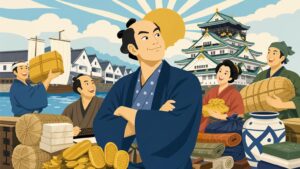
Osaka has been Japan’s commercial hub for centuries, a city built by merchants, traders, and entrepreneurs. The prevailing mindset isn’t about simply hoarding wealth; it’s about making smart decisions and getting the best possible value for your money. To an Osaka native, paying full price for a gourmet croquette that will be half-priced in forty-five minutes isn’t a sign of class; it’s a sign of poor business sense. The excitement comes from the deal itself. It’s a victory. Securing a premium sashimi platter—normally costing three thousand yen at six p.m.—for just fifteen hundred yen at seven forty-five is a story you’ll proudly share with your family at home. It’s a win. You haven’t merely bought dinner; you’ve successfully executed a strategy.
This marks a fundamental difference between Osaka and Tokyo. In Tokyo, there is often a greater emphasis on appearance and maintaining a certain image. Openly chasing discounts in a high-end department store might be seen by some as unrefined. The social cost of appearing ‘cheap’ may outweigh the financial benefit. In Osaka, that calculation is reversed. Practicality almost always outweighs pretense. The well-paid salaryman in a tailored suit will stand shoulder-to-shoulder with a university student, both waiting for the hangaku sticker on the same tonkatsu bento. There’s no shame in it; in fact, there’s quiet respect. It shows you’re sharp and understand how things work. People in line at the register will proudly exclaim to their friends, “Meccha ee kaimon dekita wa!” which means “I made a really great purchase!” It’s a boast, a badge of honor in this city of pragmatic shoppers.
The Unspoken Rules of the ‘Waribiki’ Game
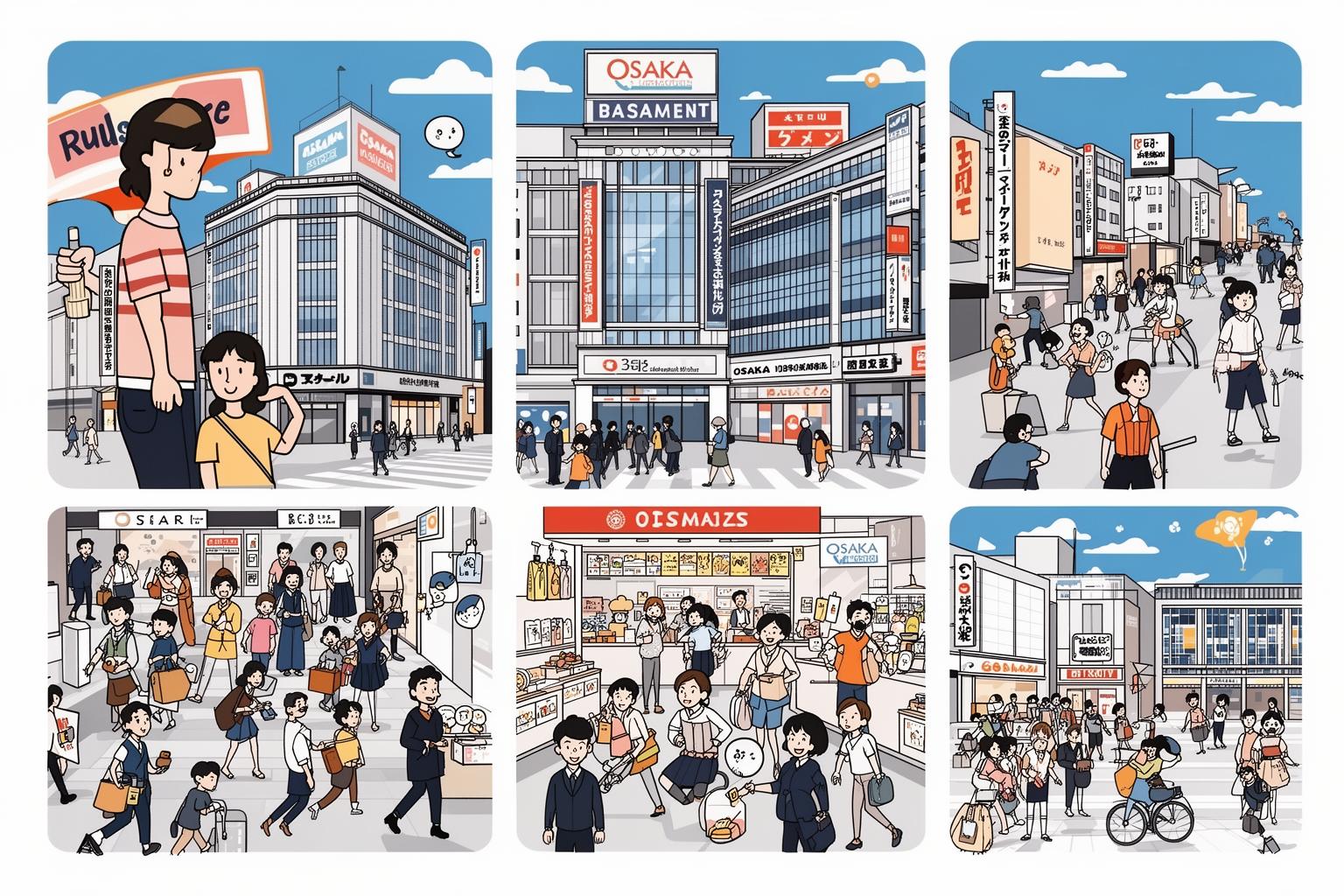
The evening rush is not a free-for-all. While it may appear to be a chaotic scramble, underneath lies a complex, unwritten code of conduct. It’s a dance of timing, observation, and subtle social cues. Mastering this ritual requires understanding its distinct phases.
Phase One: Reconnaissance (T-minus 60 to 90 minutes)
This is the scouting mission. Between six-thirty and seven, the pros begin their patrol. They stroll the aisles casually, but their gaze is sharp and analytical. They aren’t just window shopping; they are taking inventory. They identify their primary targets—maybe the roast beef from RF1, the Chinese dumplings from 551 Horai, or the fruit tarts from a fancy patisserie. Crucially, they assess stock levels. A mountain of unsold fried shrimp is a good sign. A single, lonely bento box is a lost cause; it will be snapped up long before the deep discounts arrive. During this phase, they also observe staff members, learning who applies the discount stickers and from which direction they usually appear. This intelligence is vital for the next phases.
Phase Two: The Loiter (T-minus 30 minutes)
As seven-thirty approaches, casual strolling turns into strategic loitering. Shoppers position themselves near their chosen counters, feigning interest in nearby displays of pickles or tea. This is the art of hovering. You must be close enough to act the moment the stickers show up, but not so close as to seem desperate or block others. The air thickens with unspoken communication. You might catch the eye of someone else clearly waiting for the same item. A silent acknowledgment passes between you. No hostility, just a mutual understanding that you are competitors in a shared endeavor. It’s a game of patience. Amateurs grow restless and leave. The veterans hold their ground, knowing their moment is near.
Phase Three: The First Wave (20% to 30% Off)
The first stickers test your nerve. A staff member appears and begins marking items down by twenty or thirty percent. This triggers the initial flurry of activity. A crowd, seemingly appearing out of nowhere, forms. Buyers at this stage are risk-averse. They have their hearts set on a particular item and won’t gamble on it lasting until deeper discounts arrive. They prioritize securing their desired dinner over maximizing savings. This is a valid strategy, especially for sought-after items like premium sushi or signature store dishes. The atmosphere remains orderly, but the first move has been made, and tension rises.
Phase Four: The ‘Hangaku’ Frenzy (50% Off and Beyond)
This is the main event. About fifteen to twenty minutes before closing, the final and most coveted stickers come out: 半額 (hangaku). Sometimes, for items that must be sold, “buy one, get one free” deals also appear. When staff start applying these half-price stickers, the strategic hovering erupts into swift, coordinated action. But here’s what foreigners often miss: it’s not a violent rush. This is not a Black Friday doorbuster. There is a clear etiquette. You don’t touch an item until the sticker is fully applied. You don’t snatch it from staff. Instead, you extend your hand, grasp your prize firmly but politely, and back away. Movements are fast, efficient, and surprisingly graceful—it’s a ballet of bargains. This phase is for the true players, those who thrive on risk and reward. They may have missed their first choice at thirty percent off, but walking away with a fantastic meal at half-price is the ultimate triumph.
The Aftermath: The Victor’s Spoils
Suddenly, checkout lines that were empty moments ago stretch ten people deep. Each person clutches their red-stickered treasures. A palpable sense of shared victory and relief fills the air. People glance into each other’s baskets, nodding in approval at impressive hauls. You might overhear a stranger say, “Oh, you got the eel bento! Great choice, I missed it!” The competition is over, and now everyone feels like part of the same winning team. This is the communal release after the tension of the hunt, a collective exhale of satisfaction before heading home to enjoy a cleverly acquired, delicious dinner.
What This Teaches You About Living in Osaka
Joining in—or even just watching—the waribiki rush offers a crash course in the Osaka mindset. It showcases some of the city’s most defining traits in a way that no travel guide ever could.
Pragmatism Rules
This whole event highlights Osaka’s deeply ingrained pragmatism. The reasoning is straightforward and undeniable: why pay more when you can pay less for the exact same item? It’s not about the abstract idea of luxury; it’s about the concrete value of the product. The salad at 7:45 PM is identical to the one sold at 6:00 PM. Its quality hasn’t changed, only the price. This practical, results-driven mentality runs through life in Osaka. In business, Osakans prefer deals that are simple and mutually advantageous over those mired in needless formalities. In everyday life, people value cleverness, efficiency, and good bargains—whether it’s a smart kitchen tool or a perfectly timed discount.
A Unique Sense of Community
Though Osaka is often seen as loud and overtly friendly, much of its community is based on shared experiences rather than direct conversation. The waribiki rush exemplifies this. You’re competing with others around you, yet you’re all in it together. You recognize the same faces night after night, learning their routines and favorite spots. A silent bond develops, a community shaped by the collective ritual of the hunt. This connection is founded on a shared understanding and common goal. It reveals a quieter, subtler side of Osaka’s social network—a feeling of belonging that arises from participating in the city’s rhythms.
Reading the Air, Osaka Style
The Japanese idea of kuuki wo yomu, or “reading the air,” is well known. Elsewhere in Japan, it usually means conforming, staying quiet, and maintaining group harmony. In Osaka, however, reading the air is a more active, tactical skill. It involves grasping the situation’s dynamics and knowing exactly when to act. The depachika at closing time serves as the perfect training ground. You must interpret other shoppers’ intentions, anticipate staff movements, and sense the ever-changing balance of supply and demand. Passivity won’t work. Being alert, decisive, and quick to move is essential. This proactive social awareness is crucial for navigating life in Osaka, a city that rewards those who are observant and fast on their feet.
A Starter’s Guide to Your First ‘Waribiki’ Hunt
Ready to test your skills at the game? Here’s a brief guide for your first adventure into the world of depachika discounts. It’s something every local should experience at least once.
Choose Your Battlefield
Not all depachika are the same. Each has its own personality. The basement of Hankyu Umeda is large, upscale, and might feel intimidating for beginners. Nearby, Hanshin Department Store’s depachika is well-known for its food, often more crowded, and has a more casual, hectic vibe. In the south, Takashimaya in Namba offers a vast and diverse range, while Kintetsu Department Store in Abeno Harukas is modern and spacious. Pick one that feels manageable and spend some time familiarizing yourself with its layout during a quieter part of the day.
Know Your Timings
Most department stores in Osaka close their main floors and food halls by 8:00 PM. The prime time for waribiki hunting is usually between 7:00 PM and 8:00 PM. Arrive around 6:45 PM to scope things out. The initial, smaller discounts tend to appear around 7:15 PM. Major half-price deals generally begin dropping from 7:30 PM to 7:50 PM. Don’t show up at 7:55 PM expecting to find anything but a few leftover fried items looking a bit sad.
Etiquette for the Arena
Keep in mind the unwritten rules. Maintain a respectful distance while waiting. Avoid crowding the staff. Allow them to place the discount sticker before you pick up the item. There’s no need to push or shove; a quick, decisive reach is enough. Once you’ve gathered your items, head promptly to the checkout line. A simple “arigatou gozaimasu” to the hardworking staff during this busy time is always appreciated. Be a graceful winner.
What to Target
For your first try, avoid the most competitive items. Raw fish and high-end sushi counters are usually reserved for seasoned shoppers. Instead, start with easier choices. Prepared salads, fried foods (agemono like tonkatsu and croquettes), and bakery items are great starting points. They often have abundant supply and offer significant discounts. Once you’ve sharpened your timing and skills, you can move on to more sought-after bento boxes and sashimi platters.
More Than Just a Discount: The Joy of the Game
Ultimately, the nightly waribiki rush in Osaka’s depachika represents much more than simply saving a few yen. It captures the city’s essence. It’s a dismissal of pretense in favor of practicality. It’s a celebration of value, a thrilling strategic game played out every evening. For the people of Osaka, it’s a small yet meaningful victory in their daily lives, a reminder that they are clever, resourceful, and living well.
To regard it as mere cheapness misses the entire point. It is a form of entertainment, a hunt where the prize is a delicious meal. It’s the satisfaction of knowing you played the game and emerged victorious. So next time you find yourself in an Osaka department store as night falls, don’t just pass through. Pause and observe. Even better, choose a target, take your position, and join the game. The thrill of walking home with a gourmet dinner snagged for half the price offers one of the most authentic Osaka experiences. It’s more than a meal; it’s a taste of the city itself.