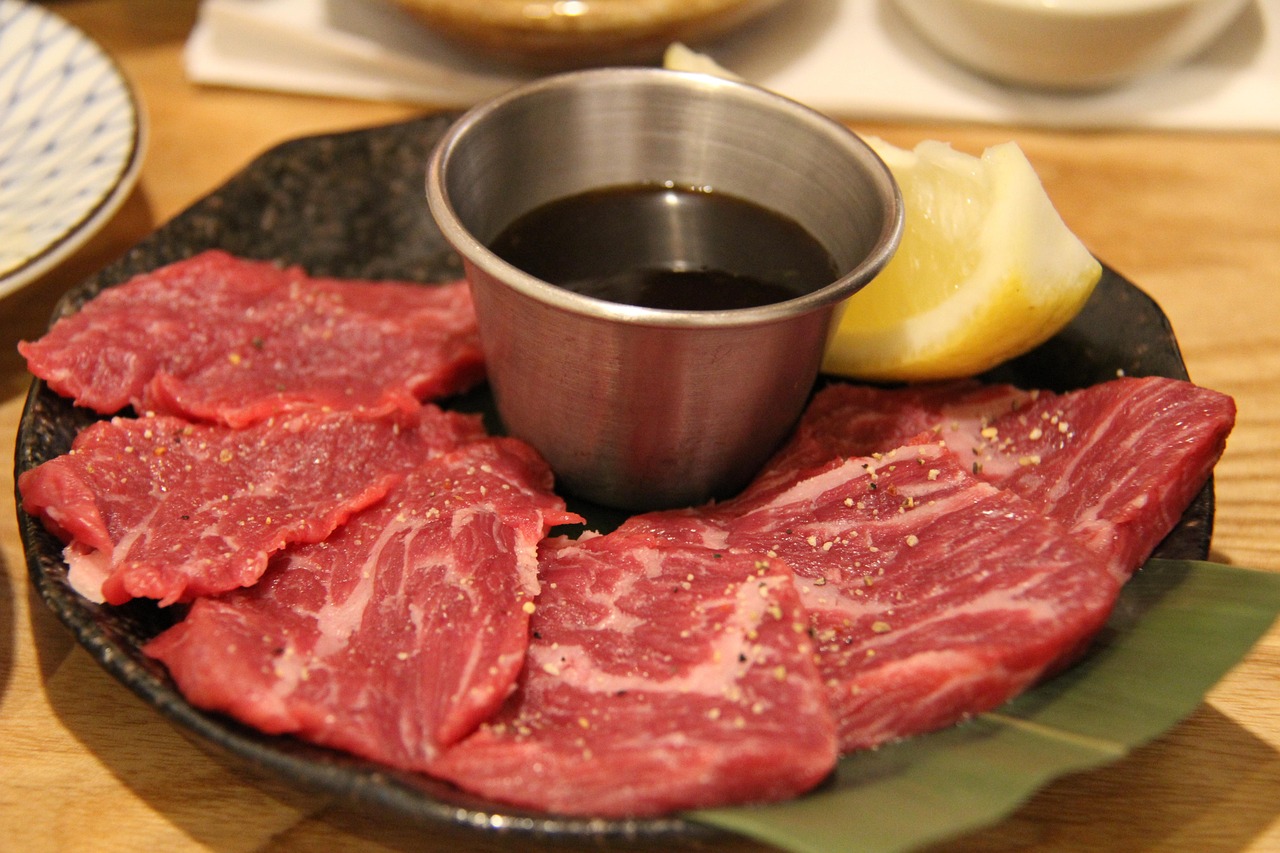
Step off the train at Tsuruhashi Station, and the city of Osaka changes in a heartbeat. The polished gleam of downtown department stores and the neon theatrics of Dotonbori melt away, replaced by something far more elemental, something you smell before you see. It’s the rich, intoxicating perfume of charcoal and searing beef, a haze that hangs in the air like a permanent culinary fog. This is the gateway to Osaka’s vibrant Korea Town, a labyrinthine universe of covered shopping arcades, bustling markets, and the undisputed epicenter of Japan’s most beloved carnivorous art form: yakiniku. But to label Tsuruhashi as merely a place for Korean barbecue is to tell only a fraction of the story. This is a pilgrimage site. It’s a living, breathing testament to the history of a community, a classroom for the dedicated butcher, and a paradise for anyone who believes that the true soul of a city can be found sizzling on a grill. Here, under the hum of fluorescent lights and the glow of red lanterns, the pursuit of the perfect piece of meat transcends a simple meal; it becomes an exploration. We’re not just talking about any beef. We’re talking about Wagyu, in all its marbled glory, served not just in familiar steaks but in a dazzling array of rare cuts—kisho bui—each with its own story, texture, and secret melody of flavor. This is a journey into the heart of Tsuruhashi’s butcher shops and legendary grills, a quest for the cuts you won’t find anywhere else, in a place where every bite tells a tale of tradition, innovation, and pure, unadulterated flavor.
To fully appreciate this culinary landscape, you’ll want to explore our complete guide to Tsuruhashi’s authentic yakiniku scene.
The Alleys of Appetite: First Steps into a Sensory Maze
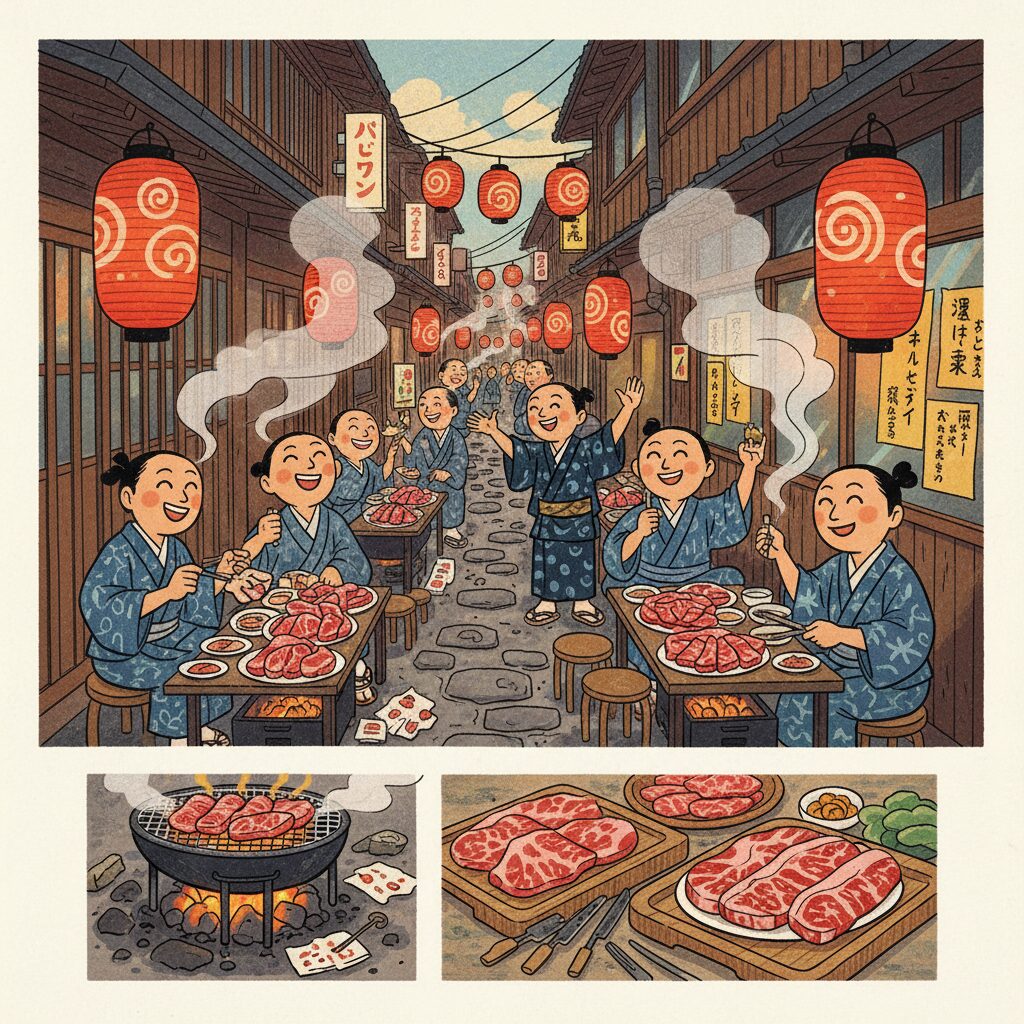
Your adventure begins the moment you pass through the turnstiles of Tsuruhashi Station, a distinctive hub where the JR Osaka Loop Line, the Kintetsu Nara Line, and the Sennichimae Subway Line intersect. There is no gradual introduction. You are instantly immersed in the Tsuruhashi Shopping Street, an expansive, covered market that feels less like a single place and more like a network of interwoven veins and capillaries, each buzzing with its own unique energy. The air is rich and savory, a complex blend of grilling meats, fermenting kimchi, simmering dashi, and sweet soy. It’s a scent that clings to your clothes and stirs a primal hunger. Forget wide, pristine boulevards; here, the pathways are narrow, the shopfronts tightly packed, and the ceiling a chaotic web of wiring, pipes, and signs inscribed in both Japanese and Korean. The soundscape is equally dense: the rhythmic clatter of knives on wooden blocks, the sizzle of fat hitting hot coals, the lively shouts of vendors selling their goods, and the constant murmur of conversations in a mixture of Japanese and Korean. This isn’t a curated tourist attraction; it’s a living, vital organ of the city, and its raw, unfiltered authenticity is exactly what makes it so compelling. You’ll find yourself sharing the narrow alleys with locals pulling shopping carts, chefs on their daily errands, and fellow travelers with wide, curious eyes. To navigate Tsuruhashi is to surrender to the flow, letting your nose lead you past stalls piled high with vibrant red kimchi, shops offering colorful jeogori dresses, and displays of exotic Korean pantry essentials. Getting a little lost isn’t a risk; it’s an essential part of the journey, as every wrong turn uncovers another hidden treasure, another enticing aroma, another piece of the neighborhood’s intricate mosaic.
The Butcher’s Altar: Where Wagyu Becomes Art
While the entire market is a sensory delight, the true essence of Tsuruhashi for the meat lover resides within its revered butcher shops, the seinikuten. These are far from typical supermarket meat counters—they are sanctuaries of beef, immaculate showcases where Wagyu is presented with the care reserved for fine jewelry. Behind polished glass cases, you’ll find stunning slabs of beef, their rich ruby flesh intricately veined with delicate threads of pure white fat. This is the renowned shimofuri, or marbling, that grants Wagyu its legendary reputation, but in Tsuruhashi, the lesson runs even deeper. The butchers here are masters, artisans who can dissect an entire cow with surgical precision, revealing dozens of unique cuts, many virtually unknown beyond Japan. These are the kisho bui, or “rare cuts,” and they are the very reason for the pilgrimage. Forget sirloin and ribeye alone; here, you’ll discover a whole new lexicon of flavor and texture. Look for the zabuton, or “cushion,” a cut from the chuck flap so richly marbled it nearly melts on the tongue, releasing waves of buttery sweetness. Then there’s the misuji, or top blade, an exceptionally tender cut distinguished by a thin cartilage line through its center, which, when grilled, turns into a delightful gelatinous texture. You might encounter the ichibo, a rump cap cut offering a robust beefiness perfectly balanced by a delicate fat cap. And finally, there is the realm of horumon, or offal, which Tsuruhashi has elevated from humble roots to a celebrated delicacy. The term is said to come from the Kansai dialect phrase horu mono, meaning “discarded things,” a reminder of its post-war origins when no part of the animal was wasted. Today, nothing is discarded. You’ll find pearly white folds of mino (first stomach), prized for its crunchy texture; rich, fatty rings of tecchan (large intestine); and the firm, iron-rich hatsu (heart). The butchers, often third- or fourth-generation owners, serve as guardians of this knowledge. Don’t hesitate to point and ask questions—even with limited Japanese, a simple “Osusume wa?” (What do you recommend?) often brings a proud smile and a carefully chosen cut that will redefine your beef experience. Many shops, like the famed Yamato-ya, not only sell raw meat to take home but also feature small, standing-room-only grilling stations right at the counter. This is the ultimate expression of freshness: you select your cut, they season it lightly with salt and pepper, and you grill it yourself over a tiny personal brazier, savoring the meat moments after it has been sliced.
The Ritual of the Grill: From Tachinomi to Yakiniku Royalty
The journey from butcher block to dining table is short but sacred in Tsuruhashi. The area is filled with yakiniku restaurants, ranging from no-frills standing bars to esteemed establishments that have tended their flames for decades. The choice of experience will shape your adventure. For a quick, immersive, and genuinely local taste, the tachinomi (standing bar) yakiniku is essential. These are small, often cramped spots where you stand at a counter, order small plates of meat for a few hundred yen, and grill them yourself on a tiny grill. It’s a fast-paced, democratic way to eat, letting you sample a broad variety of cuts without committing to a full meal. You’ll be shoulder-to-shoulder with local workers grabbing a bite on their way home, sharing smoky air and communal joy. This is the place to be adventurous—trying a skewer of heart or a few slices of a prized cut spotted at the butcher. For a more relaxed and traditional experience, enter one of the classic sit-down yakiniku restaurants. Once the door slides open, the outside world melts away. The atmosphere is dense with smoke, noise, and laughter. The decor is typically simple, even old-fashioned, with wood-paneled walls darkened by years of smoke, peeling posters, and the low hum of overworked ventilation. This is the stage for yakiniku. Each table has its own grill, either a charcoal brazier built into the table or a modern gas model. The menu can be overwhelming, often listing cuts in Japanese. The smartest choice for a first-timer is to order a moriawase, a chef-curated assorted platter. This typically offers a range of flavors and textures, from lean akami (red meat) to richly fatty cuts and possibly some horumon. The ritual begins when the platter arrives. Using chopsticks, you place a piece of meat on the hot grill. The sizzle is immediate, a sharp, satisfying sound that signals the magic’s onset. You must stay attentive—high-quality Wagyu, especially marbled cuts, cooks quickly. Just a few seconds per side usually yields a perfect medium-rare, with fat rendered to a glossy sheen and the surface beautifully caramelized. Then comes the choice: tare (sauce) or shio (salt). Many restaurants ask your preference when you order. Salt is favored by purists, allowing the beef’s natural flavors to shine, often accompanied by lemon wedges or wasabi. Tare, a secret blend of soy sauce, mirin, sake, sugar, and other ingredients, adds a sweet and savory glaze that deepens the meat’s richness. There’s no right answer—the joy is in trying both. Pair your meal with a cold mug of Japanese beer, a glass of refreshing makgeolli (Korean rice wine), and essential side dishes like spicy kimchi, seasoned namul vegetables, and a bowl of pristine white rice, the perfect canvas for the grilled beef. Eating yakiniku in Tsuruhashi is never a solitary act—it is a communal, interactive, and joyous celebration of food and fire.
A Tapestry Woven with History and Flavor
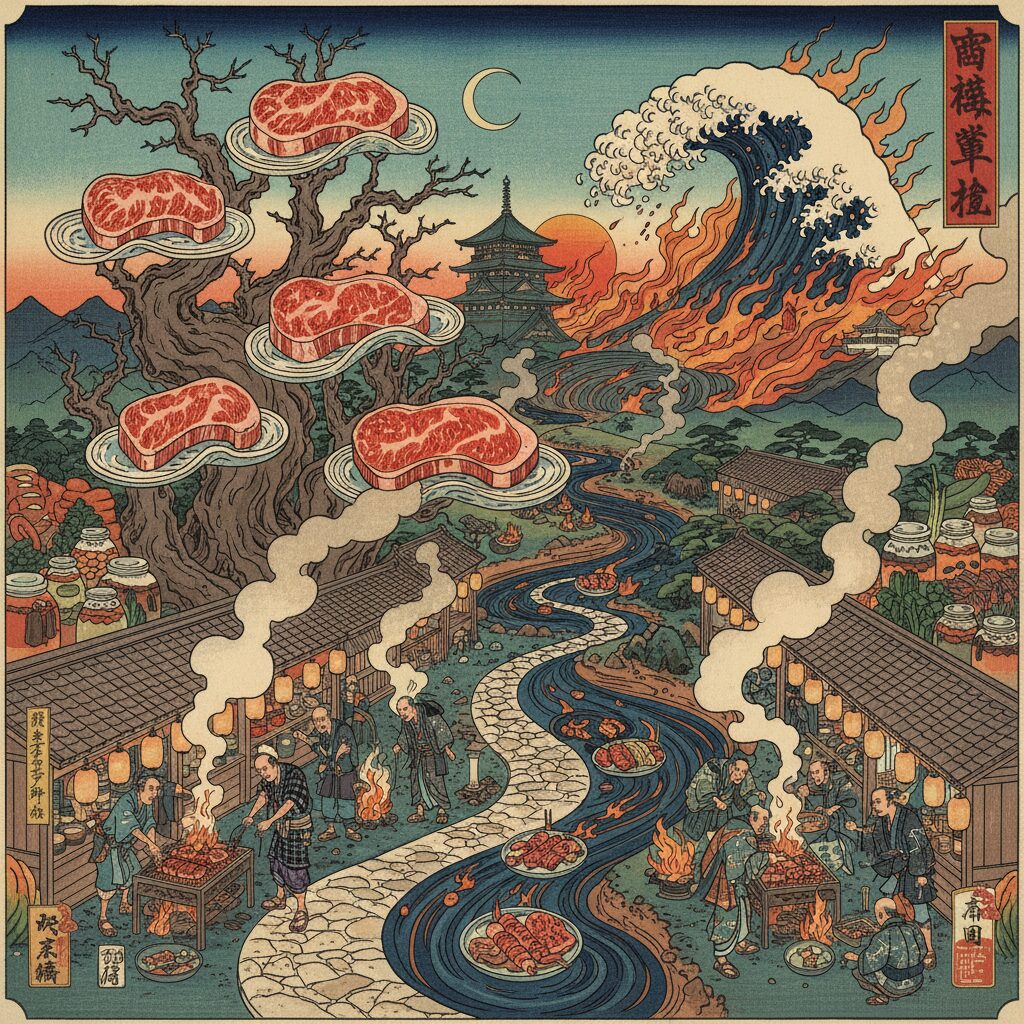
To truly appreciate Tsuruhashi’s culinary scene, one must first understand its history. The neighborhood’s identity is deeply intertwined with the Zainichi Korean community, ethnic Koreans who have lived in Japan for generations. In the years after World War II, this area, located next to what was then a large black market, became a center for this community. Out of hardship and resourcefulness, the modern culture of yakiniku and horumon emerged. During times of scarcity, the Korean community took the less-desirable cuts of meat and offal—the “horu mono”—and, using their grilling and seasoning traditions, transformed them into something flavorful and sought after. They introduced the concept of grilling meat at the table, a communal way of eating that quickly won over food-loving Osakans. This is why Tsuruhashi stands apart from other parts of Japan. It is a place where two cultures have not only coexisted but merged to create something entirely new and unique. The yakiniku now regarded as a quintessential Japanese dish has its roots firmly anchored in this neighborhood—a delicious legacy of the Zainichi Korean community’s resilience and culinary ingenuity. As you stroll through the market, this history is tangible. You see it in the signs written in both Hangul and Kanji, hear it in the mix of languages, and taste it in every bite of expertly seasoned kimchi and perfectly grilled beef. The smoke filling the air is more than cooking fumes; it carries the enduring spirit of generations who built this community, transforming necessity into a cherished art. This background adds profound depth to the experience. You are not merely a consumer; you are a witness to living history, engaging in a tradition that tells a compelling story of migration, adaptation, and the universal language of good food. This awareness turns a simple meal into an act of cultural appreciation, enriching every savory bite.
Practical Wisdom for the Wayward Carnivore
Exploring the vibrant chaos of Tsuruhashi for the first time can be thrilling, and a few tips will help you navigate it like a local. First and foremost, dress appropriately. The rich smoke from numerous grills will cling to your clothes and hair. Opt for casual, washable attire that you don’t mind smelling like barbecue for the rest of the day. Consider it a badge of honor, a mark of a successful culinary adventure. Second, carry cash. Although Japan is becoming more card-friendly, Tsuruhashi’s heart beats to an older rhythm. Many small butcher shops, standing bars, and market stalls accept cash only. Having enough yen ensures you won’t miss out on an impromptu skewer or a bag of homemade kimchi. Timing is crucial as well. Market shops typically open from mid-morning, making it ideal for a daytime stroll. Yet, Tsuruhashi’s true spirit awakens in the late afternoon when the dinner grills are fired up. The energy intensifies through the evening, peaking between 6 and 9 PM. Weekdays tend to be less crowded than weekends, offering a somewhat more relaxed (though still lively) atmosphere. Don’t hesitate to wander without a set plan. While it’s good to have a few well-known restaurants in mind, the greatest pleasure in Tsuruhashi lies in discovery. Follow your nose down a narrow alley, peek into a steamy doorway, and try a spot bustling with locals. The most unforgettable meals often come from the places you find by chance. Lastly, embrace the language barrier. Fluency in Japanese isn’t necessary. A smile, a point, and a few key phrases like “Sumimasen” (Excuse me), “Arigato” (Thank you), and “Oishii!” (Delicious!) will take you far. The people of Tsuruhashi are passionate about their food and usually happy to share it with anyone who shows genuine interest.
The Lingering Taste of Tsuruhashi
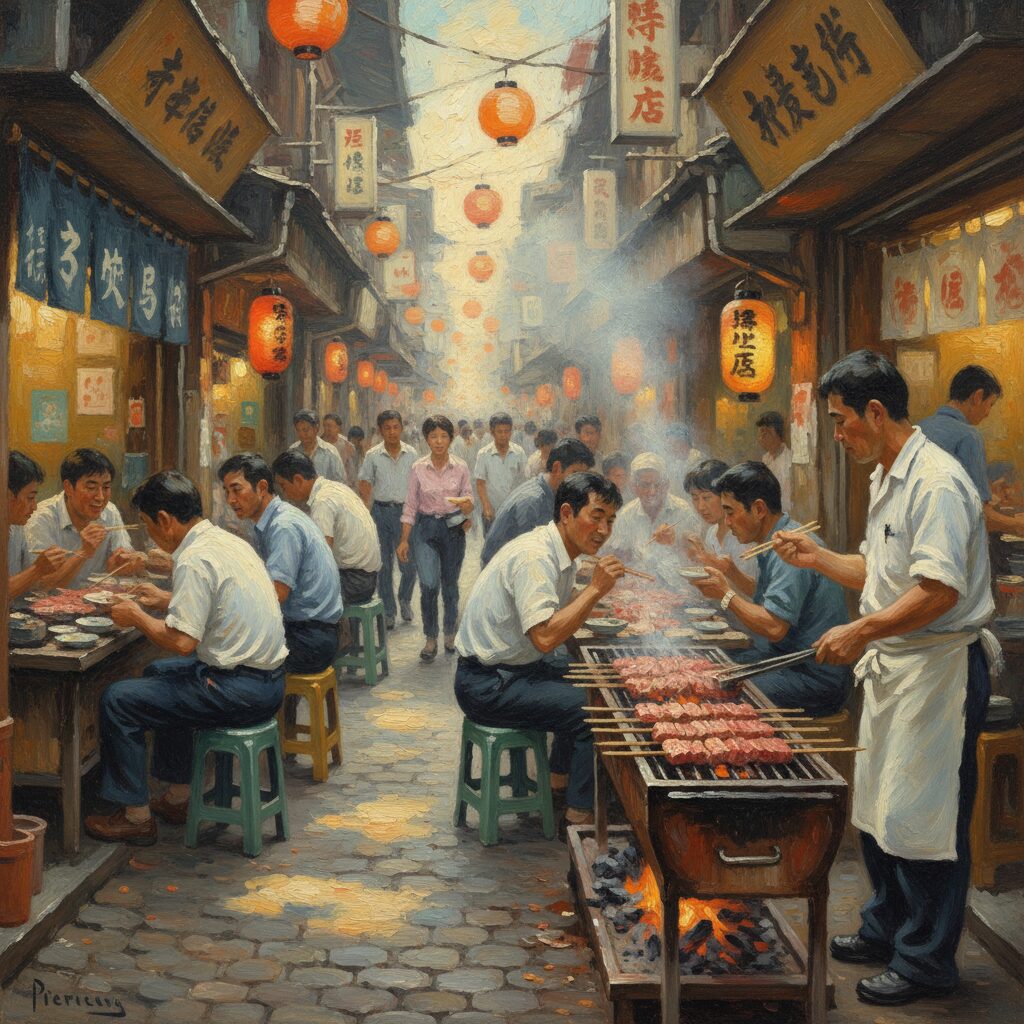
A trip to Tsuruhashi is a full sensory journey, one that lingers long after you’ve boarded the train to depart. The taste of perfectly seared Wagyu fat, the sharp bite of aged kimchi, the smoky aroma you’ll carry for hours—these are the immediate keepsakes. Yet, the deeper impression is one of community and history, a place that beats with a fierce and proud identity. It serves as a reminder that the most thrilling culinary destinations are seldom the most polished or pristine. They are the places with grit, noise, a touch of chaos, and a great deal of soul. Tsuruhashi is more than a collection of restaurants; it’s a lively, interconnected ecosystem of butchers, chefs, vendors, and diners, all bonded by a shared passion for meat. It stands as proof that with skill and respect, even the simplest ingredients can be elevated to something sublime. So, when you visit Osaka, step off the beaten path. Set aside the guidebooks for one evening and follow the smoke. Dive into the delicious, bewildering, and utterly unforgettable maze of Tsuruhashi. Pull up a stool, stoke the flames, and get ready to discover not only the heart of yakiniku but a small piece of Osaka’s very soul.