
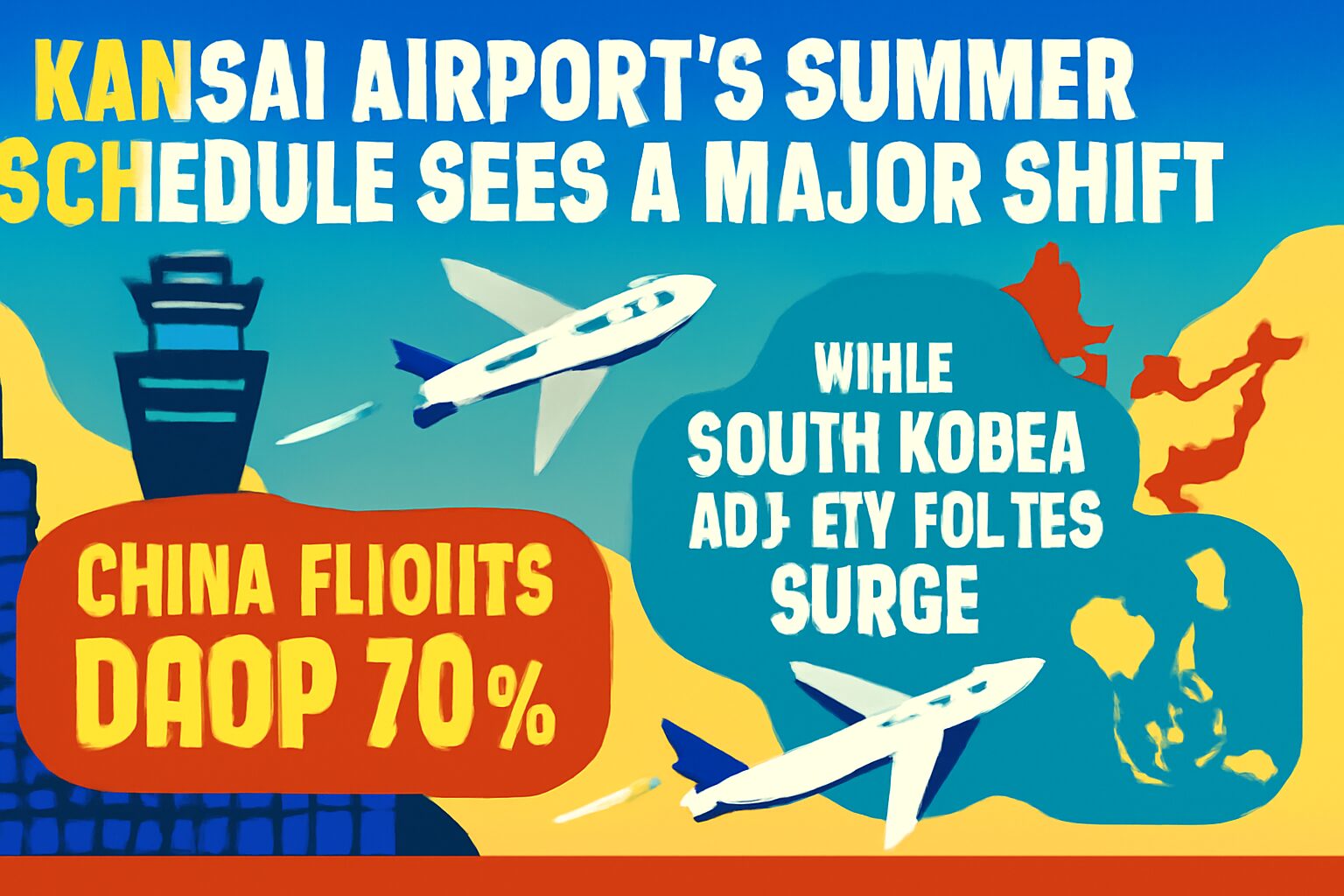
Kansai Airports has unveiled its 2024 summer schedule, revealing a significant transformation in the international travel landscape for the region. The schedule, effective from March 29 to October 24, shows an overall 17% decrease in weekly international passenger flights compared to the previous year, averaging 1,202.8 flights. However, this headline number masks a dramatic realignment of routes, with a sharp decline in China services being offset by a robust increase in flights from other Asian neighbors.
Key Changes in International Flights
The data released by Kansai Airports paints a clear picture of shifting travel trends. The most striking change is the sharp reduction in flights connecting to mainland China, while routes to South Korea, Taiwan, and Southeast Asia are experiencing remarkable growth.
The Dramatic Drop in China Routes
The primary driver behind the overall decrease in flight numbers is a staggering 70% reduction in services to and from China. Once a dominant force in Kansai’s international traffic, accounting for over a third of all flights, the China network now constitutes just 14% of the total international schedule. This decline reflects a slower-than-expected recovery in tourism between the two nations following the pandemic.
A Surge from South Korea, Taiwan, and Southeast Asia
In stark contrast, routes to South Korea have surged by an impressive 26%, now totaling an average of 468.6 weekly flights. This makes South Korea the most connected country to Kansai International Airport (KIX), with its flights now making up approximately 40% of all international services. This boom is largely credited to strong inbound demand from South Korean tourists, eager to take advantage of the weak Japanese yen.
Similarly, routes to Taiwan and various Southeast Asian countries have also seen a healthy increase, further diversifying the airport’s international network and underscoring a broader shift in the primary markets for tourism to the Kansai region.
Behind the Numbers: The Driving Forces of Change
This strategic shift isn’t accidental; it’s a reflection of current economic and travel industry dynamics.
The Power of the Weak Yen
The most significant factor fueling the growth from South Korea, Taiwan, and Southeast Asia is the historically weak yen. For travelers from these countries, Japan has become an exceptionally affordable and attractive destination for shopping, dining, and cultural experiences. Airlines are responding directly to this soaring demand by increasing flight frequency and capacity.
Shifting Geopolitical and Travel Landscapes
The slower recovery of the China market can be attributed to several factors, including ongoing economic conditions and a shift in outbound travel preferences among Chinese tourists. In response, Kansai Airport appears to be strategically diversifying its route portfolio to reduce its reliance on a single market, thereby building a more resilient and balanced network.
What This Means for Travelers and the Future of Kansai Travel
These changes will have a direct impact on travelers planning a trip to Osaka and the wider Kansai area.
Enhanced Accessibility for Asian Travelers
For visitors from South Korea, Taiwan, and Southeast Asia, the news is overwhelmingly positive. The increase in flights means more options, potentially more competitive airfares, and greater flexibility when planning trips to Osaka, Kyoto, and Kobe.
A Changing Visitor Profile
The shift in flight schedules signals a corresponding change in the demographics of international visitors to Kansai. While the region has always been popular with a diverse range of tourists, a stronger influx from South Korea and Southeast Asia is expected, potentially influencing local tourism services and offerings.
Future Outlook
While Middle Eastern routes remain at previous levels, they are currently suspended with no firm date for resumption. However, the airport’s overall strategy points towards strengthening connections with high-growth markets. This diversification not only mitigates risks associated with over-reliance on one country but also opens up Kansai to new and expanding tourism markets, ensuring its long-term appeal as a premier global destination.








