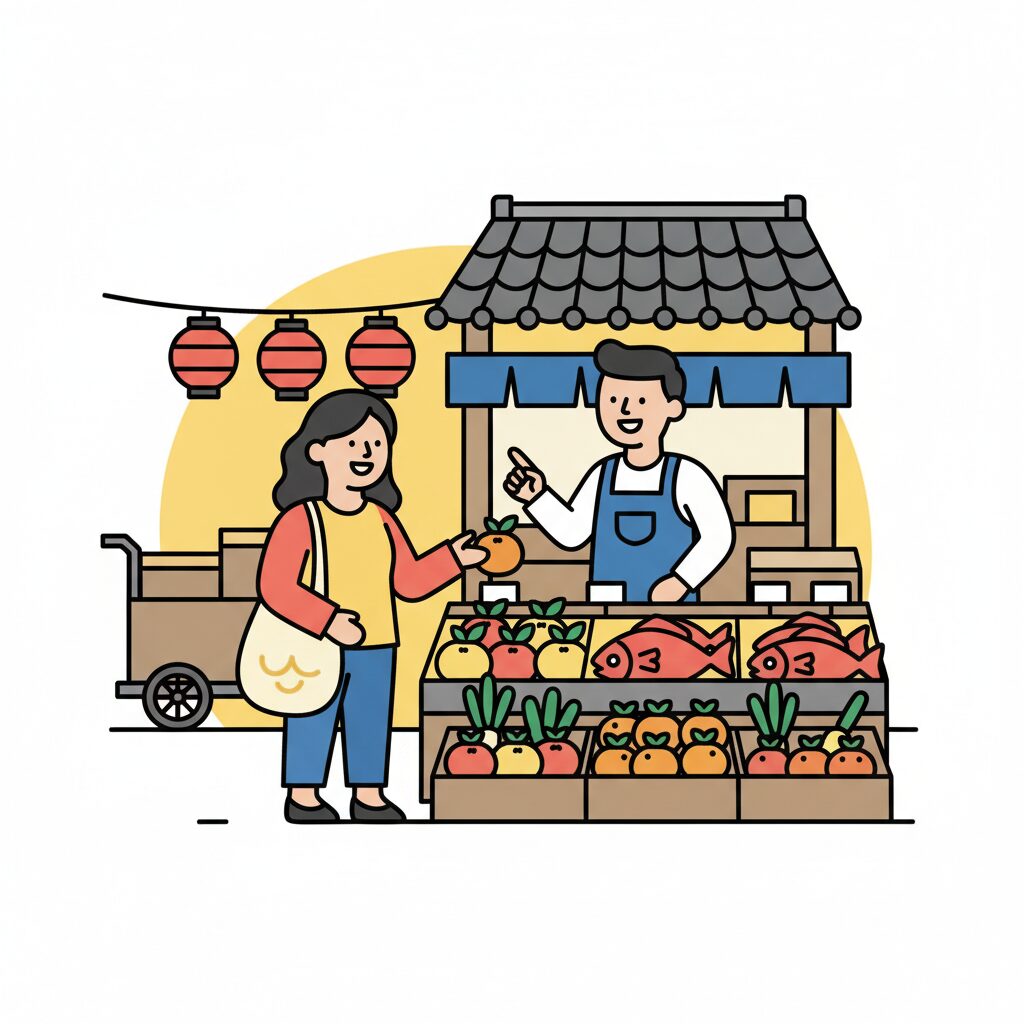
You just wanted to buy a daikon radish. You walked into a small, family-run vegetable stand tucked away in a shotengai, the covered shopping arcades that act as the city’s arteries. You picked a good one, firm and white. You walked to the counter. But the transaction didn’t end with you handing over a few coins and receiving your change. It began. The shop owner, a woman with a perm that could withstand a typhoon, looked you square in the eye. “Where are you from, son?” she asked, her voice a cheerful rasp. Before you could fully answer, she was asking what you were making for dinner, offering unsolicited but surprisingly useful advice on how to stew the daikon, and telling you about her nephew who once visited Canada, which she assumed was right next to your hometown in California. You walked away ten minutes later, daikon in hand, slightly bewildered but also strangely warmed. Welcome to Osaka. This isn’t an anomaly; it’s the operating system. In a world chasing efficiency, automated checkouts, and silent, seamless service, Osaka’s commercial culture often feels like a vibrant, talkative rebellion. For those accustomed to the polite, professional distance of Tokyo or the head-down, get-it-done pace of many Western cities, the constant chatter can be a shock. Is it nosy? Is it a sales tactic? Is it just… friendly? The answer is more complex and far more interesting. It’s a philosophy of business, a form of entertainment, and a cornerstone of community life all rolled into one. Understanding this art of conversation is key to understanding the heart of Osaka itself. It’s how a city of millions can feel like a village, and how a simple purchase can become a memorable human connection.
For those eager to delve deeper into how everyday deals in Osaka are woven into its vibrant social tapestry, exploring the city’s evening discount practices reveals another captivating layer of local charm.
The Unwritten Contract: Commerce as Conversation
In most modern cities, the contract between a customer and a shop is straightforward: you give money, they provide goods or services. The exchange is quick, clean, and anonymous. In Osaka, particularly in its traditional markets and independent stores, an unspoken clause is added to that contract. The transaction involves not only money but also words, laughter, and a touch of your personality. This is the heart of akinai, the Osakan term for business or trade. It’s a concept that extends beyond simple profit and loss; it’s based on building relationships, however brief. A successful akinai isn’t just about making a sale; it’s about creating a connection. This approach sharply contrasts with Tokyo. In Tokyo, excellent service is often characterized by its seamlessness, quiet anticipation of your needs, and flawless, unobtrusive execution. The clerk at a Tokyo department store embodies polite efficiency. They facilitate your purchase gracefully and then vanish. Trying to start a long, personal conversation would feel like an awkward interruption, breaking the flow. In Osaka, however, that same silence can be seen differently—cold and indifferent. For an Osaka merchant, engaging you in conversation is an essential part of the service. They’re not merely selling a fish; they’re welcoming you into their space, sharing part of their day, and recognizing you as a fellow human being who happens to be a customer. It’s a performance, a ritual, and a deeply embedded aspect of the city’s merchant culture, shaped over centuries as Japan’s commercial center.
Decoding the Dialogue: What Are They Really Asking?
To someone unfamiliar, the questions from an Osaka shopkeeper might seem like a rapid-fire interrogation. They come quickly, feel personal, and call for an immediate response. But these aren’t tests. They’re invitations, each with a distinct purpose, meant to open the door to a shared moment. Understanding them for what they truly are is the first step in mastering the art of conversation.
The Opening Salvo: “Where ya from?”
This is the classic icebreaker, the “Dokokara kitan?”. It’s the most common and possibly the most important question you’ll get. On the surface, it’s simple curiosity. But its role is much deeper. It’s a mental mapping exercise. The shopkeeper is trying to find a landmark in their mental map to connect with you. If you say you’re from America, they might mention a baseball player. If you say you’re from Thailand, they might recall a vacation they took in Bangkok. It doesn’t matter if the link is weak. The goal isn’t to have a detailed geopolitical discussion; it’s to create a single point of common ground. It means, “You are not a complete stranger to me. I have a hook to hang my perception of you on.” Your answer provides the thread the conversation will follow.
The Practical Probe: “What’re you making with that?”
The butcher, holding up a piece of pork, asks, “Kore, nani tsukurun?”. The fishmonger, wrapping a fillet of mackerel, wants to hear your plans for it. This isn’t just small talk; it’s a mixture of genuine interest and professional pride. These experts in their craft know the best way to cook that cut of meat or the ideal seasoning for that fish. By asking, they open the door to share their knowledge. This is their chance to offer value beyond the product. Replying with “I’m not sure yet” invites a flood of advice, recipes, and maybe even a gentle critique of your initial plan. It’s a transfer of knowledge, a small lesson from a master to a novice. It’s also their way to feel connected to your life, if only until dinnertime.
The Stylist’s Statement: “That’s nice, but this one’s better!”
You’re in a small clothing boutique, holding up a shirt you like. The owner jumps in. “Ah, sore mo ee kedo, anata ni wa kocchi no hou ga zettai niau de!” (“Oh, that one’s fine, but this one would definitely look better on you!”). In many cultures, this would feel like a shockingly aggressive sales tactic, almost insulting your taste. In Osaka, it’s an intimate, playful form of styling. They see their customers not as walking wallets, but as characters they can help shape. Their opinion is offered as a gift, a piece of professional expertise wrapped in blunt honesty. The subtext is, “I see you. I have an opinion about you. Let’s collaborate on this.” It’s interactive—they expect you to push back, defend your choice, or laugh and trust their judgment. It turns the solitary act of shopping into a dynamic, often hilarious joint venture.
The Art of the Comeback: Boke and Tsukkomi in the Wild
To truly flourish in these interactions, it’s helpful to grasp the comedic rhythm that forms the foundation of much of Osaka’s communication. This rhythm belongs to manzai, a traditional style of stand-up comedy featuring two performers: the boke and the tsukkomi.
Boke (The Fool): Spotting the Absurd
The boke is the humorous character, the one who says something absurd, exaggerated, or simply wrong. The shopkeeper often plays this part. They might tell you their tomatoes are so sweet they’re basically candy. Or claim that the jacket you’re trying on will make you look ten years younger. They may even dramatically sigh, saying if you don’t buy this last piece of tuna, their family will starve. These aren’t lies; they’re elements of comedic performance. They intentionally set up a conversational volley, waiting for you to return the spike.
Tsukkomi (The Straight Man): Your Part in the Play
As the customer, your role is to be the tsukkomi. You are the straight man who points out the absurdity of the boke’s remarks—the spike. When the shopkeeper says the tomatoes are candy, you shouldn’t just nod silently. You offer the tsukkomi. A simple “Uso ya de!” (“No way!”) or “Honma kai na?” (“Really, now?”) with a grin works perfectly. If they claim the jacket will make you look ten years younger, you can glance in the mirror, stroke your chin thoughtfully, and reply, “Only ten? I was hoping for twenty.” This completes the comedic exchange. You’ve shown you understand the game and are happy to play along. No need to be a professional comedian—the effort is what matters. A laugh, a shake of the head, or an expression of mock disbelief are all valid tsukkomi moves. The worst response is a flat, literal one—that’s like letting the volleyball fall to the floor. The game ends, the connection fades, and the interaction becomes purely transactional. The magic is lost.
Navigating the Personal: When “Friendly” Feels Forward
There will be moments when the conversation unexpectedly shifts into surprisingly personal territory. Questions about your job, salary, marital status, or why you’re not married yet may arise quite frequently. For many foreigners, this can feel like a significant invasion of privacy. It’s important to understand the intention behind these questions. In the community-focused mindset of an Osaka neighborhood, these details help to define you as a fully realized person. A person’s life isn’t a private, sealed-off matter; it’s a series of stories and connections. By asking about your family or work, they’re attempting to place you within a human context. They want to move you from being just a “foreign customer” to “Taro-san who lives down the street and is still single.” It’s a shortcut to familiarity. That said, you are under no obligation to share sensitive details. There are tactful ways to respond. You can be vague—if asked about your job, saying “I work in IT” is perfectly fine. You can also deflect with humor; if asked why you’re not married, you might laugh and say, “I’m too busy eating all of Osaka’s delicious food!” Another strategy is to turn the question around: “And what about your children? Are they married?” Most people enjoy talking about themselves. The key is to realize that these questions almost never come from ill intent. They are a clumsy but sincere effort to connect.
Where to Practice: Finding Your Stage
This vibrant culture of conversation isn’t found everywhere. You won’t encounter it in the sterile aisles of a supermarket or the quiet corridors of a luxury brand store. You have to go to the right spots—the natural environments where this behavior flourishes.
The Shotengai: The Premier League of Small Talk
Covered shopping arcades, or shotengai, are the epicenters of this culture. Places like Tenjinbashisuji, Japan’s longest shopping street, or the more compact and chaotic Janjan Yokocho, serve as living stages of akinai. Here, generations-old fishmongers, lively green grocers, and quirky clothing shops all blend into a symphony of sales pitches and friendly chatter. Simply strolling through a shotengai is an immersive experience. To join in, just stop at a stall that piques your interest. The conversation will probably reach you before you even ask for the price.
Local Shops and Standing Bars (Tachinomiya)
Venture off the main streets and into residential neighborhoods, and you’ll discover smaller, independent shops. The local butcher, the corner bakery, the tiny tofu maker—these are the places where the strongest bonds are formed. The same goes for tachinomiya, or standing bars. Often tiny and packed elbow-to-elbow, these spots thrive on conversation with the bar master (taisho) and fellow drinkers. This interaction isn’t just common; it’s the main attraction. It’s a quick immersion into the local dialect and the everyday lives of ordinary Osakans.
Where It Doesn’t Happen (Usually)
It’s just as important to recognize where not to attempt this. The smiling clerk at a convenience store follows a strict script. Staff at Uniqlo focus on folding clothes with military precision. The barista at Starbucks is focused on navigating a complex custom order. These settings are designed for modern, standardized efficiency. Although the staff are courteous, trying to spark classic Osaka-style banter with them will likely cause confusion. Context is key. The art of conversation belongs to places with a face, a name, and a history.
The Payoff: More Than Just a Bargain
So why go through all this trouble? Why not just head to the supermarket, pick up your daikon, and use the self-checkout? Because you’d miss out on what makes living in this city truly special. Taking part in this culture of conversation brings both tangible and intangible rewards.
Becoming a “Regular” (Jouren-san)
When you habitually shop at the same places and engage in the conversational dance, you move from being just a customer (okyaku-san) to a regular (jouren-san). This is a valued status. As a jouren-san, the shopkeeper knows your name and your preferences. They might set aside the best piece of tuna just for you because they know you’re coming. They might throw in a few extra potatoes as omake (a small bonus). They’ll share local gossip and look out for you. You become part of their daily routine, and they become part of yours. It’s a bond of mutual loyalty and affection that no point card or corporate loyalty program can ever replace.
Weaving Yourself into the City’s Fabric
On a deeper level, these everyday interactions are how you truly become part of the city. They are the threads that help you weave yourself into the local fabric. Each conversation, no matter how brief, is a stitch connecting you to the community. You learn the flow of the language, grasp the local sense of humor, and begin to see the city not as a vast, impersonal metropolis, but as a network of interconnected villages. This is the genuine reward. The daikon radish was just your ticket of entry. The real gain was a sense of belonging. In Osaka, you discover that the most valuable exchanges are those that have nothing to do with money at all.