
The walls of my Osaka apartment are thin. I know my neighbor’s favorite TV drama, the one with the dramatic musical cues that crescendo every evening around nine. I know the precise, rhythmic clatter of the train on the Hankyu line, a sound that has become the metronome of my days. And I know, with intimate familiarity, every crack in the plaster above my desk. This is the reality of remote work in a compact Japanese city. Your home becomes your office, your canteen, your entire world, shrinking until you can feel the pressure of it. The need for a ‘third place’—that sacred space between the domestic and the professional—isn’t a luxury here; it’s a lifeline. For many, the immediate answer is a sleek, modern café, a beacon of globalized familiarity with reliable Wi-Fi and oat milk lattes. But in Osaka, to default to the chain is to miss the point entirely. It’s to walk past a hundred living rooms, each with its door slightly ajar, and choose the sterile comfort of a waiting room instead. We’re not looking for a temporary desk. We’re hunting for a neighborhood ‘kissaten’, the old-school Japanese coffee shop that holds a piece of the city’s soul. Finding yours is more than just a logistical exercise; it’s a rite of passage, a deep dive into the true, unvarnished rhythm of Osakan life.
Embracing Osaka’s vibrant rhythm often means looking beyond the familiar neighborhood kissaten to appreciate the city’s unique character, so you might enjoy decoding the Osaka code for a fresh, humorous take on its urban spirit.
The Anatomy of Authenticity: Kissaten vs. Café
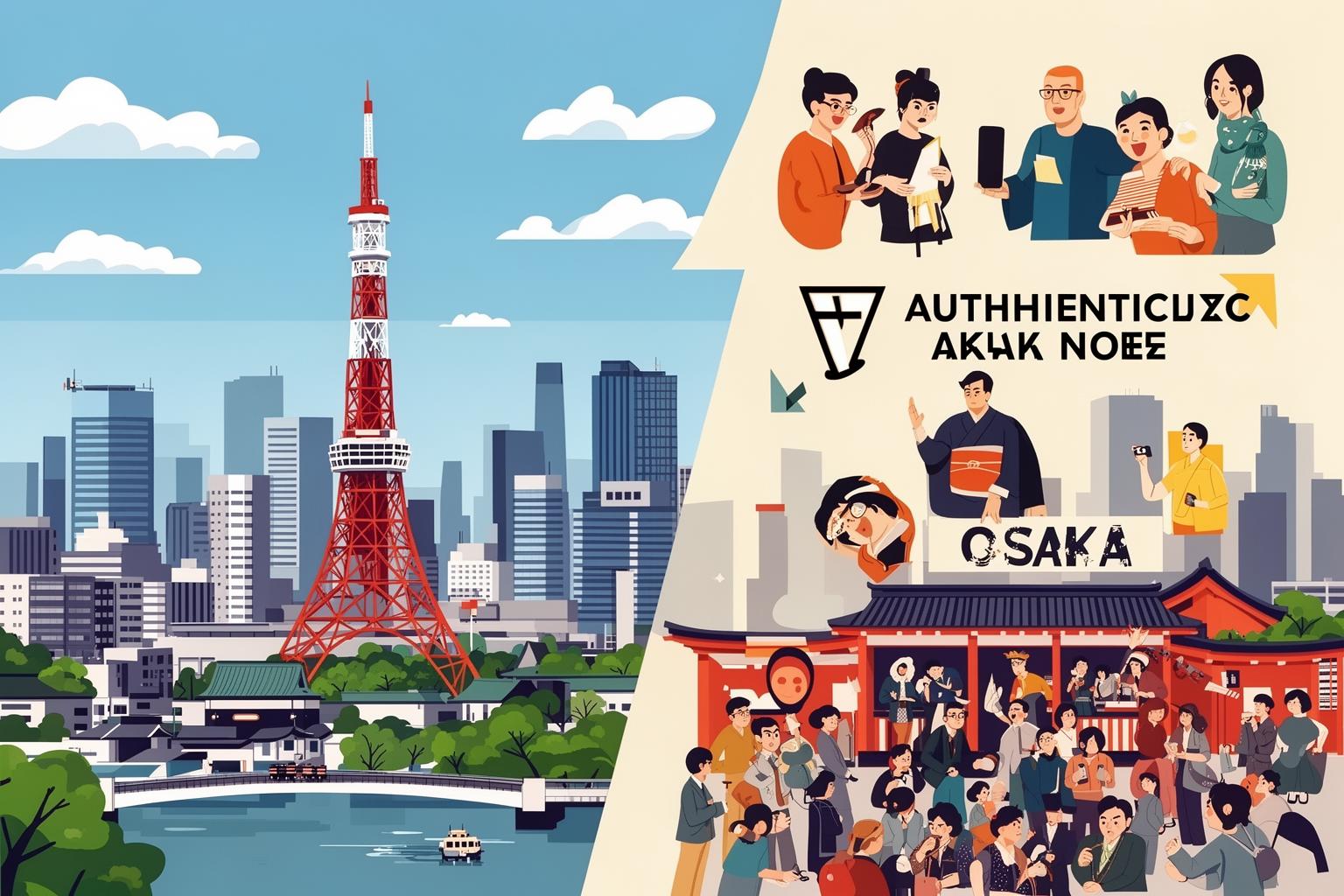
Before we even start the search, let’s set a clear boundary. A modern café and a classic kissaten are two completely different entities, born from distinct eras and fulfilling different needs. The former stems from global efficiency. It’s a non-place, crafted to be the same from Shinjuku to Seattle. The lighting is bright and uniform, designed for Instagram. The music is a carefully selected playlist of inoffensive indie pop. The transaction is quick, straightforward, and anonymous. You order, you pay, you receive. It’s a space for transient productivity, and there is a time and place for its predictable comfort.
But a kissaten… a kissaten is a place rich with history. Enter one and the first thing that strikes you isn’t the aroma of freshly ground single-origin beans but a complex blend of scents: the faint, lingering ghost of countless cigarettes from decades ago, the dusty sweetness of old wood and worn velvet, the sharp tang of coffee roasting from a siphon brewer that looks like a chemistry set. The lighting isn’t planned; it’s accumulated, filtering through grimy windows or glowing from ornate, tulip-shaped lamps that cast a warm, nicotine-yellow light. The chairs are plush, deep, often bearing the marks of numerous conversations. The silence isn’t empty; it’s a comfortable, weighted quiet, broken only by the rustle of a newspaper, the soft clink of a ceramic cup on its saucer, and the low, steady hum of a daytime television show playing on a small CRT television in the corner.
This distinction is essential because it reflects a fundamental contrast between Osaka and, for example, Tokyo. Tokyo often feels like a city of curated perfection. Its public spaces, shops, and cafés are carefully designed, presenting a flawless, polished image to the world. Osaka, by contrast, is a city of lived experience. It prioritizes function over form, substance over style. An Osakan kissaten isn’t aiming to be a ‘concept.’ It simply is. It’s a practical, comfortable space that has developed over decades to serve its community. Its authenticity isn’t a marketing catchphrase; it’s the natural outcome of time, use, and an absence of pretension. Choosing the kissaten is choosing to connect with this unfiltered, pragmatic, and deeply human side of the city.
Reading the Room: The Unspoken Rules of the Third Place
So you’ve discovered a promising spot. It’s nestled down a side street, its name displayed in peeling gold leaf on a dark wooden sign. You slide open the door, a small bell announcing your arrival. Now what? This is where many foreigners hesitate. The space feels deeply local, like a private club you’ve accidentally wandered into. All eyes seem to be on you. This is your first challenge, and passing it means understanding a set of unspoken rules that guide these micro-communities.
The Master and the Joren
First, grasp the hierarchy. The person behind the counter is not a ‘barista’ or a ‘staff member’. They are the ‘Master’ (or ‘Mama-san’). They are the owner, the curator, the quiet center of this small world. Your relationship with them isn’t transactional; it’s relational. A simple, clear ‘Konnichiwa’ upon entering and ‘Gochisousama deshita’ when leaving are non-negotiable. But the real skill lies in quiet observation. The Master knows everyone. They are the keeper of the neighborhood’s rhythm. They know which regulars—the ‘joren’—take sugar, who reads the sports paper, and who comes to escape a crowded home for a moment of peace.
As a newcomer, your aim is not to disturb this rhythm. Find a seat, order simply, and remain a quiet presence at first. The Master’s attitude toward you is your guide. A curt nod is customary. But if, on your second or third visit, that nod comes with a flicker of recognition, or they bring your water without being asked, you’re on the right track. This isn’t the effusive, performative customer service of a department store. This is Osaka-style acknowledgment: direct, minimalist, and earned. It signals that you have been seen and accepted into the subtle background of the place.
The Currency of Time and Space
Here’s a common point of confusion: the laptop. Is it okay to work? The answer is a tricky ‘it depends.’ There’s no sign or written policy. You must learn to read the atmosphere. The biggest hint is whether other laptops are in use. If none are, think twice. Is the place small, with only a few tables? If so, occupying a seat for four hours with your MacBook is considered rude. A kissaten is not a co-working space. It’s a commercial venue where every seat represents potential income.
The unspoken agreement is this: you rent the space with your order. One 500-yen coffee doesn’t grant you a four-hour lease on a table during the busy lunch period. A good rule of thumb is to order something every ninety minutes to two hours. A coffee, then a slice of toast, then maybe a cream soda. This shows respect for the business’s commercial reality. The Osakan mindset is deeply rooted in a sense of ‘give and take’ and fairness. You provide the Master with your patronage, and they offer you a quiet place to work. Violating that unspoken understanding is a fast way to earn a cold reception on your next visit. If the Master starts clearing your table vigorously while you still have half a cup of coffee left, that’s your gentle, non-verbal hint to either order again or pack up.
The Sonic Landscape
Forget the hushed silence of a library. Kissaten are often filled with sound, but it’s a specific kind. The television is almost always on, usually tuned to a daytime talk show or the news. Old men will be engaged in loud, gruff conversations about the Hanshin Tigers baseball team. The Master might be chatting with a delivery person. This isn’t noise that should be silenced; it’s the ambient soundtrack of the community. Taking a Zoom call without headphones is a major faux pas. Your goal is to blend into the existing sonic landscape, not to overwrite it with your own noise. The people here aren’t trying to be quiet for you. They are living their lives. You are the guest in their space. This is a crucial difference from a chain café, where the environment is designed for the solo worker. Here, the solo worker must adapt to fit the environment.
Value, Not Price: The Philosophy of Morning Service
To grasp the essence of Osaka’s practical, no-nonsense nature, you need only look at the institution of ‘Morning Service‘, or simply ‘Morning’. From opening until about 11 a.m., ordering just a cup of coffee comes with a thick slice of toast (in Japan, ‘toast’ refers to a thick, fluffy slice of white bread), a hard-boiled egg, and sometimes a small salad or yogurt. The entire set often costs no more than the price of the coffee alone, or maybe 100 yen extra.
At first glance, it seems like an amazing deal. But it’s much more than that—it’s a philosophy. A Tokyoite might consider it a cheap breakfast, while an Osakan sees it as the embodiment of ‘kospa’ (cost performance) and a fundamental statement of value. The mindset is: ‘You’re starting your day with me, giving me your business, so it’s my duty to provide you with a proper, substantial start. It’s just common sense.’ There’s no artifice or marketing gimmick—just a straightforward, honest exchange. The coffee delivers caffeine, while the toast and egg provide fuel. It’s perfectly, beautifully functional.
This pragmatism permeates the entire kissaten experience. The menu isn’t a carefully curated list of artisan creations; it’s a reliable lineup of classics: ‘Blend Coffee’, ‘American Coffee’, ‘Cafe au Lait’. The food menu is similarly simple: ‘Toast’, ‘Mixed Sandwich’, ‘Neapolitan Spaghetti’, ‘Curry Rice’. These aren’t dishes meant to be photographed but to be eaten—providing comfort and sustenance consistently and without fuss. This focus on practical value over aesthetic appeal is one of Osaka’s defining traits. The city works. It might not always be pretty, but it gets the job done. The local kissaten perfectly reflects this ethos. It isn’t trying to impress you; it’s trying to serve you. And in that honest, straightforward mission, it achieves a kind of perfection that even the most stylish Tokyo cafe can’t match.
A Kissaten Typology: Finding Your Fit in the Urban Jungle
Not all kissaten are made alike. Your ideal third place will greatly depend on your neighborhood and personal preferences. Rather than relying on a ‘top five’ list that quickly becomes overcrowded, it’s more helpful to familiarize yourself with the various archetypes you might encounter.
The Station-Front Workhorse
Located near both major and minor train stations, these kissaten are often the busiest and typically the most laptop-friendly. They serve a transient clientele: salarymen passing time between meetings, shoppers taking a break, travelers waiting for their train. The turnover is rapid, and the Masters are generally accustomed to seeing people working on laptops. These cafes usually offer more seating and occasionally, if you’re lucky, a few electrical outlets. The atmosphere is less intimate and more anonymous, making it a suitable option if you feel hesitant about entering a well-established local spot. The downside is the constant flow of visitors and the higher noise level. It’s a practical space for focused work, though the sense of community might be lacking.
The Shotengai Living Room
Tucked away in the covered shopping arcades (‘shotengai’) winding through Osaka’s residential areas, these spots serve as true community hubs. Here, you’ll find the lifers, the ‘joren’ who have occupied the same seat every morning for decades. The Master is well-informed about everyone’s affairs, and the atmosphere is rich with gossip and laughter. Bringing a laptop into one of these places demands a high degree of social awareness—it can be perceived as antisocial and disruptive to the communal spirit. Your best approach is to become a regular first: visit for coffee on weekends, read a book, engage in brief, polite conversation when offered. Once recognized, quietly working on a laptop for an hour may be welcomed. This is the most rewarding type of kissaten to be embraced by, but it requires patience. It’s less about working and more about becoming part of a neighborhood family.
The Student-Adjacent Study Hall
Near universities in places such as Toyonaka or Suita, you’ll find kissaten with a distinct vibe. They tend to be larger, brighter, and more accepting of students who settle in for long study sessions. The Masters here are familiar with textbooks and notebooks, and laptops fit naturally into this setting. The atmosphere hums with quiet focus. You’ll often find more electrical outlets and sometimes—even if not reliably—Wi-Fi. This type strikes a nice balance, blending the authentic kissaten atmosphere with a more tolerant attitude toward extended stays and technology use. The coffee might be somewhat weaker and the chairs more worn, but the increased acceptance can be well worth the trade-off.
The Business District Bunker
In neighborhoods like Yodoyabashi, Honmachi, or Kitahama, kissaten reflect their business surroundings. These spots are typically dimly lit, often underground, featuring dark wood paneling and high-backed booths for privacy. They cater to quiet business meetings, salarymen unwinding with coffee and a cigarette, or those reading financial newspapers undisturbed. Laptops are usually welcomed here as tools of the trade. The mood is serious and subdued. You won’t be disturbed. This is an excellent choice for deep, focused work, though it can feel sterile and isolating. It’s a kissaten reduced to a purely functional role, lacking much of its communal warmth. It serves its purpose, but may not nourish your soul.
Your Third Place is a Mirror
Ultimately, the search for your ideal kissaten is a journey to discover yourself within the context of Osaka. The place you choose, and how you learn to exist within it, reveals much about your willingness to adapt and observe. It’s a process that pushes you beyond the easy, comfortable surface of expat life and invites you to engage with the city on its own terms. You will face challenges. You will sit surrounded by cigarette smoke. You will be frustrated by the lack of Wi-Fi. You might feel like an outsider. But if you persist, listen carefully, and respect the unspoken rules, you will be rewarded.
You’ll find more than just a place to work. You’ll receive the subtle nod from the Master that says, ‘I see you. You belong here.’ You’ll discover a quiet corner of the city that feels like your own. You’ll begin to understand the deep, pragmatic, and fiercely loyal heart of Osaka—not through a textbook or travel guide, but through the simple, daily ritual of a cup of coffee. Your third place won’t just be a space you occupy; it will become a place that shapes you, a small, velvet-seated, smoke-scented theater where you learn your role in the grand, chaotic, and beautiful play of life in Osaka.