Walk out of Higobashi Station and you’re hit with a wall of sound and purpose. The air thrums with the energy of business, of deadlines, of a city that never stops moving forward. This is the Osaka everyone knows—the powerhouse of commerce, the engine room of Kansai. But take a few steps east, cross a bridge onto the long, slender island of Nakanoshima, and the city’s frantic rhythm changes. The roar softens to a hum. The concrete canyon opens to a wide sky. This isn’t the Osaka of flashing neon or bustling shotengai. This is where the city comes to breathe. People often see Nakanoshima on a map, a sliver of land sandwiched between the Dojima and Tosahori rivers, and write it off as a formal district of museums, government buildings, and corporate headquarters. A place you visit, but don’t live in. And in a literal sense, they’re right; residential addresses are few. But they miss the point entirely. Nakanoshima is Osaka’s communal backyard, a shared living room where the unspoken rules of the city play out in the open. It’s a space that reveals more about the Osaka mindset than a thousand guidebooks, showing how a city of relentless pragmatists carves out moments of beauty and calm amidst the chaos. It’s where the city’s true pulse can be felt, not in the market stalls, but in the quiet spaces in between.
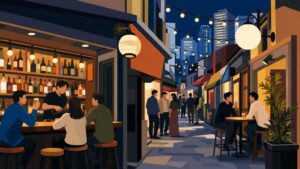
Tucked away from Nakanoshima’s quiet respite, other city areas reveal their own charm as visitors can experience the vibrant suburban soul along the Kita-Osaka Kyuko Line.
The Island as an Urban Lung
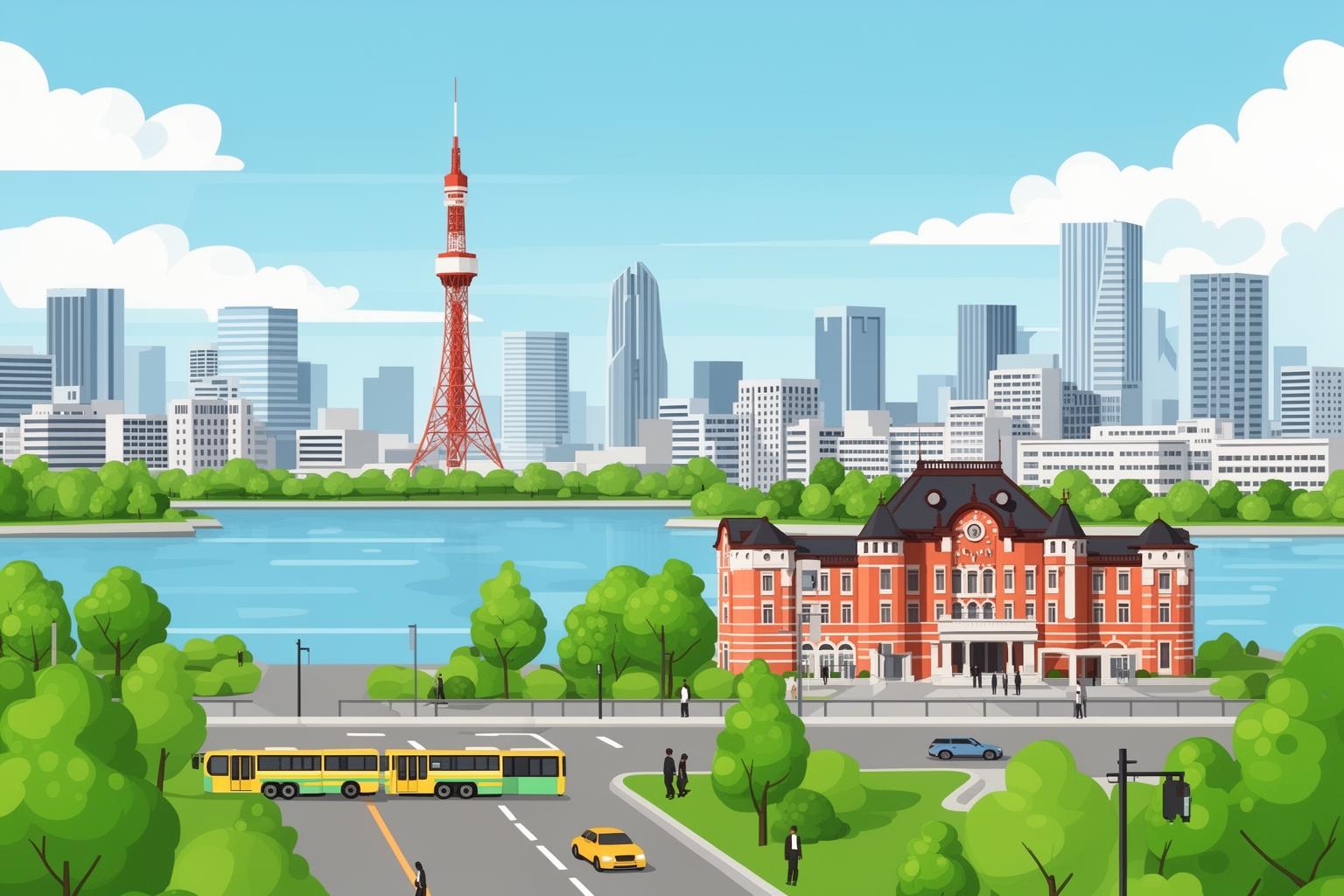
Tokyo boasts its grand imperial parks—vast green spaces that feel like carefully set-aside escapes from the bustling metropolis. You plan a visit to Yoyogi or Shinjuku Gyoen. Nakanoshima, however, is different. It’s not a destination for a planned day trip; it’s an artery you pass through that calms your heart rate without your awareness. It’s integrated, essential. The island serves as the city’s lung, drawing in stress from the adjacent business districts of Umeda and Yodoyabashi and releasing a sense of calm that ripples back into the city streets. This distinction is key to understanding the Osaka versus Tokyo dynamic. Life in Tokyo often feels compartmentalized—work happens here, living takes place there, relaxation occurs elsewhere. Osaka blends its spaces, and Nakanoshima is the perfect example. It’s a place of work, culture, and relaxation, all coexisting on a single strip of land.
A Space to Decompress
The true charm isn’t in the manicured rose gardens or impressive architecture. It lies in the generous spacing, the wide riverside promenades, and the sensation of an unobstructed horizon amid a dense urban core. For office workers from nearby skyscrapers, a ten-minute walk through the park isn’t merely a shortcut; it’s a mental reset. You can observe them—shoulders dropping as they cross the bridge, their pace slowing, eyes lifting from the pavement to the water. The relentless sensory onslaught of the city fades, replaced by the rhythmic lapping of the river, the rustling leaves, and the distant, muted chime of a tram. This isn’t a deliberate activity; it’s a subconscious ritual of unwinding. People aren’t coming here to do something. They’re coming here to be—to escape pressure, even if only for a few hundred meters.
Public Space, Private Moments
Observe the benches along the waterfront. You’ll witness the full spectrum of Osaka life unfolding in quiet vignettes. A salaryman in a crisp suit, his tie loosened, carefully eating a convenience store bento. Two university students, sitting a respectful distance apart, practicing a melody on a flute. An elderly couple, silent, simply watching the tour boats drift by. This is Osaka’s approach to public space: it acts as an extension of personal life. There’s a striking absence of performative behavior. In Tokyo, a park can sometimes feel like a stage. Here, it feels like a shared porch. This ease in using public space for personal, quiet moments reflects a confidence and lack of self-consciousness. It’s an unspoken understanding that this space belongs to everyone, making it a place where you can simply be yourself without pretense.
The Daily Pulse: Morning, Noon, and Night
The character of Nakanoshima is ever-changing; it’s a living entity that shifts its mood and purpose as the sun moves across the sky. To truly understand the island is to grasp the daily ebb and flow of people, a rhythm that is at once predictable and endlessly captivating. It serves as a microcosm of the city’s work-life balance, visually illustrating how Osakans transition from the demands of business to the simple joys of leisure.
The Purposeful Dawn
With the first light reflecting off the glass towers, Nakanoshima stirs awake with a quiet, focused energy. This is the time of the regulars. Runners, dressed in serious athletic gear, follow determined routes along the riverside, their breath visible in the cool air. Dog walkers, familiar with each other through their pets’ names, exchange brief, knowing nods. Commuters, taking the scenic route from the station to their offices, cross bridges with a briskness unburdened by the day’s tasks. The soundscape is a soft rhythm: the slap of running shoes on stone, the jingle of dog collars, the gentle click of briefcase latches. It’s a functional moment, a period of preparation. The island acts as a conduit, a beautiful yet practical thoroughfare setting the city in motion for the day ahead. There’s an unmistakable Osaka efficiency here—no time is wasted, but if the commute can be beautiful, why not embrace it?
The Practical Midday Ritual
As noon nears, a great migration unfolds. The office buildings open their doors, and a river of workers surges onto the island. Here, Osaka’s pragmatism truly stands out. While Tokyo office workers may pack into ramen shops or grab hurried meals at their desks, Nakanoshima becomes a sprawling outdoor cafeteria. Every bench, every patch of grass, every sunlit step transforms into a dining spot. The favorite choice is a bento box from a convenience store or a local takeaway. This isn’t about cutting corners; it’s a keen calculation of value. Why spend 1,000 yen in a cramped, noisy restaurant for thirty minutes when you can enjoy a 500-yen meal with a priceless waterfront view? This daily ritual quietly defies the inefficiency of the typical lunch hour. It’s about maximizing personal time and well-being, a shared, unspoken understanding that this slice of nature is the best bargain in town—and Osakans love a good deal.
The Illuminated Evening Calm
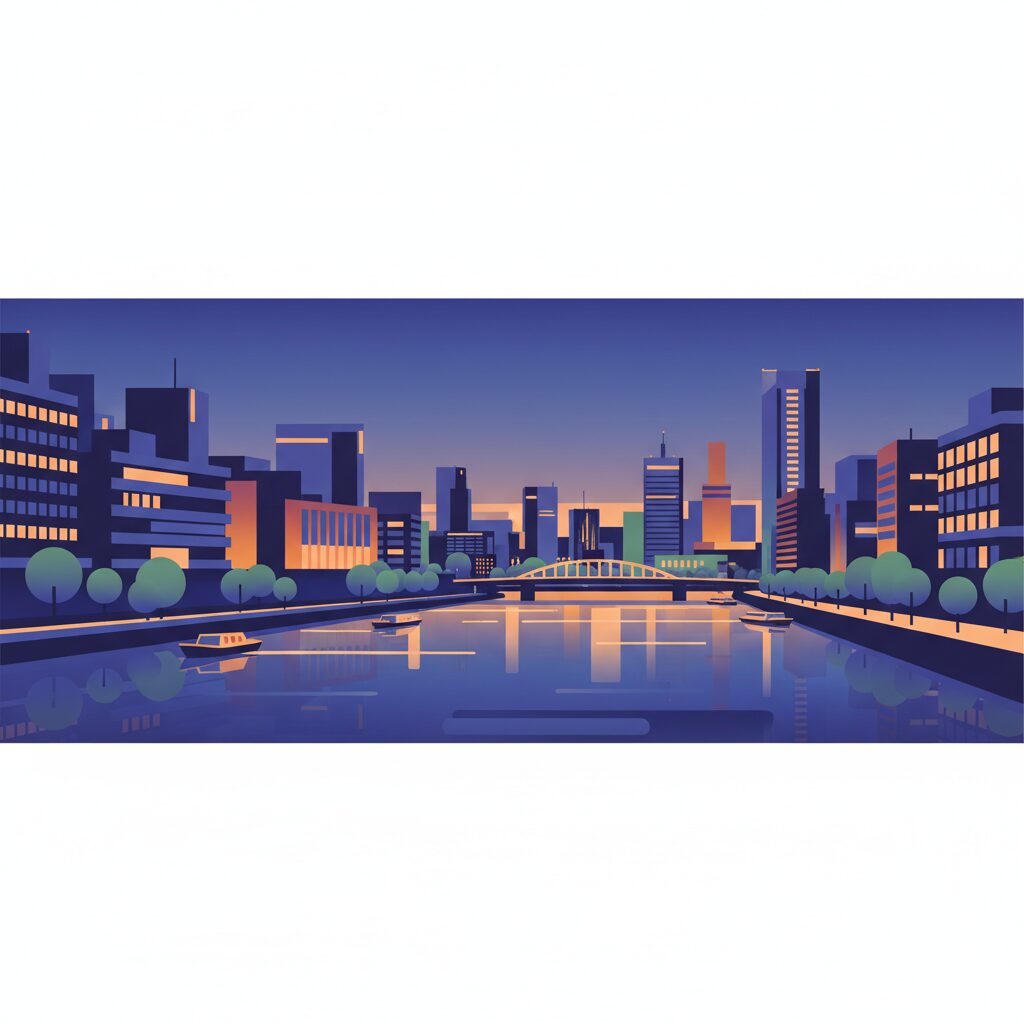
As dusk approaches, the island undergoes its most striking transformation. The purposeful energy of morning and the practical buzz of afternoon melt into a soft, contemplative glow. The ornate Central Public Hall and surrounding bridges light up, their reflections shimmering on the dark water. The daytime throng of office workers gives way to a new crowd. Couples, young and old, stroll hand-in-hand along the promenades. Amateur photographers set up tripods, patiently waiting for the perfect shot of the city lights. Small groups of friends lounge on riverbanks, sharing a can of beer and quiet conversation. The atmosphere is relaxed, almost romantic, but in a distinctly unpretentious Osaka style. There are no grand gestures, just a simple, collective appreciation of a beautiful evening. It’s a time to unwind, to talk, to simply watch the city lights twinkle on. Having served its practical purpose during the day, the island now offers a space for connection and repose.
Unpacking the Misconceptions

For many foreigners, Nakanoshima can be perplexing. It doesn’t align with common Osaka stereotypes. It isn’t loud or chaotic, nor will you find a takoyaki stand on every corner. This often leads to a couple of misunderstandings that obscure the island’s true nature: an authentic reflection of modern Osaka culture.
Misunderstanding One: It’s Just a Soulless Business District
The most common error is to see the soaring office buildings and write off the area as a lifeless 9-to-5 zone that empties after hours. This misses the island’s vital role as a community hub. Here, “community” isn’t about residents but the thousands who claim it as their space daily. It’s a third place—neither home nor office—where people from the city converge. Nakanoshima’s vitality isn’t in its apartments but in the steady stream of people who visit for lunch, a jog, a date, or a quiet moment. It stands as a testament to Osaka’s talent for fostering vibrant public life even in business-dominated zones. The island proves that a community doesn’t need residential addresses to have a soul.
Misunderstanding Two: It’s Too Polished to be ‘Real’ Osaka
Another typical view is that Nakanoshima, with its pristine parks, world-class museums, and elegant riverside cafes, feels more like Tokyo than Osaka. It seems to lack the raw, down-to-earth “honesty” found in areas like Shinsekai or Tenma. This perspective overlooks Osaka’s complexity. The city’s identity isn’t just shaped by its lively entertainment districts. The essence of Osaka—its practicality, modesty, and love of good value—is equally evident here. Nakanoshima’s authenticity lies in how people use this refined space. They come with convenience store meals to its lovely benches. They wear running shoes along its grand promenades. They treat its world-class architecture as the everyday backdrop of their lives. This casual, unpretentious blend of the grand and the ordinary may be the most genuinely Osakan trait of all.
The Architecture of Attitude
The physical landscape of Nakanoshima represents a dialogue between past and present, with this exchange expressed through brick, stone, glass, and steel actively influencing the behavior of those who move through it. The buildings serve not merely as static landmarks but as dynamic participants in the island’s daily life, shaping distinct zones of mood and encouraging various forms of interaction.
A Dialogue in Stone and Steel
Take the striking contrast between the Osaka City Central Public Hall, an impressive neo-renaissance building from 1918, and the National Museum of Art, a futuristic underground structure represented above ground by a bold steel sculpture. Near the Public Hall, with its red brick and grand domes, people instinctively slow their pace. The atmosphere exudes gravitas and history. Conversations quiet down, and visitors walk with a sense of reverence. It’s a place that fosters contemplation. Moving west toward the museum, the energy changes. The modern, abstract sculpture and the sleek architecture of nearby buildings create a lively, forward-looking vibe. Here, one is more likely to see groups of art students sketching, young people taking photos, and a general buzz of creative energy. The island’s architecture curates its own social experience, guiding people into different states of mind without any explicit signage.
An Invitation, Not a Fortress
There is a significant difference in the approach to public space here compared to many parts of Tokyo. In Tokyo, important buildings often feel imposing, set back from the street, creating a psychological barrier between the institution and the public. Nakanoshima’s design philosophy centers on integration and invitation. The park’s pathways flow effortlessly around and between the major buildings. The entrance to the National Museum of Art is an open plaza inviting you down into the earth. The riverside walkways are wide and accessible, not narrow afterthoughts. This design ethos reflects a fundamentally open and democratic Osaka attitude. These cultural and civic institutions are not fortresses to be observed from a distance; they are woven into the city’s living fabric, accessible and welcoming to everyone. The architecture doesn’t command attention; it extends an invitation. This subtle but meaningful distinction is key to why the island feels less like a formal district and more like a shared public asset.