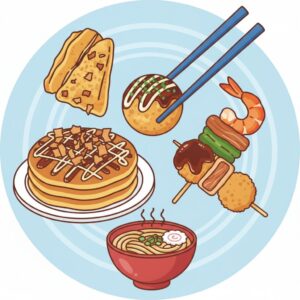
Walk through Dotonbori at night, and Osaka hits you like a sensory overload. A giant mechanical crab waves its claws. A furious-looking pufferfish hangs over a doorway. The Glico Running Man poses triumphantly, a beacon in a sea of neon. This is the image sold to the world: Osaka, the city of kuidaore. The word is plastered on souvenirs and splashed across travel blogs, usually translated as “eat until you drop” or, more dramatically, “eat yourself into bankruptcy.” For the average tourist on a whirlwind takoyaki tour, it’s a fun, gluttonous slogan—a permission slip to indulge. But once you actually live here, you realize that translation is missing the point entirely. The tourist version is a caricature. The real kuidaore is something deeper, a philosophy that’s woven into the very fabric of daily life. It’s a razor-sharp, unsentimental, and deeply practical approach to food that dictates everything from a salaryman’s 700-yen lunch to a grandmother’s weekly grocery run. It’s not about spending a lot. It’s about a relentless, city-wide obsession with getting incredible value for every single yen you spend. Forget the neon. The real kuidaore happens in the quiet side streets, the fluorescent-lit supermarket aisles, and the crowded lunch counters where the city’s unwritten rules of taste and value are enforced with brutal efficiency.
The cultural nuance of Osaka’s food philosophy is mirrored in the everyday language of its shopping streets, as highlighted in shotengai banter.
The True Meaning of Ruin: Cost-Performance as a Religion

Let’s set one thing straight. The “bankruptcy” aspect of kuidaore isn’t about racking up credit card bills on Michelin-starred dishes. It’s a more poetic concept. It refers to being ruined by your own impossibly high standards. It describes the state of being so used to delicious, high-quality food at reasonable prices that you simply can’t bring yourself to pay for something mediocre. An Osakan would rather skip a meal than spend 1,000 yen on a bland bowl of udon. That, to them, is the true financial offense. This mindset creates a fundamental difference between Osaka and Tokyo. In Tokyo, status is often signaled by dining at an exclusive restaurant with a three-month waitlist where the high price is part of the allure. The story there is about the chef, the ambiance, and the prestige. In Osaka, the story is about the win. The ultimate status symbol isn’t dropping 30,000 yen on a meal; it’s discovering a hole-in-the-wall spot serving a life-changing plate of curry for 850 yen and sharing the find with all your friends. The hero of the story is you, the savvy customer who uncovered the gem.
This obsession is captured in a single, sacred term: cospa. It’s a blend of “cost” and “performance,” and it’s the standard by which all food—and frankly, most purchases—are judged. Cospa isn’t the same as being cheap. A cheap meal that tastes cheap has poor cospa. An expensive meal that’s merely good also has poor cospa. A 500-yen lunch set that includes perfectly grilled fish, fluffy rice, flavorful miso soup, and a side of crisp pickles? That has excellent cospa. A 2,000-yen sashimi platter where the fish tastes freshly caught? Also, excellent cospa. It’s a fluid scale balancing price against quality, quantity, and satisfaction. An Osakan’s mind runs a constant cospa calculator. They can pass by a restaurant, glance at the plastic food models in the window, see the prices, and make a complex judgment in seconds. That internal dialogue is kuidaore in action. It’s a demanding, consumer-driven culture where businesses don’t survive on hype alone. They survive by delivering undeniable value, day after day. If they fail, they vanish. Quickly.
The Midday Proving Ground: Lunch in the Business Districts
This philosophy is most apparent during the weekday lunch rush. In business districts like Honmachi, Yodoyabashi, or Umeda, the time between 12:00 and 1:00 PM is more than just a meal break; it serves as a daily referendum on the city’s restaurants. The competition is ruthless, a Darwinian struggle for survival. Forget charming decor or clever marketing—victory hinges on one factor: cospa.
Picture a small street with six different restaurants. One serves ramen, another udon, a third offers a daily teishoku (set meal), another curry, and so forth. They all target the same army of office workers, who have a limited budget but a discerning palate. To compete, they can’t simply be cheap. The 500-yen “one coin” lunch isn’t a gimmick here; it’s a battlefield. For that single coin, you’re not getting a sad, pre-packaged bento. You expect a hot, freshly prepared meal. Maybe it’s crispy chicken nanban with a generous dollop of tartar sauce or a hearty bowl of kitsune udon topped with a large piece of sweet fried tofu. If a restaurant dares to charge 800 or 900 yen, the quality must leap dramatically. The fish needs to be thicker, the tempura crisper, and the ingredients noticeably fresher.
Observe the crowds. The best sign of a good restaurant isn’t an online review; it’s a queue of local office workers winding out the door at 12:15 PM. These customers aren’t waiting because it’s trendy—they’re waiting because they’ve done the cospa calculation and concluded this specific spot offers the best combination of price, taste, and portion size that day. They know the place next door may be 50 yen cheaper, but the rice isn’t as good. They understand the restaurant across the street is faster, but the portions are smaller. This is a discerning, knowledgeable customer base. Free rice refills (okawari jiyuu) or a complimentary extra-large serving of noodles (oomori muryo) are often standard weapons in these lunchtime battles. These aren’t seen as special perks but baseline expectations. A restaurant that doesn’t offer them is already at a disadvantage.
The word-of-mouth network is mercilessly efficient. If a new ramen shop opens with weak broth or stingy chashu pork, the verdict will spread through the office grapevine by mid-afternoon: “Tried that new place. Don’t bother.” It’s a death sentence. Conversely, finding a spot with fantastic cospa becomes social currency. You don’t just enjoy the meal—you gain bragging rights. You become the person in the know, the one who can guide colleagues to a satisfying and affordable lunch. This is the daily ritual of kuidaore: a relentless pursuit of the best possible meal for the price, repeated five days a week by millions.
The Supermarket Gauntlet: A Masterclass in Strategic Shopping

The kuidaore mindset doesn’t stop when you clock out; it follows you home and into the supermarket aisles. Grocery shopping in Osaka isn’t a passive task of filling a cart—it’s a strategic mission. Like the restaurant scene, the supermarket landscape is highly competitive. National chains such as AEON and Life compete with local giants like Mandai and Kansai Super, while budget-oriented stores like Gyomu Super and Tamade present a completely different value proposition. Interwoven among them are local yaoya-san (greengrocers) and fishmongers found in the shotengai (covered shopping arcades).
An Osakan household often doesn’t remain loyal to just one store; rather, their loyalty lies with specific products at certain stores on particular days. Living here, you quickly learn the unwritten rules. You discover that Mandai holds a huge 100-yen bread sale on Wednesdays. You realize that the tofu from the small shop in the shotengai is far superior and cheaper than the supermarket version. You find out that Gyomu Super is the go-to place for frozen goods and bulk sauces, but fresh meat is off the list. This isn’t a casual preference; it’s a carefully honed system. It’s quite common for someone to visit two or even three different stores on their way home to gather dinner ingredients, all to maximize quality while minimizing cost.
Then there’s the art of the discount sticker. Throughout Japan, supermarkets mark down perishable items in the evening, but in Osaka, this practice becomes a competitive sport. Timing your visit to coincide with the staff member wielding the sticker gun is a refined skill. The red hangaku (half-price) sticker is a badge of triumph. Scoring a pristine tray of sashimi or a high-quality cut of meat at 50% off is not viewed as being cheap or settling; it’s seen as being smart. It’s a win. Shoppers patrol the deli and fish sections with the patience of predators, waiting for the perfect moment to strike. Still, the kuidaore filter remains active. An Osakan won’t buy an item just because it’s half-price—they’ll examine it closely. Is the fish still vibrant? Does the tempura look soggy? If it’s not good quality, it’s not good value, even at 50% off. This is the essential principle: the discount is a reward for your savvy, but it never excuses compromising on quality.
Living the Kuidaore Life: How to Think Like a Local
So, what does this mean for a foreigner living in Osaka? It means you need to adjust your perception of value. It means becoming a more discerning, curious, and engaged consumer. This isn’t impolite; it’s part of the local culture. Here’s how you can adapt.
Trust the People, Not the Hype
Forget the blogs written by visitors who were here for just three days. Your best guide to great food is the local community. Spot a long line of salarymen, construction workers, or neighborhood grandmas outside a modest-looking eatery? Join that line. Whatever they’re serving is almost certainly outstanding in terms of cospa. The appearance of the place doesn’t matter. Some of the best food in Osaka is found in spots that haven’t been updated since the 1970s. The focus is entirely on the food.
Embrace the Shotengai
Your local shotengai embodies the living soul of the kuidaore philosophy. It’s where generations of shopkeepers have earned their reputations through quality and trust. Don’t just pass through it; interact with it. Buy your vegetables from the yaoya-san who can recommend the best tomatoes today. Get your fish from the fishmonger who knows exactly how to prepare it for sashimi. Pick up a freshly fried korokke (croquette) for 90 yen at the butcher shop. These small, independent businesses thrive because they offer something supermarkets cannot: intimate knowledge and a deep dedication to quality.
Make ‘Cospa’ Your Mantra
Start thinking in terms of cost performance. When dining out, don’t just ask if the food was good. Ask if it was worth the price. Was the portion reasonable? Were the ingredients fresh? Did you leave feeling satisfied and savvy, or slightly cheated? This mindset will not only help you find better food but will also give you insight into the local way of thinking. It applies to everything, from your morning coffee to your evening beer.
Share Your Discoveries
In Osaka, uncovering a great deal or a fantastic new restaurant is a discovery to be shared. It’s a common topic of conversation. When you find that amazing curry spot or the bakery with unbelievable cream puffs, tell your friends, neighbors, and colleagues. This is how you foster connections. It’s a gesture that says, “I’m one of you. I appreciate something good and want you to enjoy it too.” It’s a form of friendliness far more meaningful than a simple “hello,” rooted in the shared pleasure of a great meal and a smart choice.
The Philosophy of a Full Stomach and a Smart Wallet

Ultimately, kuidaore is much more than just a marketing slogan aimed at tourists in Dotonbori. It represents a practical, deeply rooted cultural philosophy that influences the entire economic ecosystem of the city. It creates a fiercely competitive environment where businesses must deliver genuine value to thrive. It empowers consumers, turning every local into a discerning food critic who votes with their wallet every day. For those of us who choose to live here, it’s an incredible gift.
Living in Osaka teaches you that eating well doesn’t need to be a luxury reserved for special occasions; it’s a right to be enjoyed daily. It heightens your senses, encourages you to notice the details, and rewards your curiosity. You come to appreciate the craftsmanship behind a simple bowl of noodles, the freshness of just-harvested vegetables, and the immense satisfaction of a meal that tastes like it should have cost twice as much. This is the true spirit of kuidaore. It’s not about going broke from overeating; it’s about becoming rich in experience, one delicious, valuable, and exceptionally smart meal at a time.