There’s a specific kind of magic that happens when you step off a Hankyu train at Juso Station. It’s not the polished, futuristic spell of central Osaka, just one stop away in Umeda. This is something different. It’s a raw, electric hum that seems to rise from the very pavement, a scent of grilled soy sauce and sweet batter that hangs in the air like a permanent welcome. You’ve arrived in Juso, a neighborhood that feels less like a place on a map and more like a tear in the fabric of time, a portal that leads directly into the heart of the Showa era. This isn’t a meticulously preserved historical district; it’s a living, breathing, and yes, slowly fading relic of a Japan that prioritized community grit over corporate gloss. It’s a labyrinth of covered shopping arcades, or ‘shotengai,’ where neon signs, some with buzzing, flickering tubes, cast a kaleidoscopic glow on the faces of locals going about their day. Juso is the echo of post-war optimism, a symphony of pachinko parlors, standing bars, and tiny eateries crammed into impossibly narrow alleys. It’s a testament to an era when life was lived loudly, locally, and face-to-face. To visit Juso is to understand a fundamental piece of Osaka’s identity—its working-class soul, its unapologetic realness, and the poignant beauty of a culture weathering the relentless tide of modernity. This is a journey not just to a place, but to a feeling, an atmosphere that, once experienced, lodges itself deep in your memory as the authentic rhythm of a city.
To truly immerse yourself in this atmosphere, step into one of its legendary standing bars to experience the local senbero culture.
The Electric Heartbeat of a Bygone Era
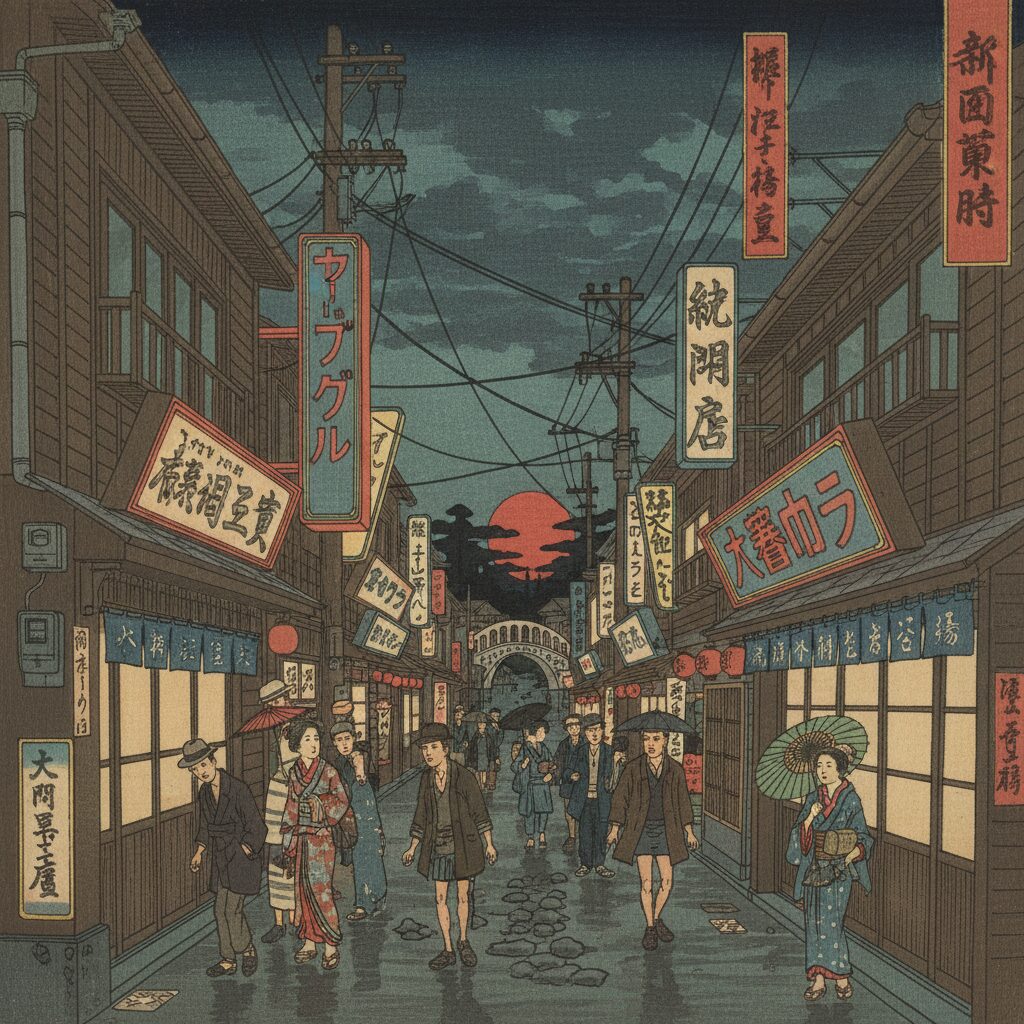
The moment you pass through the station’s ticket gates, you’re not gently introduced to Juso; you’re immediately immersed in its vibrant, chaotic energy. The area right around the station is a complex maze of shotengai, each exuding its own unique character. The Juso Friendly Street arcade is perhaps the most prominent, a covered thoroughfare pulsing with life. The ceiling, lined with fluorescent lights and hanging banners announcing seasonal sales, softens the daylight into a gentle, constant twilight. Inside, the air is thick with a blend of sounds and scents. You’ll hear the digital clamor spilling from the wide-open doors of pachinko parlors, a captivating, rhythmic cascade of tiny steel balls. The lively, upbeat jingles serve as a constant soundtrack, a mechanical heartbeat for the neighborhood. Mixed in with this is the sizzle of hotplates from takoyaki stalls, where vendors skillfully flip the doughy octopus balls with practiced, rhythmic motions. The aroma of dashi broth and savory takoyaki sauce mingles with the sweet fragrance of Imagawayaki, a filled pancake-like dessert, being pressed in cast-iron molds. It’s a sensory feast in the most delightful way imaginable. Take a closer look at the storefronts. They reveal stories spanning decades. A traditional pharmacy, with wooden shelves piled high with mysterious boxes; a small tea shop where an elderly woman carefully measures out sencha leaves; a butcher shop with hand-painted signs advertising daily specials. These aren’t chains—they are legacies. Above, a tangled web of electrical wires snakes between buildings, a visual hallmark of older Japanese urban areas. This is not the sleek, hidden infrastructure of modern Tokyo, but a visible, wonderfully intricate system that reflects a history of organic growth—the story of a neighborhood that has evolved and adapted over time. At street level, human activity flows like a river. Bicycles, the favored local mode of transport, are parked in dense clusters or skillfully navigated through the crowds by shoppers lugging baskets full of groceries. Elderly residents, moving at a measured pace, stop to chat with shopkeepers they’ve known for decades. Salarymen in crisp suits stride purposefully toward the train station, while groups of students in their neat uniforms laugh and joke as they head to a snack stall. The vibe is full of energy, but it’s a shared, communal energy—not the impersonal rush of a big city. It’s a place where you feel like a participant, not just an onlooker. Stepping off the main arcade into the smaller side alleys is like peeling back layers of history. Here, the noise softens to a gentle murmur. The alleys are so narrow you can almost touch both sides at once. Tiny bars, some seating only four or five patrons, have their doors open, revealing dark wood interiors and the glow of a television in the corner. Red paper lanterns, or ‘akachochin,’ hang above the doorways, their soft light a traditional signal that they’re open for business and ready to offer a warm cup of sake and a friendly ear. This is the true essence of Showa nightlife, a world apart from the sprawling, impersonal clubs of other districts. It’s intimate, human-scale, and built on the simple joys of conversation and camaraderie.
A Taste of Showa: Culinary Time Travel
To truly understand Juso, you need to taste it. The cuisine here isn’t about Michelin stars or cutting-edge gastronomy; it’s centered on comfort, tradition, and flavors honed through generations. It embodies the culinary spirit of working-class Osaka—hearty, unpretentious, and deeply satisfying. At the core of Juso’s food scene lies a dish synonymous with the neighborhood: negiyaki. Your journey must include a visit to Negiyaki Yamamoto, a legendary establishment that has been serving its signature creation for decades. From the outside, it appears modest, but the steady line of patient patrons signals that something extraordinary awaits inside. The air is warm and fragrant with the aroma of batter grilling and green onions sizzling. The setup is classic: a long teppan grill where chefs perform their craft in full view of diners seated at the counter. For those unfamiliar, negiyaki is a close relative of the more widely known okonomiyaki. However, while okonomiyaki can be a heavy dish loaded with cabbage and various ingredients, negiyaki celebrates the humble ‘negi,’ or green onion. A mound of finely chopped green onions is folded into a thin, savory crepe-like batter, along with beef tendon or other fillings, then grilled to perfection. It’s brushed with a tangy soy sauce instead of the thick, sweet sauce typical of okonomiyaki. The outcome is lighter, more aromatic, and utterly addictive. Watching the chefs work is a spectacle itself—the smooth spreading of batter, the generous shower of green onions, and the confident flip using two metal spatulas. Eating it fresh from the grill, with edges slightly crispy and the center tender and steaming, offers a taste of Osaka’s essence. Beyond negiyaki, Juso is a refuge for ‘tachinomi,’ or standing bars. These spots aren’t meant for lengthy meals but serve as soulful pit stops—small venues where you stand shoulder-to-shoulder with locals for a quick drink and a few snacks. From a family viewpoint, they might seem intimidating, but they provide a captivating glimpse into local culture just by looking inside. The atmosphere is friendly and surprisingly inviting. You might spot a solitary salaryman unwinding with a beer and pickled vegetables or friends catching up over sake. Menus are typically simple, written on paper strips taped to the wall, listing classics like ‘edamame,’ ‘karaage’ (Japanese fried chicken), and ‘doteyaki’ (slow-cooked beef tendon in miso). It’s an informal lesson in Japanese bar food and social customs, where space is shared and conversations can easily spark among strangers. Naturally, no exploration of Osaka’s culinary offerings is complete without ‘kushikatsu,’ and Juso boasts plenty of these spots. Kushikatsu are deep-fried skewers of meat, seafood, and vegetables. The ritual itself adds to the fun: the skewers come with a communal pot of thin dipping sauce, and the golden rule, emphasized everywhere, is no double-dipping. Once you’ve bitten into your skewer, it mustn’t return to the sauce. This simple hygiene rule has become a cherished part of the experience. The crispy, golden batter gives way to perfectly cooked fillings, a simple pleasure enhanced by the lively, often rowdy, restaurant atmosphere. To complete the Showa-era experience, visit a ‘kissaten,’ traditional coffee shops that serve as time capsules from before the era of sterile, minimalist cafes. Step inside and you’re transported back to the 1970s. Expect plush velvet seats, dark wood paneling, ornate lighting, and the gentle bubbling of a siphon coffee maker. The air carries the scent of roasted coffee and a faint trace of cigarette smoke from days gone by, even in non-smoking spots. The menu is a nostalgic journey: thick toast slices with butter and red bean paste, spaghetti Napolitan with its sweet ketchup-based sauce, and vibrant melon soda floats topped with vanilla ice cream and a maraschino cherry. A kissaten is the perfect place to rest your feet, escape the sensory overload of the arcades, and simply watch the world pass by from a cozy, well-worn armchair.
The Flicker of the Silver Screen and the Echoes of the Stage
Juso’s identity as an entertainment district, known as a ‘kanrakugai,’ runs deep and goes far beyond its food and drink offerings. It has long served the leisure and artistic interests of Osaka’s residents, with traces of this vibrant history still alive, flickering in the shadows of modern development. One of the neighborhood’s most treasured cultural landmarks is the Dai-nana Geijutsu Gekijo, often simply called “Nanagei,” or the Seventh Art Theater. Nestled on the second floor of a modest building, this independent cinema is a haven for cinephiles. It stands as a bold contrast to the multiplex era, championing arthouse films, independent productions, and documentaries from Japan and beyond. The theater itself is a throwback, featuring a cozy, intimate screening room and a lobby adorned with movie posters and handwritten recommendations. There is a tangible passion for film here—a place curated by people who love cinema, for people who love cinema. Its continued survival is a tribute to the community that supports it, one that values challenging, thought-provoking art over mainstream blockbusters. Nanagei’s presence grants Juso an intellectual and artistic credibility, a soulful counterbalance to its more indulgent reputation. It signals that this neighborhood holds depth, a place where art is not just consumed but revered. Now, discussing the full character of Juso is incomplete without recognizing its more adult-oriented side. The area has long been known as an ‘iromachi,’ or pleasure quarter. This facet of its identity is most apparent in certain alleys, where neon signs glow in different colors and establishments operate as “pink salons.” From an outsider’s view, this part of the urban landscape can be surprising. However, it is essential to understand it through a cultural and historical perspective. Such districts were common in post-war Japanese cities, catering to specific clients in a society with different social norms. In Juso, this section of the neighborhood exists in a straightforward manner. It does not extend into the main family-friendly shopping arcades but remains confined to distinct, well-known zones. For visitors, it is not a place to seek out, yet its presence is part of Juso’s raw, unapologetic story. It is a living piece of Showa-era social history, reminding us that this district was built to serve all of life’s desires and escapes. The district’s soundscape is not limited to pachinko machines; music is also a key element. Hidden within are small ‘live houses,’ intimate venues where emerging rock bands or experimental jazz musicians perform. These venues are the lifeblood of the local music scene, offering a raw, direct experience unavailable in large concert halls. It is within these small, crowded spaces that one can sense the creative heartbeat of the city, a continuation of the artistic spirit embodied by Nanagei cinema. Juso, in its entirety, is a stage. Daily life in the shotengai unfolds as street theater. The passionate conversations in a tachinomi are unscripted dialogues. The flickering images at Nanagei and the vibrant energy of a live house are the formal expressions of a neighborhood that has always been, and continues to be, a hub for human drama, art, and entertainment.
Navigating Juso: A Practical Guide to a Sentimental Journey
One of Juso’s greatest attractions is its exceptional accessibility. It is not a remote or difficult-to-reach area; rather, it stands as one of Osaka’s most convenient transportation hubs, a role that has influenced its character for more than a century. Juso Station, operated by the private Hankyu Railway, is the first stop departing from the sprawling Osaka-Umeda Station. The journey takes only three minutes, yet in that brief time, you cross a significant cultural divide. The station is a unique junction where three major Hankyu lines—the Kyoto Line, the Kobe Line, and the Takarazuka Line—intersect. This continuous stream of commuters from all directions fuels the neighborhood’s vibrant, bustling energy. Historically a place of transit and a spot to grab a drink on the way home from work, Juso’s abundance of bars and restaurants reflects this tradition. Its easy access makes it an ideal and rewarding side trip for anyone staying in the central Umeda area. The best time to visit Juso depends entirely on the kind of atmosphere you want to experience. During the day, the neighborhood’s more domestic side comes into view. Shotengai are bustling with shoppers, and filtered sunlight fills the arcades. It’s an ideal time to explore the small shops, enjoy a leisurely lunch at a spot like Negiyaki Yamamoto without the evening crowd, or unwind in a classic kissaten with coffee and a book. The pace is lively yet manageable, offering a great chance to observe the local daily rhythms. However, Juso truly comes alive as the sun sets. Late afternoon marks a magical transition. Shopkeepers hang out their red lanterns, the first neon signs flicker on, and the scents of dinner preparations drift from every doorway. As dusk fades into night, the neighborhood transforms. The soft lantern glow combined with the colorful neon lights creates an atmosphere steeped in Showa-era nostalgia. Izakayas and tachinomi bars fill with after-work patrons, and the sound of laughter and conversation amplifies. Nighttime is when Juso reveals its true character—a playground for adults, a place of relaxation and connection. For first-time visitors, arriving in the late afternoon, around 4 or 5 PM, is a great way to witness this charming transformation firsthand. For those new to Juso, a few tips can enhance the visit. Above all, embrace a sense of being lost. The most delightful spots are often tucked away in the maze-like alleys branching off the main arcades. Don’t hesitate to wander aimlessly and follow your curiosity. Although Japan is becoming more card-friendly, many older, smaller establishments in Juso still operate on a cash basis. Carrying enough yen is advisable to avoid any inconvenience. English is not widely spoken here, as this is not a tourist-focused district. Menus are likely in Japanese only, and staff may have little to no English proficiency. However, this shouldn’t deter you. A warm smile, polite pointing, and simple Japanese phrases like ‘Kore o kudasai’ (This one, please) and ‘Arigato gozaimasu’ (Thank you very much) will be warmly received. In fact, this slight language gap adds to the immersive charm, encouraging you to engage with the area on its own terms and fostering more genuine, memorable interactions. From a family perspective, while the nightlife leans towards an adult crowd, the main arcades and restaurants during the day and early evening are perfectly welcoming to children. The lively ambiance and delicious street food are sure to delight young visitors. It’s just a matter of being mindful of your environment and perhaps heading back to the station as the late-night crowd begins to gather.
The Inevitable Tide of Change
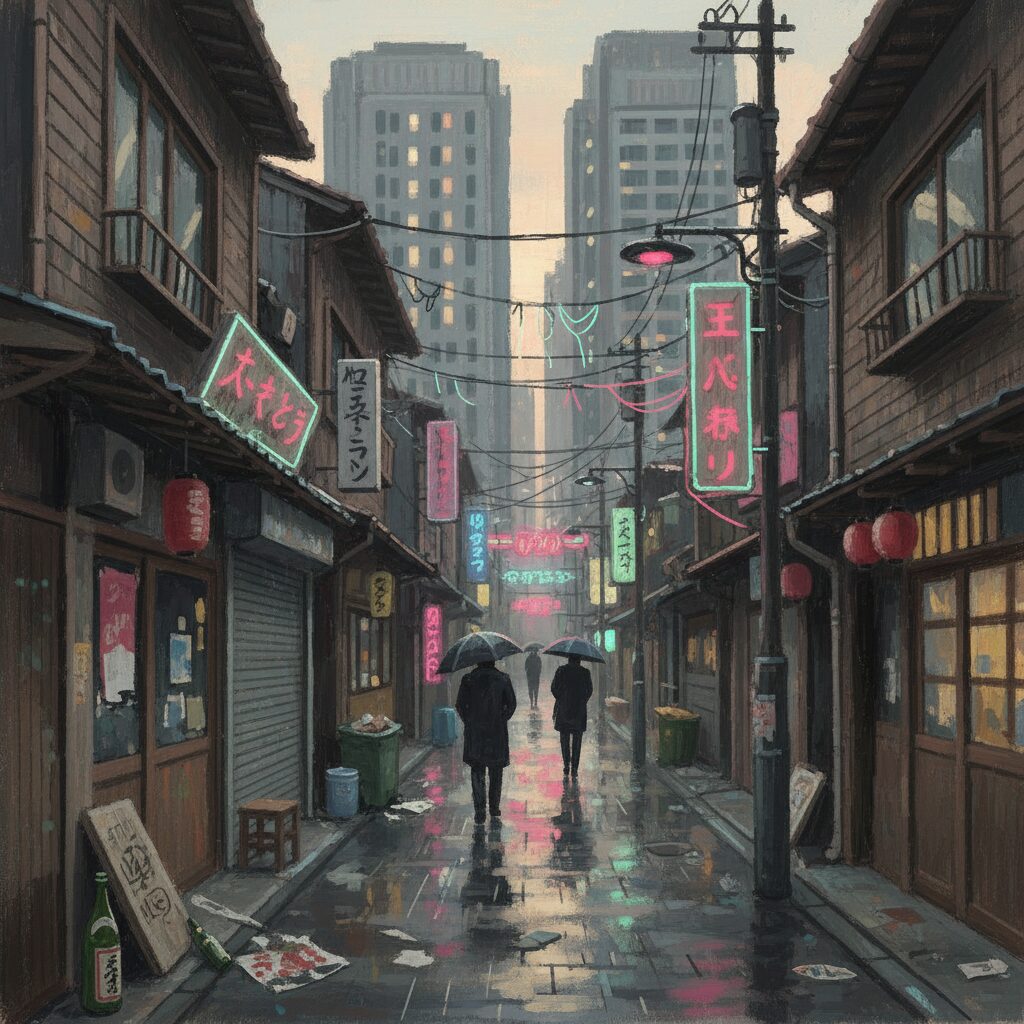
Walking through Juso is like passing through a living museum—except the exhibits aren’t shielded behind glass. They remain exposed to the forces of time, economics, and urban renewal, with signs of slow, inevitable change visible everywhere. This poignant sense of impermanence defines the experience, giving a visit a certain urgency and depth. You’re not merely observing a neighborhood; you’re witnessing a culture in its twilight. The most obvious indicators of this shift are physical. Scattered among the Showa-era two-story wooden buildings are sleek, modern apartment towers reaching skyward. On the west side of the station, large-scale redevelopment projects promise to transform the landscape with new commercial complexes and condominiums. With each new building, a fragment of old Juso—with its tangled wires and low rooftops—vanishes. You notice it in smaller details, too: a faded hand-painted sign on a now-closed building, a dusty storefront with a “for rent” sign taped to the glass, or an empty, weed-filled lot where a beloved local eatery once thrived. These aren’t just vacant spaces; they are gaps in the community’s memory—places once filled with stories, laughter, and generations of history. This process of change is a natural part of any city’s growth. Osaka continually reinvents itself. Yet what feels unique about Juso’s transformation is the fear that what is lost cannot be replaced. Juso’s culture rests on small, independent, family-run businesses, the very kind most vulnerable to rising rents, aging proprietors without successors, and competition from large corporations. When a 50-year-old tachinomi closes, it seldom reopens as a similar establishment; more likely, it becomes a chain convenience store or a generic café. The neighborhood’s unique texture, woven from these individual threads, smooths out, becoming more uniform and less special. A subtle melancholy lingers in the air, perceptible when talking with an older shopkeeper. They might recall arcades once more crowded, festivals that were grander, and neighbors who all knew each other. There is pride in what Juso was, coupled with quiet resignation about what it is becoming. This isn’t despair, but a bittersweet acknowledgment of time’s passage. This is why visiting Juso today feels so significant. You are witnessing the final, beautiful glow of a sunset. The energy, the community, and the Showa spirit remain vibrantly alive. You can still savor negiyaki made from a half-century-old recipe, drink in a bar unchanged since 1965, and lose yourself in alleys that feel like stepping back to another era. But knowing this version of Juso is finite encourages you to look more closely, listen more carefully, and cherish the profound beauty of its charming, gritty, and wonderfully imperfect present.
Juso is not a neighborhood that offers easy, curated comfort. It doesn’t present a polished facade for tourists. In many ways, it’s a challenge. It invites you to look beyond the occasional grime, embrace a touch of chaos, and discover the deep beauty in its unvarnished authenticity. A journey here, just minutes from Umeda’s gleaming towers, is a venture into another reality—a powerful reminder of the layers of history that shape a great city. This is the Osaka of old films, the Osaka of working-class dreams, the Osaka that feels viscerally, undeniably real. What you take away from Juso is more than a full stomach or a collection of photos. It’s a feeling—the warm glow of a paper lantern on a narrow alley, the rumble of a train overhead as you sip a cold beer, the taste of perfectly grilled negiyaki shared with friends, and the sight of a community that, despite modern pressures, still clings to its unique, electric soul. Visiting Juso is to connect with the heart of Osaka, to understand its past, and to appreciate the precious, fleeting beauty of its present. It’s an invitation to stray from the beaten path, wander without direction, and discover the magic lingering in the fading neon light.