Living in Osaka, you quickly get the memo. This is Japan’s kitchen, the city of kuidaore—eating till you drop. You master the takoyaki flip, you learn your favorite ramen joint by heart, and you can debate the merits of okonomiyaki styles from here to Hiroshima. We’re loud, we love a bargain, and our unofficial mascot is a mechanical crab. It’s a great story, and it’s not wrong. But it’s not the whole story. The neon glow of Namba and the endless arcades of Shinsaibashi are just the glittering surface of a much deeper, grittier, and profoundly practical city. I first felt this pull not in a crowded izakaya, but in a quiet corner of a department store. I was looking for a good kitchen knife, a real one. The kind that makes slicing an onion feel like an act of meditation. The elderly man behind the counter, his hands as worn as old leather, held one up to the light. “Sakai-uchi,” he said, his voice a low rumble of pure conviction. Sakai-forged. The name landed with a weight I didn’t understand. It sounded less like a brand and more like a declaration of origin, a seal of quality that needed no further explanation. That single phrase sent me south, out of the urban sprawl of Osaka proper, on a rickety old tram heading for Sakai. I wasn’t just looking for a knife anymore. I was looking for the source of that conviction, the heart of Osaka’s unshakeable, practical soul.
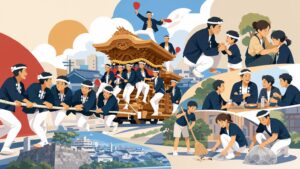
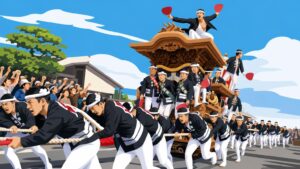
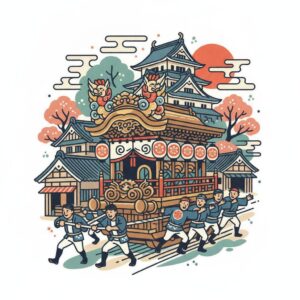
Intrigued by the sensibility of Sakai’s artistry, I soon extended my exploration to Kishiwada’s historic castle town, where centuries-old traditions harmonize with contemporary vibrancy.
Beyond the Takoyaki: Uncovering Osaka’s ‘Monozukuri’ Soul
To truly understand Osaka, you need to grasp the meaning of monozukuri. It roughly translates to ‘making things’ or ‘craftsmanship,’ but that’s like describing a symphony as merely ‘a bunch of sounds.’ It embodies a spirit, an ethos deeply embedded in the city’s core. While Tokyo showcases the polished, high-concept image of ‘Cool Japan’—anime, fashion, minimalist design—Osaka has long been the nation’s workshop. It’s a city that rolls up its sleeves and gets hands-on. This isn’t a recent development; it’s rooted in centuries of history as a merchant capital, where wealth was built not on abstract financial products but on tangible goods: rice, textiles, and steel. This history shapes a distinctive type of person and mindset. The typical Osakan doesn’t ask, “Is it cool?” Instead, they ask, “Does it work?” And more importantly, “Is it worth the money?” This mindset underpins the stereotype that Osakans are obsessed with bargains. Outsiders often mistake this for being cheap. It’s not; it’s an ingrained insistence on value. It’s a rejection of paying for hype, flashy logos, or slick marketing. In Osaka, the quality of the product itself is the only currency that truly counts. This pragmatism influences every aspect of daily life. It’s evident in the direct, no-nonsense communication style, cutting through polite formalities to get straight to the point. It’s reflected in the city’s functional, unpretentious architecture. Tokyo builds gleaming, artistic skyscrapers reaching for the sky; Osaka constructs solid, reliable buildings that support businesses and residents. Neither is superior, but they highlight fundamentally different priorities. Tokyo focuses on presentation; Osaka prioritizes the product.
The Knife’s Edge: What Sakai’s Blades Tell You About Osaka Pride
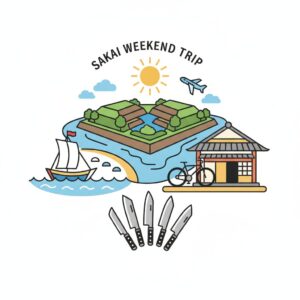
Nowhere is the spirit of monozukuri more palpable or finely honed than in the quiet, unpretentious backstreets of Sakai. This historic center of Japanese cutlery has been crafting blades for over six hundred years—originally for samurai, now for chefs worldwide. Spending a weekend wandering these neighborhoods offers a masterclass in Osaka pride. Forget your image of a factory; here, workshops are small and often blend seamlessly into the surrounding houses, tucked into garages or the ground floors of family homes. The only sign of their presence is the steady clang-clang-clang of hammer on steel, a sound that has echoed through these streets for generations. I entered one such workshop, a forge dedicated to sharpening and finishing. There was no reception desk, no gift shop—just the intense, focused silence of three men bent over whirring grindstones, sending showers of glowing sparks into the dim light. They barely glanced up. This can feel intimidating to outsiders, seeming like a cold dismissal. Yet this is a common misconception about the Osakan—and particularly the shokunin (master artisans)—mentality. Their silence isn’t coldness; it’s concentration. Their world is one of millimeters and degrees, experienced through the resistance of steel against stone. The work itself is the conversation. The welcome isn’t spoken; it’s the quiet permission to stand in the corner and observe this alchemy. I stood for twenty minutes before the oldest man, his face lined with focus, switched off his machine, wiped his hands on a rag, and gave me a brief nod. I asked a simple, cautious question about the different grinding wheels. His response wasn’t a show; it was a detailed, technical, and deeply passionate explanation of grit, water flow, and temperature. He wasn’t trying to sell me anything—he was sharing the essence of his life’s work because I had shown genuine interest. This is the unspoken rule of Sakai, and by extension, Osaka: respect the craft. Don’t treat it like a tourist attraction. The pride here isn’t loud or boastful. It’s a quiet, fierce confidence rooted in the object itself. A Sakai knife needs no fancy packaging or celebrity endorsement. Its reputation is forged in steel and validated on the cutting boards of the world’s finest kitchens. That blade is its résumé, its marketing, and its soul. It embodies Osaka’s philosophy of substance over style.
The Scent of History: Incense, Bicycles, and Neighborhood Life
While knives are Sakai’s most renowned export, the city’s artisan spirit runs far deeper. To truly grasp its essence, you need to engage your other senses. Follow your nose. In certain neighborhoods, the air is heavy with a dry, sweet, and woody fragrance. This is the scent of senkō, Japanese incense, another craft perfected in Sakai over centuries. Like the forges, the incense workshops often lie hidden in plain view. You might pass by a sliding door and glimpse workers sorting bundles of fragrant wood or racks of freshly rolled sticks drying under the sun. It’s an entirely different energy from the fiery intensity of the blade makers—quiet, contemplative, and aromatic—yet it shares the same DNA: profound respect for raw materials, an unbroken chain of generational knowledge, and a product integral to daily Japanese life, used in homes and temples nationwide. Then there’s the bicycle. While you might not easily smell or hear their production, Sakai is the birthplace of Shimano, a name synonymous worldwide with cycling components. This legacy isn’t confined to a massive corporate headquarters. It’s visible in the thousands of residents who navigate the city on two wheels. The bicycle perfectly embodies the Osakan spirit—practical, efficient, and economical. It connects seamlessly to the city’s landscape, largely flat and designed for easy movement. Living here, you realize these crafts are not relics locked away in a museum; they are the living, breathing pulse of the community. You see the local butcher wielding a massive, perfectly honed Sakai deba knife to break down fish. You smell incense from the neighborhood temple during a festival. You ride a bicycle fitted with locally made parts to the grocery store. Daily life in these artisan neighborhoods constantly and subtly reminds you that you are in a place where things are made. The sound of industry isn’t a nuisance; it’s the heartbeat of the local economy. This fosters a strong sense of place and identity, sharply contrasting the more transient and anonymous atmosphere of many global megacities, including parts of Tokyo. In Sakai, you feel connected to the process and to the people whose skill and labor shape the objects that define everyday life.
The Sakai Mindset vs. The Osaka Stereotype
How does the quiet, focused world of craftsmanship in Sakai align with the boisterous, food-obsessed, comedy-loving stereotype of Osaka? In truth, they represent two sides of the same coin. The artisan of Sakai and the shopkeeper of Shinsaibashi both emerge from the same merchant culture. They share a common language of practicality, honesty, and a deep-seated distrust of pretense. The stereotype of the loud, direct Osakan stems from this very background. In a marketplace—whether selling knives or takoyaki—clarity is essential. There’s no room for the nuanced, indirect communication often found in Tokyo. You say what you mean, state your price, and stand by your product. This directness, which outsiders might sometimes misinterpret as aggression or rudeness, is actually a form of respect. It trusts that you’re smart enough to handle the truth without excessive politeness. It’s a craftsman’s efficiency applied to social interaction. Consider bargaining, a practice Osaka is known for. A Tokyo shopkeeper might politely decline to save face softly, while an Osaka merchant might look you in the eye and give an unapologetic, firm “No.” This isn’t out of greed; it’s because they believe the price honestly reflects the item’s value. To them, the price is fair, the quality high, and the matter settled. The negotiation ends there. It’s a transaction grounded in the maker’s confidence, not the seller’s charm. This shokunin pride forms the foundation of Osaka’s identity. It’s a confidence rooted in skill, not status. In Tokyo, social standing often depends on the company you work for or the university you attended. In Osaka, respect is earned through what you can do, what you can create. It’s a more democratic, meritocratic sense of pride. This explains why people here are so unimpressed by brands and titles. They’re far more impressed by a perfectly sharpened blade, a flawlessly cooked piece of octopus, or a joke that lands just right. It’s all a form of craft, and in Osaka, craft reigns supreme.
How to Experience Sakai Like a Resident
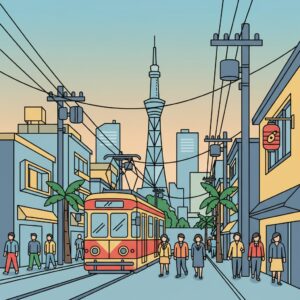
Visiting Sakai with a tourist checklist is the quickest way to miss its essence. To genuinely grasp its importance, you need to approach it like a local, with curiosity and patience. The first step is to change your mode of transportation. Skip the sleek, efficient JR trains and find a stop for the Hankai Tramline, affectionately called the ‘Chin-Chin Densha’ for the bell-like sound it makes. This is one of Japan’s last remaining streetcar lines, rattling and swaying its way slowly through the heart of Sakai’s residential and industrial neighborhoods. It’s the opposite of modern efficiency, and that’s exactly its charm. Through its windows, you witness life unfolding on a human scale: children walking home from school, grandmothers tending their gardens, sparks flashing from a hidden workshop. It encourages you to observe and absorb the atmosphere instead of rushing from one attraction to the next. Once there, let your senses lead you. Rather than heading straight to the largest museum, wander the side streets. Listen for the sounds of machinery, hammers, and grinding wheels. Follow the scent of roasting tea or sweet incense. Peek respectfully into open doorways. You’re not seeking a curated experience; you’re searching for an authentic one. Find a small, local eatery for lunch—the kind with only a few seats and a handwritten menu on the wall. This is where the craftsmen themselves dine. The food will be simple, honest, and delicious. Finally, put what you’ve seen into context by visiting the Kofun, the enormous ancient burial mounds scattered across the landscape. These grass-covered, keyhole-shaped tombs, some larger than the pyramids of Giza, were built for emperors and rulers fifteen hundred years ago. Standing before them, you realize Sakai has been a hub of power, industry, and extraordinary skill for an incredibly long time. The blade smiths and incense makers of today are not preserving a dying craft. They are the current guardians of a legacy of monozukuri that is ancient, continuous, and vital to truly understanding the character of Osaka.