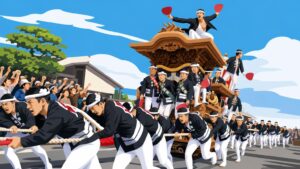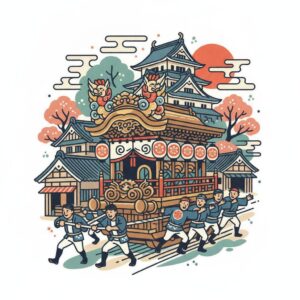
When you say “Kishiwada” to anyone in Osaka, one image explodes into their mind: the Danjiri Festival. It’s a chaotic symphony of raw power and adrenaline, a thunderous spectacle of massive wooden floats careening through narrow streets at impossible speeds. It’s wild, it’s intense, and for many, it’s the beginning and end of what Kishiwada is. But this raises a question that gets to the heart of understanding Osaka’s deeper character. What happens on the other 363 days of the year? When the roar of the crowds fades and the scent of sawdust settles, what is the soul of this city by the sea? The answer isn’t found in a tourist pamphlet. It’s woven into the very fabric of its streets, a quiet but fierce identity forged in its past as a castle town. To understand Kishiwada is to peel back the layers of Osaka itself, to see that beyond the neon-drenched image of a merchant metropolis lies a mosaic of fiercely independent neighborhoods, each with its own history, its own dialect, and its own unwritten rules. This isn’t just a day trip; it’s a lesson in the stubborn, localized pride that truly defines the people of Osaka, a pride that often gets lost in translation when compared to the more uniform identity of a city like Tokyo. Forget the festival for a moment. Let’s walk the quiet streets and listen to what they have to say.
To further uncover Kishiwada’s vibrant spirit beyond its celebrated festival, explore its enduring castle town charm and seaside life that continues to shape its unique character throughout the year.
The Castle Town’s Quiet Rebellion
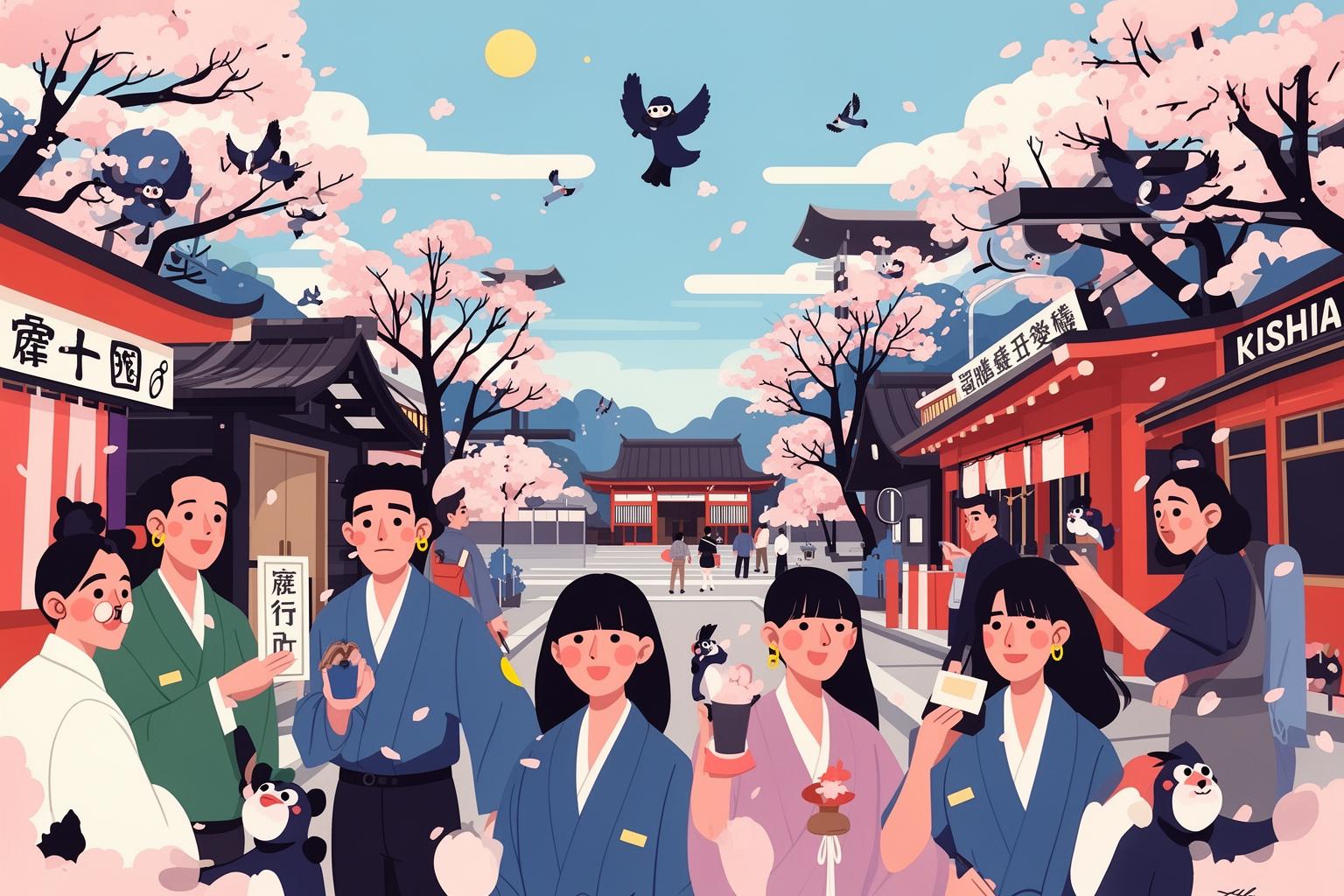
Step away from the main station, leaving behind the generic storefronts, and the city begins to transform. The streets grow narrower, winding and twisting in ways that challenge a modern grid. This isn’t poor urban design; it’s a ghost. You are walking through the blueprint of a feudal defense system. The layout of Kishiwada‘s old town, known as the Sannomaru, is a living relic from a time when a city’s design aimed to confuse and slow invading samurai, not to expedite delivery trucks. This physical environment shapes the mental landscape. In central Osaka, the city is a grid—a rational checkerboard designed for commerce and efficiency. Streets like Midosuji are wide, straight, and built to facilitate the flow of money and people. Life in Umeda or Shinsaibashi feels linear, a rush from point A to point B. But here in Kishiwada, the pace is compelled to slow. You cannot hurry through these labyrinthine alleys. You must navigate them. You must observe. You become aware of small shrines nestled between houses, weathered wooden facades, the scent of soy sauce simmering from a kitchen window. This enforced slowness fosters a different kind of community. In Tokyo, one can live in an apartment for years without knowing neighbors. It’s a city of polite, respected anonymity. Here, the architecture itself encourages interaction. The narrow streets physically bring you closer to your neighbors. You hear their lives, see them tending plants, exchange greetings because you simply cannot avoid it. This creates a strong sense of localism. The people here don’t just identify as being from “Osaka.” They are from Kishiwada. More specifically, they are from their neighborhood, their cho. This intense, hyperlocal pride is a defining trait of Osaka often overlooked by outsiders. They see the loud, unified personality projected outward but miss the fierce internal divisions and loyalties that give the prefecture its true character. Kishiwada’s streets stand as a quiet rebellion against the modern, anonymous metropolis—a constant, physical reminder of a history and identity that refuses to be straightened out.
Danjiri DNA: Beyond the Festival Roar
The biggest misconception about the Danjiri Festival is that it’s merely a party. It is not. It represents the organizing principle of life itself. The festival is simply the explosive yearly climax of a year-long, all-encompassing social contract. This is the “Danjiri DNA” that pulses through the veins of everyone born and raised here. It shapes social circles, business connections, and even family dynamics. From an early age, children are immersed in it. They don’t just watch the festival; they take part in youth versions, learning the chants, the rhythms, and the complex social hierarchy. As they mature, their role shifts. Their position within the local youth association, the seinendan, becomes a core part of their identity, far more significant than their job or school. This stands in sharp contrast to life in Tokyo, where identity is often tied to one’s company or university. A Tokyo resident might say, “I work for Mitsubishi,” whereas a Kishiwada native is more likely to identify with their festival group: “I’m from the Kaminomachi district.” The festival’s influence is all-encompassing. Local businesses close for days, not only for the festival itself but also for the preparations. The entire city’s rhythm bends to its demands. Outsiders witnessing the thrilling risk—the men jumping on the roofs of speeding floats—might perceive it as reckless chaos. But it is far from chaotic. It is a highly structured, ritualized display of community strength and unity. Every role is defined, every move rehearsed, and every risk weighed within a deep tradition. The social pressure to participate is enormous. Choosing to opt out is not a simple personal decision but a statement against the community itself. This year-round dedication is the true engine of the festival. It is financed by local donations, carried out by volunteer labor, and sustained by a collective pride that is nearly tribal in its intensity. When you walk through Kishiwada in the quiet of May or the chill of January, you can still sense it. You see the massive storage houses, the danjiri-goya, where the floats rest. You see festival emblems proudly displayed on homes and shops. The festival is not a transient event; it is a continuous, living presence that defines what it means to come from this town. It clarifies the almost fierce pride Osaka residents have in their hometowns, a sentiment that can feel foreign in more transient, career-driven cities.
The Language of the Shoreline: Kishiwada-ben and Local Identity
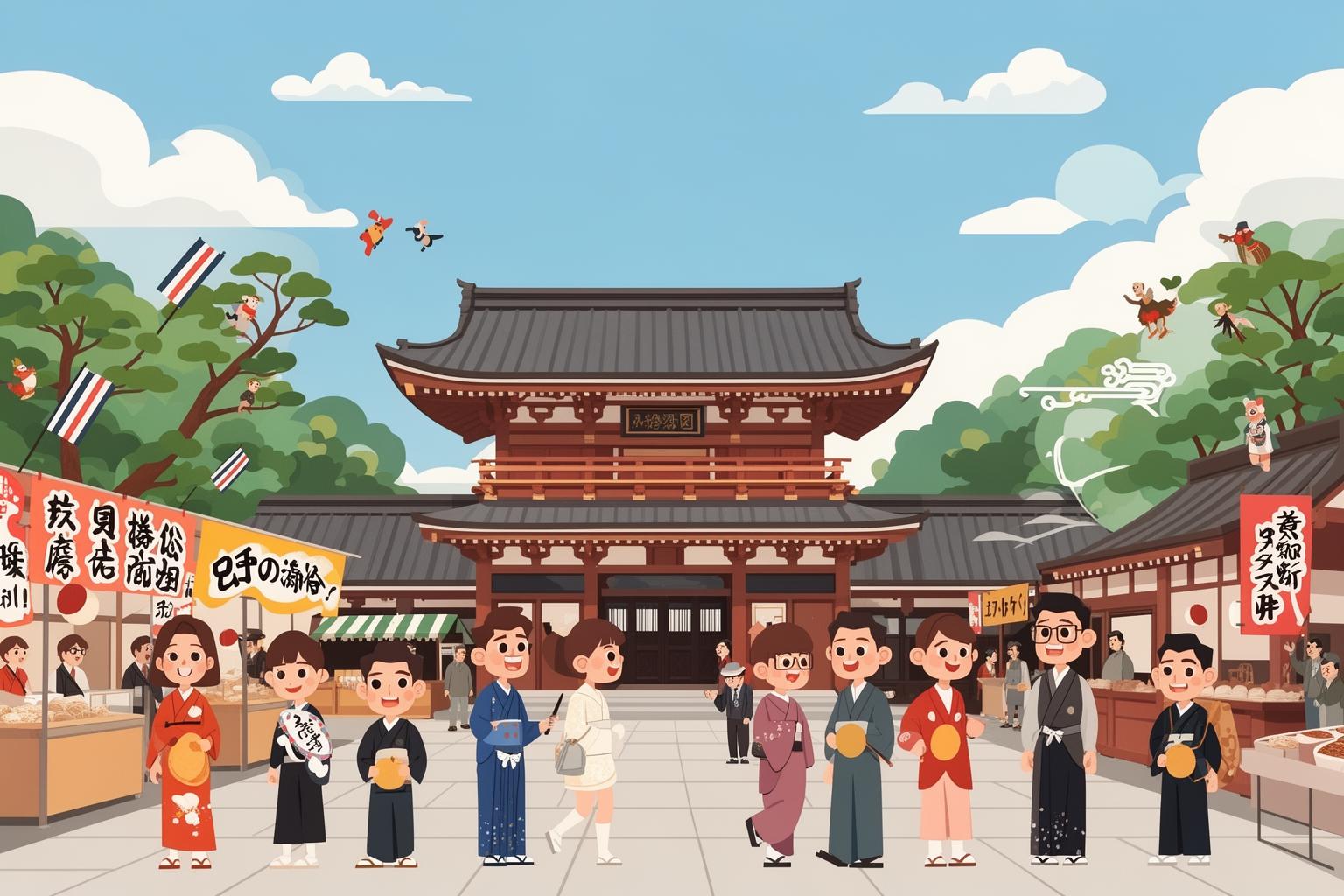
If you think you’ve mastered Osaka-ben, the region’s general dialect, a visit to Kishiwada will surprise you. The local version, often known as Senshu-ben or more precisely Kishiwada-ben, is quite different. It’s faster, rougher, and more clipped than the dialect you hear in Namba. To an untrained ear, it may come across as aggressive, almost confrontational. Words get shortened, consonants are stressed, and the intonation has a sharp, percussive tone that reflects the town’s history of fishermen and warriors. It’s a language shaped by hard work and straightforwardness. This isn’t just a linguistic peculiarity; it’s a strong symbol of identity. Speaking Kishiwada-ben signals that you are one of the locals, a part of this coastal community. People from Kishiwada take great pride in their dialect, even as they switch to a softer Osaka-ben or standard Japanese when speaking with outsiders. This reveals a key aspect of the Osaka mindset. While Tokyo tends to smooth out regional differences in favor of a standard, cosmopolitan identity, Osaka embraces its local variations. The way you speak reveals your roots, background, and community. For foreigners, this can be confusing. You might enter a shop and be met with a rapid-fire series of what sounds like harsh commands. A shopkeeper might say “Hona, koreナンボにしょか!” (Alright, how much should we make this!) in a tone that seems challenging. In fact, it’s an intimate, straightforward way of engaging. It’s an invitation into a local style of communication that removes the layers of polite formality common elsewhere in Japan. They’re not being rude; they’re offering brusque familiarity, assuming you can handle the bluntness. The confusion arises from linking politeness with softness. In Kishiwada, respect is expressed through directness and sincerity. Learning to perceive the warmth beneath the brusque surface is essential to understanding the true nature of Osaka’s people. They don’t waste time on pleasantries because they expect a foundation of mutual understanding and toughness. They speak to you not as a delicate customer but as a fellow human being.
Weaving Tradition into Modern Life: Exploring the Shotengai
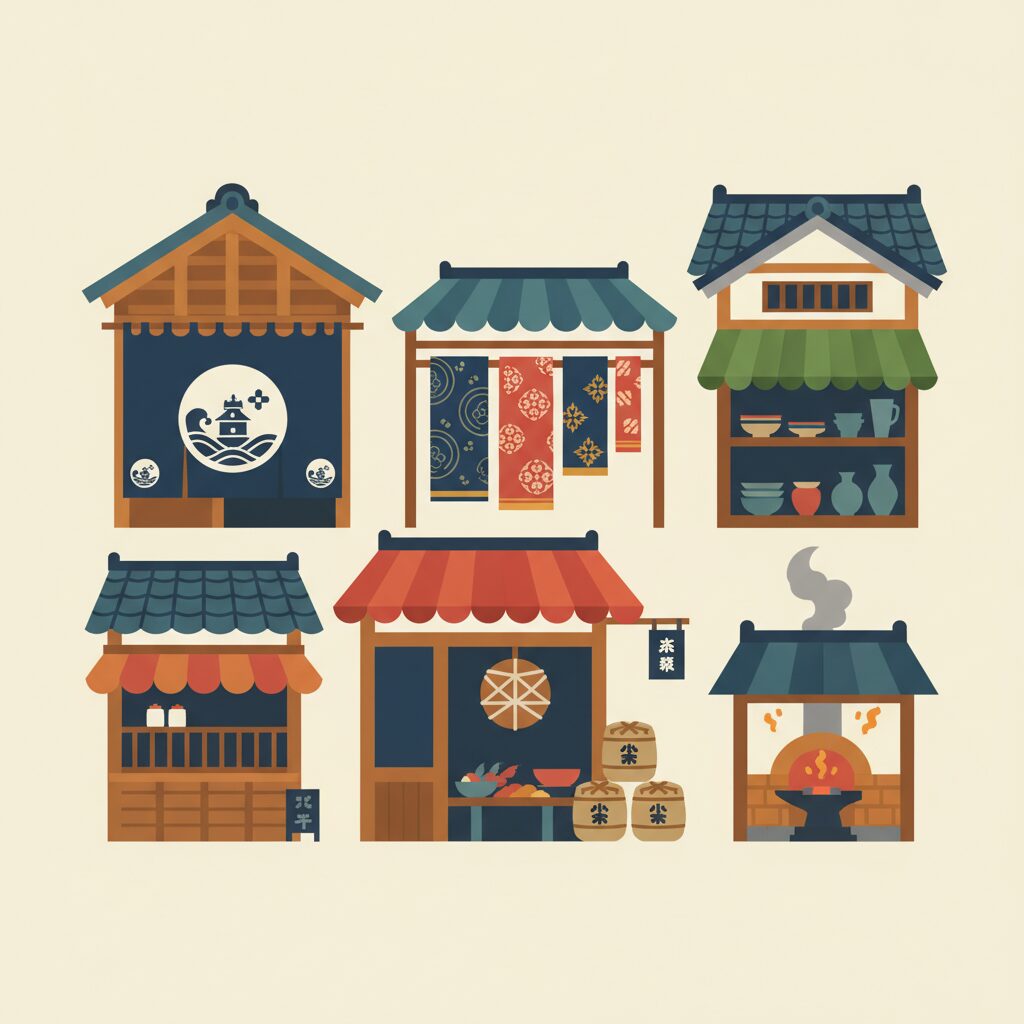
To truly experience the Danjiri DNA and the local dialect in action, you must stroll through the Kishiwada Ekimae Shotengai, the covered shopping arcade near the station. This is not the trendy, Instagram-worthy consumer haven of Shinsaibashi. Rather, it’s a living, breathing lifeline of the community, operating on an entirely different set of principles. Here, the shops directly reflect the town’s identity. You’ll find tailors specializing in intricate festival garments, from the distinctive happi coats to the unique, close-fitting momohiki pants. The level of detail and craftsmanship is remarkable, a testament to the seriousness with which this tradition is upheld. With my background in fashion and art, I find myself stopping in admiration; the patterns and weaves are a form of folk art, passed down through generations. Next door, a shop sells only miniature Danjiri floats, detailed replicas that children use in their own neighborhood parades. Nearby, the local fishmonger offers fresh catch from Osaka Bay, his voice booming in thick Kishiwada-ben as he chats with elderly customers he’s known for fifty years. These are not merely commercial transactions; they are social rituals. In Tokyo, shopping tends to be a silent, efficient exchange—you select your items, pay, and leave. Here, a ten-minute trip can easily turn into a half-hour conversation about the weather, local gossip, and this year’s festival prospects. This captures the essence of the Osaka merchant spirit, or akindo. It’s not just about selling products; it’s about building relationships. The shopkeepers are pillars of the community. They know everyone’s family, sponsor the local festival, and their stores serve as informal community centers. Daily life unfolds on a human scale, in stark contrast to the impersonal convenience of a megacity. Foreigners often flock to flashy department stores and gleaming malls, but the true heart of Osaka life pulses strongest in these weathered, unpretentious shotengai. Here, for many Osakans, community and commerce aren’t separate—they are deeply intertwined.
A Woman’s Perspective on Castle Town Safety
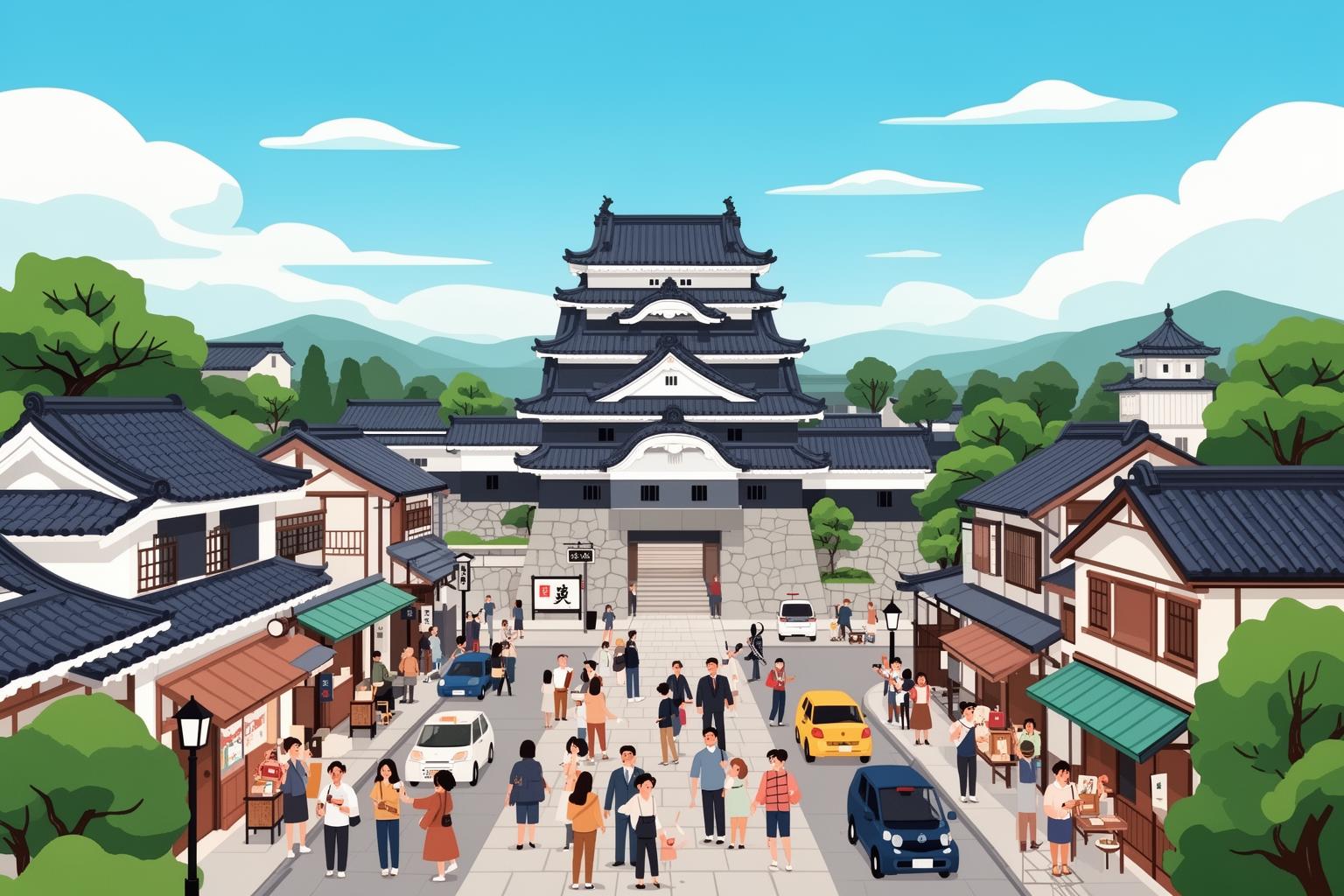
As a woman who frequently travels alone, I have developed a keen sense for the atmosphere of a place, especially after dark. At first glance, the quiet, winding, and dimly lit backstreets of Kishiwada’s castle town might appear daunting. They lack the bright, anonymous safety found in a well-policed Tokyo neighborhood. Yet, the feeling here is completely different. It’s not the safety provided by surveillance cameras and police boxes; it’s the safety of community. In such a close-knit place, a stranger stands out. Every resident acts as an extra pair of eyes on the street. An unfamiliar face walking through the residential lanes at night is noticed. This isn’t a hostile watchfulness, but a natural, protective awareness. People know the rhythm of their neighborhood and the sound of their neighbors’ footsteps. This creates an invisible safety net far more effective than any official presence. It’s a concept that can be difficult to understand if you’re used to the anonymity of a global city. In Shinjuku, you could shout and no one might look twice, lost in the crowd. Here, a strange noise would have curtains twitching in a dozen houses. Of course, basic precautions are always wise. But the key to feeling safe here lies in understanding the social dynamic. The gruff talk from a group of men gathered outside a shop isn’t a threat; they are likely members of the local festival association and serve as the unofficial guardians of that street. Their presence deters any real trouble. This challenges the common notion that safety depends on silence and order. In Kishiwada, safety comes from a noisy, nosy, interconnected community. It’s a place where you are less likely to be a random victim because you are never truly anonymous. For a foreign woman, navigating this demands a mental shift. You must trade the comfort of blending in for the security of being noticed. It’s about understanding that the sometimes-intrusive closeness of the community is also its greatest strength and your best protection. It’s a practical, lived-in safety, far removed from the theoretical security of a manual.
Kishiwada’s Unchanging Heart
Kishiwada serves as a microcosm of the authentic Osaka. It is a city that carries its history not as a tourist façade, but as an intrinsic part of its everyday identity. The thunderous Danjiri festival is the most well-known expression of its spirit, but its true essence lies in the quiet moments: in the defiant curve of an age-old street, in the rough warmth of the local dialect, and in the lasting relationships between shotengai shopkeepers and their customers. Visiting Kishiwada reveals that Osaka is far from a monolith. It is a collection of villages, each fiercely guarding its unique identity, all woven together into the vast fabric of a modern metropolis. This contrast is what sets Osaka apart from Tokyo. Tokyo’s strength lies in its polished, centralizing force, a power that smooths out rough edges in favor of a refined, global standard. Osaka’s strength, however, is its chaotic, decentralized pride. It is a city that not only accepts but celebrates its internal contradictions and stubborn localism. For those seeking to truly understand daily life in Osaka, a walk through Kishiwada is indispensable. It encourages you to look beyond the surface stereotypes of friendly, humorous food lovers and appreciate the deeper currents of history, community, and an unwavering pride in a place that steadfastly remains itself. This is the enduring heart of Kishiwada, and in many respects, the enduring heart of Osaka.