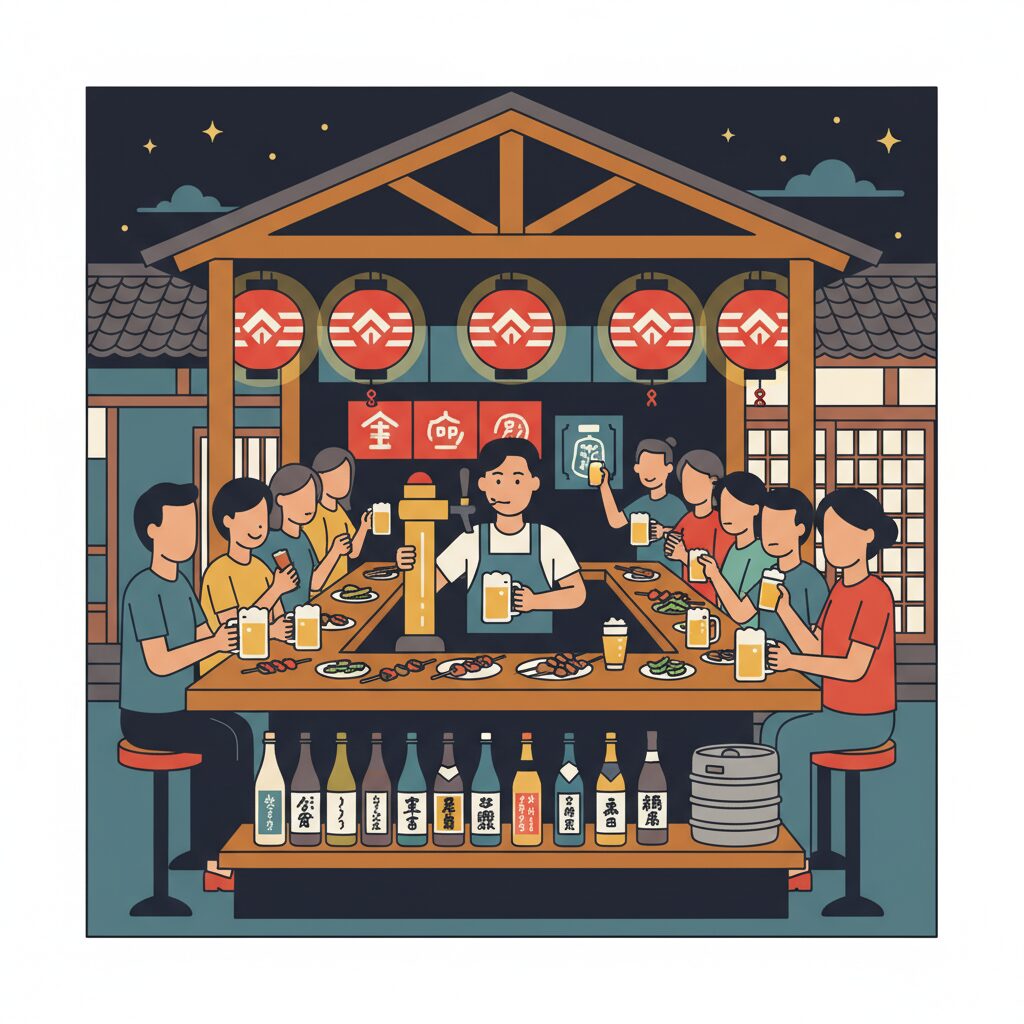
The screen glows. The Slack notifications ping. Your apartment, once a sanctuary, now feels like a softly lit office cubicle you can never leave. This is the new normal for many of us, the strange, isolating reality of remote work in a city of millions. You’re surrounded by life, by the electric hum of Osaka, yet you feel strangely disconnected from it. You crave a “third place,” that haven of sociability between home and work, but the lines have blurred into a single, monotonous space. Where do you go to break the spell? Where do you find the city’s authentic, uncurated pulse? The answer, my friend, is standing right in front of you, behind a steamed-up glass door and a short, flapping noren curtain. It’s the tachinomi, the standing bar. And in Osaka, it’s more than just a place to grab a cheap drink. It’s a social institution, a cultural antidote to loneliness, and your fastest gateway into the real, beating heart of local life. Forget what you think you know about bars. This isn’t about a wild night out. It’s about a quick, casual, and deeply human reset button.
After experiencing the brisk cultural reset of a tachinomi, you might also enjoy an affordable 500-yen sento reset that offers a relaxing plunge into Osaka’s vibrant local life.
What a Tachinomi Isn’t: Deconstructing the “Standing Bar”
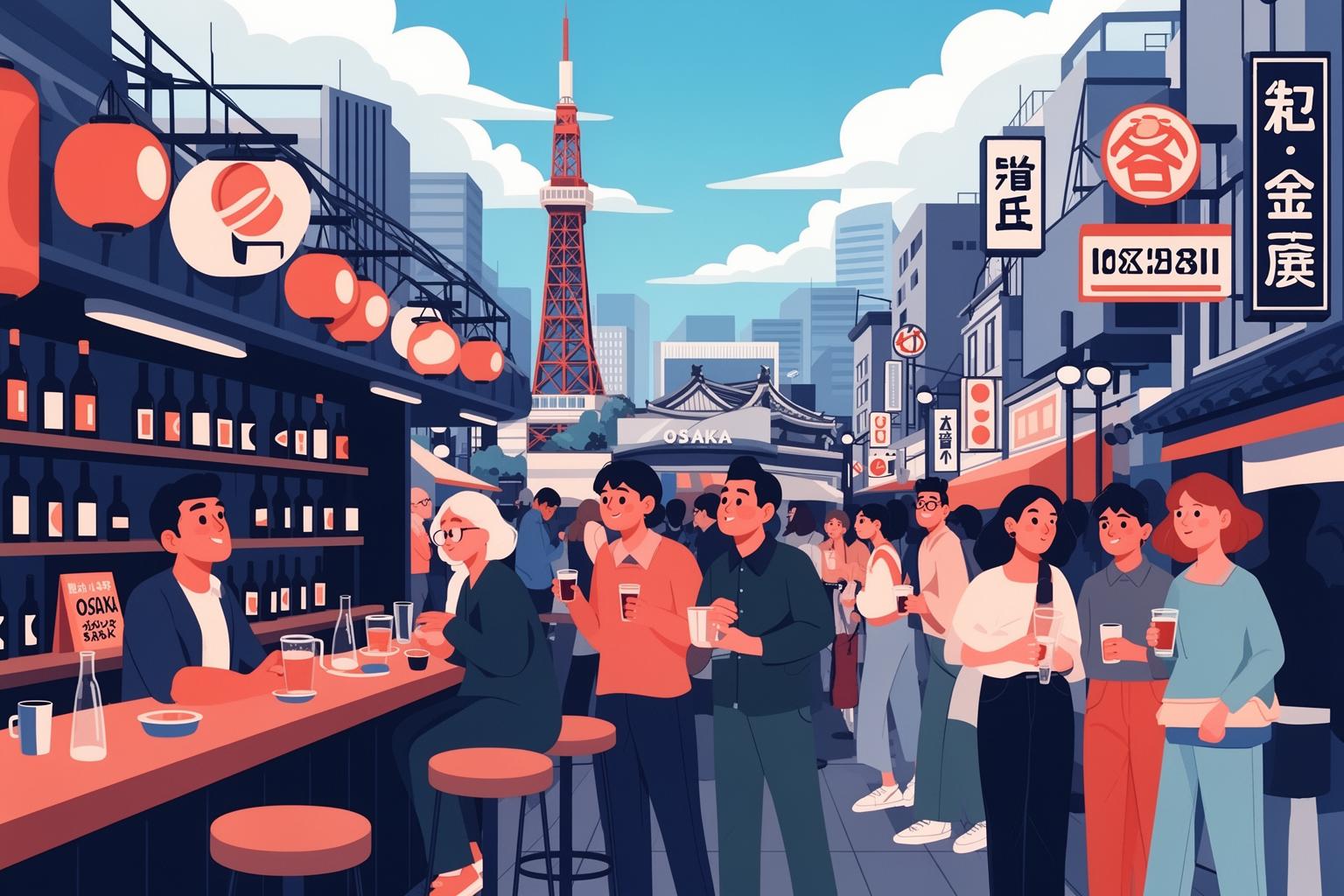
First, let’s set the stage. A tachinomi isn’t the typical bar you might be familiar with. It’s not a dimly lit lounge for savoring costly cocktails. It’s not a rowdy pub where you settle in for hours to watch a game. And it’s definitely not a soulless pre-club spot for quick cheap shots. The tachinomi follows a different philosophy, deeply rooted in the practical, efficient, and highly social spirit of Osaka. The key idea is often captured by the magical word senbero—getting happily buzzed for a thousand yen. That single concept reveals nearly everything about the Osakan attitude. It’s not about being stingy; it’s about being accessible. It makes the after-work drink a casual, everyday ritual for everyone, from a construction worker in dusty clothes to an executive in a suit.
Here lies the first noticeable contrast with Tokyo. While Tokyo has numerous standing bars, they often feel more impersonal, more transactional. They serve as quick, efficient stops for a solitary salaryman to recharge before a long train ride home. The emphasis is on speed and solitude. In Osaka, a tachinomi is more like a shared living room that has spilled out onto the street. The vibe is more relaxed, and the barriers between strangers are thinner. It remains fast and efficient, but with a strong social undertone. It’s natural for a foreigner to hesitate initially—you peek inside, see a tight crowd, hear a dialect that sounds foreign even if you speak Japanese, and think, “There are no seats. I don’t know the rules. This isn’t for me.” That hesitation forms a barrier, but it’s a flimsy one. Once you push past it, you discover one of the city’s most welcoming spaces. The apparent intimidation is just a layer of genuine, unfiltered local culture.
The Unspoken Rules of Standing Shoulder-to-Shoulder
Every culture has its rituals, and the tachinomi serves as a stage for unspoken social agreements. Mastering these isn’t about memorizing a set of rules; it’s about tuning into the space’s rhythm and flow. It’s a dance, and once you know the steps, you can move confidently.
The Entry and the Order
You don’t stand by the door waiting to be noticed. That’s a restaurant mindset. Here, you act independently. You slide open the door, glance along the counter for an opening—even the smallest space counts as an invitation—and you move toward it. A subtle nod or eye contact with the person beside you is courteous. Hang your bag on a hook under the counter or place it in a provided basket, marking your spot. Now, the order. Don’t stress over the menu, likely handwritten strips of paper pinned to the wall. The usual first order is almost always the same: “Toriaezu, nama,” or “Bin biiru.” A draft beer for now or a bottle of beer. This is the social lubricant, the opening move that gets you started. It gives you time to observe the scene, check out what others are eating, and decode the menu. Payment methods differ. Some spots are cash-on-delivery, where you put your money into a small tray or basket on the counter, and the staff deducts the cost of each item as it’s served. Others run a tab, and you pay on your way out. A quick look at how those around you pay will reveal the system. This whole process exemplifies Osakan efficiency: get in, get going, no fuss.
The Art of Conversation (or Not)
Here is where the true charm of the tachinomi lies. You are allowed, completely and comfortably, to be alone. You can stand there, sip your drink, enjoy a plate of grilled fish or simmered daikon, and fully immerse yourself in your own space. No one will find it odd. There’s zero social pressure. This makes it a perfect place to unwind after a long day of screen time. But if you want to talk, conversation is always simmering just beneath the surface. The close quarters are intentional. They break down personal space barriers and, by extension, social walls. The easiest way in? A comment about the food. Point at your neighbor’s tasty-looking dish and ask the owner, the taisho, “Are, nandesuka?” (What’s that?). That simple question can ignite a spark. Your neighbor might turn and share that it’s the best doteyaki (slow-cooked beef sinew) in town. Just like that, you’re in.
The taisho or mama-san is the cornerstone of this entire ecosystem. They’re not just the cook or bartender; they’re the host of the gathering, the conductor of the social symphony. They remember faces. They remember what you drank last time. They might gently introduce you to the person next to you. This is the foundation of the famed “Osaka friendliness.” It’s not an abstract concept but a practical, skillful hospitality that builds community in these small spaces. On your second visit, when the taisho greets you with a warm “Maido!” (a merchant’s greeting meaning “welcome back” or “thank you”), you’ll feel it. You’ve crossed from being an anonymous customer to a recognized face, a budding regular.
The Graceful Exit
A tachinomi is defined as much by its brevity as its warmth. This isn’t a place to linger for hours. The Japanese have the perfect phrase: sakutto nomu, to enjoy a quick drink. The ideal visit lasts about an hour, maybe ninety minutes at most. You have a couple of drinks, sample two or three small, affordable dishes, and then move on. This fast turnover keeps the atmosphere lively and the space open. It’s a social river, continuously flowing. This transient nature is exactly what makes the atmosphere so low-pressure. You aren’t dedicating your entire evening to one spot or one group. It’s a pit stop, a chapter in your night, not the whole story. When it’s time to leave, catch the owner’s eye and say “Okanjo, onegaishimasu” (The bill, please), or simply “Go-chiso-san” (Thanks for the meal). You settle up, offer a final “Ookini!” (Osaka-ben for “thank you”), and quietly slip back into the night, feeling more connected to the city than when you arrived.
Osaka vs. Tokyo: A Tale of Two Standing Bars
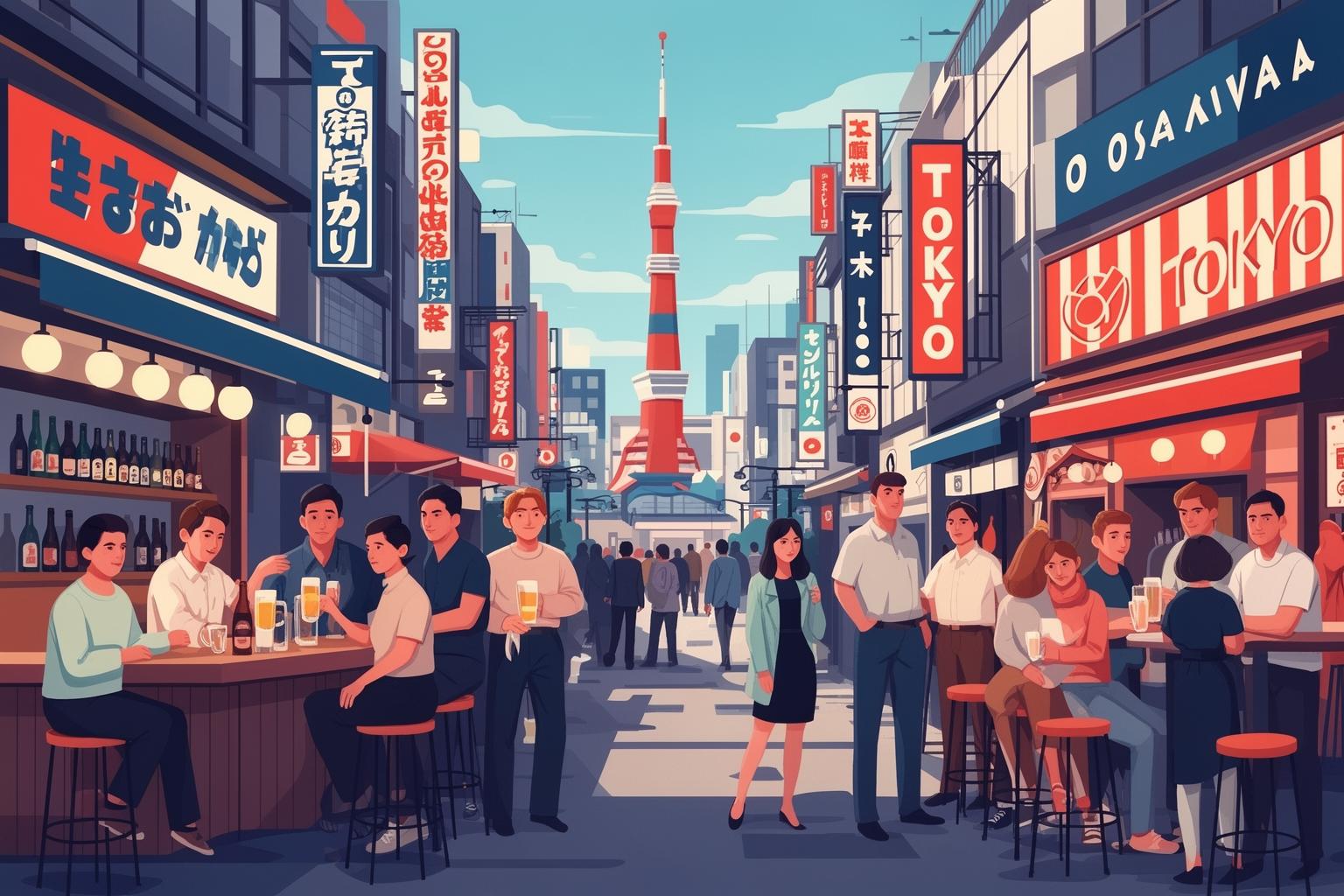
The essence of a city often reveals itself through its everyday institutions, and the subtle yet significant contrasts between tachinomi in Osaka and Tokyo tell a compelling story. It’s a narrative of commerce, class, and social character.
The Economic Underpinnings
Osaka has long been known as Japan’s kitchen, a city of merchants where practicality and value take precedence. The expression “kuidaore” (to eat oneself into bankruptcy) is more than just a love of food; it embodies a culture that demands high quality at a fair price. Kosupa, or cost performance, is deeply revered here. The tachinomi exemplifies this philosophy perfectly. It’s a business model pared down to its essentials: no chairs means fitting more customers per square meter, a simple menu reduces waste, and a cash-on-delivery system prevents unpaid tabs. This approach is not about being cheap, but about being efficient. This economic mindset turns Osaka’s tachinomi into something akin to essential public infrastructure—just as vital as a train station or convenience store. In Tokyo, while traditional tachinomi remain, there is also a trendier, more gourmet variety specializing in craft sake, natural wine, or artisanal foods. These places become destinations people seek out. In contrast, in Osaka, the tachinomi is often just part of the everyday scenery, a dependable neighborhood spot you drop by on your way home. It functions as a utility, not as a novelty.
The Social Fabric
This is where the distinction is most noticeable. Tokyo’s social etiquette typically values polite reserve. In bars, people often stick with their own group, and engaging with strangers usually requires intentional effort. Osaka’s reputation for being more open and direct shines clearly in its tachinomi culture. The cramped space is not only a physical constraint but also a social catalyst. The invisible barriers between strangers are lower. It’s common for the salaryman on your left to offer you some of his tempura, or for the two older women on your right to inquire about your background and then share unsolicited but kindly advice. This isn’t forced friendliness; it’s the cultural default mode. The humor is sharper, the laughter louder, and striking up a conversation is easy. It reflects a city built on trade, where interacting with strangers was essential for business. In a Tokyo tachinomi, you might stand beside someone for an hour in comfortable silence. In Osaka, that same silence might be warmly and cheerfully broken within minutes.
A Gateway to the Real Osaka: Beyond the Tourist Trail
If you want to truly understand the city, skip the famous landmarks for an evening and step into a neighborhood tachinomi. These bars serve as living museums of local character, each offering a glimpse into the soul of its particular part of Osaka.
Reading the Room: From Kyobashi to Shinsekai
The neighborhood shapes the atmosphere. Head to Kyobashi, a lively hub east of the castle, and you’ll find yourself in a gritty haven of working-class tachinomi. The spaces are crowded, the air pungent with the smoke of grilled meats, and the chatter loud and unrestrained. This is the raw, pulsing heart of salaryman Osaka. Move on to Tenma, with its vast covered market and endless maze of narrow alleys, and the vibe shifts. The crowd is somewhat younger, the menus more varied. You’ll discover tachinomi specializing in Italian dishes, Spanish tapas, or fresh sashimi standing alongside traditional establishments. Down in Shinsekai, beneath the watchful eye of Tsutenkaku Tower, you step back in time. Tachinomi here revolve around kushikatsu (deep-fried skewers), and the clientele tends to be older, filled with characters who seem lifted from a Showa-era film. Each neighborhood speaks a different dialect of the tachinomi language, a distinctive taste of the city’s remarkable diversity.
The Language of the Counter
You don’t need to be fluent in Japanese to get by, but a tachinomi is the best language school you could ask for. You’re not memorizing sterile textbook phrases; you’re absorbing the living, breathing language of the streets. You’ll learn the difference between the formal “Arigatou gozaimasu” and the warm, rounded “Ookini” that feels like a verbal embrace. You’ll hear shopkeepers greet each other with “Moukarimakka?” (Making money?), a classic merchant’s salutation. You’ll master ordering not just with words but with points, nods, and gestures. This is immersive learning at its finest. It’s where you’ll pick up the cadence and rhythm of Osaka-ben, the dialect that perfectly reflects the city’s direct, expressive, and humorous spirit.
The Antidote to the Algorithm: Finding Your Place in the Analog World
Let’s return to that glowing screen. Our digital lives are controlled by algorithms. Social media feeds, streaming suggestions, and news alerts are all tailored to show us more of what we already enjoy, trapping us in a comfortable yet isolating echo chamber. The tachinomi is the wonderful, chaotic, and beautifully human counterpoint to this. It is a place of spontaneous serendipity. You cannot customize your experience. You don’t choose who stands beside you. It might be a fishmonger from the local market, a university professor, a group of young fashion students, or a retired couple enjoying their evening. You’ll overhear conversations about baseball, local politics, or the price of cabbage—subjects that would never appear on your curated digital feed. You’ll witness food being made with a skill and care that a delivery app photo could never convey.
This is the remedy for the loneliness of remote living. It’s about reconnecting with the analog world, with the beautiful friction of real-life, unscripted human interaction. It’s a low-cost, low-commitment way to weave yourself into the fabric of your neighborhood. You start as an anonymous face. Then, you become a familiar one. Soon, you’re a regular. People nod when you walk in. The taisho begins pouring your usual drink before you even ask. You’re no longer just an expat living in Osaka; you are becoming a part of Osaka. You have discovered your third place.
So next time you feel the walls of your home office closing in, the next time the digital noise overwhelms you, resist the urge to scroll further. Put on your shoes, step outside, and look for that red lantern or simple noren curtain. Slide the door open and enter the warm, noisy, welcoming world of the tachinomi. It’s more than just a bar. It’s a micro-community, a social safety valve, and the most honest expression of Osaka’s unpretentious, pragmatic, and deeply human culture. The cure for your modern isolation isn’t online. It’s standing at a worn wooden counter, a cold beer in hand, ready for the simple, unpredictable magic of a real conversation.