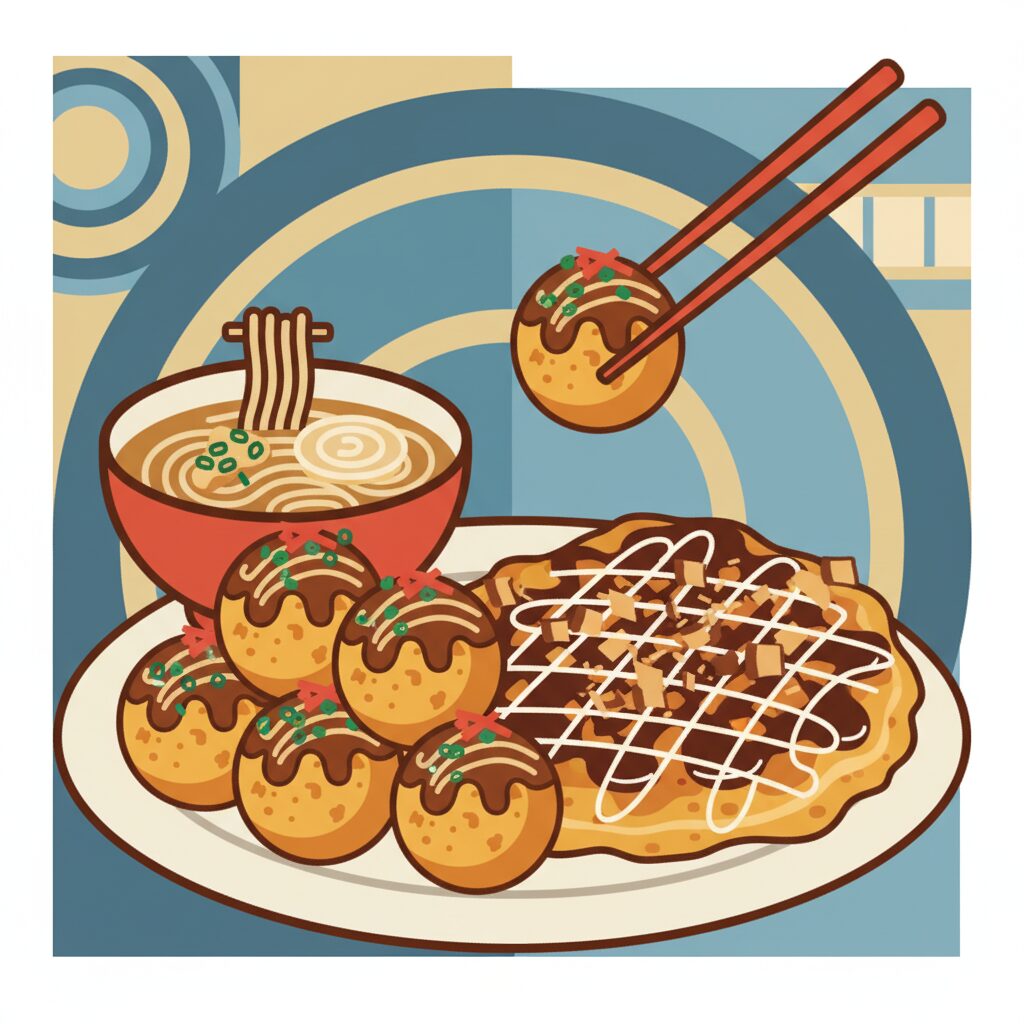
The first time I was invited to a friend’s apartment in Osaka, I expected what I’d seen in a dozen Japanese dramas: a quiet evening, meticulously presented dishes, and polite conversation. What I got instead was a cloud of savory steam, the clatter of metal on iron, and a cheerful command to “grab a skewer and start flipping!” Spread across the living room table was not a beautiful, multi-course meal, but an electric griddle pockmarked with sizzling, golden-brown spheres. This was my introduction to the ‘takopa,’ or takoyaki party, and my first real lesson in understanding Osaka. I’d eaten takoyaki a hundred times from street vendors, those delicious octopus-filled balls of batter I considered a quintessential tourist snack. But seeing them made at home, with friends laughing and competing to create the most perfectly round morsel, completely reframed my perspective. This wasn’t a snack; it was an activity. It was communion. And it was the key to unlocking the city’s entire personality.
So much of Osaka’s identity, I soon learned, is mixed into a simple batter of flour and water. We call this category of food ‘konamon,’ literally ‘flour things.’ To the outsider, it’s just okonomiyaki and takoyaki. But to Osakans, konamon is a language of practicality, a blueprint for social life, and an economic philosophy served on a hot plate. It explains why people here seem so different from their counterparts in Tokyo, why they value a good deal with near-religious fervor, and how they build community not in hushed, formal settings, but around a shared, sizzling griddle. Forget the guidebooks for a moment. If you truly want to understand what it feels like to live in this vibrant, no-nonsense city, you need to look beyond the street stall and into the heart of its konamon culture.
The spirited konamon gatherings, with their blend of culinary creativity and community spirit, mirror another local quirk that reveals Osaka’s distinct character, as seen in its unique escalator etiquette.
The Konamon Trinity: More Than Just Takoyaki
When you first arrive in Osaka, the flashing neon signs of Dotonbori will loudly advertise takoyaki. You’ll spot lines of people patiently waiting for a boat-shaped tray filled with octopus balls, smothered in sweet brown sauce and mayonnaise, topped with a flurry of dancing bonito flakes. It’s the city’s most famous culinary symbol, but it’s just one piece of a much larger and more significant food puzzle. To truly understand Osaka, you need to know the holy trinity of home-style konamon, each serving a distinct role in the rhythm of daily life.
Okonomiyaki: The Soul on a Griddle
First, let’s clarify something. Calling okonomiyaki a “Japanese pizza” or a “savory pancake” misses the entire point. The name itself reveals the philosophy: okonomi means “what you like,” and yaki means “grilled.” It’s not a fixed recipe; it’s a blank canvas. At its base, it’s a batter made from flour, water, and dashi, blended with a mountain of shredded cabbage and an egg. From there, anything goes. Thin slices of pork belly are the classic choice, but you can add squid, shrimp, cheese, mochi, kimchi—whatever you prefer.
More importantly, you cook with what you have. In an Osakan home, okonomiyaki is the go-to solution for the age-old question, “What can I make with the sad-looking leftovers in my fridge?” It embodies the local spirit of mottainai, a deep-seated cultural aversion to waste. That last bit of pork, the half-empty bag of frozen corn, the wilted green onions—all go into the mix. The secret ingredients that give okonomiyaki its authentic Osaka flavor are often leftovers themselves: tenkasu, crunchy bits of fried tempura batter, and beni shoga, bright red pickled ginger. These aren’t fancy or costly additions; they’re inexpensive, flavorful fillers. Okonomiyaki isn’t about flaunting expensive ingredients; it’s about transforming humble, everyday items into something incredibly tasty and satisfying. It’s resourcefulness made edible.
Takoyaki: The Party in a Ball
While tourists line up for takoyaki on the streets, Osakans make it at home. Step into any electronics store here, and you’ll find an entire section devoted to takoyaki-ki, special griddles with hemispherical molds. Owning one isn’t a novelty; it’s a household staple, as common as a coffee maker or rice cooker. Its presence signals that the home is ready for a party, or a “takopa,” at a moment’s notice.
The takopa is Osaka’s signature social gathering, very different from a typical dinner party. There’s no single host slaving away in the kitchen while guests engage in polite small talk. Instead, everyone gathers around the griddle. The host prepares the batter and basic octopus filling, then the cooking is communal. Each person claims a few holes on the griddle and takes responsibility for their own little spheres of dough. The real fun lies in the technique: armed with a long wooden skewer, you skillfully poke and turn the batter at just the right moment to create a perfect ball—crispy on the outside and gooey on the inside. It’s a skill, and people take great pride in it.
This process acts as a social lubricant. It’s impossible to be stiff or formal when focused on not burning your takoyaki. It sparks conversation, friendly competition, and a bit of controlled chaos. People bring their favorite fillings to share—sausages, cheese, chocolate for dessert versions—making the meal a collaborative experiment. The takopa perfectly embodies the Osakan social ideal: informal, hands-on, and centered around a shared, interactive experience.
Udon & Yakisoba: The Everyday Fuel
The trinity isn’t complete without the noodle-based konamon that fuel the city through its workdays. While okonomiyaki and takoyaki are often reserved for gatherings, udon and yakisoba are everyday staples. Osaka has a deep, abiding love for udon, especially Kitsune Udon. The story goes that this dish—a simple bowl of thick, chewy noodles in a savory dashi broth topped with a large piece of sweet fried tofu (aburaage)—was invented here. It’s the quintessential meal of the Osaka merchant: cheap, quick, filling, and deeply comforting. The broth is everything, a delicate balance of kombu and bonito reflecting the city’s history as the “Nation’s Kitchen,” where the finest ingredients from across Japan gathered.
Yakisoba, fried noodles, is the griddle’s other star. It’s often cooked on the same teppan as okonomiyaki, sometimes right beside it. It’s the perfect way to stretch ingredients. A little meat and plenty of cabbage and noodles can feed a large family for pennies. You’ll find yakisoba made in huge batches at local festivals, school events, and neighborhood barbecues. It’s not fancy or complicated, but it’s reliable, delicious, and a masterclass in cost-effective cooking. Together, these dishes form the foundation of the local diet, proving that konamon culture is for every day, not just special occasions.
Flour, Water, and the Osakan Mindset
To truly understand why konamon is so deeply embedded in Osaka’s culture, you need to realize it’s more than just a category of food. It embodies the fundamental values that have shaped this city for centuries. Osaka was founded by merchants, not samurai, and that practical, commercial mindset permeates every facet of life, especially the cuisine. Konamon perfectly represents Osaka’s core values: savvy economics, fierce independence, and vibrant communication.
‘Mokkari-makka?’: The Economics of Konamon
The customary greeting among Osaka businesspeople isn’t “How are you?” but “Mokkari-makka?” which means “Are you making a profit?” While often delivered with a playful wink, it reveals a vital truth: this city is obsessed with value. This mindset is best captured by the concept of kospa, short for ‘cost performance.’ An Osakan doesn’t just want quality; they want quality relative to price. A 10,000 yen meal might be tasty, but a 1,000 yen meal that tastes like it should cost 3,000 yen? That’s real satisfaction.
Konamon reigns supreme in kospa. Its basic ingredients—flour, water, cabbage, eggs—are some of the cheapest items you can find at a supermarket. With a small outlay, you can prepare a meal that is hefty, satisfying, and delicious. You can feed a family of four a huge pork-filled okonomiyaki for less than the price of a single bowl of ramen in Tokyo. This isn’t about being frugal; it’s about being resourceful. It’s the merchant’s pride in turning a small investment into a significant return, applied directly to the dinner table. People boast not about rare ingredients, but about how much food they created for so little money. This philosophy sharply contrasts with Tokyo’s culinary culture, which often prizes expensive, single-serving delicacies and refined simplicity. Osaka cherishes abundance, efficiency, and maximizing every yen’s worth.
The ‘My-Rule’ Culture of Customization
Eavesdrop on a conversation between two Osakans debating okonomiyaki, and you’ll witness a passion rivaling any political argument. Should cabbage be mixed into the batter from the start, or layered on the griddle for a fluffier result? Is adding mountain yam (yamaimo) for creaminess a must or cheating? What’s the perfect balance of sauce to mayonnaise? Everyone has staunch opinions, usually beginning with, “Well, in my family, we always…” There is no single definitive recipe—only your way, and naturally, your way is the best.
This debate goes beyond culinary preference. It reflects a deep-rooted individualism and a healthy distrust of rigid authority. Osaka prides itself on being a city of independent thinkers, where you set your own rules. The konamon griddle is a classroom for this ethos. There is a basic formula, but the artistry lies in personal flair and improvisation. This differs from the more form-bound culture of Kanto and Tokyo, which places greater emphasis on following traditional, established methods. In Osaka, tradition is a foundation, not a constraint. The freedom to customize and invent your own ‘my-rule’ version of a classic dish is a form of self-expression—a declaration that you know best what works for you.
Communication on the Teppan
Imagine the scene around a teppan, the large iron griddle central to any konamon gathering. It’s noisy. You hear batter sizzling in hot oil, the rhythmic clack-clack-clack of metal spatulas (kote) against the iron, the pork belly crackling as it crisps. But above all, you hear the conversation. It’s not quiet or polite; it’s a lively exchange filled with instructions, jokes, and unsolicited advice. “Flip it now, it’s going to burn!” “No, wait another minute!” “Who put cheese in this one? Genius!” Someone inevitably bungles a flip, sending cabbage flying, and the table bursts into laughter.
The teppan is a social stage, showcasing Osaka’s communication style. It’s direct, interactive, and a bit chaotic. There’s less focus on formal niceties and more on shared effort and good-natured teasing. Making konamon together breaks down social barriers. You aren’t just host and guest; you’re collaborators in the delicious project of dinner. This hands-on, communal experience builds bonds based on participation rather than passive observation. It’s a world apart from the quiet reverence of a formal kaiseki meal. In Osaka, the best meals are those where everyone has a spatula in hand and a bit of sauce on their cheek.
Living the Konamon Life: A Practical Guide for Residents

Understanding konamon culture is one thing; truly living it is another. For any foreigner settling in Osaka, embracing the flour-based lifestyle is one of the quickest ways to feel like a local. It’s your gateway into neighborhood life, a reliable method for making friends, and a useful skill that will benefit you greatly. Here’s how to begin.
Your Konamon Starter Kit
Your first task is to gather the essential tools. There’s no need to spend a lot of money. Visit a store like Don Quijote, the electronics giant Yodobashi Camera, or even a nearby home center. Your main target is a takoyaki-ki. The electric tabletop models are ideal for apartment living. Next, you’ll need two small metal spatulas, known as kote or hera. These are crucial for flipping and slicing okonomiyaki. Finally, pick up a brush for spreading the sauce.
When it comes to ingredients, every supermarket in Osaka features a dedicated ‘konamon corner.’ This is where you’ll find the staples you should always keep in your pantry. Start with a bag of pre-mixed okonomiyaki or takoyaki flour, which includes dashi and other seasonings to simplify the process. Then, stock up on the holy trinity of toppings: a bottle of thick, sweet Otafuku or Bulldog okonomi sauce, a squeeze bottle of Kewpie mayonnaise (the authentic Japanese version is key), a bag of katsuobushi (bonito flakes), and a shaker of aonori (powdered green seaweed). With these essentials on hand, you’ll always be prepared for a konamon emergency—meaning any night of the week.
Navigating the ‘Takopa’ Invitation
Sooner or later, you will be invited to a takopa, which is a major milestone in your social integration. Don’t take it lightly. This is your opportunity to show that you truly understand Osaka. First, think about what to bring. A fancy bottle of wine or an expensive cake is not the right choice—too formal. The best options are almost always beer, canned chu-hai (shochu highballs), or a fun snack to share. Even better, bring an ingredient to add to the takoyaki experiment, like a block of cheese, a pack of sausages, or a small container of kimchi. This will be warmly welcomed and shows you appreciate the collaborative spirit of the event.
Once there, the most important rule is to participate. Don’t be the shy guest sitting quietly waiting to be served. Grab a skewer, claim a section of the griddle, and start flipping. At first, you’ll be terrible. Your takoyaki will be misshapen, sticky, and may fall apart. That’s completely fine—it’s all part of the fun. Your failed attempts will become excellent icebreakers, and your friends will eagerly offer loud and conflicting advice. What counts is the effort. Demonstrating that you’re willing to jump in, make a mess, and laugh at yourself is the fastest way to win the hearts of Osakans.
Beyond the Home: The Neighborhood Konamon Joint
While home cooking is the heart of konamon, its soul lies in the thousands of tiny, family-run shops tucked away on the side streets of every residential neighborhood. These aren’t flashy tourist spots; they’re well-worn local joints where the owner knows everyone’s name. Often, there’s just one large teppan surrounded by a counter with a few stools. The air is thick with the scent of sizzling batter and sweet sauce.
For a new resident, finding your local okonomiyaki-ya is a rite of passage. Visit on a weeknight. Sit at the counter, order a beer and a butatama (the classic pork okonomiyaki), and simply watch. You’ll see the owner’s practiced, almost balletic movements as they prepare the food, and hear the easy banter of the regulars. This is where the real life of the neighborhood plays out. Becoming a familiar face in a place like this is a strong anchor. It’s how you transition from being an anonymous foreigner to a member of the local community. Here, you’ll discover the unpolished, unpretentious, and wonderfully warm heart of the city.
Common Misunderstandings and the Tokyo Comparison
Part of understanding Osaka is recognizing what it isn’t. The city often defines itself in contrast to its great rival, Tokyo. This friendly yet intense competition manifests in language, sports, and especially cuisine. Konamon culture is a significant source of pride and a clear cultural boundary between the Kansai region and the Kanto region to the east.
Misunderstanding: “It’s Just Cheap Street Food”
The biggest error a visitor can make is to assume konamon is low-quality fast food simply because it’s affordable and often sold from street vendors. This overlooks the deep cultural importance and genuine pride Osakans have in this cuisine. For many, the taste of their mother’s okonomiyaki embodies ultimate comfort food, a flavor closely tied to home and family. The quality of the dashi in the batter, the freshness of the cabbage, and the precise blend of sauces—all are carefully considered elements.
Store-bought takoyaki is convenient, but homemade takoyaki is an occasion. It represents hospitality and community. To dismiss it as merely ‘cheap food’ ignores the craftsmanship, history, and love invested in it. It’s akin to calling a backyard barbecue in Texas ‘just cheap meat.’ You miss the entire cultural context. In Osaka, value and quality coexist, and konamon is the perfect example.
The Osaka vs. Tokyo Flour Divide
Tokyo has its own version of a savory pancake: monjayaki. The typical Osakan reaction upon seeing it for the first time is a blend of confusion and mild horror. Whereas okonomiyaki is a solid, hearty pancake, monjayaki has a much runnier, more liquid batter. It’s cooked on a griddle but never fully firms up. You eat it by scraping small portions directly off the teppan with a tiny spatula. To Osakans, it looks undercooked, messy, and basically unsatisfying. The classic joke is, “Did someone get sick on the griddle?”
This culinary rivalry perfectly symbolizes broader cultural differences. Osaka culture, expressed through okonomiyaki, is direct, substantial, and straightforward. What you see is what you get: a hearty meal that satisfies and delights. From an Osakan perspective, Tokyo’s monjayaki can appear overly complicated and less sincere. This flour-based rivalry underscores Osaka’s historical role as the ‘Nation’s Kitchen.’ It was the central hub for distributing essential ingredients like flour, kelp for dashi, and sugar. This long-standing expertise in managing core Japanese culinary staples nurtured a food culture that is robust, inventive, and deeply democratic. It’s a cuisine built from the ground up by merchants and ordinary people, and that heritage of practicality and heartiness continues to shape Osaka’s palate today.
The Unspoken Flavor: Dashi and the Soul of the Batter

If you eat enough konamon in Osaka, you’ll begin to detect a subtle complexity beneath the bold flavors of the sauce and mayonnaise. There is a savory depth, a quiet undertone of umami that transforms the simple batter from bland to addictive. This flavor is dashi, the real secret to Osaka’s culinary essence. Dashi, a soup stock usually made from kombu (kelp) and katsuobushi (bonito flakes), forms the foundation of much Japanese cuisine, but in Osaka, it is a passion.
The city’s closeness to the sources of premium kombu from Hokkaido and katsuobushi from the south established it as the historical heart of dashi culture. This expertise extends beyond upscale restaurants; it infuses everything, especially konamon. A truly exceptional takoyaki doesn’t need to be smothered in sauce because the batter itself is brimming with the rich, savory taste of dashi. Many renowned shops take pride in their unique dashi blends, a secret recipe handed down through generations. Some even serve their takoyaki with a side of clear dashi for dipping, allowing the batter’s flavor to stand out.
For home cooks, incorporating dashi into the batter is an essential step. It distinguishes a mediocre attempt from an authentic Osaka creation. Recognizing this hidden flavor’s importance shows that you’re moving beyond a superficial appreciation of the food. You start to realize that the brilliance of konamon lies not only in its affordability or social role but also in its capacity to deliver a deep, satisfying, and complex flavor from the humblest ingredients. It quietly honors the city’s culinary heritage, a taste that reflects wisdom rather than wealth.
In the end, konamon is much more than just a set of recipes. It’s a cultural toolkit, a way of life perfectly tailored to the city that birthed it. It’s the practical solution to “What’s for dinner?” when funds are tight. It’s the social answer to “How can we gather everyone?” without the formality or cost of dining out. It’s a delicious, edible expression of Osaka’s core values: be resourceful, cherish community, make your own rules, and always seek a great deal.
This journey begins with a simple snack from a street stall and ends in a friend’s living room, spatula in hand, debating the perfect flip timing. When you find yourself fiercely defending your family’s secret okonomiyaki ingredient or evaluating the dashi level in a neighbor’s takoyaki batter, you’ll know you’ve crossed a key threshold. You’re no longer just a resident of Osaka—you’re starting to think and eat like you truly belong here.