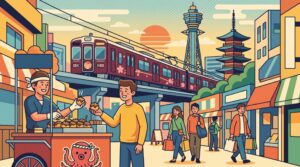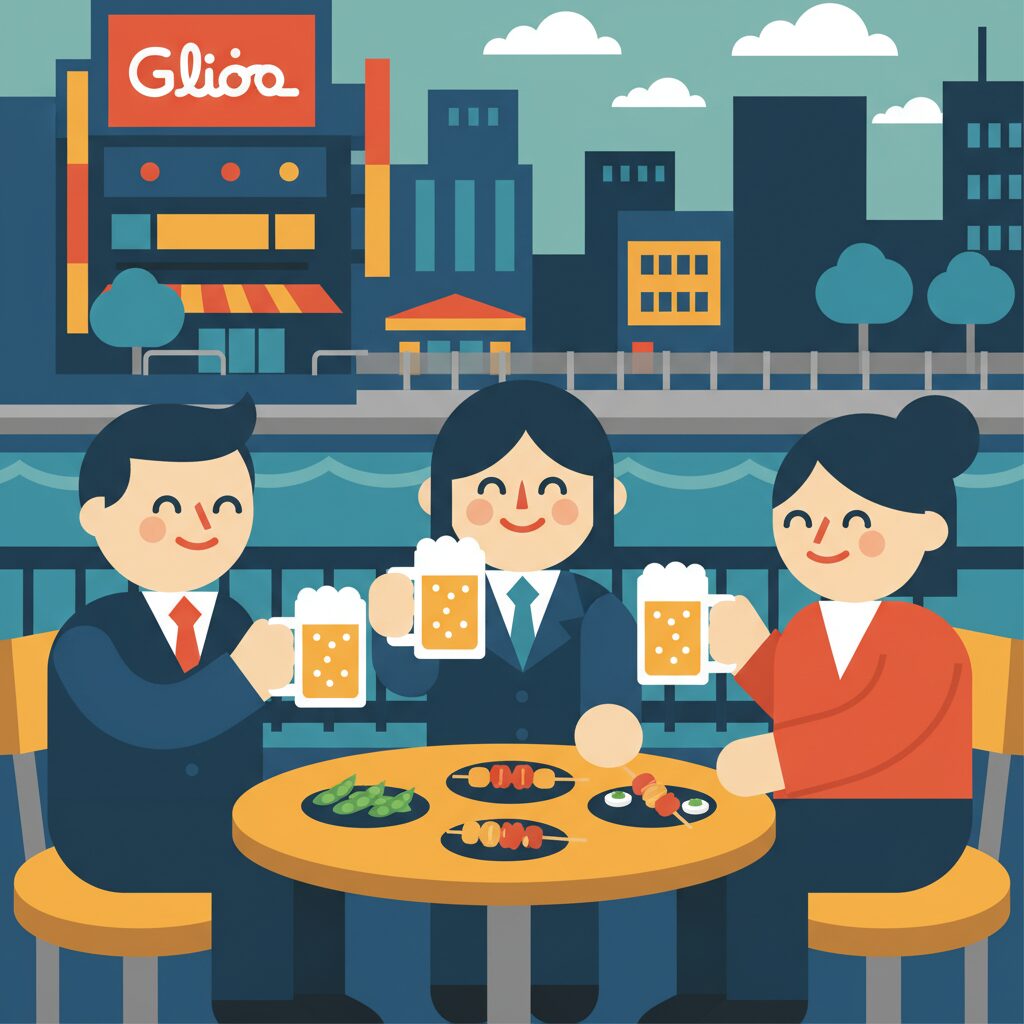
You made it through another day. The fluorescent lights of the office flicker off, replaced by the soft glow of your monitor. You’re packing your bag, thinking about the train ride home, when Tanaka-san from accounting claps you on the shoulder. “Hey, we’re all going for a drink, you coming?” An invitation. Or is it a command? In the West, this is a simple question. In a Japanese office, especially here in Osaka, it’s a cultural crossroads. You might be tired. You might have plans. You might just not feel like it. But you also have this nagging feeling that saying “no” means more than just missing a beer. You’re right. It does. This isn’t just about drinks; it’s about connection. It’s the unspoken, after-hours ritual known as the ‘nomikai’, and in Osaka, it’s the bedrock of professional relationships, the place where colleagues become a team. This is where the city’s true personality, often hidden behind the polite formalities of the workday, comes roaring to life. Forget the emails and the PowerPoints for a night. The real work of building trust happens here, in the heart of the city’s vibrant nightlife.
Yet another way to immerse yourself in Osaka’s rich post-work culture is by experiencing its traditional sento ritual, which offers a refreshing contrast to the lively nomikai scene.
Two Worlds: The Office Mask and The Izakaya Face
Step into any office building in Umeda or Yodoyabashi, and you’ll encounter a familiar, universal hum of productivity. Keyboards tap in a steady rhythm. Phones ring with polite, measured greetings. People bow slightly as they pass each other in the hallways. It’s a world defined by precision, process, and politeness. This is the domain of `tatemae`, the public-facing self. It’s the polished, professional facade that keeps the intricate machinery of a Japanese company running smoothly. In meetings, opinions are frequently expressed in indirect language, and consensus is cultivated carefully, layer by layer. A suggestion is never just a suggestion; it’s a delicate probe to gauge the group’s mood. A direct “no” is rarely heard; instead, phrases like “that could be difficult” or “I will take that back for consideration” are common. For a foreigner used to more direct communication, this can feel like navigating a maze of unspoken rules. You see the same faces every day, work on the same projects, yet you might feel like you don’t truly know the people beside you.
Then, at 7 PM, the scene changes completely. You slide open the door to a small `izakaya` tucked away in a back alley near Temma Station. The air is thick with the savory smoke of grilled chicken skewers and the lively sounds of laughter. The quiet, reserved section chief from the third floor is now telling a loud, animated story, waving his chopsticks energetically. The new hire, who barely spoke all week, passionately debates the merits of the Hanshin Tigers’ latest draft pick with a senior manager. This is the world of `honne`, where true feelings and thoughts come to light. Alcohol here isn’t just a drink; it’s a permission slip. It’s the socially accepted trigger that allows the `tatemae` mask to fall away, revealing the real person underneath. This duality is essential to grasping Japanese work culture. The office is where you perform your role. The izakaya is where you reveal your character. Without experiencing both, you only see half the picture. The trust needed to collaborate effectively, ask for help, or navigate internal politics isn’t built in the sterile conference room. It’s forged here, over shared plates of fried octopus and brimming glasses of beer.
The Ritual of Release
Think of the nomikai as a communal pressure-release valve. The day’s stress, frustrations with a difficult client, anxieties about an approaching deadline—they all come out, literally. But it’s not a complaint session in the Western sense. It’s a shared act of letting go. Pouring a drink for your boss, and having one poured for you in return, is a subtle yet powerful leveling gesture. For a moment, the rigid hierarchy of the office softens. The manager transforms from a distant authority figure into someone who also worries about their kids’ school exams or enjoys fishing on weekends. This humanization is the core purpose. When you understand your boss’s quirky sense of humor or find a shared passion for old movies with a colleague from another department, that connection doesn’t disappear when you return to the office the next morning. It lingers. It becomes a new channel of communication, an invisible bridge of understanding that makes everything flow more smoothly.
Why Osaka’s Nomikai Hits Different
While the nomikai is a widespread tradition across Japan, the style and purpose it takes on in Osaka are uniquely distinctive. This isn’t Tokyo. The difference is tangible and deeply rooted in centuries of history. Tokyo, formerly Edo, was the domain of samurai and shogun—a hierarchical society governed by strict protocol. Its nomikai culture, though evolving, sometimes still carries remnants of that formality. It can feel like an extension of the workday, another obligation where managing relationships with superiors carefully is key. Conversations tend to be more restrained, and the atmosphere somewhat calculated, often reinforcing the existing power dynamics in a more relaxed environment.
Osaka, in contrast, originated as a merchant city. Known as the nation’s kitchen, success there depended less on lineage and more on intelligence, effort, and, above all, relationships. For Osaka merchants, a handshake and a shared cup of sake were as binding as any written contract. Trust was currency, earned face-to-face. This mercantile spirit is embedded in the city’s DNA and shapes the local nomikai culture. An Osaka nomikai is less about obligation and more about exploration. The aim isn’t just to drink with the boss, but to share laughs, break down barriers, and truly understand who you’re dealing with. It’s louder, more chaotic, and refreshingly straightforward.
The Currency of Laughter
In Osaka, humor serves as a tool, a social lubricant, and a sign of intelligence. Playful teasing of your boss isn’t seen as disrespect; it’s a marker of a comfortable, trusting relationship. The talent for making people laugh, telling engaging stories, or engaging in witty banter (`tsukkomi` and `boke`) is highly prized. The atmosphere leans less toward polite deference and more toward lively interaction. Conversations swing rapidly between topics, driven by a shared desire for genuine human connection. Here, you’ll hear blunt opinions, passionate debates about food, and the self-deprecating humor for which Osakans are well known. While a Tokyo nomikai might conclude with a polite, formal farewell, an Osaka nomikai is more likely to lead to plans for a second venue (`nijikai`), or even a third (`sanjikai`), not out of duty but because everyone is truly enjoying each other’s company.
The `Kuidaore` Connection
Osaka’s identity is inseparably tied to food, epitomized by the concept of `kuidaore`—to eat until you drop. This passion for food deeply influences the nomikai. The choice of izakaya, the quality of sashimi, the crispiness of `kushikatsu`—these details are far from trivial. They serve as conversation starters and bonding experiences. Sharing a meal in Osaka is a profoundly communal act. Plates circulate, food is shared, and opinions are debated with the same enthusiasm that accompanies business negotiations. Discussing the subtle flavors of a particular sake or the best spot in Namba for `takoyaki` is how Osakans build connections. It’s neutral ground where everyone, from intern to CEO, can have their say. Engaging in this culinary dialogue signals that you’re invested not only in the company but also in the culture of the city itself.
Navigating the Nomikai: A Practical Guide for Outsiders
Grasping the significance of the nomikai is one thing; feeling at ease within it is quite another. For someone who isn’t Japanese, the unspoken rules and expectations may cause anxiety. Let’s clarify the process and offer a practical guide not just to survive, but to thrive, in Osaka’s after-work social gatherings.
Is It Really Mandatory?
This is the million-yen question. The honest answer is no, it’s not mandatory in the sense that you will be fired for not attending. However, is it essential for integration and relationship-building? Absolutely. Think of it less as an obligation and more as an open invitation to join the inner circle. Declining every time sends a clear message: “I am not interested in being part of this team beyond my contractual duties.” This can be seen not as a personal choice, but as a rejection of the group. The key is balance. You don’t need to attend every single nomikai. Life happens. But making an effort to show up regularly, even if only for the first hour, shows your commitment to the team. Your presence itself is what matters.
What If I Don’t Drink Alcohol?
This is a common and entirely valid concern. The good news is, you absolutely don’t have to drink alcohol. The term `nomikai` literally means “drinking gathering,” but today its main purpose is social bonding. It’s perfectly acceptable to stick with oolong tea, juice, or non-alcoholic beer all night. No one will pressure you. In fact, many Japanese people abstain from alcohol for various reasons. The important thing is to join in the rituals. When everyone raises their glass for the initial “Kanpai!” (cheers), raise your glass of tea with them. If a colleague offers to pour you a drink, you can politely thank them and indicate your soda glass. The aim is to be part of the communal experience. The contents of your glass don’t matter; your participation does.
The Unwritten Etiquette
Although an Osaka nomikai is informal, a few customs help things go smoothly. It’s considered polite to be mindful of the glasses around you. If you notice a senior colleague’s glass is nearly empty, it’s a kind gesture to pick up the beer bottle or sake flask and offer to pour for them, holding the bottle with both hands as a sign of respect. They will almost certainly reciprocate. This ongoing act of serving each other reinforces a sense of mutual care and team unity. When it comes to food, dishes are almost always served family-style. Don’t wait to be served; use the shared chopsticks (`toribashi`) to take a portion for your own small plate. And don’t hesitate to ask what things are or recommend something you enjoyed. It’s all part of the shared discovery.
From Coworkers to Comrades: The Real Payoff
The true value of investing your time in nomikai isn’t immediately apparent. It doesn’t appear on a performance review or reflect in your monthly paycheck. The benefits are long-term and fundamental. It’s the gradual, consistent buildup of social capital and mutual trust that turns a group of individuals into a close-knit, effective team. It’s the difference between working in a place where you feel like an interchangeable part and one where you feel like a valued member of a work family.
Consider this scenario: you’re facing a tight deadline and encounter a major obstacle requiring urgent assistance from another department. If your only contact with that department’s manager has been through formal emails, your urgent request is just another message in their overloaded inbox. But if you spent two hours last week sharing laughs with that same manager over a terrible Netflix show you both watch, your relationship changes. You’re not just a name in an email signature; you’re a person. You can call them directly, explain your situation, and draw on the goodwill you’ve built. They’re far more likely to go above and beyond to help you, not just because it’s their job, but because there’s a personal connection. This is the magic of the nomikai. It’s a strategic investment in human relationships that yields returns in efficiency, collaboration, and job satisfaction.
This informal network becomes your safety net. When you make a mistake, colleagues who know you personally are more understanding and willing to help you fix it. When you have a good idea, they’re more inclined to listen and support you. The bonds formed in the relaxed chaos of an izakaya foster a more resilient, communicative, and ultimately more productive workplace. You begin to understand the nuances of your colleagues’ personalities, their strengths, and their communication styles, enabling smoother collaboration with much less friction.
Misunderstandings and Final Thoughts

Foreigners often misinterpret the nomikai through a Western lens, viewing it as forced fun or unpaid overtime. This perspective overlooks the cultural context. It’s not about the company trying to take your personal time; rather, it is a deeply rooted cultural practice aimed at fostering group harmony, which is valued more than rugged individualism in Japanese society. The system is designed to ensure the team operates as a single, empathetic unit. While the notion of mandatory fun may seem odd, its purpose is to create a stronger, more supportive work environment for everyone.
Another frequent misconception is seeing it solely as a party. Though nomikai are enjoyable, they serve a clear purpose. They provide a space for informal information sharing, where junior employees receive mentorship from seniors in a relaxed atmosphere, and inter-departmental barriers are broken down. In this way, nomikai represent an efficient form of networking and team-building that has existed long before modern corporate terminology.
Ultimately, to truly understand Osaka and find your place in its professional world, you need to embrace the nomikai. Don’t regard it as an obligation but as an opportunity. It is your backstage pass to the real Osaka, a city that does business with a handshake, a laugh, and a shared meal. It’s where you transition from being the “foreign colleague” to becoming part of the team. Here, the city’s famous warmth and pragmatism come together, demonstrating that in Osaka, the strongest business relationships are always personal.