Hey everyone, Sofia here! When you first move to a city like Osaka, your weekends can fill up fast. You’ve got the castle, the neon lights of Dotonbori, the endless food quests. You’re busy, you’re exploring, you’re checking off the big-ticket items. But then, a few months in, you might feel a little itch. You’ve seen the sights, but have you felt the city’s pulse? You know the train lines, but do you know the neighborhoods? That’s when I discovered the real secret to unlocking Osaka isn’t found on a tourist map. It’s found behind a simple noren curtain, in the steam and chatter of a neighborhood sento, a public bath. Forget what you think you know. This isn’t just about getting clean. It’s about getting connected. In Tokyo, a sento can sometimes feel like a quiet, stylish spa. In Osaka, it’s the city’s living room, its soap opera, its comedy club, all rolled into one steamy, wonderful package. Planning a weekend around a local sento isn’t a retreat from the city; it’s a deep dive into its very soul. It’s how you switch from seeing Osaka to truly living it, feeling its rhythm, and understanding why its people are the way they are. So, grab a tiny towel, leave your inhibitions at the door, and let’s plan a weekend that will warm you from the inside out.
Embracing the unique charm of Osaka means not only enjoying its local sento culture but also delving into the city’s signature tsukkomi humor that colors every neighborhood interaction.
Decoding the Sento Vibe: Why Osaka Baths Feel Different
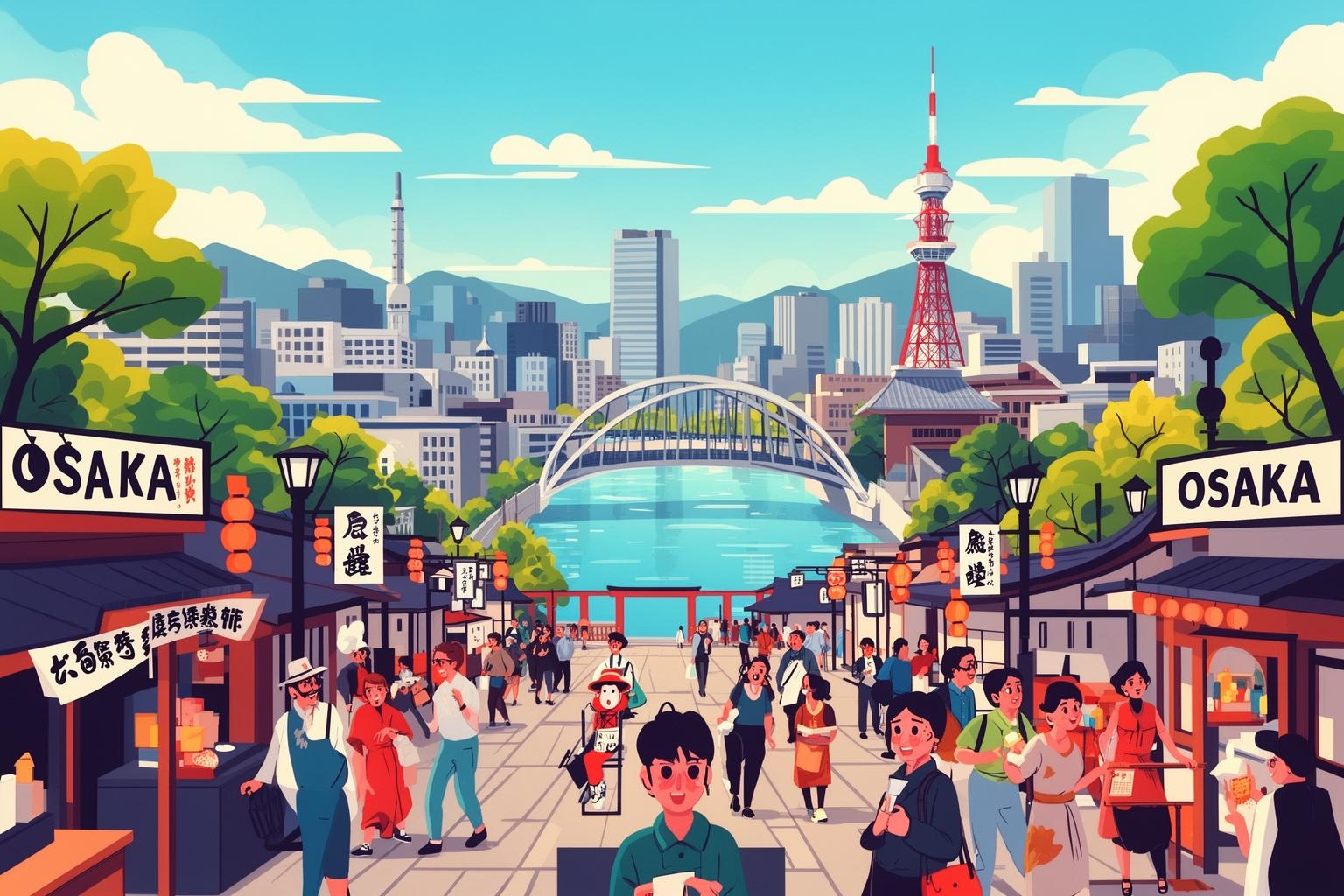
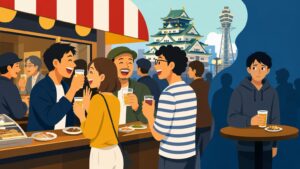
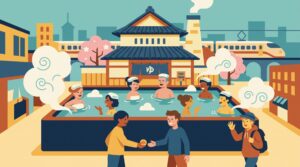
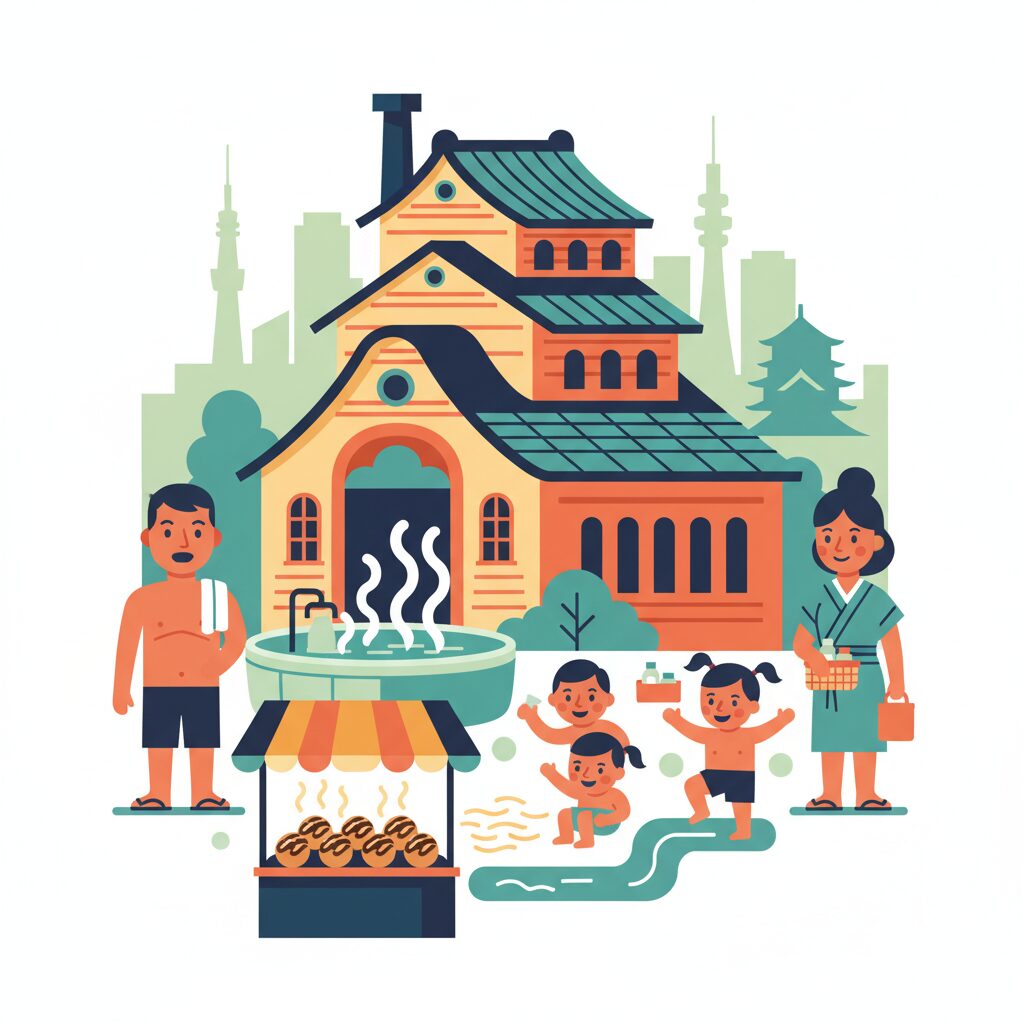
Step into a public bath in Tokyo, and you’ll likely encounter a calm, respectful silence. People soak in quiet reflection, keeping to themselves. It’s relaxing, certainly, but it’s a more internal kind of relaxation. Now, pull aside the noren curtain of a sento in Osaka. The first thing that greets you isn’t the steam—it’s the noise. It’s a lively, bubbling commotion. Nearby, two obachans, elderly ladies, are debating the quality of this week’s cabbage, their voices bouncing off the tiled walls. Over there, a father patiently tries to explain to his splashing toddler why drinking the bathwater is a bad idea. In the corner, a group of middle-aged men groan in unison as they endure the cold plunge pool. This isn’t a temple of quiet reflection; it’s a community hall where everyone just happens to be naked. This is the first and most essential lesson in understanding Osaka. The city operates on the principle of ‘kamahen, kamahen,’ a wonderfully flexible phrase meaning ‘don’t worry about it,’ ‘it’s all good,’ or ‘who cares?’ This attitude is the heart of the Osaka sento. There’s a charming absence of pretense. You don’t have to be proper. You don’t have to be quiet. You simply have to be yourself. This sharply contrasts with the more formal, rule-bound culture found elsewhere in Japan. In Osaka, the rules are simpler: stay clean, be respectful, but for heaven’s sake, don’t be a stranger. The perceived lack of personal space isn’t an intrusion; it’s an invitation. It’s a city that wears its heart on its sleeve, and in the sento, it sheds its clothes and reveals its soul, wrinkles and all.
Your Sento Weekend Blueprint: A Neighborhood-Hopping Itinerary
A genuine sento weekend embraces the concept of reverse tourism. The aim isn’t to see as much as you can, but to immerse yourself deeply in one small part of the city. The bathhouse serves as your anchor, your destination, and your reward. Everything else you do revolves around it, forming a perfect cycle of simple, local delights. This is how you tap into the city’s rhythm—by slowing down to a basic, human pace. Forget about packed schedules and rushing for the last train. This is the indulgent art of doing very little, and truly savoring it.
Step One: Choosing Your Basecamp – The Sento is the Destination
First, you need to shift your perspective. You’re not selecting a neighborhood that happens to have a sento; rather, you’re picking a sento, with the neighborhood as a wonderful bonus. Each area’s bathhouse has its own distinctive character, reflecting the people it serves. For a taste of living history, settle near the Tenjinbashisuji Shotengai. This covered shopping arcade is a world unto itself, and the sentos hidden in its side streets have served merchant families for generations. They’re often grand, a bit faded, and rich with stories. You can feel the Showa-era spirit in the tiles. For a more grounded, residential atmosphere, explore neighborhoods along the Hankyu line, such as Awaji or Shimo-Shinjō. Here, sentos act as true community hubs. You’ll share the water with university students, young families, and salarymen unwinding after a long day. This is everyday Osaka in its raw form, where life flows naturally. And if you’re feeling bold and want to experience the city’s unvarnished, gritty core, head to Nishinari. Often misunderstood, this area is home to some of the most remarkable retro sentos you’ll ever visit—places steeped in history and character. Going to a sento here is a strong reminder that in Osaka, beauty isn’t always polished. It’s authentic, raw, and deeply human.
Step Two: The Pre-Sento Ritual – Building Anticipation
The magic of the sento experience begins well before you step into the water. It’s a ritual that starts with the journey. After choosing your sento, start with the walk. Avoid the direct route. Meander instead. Wander down narrow alleys, peek into small workshops, smell the grilling takoyaki from street vendors, and listen to the clatter of mahjong tiles from second-story windows. This acts as your overture. You’re soaking in the neighborhood’s atmosphere, tuning your senses to the place you’re about to become part of. Next comes the pre-sento meal. This isn’t the time for a fancy, multi-course dinner. You want something quick, affordable, and delicious—the holy trinity of Osaka cuisine: `yasui, umai, hayai`. Pop into a tiny ramen shop where the broth has been simmering all day. Find a local okonomiyaki spot where the owner greets every regular by name. Or, for the ultimate Osaka experience, hit a stand-up udon counter and slurp a bowl of noodles in under five minutes. This simple, satisfying meal isn’t just about nourishment; it’s about connecting with the city’s practical, no-nonsense approach to good food. Finally, think about your gear. While every sento sells soap and rents towels, there’s a special satisfaction in arriving with your own small basket: a tenugui towel for washing, a larger one for drying, your favorite soap and shampoo. It’s a subtle way of saying, “I’m not just a visitor; I’m fully engaged.” It’s your ticket to the club.
Inside the Noren Curtain: Navigating Sento Etiquette, Osaka-Style
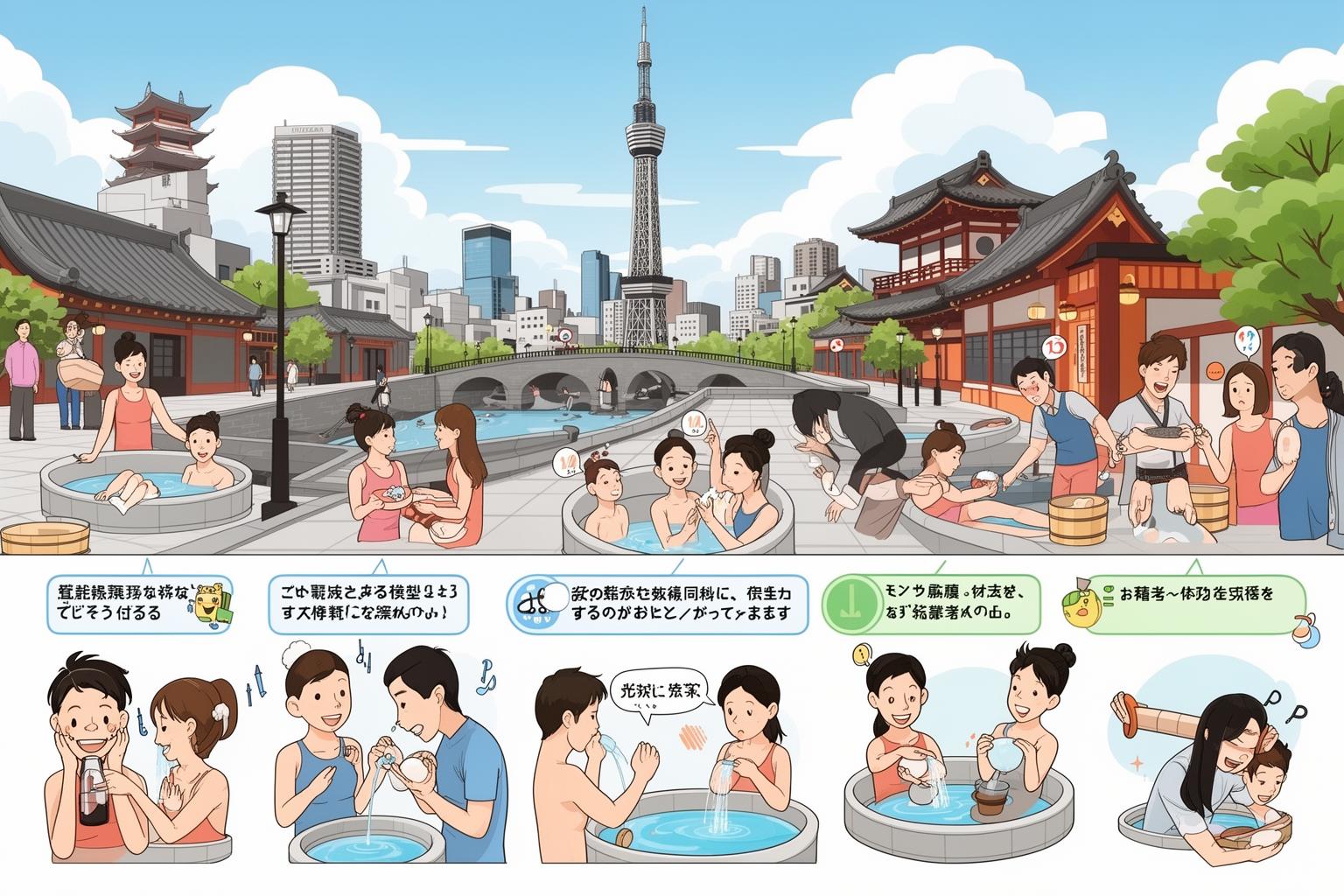
Crossing the threshold of the sento feels like stepping into another world. The noise of the city quiets, replaced by the sound of splashing water and friendly conversation. The rules here are straightforward, but grasping the local vibe is essential to truly fitting in and savoring the experience. It’s less about strict dos and don’ts and more about understanding the rhythm of the space and the people who inhabit it.
The Locker Room Lowdown
The changing room, or `datsuijo`, serves as the sento’s entrance hall. It’s a semi-public area where the transition from the outside world begins. Don’t expect a silent, spa-like environment. More often than not, a television will be mounted on the wall, airing a baseball game or a lively comedy show. Patrons, dressed in various stages of undress, gather around it, commenting on the plays or laughing at the jokes. This is where community comes alive. People greet one another, catch up on local news, and step onto large, old-fashioned scales. You’ll be given a key attached to an elastic band for your locker; wear it on your wrist or ankle. The unspoken rule here is simple: be efficient, but not unfriendly. A friendly nod or a quiet “konbanwa” (good evening) to those nearby makes a big difference. This isn’t about forced sociability but about acknowledging your shared presence in this communal space. It’s the first step in shedding not only your clothes but also your anonymity.
The Bathing Area: Wash First, Soak Later
This is the one uncompromising rule of any Japanese bath and the foundation of the entire experience: you must wash your body thoroughly before entering the tubs. Find an open washing station, which includes a stool, a faucet, and a shower head. Sit down and scrub yourself clean from head to toe. This ritual is about more than hygiene; it’s a sign of respect for the communal water and other bathers. In Osaka, however, this rule’s enforcement can be a bit different. If, in your foreign confusion, you head straight for the tubs, you won’t likely receive a cold glare. Instead, you might get a direct, yet surprisingly warm, intervention. An elderly man might tap your shoulder and say, “Hey, brother, wash up over there first!” It’s not meant to be rude or embarrassing. It’s just the Osakan way: straightforward, practical, and ultimately helpful. They see a problem, offer a solution, then move on. Once you’re clean, you’re free to explore the variety of tubs. You’ll often find a jet bath (`jetto-buro`), a super-hot bath, a cold plunge pool (`mizu-buro`), and perhaps the most intriguing of all, the electric bath (`denki-buro`). This bath has a mild current running through the water, creating a strange, tingling sensation. Trying it for the first time is a rite of passage, and your involuntary yelp will likely be met with knowing chuckles from regulars.
Hadaka no Tsukiai: The Art of Naked Conversation
There’s a Japanese concept called `hadaka no tsukiai`, meaning “naked communion” or “naked friendship.” The idea is that when you remove your clothes, you also strip away social status, titles, and pretenses. In the bath, a company president and a construction worker are simply two men soaking in the same hot water. While this concept exists throughout Japan, it feels especially at home in Osaka. Osakans are natural conversationalists—curious, open, and unafraid to bridge the gap between strangers. Don’t be surprised if the person soaking next to you starts a conversation. It might begin with a simple “Ii oyu desu ne” (It’s nice hot water, isn’t it?), but it can quickly blossom. They’ll ask where you’re from, your thoughts on Osaka, and if you’ve tried the takoyaki from the shop on the corner. This isn’t an interrogation. It’s genuine curiosity and a desire to connect. This is often misunderstood by foreigners. The direct questions and casual familiarity aren’t nosiness; they’re the Osaka way of saying, “You’re here in my space, so you’re one of us for now. Let’s talk.” Responding with a smile and simple answers is all it takes to be welcomed in. Here you’ll hear the unfiltered Osaka-ben dialect, learn about the best local eateries, and get up-to-the-minute updates on the Hanshin Tigers’ chances this season. You’ll discover more about the city in a twenty-minute soak than you ever could from a guidebook.
The Post-Sento Glow: The Final, Crucial Step
The sento experience is a story, and its final chapter is just as crucial as the bath itself. Leaving hastily and stepping back into the night would be like walking out of a movie before the credits roll. The post-sento ritual locks in the relaxation and deepens the feeling of contentment. It’s a gentle transition back into the real world, one that deserves to be savored.
The Beverage of Champions: Fruit Milk and Beer
Once you’ve dried off and dressed, return to the lobby. There, you’ll find the sento’s core: the vending machines and coolers. Choosing your first post-bath drink is both a deeply personal and culturally meaningful act. For a burst of pure nostalgia, the classic choice is fruit milk (`furutsu gyunyu`) or coffee milk (`kohi gyunyu`), offered in traditional glass bottles. There’s something deeply satisfying about peeling off the paper cap and drinking the sweet, cold liquid while your body is still warm from the bath. It’s like tasting a piece of Japanese childhood. The adult favorite, naturally, is a crisp, cold beer. Vending machines often carry Asahi or Kirin, and cracking one open in the sento lobby is a pleasure beyond compare. The ritual is to find a bench, sip your drink, and watch TV alongside the other patrons. Conversation isn’t necessary. There is a quiet camaraderie in this shared moment of post-bath bliss. You are all members of the same clean, relaxed, and slightly drowsy club. It’s the perfect, simple end to the bathing ritual.
The Slow Walk Home
At last, with your skin tingling and your mind at ease, you step back into the night—transformed. The city appears different: neon lights softer, street sounds more distant. The final step in the sento experience is the walk home. Resist the urge to rush. Slow your pace. Feel the cool night air on your warm skin. Notice how being thoroughly clean makes you feel more connected to your surroundings. You are no longer an anonymous passerby hurrying through the streets. You have taken part in a fundamental neighborhood ritual. You have shared an experience with its residents. You carry the warmth of the bath and the murmur of friendly chatter with you. This feeling, this post-sento glow, is your souvenir. It’s a sense of belonging, a momentary weaving into the intricate, vibrant, and wonderfully human fabric of daily life in Osaka.
Why a Sento Weekend Unlocks the Real Osaka
By the end of your sento weekend, you’ll have done more than just visit several bathhouses. You will have given a deep-tissue massage to your understanding of Osaka. You’ll come to see that the city’s renowned friendliness isn’t just for tourists; it’s a core way of life born from places like this, where community is nurtured through casual, everyday interaction. The noise you hear on the street mirrors the same joyful, uninhibited energy you experience in the bathhouse – the sound of a city that lives openly, without shame or pretense. In an increasingly digital and isolated world, the Osaka sento stands as a powerful reminder of the value of physical, shared spaces. It’s where different generations and backgrounds come together every day. Amid towering apartment blocks, the sento serves as a communal backyard, a spot to relax, connect, and simply be human together. You learn that Osaka’s identity isn’t shaped by its grand castles or gleaming skyscrapers, but by these humble, steamy rooms. So if you truly want to understand this city, to feel its genuine rhythm and grasp the spirit of its people, make a plan. Choose a bath, take a walk, soak in the water, and drink a bottle of fruit milk. In the warm, welcoming water of a neighborhood sento, you’ll discover the true, unfiltered heart of Osaka.