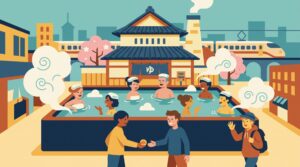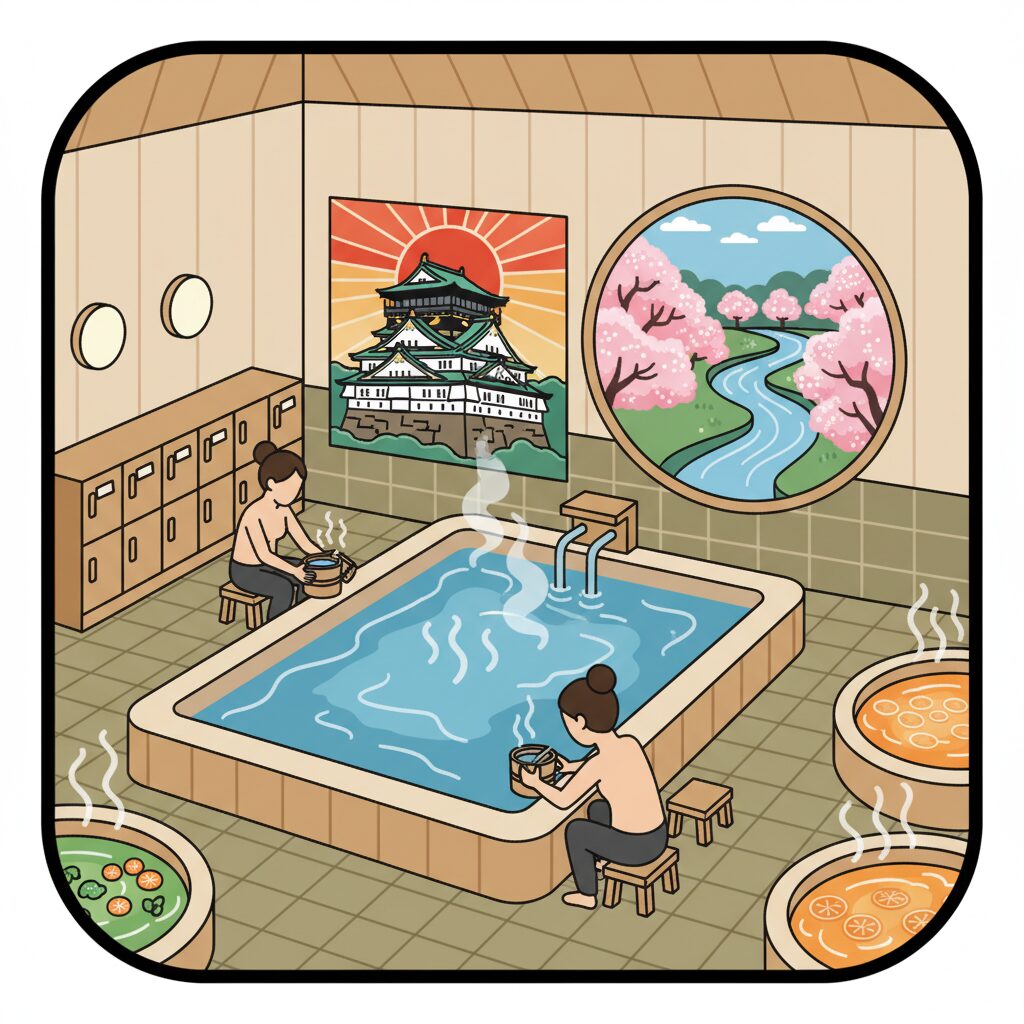
When I first moved from Tokyo, I carried a certain metropolitan armor. In Tokyo, you learn to cultivate a personal bubble, a silent, invisible shield that lets you navigate the world’s most crowded intersections without ever truly touching anyone. We value a clean, sharp, and respectful distance. Private life is private, and public space is merely the transit zone between those private bubbles. Then I came to Osaka, and the city, in its loud, boisterous, and utterly charming way, took a sledgehammer to that shield. Nowhere was this more apparent, more visceral, than in my first visit to a neighborhood sento, a public bathhouse. I went in expecting a quiet, meditative soak and walked into what felt like a town hall meeting in a steam room. It was confusing, it was overwhelming, and it was the moment I realized that to understand Osaka, you have to understand its relationship with water, steam, and the art of being naked together.
This isn’t a guide to the most beautiful or historic bathhouses. This is a field guide to Osaka’s soul, viewed through the tiled walls and scalding pools of its sento. Forget the sterile, hushed reverence you might find elsewhere. The Osaka sento is a living, breathing organism. It’s a social club, a therapy session, a neighborhood news hub, and, yes, a place to get clean. Hopping between them on a weekend is like flipping through the city’s family album, each bathhouse revealing a different chapter of its identity. It’s here, in these unassuming buildings tucked into quiet residential streets, that the unspoken rules of Osaka life are laid bare for all to see. To truly grasp the city’s rhythm, you need to shed your clothes, your preconceptions, and just soak it all in.
Exploring Osaka’s vibrant cultural tapestry means embracing not only its communal bathhouses but also its direct communication style, where making friends sometimes teeters on the edge of boldness and subtlety.
More Than Just a Bath: The Sento as Osaka’s Living Room
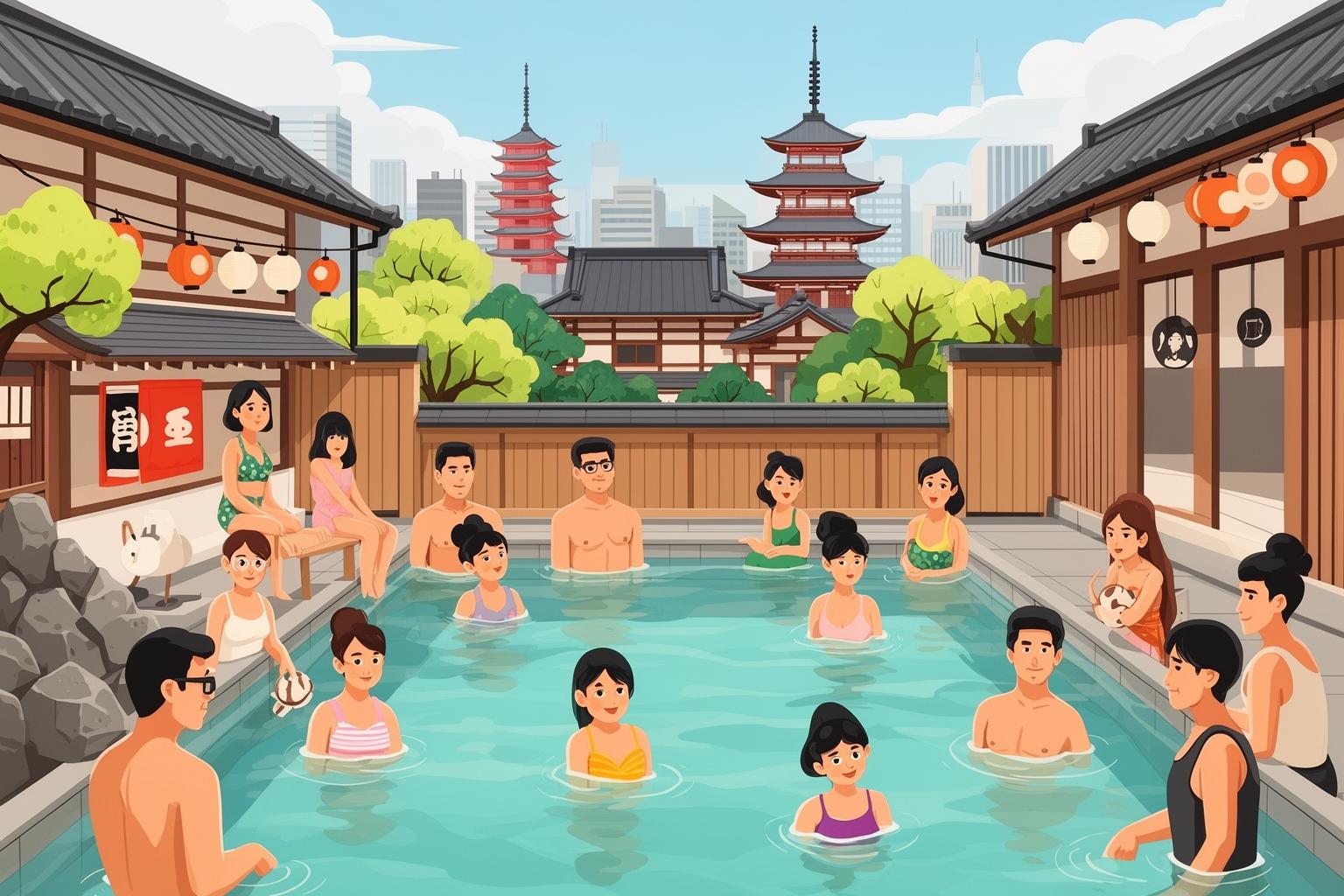
A common misconception among many outsiders—including Tokyoites—is that a sento is primarily about hygiene. In twenty-first-century Japan, nearly everyone has a bath or shower at home. The neighborhood sento persists not out of necessity but by choice. In Osaka, people opt for the sento to foster community. It serves as the city’s collective living room, a third space that blurs the line between public and private in a way that feels unfamiliar in the more reserved Tokyo. Once you step through the noren curtains, you become more than a customer; you temporarily join a micro-community.
The air is thick with steam and lively conversation. In one corner, a group of elderly men, flushed from the heat, loudly debate the latest Hanshin Tigers game, their voices bouncing off the tiles. Their towels rest precariously on their heads, and they gesture animatedly, splashing water with each exclamation. In the women’s section, the sounds differ but the energy remains just as vibrant. It’s a chorus of gossip, laughter, and the clatter of plastic washbowls. An obachan (auntie) might be offering daikon pickles she made, surrounded by her friends. Children may cautiously pour water on each other under the watchful, yet relaxed, eyes of their mothers. This is not a place for quiet reflection. It is a space for engagement. The silence I cherished in a Tokyo onsen feels awkward and misplaced here. Silence signifies distance, and Osaka thrives on closing it.
This embodies the concept known as hadaka no tsukiai, or “naked communion.” In Tokyo’s business circles, it’s a metaphor for building trust through vulnerability. In an Osaka sento, it sheds all metaphorical weight—it is strikingly literal. When everyone is naked, social hierarchies disappear. The salaryman, the shop owner, the construction worker—they are all simply bodies in hot water. This creates an egalitarian space where conversations flow freely, unencumbered by the usual social shields of job titles and company ties. This environment perfectly reflects the Osaka mindset: a grounded pragmatism and a skepticism toward pretension. People are valued for their character, humor, and stories—not their business cards. The sento is the great equalizer.
Reading the Neighborhood Through Its Bathhouse
A weekend tour of Osaka’s sento serves as an exercise in urban anthropology. The architecture, the clientele, the water temperature, and even the brand of fruit milk offered in the lobby reveal a story about the neighborhood each bathhouse serves. Every sento has its own unique character, directly reflecting the community that sustains it.
The Showa Relic: Deep in Nishinari
To discover the city’s stubborn, enduring core, you head to neighborhoods seemingly untouched by time, such as parts of Nishinari or Taisho. Here, sento act as living museums of the Showa Era. The facade shows wear, adorned with intricate wooden carvings and faded tilework. Inside, the lockers hold keys attached to heavy, clunky plastic tags that feel substantial in your hand. The painted mural of Mount Fuji above the main bath is probably peeling, its colors dulled by decades of steam. The water in the main tub is uncomfortably hot—not for comfort but tradition—a tribute to the endurance of the working-class men and women who have bathed here for generations.
The regulars are the lifeblood of these places. They have their assigned washing stations and routines polished over thousands of visits. The `bandai`, the elevated seat where the owner presides, serves as the nerve center. Often this is an elderly woman who observes everything, knows everyone’s business, and enforces unwritten rules with a sharp tongue but a warm heart. She’ll scold you for not rinsing properly before entering the tub, then inquire about your mother moments later. These sento are not tailored for outsiders. They are unapologetically and fiercely authentic. They embody Osaka’s grit, loyalty to its roots, and a profound belief in substance over fleeting style. This is the city that fueled Japan’s industrial era, and within these sento, that raw, unpolished community spirit survives.
The Designer Sento: A Nakazakicho Vibe
Next, take the subway to neighborhoods like Nakazakicho or Horie, bustling with vintage shops, independent galleries, and third-wave coffee spots. Here, you’ll find the new generation of sento—“designer” or renovated bathhouses where tradition meets a contemporary twist. The exterior might feature a minimalist concrete facade, while the interior is bright, airy, and highlighted by light wood and modern art. Instead of the blare of a baseball game on a corner TV, ambient electronica might fill the air.
The crowd tends to be younger—artists, tech workers, students, and young families. Conversations are quieter but no less engaged, covering gallery openings, new restaurants, or creative collaborations. Amenities are upgraded: premium shampoos and soaps are provided, and post-bath drinks might be craft ginger ale instead of the classic syrupy fruit milk. Yet, despite this carefully curated style, the core function remains unchanged. It is still a communal hub. People meet here after work, forge friendships, and build community. This shows that the Osaka spirit isn’t static but adaptable. The younger generation may favor different aesthetics, but they retain the deep-seated desire for connection that defines the city. They’ve simply refreshed the living room’s decor.
The Super Sento: Suburban Sprawl and Family Life
For a completely different perspective, venture out to the suburbs to experience the sprawling “Super Sento.” These are less bathhouses and more aquatic amusement parks—massive, multi-story complexes offering a dazzling variety of baths: carbonated pools, herbal infusions, open-air rotenburo, electric shock baths (`denki buro`), and powerful jet spas. But bathing is only part of the experience. These facilities also include multiple restaurants, manga libraries stocked with thousands of volumes, nap rooms with reclining chairs, massage services, and even hair salons.
Here, Osaka’s famous pragmatism and obsession with `cos-pa` (cost performance) are on full display. Families can spend an entire Sunday here. For a single admission fee, you get entertainment, relaxation, and dinner all taken care of. It’s an incredibly efficient approach to leisure. The atmosphere is less about intimate neighborhood chats and more about family-centered fun. It reflects the daily reality for much of the population living outside the city center. Life is busy, and time is precious. The Super Sento offers the ultimate one-stop shop for unwinding. It’s a lively, bustling, and thoroughly practical expression of the Osaka merchant’s mindset: get maximum value and enjoy yourself doing it.
Sento Etiquette: The Unspoken Osaka Rules
Navigating an Osaka sento is less about following strict rules and more about sensing the atmosphere and respecting the social contract. It’s a close-quarters dance of communal living.
It’s Not a Spa, It’s a Community Center
For a Tokyo native, the most striking difference is the noise. In Tokyo, bathing is often a quiet, meditative ritual. In Osaka, silence can feel suspicious, sometimes seen as standoffish or even arrogant. The expectation is to engage, even briefly. You don’t need to share your whole life story, but small talk acts as social grease. Mention the heat of the water to the person beside you. Ask the obachan at the counter if it’s going to rain tomorrow. A simple nod or a “`maido`” (a local greeting) carries weight. This isn’t about being intrusive; it’s about recognizing your shared humanity in a communal space. It’s the audible buzz of a community working as it should.
The Politics of the Faucet
Though the vibe is relaxed, there are cardinal rules. The worst offense is splashing. This isn’t about being overly tidy; it’s a practical respect for those around you. Space is tight, and when you wash, you create a personal zone. Splashing carelessly invades your neighbor’s space, forcing them to deal with your soap and water. It breaches the unspoken pact to coexist peacefully. Likewise, don’t monopolize a faucet if you’re resting in the tub. You can leave your washbowl to save your spot, but free up the tap for others. These aren’t posted rules; they’re upheld through collective understanding developed over centuries of living close together. It’s about being aware of your impact on the group—an essential value of Osaka life.
The Post-Bath Ritual
In Tokyo, the experience often ends once you’re dressed. You might grab a quick drink from a vending machine and leave. In Osaka, the ritual continues. The lobby, or `datsuijo` (changing room), serves as an important social space. Leaving quickly is considered odd. Proper etiquette is to linger. This is where real conversations flow. People wrapped in towels or comfy `yukata` sit on worn vinyl benches or massage chairs for twenty or thirty minutes. They watch TV—usually a comedy show or baseball game. They sip a cold beer or the iconic glass-bottled fruit milk that tastes like childhood memories. This post-bath relaxation is sacred, a collective sigh at day’s end. It reinforces the notion that you’re not just a customer passing through; you’re part of the community fabric. It embodies a lifestyle that values unwinding as much as hard work.
Why the Sento Explains Osaka’s Beef with Tokyo
The humble sento serves, in many respects, as the perfect metaphor for the cultural divide between Osaka and Tokyo. It embodies the fundamental philosophical differences that drive their well-known rivalry. Tokyo is a city built on `tatemae`—the public facade, the polite fiction that enables millions to coexist in a cramped space without conflict. It’s a culture of polished surfaces, unspoken norms, and maintaining a courteous, if occasionally distant, demeanor. Tokyo is a city of carefully curated private lives, with public spaces designed for efficient, anonymous transit between them.
Osaka, by contrast, is a city of `honne`—the genuine, unfiltered feelings. It’s a culture that embraces directness, humor, and a certain messy, human authenticity. The Osaka sento embodies this spirit. It’s loud, chaotic, sometimes intrusive, and compels interaction. It rejects the polished anonymity found in the capital. It insists that you leave your `tatemae` at the door along with your clothes. Foreigners, and even Japanese from other areas, often misinterpret Osaka’s frankness as rudeness. But time spent in a sento reveals the reality. It’s not hostility; it’s an invitation. An invitation to set aside formalities, to laugh at a poor joke, to gripe about the weather, to connect on a simple, human level.
Living in Osaka means adjusting your sense of personal space. You discover that a stranger speaking to you at the bus stop isn’t eccentric, they’re simply being neighborly. You recognize that a shopkeeper’s teasing is a sign of warmth. And you come to appreciate that undressing and soaking in a hot bath alongside a dozen neighbors is one of the most profound ways to experience the soul of this remarkable city. To truly understand Osaka, avoid the tourist spots. Grab a tenugui towel, find a local sento with a tall chimney, and dive in. That’s where you’ll encounter the real Osaka—steaming, laughing, and vibrantly alive.