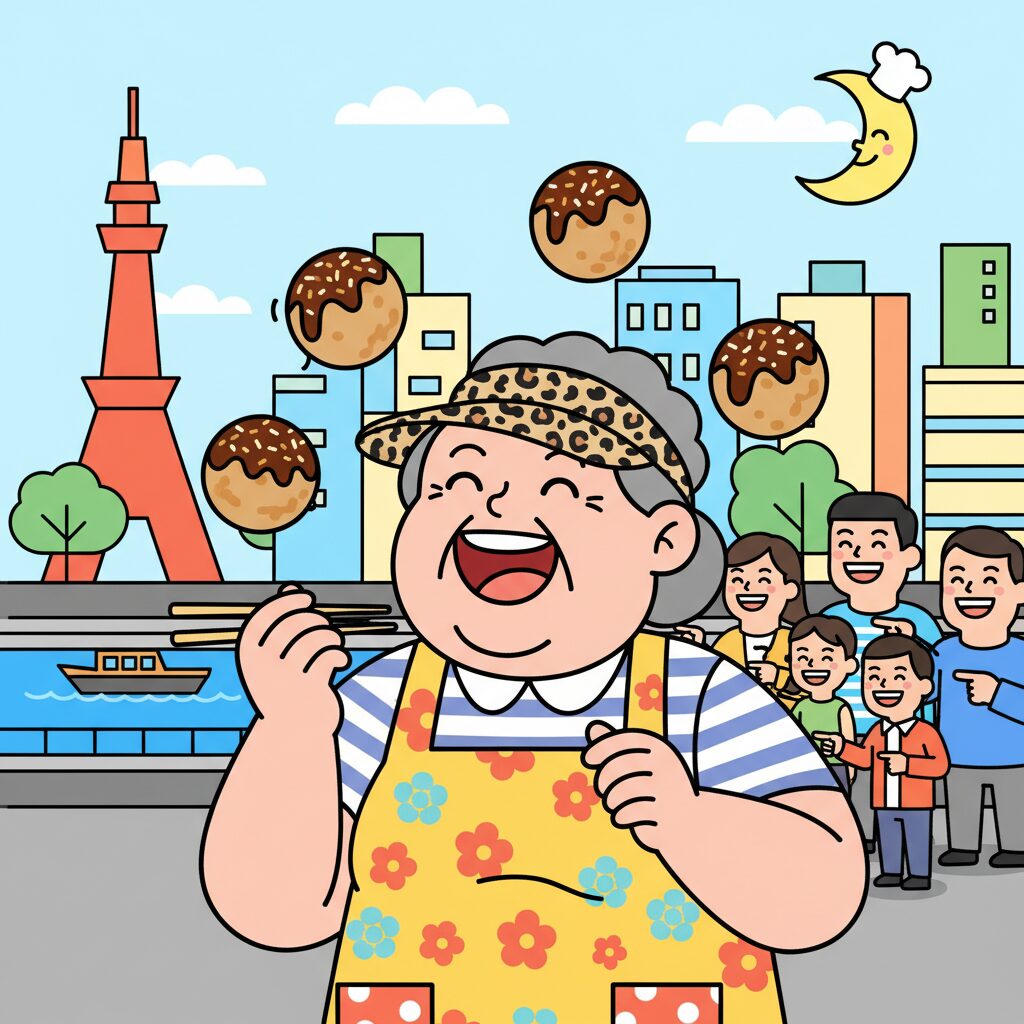
You landed the job. You survived the interviews, navigated the paperwork, and now you’re sitting at your new desk in a bustling Osaka office. You’ve read the books, watched the videos. You’re ready for the subtle nods, the indirect communication, the delicate dance of Japanese workplace etiquette. Then your boss, Tanaka-bucho, walks over, glances at your screen, and says with a booming laugh, “Still working on that? A turtle could do it faster! Let me know if you need help, you big goof.” He claps you on the back and walks off, leaving you in a state of cultural whiplash. Was that an insult? A joke? A threat? Welcome to Osaka. This isn’t the Japan you were briefed on. This is a city that moves to a different beat, a place where business is done with a sharp tongue, a quick wit, and an undercurrent of warmth that can be confusing at first. Forget the stereotypes of quiet, reserved consensus-building you might associate with Tokyo. An Osaka office is a different ecosystem entirely, one built on a foundation of merchant pragmatism and a love for comedy. It’s a code that can seem impenetrable, but once you crack it, you’ll find a level of honesty and camaraderie that’s hard to find anywhere else. To truly thrive here, you need to understand not just what is said, but why it’s said that way. Let’s decode the beautiful, baffling, and brutally efficient world of communication in an Osaka workplace.
The nuances of Osaka’s workplace culture mirror a city-wide evolution that extends to its urban landscape, as seen in this tourism transformation initiative in Nishinari.
The Sound of Business: Why Osaka Conversations Feel Different
Step into an office in Marunouchi, Tokyo, and you’ll typically encounter a quiet, diligent atmosphere. The language is precise and layered with formal honorifics (`keigo`), with conversations carefully crafted to avoid direct confrontation. Now, enter an office in Umeda, Osaka. The noise level rises. Laughter breaks out more often. People talk over each other, not out of rudeness, but as part of a fast-paced, overlapping dialogue. The rhythm of speech is distinctly different—faster, more rhythmic, and carrying an energy that can feel overwhelming if you’re unprepared. This isn’t chaos; it’s the sound of commerce in a city that has always prioritized action over polished expression. This difference stems from the structure and use of the Japanese language itself, and understanding it is the first step to adapting.
Ditching the Keigo Overload
In typical Japanese business culture, `keigo`, the intricate system of honorific and humble language, forms the foundation of communication. It serves to clearly define hierarchy and maintain respectful distance between colleagues, clients, and superiors. Tokyo workplaces, in particular, follow these rules with near-religious dedication. In Osaka, the approach is much more relaxed. Naturally, `keigo` is known and used, especially during initial interactions or with important clients from outside the region. You will definitely use it when you first meet your boss. But what surprises many newcomers is how quickly it fades. After a few weeks, or even a few days, your senior colleagues may switch to a far more casual speech style. A formal request like `“Tanaka-san, kono shiryo o goran itadakemasen deshou ka?”` (Mr. Tanaka, would it be possible for you to please look at this document?) might soon become `“Tanaka-kun, chotto kore mite kureru?”` (Hey Tanaka, can you check this out real quick?). This isn’t a sign of disrespect; rather, it indicates acceptance. It means you’re now part of the inner circle, a teammate, and the formal barriers are no longer needed for daily work. It signals that “We’re comfortable with you. Let’s drop the formalities and collaborate.” Continuing to respond with overly formal `keigo` after this shift can even come across as cold or distant, as if you’re deliberately putting up a wall.
The Straightforward Request: No Beating Around the Bush
One common piece of advice for foreigners working in Japan is to master the art of reading the air (`kuuki wo yomu`) and understanding indirect communication. You’re told that “no” is rarely expressed directly, and requests are often wrapped in soft, ambiguous language. This advice works well for much of Japan, but it can backfire in Osaka. Osakans, especially in business, prioritize clarity and speed above all else. They are merchants at heart, and in negotiations, ambiguity costs money and time. This attitude directly shapes office communication. Instead of a long explanation about how busy everyone is and how unfortunate the timing is before making a request, an Osaka colleague will most likely come to your desk and say, “Sorry to bother you, but I need the sales figures for last quarter by 4 PM for the client meeting. Can you do it?” The request is straightforward, the deadline clear, and a simple “yes” or “no, I can’t because I have to finish the ABC report first” is the expected reply. This frankness isn’t meant to be harsh. It’s a form of respect—respecting your time by not wasting it with needless pleasantries, and respecting your intelligence by assuming you can handle a direct question. They aren’t being rude; they’re being efficient. For many foreigners who struggle with the uncertainty of indirect communication, this can be a huge relief. In Osaka, what you hear often is exactly what you get.
Humor as a Social Lubricant: The Role of ‘Tsukkomi’ and ‘Boke’
If directness drives communication in Osaka, humor acts as the lubricant that keeps it flowing effortlessly. Osaka is Japan’s undisputed comedy hub, known for the `manzai` tradition—a stand-up style comedy featuring a silly, scatterbrained character (the `boke`) and a sharp-witted straight man who corrects them (the `tsukkomi`). This style extends beyond entertainment; it is deeply embedded in everyday interactions, including in the workplace. Grasping this dynamic is essential for understanding exchanges that might otherwise appear strange or even hostile. The ongoing playful teasing, clever comebacks, and exaggerated responses serve an important function: they ease tension, foster camaraderie, and strengthen team connections in ways formal politeness never can.
Your Desk as a Comedy Stage
In an Osaka office, you’ll regularly see exchanges between `boke` and `tsukkomi`. For instance, someone may spill coffee and joke, “Ah, the floor was thirsty!” (a `boke` moment). Immediately, a coworker responds, “Don’t try to make it sound cool, just clean it up, you clumsy oaf!” (a `tsukkomi`). Laughter follows, the tension around the mistake dissipates, and the one who spilled the coffee isn’t overly embarrassed. The `tsukkomi` isn’t a real insult; it’s a structured comedic response that completes the humor cycle. For outsiders, hearing a colleague called a “clumsy oaf” may seem harsh, but within context, it’s part of cooperative joke-telling. Recognizing—and at least appreciating—this interaction is crucial. You don’t need to be the joker, but if you become the recipient of a good-natured `tsukkomi`, smiling or laughing along is expected. Reacting defensively or taking it as a serious slight will mark you as someone who doesn’t “get it,” potentially leading to social exclusion. This comedic exchange signals a healthy, functioning team. It says, “We’re comfortable enough with each other to joke, even during busy and stressful times.”
The ‘Aho’ Compliment: Decoding Osaka’s Favorite Insult
Language varies regionally, especially when it comes to words meaning “idiot.” In Tokyo and much of Japan, `baka` can range from a playful tease to a serious insult depending on tone. The word `aho` is typically a sharp, offensive insult. In Osaka, these roles are reversed. `Baka` carries the real sting and is used when genuinely angry. `Aho`, conversely, is a versatile communicative tool, often used affectionately. For example, a boss might see you working late and say, `“Omae, honma aho ya na. Hayaku kaeriや.”` (“You’re a real idiot. Go home already.”) A Tokyo native might view this as harsh criticism for poor time management, while an Osakan would hear: “I notice your hard work and appreciate it, but you’re pushing yourself too much. I care about you, so please go rest.” Here, `aho` softens the blunt order, adding a layer of familiar, playful affection. Similarly, if you accomplish something impressive, a colleague might joke, `“Sugo! Aho chau?”` (“Amazing! Aren’t you an idiot?”), which roughly means “That’s ridiculously good.” Of course, this is an advanced form of communication. As a foreigner, you shouldn’t start calling colleagues `aho` casually. But it’s important to understand that when used this way, it’s a sign of closeness and inclusion, not an insult.
Self-Deprecation as a Power Move
In many Western cultures, leaders are expected to consistently project competence and confidence. In Osaka, however, a different kind of strength is often prized: the ability to be humble and laugh at oneself. Self-deprecation is a common and effective communication strategy. A manager might open a meeting with, “Alright everyone, listen up! I have a brilliant idea I just thought of, so it’s probably full of holes. Please tear it apart.” This is not a show of weakness, but strategy. By acknowledging their own fallibility, they create a psychologically safe space for honest feedback and constructive criticism. It breaks down rigid hierarchies and promotes genuine teamwork. It says, “Don’t be intimidated by my position. We’re all working together, and getting the best result matters more than my ego.” This sharply contrasts with traditional top-down management styles, where questioning a superior—even politely—can hurt one’s career. In Osaka, the boss who can joke at their own expense often earns the greatest respect and loyalty.
The Merchant’s Mentality: Where Frankness Comes From

To understand why Osaka’s communication style stands out, you need to trace its history. Unlike Kyoto, the imperial capital, or Tokyo (formerly Edo), the political center, Osaka was known as `“tenka no daidokoro,”` the “nation’s kitchen,” serving as Japan’s commercial hub where rice, goods, and money circulated. This city was founded not by samurai or aristocrats, but by `akindo`—merchants. This heritage has deeply influenced the local mindset. The merchant culture prizes pragmatism, speed, efficiency, and above all, results. In a competitive marketplace, there’s no room for the elaborate, indirect language of the court. A deal is a deal. A price is a price. A deadline is a deadline. This approach, cultivated over centuries of trade and negotiation, forms the foundation of the straightforwardness you experience in today’s Osaka workplace.
‘Akindo no Machi’ (The Merchant City) Legacy
The merchant spirit infuses everything here. A common Osaka phrase is `“Chokin yori shokin,”` meaning “Business credit is more important than savings.” This goes beyond financial credit—it speaks to your reputation, reliability, and trustworthiness. In a merchant city, your word is your bond. Maintaining this `shokin` demands clear, unambiguous communication. People need to know exactly where they stand with you. Overpromising or being vague about your capabilities will quickly ruin your reputation. Thus, directness is more than a personality trait; it’s a business imperative. When a colleague offers a blunt critique of your proposal, it’s not meant to be harsh. They follow the merchant’s code: spot problems quickly, solve them efficiently, and move on to the next deal. They treat you as a trusted business partner, giving you the respect of honest feedback so the collective venture can succeed. Politeness that hides problems is seen as counterproductive, even irresponsible.
Negotiating with a Smile (and a Sharp Tongue)
This merchant mindset is most apparent during negotiations. Osakans are known as some of Japan’s toughest, shrewdest negotiators. While a Tokyo-style meeting may involve extended polite listening and subtle cues, an Osaka negotiation feels more like a fast-paced sport. They get straight to the point, clearly express their desired outcome, and challenge anything unreasonable. They are masters of `neuchi`, the art of haggling, expecting vigorous back-and-forth. This can be intimidating. Foreign partners might feel they’re under aggressive interrogation. But it’s important to remember this isn’t personal. It’s a method to reach a mutually acceptable agreement as swiftly as possible. The goal is win-win, and they believe candidness is the quickest path there. The most interesting part comes after negotiations end. Despite intense debates over contract terms, it’s common for the same people to go out drinking and singing karaoke, laughing like lifelong friends. Business is business. The personal relationship is separate. They respect a tough opponent, and once the deal closes, the relationship is what truly matters.
Navigating the Osaka Office: A Foreigner’s Survival Guide
Grasping the theory is one thing; applying it in everyday practice is quite another. The Osaka workplace can be incredibly rewarding, but it demands a conscious adjustment. This means unlearning some traditional Japanese etiquette rules and adopting a new set of localized social cues. Your success and happiness here will rely less on your mastery of perfect `keigo` and more on your resilience, sense of humor, and willingness to engage with a more direct and lively communication style. Here are some practical tips to help you not only survive but thrive.
Don’t Mistake Directness for Aggression
This is the key rule. When a supervisor says, “This report isn’t good enough, fix these three points by noon,” they are not angry with you. They are managing efficiently. They’ve identified a problem, offered a clear, actionable solution, and set a deadline. The absence of polite language like “I was wondering if you might have a moment to perhaps reconsider some aspects of this report” does not indicate displeasure; it signals urgency and respect for your ability to complete the task without hand-holding. Your best response is not to get defensive or apologetic but to say, “Understood. I’ll get it done,” and then follow through. Responding emotionally to direct feedback can come across as unprofessional. See it for what it is: a straightforward communication line meant to achieve a goal.
Learn to Take a Joke (and Maybe Make One)
You will be teased; it’s nearly inevitable. It could be about your Japanese pronunciation, your choice of lunch, or a harmless mistake. This is a test—not of your language skills or lunch choices, but of your spirit. The right response is to laugh. If you can return the favor with a gentle, self-deprecating joke, you’ll score major points. For instance, if teased about your accent, you might laugh and say, “I know, I sound like a robot from a bad sci-fi movie!” This shows confidence, humility, and that you’re not easily rattled. You don’t need to become a `manzai` comedian, but showing you can take a joke and not take yourself too seriously is essential for social integration. It signals you’re friendly and understand the office’s unspoken rules.
When in Doubt, Ask Directly
One advantage of a culture that values frankness is that you can be frank as well. If you’re uncertain about instructions or sense mixed messages, it’s almost always better to seek direct clarification than to guess. In many parts of Japan, a direct question might be seen as challenging authority, but in Osaka, it’s often appreciated as diligence. A question such as, “Tanaka-bucho, just to be 100% clear, you want me to prioritize the Suzuki project over the Sato project this week, correct?” will likely be welcomed. You’re preventing mistakes and showing you want to get it right. Trying to `read the air` and guessing incorrectly is a far bigger mistake here than asking a straightforward question. Use the local communication style to your benefit.
Observe the Hierarchy
This is a crucial nuance. While communication may feel flatter and more casual, the underlying corporate hierarchy remains firmly in place. The freedom to be blunt and humorous is not evenly shared. A boss can call a subordinate `aho` affectionately, but the reverse would be career suicide. A senior colleague may deliver a sharp `tsukkomi` at a junior’s expense, but juniors must be more cautious. Pay close attention to who jokes with whom and how. The humor and directness mainly flow downwards and among peers. When communicating with superiors, maintain a respectful tone, even if it isn’t the most formal kind of `keigo`. The office may resemble a comedy club, but it is still a Japanese company. Respect for age and rank hasn’t disappeared; it’s just presented in a different, livelier style.
The Payoff: Building Real Relationships
Adapting to the distinct communication style of an Osaka workplace can be a challenging process. There will be times of confusion, misunderstandings, and possibly some frustration. However, the payoff for overcoming that initial discomfort is significant. Once you understand the dynamic, you’ll realize that this mix of straightforwardness and humor creates a work environment rich in camaraderie. The absence of pretense ensures you always know where you stand. Conflicts tend to be addressed quickly and openly, rather than lingering under layers of polite silence. The continual joking and teasing, once appreciated, build strong bonds through shared experiences. You aren’t just coworkers handling tasks in the same space; you become a team that has laughed together, faced pressure together, and can be honest with one another. This often results in relationships that feel more authentic and resilient than those formed in more reserved corporate cultures. You might find yourself invited to a colleague’s home for dinner or regarded as part of the family—something that can take years to develop in Tokyo. The Osaka workplace encourages you to let go of preconceptions and interact on a more direct, personal level. It’s loud, blunt, and frequently hilarious. And once you learn how to navigate it, you’ll discover it’s an exceptionally effective and deeply satisfying way to work.