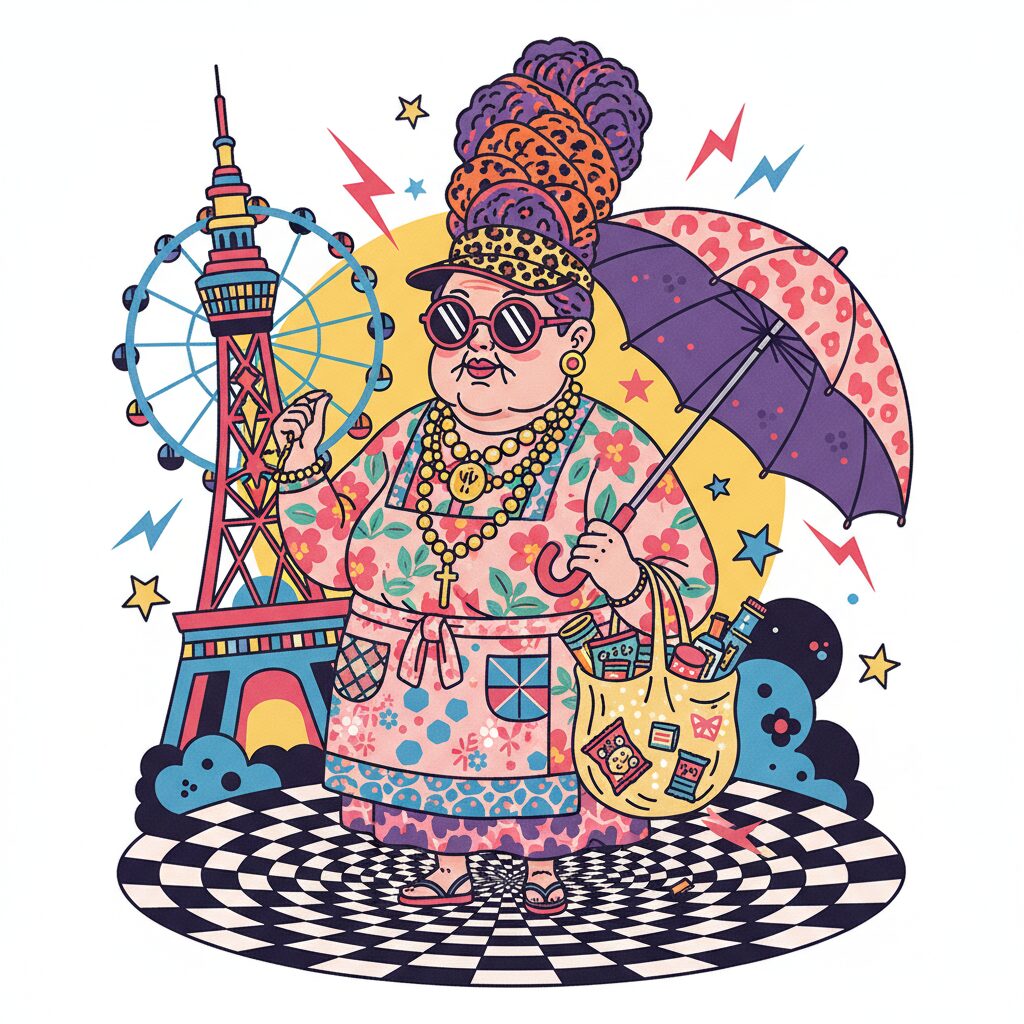
Walk through any major city in Japan, and you’ll feel it. A certain current, an unspoken rhythm that dictates how people move, interact, and present themselves to the world. In Tokyo, it’s a smooth, efficient hum, a symphony of polite distance and curated aesthetics. But then there’s Osaka. The rhythm here is different. It’s a bold, syncopated beat, a little louder, a little faster, and a lot more improvisational. At the heart of this rhythm, at least in the global imagination, is a singular, iconic figure: the ‘Osaka Obachan’. You’ve probably seen her in TV shows or read about her online. She’s a middle-aged or older woman, hair permed into a perfect, often purple-rinsed, helmet. She’s armed with a seemingly endless supply of ‘ame-chan’ (hard candies) in her handbag, ready to distribute them to friends and strangers alike. And, of course, she is clad, head to toe, in brilliant, unapologetic leopard print. This image is so pervasive that for many, the Osaka Obachan and animal print are one and the same. It’s a convenient, comical shorthand for the city itself: loud, a bit gaudy, and overwhelmingly friendly. But as someone who lives and breathes the daily life of this city, I’m here to tell you that clinging to this caricature is like looking at a single, brightly colored tile and thinking you understand the entire mosaic. To truly grasp what makes Osaka tick, we need to look past the print and deconstruct the powerful woman wearing it. The leopard spots are not a uniform; they are a symbol. They are the final, visible flourish of a mindset forged in commerce, community, and a deep, abiding refusal to be quiet when there’s something to be said. This isn’t just about fashion. This is about the cultural DNA of Osaka.
Osaka’s unique blend of style and practicality is further exemplified by residents adopting innovative approaches like Kaisu-ken to cut commuting costs, which reinforces the city’s dynamic rhythm.
The Leopard Print: Symbol, Not Uniform
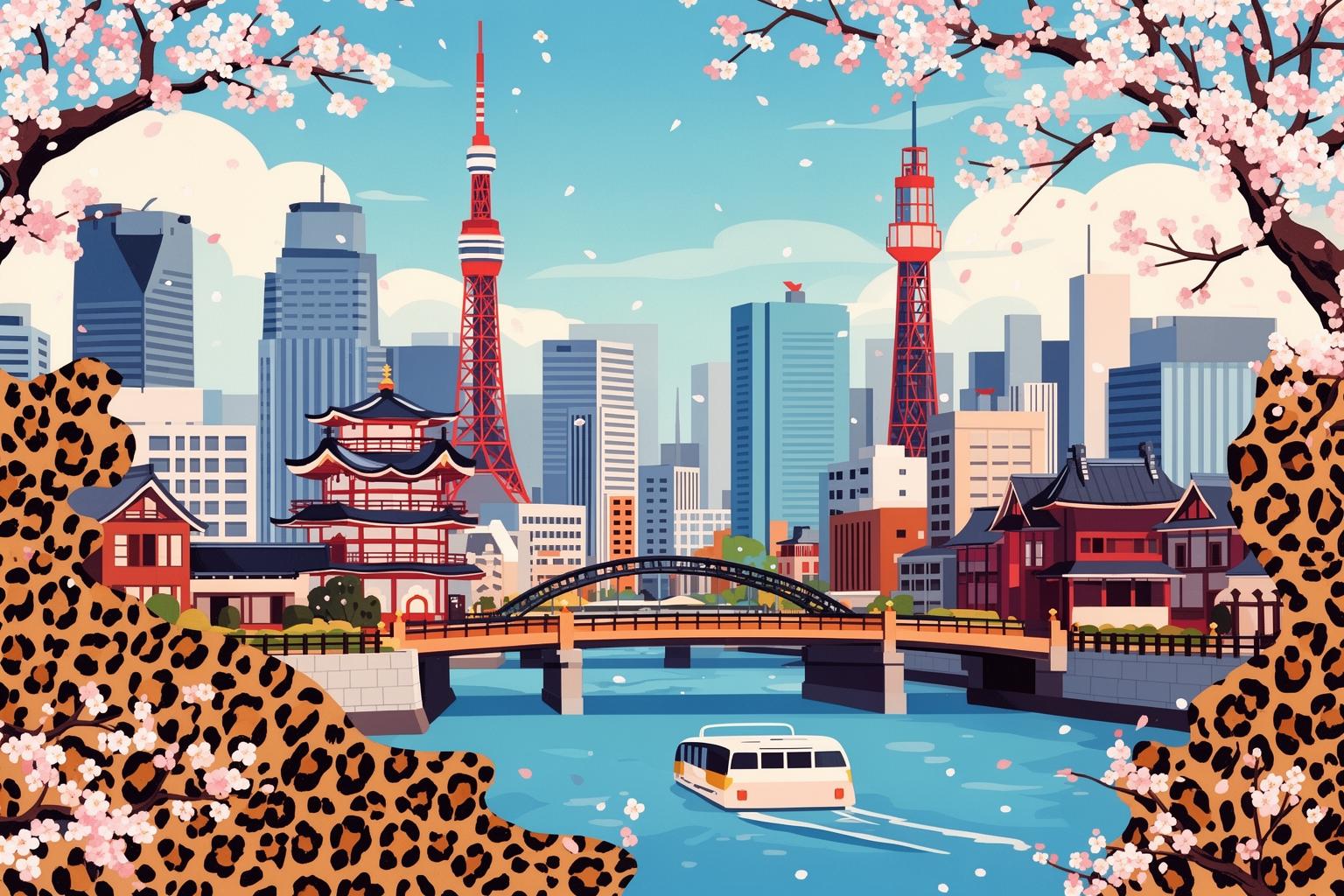
First, let’s focus on the spots in the room. Do you notice women walking around Osaka adorned in leopard print? Yes, certainly you do. But it is far from the city-wide uniform that popular culture might imply. You won’t find it on the twenty-something baristas in the trendy cafes of Kitahorie, nor on the corporate professionals striding through the Umeda business district. This style primarily belongs to a particular generation—women now in their sixties, seventies, and beyond. To understand why, you need to grasp the city’s history and its fundamental distinction from the capital.
A History of Flash and Flair
Tokyo, or Edo as it was once called, was the city of the samurai, the seat of the shogun. It was a place built on hierarchy, formality, and restrained power. Subtlety was a virtue. In contrast, Osaka was the ‘kitchen of the nation,’ a city of merchants (‘shonin no machi’). For an Osaka merchant, subtlety was a weakness. Success relied on being seen, being heard, and sealing the deal. It was about directness, savvy negotiation, and a touch of performance. You had to project confidence and prosperity, even when just starting out. This spirit of ‘me-datsu’—standing out, being conspicuous—is embedded in the city’s culture. While a Tokyoite might favor quiet, understated elegance that signals old money and established status, an Osakan has never shied away from flaunting their success. The post-war economic boom was a period of rapid growth and newfound prosperity. For the women who are today’s ‘obachan,’ coming of age during this era meant access to bold fashions and the disposable income to afford them. Animal prints, which gained global popularity, were the perfect expression of this fresh, vibrant confidence. They were exotic, luxurious, and, most importantly, impossible to ignore.
Animal Print as Power Dressing
From my viewpoint as someone in the apparel industry, animal print is a compelling statement. It’s primal, powerful, and a little bit daring. It’s not a pattern for the shy. In Western fashion, we might link the power suit with the 1980s career woman—a means of claiming space in a male-dominated environment. In Osaka, leopard print represents a different kind of power dressing. It’s not about conforming to a corporate hierarchy; it’s about asserting your presence in the social landscape. It declares, ‘I am here, I have lived, I have opinions, and I will not be made invisible by age or convention.’ It’s a refusal of the quiet, demure grandmother stereotype. It’s a vibrant, visual roar. This choice is less about following a fleeting trend and more about embodying an attitude. It’s the sartorial equivalent of a hearty laugh in a silent library, a burst of color in a sea of beige and navy. It’s a statement of self-possession that asks for no permission.
Beyond the Wardrobe: The ‘Obachan’ Mindset
To focus solely on the clothes is to overlook the entire essence. The leopard print is simply the outer shell of a complex and deeply rooted cultural mindset. What truly embodies the ‘Osaka Obachan’ spirit—and by extension, the spirit of the city—is a set of social behaviors that emphasize connection, practicality, and a cheerful dose of pragmatic optimism. This is where Osaka’s character most distinctly contrasts with the rest of Japan.
‘Ame-chan’ and the Culture of Connection
The gesture of an Osaka obachan offering you a piece of candy from her purse is legendary. It can feel surprising to newcomers, especially those used to the invisible barriers people place in other large cities. But the ‘ame-chan’ is more than just candy. It’s a tool. It’s a social lubricant, a small act of goodwill meant to instantly break down barriers between strangers. I once witnessed on a crowded Midosuji line train a toddler starting to wail. The mother was flustered, trying to quiet the child while avoiding the disapproving looks of other passengers. Suddenly, a woman with a striking purple perm and a leopard-print scarf leaned over. She didn’t say much, just rummaged in her bag, pulled out a small, brightly wrapped candy, and offered it to the child. The crying eased. Then, she handed another to the mother with a knowing nod. The mood in that small corner of the train changed. A moment of shared stress turned into one of shared humanity. This is the purpose of the ‘ame-chan’. It’s a way of saying, “I see you. We’re in this together. Life’s hard, so here’s something sweet.” It’s a deliberate act of community-building in a space usually marked by anonymity. It stands in stark contrast to Tokyo’s polite, non-interventionist public etiquette.
The Gospel of a Good Bargain
Step into a ‘shotengai’—a covered shopping arcade—like Tenjinbashisuji, the longest in Japan. The atmosphere hums with a different kind of energy. Shopkeepers aren’t silently waiting for customers; they call out deals, banter with passersby, and engage in a lively, theatrical commerce performance. This is the modern stage for the merchant spirit. The love of a good bargain here isn’t about stinginess; it’s about being smart. The ‘obachan’ reigns supreme here. She knows the price of daikon radish at three different shops, playfully haggles for a ‘make’—a little something extra thrown in—and shares her successful finds with friends. This interaction is an essential part of the shopping experience. It’s a conversation. In Tokyo, a luxury shopping experience tends to be marked by hushed reverence and impeccable, almost invisible service. In an Osaka market, the interaction itself is the service. The loud calls, direct questions, and shared laughter over the price of mackerel—these are social bonds. They strengthen community ties and turn the ordinary act of grocery shopping into a genuinely human, often entertaining, event.
The Reality on the Streets: What You’ll Actually See
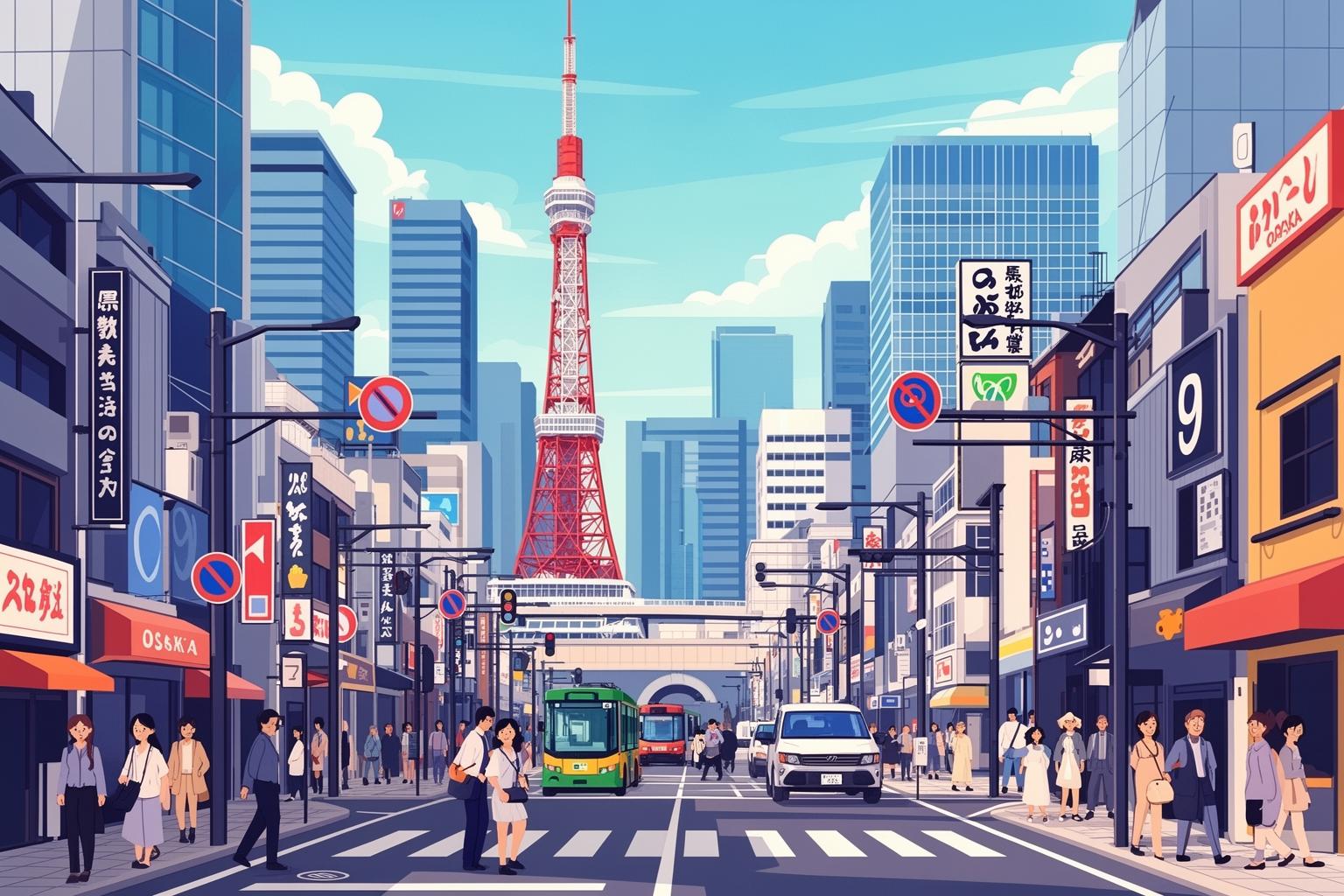
So, if you choose to live in Osaka, what will your everyday visual environment actually look like? It’s far more varied and subtle than the stereotype suggests. The city is not a single entity of animal prints; it’s a dynamic, living style ecosystem with distinct generational and geographical divisions.
The Generational Style Gap
The most crucial thing to grasp is that the classic ‘obachan’ look is strongly generational. Wander around Osaka University’s campus or the youthful, edgy streets of America-mura, and you’ll find fashion that is just as sophisticated, minimalist, or experimental as anything seen in Tokyo. Younger Osakans keep up with global trends. They shop at Zara, Uniqlo, and boutique select shops. Yet, you might still notice a subtle thread of the Osaka spirit—perhaps a lean toward slightly brighter colors, bolder accessories, or a more individualistic mix of pieces. There’s arguably less pressure to conform to a single, dominant seasonal ‘look.’ While Tokyo style often comes across as a collection of very specific, well-defined tribes, Osaka style feels freer, more centered on personal expression. The essence of ‘me-datsu’—standing out—hasn’t disappeared; it has just transformed into new forms.
Neighborhood Nuances
Your location in Osaka greatly influences the styles you encounter. Leopard prints and vibrant colors find their home in the city’s more traditional, down-to-earth neighborhoods and ‘shotengai.’ Areas like Shinsekai, with its retro, Showa-era atmosphere, or the lively markets around Tenma and Juso, remain strongholds of this classic aesthetic. Here, the community feels close-knit and the merchant culture is vividly present. In contrast, stroll through Kitahorie, a neighborhood filled with sleek, independent fashion boutiques, minimalist art galleries, and third-wave coffee shops. The style here leans toward chic neutrals, designer labels, and avant-garde silhouettes fitting perfectly in places like Daikanyama, Tokyo. Meanwhile, the business districts of Umeda and Yodoyabashi present a sea of sharp suits and practical, professional attire. Recognizing these distinct neighborhood identities is essential. Living in Osaka means grasping that drastically different social and aesthetic vibes can be found just a few train stops apart.
Misunderstanding the Message: Friendliness vs. Intrusiveness
For many foreigners, the biggest culture shock in Osaka isn’t the fashion; it’s the communication style. The same spirit that creates bold outfits and the ‘ame-chan’ gesture also encourages a level of directness that can come across as intrusive or even rude if you’re unprepared. This is likely the most significant misunderstanding of Osaka’s culture.
Direct Communication, Not Rudeness
An Osaka obachan might start a conversation with you in a way that someone from Tokyo never would. She might ask where you’re from, what you do, or even comment on your clothes, all within moments of meeting you. In a culture like Japan’s, known for its indirectness and emphasis on ‘tatemae’ (the public face), this can be startling. However, it’s important to grasp the intention. This isn’t nosiness for its own sake; it’s an accelerated way of connecting. It’s a method of quickly establishing common ground and bypassing formal pleasantries. In Tokyo, the norm is to maintain respectful distance unless formally introduced. In Osaka, the norm is to start from a place of friendly familiarity. The questions serve as an invitation, a means of drawing you into their world. They’re trying to be friendly, not intrusive. The gap between the public face (‘tatemae’) and true feelings (‘honne’) feels much smaller here.
The ‘Nori’ of Conversation
There’s a key concept in Osaka dialect and culture called ‘nori.’ It’s a term that’s hard to translate directly but refers to the rhythm, vibe, and energetic flow of a situation or conversation. To have good ‘nori’ means being on the same wavelength, getting the joke, and joining in the banter. Osaka’s communication style is heavily influenced by ‘manzai,’ the traditional two-person comedy famous in the region. Conversations often have a playful, back-and-forth rhythm, like a comedy act. The obachan’s loud voice, directness, and dramatic gestures are all part of creating ‘nori.’ She’s not just talking to you; she’s involving you in a small performance. For outsiders, the challenge is knowing how to respond. A quiet, reserved reaction might be taken not as politeness, but as lacking ‘nori,’ as a refusal to engage. The expectation is that you’ll volley back, maybe with a joke or a friendly, self-deprecating remark. Recognizing this performative aspect is key to understanding daily interactions.
What the ‘Osaka Obachan’ Really Teaches Us
So, we return to the woman in the leopard-print coat. By now, I hope you see her not as a walking joke, but as a living archive of Osakan culture. She is the guardian of the city’s merchant spirit. Her fashion choices reflect a history that values visibility and celebrates prosperity. Her ever-present bag of candies reveals a social philosophy rooted in proactive, barrier-breaking community acts. Her direct, lively communication style is a masterclass in the conversational art of ‘nori.’ She embodies a culture that prioritizes warmth over reserve, pragmatism over pretense, and spirited self-expression over quiet conformity. For anyone choosing to build a life in Osaka, looking beyond the stereotype of the ‘obachan’ is the first step to truly understanding the city’s heart. It teaches you that in Osaka, you are not expected to be invisible. You are invited to participate, engage, and find your rhythm in the city’s bold and vibrant beat. The leopard print may be optional, but the spirit of confidence, connection, and unapologetic presence it represents is the true key to feeling at home here.