

You just stepped out of a meeting in Shinsaibashi. Your head is spinning. It wasn’t the formal, silent, bow-filled ritual you’d been prepped for. It was loud. People talked over each other. Someone made a joke about the CEO’s new haircut, and everyone laughed—including the CEO. They made a decision in twenty minutes that would have taken three weeks of careful deliberation and ‘nemawashi’ back in your Tokyo office. You walked out with a handshake, a verbal agreement, and an invitation for okonomiyaki. You’re not sure if you just closed a deal or just made new drinking buddies. Welcome to Osaka, where business isn’t just business. It’s ‘akinai’.
For anyone living or working here, this is one of the biggest culture shocks, a fundamental difference from the buttoned-up corporate image Japan projects to the world. It’s a culture born not in samurai courts or government ministries, but on the bustling docks and crowded market stalls of a city built on commerce. This isn’t just a quirky local flavor; it’s a deep-seated philosophy that dictates the rhythm of the workplace, the art of negotiation, and the nature of professional relationships. To understand Osaka, you have to understand the vibrant, pragmatic, and intensely human spirit of ‘akinai’. It’s the invisible ink on every business card, the unspoken clause in every contract.
Osaka’s vibrant business culture even influences the wider hospitality scene, where OTA regulation insights are reshaping travel trends in Kansai.
What is ‘Akinai’ Anyway? More Than Just Business
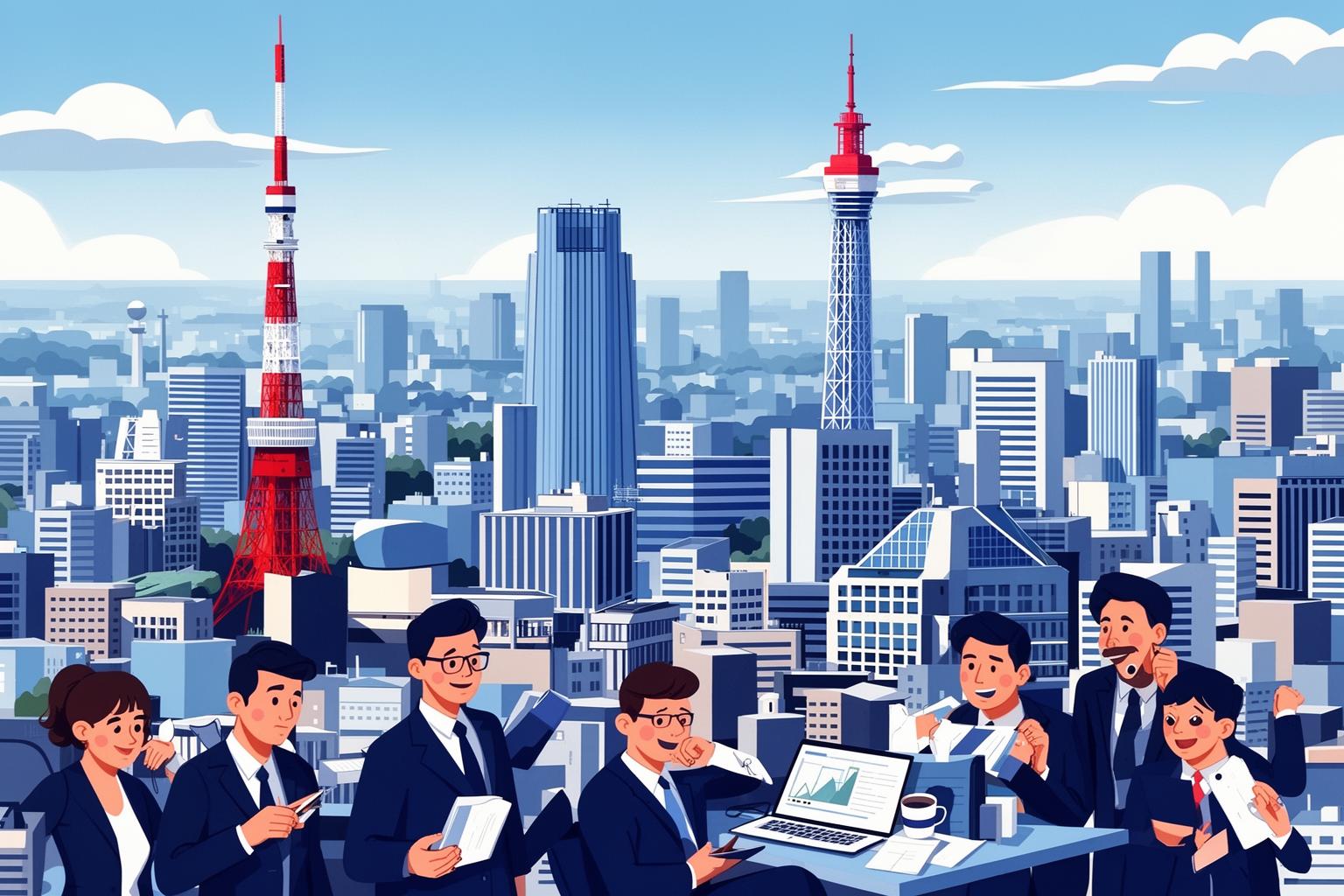
Translating ‘akinai’ (商い) simply as ‘business’ is like calling a hurricane ‘a bit of wind.’ It overlooks the energy, the history, and the soul behind the term. ‘Akinai’ represents the art of the deal, the craft of commerce, the dance of trade. It embodies a philosophy that has been cultivated over centuries in the merchant hearts of Japan.
The Roots of a Merchant City
Osaka wasn’t established by shoguns; it was shaped by shopkeepers. During the Edo period, it earned the nickname ‘Tenka no Daidokoro’—the Nation’s Kitchen. Rice, sake, textiles, and goods from all across Japan flowed through its ports and were traded at its markets. This was not a place for rigid ceremony; it was a place for getting things done. Survival and prosperity depended on your ability to think quickly, read people, negotiate firmly, and build a reputation for being both shrewd and fair. While Tokyo (then Edo) was the center of samurai government and strict social hierarchy, Osaka was the chaotic, vibrant engine of the economy. This history forged a mindset that values pragmatism over protocol, results over rank, and relationships over rules.
It’s All About the People (and the Profit)
The spirit of ‘akinai’ rests on a few core principles that continue to resonate in every Osaka office building and corner shop today.
The Win-Win Mentality
One of the most famous Osaka-ben greetings is “Mokarimakka?” which literally means “Are you making a profit?” A foreigner might find this rude, a direct inquiry into their finances. But that’s a complete misinterpretation. It’s the Osaka equivalent of “How are you?” It expresses a wish for mutual prosperity. The usual response is “Bochi bochi denna,” meaning “So-so, getting by.” It’s an act of humility, but the initial question acknowledges that everyone is in this together. The goal of ‘akinai’ isn’t to bankrupt your competitor; it’s to make a deal where both parties feel they received good value. It’s about building a sustainable commerce ecosystem, not creating a battlefield.
Speed and Action
There’s a famous saying here: “Kangaeru hima attara, ugoke!”—If you have time to think, move! Osaka’s business culture has little patience for indecision and bureaucracy. The belief is that you learn more by trying and failing than by spending months in meetings analyzing every possible outcome. This bias for action can be striking. You might pitch an idea in the morning and be expected to have a prototype or plan by the afternoon. The pace is relentless but exciting. It fosters an atmosphere of constant experimentation and agility, in stark contrast to the often cautious, consensus-driven tempo of corporate Tokyo.
Honesty with a Smile
Osaka people are straightforward. If they think your price is too high, they’ll say so. If they think your idea is poor, they won’t veil it in polite, ambiguous language. But this directness is almost always delivered with humor and warmth. They’ll critique your plan with a grin, making it clear it’s not personal. It’s about solving the problem efficiently. This can be misunderstood as rudeness or a lack of seriousness, but it’s actually a sign of respect. They respect you enough to avoid wasting time on pleasantries, and they expect the same in return.
‘Akinai’ in the Modern Osaka Office
How do these historical principles appear in a 21st-century workplace? The spirit of the old market remains vibrant, simply relocated from the riverfront to the conference room.
Meetings: Fast, Loud, and to the Point
Forget the stereotype of silent Japanese meetings where everyone waits politely for the most senior person to speak. An Osaka meeting is a lively, sometimes chaotic, arena of ideas. People interrupt, challenge their superiors, and engage in spirited, rapid-fire debates. The goal isn’t to follow a strict agenda but to reach the best answer as quickly as possible. The energy is collaborative and solution-oriented. A junior employee with a strong idea often receives as much attention as a department head. It’s a meritocracy of ideas, where the quality of your contribution matters more than your title.
The Art of ‘Nebiki’ (Negotiation)
In many parts of Japan, a price on an invoice is a fixed figure. In Osaka, it’s more of a friendly suggestion, an opening bid. The concept of ‘nebiki’ (price reduction) is deeply ingrained in the culture. Negotiation isn’t adversarial but an expected part of the interaction, signaling your engagement and desire for a win-win outcome. Whether it’s the price, delivery date, or contract terms, there’s usually room for discussion. Accepting the first offer without negotiation can seem odd, as if you’re not taking the transaction seriously. This applies not only to purchasing goods but also to B2B contracts, salaries, and project scopes.
Building Relationships Beyond the Boardroom
Business in Osaka is intensely personal. A contract is merely paper; the real agreement is the trust between two people. That’s why much business happens outside the office, over sizzling teppanyaki or numerous highballs at an izakaya. This isn’t just about socializing—it’s a vital part of the vetting process. They want to see how you behave with your guard down. Are you honest? Reliable? Can you carry on a conversation? Deals are often conceptually settled in the office but emotionally sealed at night. This emphasis on ‘ningen kankei’ (human relationships) means that once you’re in, you’re truly in. An Osaka business partner frequently becomes a lifelong friend willing to go great lengths to support you, as the relationship transcends simple commerce.
How This Feels Different from Tokyo
The contrast between the business cultures of Osaka and Tokyo is one of the most striking regional distinctions in Japan. It exemplifies the classic divide between the merchant and the bureaucrat, the workshop and the headquarters.
Formality vs. Practicality
Tokyo’s business environment is governed by a rigid code of formality. Mastery of ‘keigo’ (honorific language), the exact angle of a bow, and strict adherence to hierarchical protocols are essential. This culture places great importance on process and presentation. In Osaka, while politeness remains important, practicality takes precedence. The focus is on clear communication. An Osakan might shift to a more casual tone with a client once a relationship is established—a practice that might be viewed as unprofessional in Tokyo. They prioritize the core message over the formal packaging.
Risk and Innovation
The ‘Akinai’ spirit encourages a “give it a try” attitude. Osaka boasts a rich history of entrepreneurs and innovators, from the founder of Panasonic to the inventor of instant noodles. There is a greater tolerance for risk and an appreciation for clever, cost-effective solutions. Failure is regarded not as shameful but as a learning experience on the path to the next opportunity. Meanwhile, Tokyo’s large, established companies tend to be more risk-averse, embedded in a culture of seeking consensus from all stakeholders before making even minor moves, which can hinder speed and innovation.
The Money Talk
This is arguably the most striking difference. In Osaka, money is viewed simply as a tool and a measure. It is discussed openly and pragmatically. Asking about costs, profits, and budgets is normal and expected. As mentioned, “Mokarimakka?” serves as a common greeting. In Tokyo, discussing money too directly or too early in a relationship can be considered rude. The conversation is usually more indirect, framed in terms of value and partnership rather than pure financial figures.
What Foreigners Often Misunderstand
Navigating Osaka’s business culture can be fraught with misunderstandings for newcomers. What you interpret is often different from what is actually meant.
Is it Rudeness or Simply Directness?
The rapid speech, frequent interruptions, and blunt feedback can leave you feeling overwhelmed after an Osaka meeting. However, it is almost never intended with ill will. Instead, it stems from a strong respect for time—both yours and theirs. They see evading the point as the true disrespect. Being straightforward is their way of showing respect, trusting you to handle it professionally. Their goal is to reach a productive outcome quickly so everyone can return to work.
“Why Are They Joking During a Serious Meeting?”
Osaka is known as the comedy capital of Japan. The city’s famous ‘manzai’ (double act) comedy relies on the interplay between ‘boke’ (the funny fool) and ‘tsukkomi’ (the straight man). This pattern is woven into everyday conversations and naturally extends into the workplace. Humor acts as a social lubricant, easing tension, building rapport, and making tough discussions more manageable. A well-timed joke during a difficult negotiation serves as a strategic tool to maintain a positive atmosphere and preserve the relationship. It doesn’t imply a lack of seriousness about business; rather, it reflects their seriousness about the relationship.
The Blurred Line Between Friend and Client
A business partner in Osaka might suddenly invite you to their home for dinner, inquire about your family, or offer unsolicited life advice. For many Westerners, this may feel like an invasion of privacy and an unsettling crossing of professional and personal boundaries. However, in the ‘akinai’ mindset, a strong business relationship is also a personal one. They cannot fully trust you in business unless they know you as a person. By welcoming you into their personal life, they are signaling that you are now part of their ‘uchi’ (inside) group—a circle of deep trust and loyalty.
Daily Life: Surviving and Thriving in an ‘Akinai’ World
Adapting to this distinctive culture is essential for professional achievement and personal fulfillment while living in Osaka. It’s not about changing who you are, but about mastering a new way of interacting.
Embrace the Banter
Don’t remain a passive observer during meetings. If you have a question, ask it. If you have an opinion, express it. Participate in the give-and-take. A quiet, reserved manner, often seen as respectful in other parts of Japan, can be misunderstood in Osaka as disinterest or lack of confidence. Learn to hold your ground in a spirited discussion and don’t hesitate to add a touch of humor. It signals that you’re engaged and on the same wavelength.
Be Ready to Decide
Come to meetings prepared to make decisions. Vague comments like “I’ll have to check with my team” or “Let’s circle back on this next week” can frustrate your Osaka counterparts. They appreciate decisiveness. It’s better to make a prompt decision and adjust later than to remain stuck in analysis paralysis. Have your data, arguments, and bottom line ready.
Value the Human Connection
Dedicate time to cultivating genuine relationships. Accept invitations for dinner or drinks. Inquire about your colleagues’ families and hobbies, and share your own. This isn’t merely small talk; it’s the foundation on which all business in Osaka is based. In a city where a handshake is supported by a human bond, being a good business partner means being a good person first. This is the true secret of ‘akinai’: ultimately, it’s not about what you sell, but the trust you cultivate.








