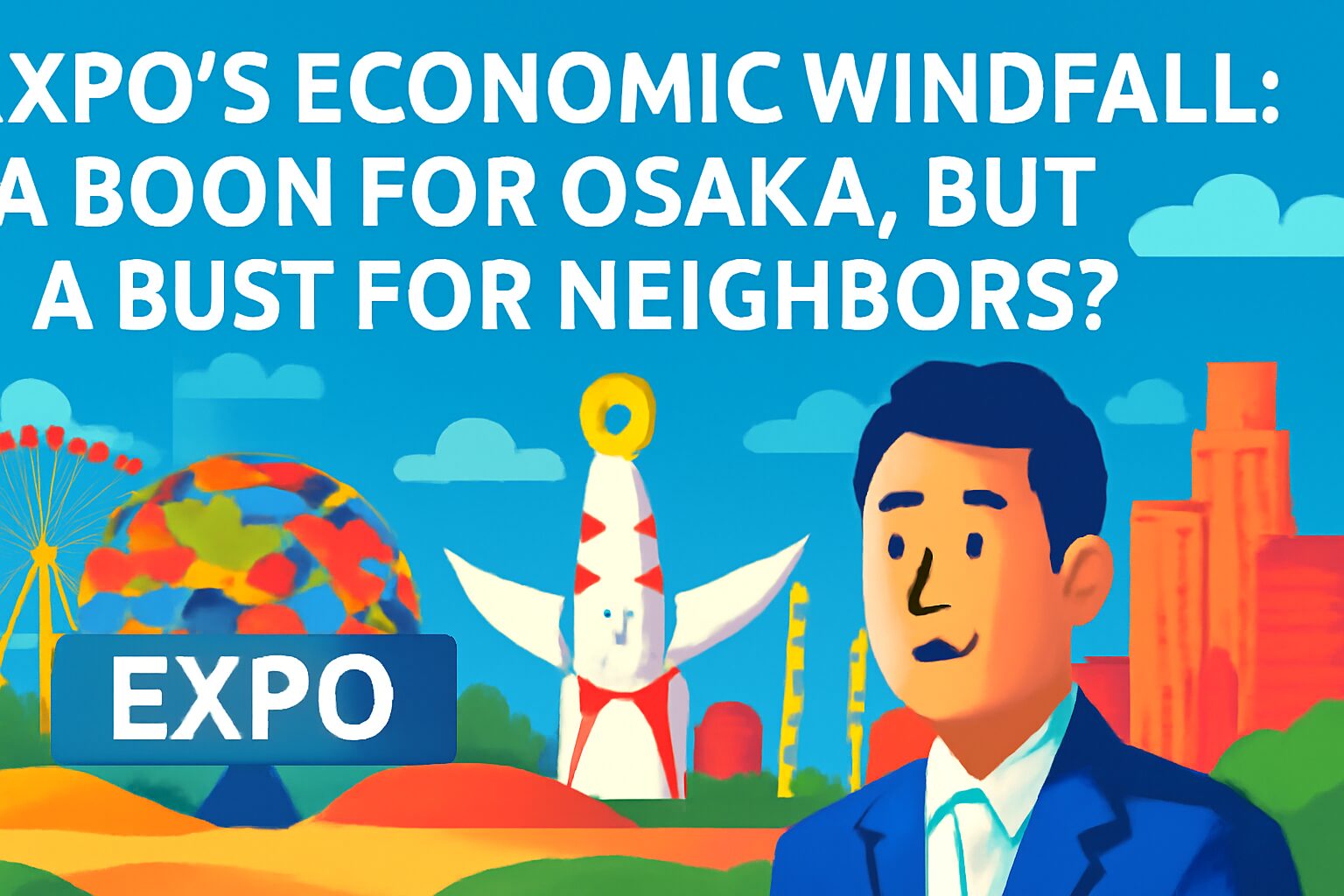
A recent report reveals a stark reality about the economic impact of the Osaka-Kansai Expo: its massive 3 trillion yen benefit was overwhelmingly concentrated within Osaka, leaving neighboring prefectures in the Kansai region with minimal spillover. This phenomenon, dubbed the “straw effect,” offers crucial insights for travelers and local authorities alike as the region gears up for future major events.
The “Straw Effect”: How Osaka Siphoned Tourism
The data paints a clear picture of a zero-sum game. While Osaka experienced a significant surge in tourism and spending directly linked to Expo preparations and related events, this came at the expense of its neighbors. The report highlighted that tourism demand, rather than expanding across the region, was effectively siphoned into Osaka.
Evidence of this trend was seen in key tourist destinations that would typically benefit from an influx of visitors to Kansai. Prominent spots such as Kobe’s vibrant Chinatown in Hyogo Prefecture and the iconic Kiyomizu-dera Temple in Kyoto reported a surprising and significant drop in visitor numbers during the period analyzed. This suggests that visitors were drawn to the gravity of Osaka’s events, choosing to spend their time and money within the city’s limits instead of exploring the broader region.
A Deeper Look at the Numbers
The 3 trillion yen (approximately $20 billion USD) economic effect is an impressive figure, but its distribution tells the full story. The vast majority of this financial impact stemmed from construction projects for the Expo site, infrastructure upgrades within Osaka, and direct spending on accommodation, dining, and retail by visitors who remained in the city. The core assumption that a major event in one city will naturally create a ripple effect of prosperity across its neighbors did not hold true in this case.
Background: The Promise of a Unified Kansai
The event was officially named the “Osaka-Kansai Expo” with the explicit intention of promoting the entire Kansai region as a single, attractive destination. The expectation from governments and businesses in Hyogo, Kyoto, Nara, and other surrounding prefectures was that they would share in the economic boom. They anticipated that international and domestic visitors, drawn by the Expo, would use Osaka as a gateway to explore the rich cultural heritage, natural beauty, and unique attractions scattered throughout Kansai. However, the report indicates that this regional synergy failed to materialize as hoped.
Future Implications for Kansai Tourism
This analysis serves as a critical lesson for future regional tourism strategies, especially with the main Expo event on the horizon in 2025.
What This Means for Travelers
For visitors planning a trip to Kansai, this trend presents both challenges and opportunities. While Osaka is likely to be bustling and potentially crowded, especially around major event periods, neighboring areas like Kobe, Kyoto, and Nara might offer a more relaxed travel experience. Travelers looking to escape the crowds could find quieter temples, less competition for restaurant reservations, and a more leisurely pace in the cities and towns just a short train ride from Osaka.
A Wake-Up Call for Regional Cooperation
For local governments and tourism boards, this data is a wake-up call. It underscores that simply hosting a major event is not enough to guarantee region-wide benefits. Proactive and collaborative strategies are now essential. We can expect to see a push for new initiatives, such as:
- Integrated marketing campaigns that showcase “Osaka +1” travel itineraries.
- The development of attractive Kansai-wide transportation passes.
- Collaborative events and promotions that connect the Expo experience with attractions in surrounding prefectures.
The “straw effect” has demonstrated that without a coordinated effort, economic benefits can become highly localized. The challenge for the entire Kansai region is to transform this one-sided outcome into a truly shared success story for 2025 and beyond.