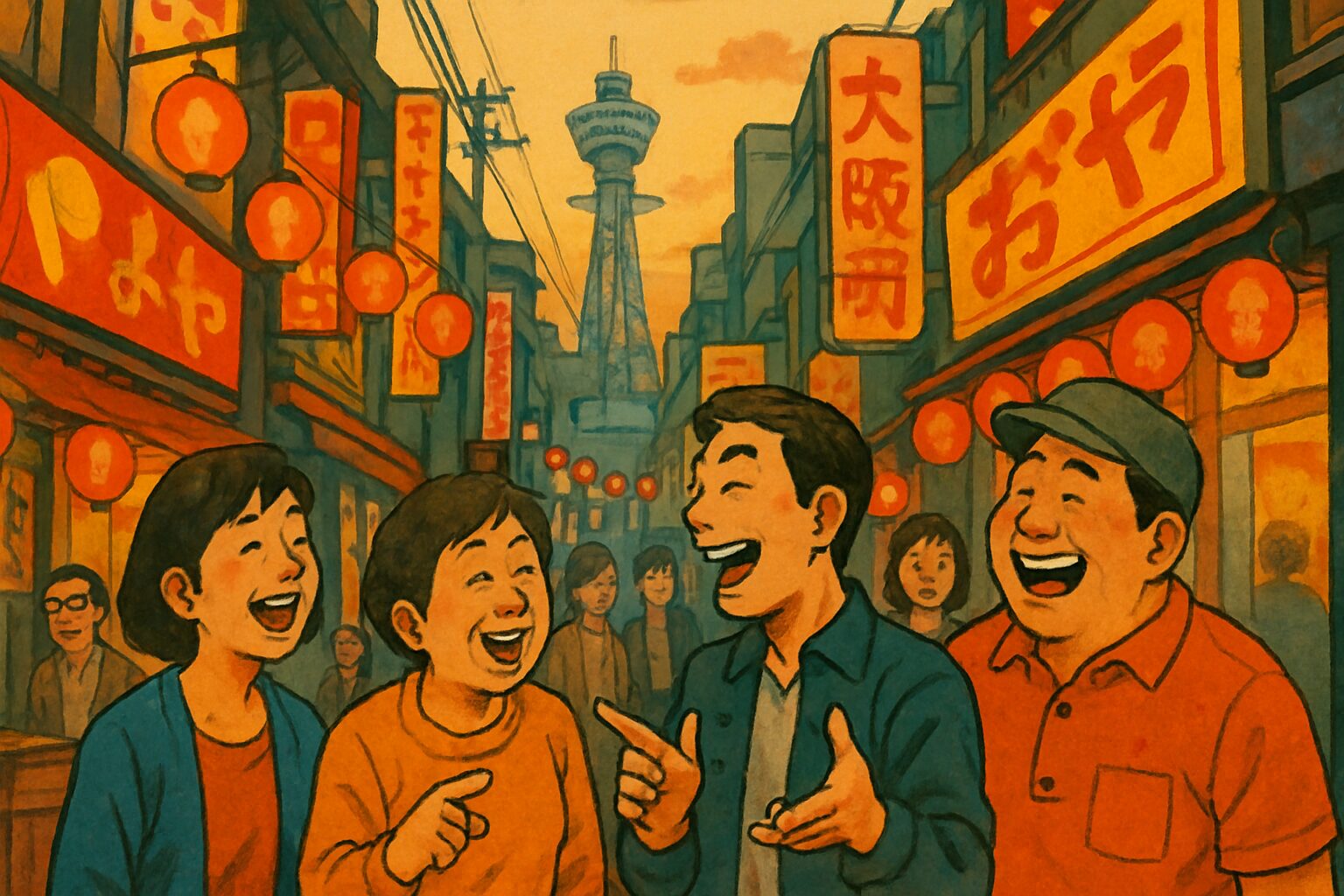
Welcome to Osaka, a city that moves to its own rhythm. You feel it in the sizzle of takoyaki on a hotplate, the roar of the crowd at a Hanshin Tigers game, and the relentless, joyful chaos of its neon-drenched nights. But to truly understand the city’s heart, you have to listen closer. You have to tune into its voice. Most people know of Osaka-ben, the general dialect of the region, famous for its melodic cadence and friendly `nandeyanen` interjections. But venture just a little east of the city center, and the rhythm changes. The beat gets stronger, the bass drops, and the words hit you with a directness that can be startling, hilarious, and deeply affectionate all at once. You’ve just entered the territory of Kawachi-ben, the dialect that is, for many, the unfiltered soul of Osaka.
Kawachi is the name of a former province, a wide, fertile plain that now encompasses cities like Higashi-Osaka, Yao, and Kashiwara. This is the industrial heartland, a landscape of small factories, bustling shopping arcades, and tight-knit communities that have powered Osaka for generations. Kawachi-ben is the language born from this environment. It’s a dialect forged in the heat of the factory floor and seasoned in the boisterous, no-frills standing bars. It sheds the layers of formal politeness you might find elsewhere in Japan and gets straight to the point. For the uninitiated, it can sound rough, even aggressive. But once you learn to hear the music behind the words, you’ll discover a communication style built on honesty, humor, and a powerful sense of camaraderie. Understanding Kawachi-ben isn’t just a linguistic exercise; it’s your backstage pass to the real, unvarnished, and incredibly warm culture of deep Osaka. It’s about learning to appreciate that a phrase that sounds like a threat can actually be a term of endearment, and that the bluntest advice often comes from the kindest heart. This is your guide to navigating that beautiful, raw, and rhythmic world.
To truly immerse yourself in the local culture, consider exploring the vibrant and authentic atmosphere of Osaka’s Tsuruhashi Korea Town.
The Sound of Authenticity: What Makes Kawachi-ben Vibrate
Before we get into the details of the vocabulary, let’s consider the feeling and atmosphere that Kawachi-ben evokes. Picture the contrast between a flawlessly polished studio recording and a live, raw blues performance in a smoky bar. That captures the essence of the difference between standard Japanese and Kawachi-ben. Standard Japanese, or `Hyojungo`, is precise, clear, and created for broad, unambiguous communication. It’s the language used in news broadcasts, formal education, and polite society. Even standard Osaka-ben, as heard in the central shopping areas of Umeda or Namba, carries a performative, merchant-class charm. It’s witty, quick, and crafted to build rapport in both business and social settings.
Kawachi-ben, in contrast, feels less like a staged act and more like a conversation caught between family members at home. It’s raw and visceral. The intonation is often flatter, the sentences shorter and more percussive. There’s a certain weight to the words, a gravelly texture reflecting a history of hard work and straightforward talk. Sentence endings often drop off or are cut short, lending a strong, declarative tone. Where a speaker of standard Japanese might soften a request, a Kawachi native might simply state a fact. This isn’t rudeness; it’s efficiency. The dialect prioritizes substance over style and genuine connection over superficial niceties. Other Japanese people often describe its sound as `kowai` (scary) or `gara warui` (ill-mannered), but this misinterprets its cultural background. It represents a close-knit community where verbal padding for strangers isn’t needed. It’s the sound of trust and being completely yourself without fear of judgment.
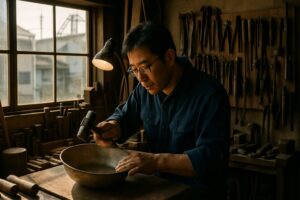
Consider the environment in which it developed. Higashi-Osaka, for example, is known as a `monozukuri no machi`, a town of makers. It’s filled with thousands of small, family-run factories producing everything from tiny screws to satellite parts. In a loud workshop, where you must be heard over clanging machinery, there’s no time for subtlety. You shout, point, and get straight to the point. Communication demands clarity and immediate understanding. This spirit is embedded in the dialect’s very DNA. It’s a language formed not in the quiet tea rooms of Kyoto or the executive suites of Tokyo, but in the vibrant, noisy, and cooperative chaos of a community that builds things with their hands.
More Than a Punchline: Deconstructing the ‘Scary’ Stereotype
The most widespread stereotype about Kawachi-ben is its presumed harshness. Popular media, particularly comedy shows, frequently use a character speaking with a strong Kawachi accent as a shorthand for a tough guy, a delinquent, or a comically aggressive elderly man. Phrases like “Shibaku zo, korā!” (“I’ll smack you, punk!”) are used for humor, reinforcing the image of a dialect constantly on the brink of a fight. But viewing it solely through this perspective misses the entire point. The directness of Kawachi-ben isn’t about aggression; it’s about intimacy and a unique form of politeness.
In much of Japanese culture, politeness is conveyed through indirectness, humility, and the use of honorifics (keigo). This complex system creates a respectful distance between speakers, which is important in a hierarchical and group-centered society. Kawachi-ben, however, operates on a different notion of politeness. Here, true respect is shown by dropping pretenses. It’s about treating someone like family, not as a stranger or superior. Speaking bluntly and plainly implies a level of comfort and trust. It says, “I don’t need to wear a formal mask with you. We’re equals. We are genuine with each other.”
Take the word ware (われ) for example. In standard Japanese, this is an archaic or very aggressive way to say “you.” Using it in Tokyo almost certainly invites confrontation. In Kawachi, though, ware is a chameleon. Sure, it can be used angrily between rivals. But between two old friends, two oji-chan sipping sake at a standing bar, it’s perfectly natural. One might say to the other, “Ware, honma aho ya na!” which literally means “You, you’re a real idiot!” Taken out of context, it sounds like a serious insult. But in context, said with a laugh and a slap on the back, it means, “You’re hilarious, you always crack me up, my friend.” The harsh word carries warm affection. The absence of honorifics doesn’t create distance; it eliminates it. It’s like a verbal bear hug. The supposed “rudeness” is actually the sign of a close, trusting bond.
This principle is the key to understanding the whole dialect. When you hear a phrase that sounds shocking to your ears, pause. Consider the context. Are people laughing? Is there a smile in the speaker’s eyes? Is the recipient firing back with an equally blunt reply? More often than not, you’re not witnessing an argument. You’re witnessing a lively, healthy, and deeply connected relationship at work. It’s a kind of social grooming, like two old lions play-fighting. The growls may sound fierce, but it’s all about strengthening bonds.
The Kawachi Lexicon: A Deep Dive into Key Words and Phrases

To genuinely understand the dialect, you have to dive into the words themselves. Let’s go beyond the stereotypes and delve into the nuance of some iconic Kawachi-ben expressions. Learning these won’t just help you grasp what’s being said; it will offer you a glimpse into the Kawachi way of seeing the world.
`Ware` (われ) and `Omae` (お前) – The Complex “You”
We’ve mentioned `ware` before, but it deserves a closer examination. Its use is a lesson in context. Among older men, especially those who grew up together or worked side by side for many years, `ware` is the default pronoun for “you.” It conveys a shared past and complete straightforwardness. For a younger person to use it toward an elder would be highly disrespectful, but among peers, it’s a mark of respect. `Omae` is another form of “you” that, while considered rude in standard Japanese, is common and often neutral in Kawachi-ben and broader Kansai-ben, especially when said by a superior to a junior or between men. The key is to pay attention to who is speaking to whom and the tone used. Is it a sharp, accusing `Ware!` or a casual, drawn-out `Waaare, nani shiten nen` (“Hey you, what are you up to?”). The feeling comes not from the word itself but from the rhythm of its delivery.
`Shibaku zo` (しばくぞ) – The Ultimate Playful Threat
This phrase is perhaps the most well-known and often misunderstood. Literally, `shibaku` means to beat or thrash. So `shibaku zo` is a declaration: “I’m going to beat you!” Of course, if said in genuine anger during a serious conflict, it means just that. But 99% of the time in everyday life, it’s a theatrical, humorous exaggeration. It’s the verbal equivalent of a noogie. A restaurant owner might say it to a regular customer who jokingly complains about the food: `Monku bakka yuu na! Shibaku zo!` (“Stop complaining! I’ll smack you!”), followed by hearty laughter from both. It expresses mild annoyance in a way that creates humor rather than conflict. It’s like saying “Oh, you!” but turned up to eleven. If you’re ever on the receiving end, the right response is laughter, not fear. A clever comeback will earn you even more respect.
`Dabo` (だぼ) – The Endearing Fool
Every dialect has its own preferred insults, and in Kawachi, `dabo` or `aho dabo` is a classic. It’s a step down from the more usual Kansai `aho` (idiot/fool). While `aho` can be a light jab or a harsh insult, `dabo` carries a slightly bumbling, oafish nuance. It’s less about intelligence and more about being clumsy or clueless. A mother might say to her son who spilled his drink, `Kono dabo!` (“You clumsy fool!”), but with a tone of affectionate exasperation. It’s rarely meant with real malice. Like many Kawachi terms, its harsh sounding tone masks a softer, more familial meaning. It’s an insult reserved for those you genuinely care about.
`~ke` (け) – The Question with Impact
One of the subtle grammatical markers of Kawachi-ben is the use of `~ke` as a question ending, often replacing the standard `~no` or the more common Kansai `~nen`. For example, `Nani shiten no?` (“What are you doing?”) becomes `Nani shiten ke?`. To the untrained ear, this might seem minor, but it changes the sentence’s feel. `~ke` gives a more abrupt, inquisitive, and occasionally accusatory tone. `Sore honma ke?` (“Is that really true?”) sounds more skeptical and demanding than `Sore hontou desu ka?`. It’s another example of the dialect’s directness. It gets straight to the point, asking for an answer without softening the edges. It doesn’t imply suspicion, just a desire for a straightforward reply, right now.
`Doitsumo Koitsumo` (どいつもこいつも) – Everyone and Their Brother
This expressive phrase means something like “every single one of them” or “this entire bunch,” with a strong note of frustration or annoyance. Imagine a shopkeeper trying to close up for the night while noisy teenagers linger outside. He might mutter, `Doitsumo koitsumo, hayo kaere ya!` (“Every last one of ‘em, just go home already!”). It’s a blanket expression of irritation that’s both funny and deeply relatable. The phrase paints a vivid picture, conveying not just the meaning but the speaker’s emotional state. It’s full of personality, a mini performance in just four words.
`Ee Kagen ni Sei yo!` (ええ加減にせえよ!) – The Definitive “Cut It Out!”
You’ll hear this phrase often in situations involving horseplay, teasing, or when someone is pushing their luck. `Ee kagen` means “to a reasonable or moderate degree.” `Sei yo` is a forceful command form of “do.” So literally it means “Do it moderately!” In practice, it means “That’s enough!” “Cut it out!” or “Give me a break!” Its intensity can vary greatly. It might be a gentle warning from a parent to a child, a firm request between colleagues, or a furious shout in a serious quarrel. It’s a versatile way to draw a line. When you hear it, you know a boundary has been crossed, and whether it’s playful or serious depends entirely on the speaker’s tone and body language.
Digging for Roots: The History and Culture Behind the Talk
A dialect does not emerge in isolation; it is shaped by geography, history, and the everyday lives of its speakers. Kawachi-ben’s character is deeply intertwined with the history of the Kawachi region itself. For centuries, this area was a vast floodplain inhabited by farmers who cultivated the fertile soil. Life revolved around the seasons and the harsh demands of agricultural work, fostering a pragmatic, down-to-earth mindset.
Then came the 20th-century industrial boom. Osaka expanded, and Kawachi’s fields gave way to a dense network of factories and residential areas. Workers from across Japan arrived, bringing their own dialects and customs. Kawachi became a melting pot with a distinct working-class identity. In these crowded communities of laborers and artisans, a new sense of self emerged. The communication style that developed valued solidarity, honesty, and a healthy distrust of authority and pretense.
This culture remains palpable today. It embodies the spirit of `shitamachi`, the traditional downtown neighborhoods where strong community ties endure. Neighbors know and support one another, speaking with a bluntness that would be surprising in a more detached, white-collar suburb. Local festivals are far from restrained; they are loud, lively, and often chaotic expressions of community pride. The famous Danjiri Matsuri in Kishiwada to the south represents the most intense example, but this same fiery enthusiasm is evident in festivals throughout Kawachi.
This historical background is crucial. When you hear an elderly man in a Yao market speaking in what sounds like a gruff, commanding tone, it is not rudeness. It is a linguistic relic. It echoes the voice of a factory foreman who needed to be clear and direct, the legacy of a farmer who had no time for pleasantries before a typhoon struck. It is the voice of a community that survived and thrived by relying on one another, a strength that demanded a language of absolute, unfiltered truth.
Field Guide: Where to Hear Authentic Kawachi-ben
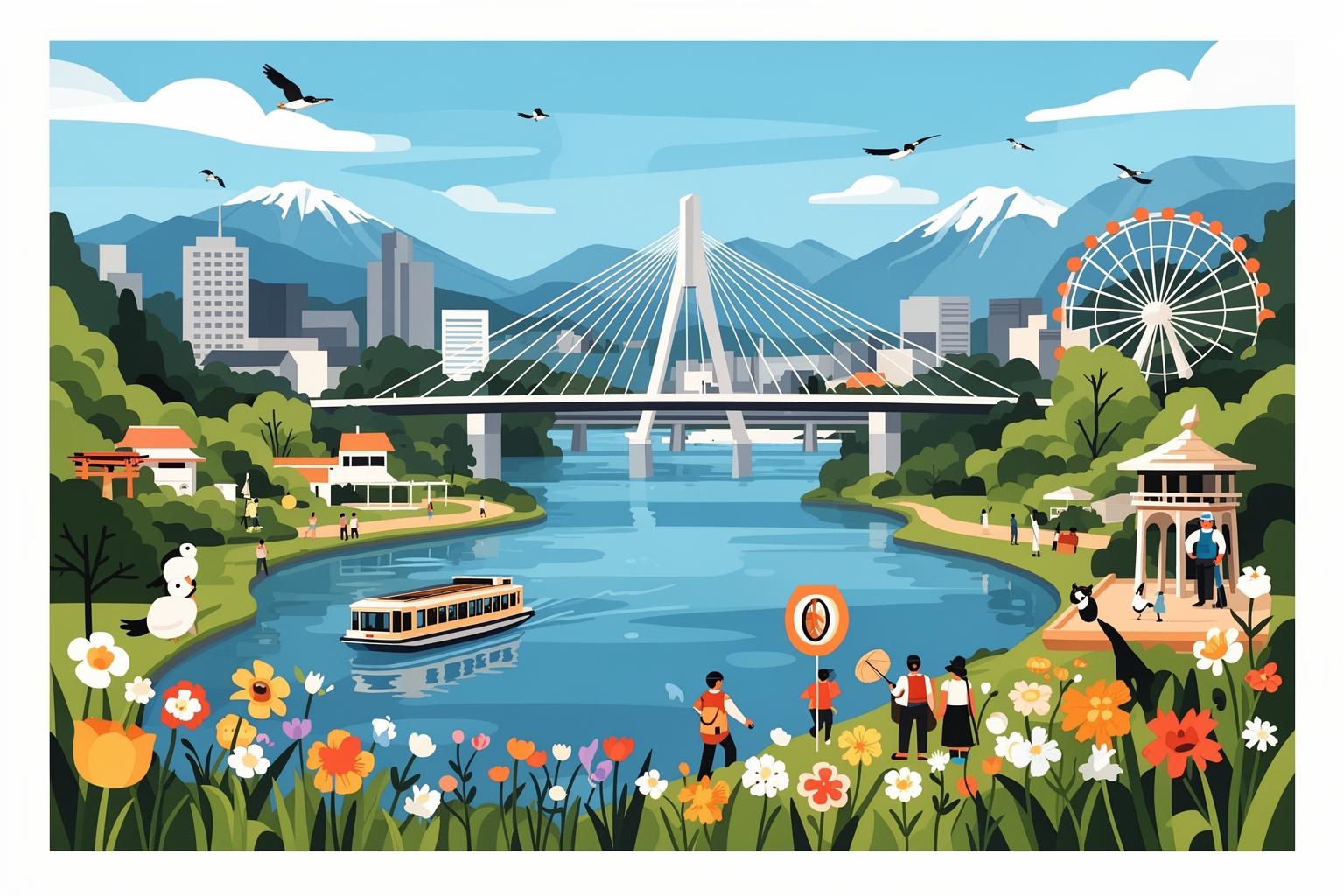
Reading about a dialect is one thing; experiencing it firsthand is quite another. To hear Kawachi-ben in its natural environment, you need to leave the tourist spots of central Osaka and explore the eastern suburbs. Here’s where to tune your ear.
The Local `Shotengai` (Shopping Arcades)
This is the heart of it all. The covered shopping arcades in cities like Higashi-Osaka and Yao are the lifeblood of their communities. Forget the polished, quiet malls—these are lively, bustling corridors filled with commerce and conversation. Listen to the fishmonger calling out the day’s specials. Hear the vegetable stand owner chatting with a regular customer. Conversations flow freely, loudly, and without restraint. This is where you’ll catch the full spectrum of the dialect—from friendly greetings and exasperated sighs to bursts of raucous laughter. A great place to start is the covered arcade near Fuse Station on the Kintetsu Line. Simply wander, listen, and soak in the atmosphere. Pick up a `korokke` (croquette) from a butcher shop and stand nearby for a few minutes. It’s a free crash course in linguistics and culture.
The `Tachinomi` (Standing Bars)
As evening approaches, the `tachinomi` bars come alive. These no-frills spots host salarymen, factory workers, and local retirees standing shoulder-to-shoulder, drinking cheap beer and sake, and enjoying simple, tasty snacks. They serve as hubs of lively conversation. Once the alcohol starts flowing, linguistic filters drop entirely. This is where you’ll hear the most authentic Kawachi-ben. Stories unfold, jokes fly, and the day’s frustrations are vented, all in the rich, rhythmic flow of the local dialect. As a foreigner, you might feel hesitant to enter, but a polite nod and a simple order often meet with curiosity and warmth. Don’t force a conversation, but if one begins, go with it. It’s an immersive lesson in local communication.
The Neighborhood `Sento` (Public Bath)
For those feeling truly adventurous, the neighborhood `sento` offers the deepest immersion. In the steamy, echoing spaces of the public bath, all social barriers are literally stripped away. The conversations among the older bathers as they soak are as raw and genuine as it gets. Expect to hear gossip, health complaints, and philosophical reflections, all spoken in pure, unfiltered Kawachi-ben. Of course, be respectful of bath etiquette, but if you want to grasp the true, unguarded spirit of the community, this is the place.
To reach these spots, take the Kintetsu Nara Line or Kintetsu Osaka Line from Osaka-Namba or Tsuruhashi. Get off at local stations like Fuse, Yao, or Kawachi-Kosaka, and just start walking. The farther you move from the station, the more authentic the atmosphere becomes.
Your Survival Guide: How to React and Interact
So, you find yourself in the heart of Kawachi, and a local shopkeeper calls out to you in a strong accent. What do you do? Here are a few simple tips.
First and foremost: Do not be intimidated. Ninety-nine percent of the time, a tone that sounds aggressive is simply emphatic. The speaker is trying to be clear, not rude. A smile is your universal shield and translator. A genuine, friendly smile can dissolve any perceived tension and show that you are open and approachable.
Second, listen for the laughter. Humor is the lubricant of Kawachi communication. Even the harshest-sounding conversations are often punctuated by shared laughs. If the people around you are smiling, you’re not in the middle of a conflict; you’re in the middle of a normal exchange. The humor might be sarcastic, dry, or slapstick, but it’s almost always present.
Third, a little bit of Kansai-ben goes a long way. You don’t need to master Kawachi-ben, but dropping a simple `honma?` (“really?”) or `meccha ee yan!` (“that’s awesome!”) shows that you’re making an effort. It signals that you’re not just a passive tourist but someone genuinely interested in the local culture. This small gesture can turn an interaction from transactional into personal.
Finally, embrace the directness. Don’t take offense if someone asks you a blunt question or offers unsolicited but well-meaning advice. This is their way of engaging. A vendor might straightforwardly tell you that you’re buying the wrong kind of fish for your cooking plans. This isn’t an insult to your intelligence; it’s a sincere attempt to help you enjoy a better meal. Accept it with a “thank you” (`ookini!`, the Osaka way), and you’ll have made a friend.
The Echo of a Beating Heart
Kawachi-ben is more than just a collection of words and grammatical quirks. It is the audible expression of a region’s character. It represents the sound of resilience, of a community that has always valued hard work over flowery language. It carries the tone of a humor that finds brightness in the everyday grind. It echoes an intimacy so profound that it needs no verbal masks.
To a passing visitor, it may sound like a confusing, even jarring, wall of sound. But for those who choose to live here, for those who take the time to listen and understand the history and heart behind the accent, it transforms into a kind of music. It’s the rhythm of real life, played without apology. So, the next time you’re in Osaka, take that train heading east. Stroll through a market in Yao. Enjoy a drink at a standing bar in Fuse. Close your eyes and simply listen. You might not catch every word, but you will feel the rhythm. And within that rhythm, you’ll discover the true, unfiltered, and wonderfully unapologetic soul of Osaka.