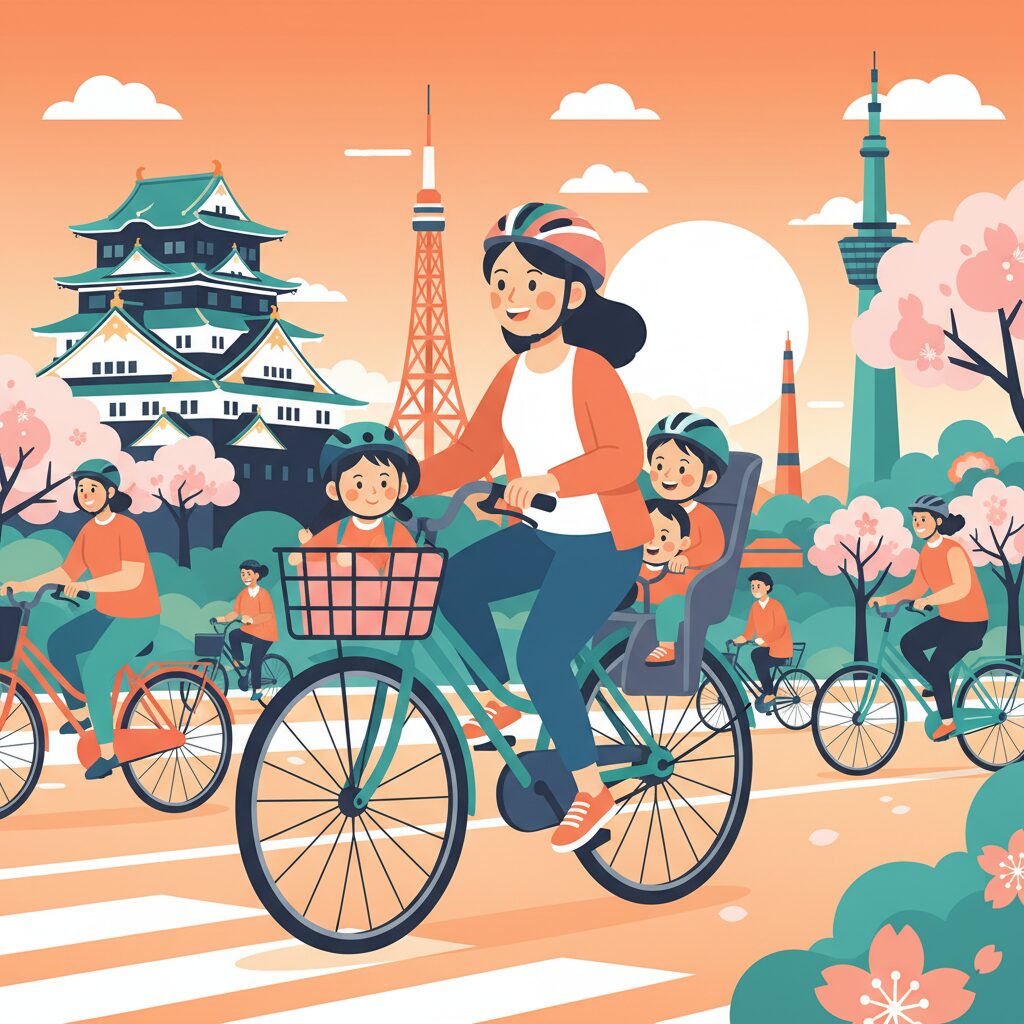
Step off the train in Osaka, anywhere from the polished corridors of Umeda to the sleepier residential tracks of the suburbs, and the first thing you’ll notice isn’t a landmark. It’s not the Glico Man or the castle. It’s the sound. A gentle, persistent whirring, punctuated by the cheerful chime of a tiny bell. It’s the sound of the ‘mamachari’ kingdom in motion. Before you even fully register the sight, you feel the movement: a river of bicycles flowing around you, parting and converging with the practiced ease of a school of fish. Women with two children strapped in, one front and one back, glide past with groceries swinging from the handlebars. Businessmen in suits pedal with briefcases wedged in their front baskets. Elderly grandmothers, impossibly steady, navigate crowded sidewalks with a placid focus. This isn’t just transportation; it’s the city’s circulatory system, and the mamachari is the lifeblood. For a newcomer, especially one clutching a mental image of Japan as a place of rigid order and unyielding rules, the scene can be utterly baffling. It looks like beautiful, functional, unadulterated chaos. And in many ways, it is. But it’s a chaos with its own rhythm, its own logic, and a deep set of unspoken rules that govern the flow. This isn’t Tokyo, where cyclists often seem like cautious guests on the road. Here in Osaka, the bicycle is king, the sidewalk is its domain, and learning to navigate this world is the first true step to understanding the city’s pragmatic, efficient, and deeply human heart.
To truly understand this pragmatic city, you should also explore the daily rhythm of its local shopping arcades.
The Mamachari: More Than Just a Bicycle
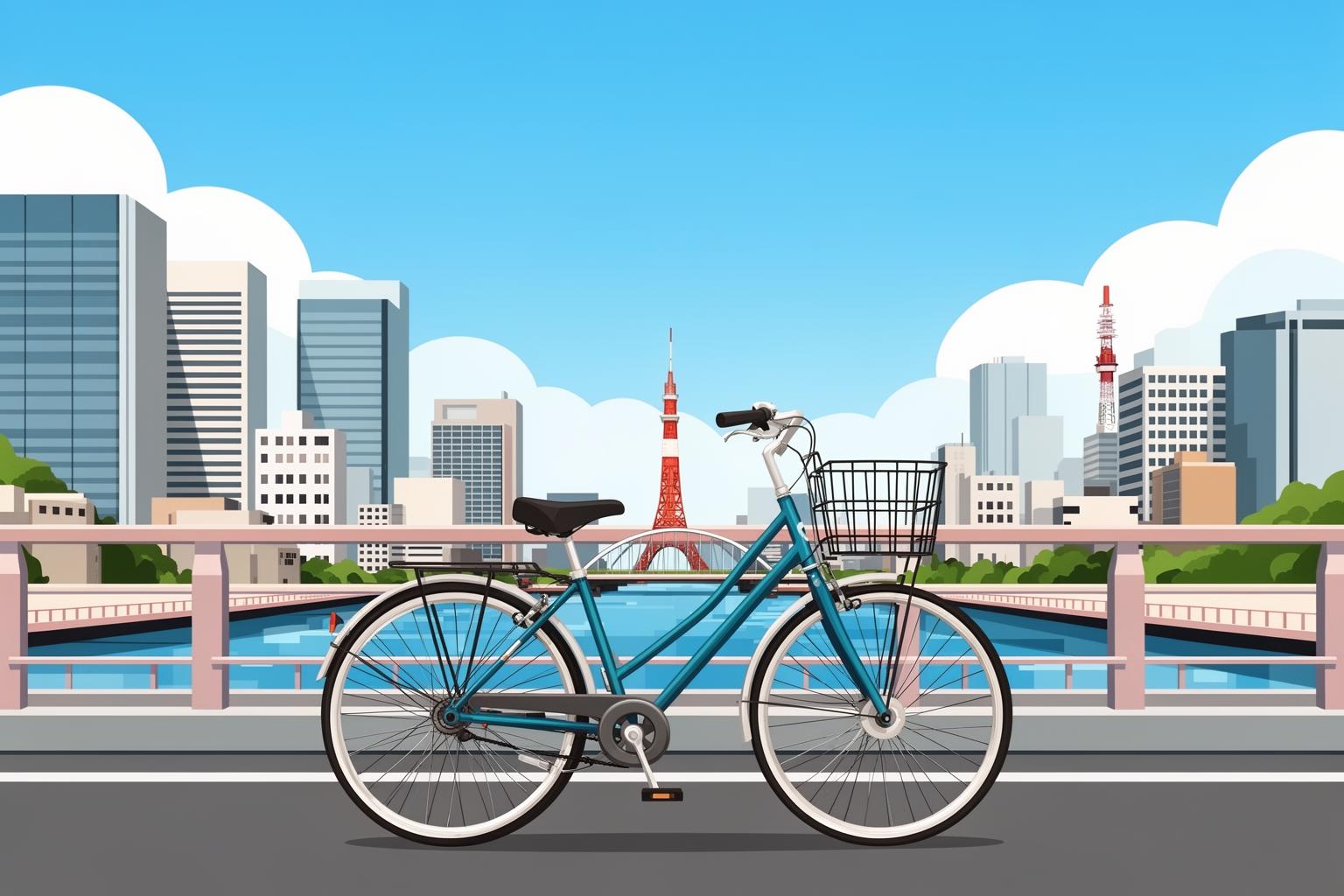
Before you can grasp the rules, you need to understand the machine. The mamachari, or “mom’s chariot,” is a triumph of practical design. It stands in stark contrast to the sleek, lightweight road bikes common elsewhere. This is a heavy, steel-framed workhorse, built for a single purpose: to make life in a dense urban setting manageable. It serves as the family station wagon, grocery cart, and school bus all combined into one elegantly simple package.
Anatomy of an Osaka Workhorse
Take a closer look at any mamachari parked outside a supermarket, and it tells a story of everyday life. The large, sturdy basket at the front is not decorative; it’s crafted to perfectly hold a standard grocery bag, or perhaps a school backpack and a handbag. The frame features a low step-through design, making it easy to mount and dismount even while wearing a skirt or carrying a baby. The chain is fully enclosed in a plastic guard, preventing oily stains on your pants. The seat is wide and cushioned for comfort rather than speed. But the true brilliance lies in the accessories. The rear rack is a platform full of potential, almost always equipped with a child seat that can hold a youngster up to kindergarten age. Sometimes, you’ll find a second, smaller child seat attached to the handlebars. Yes, a family of three can, and often does, travel on a single bicycle. The kickstand is no flimsy stick; it’s a heavy-duty, spring-loaded device that lifts the entire rear wheel off the ground, creating a stable base that won’t tip over even when loaded with a squirming toddler and a week’s worth of daikon radishes. Every mamachari includes a built-in lock that clamps around the rear wheel with a flick of a lever and a turn of a key. It’s not high-security, but it effectively deters casual opportunistic theft. The dynamo-powered light, which activates automatically as you pedal, means you never need to worry about batteries. It’s a self-sufficient, all-in-one support system for urban parents and commuters alike.
Why the Mamachari Reigns Supreme in Osaka
So why is this modest chariot the undisputed king of Osaka‘s streets, far more than in Tokyo? The answer lies in a perfect combination of geography, economics, and culture. First, Osaka is predominantly flat. The Osaka Plain is a vast, gentle basin, allowing you to cycle for kilometers without breaking a sweat, even on a heavy, single-speed mamachari. This accessibility makes it an option for everyone from children to the elderly. Second, the city’s layout differs significantly. While Tokyo consists of major hubs connected by an incredibly dense and efficient train network, Osaka feels more like a sprawling array of self-contained villages. Your local shotengai (shopping arcade), supermarket, clinic, post office, and train station are often within a ten-minute bike ride. Driving that distance could take just as long, and you’d face the costly, soul-draining search for parking. The mamachari is simply the most efficient tool for the task. This directly taps into the famed Osaka pragmatism. Osakans are known for being kechi, a term often mistranslated as “stingy” but better understood as “intensely value-conscious.” A twenty-thousand-yen bicycle that replaces train fares, gas, and parking fees is not just a good deal; it’s a financial masterstroke. In Tokyo, the city’s vast scale and the perfection of its subway system make trains the logical choice for many journeys. In Osaka, the mamachari frequently wins in the calculation of time, cost, and convenience for local travel, fostering a culture where not owning one feels like a genuine disadvantage.
The Unwritten Rules of the Osaka Road
Now we reach the core of the matter: the stunning, intimidating dance of the Osaka cyclist. To an outsider, it may appear as a chaotic free-for-all. To those involved, it’s a carefully coordinated system built on shared understandings, subtle signals, and a collective decision to prioritize flow over formal rules. Forget what you learned in your driving lesson; this operates on an entirely different system.
The Sidewalk is the Main Street
The most crucial rule to grasp is that the sidewalk serves as the main cycling route. Yes, the law often states that bicycles are vehicles and should remain on the road. In Osaka, this is more of a polite suggestion than a strict rule. The truth is that roads are narrow, cars travel fast, and trucks pass perilously close. For the vast majority of mamachari riders—who are often parents carrying precious cargo rather than lycra-clad athletes—the sidewalk is simply the safest option. This sets the stage for the central drama of daily life in Osaka: the constant, delicate negotiation between pedestrians and cyclists sharing a space meant for walking. It works because of a shared, unspoken code of conduct. Cyclists are expected to ride slowly and predictably. Pedestrians, in turn, are used to bicycles and tend to walk straight and steadily. An ongoing, subtle exchange of communication takes place. A gentle double-ring of a bell isn’t a rude demand to move; it’s a soft “hello, I’m behind you, just letting you know I’ll pass on your left.” A quiet “sumimasen” as you squeeze by is both an apology and a thank you. You learn to read the slight shift in a pedestrian’s shoulders that signals which way they will move. This pragmatic rule-bending is quintessential Osaka. The official law is seen as inefficient and unsafe, so a more practical, community-regulated system has organically developed. The aim is not strict legal adherence but to get everyone moving smoothly with minimal disruption.
The ‘Osaka Weave’: A Masterclass in Motion
Observe an experienced Osaka cyclist weaving through a crowded walkway outside a train station at rush hour. It’s like poetry in motion. They don’t stop because stopping causes blockages. Instead, they perform the “Osaka Weave.” They slow to an almost crawl, reading gaps in pedestrian flow and anticipating the movements of those five feet ahead. With tiny adjustments to the handlebars and subtle shifts in balance, they slip through impossibly narrow spaces without ever putting a foot down. This skill lies at the heart of the Osaka cyclist’s philosophy, focused on maintaining momentum. The entire system hinges on the idea of everyone moving slowly and predictably. Sudden stops or sharp turns are the cardinal sins, disrupting the shared rhythm and forcing those behind to react suddenly. It’s a blend of applied physics and social psychology, learned over years of experience. For foreigners, the natural instinct is often to stop and wait for a clear path. This is the wrong approach. Stopping makes you an obstacle, a boulder in the river. The right tactic is to breathe deeply, slow down, trust the flow, find your gap, commit to your path, and become part of the weave.
The Art of the ‘Chotto Dake’ Parking
Bicycle parking in Osaka is a city-wide contradiction. Near every train station and major supermarket, you’ll find designated multi-story bike parking facilities. Yet, these are almost always full. This situation has given rise to the delicate art of “chotto dake” (just a little bit) parking. The unspoken rule is that you may park your bike almost anywhere, provided it’s for a short time and done considerately. Need to pop into a convenience store for two minutes? Leaning your bike against the wall near the entrance is perfectly fine. Meeting a friend for a quick coffee? Finding a tiny patch of unused wall space in an alley is the solution. The key is not to be a nuisance. Don’t block building entrances, don’t obstruct tactile paving for the visually impaired, and don’t lock your bike to handrails. The community tolerates short-term, courteous parking but will quickly turn against bikes that are clearly abandoned or selfishly blocking spaces. You’ll know you’ve crossed the line when you return to find your bike tagged with a bright yellow or red warning—a first step toward impoundment. This culture of informal parking is another example of Osaka’s pragmatism. Official infrastructure falls short, so residents have created a flexible, user-driven system to fill the gaps.
Advanced Mamachari Techniques for the Brave
Once you’ve grasped the basics of weaving through traffic and parking, you’ll begin to recognize the true masters of the craft. These are riders who have elevated mamachari cycling to a level that is both awe-inspiring and, to be honest, somewhat intimidating. While these techniques are not recommended for beginners, watching them is an essential part of the Osaka experience.
The Umbrella ‘Sasu-bei’ Maneuver
During the rainy season in June, you’ll witness a scene that defies both physics and traffic laws: the umbrella rider. Known in Japanese as “kasa-sashi unten,” it involves cycling with one hand while holding a full-sized umbrella in the other. Though technically illegal and undeniably risky, it is completely, utterly, and universally normal. Seeing hundreds of cyclists navigating a downpour with their umbrellas forming a floating, multi-colored canopy over the sidewalks is quintessential Osaka. It demonstrates a deep-rooted determination not to let weather disrupt daily life. Although taking the train can be inconvenient, the mamachari remains the most direct way to the kindergarten. So, people adapt—they learn to balance, steer one-handed, and angle their umbrellas just right against the wind. This reflects the city’s resilience and pragmatic “get it done” mindset. You can even buy special clamps that attach to handlebars to hold umbrellas, a tacit acknowledgment from manufacturers that this practice isn’t going away.
The Smartphone Scroll
In a more modern, yet equally illegal, form of multitasking, there’s the smartphone scroller. This rider pedals slowly, one hand on the handlebar while the other holds a smartphone mere inches from their face. They might be texting, following GPS directions, or watching a video. It’s a heart-stopping sight for those unfamiliar, but like the umbrella maneuver, it’s executed with practiced ease and a casual air. These riders typically stick to quieter backstreets and move slowly, relying on peripheral vision and the predictability of their environment. It’s a risky habit that illustrates how completely integrated the bicycle is into everyday life. The mamachari is not a special activity requiring full focus; for many, it’s simply a mobile platform for living life, as automatic as walking. It’s a fascinating, if somewhat worrying, development in the mamachari realm.
Carrying the Impossible
Perhaps the most impressive aspect is the cargo-hauling skill of a determined mamachari rider. The basket and rear rack are just starting points. Osakans have mastered the art of balancing, stacking, and strapping an astonishing amount of items onto their bikes. I’ve personally seen a man cycling calmly with a full-sized Christmas tree resting across his handlebars. I’ve watched women return from the home center with bags of potting soil in the basket, a new shelving unit bungee-corded to the rear rack, and a long fluorescent light tube held precariously under one arm. Towers of toilet paper rolls bought during a sale, piled so high they obscure the rider’s face, are common sights. This isn’t about showing off; it’s pure, practical efficiency. Why take a taxi or order delivery when the mamachari is right there? It embodies a resourceful, “make it work” mindset. The bicycle isn’t a limitation; it’s a tool, and with enough ingenuity and a few bungee cords, it can be adapted to almost any task.
The Social Fabric of Cycling
The mamachari is more than just a practical means of transportation; it’s an essential part of the city’s social fabric. Riding a bike immerses you in the community in a way that neither a car nor a train can. It fosters connections, strengthens neighborhood ties, and contributes to the sense of safety and warmth that Osaka is known for.
The Neighborhood Watch on Wheels
Traveling through your neighborhood by bicycle means moving at a human pace. You’re not enclosed in a metal box. You hear the sounds of local shops, smell the yakitori grill warming up for the evening, and see your neighbors face-to-face. You exchange a nod with the tofu shop owner, a quick “konnichiwa” with another parent outside the school gates. You become a familiar presence. This is how Osaka’s renowned friendliness shows itself in everyday life. It’s not through grand gestures, but the accumulation of countless small, low-key interactions. Groups of mothers on their mamacharis, taking their children to and from the park, create a moving support network, sharing gossip and advice. Elderly residents use their bikes to maintain independence and social ties, riding to the community center or market. This steady, visible presence of people moving through the neighborhood generates a strong sense of informal surveillance. Streets feel safer because they are alive with the quiet, continual movement of the mamachari community.
Registration, Theft, and the Silver Sticker
Of course, there is a formal aspect to this informal world. When you buy a bicycle in Japan, you must register it with the police—a process called “bouhan toroku.” For a small fee, you receive a modest silver or orange sticker with a registration number, which is attached to your bike’s frame. This sticker serves as proof of ownership. Police can, and sometimes do, stop cyclists to check registration, especially if the bike looks new or the rider appears unfamiliar. This measure helps combat theft, which remains a persistent but somewhat unique issue. Professional bike theft is fairly rare. More common is opportunistic crime: someone leaving a bar late at night “borrows” an unlocked bike to reach the station and then abandons it. That’s why the built-in wheel lock is so important. It won’t deter a determined thief with bolt cutters but can stop a casual opportunist. The flip side of this bicycle-saturated culture is the problem of disposal. Near train stations, designated removal zones exist where bikes parked illegally for long periods are tagged and eventually taken to huge bicycle graveyards on the city outskirts. This serves as a stark reminder that within the mamachari kingdom, the cycle of life, use, and abandonment is always ongoing.
How to Join the Mamachari Kingdom Without Causing an Uproar
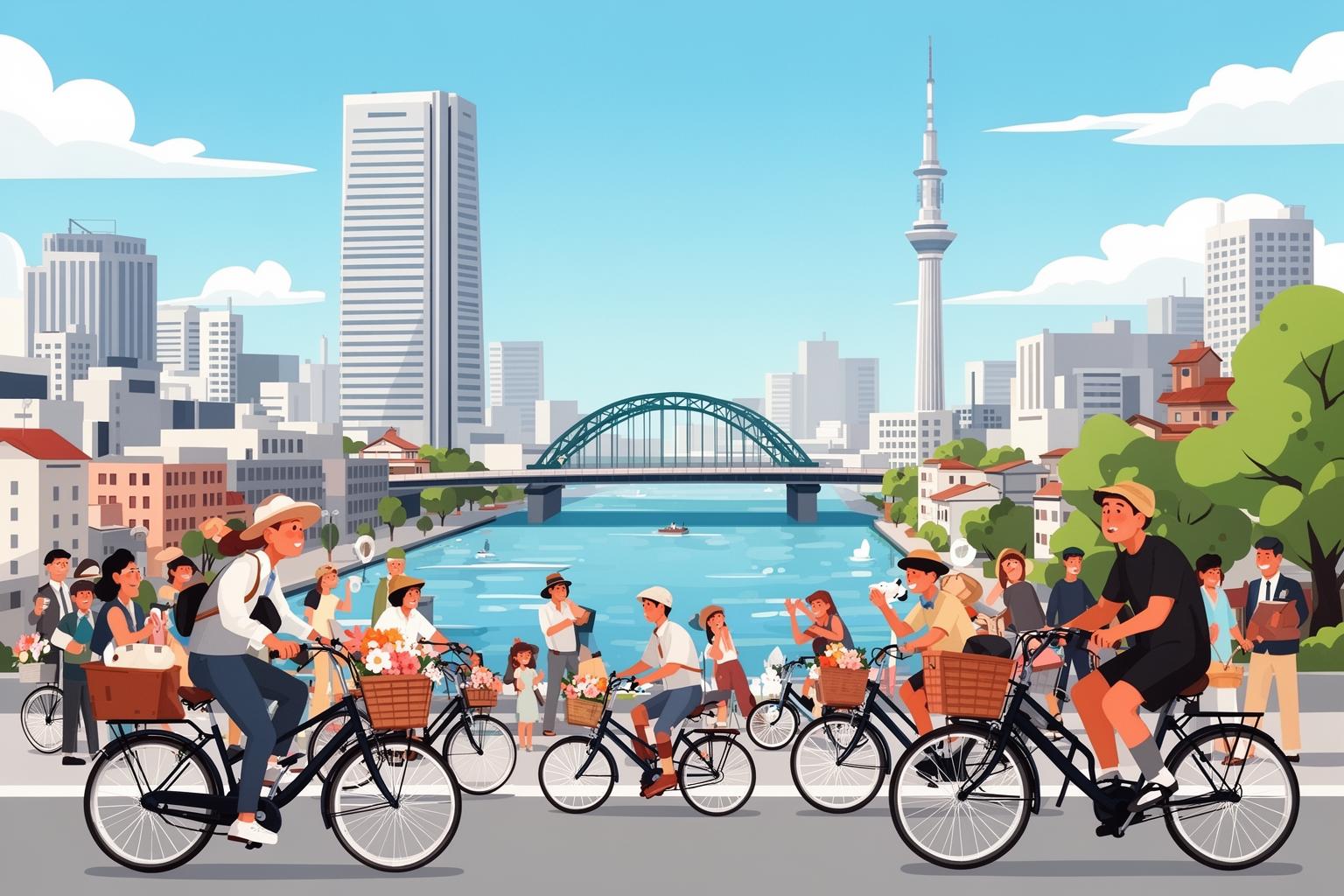
So, you’re convinced. You’re ready to embrace the two-wheeled lifestyle and join the flow. Doing it right will earn you the quiet respect of your fellow riders, while doing it wrong will brand you as a clumsy amateur who disrupts the delicate balance. Here’s how to get started on the right foot.
Your First Mamachari: Buying and Registering
Your first choice is where to buy. You can visit a large chain store or a home center, which often offer the lowest prices. However, the best option for a beginner is a small, local bicycle shop. The owner, likely an experienced mechanic, can help you select the right size and model and will assemble it properly. More importantly, you’ll be building a relationship with the person who can fix your flat tires and adjust your brakes for years to come. Second-hand shops are also a great, budget-friendly option. Wherever you purchase it, the shop will handle the police registration for you on the spot. It’s a simple form with a small fee and not optional. Get the sticker, and you are officially a citizen of the kingdom.
Etiquette for the New Rider
Your first few rides will feel intimidating. The key is to be humble and observant. Start by watching. Sit on a bench near a busy shopping arcade and observe how people move, interact, and navigate intersections. When you begin riding, your guiding principle should be predictability. Avoid sudden stops, turns, or swerves. Signal your intentions with your body language. Use your bell appropriately: a quick, friendly double-ring is a polite alert, not a horn. When you’re on the sidewalk, remember you are a guest. Pedestrians, especially the elderly and children, have the ultimate right of way. Give them plenty of space and pass slowly. Master the kickstand. A bike left improperly parked and fallen over, blocking the path, is a major public nuisance. Above all, go with the flow. Don’t fight the current. Merge smoothly, anticipate others’ movements, and trust that this chaotic, beautiful system has its own logic. In time, you won’t even have to think about it. You’ll simply be part of the rhythm—another rider in the endless, whirring, chiming river of wheels that keeps Osaka moving.