You feel it before you see it. A wave of warm, savory air hits you first—the scent of simmering dashi, sizzling kushikatsu, and stale beer, all mingling into a perfume unique to the Osaka underbelly. Then comes the sound, a low, rolling murmur that spills out from under a grimy noren curtain or through a fogged-up sliding door. It’s the sound of a hundred tiny conversations, punctuated by sharp laughs and the clatter of ceramic on a stainless-steel counter. This is the sensory overture to the tachinomi, Osaka’s ubiquitous standing bars. For a foreigner trying to understand the city’s pulse, these are not just places to grab a cheap drink; they are living, breathing classrooms of Osakan social dynamics. They are chaotic, they are intimate, and they operate on a dense, unwritten code of conduct that can feel as impenetrable as it is inviting. The question isn’t just what a tachinomi is, but how you exist within one without shattering the delicate, unspoken equilibrium. It’s a place where the city’s soul is laid bare, for better or for worse, one highball at a time. Forget the guidebooks that tell you where to go. The real map you need is a social one, a guide to navigating the currents of community and isolation that swirl around these counters.
To truly understand these layers of unspoken community rules, one might also explore the similarly intimate and codified world of Osaka’s sentō culture.
The Magnetic Pull: Why Tachinomi Thrive in Osaka’s Soil
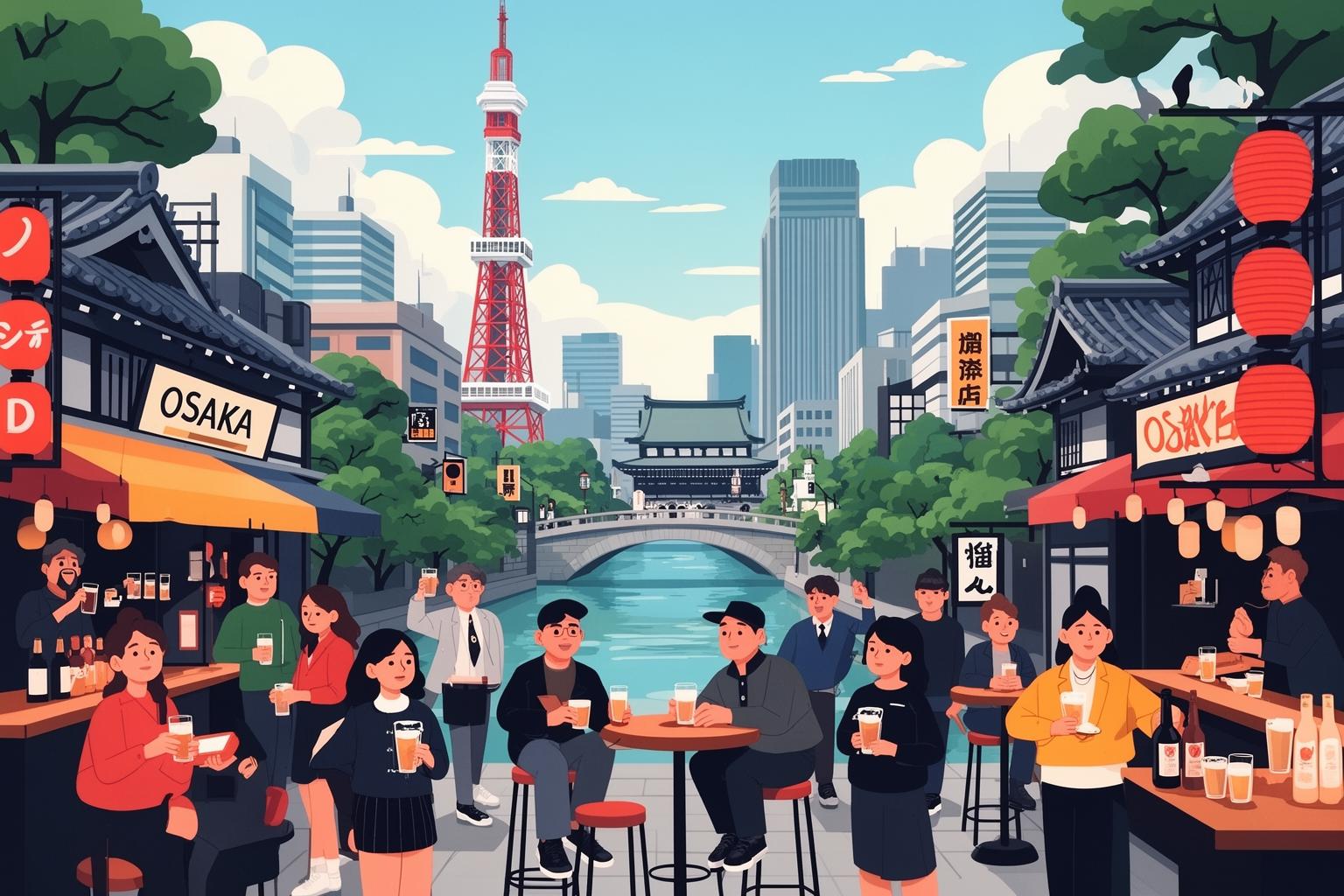
To grasp the concept of a standing bar, you first need to understand the economic and social environment from which it emerges. Osaka, historically known as a city of merchants (`shōnin no machi`), carries a deeply rooted pragmatism. Time equates to money, space is limited, and pretension wastes both. A tachinomi physically embodies this mindset. There are no chairs to encourage lingering, no ornate decorations to justify high prices, and no hushed atmosphere demanding reverence. It is a mechanism designed for speed, efficiency, and social interaction. Its appeal is fundamental. First, there’s the remarkably low barrier to entry. You can walk in, order a single draft beer for a few hundred yen, and a skewer of grilled chicken for even less. There’s no cover charge or pressure to order a full meal. This financial accessibility democratizes the experience completely. In the same small space, you might find a construction worker in dusty work clothes, a sharply dressed office manager loosening his tie, a young university student, and a retired grandmother out for an early evening drink. This social melting pot is uncommon in a country that often favors more homogeneous groupings.
This is not merely about affordability; it reflects a culture of `choinomi`, the art of the quick drink. The idea is to take a brief, sharp pause in your day. A drink on the way home from work. A beer before meeting friends for dinner. A final nightcap before catching the last train. The tachinomi facilitates this perfectly. The standing posture itself emphasizes transience. You’re not settling in; you’re pausing. This impermanence is, paradoxically, what makes it so appealing. It’s a low-commitment social space. You can be in and out within fifteen minutes, sharing a few pleasantries with the master (`taishō`) or the person next to you, and feel a brief but genuine sense of connection before melting back into the city’s anonymity. This contrasts sharply with the seated izakaya experience, which implies a longer, more structured social engagement. At a tachinomi, the social contract is lighter, and expectations are fewer. It’s a space made for fleeting moments, not extended stays, and in a bustling merchant city like Osaka, that efficiency is a virtue.
The Allure of Proximity and Spontaneity
The physical layout of a tachinomi acts as a catalyst for its distinctive social dynamic. Counters are narrow, spaces tight, and personal bubbles necessarily compressed. You stand literally shoulder-to-shoulder with strangers. In Tokyo, this proximity might inspire a deliberate, almost architectural indifference. People erect invisible barriers, focusing intently on their phones, drinks, or thoughts. In Osaka, this same closeness is often seen as an invitation. The shared discomfort of being crammed into a tiny space fosters a strange, temporary camaraderie. A dropped coin, an accidentally nudged elbow, a complimentary glance at someone’s sashimi plate—all become potential openings for conversation.
This is where Osaka’s famed “friendliness” stops feeling like a cliché and becomes a real, observable trait. An elderly man might lean over and say, “That doteyaki looks good, where are you from?” A woman may notice you struggling with the menu and offer a suggestion. These exchanges are usually brief and light; conversational sparks rather than bonfires. Topics tend to be situational: the weather, the day’s Hanshin Tigers game, the quality of the tuna, or the current prime minister’s ineptitude. It’s a form of social grooming, acknowledging shared space and humanity without demanding intimacy. For a foreigner, this can be both exhilarating and daunting. It offers a chance to practice Japanese in a low-pressure setting and to feel woven into the city’s fabric. Spontaneity is crucial. You never know who you’ll meet or what snippet of life you might overhear. It is the city’s living room, a place where the private thoughts of its residents momentarily become public, and that raw, unfiltered energy is intoxicating.
The Jōren Ecosystem: Becoming a Regular
While a tachinomi welcomes the transient drinker, its true essence lies in its community of `jōren`, or regulars. Watch any standing bar for more than an hour, and you’ll begin to perceive the invisible bonds that hold it together. The `taishō` will have a drink ready for a regular before they even order. Conversations pick up right where they left off the day before. A shared history fills the air, a comfortable rhythm that newcomers can only observe from the sidelines. Becoming a `jōren` is a gradual, organic process. It’s not something that can be rushed. It requires consistency, respect for the space, and a slow opening up.
It begins with simple recognition. You arrive around the same time a few days a week, order similar items, and engage in polite, brief conversation with the staff. Over time, the `taishō` might ask about your work or day. The other regulars start to acknowledge you with nods. This is the first step. The next is when they remember your drink or save a spot for you when they see you approaching. The final stage is being drawn into group conversations, with your opinion on the Tigers’ new pitcher actively sought. This ecosystem offers a strong sense of belonging, a “third place” that is neither home nor work. In a vast city that can feel isolating, being a `jōren` at a local tachinomi is an anchor. It guarantees that at the end of a long day, there is a place where someone knows your name and your drink, and that simple comfort is invaluable. It transforms what might be a transactional bar experience into something deeply communal.
The Abrasive Edge: Navigating the Downsides and Unspoken Rules
For all its appeal, the tachinomi is far from a utopian social space. The very qualities that make it lively and thrilling can also render it grating and uncomfortable. The most immediate and tangible challenge is the lack of personal space. On a busy evening, you remain in near-constant physical contact with those around you. You will be bumped, jostled, and pressed up against. There is a subtle skill in making yourself small, holding your glass and plate so as to minimize your footprint. For those familiar with Western concepts of personal space, this can feel intrusive and aggressive. There is no quiet nook to retreat to; you are always visible, always part of the swirling human mass. This unyielding closeness means there’s no escape. If the person beside you chooses to start a conversation, you become a captive audience. While this can lead to wonderful, spontaneous connections, it may also result in unwanted attention or excruciatingly dull discussions about pachinko that you feel obliged to endure.
Moreover, the transient nature of the `choinomi` culture exerts a subtle but constant pressure to keep moving. Lingering too long over a half-empty glass is a major faux pas, especially when others are waiting for a spot. You are expected to read the atmosphere. If a queue is forming outside, you should finish your drink, settle your bill, and relinquish your place. This rule is never stated outright, yet it is enforced by collective social pressure. You might sense the watchful eyes of the `taishō` on you, or notice hopeful glances from those waiting by the door. This unspoken expectation can detract from the relaxed vibe. You can’t just zone out; you must stay socially alert, constantly gauging how welcome you remain. This contrasts sharply with the Western pub culture of buying a pint and holding a table for hours. The tachinomi is a place of flow and turnover, and you are merely a temporary part of that current.
Decoding the Code: The Unwritten Rules of the Counter
To survive and thrive in a tachinomi, one must grasp a dense lexicon of unwritten rules. This is where many foreigners falter—not out of ill intent, but simple ignorance. The social contract is delicate, and breaking it, even unknowingly, can disrupt the harmony of the entire space. First and foremost is the ordering process. You do not wait to be served. You must catch the eye of the busy `taishō` or staff and place your order clearly and promptly. Hesitation is a cardinal sin. Know what you want before you speak. In many traditional establishments, payment operates on a `kyasshu on` system, a slang term meaning “cash on delivery.” You place 1,000 yen coins or bills on the counter in front of you, and with each order, the staff deducts the exact amount from your pile. It’s an honor system and a clever psychological design; seeing your cash pile shrink offers a tangible reminder of your spending and time in the bar.
Managing your personal space is another vital skill. Your domain extends only as wide as your shoulders. Your glass, plate, and small personal items must stay within this invisible boundary. Spreading out is viewed as selfish and disrespectful to those nearby. When finished with a plate or bottle, you are often expected to place it on a higher shelf above the main counter to free up space. This act of communal tidiness is part of the unwritten agreement. Joining a conversation is an art in itself. You never interrupt a one-on-one exchange. However, if there is a group discussion swirling around the counter, often led by the `taishō`, it might be acceptable to laugh gently at a joke or add a brief, relevant comment—but this requires extreme caution. The key is to read the mood. Is it a closed circle or an open forum? Misjudging this can result in an awkward, deafening silence. The ultimate rule is simple: be aware. Be mindful of your space, your volume, your timing. The tachinomi is a collective improvisation, where your role isn’t to solo, but to blend seamlessly into the rhythm section.
The Gruff Affection of the Taishō
The master of the bar, the `taishō`, is the sun around which the entire tachinomi universe revolves. They are not bartenders in the Western sense—they serve as conductors, gatekeepers, and pillars of the community. Their demeanor can be wildly misleading to outsiders. Many `taishō` in classic, old-school bars may come across as gruff, intimidating, or even rude. They might grunt instead of speak, take your money without a word of thanks, or slam your drink down on the counter. A foreigner might interpret this as hostility or poor service, but this is almost always a profound misunderstanding of cultural cues.
This apparent gruffness often masks a professional stoicism, a protective shell concealing a deep warmth reserved for those who respect the establishment’s rules. It’s also a form of efficiency. Many work alone, cooking, serving, and managing numerous customers simultaneously. There’s no time for pleasantries. The absence of fawning service can, in a way, be a sign of respect. The `taishō` assumes you’re not a tourist who needs hand-holding; you’re an adult who understands how a bar works. The real communication is non-verbal: it’s in the way they place a small, complimentary appetizer (`otoshi`) before a regular who looks worn out; in the slight nod you receive when placing your empty plate on the upper shelf; in the rare, crinkled-eye smile after you’ve been coming for a few weeks. This is the Osakan way. Affection is shown, not spoken. Earning the subtle, unspoken approval of a surly `taishō` is a rite of passage. It means you’ve cracked the code. You’re no longer just a customer—you’ve become part of the scene.
The Osaka-Tokyo Tachinomi Divide: A Tale of Two Cities
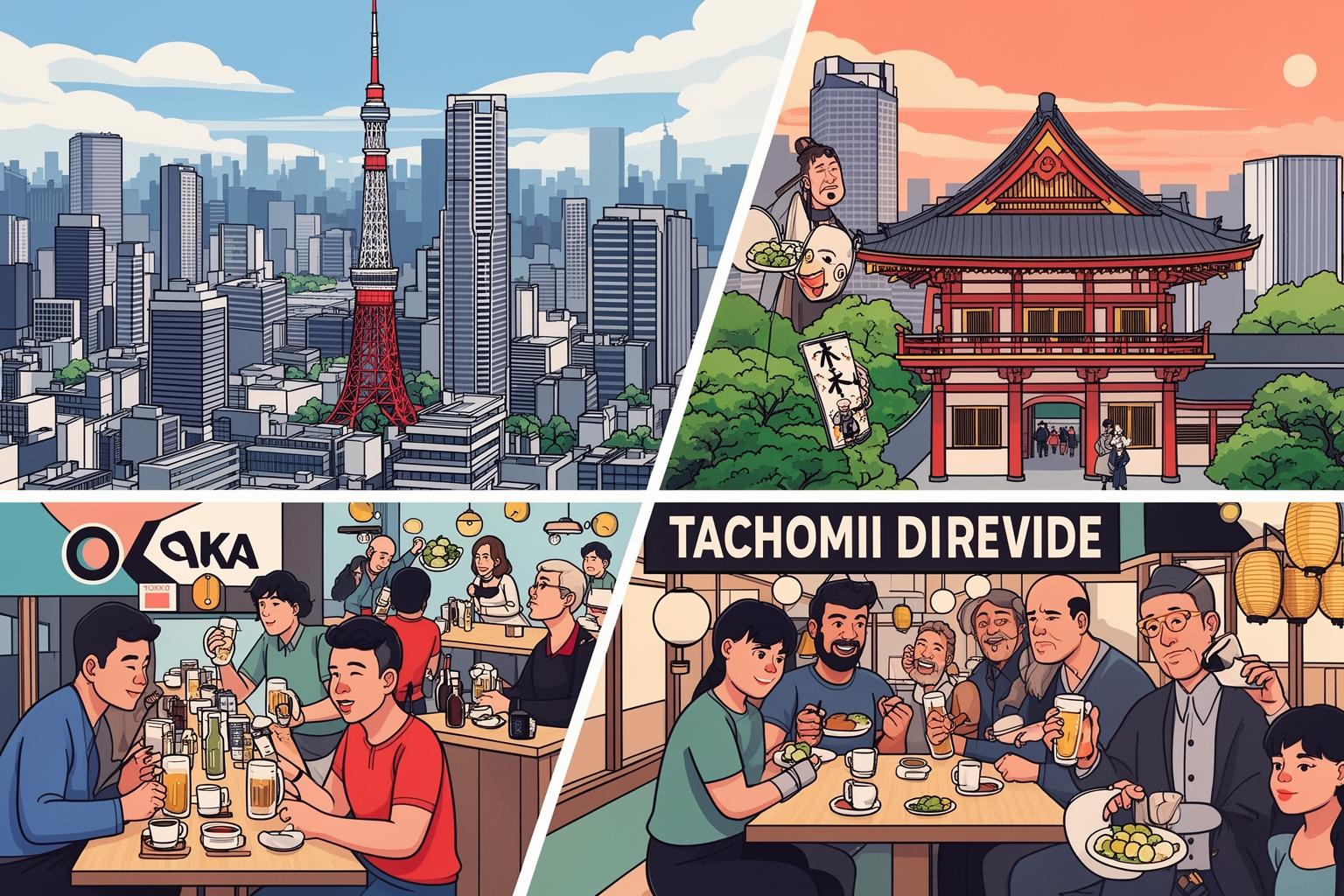
While standing bars are found throughout Japan, their cultural expression in Osaka is distinctly different from that in Tokyo. This difference offers a fascinating perspective on the long-standing rivalry and unique identities of the two metropolises. A tachinomi in Tokyo, whether in a polished neighborhood like Ebisu or a salaryman district such as Shimbashi, often resembles a finely tuned instrument. The emphasis is usually on a specialty: a carefully curated sake selection, artisanal tofu, or impeccably fresh seafood. Customers come as much for the product as for the experience. Conversations tend to be subdued, generally limited to those who arrived together. A solo drinker in Tokyo is usually granted a respectful shield of anonymity. People may stand side by side for an hour, separated by just inches of space, without exchanging a single word. The unspoken social agreement is one of non-interference. The atmosphere is cool, efficient, and professional.
In Osaka, however, the tachinomi is a far more chaotic and theatrical event. While the product remains important, the performance takes precedence. The space becomes a stage, and everyone—from the taishō to the newest customer—is a potential actor. The aim is not quiet appreciation but lively participation. An Osaka tachinomi is loud. The chatter is continuous, the laughter explosive, and the conversations shared communal property. A joke made at one end of the counter is expected to be heard and responded to at the other. Strangers don’t just talk to each other; they perform for one another. The famous Osaka sense of humor, with its love for a sharp tsukkomi (retort), is fully on display. Someone will make a silly comment (boke), and someone else, often a complete stranger, will immediately fire back with a witty comeback. It’s a verbal dance, a shared cultural language that values engagement over privacy.
This contrast lies at the heart of what makes living in Osaka feel so different. In Tokyo, social life feels more curated and planned. You meet friends you have arranged to see. In Osaka, social life often feels more spontaneous and accidental. The tachinomi exemplifies this perfectly. You might head out for a quiet, solo drink and end up immersed in a three-hour debate about baseball with a fishmonger and an accountant. This isn’t necessarily better or worse, just fundamentally different. It reflects Osaka’s merchant-class heritage, where communication, negotiation, and quickly building rapport were essential survival skills. In contrast, Tokyo’s samurai-bureaucratic history perhaps encourages a more reserved, formal, and structured approach to public life. The tachinomi is more than just a bar; it is a barometer of the city’s historical character.
Case Study: Kyobashi vs. Marunouchi After Dark
Picture a tachinomi in Kyobashi, a gritty, neon-lit hub in eastern Osaka. The floor is slightly sticky. The air is dense with cigarette smoke and the aroma of fried entrails (horumon). An old television blares variety shows in the corner. A group of day laborers roar with laughter, their voices bouncing off tiled walls. The taishō, a tough woman with a perm, shouts orders and jokes in a thick Kansai dialect. You order a beer, and the man beside you, a total stranger, clinks glasses silently before launching into a story about his daughter. The vibe is raw, unfiltered, and intensely communal. The primary purpose of the space feels like human connection, with inexpensive food and drink serving as social lubricants.
Now, imagine a standing bar in Tokyo’s Marunouchi district, the heart of corporate Japan. The space is pristine, featuring minimalist wooden decor and soft, focused lighting. The menu is a single, beautifully calligraphed sheet of washi paper listing rare sakes from Niigata. The clientele are men and women in tailored suits, speaking in quiet, polite tones about quarterly earnings and market trends. They stand in orderly lines, careful not to invade each other’s space. The taishō, a young, serious man, explains each sake’s flavor profile with sommelier-like precision. You order a glass, and the person next to you offers a slight, almost imperceptible nod before returning to their smartphone. The atmosphere is sophisticated, controlled, and highly individualistic. The primary purpose of the space feels like the appreciation of premium consumables in a time-efficient manner.
This sharp contrast is a daily reality for those who have lived in both cities. It shows how a single concept—the standing bar—can be transformed by local culture into two vastly different experiences. The Kyobashi bar exemplifies Osaka’s love for the unpolished, the communal, and the chaotic. The Marunouchi bar reflects Tokyo’s appreciation for order, quality, and reserved professionalism. Neither is less authentic; both are true to their respective environments. Grasping this difference is key to understanding the deeper cultural currents shaping everyday life in Osaka.
The Foreigner’s Tightrope: Integration vs. Intrusion
For a non-Japanese resident, the tachinomi presents a unique and often delicate social balancing act. On one hand, it provides one of the most direct and unfiltered ways to experience local culture. It offers an opportunity to escape the expatriate bubble and connect with the city on its own terms. Speaking even broken Japanese in a tachinomi is often met with enthusiastic encouragement, a stark contrast to the polite but distant service typical of more formal venues. Osakan eagerness for interaction means that your presence as a foreigner is frequently seen as a novelty and a conversation starter. People are genuinely curious; they want to know where you come from, what you think of Japan, and if you can handle eating raw squid guts. This can be a wonderful way to feel acknowledged and develop a sense of belonging in your new home.
Yet, this very dynamic also has its drawbacks. Your foreignness can sometimes make you a temporary spectacle, an object of fleeting amusement rather than a welcomed community member. Friendly questions may occasionally feel like an interrogation, a rehearsed script you’ve heard countless times. The laughter and camaraderie might carry a subtle edge, casting you as the gaijin mascot of the night. It’s easy to be mistaken for a tourist unfamiliar with the rules, even after living in the city for years. This is where genuine integration starts. It’s about learning to navigate these encounters with tact and humor, steering conversations away from the typical “foreigner script” toward genuine common ground—the weather, sports, or the food in front of you.
Misreading the Signals
The biggest mistake a foreigner can make in a tachinomi is to misread the nature of Osakan friendliness. The warmth and curiosity are sincere, but they don’t necessarily signal an invitation to deep, lasting friendship. This friendliness is situational, arising from shared space and a few drinks. The salaryman who was your best friend for twenty minutes, shared his life story, and insisted on buying you a skewer will probably not remember your name the next day. This is not hypocrisy but simply the nature of the social contract in these settings. The connection is intense yet fleeting. Attempts to exchange social media contacts or arrange future meetings often lead to awkwardness, as they try to transform a temporary, situational bond into a lasting one. It’s like trying to capture lightning in a bottle.
Another frequent misunderstanding is between lively and obnoxious behavior. Because an Osaka tachinomi is loud and seemingly chaotic, some foreigners assume all social rules are suspended. They might start speaking loudly in English, treating the bar like a college party. This is a grave mistake. There is a vast difference between natural, communal liveliness in Japanese and the disruptive, exclusionary noise of a foreign language spoken at high volume. The former enhances the atmosphere; the latter breaks it. It draws a clear boundary, signaling that you are an outsider not participating in the collective improvisation but imposing your own performance instead. The key is to match the room’s energy, not overwhelm it. The aim is to blend into the ambient noise, not become the center of attention. True integration in a tachinomi is measured not by how many people you talk to, but by how seamlessly you become part of the vibrant, chaotic, and thoroughly human mosaic of an Osaka night.