You’ve seen the pictures. The boat processions of the Tenjin Matsuri, the thunderous Danjiri carts of Kishiwada, the sea of people at the Toka Ebisu festival. These are Osaka’s heavyweight champions, the festivals that make the travel brochures and draw crowds by the million. They are spectacular, undeniable forces of nature. And they tell you almost nothing about how this city actually breathes.
Living in Osaka is a different beast entirely. It’s not a highlight reel. It’s the day-to-day rhythm, the subtle currents of community that flow beneath the concrete and neon. The big festivals are like massive concerts; they’re amazing, but you don’t get to know the band. The real music of Osaka, the melody that local people live by, is played in hundreds of smaller, un-Googleable festivals hosted by the neighborhood shrine you walk past every day without a second thought.
This isn’t a guide on where to go and when. Think of this as a decoder ring. We’re not talking about tourism; we’re talking about belonging. We’re going to pull back the curtain on these hyper-local events to understand the city’s true social architecture. Why do they matter so much here? How do they shape the famously pragmatic, community-oriented Osaka mindset? And how can you, as a foreign resident, move from being a spectator to being a part of the scene? Forget the grand spectacle for a moment. The real soul of Osaka is found in a cramped shrine precinct, under strings of paper lanterns, surrounded by the smell of grilled squid and the laughter of your neighbors.
To truly understand this daily rhythm, you can start by experiencing the city’s beloved morning ritual at a local kissaten.
The Festival Calendar You’ll Never See in a Guidebook
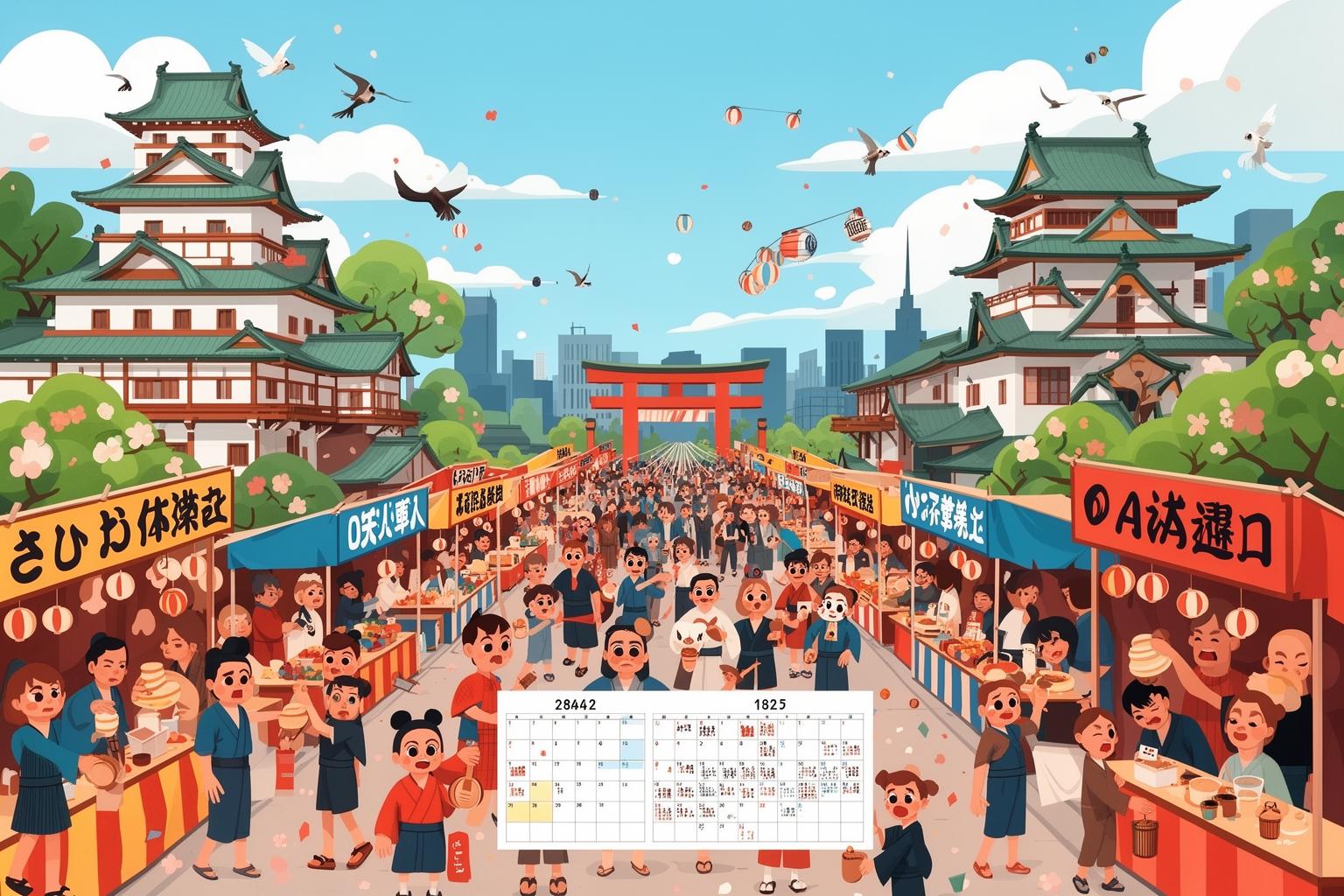
Every resident of Osaka lives according to two calendars. One is the official Gregorian calendar of work deadlines and national holidays. The other is the unwritten calendar of the local shrine, which governs the rhythm of community life, marking the seasons not only by temperature but through a steady flow of rituals, preparations, and celebrations deeply embedded in the neighborhood’s identity.
More Than Just a Party: The Concept of ‘Ujigami’ and ‘Ujiko’
To truly understand a local festival, you first need to understand the invisible map it follows. In Shintoism, the concept of an ujigami refers to a guardian deity presiding over a specific geographic area. Everyone living within that area is considered an ujiko, essentially a parishioner or child of that deity. In a very real sense, your address determines your spiritual guardian.
In modern, secular Japan, you might see this as mere folklore. However, in Osaka, it remains a living framework for community. It is less about fervent religious belief and more about a shared sense of place and belonging. The shrine is not just a building; it serves as the neighborhood’s anchor. This connection feels more tangible here than in many parts of Tokyo, where the scale and flux of the population can make neighborhood ties seem fleeting. Osaka, a city built by merchants who lived and worked in the same area for generations, holds onto these geographic bonds with remarkable persistence.
This relationship subtly influences daily life. A notice seeking donations for the shrine’s roof repair might appear on your apartment’s community bulletin board, alongside the schedule for garbage pickup. The annual festival is not merely a party thrown by the city; it is an event hosted by the community, for the community, in honor of its guardian. This distinction is crucial—it transforms the festival from a commercial event into a participatory act of collective identity.
The Rhythms of the Year: From New Year’s to Neighborhood Fairs
The festival year follows a cycle, a steady rhythm that structures social life. It begins with Hatsumode, the first shrine visit of the New Year. While many visit major shrines like Sumiyoshi Taisha, numerous Osakans make a quieter, more personal visit to their local ujigami first, paying respects to their home deity before going to the larger shrines.
In January, the Toka Ebisu festival celebrates the god of business and fortune. Imamiya Ebisu near Namba is the most famous, attracting massive crowds praying for prosperity. Yet hundreds of smaller Ebisu-connected shrines also hold their own festivals. These might last only a day and draw smaller crowds, but share the same vibrant energy: the rustling of lucky bamboo branches (fukuzasa), the cheerful calls of shrine maidens, and an intense focus on commerce. This is quintessential Osaka. A festival devoted to making money is not viewed as crass but seen as essential—a communal prayer for the city’s lifeblood.
February brings Setsubun, marking the start of spring. While large temples host celebrity bean-throwing events, local shrines offer a more intimate experience. It’s a chaotic, joyful scene: local leaders, neighborhood association heads, and often the priest himself stand on platforms to throw roasted soybeans and small packets of sweets into laughing crowds. Children scramble, grandmothers deftly catch treats in their bags, and neighbors—the quiet woman from the third floor, the gruff tobacco shop owner—all join in. It’s a moment of communal catharsis, driving away the bad luck of the old year together.
The true heart of the local festival calendar is the Natsumatsuri, the summer festival. From July to August, nearly every weekend sees a neighborhood somewhere in Osaka celebrating. These are not huge, city-stopping events but intimate gatherings, sometimes lasting just one evening. They are the city’s heartbeat, a decentralized, organic expression of community on a scale that feels deeply personal.
Finally, the Aki Matsuri, or autumn festivals, bring the year to a close. Often quieter than their summer counterparts and tied to the harvest, these festivals focus on giving thanks, enjoying food, and cultural performances. They provide a collective exhale after the summer’s energy—a moment to appreciate the year’s bounty before winter’s quiet settles in.
The Anatomy of a Neighborhood Natsumatsuri
Imagine a small park in your neighborhood or a quiet side street you walk down every day. For one or two days in the summer, it becomes completely transformed. This change is the magic of the local natsumatsuri. It is a temporary autonomous zone of celebration, created by and for the people who call that small part of Osaka home. Understanding its elements is like learning the grammar of the community.
The Transformation of a Familiar Street
The first sign is the sound. Days before the event, you might catch the faint, rhythmic beat of a taiko drum coming from the direction of the shrine. It’s either the local preservation society or a group of children practicing. Then, the day before, the tangible changes begin. Red-and-white striped tents, the universal symbol of a Japanese festival, spring up like mushrooms. Electrical cables are strung between temporary poles, and bare bulbs are hung, ready for dusk.
The most important visual feature is the chochin, the paper lanterns. They are hung in rows, forming a warm, festive canopy. But look closer. Each lantern bears a name in black calligraphy—perhaps a person’s name, a family’s name, or a local business’s name, such as the sentō (public bath), the laundry, the ramen shop, or the real estate agent. This isn’t mere decoration. It serves as a public ledger of community support. It visually represents the network of businesses and families that have invested in the festival and, by extension, the neighborhood. It declares, “We are here. We are part of this.”
As evening falls, the sensory experience grows richer. The air fills with the smell of sizzling yakisoba, the sweet aroma of caramelizing soy sauce from yakitori grills, and the savory scent of dashi from takoyaki stands. Layered over this is the distinct Japanese festival soundscape: the cheerful, slightly tinny ennichi music from speakers, the calls of vendors, the fizz and pop of ring-toss games, and the constant, joyful murmur of hundreds of conversations.
The Players: Who Runs This Event?
This is the crucial thing for a foreigner to grasp. A neighborhood festival is not managed by a professional event company. It is a large, coordinated volunteer effort led by the chonaikai (neighborhood association) and other local groups like the PTA or the children’s association (kodomokai).
Watching who does what is like seeing a live-action diagram of the community’s social structure. The older men, often senior members of the chonaikai, wear matching happi coats and serve as the leaders. They direct the flow of the mikoshi procession, handle logistics, and generally stand around looking important—a role earned through decades of service.
The middle-aged women, the backbone of any community, operate the food stalls. They are models of efficiency, flipping noodles, wrapping candy apples, and making change with practiced ease, all while gossiping and laughing. They are the engine room of the festival.
The younger men and teenagers take on the most physically demanding role: carrying the mikoshi, or portable shrine. This is a rite of passage, a strenuous task requiring teamwork and endurance. It’s a way for them to demonstrate their strength and commitment to the community in a very visible manner.
Foreigners often see the fun and food and assume it’s just a party. But what they witness is the culmination of months of planning meetings, fundraising, and logistical coordination. It is a testament to the power of shared responsibility. This is the deeper, structural reason behind the cliché that “Osaka people are friendly.” It’s a friendliness born from a culture of mutual reliance. You help your neighbor set up their tent because you know they’ll help you clean up later. This web of small, reciprocal obligations is what holds the community together, and the festival is its most vivid expression.
The Rituals Beyond the Food Stalls
While the games and food attract many, at the heart of the festival are rituals with deep spiritual meaning. The centerpiece is the mikoshi procession. The mikoshi is an ornate, heavy palanquin believed to house the shrine’s deity during the festival. Carrying it through the streets is more than a parade; it is a sacred act. The deity is taken on a tour of its domain, visiting and purifying the lands and people under its protection.
The route is carefully planned. It passes by the homes of important community figures, the storefronts of sponsoring businesses, and through every corner of the neighborhood. The carriers chant together—rhythms like “Wasshoi! Wasshoi!”—not only to keep the pace but to focus their energy and spirit. It is a loud, sweaty, exhilarating spectacle—a physical expression of a community moving as one.
In some parts of Osaka, especially the south, you’ll see a version involving danjiri, large, elaborate wooden carts. The Kishiwada Danjiri Matsuri is the most famous and famously dangerous example, but many neighborhoods have their own smaller, safer versions. Pulling the cart, often accompanied by musicians riding atop, is an expression of local pride and friendly competition between different neighborhood sections. It is a display of power, unity, and a distinctive brand of boisterous Osaka spirit.
How Festivals Weave the Social Fabric of Osaka
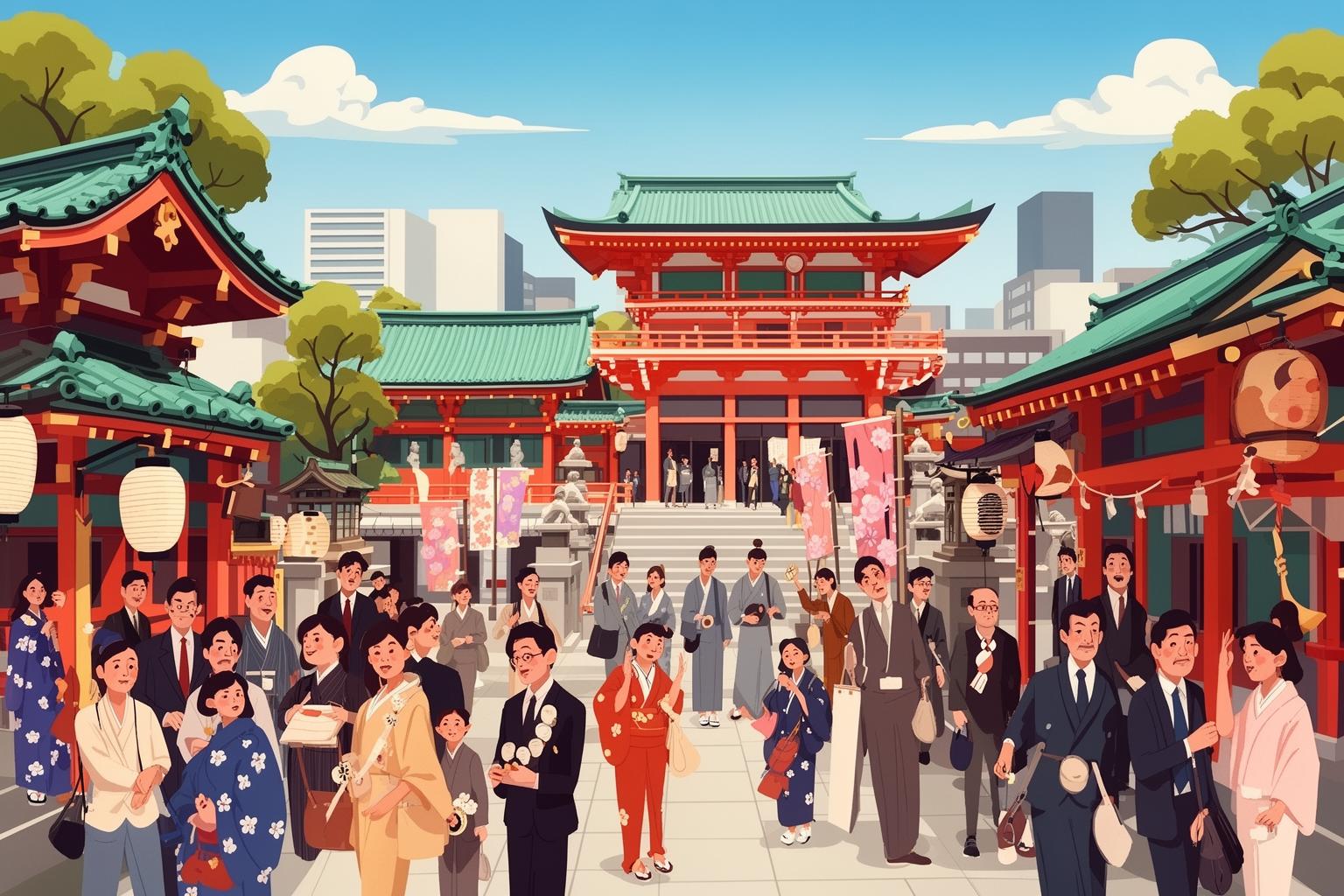
These local festivals represent much more than mere entertainment; they are the looms upon which Osaka’s social fabric is woven. They serve as tangible spaces where intangible ideas such as community, obligation, and identity become real. For any resident—whether foreign or Japanese—grasping these dynamics is essential to truly understanding the city itself.
The ‘Kao o Dasu’ Culture: The Importance of Showing Your Face
There is a crucial Japanese social concept called kao o dasu, which literally means “to put out one’s face.” It refers to the act of showing up, of making an appearance. Attending your local shrine festival exemplifies kao o dasu culture in practice. You don’t have to stay for hours, but you do need to go. You need to be seen.
By simply spending fifteen minutes walking through the festival grounds, you are fulfilling an important social role. You signal to your neighbors, the shopkeepers, and community elders that you acknowledge and respect the community. You are saying, “I belong here.” Whether buying a beer at the PTA stall, greeting the family who lives downstairs, or nodding to the elderly man who sweeps the street, these small interactions form the foundation of neighborhood relationships.
For foreign residents, this can be transformative. It’s easy to feel anonymous and disconnected in a big city, and you might hesitate to attend local events out of a sense of intrusion. But the truth is quite the opposite. Your presence is not only welcomed; it is viewed as a positive sign of engagement. Simply showing up, smiling, and participating in a small way—like buying some takoyaki or joining a game—is one of the most effective ways to integrate. It is noticed and appreciated more than you might imagine.
Business, Community, and Mutual Obligation
Consider again those paper lanterns bearing the names of local businesses. Why does the tiny, family-run dry cleaner with razor-thin margins spend money to sponsor the festival? It’s not about advertising in the modern sense—no one chooses their dry cleaner based on a festival lantern. It’s about something far deeper: reinforcing the symbiotic bond between local commerce and the community.
Osaka has always been a city of merchants, with a culture deeply rooted in local business principles. The unspoken contract is simple: the community supports its local businesses, and in return, the businesses support the cultural and spiritual life of the community. The festival serves as an annual renewal of this contract. A business’s donation publicly declares its commitment to the neighborhood. Neglecting to contribute might be seen as indifference, which in a relationship-driven economy like Osaka’s can be disastrous.
This marks a fundamental difference from the more anonymous, corporate-driven atmosphere of a city like Tokyo. While Tokyo has its local communities, the ties between small businesses and neighborhood identity feel much stronger and more visible in Osaka. You might see the local butcher sweating over a charcoal grill at the festival, selling skewers for a few hundred yen. He’s not doing it for profit; he’s fulfilling his community role. The next time you visit his shop to buy meat, you are no longer just a customer—you are two people who have shared a community experience. That is how trust is built here. Business is personal.
Raising the Next Generation: A Festival as a Classroom
Observe the children at a local festival. They are not merely passive recipients of candy and games; they are active participants and apprentices in the culture of community.
In the weeks leading up to the festival, you may see groups of children gathering at the community center or shrine grounds, practicing traditional dances or learning the complex rhythms of the festival taiko drums from elder residents. During the festival, they might help run a simple game stall or carry a smaller, child-sized mikoshi. These are not chores but lessons. Through action, children learn that they have a role and responsibility. They are inheriting the traditions of their neighborhood, cultivating a sense of local identity and pride known as jimoto-ai (local love).
The festival acts as a living classroom for the unspoken rules of Japanese society: teamwork, respect for elders, the importance of tradition, and contributing to collective efforts. By participating, children develop a tangible connection to their neighborhood that goes well beyond simply living there. They learn what it means to be an ujiko of their shrine and a committed member of their community.
A Foreign Resident’s Guide to Navigating Local Matsuri Culture
Understanding all this is one thing; feeling comfortable enough to jump in is another. Many foreigners hesitate, concerned about breaking an unspoken rule or intruding on a private gathering. Let’s clear up some common misconceptions and provide a practical guide for moving from spectator to participant.
The Misconception: “It’s a Private Party” vs. “Everyone’s Welcome”
The biggest mental hurdle for many non-Japanese residents is the fear that a small neighborhood festival is a closed, private event. It appears so intimate and local that it’s easy to feel like you’d be crashing a family reunion. Nothing could be further from the truth. The whole point of the festival is to bring the community together—and that includes everyone who lives there, regardless of their origins.
These events are, by nature, the most open and welcoming gatherings you can find. Your presence is not an intrusion; it’s a confirmation of the festival’s purpose. The organizers want the streets to be packed. They want people to come and enjoy themselves. A successful festival is a lively one. When you, as a foreign resident, join in, it sends a positive message: our neighborhood is diverse, growing, and new people are welcome here. So dismiss the thought that you don’t belong. You live here. This is your festival too.
How to Participate, Not Just Watch
So how can you close the gap? It’s easier than you might think. The key is to change your mindset from that of a tourist to that of a resident.
Engage Economically: Don’t just snap photos. Take part in the festival’s economy. Buy a beer, grab some yakisoba, play a game. Your 500 yen is more than just payment. When you purchase from a stall run by the local PTA, that money goes straight back into the community—maybe funding new equipment for the local school or supporting next year’s festival. It’s a small but meaningful way to invest in your neighborhood.
The Shrine Gesture: You don’t have to be religious to show respect. Near the main shrine building, you’ll see the saisen-bako, the large wooden offering box. It’s customary to toss in a small coin (a 5-yen coin is thought to bring good luck), bow twice, clap your hands twice, and bow once more. No one is judging your religious sincerity. This is a gesture of cultural respect for the community’s heart. It’s a simple, quiet way to say “thank you” for the space and the event.
Long-Term Integration: For those planning to stay in Osaka for a while, deeper involvement opportunities are available if you look for them. It begins with building relationships in daily life. Befriend the owner of your local coffee shop or bar. Become a regular. Once people in the community know you, chances can arise. You might be invited to help with festival preparations (junbi) or cleanup (katazuke). Being asked to help carry a tent or sweep the grounds is a major sign of acceptance. It means you’ve gone from being a guest to being part of the team.
Decoding the Sights and Sounds
Grasping the subtle details can enhance your experience and deepen your appreciation for what’s happening around you.
The Happi Coats: These traditional festival jackets are more than costumes. Look closely at the large symbol (mon) on the back. It signifies a specific group. Different neighborhoods, associations, even different teams of mikoshi carriers within the same festival have their own unique happi. It’s a uniform representing allegiance and local pride. It’s the neighborhood’s version of a team jersey.
The Rhythmic Chanting: The chants used while carrying the mikoshi are not random shouts. They help synchronize the steps and energy of dozens of people carrying a very heavy object. While “wasshoi” is a common, generic cheer, many neighborhoods have their own unique chants that have been passed down through generations. It’s part of the area’s distinctive cultural identity.
The Morning After: One of the most impressive things about a local festival is how the street looks the next morning. It’s always spotless. The tents have disappeared, the trash is gone, and the street is restored to normal as if nothing happened. This isn’t the work of a municipal cleaning crew. It’s the festival’s final act: the community cleanup. It’s a powerful statement of shared responsibility and civic pride. The community that celebrates together also cleans up together.
Why This Matters More in Osaka
This intense focus on hyper-local, community-driven festivals is especially evident in Osaka. It’s not that other Japanese cities lack them, but here they form the very essence of the city’s identity. This stems directly from Osaka’s distinct history and its deeply embedded cultural DNA.
A Merchant’s City Built on Trust and Relationships
Unlike Kyoto or Tokyo, Osaka was never the political or imperial center. Instead, it was Japan’s commercial powerhouse—the “nation’s kitchen.” Its strength was forged not by samurai or aristocrats, but by merchants. In a world where business relied on credit and reputation (shin’yo), your connections within the community were your greatest asset. You couldn’t afford to be anonymous.
Festivals have long been, and remain, the primary platform for cultivating these relationships. They offer an opportunity to celebrate a successful year with those who made it possible, to publicly express gratitude and prosperity through donations, and to build trust that would sustain you through tough times. This merchant’s DNA—the recognition that community and commerce are inseparably linked—still pulses strongly in the city. The local festival serves as the community’s annual shareholder meeting, reinforcing the bonds that keep the local economy and social fabric healthy.
The Counterpoint to Tokyo’s Anonymity
Osaka is often contrasted with Tokyo. While Tokyo is seen as polished, sleek, and somewhat anonymous, Osaka is its grittier, more grounded, and deeply communal counterpart. You can live in a Tokyo apartment building for years without ever learning your neighbors’ names. Though this is possible in parts of Osaka as well, the city’s structure—with its active chonaikai and pervasive local festivals—actively combats that kind of anonymity.
Though a metropolis of over two and a half million, Osaka often functions like a federation of small towns. Each train station, each neighborhood, boasts its own distinct character, its own commercial street (shotengai), and its own guardian shrine. The local festival reaffirms the identity of that “town” within the wider city. It’s a potent anchor against the homogenizing pressures of modern urban life.
The True Meaning of ‘Human-Smelling’ (Ningen-kusai)
A great Japanese phrase often associated with Osaka is ningen-kusai. Literally, it means “human-smelling” or “stinks of human.” In a different context, it might be insulting, but here it’s a genuine compliment. It conveys something earthy, unpretentious, flawed, and full of raw emotion and messy vitality. It means it’s authentic.
While the large, famous festivals are impressive, their polish and perfect execution can sometimes strip away that ningen-kusai quality, making them feel like performances for outsiders. By contrast, a local neighborhood festival embodies ningen-kusai fully. It’s slightly chaotic; the takoyaki may be a bit burnt; the dancing may be out of sync. The event holds together through the enthusiastic, amateur efforts of the community. It’s a celebration of imperfection, of real people coming together to create joyful moments.
This is Osaka’s genuine core. It’s not always neat or pretty, but it is deeply human. The local festival is where this spirit is most concentrated—a place where the city’s abstract ideals of community, practicality, and boisterous energy become vivid, lived experience.
So, the next time you catch the distant beat of a taiko drum on a summer evening, don’t dismiss it as mere noise. Follow the sound. Spot the lanterns. Consider it an open invitation to the true Osaka. Forget tourist maps and top-ten lists. You’ll discover more about how this city truly functions, what its people value, and what it feels like to belong here in one evening at a neighborhood festival than in years of simply living within its boundaries. It is the key that unlocks everything.