The first time it happens, you won’t believe it. You’re walking down a perfectly lovely, moderately crowded sidewalk in, say, Namba. You’re minding your own business, maybe admiring the window display of a takoyaki stand, when a sudden, sharp chirin! slices through the air behind you. It’s not a polite little tinkle. It’s a demand. You instinctively sidestep, and a bicycle whips past you, inches from your elbow, ridden by a woman with a child in a front seat, a bag of groceries in the basket, and an expression of serene, unshakeable purpose. She doesn’t look at you. She doesn’t say sorry. She just flows forward, a human torpedo on a mission. You’re left standing there, heart pounding, thinking, “Wasn’t I on the sidewalk? Is that… allowed?” Welcome to Osaka. Your formal introduction to the unwritten, unspoken, and unbelievable rulebook of the city’s bicycle culture has just begun. Forget everything you know about traffic laws, personal space, and polite negotiation. Here, the bicycle is not just a mode of transport; it’s a fluid, chaotic, and deeply revealing extension of the Osaka soul. To understand the city, to truly feel its pulse, you have to understand why that woman on the mamachari didn’t even flinch. She was operating on a different wavelength, a set of principles known only as the Osaka Rules.
To truly immerse yourself in the city’s unique rhythm, consider exploring its local culture through a weekend of sento-hopping in Osaka’s neighborhoods.
The Sidewalk is the Main Road: Rule #1 of Osaka Cycling
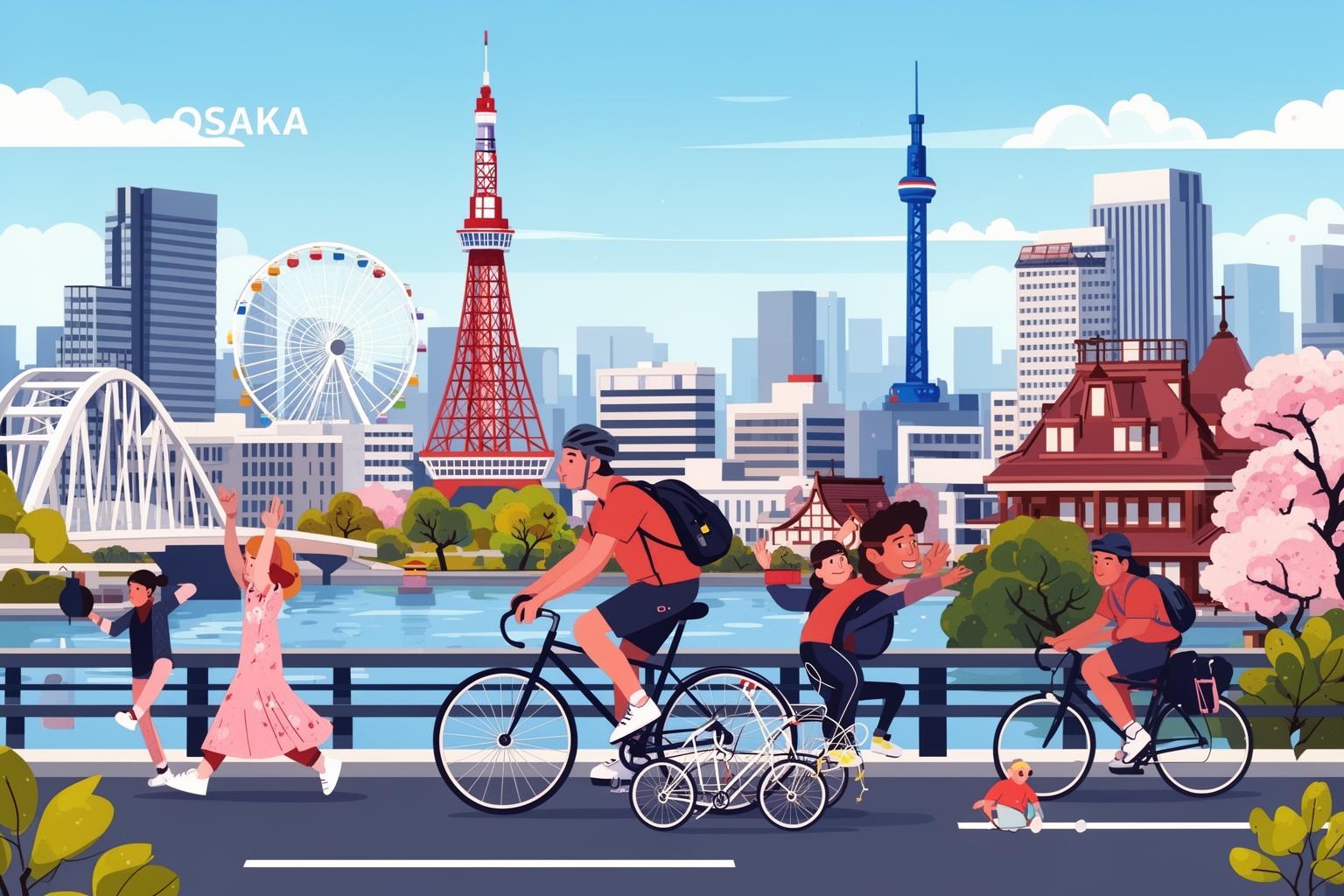
Let’s address the most fundamental, earth-shattering truth first. In Osaka, sidewalks are not just optional overflow spaces for cyclists. Practically speaking, they serve as the main arteries for cycling. Officially, Japanese law states that bicycles should be ridden on the road, with sidewalks as a rare exception. In Tokyo, this rule is more strictly followed, and police may even stop riders who disobey it. In Osaka, however, this regulation is seen as a well-meaning but impractical suggestion quickly dismissed. The city is a dense maze of narrow streets, many one-way, all congested with cars, trucks, and taxis whose drivers navigate with the same aggressive efficiency as cyclists. To a practical Osakan, riding a fragile bike in that chaotic flow of metal isn’t just inefficient—it’s suicidal. Thus, the sidewalk becomes the only sensible option.
Why the Sidewalk? Pure Pragmatism
This choice doesn’t stem from animosity or a wish for disorder. It’s founded in straightforward pragmatism, a core element of Osaka’s mentality. The city was made for merchants, movement, and getting things done. The question isn’t “What is the official rule?” but rather “What’s the fastest, most direct way to get from my Tenma apartment to the Kyobashi grocery store without getting flattened by a delivery truck?” The answer, always, is the sidewalk. Dedicated bike lanes are a scarce and treasured commodity in Osaka. Where present, they are often short, disjointed, and abruptly end, dumping cyclists back into traffic chaos or onto crowded sidewalks. The infrastructure hasn’t caught up with the reality that bicycles are the favored local transport. So, people adapted, crafting their own system—a de facto network of cycling highways beneath the awnings of the shotengai shopping streets. This highlights a major contrast between Osaka and Tokyo. Tokyo feels like a city driven by strict system adherence, where everything has a proper way and social pressure enforces compliance. Osaka operates on a far more flexible, outcome-driven logic. If the official system is inefficient, Osakans collectively disregard it and develop a better, if more chaotic, alternative. The sidewalk-as-highway system perfectly embodies this spirit.
The Pedestrian-Cyclist Dance
For this system to work without constant, disastrous collisions, there must be an unspoken set of rules—and indeed, there is. It’s a complex, intuitive ballet of moving bodies that I call the Pedestrian-Cyclist Dance. As a pedestrian, you quickly develop a kind of sonar, a sixth sense for the faint hum of tires and the subtle click of a bike chain behind you. You learn to walk predictably, avoiding sudden jerks or erratic moves. The key to this dance is a mutual, tacit understanding. Cyclists behind you assume you’re aware of their presence and that you’ll continue your path or make a slight, subtle shift for them to pass. Pedestrians assume cyclists can skillfully weave around with minimal clearance. Verbal exchanges are rare—no “excuse me” or “sumimasen.” Communication is purely physical: a slight shoulder dip from the cyclist, a fractional lean from the pedestrian. It’s a high-speed negotiation for space that happens hundreds of times during a single walk to the station. On Tenjinbashisuji shotengai—the longest shopping street in Japan—this dance reaches perfection. Technically a pedestrian-only zone, the bicycle ban is blissfully ignored. Bikes glide silently through thick crowds, weaving around shoppers, delivery carts, and tourists frozen in awe. An expert Osaka cyclist can navigate this human river without ever touching their brakes—a feat of sheer instinct and spatial awareness. For foreigners, the initial reaction is fear. You feel like a fixed pin in a bowling alley. But over time, you find the rhythm. You learn to move with the flow. And you realize it’s not aggression but a form of high-stakes, nonverbal cooperation. It’s the city’s kinetic energy brought to life.
The Symphony of the Bell: Communication, Osaka-Style
In most cultures, a bicycle bell serves as a gentle alert, a polite “excuse me, I’m coming through.” In Osaka, however, the bell functions with surgical precision and unmistakable purpose. It is less of a request and more of a statement. Understanding the rich and varied language of the Osaka bicycle bell is crucial for anyone wishing to navigate the city’s sidewalks without constant anxiety. The bell reflects the city’s communication style: direct, efficient, and devoid of pleasantries when there’s a destination to reach. It’s not about rudeness; it’s about clarity. Ambiguity causes hesitation, and hesitation disrupts the flow—the cardinal sin of Osaka movement.
The “Chirin-Chirin” Warning Signal
The most common sound you’ll hear is the sharp, insistent double ding: chirin-chirin. This is no mere suggestion but a warning shot fired from about ten meters away. It means: “I am approaching quickly. Make way. You have around three seconds to assess your position and adjust slightly.” It’s typically used when a cyclist is approaching a cluster of pedestrians blocking the entire sidewalk. The tone is firm, not angry, conveying inevitability. The cyclist will pass through this space shortly. The only question is how gracefully the pedestrians will make way. The single, sharp CHIRIN! is a more urgent variation, used in close quarters. It means, “You’re about to make a sudden, unpredictable move, and I’m right behind you. Stop immediately.” You often hear this when a tourist, absorbed in their phone, starts drifting aimlessly across the pavement. Then there’s the long, almost lazy chiiiiiriiiiin of an elderly rider on a classic mamachari. This sound carries a different weight: “I’ve been riding this path since long before you were born. I move at one pace and do not swerve. The world will yield to me.” And it does. Everyone—from teenagers to salarymen—instinctively clears a path for that sound’s source.
When Silence Speaks Volumes
Perhaps even more intimidating than the chorus of bells is the deep silence of the true master cyclist. These are the ninjas of the sidewalk. They ride with quiet, confident speed, never needing a bell because their command of urban flow is absolute. They anticipate your movements before you even consider them. They notice the slightest hesitation in your step, the turn of your head, and adjust their course with seamless, fluid grace. Their silence is a statement itself. It means, “A bell is a crutch for the less skilled. I don’t need to warn you because our interaction will be so smooth you’ll barely notice me.” Encountering one of these silent masters is humbling. They appear out of nowhere, glide past your shoulder with less than a centimeter to spare, and vanish before you’ve even registered their presence. This silent navigation is the pinnacle of Osaka cycling art—a complete immersion in the city’s rhythm, a level of non-verbal communication bordering on telepathy. It reflects a culture that values intuitive understanding and shared context. In a city where entire conversations can be had with grunts and gestures, it makes perfect sense that the most skilled communicators on the road are those who make no sound at all.
The Mamachari Brigade: The Unquestioned Queens of the Road
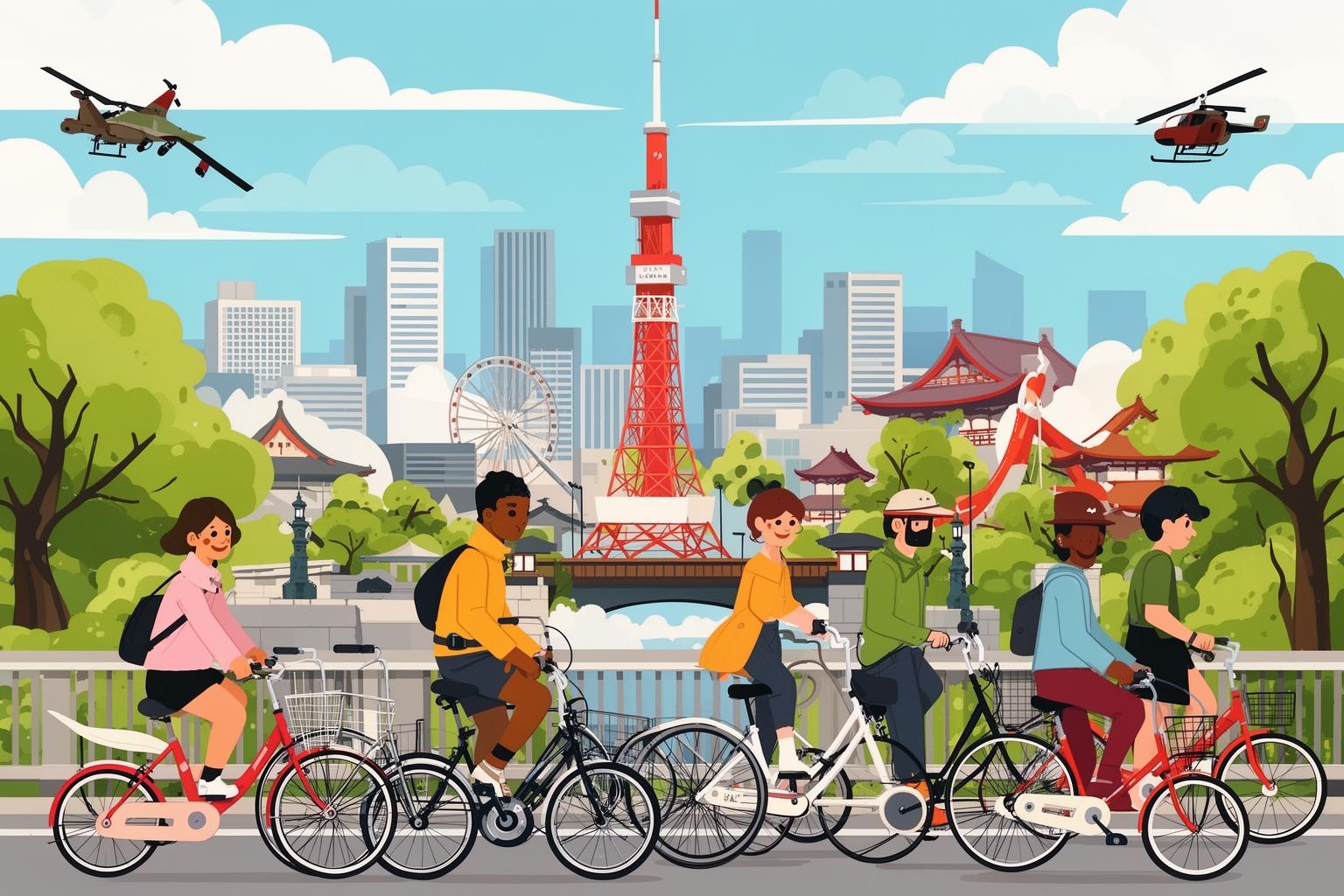
If you want to pinpoint the true epicenter of power within Osaka’s street-level ecosystem, look no further than the mamachari. This “mom’s chariot” is the ubiquitous, durable, and often electric-assisted bicycle that functions as the city’s unofficial family vehicle. It is a triumph of utilitarian design, generally boasting a low-slung frame for easy mounting, a wide, comfortable seat, a large front basket, a built-in lock and kickstand, and, most importantly, fittings for one or even two child seats. These are not sleek, lightweight racing bikes. They are the workhorses, the tanks, the armored personnel carriers of the urban landscape. And the women who ride them—the mothers and grandmothers of Osaka—are the undisputed, unquestioned queens of the road. They are the Mamachari Brigade, and their authority is absolute.
More Than Just a Bike
To grasp the Mamachari Brigade, you must first understand that the mamachari is far more than a mere bicycle. It is a mobile command center. It’s the vehicle for the morning kindergarten run, the afternoon grocery trip, the evening journey to cram school, and the weekend outing to the park. The front basket will be overflowing with groceries: a daikon radish sticking out at a jaunty angle, a net of onions, a pack of milk cartons. A purse will be precariously perched on top. A child, snug in their seat, might be eating a snack or sleeping peacefully, completely unaware of the chaos their mother is navigating. On rainy days, the entire setup is wrapped in a complex system of clear vinyl rain shields, turning it into a personal-sized terrarium on wheels. Fully loaded, the mamachari is a heavy, powerful machine with remarkable momentum. It doesn’t stop on a dime. It doesn’t swerve nimbly. It moves with the deliberate, unstoppable force of a glacier. This physical reality underpins its power. When a mamachari is bearing down on you, you don’t argue with physics. You move.
The Right of Way of the Obachan
This brings us to one of the most sacred and inviolable Osaka Rules: the obachan (a colloquial term for a middle-aged or older woman) on a mamachari always has the right of way. Without exception. This right isn’t granted by law; it’s granted by a deep societal understanding of her role and mission. She is the engine of the community. She is raising the next generation, feeding her family, and running the household. Her journey isn’t a leisurely outing; it’s a vital logistical operation. Therefore, her path cannot be blocked. I have witnessed scenes that defy traffic laws and social norms. I have seen a woman on an electric-assist mamachari, carrying two children and a week’s worth of groceries, sail through a red light into a busy intersection without so much as a glance at oncoming traffic. And the cars… they simply stopped. Truck drivers, taxi drivers, salarymen in their sedans—they all braked and waited patiently for her to pass. No angry honks, no shouted words. Only a silent, collective acknowledgment of the hierarchy. She is on a mission. We can wait. This phenomenon utterly confounds newcomers. It appears reckless, dangerous, and arrogant. But it’s not arrogance. It is an expression of supreme, unshakable confidence in her role and the system that supports it. She knows the drivers will stop. The drivers know that she knows. It’s a game of chicken that one player has already won before the game even starts. Challenging the Mamachari Brigade is not just foolish; it’s a violation of the city’s natural order. You learn to spot them from a distance, give them a wide berth, and simply admire the formidable, unyielding power of the Osaka matriarch in motion.
Parking Pandemonium: A Masterclass in Creative Geometry
Once your journey concludes, you encounter the final—and perhaps most frustrating—challenge of cycling in Osaka: parking. The immense number of bicycles in the city creates a logistical crisis of epic proportions every day. Surrounding every train station, supermarket, apartment complex, and pachinko parlor, you’ll find vast, metallic forests of parked bikes. This is far from the neat, orderly parking seen in other cities. This is Parking Pandemonium: a chaotic, improvisational art form guided by one principle—if there’s any physical space where a bicycle can fit, it’s a parking spot. This daily routine of puzzle-solving and physical effort is as integral to the Osaka experience as savoring okonomiyaki.
The “Anywhere is a Spot” Philosophy
In Tokyo, you often find large, organized, and often paid bicycle parking facilities. There is a system, and enforcement is relatively strict—bikes parked illegally might be tagged with warnings and eventually towed to impound lots. In Osaka, while official lots do exist, the dominant philosophy is much more libertarian. The unspoken rule is that as long as your bike doesn’t completely block a main entrance or emergency exit, it’s fair game. This leads to astonishing displays of creative geometry. Bikes are packed handlebar-to-handlebar, forming dense, impenetrable walls of steel. They are chained to guardrails, street signs, telephone poles, and fences. They’re arranged in intricate, interlocking patterns that would make a Tetris champion weep with joy. The concept of a straight line is forsaken in favor of a more organic, fractal-like growth. A single guardrail outside Umeda Station can serve as the foundation for a twenty-bike ecosystem, with each new arrival adding another complex layer to the puzzle. This approach, again, is grounded in pragmatism—there simply isn’t enough official parking to meet demand. So, people have created their own high-density, user-managed system. It’s messy, it’s chaotic, but in its own way, it works. The objective is to park your bike, and despite sacrificing public order and sometimes your sanity, that goal is achieved.
The Art of Extraction
Parking your bike is only half the challenge. The real test of skill and patience comes when you need to reclaim it. Extracting your bicycle from this metallic jungle is a delicate and often vexing task that demands a specific skill set. First, you must carefully lift your bike’s front wheel over the basket of the neighboring bike. Then begins the slow, meticulous process of wiggling your handlebars free from the tangled mass of nearby handlebars and brake cables. This often involves tiny, precise movements—a slight turn to the left, a half-inch pull backward, a gentle lift. It’s a physical puzzle that can take several minutes to unravel. During the extraction, it’s almost inevitable that you’ll trigger a chain reaction, causing a domino effect of falling bicycles if you’re not cautious. Yet this daily struggle fosters a peculiar camaraderie. Strangers will often help one another, with one person steadying a bike while another untangles their handlebars. There is a shared sigh of resignation, a knowing glance that says, “We’re all in this together.” You come to accept that your bike will get scratched and that your pant leg will sometimes be smeared with chain grease from someone else’s bike. These are the sacrifices for participating in this city’s preferred mode of transport. The chaos of the parking lot is a small-scale reflection of Osaka itself: dense, overwhelming, occasionally frustrating, but ultimately held together by an unspoken understanding and a collective will to make it work.
The Rules of Rain and Night: When the Chaos Amplifies
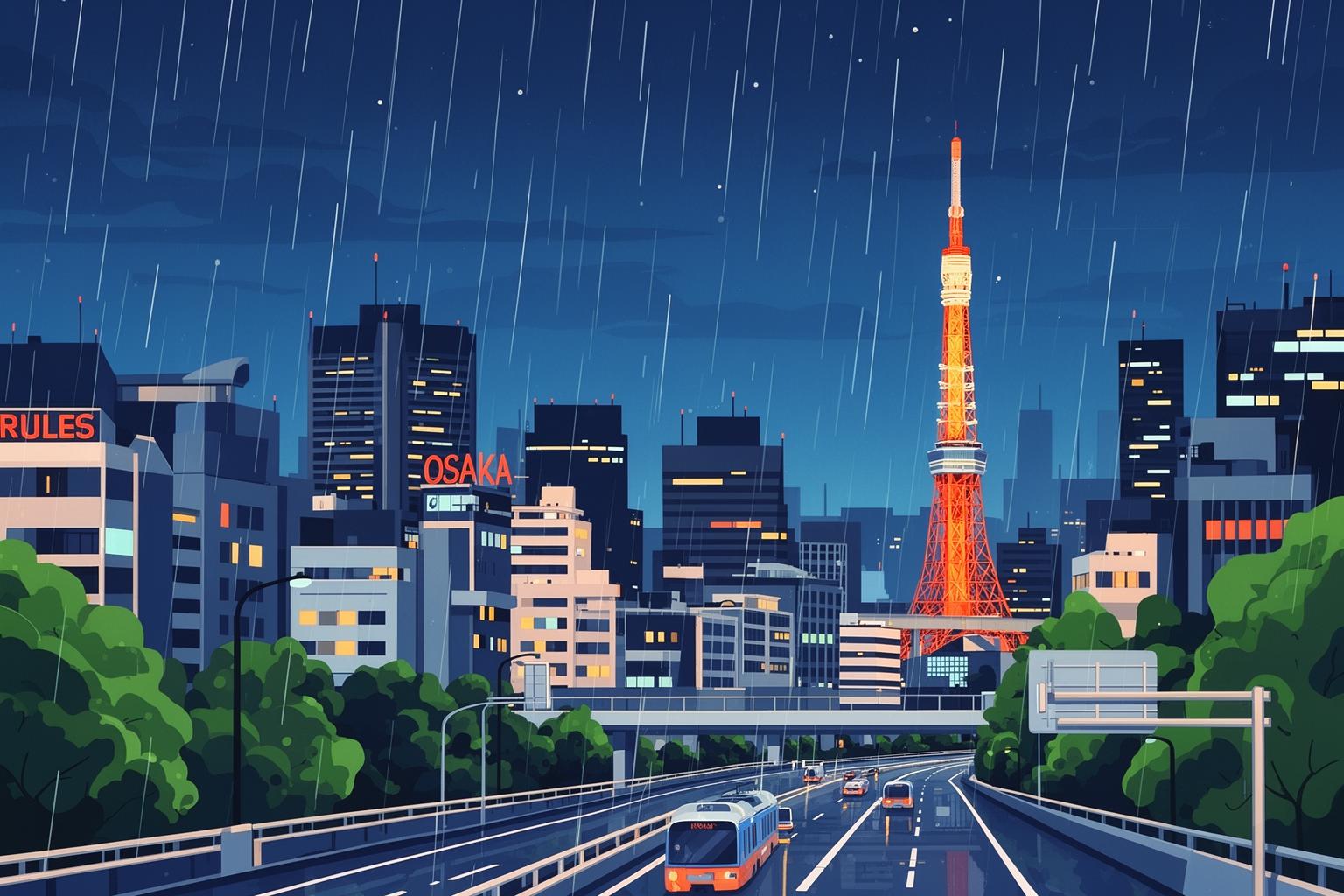
If you think Osaka’s bicycle culture is intense on a bright, sunny day, just wait until night falls or the skies open up. Darkness or rain doesn’t deter Osaka cyclists; instead, it adds new dimensions of complexity and danger to the experience. These are the advanced stages, where the unwritten rules are pushed to their limits and the boundary between impressive skill and reckless daring becomes perilously thin. It’s in these moments of heightened chaos that the city’s dedication to cycling reveals itself in the most extreme and telling way. Convenience and maintaining personal momentum are paramount, and neither will be sacrificed for something as trivial as a typhoon or the absence of daylight.
Umbrella Jousting: The Rainy Day Gauntlet
The image of an Osakan riding a bicycle in the pouring rain is something every foreigner never forgets. In particular, the practice of kasa-sashi unten—cycling while holding an umbrella—is striking. This practice is illegal in Japan for good reasons. It requires steering with one hand, balancing against gusting winds, and holding a large, vision-blocking canopy while navigating slippery, crowded sidewalks. By any measure, this is a terrible idea. Yet in Osaka, it is utterly, completely, and defiantly normal. The alternative—wearing a full rain suit or poncho—is often seen as too bulky and time-consuming. The umbrella is quick, convenient, and effective—a classic Osaka solution. This creates a frightening spectacle I call Umbrella Jousting. Sidewalks become narrow lists for a medieval tournament, with cyclists and pedestrians brandishing their umbrellas like lances. The risk of accidentally poking someone’s eye is constant and very real. Cyclists must angle their umbrellas carefully to avoid clashing with those of oncoming cyclists and pedestrians. Their field of vision is drastically limited. The pavement is slick. It’s a recipe for disaster. Yet somehow, the system functions. It operates on an even higher level of mutual understanding and risk acceptance. All participants simply accept the elevated danger as the price of staying relatively dry. It’s a striking display of the city’s stubborn pragmatism. The goal is to get from A to B without getting soaked. If that demands a bit of one-handed, nearly blind maneuvering, so be it. The flow must go on.
Lights? Optional. Reflexes? Mandatory.
As dusk settles over the city, another puzzling sight appears: cyclists without lights. While most modern bikes in Japan come equipped with dynamo-powered lights that turn on automatically, a large portion of Osakan cyclists either ride older bikes, have broken lights, or simply choose not to use them. They glide through twilight and deep night as dark, silent shapes, only becoming visible at the very last moment. For drivers and pedestrians used to the visual signals of headlights and taillights, this is deeply unsettling. The first few times a cyclist suddenly materializes out of the dark right in front of you, your heart leaps into your throat. The underlying mindset seems to be reciprocal awareness: “I can see you, so you must be able to see me.” This shifts enormous responsibility onto everyone else to stay hyper-vigilant. It assumes that pedestrians are scanning shadows and drivers’ headlights will spot cyclists in time. This is one of the biggest cultural shocks for foreigners. In many Western countries, riding without lights at night is seen as dangerously reckless, almost suicidal. In Osaka, it’s just something people do. It reflects a different relationship with risk and personal responsibility. The burden isn’t solely on the cyclist to be visible; it’s on everyone to remain constantly alert. It’s another layer of the unspoken agreement: in this chaotic city, you are responsible for your own awareness at all times. Don’t expect others to make it easy for you.
The Psychology of the Osaka Cyclist: What It All Means
So, what does this wild, rule-defying, and fast-paced bicycle culture truly reveal about the people of Osaka? It’s more than just a means of transportation. It serves as a vivid, living metaphor for the city’s essence. The way residents ride their bikes directly mirrors their history, dialect, humor, and core outlook on life. To dismiss it as merely rude or chaotic is to completely miss the point. It’s a complex, living system that uncovers the city’s deepest realities. Through one overloaded mamachari after another, you witness the soul of Osaka in motion.
Speed, Efficiency, and the “Sekkachi” Spirit
At the core of Osaka’s mindset lies the idea of sekkachi, roughly meaning impatience, haste, or always being in a rush. Osakans prize speed and efficiency above nearly everything else. This stems from their longstanding role as Japan’s merchant hub, where time literally equated to money. You can hear it in the brisk, direct dialect. You can observe it in the way they stand on the right side of escalators to let others pass swiftly. And you can certainly see it in their cycling behavior. The bike is the ultimate sekkachi instrument. It’s quicker than walking, cheaper than the subway for short trips, and more agile than a car on narrow city streets. The aim isn’t to enjoy the ride; it’s to complete the journey. Red lights are treated as suggestions when no cross-traffic is present. Stop signs serve as prompts to slow down briefly before continuing. The shortest path between two points isn’t necessarily straight; it’s the path with the fewest obstructions, even if that means riding on a crowded sidewalk or cutting through a park. This relentless drive for progress infuses the city with energy and vibrancy. It may shock outsiders, especially those from the more tranquil, orderly Tokyo, but it is the city’s lifeblood. The cyclists function like red blood cells in Osaka’s circulatory system, rushing to deliver their loads with maximum efficiency.
A Community of Individualists
This is where Osaka’s bicycle culture presents its central paradox. On the surface, it seems like the peak of individualism. Everyone appears to act solely in self-interest, cutting others off, breaking rules, and carving unique paths through the urban maze. It might seem like a classic “every person for themselves” scenario. Yet if that were true, the streets would be a constant scene of crashes and confrontations. But they are not. And the reason is that this isn’t pure individualism — it’s a community of individualists. Everyone operates under the same unwritten code. Everyone implicitly agrees to the chaos. You cut someone off, fully expecting to be cut off in turn moments later. You ring your bell insistently, but don’t get angry if someone else does it to you. There is a deep, shared understanding of the game’s rules. It’s an aggressive, high-speed cooperation based on mutual assumptions of skill and intent. This mirrors a broader aspect of Osaka culture. People are fiercely individualistic yet strongly connected by community and shared identity. They tease each other relentlessly but will also help a stranger instantly. The bicycle chaos is no different. It’s a system where everyone acts independently, yet their actions constantly adjust to those around them, creating a dynamic, self-regulating, surprisingly resilient whole.
What Foreigners Get Wrong
Visitors to Osaka often make two fundamental errors in interpreting the bicycle culture. The first is taking it personally. When a cyclist nearly brushes past you on the sidewalk without apologizing, it feels like a personal slight. It appears rude. But it’s almost never about you. Pedestrians are simply temporary obstacles in the constantly shifting geometry of their path. Their focus is ten meters ahead, already calculating the next move. The absence of apology isn’t ill will; it’s efficiency. Stopping to acknowledge the near miss would break the flow. The second mistake is assuming there are no rules. This couldn’t be more wrong. There are definite rules, just not those found in the traffic code. The rules are: keep the flow going, be predictable in your actions (even if illegal), and avoid serious accidents. A crash requiring an ambulance is a failure. Everything else is just part of the system. Understanding this is vital. The system isn’t anarchic; it runs on its own strict, if intimidating, set of laws. My advice to newcomers: don’t resist it. Be a cautious but confident participant. Avoid sudden stops or turns. Walk straight. And develop a sixth sense for the faint approach of a bicycle. You are no longer in a place where you can zone out with headphones on the sidewalk. You are in Osaka. Staying alert is essential.
How to Survive and Thrive: Your Guide to Osaka Cycling
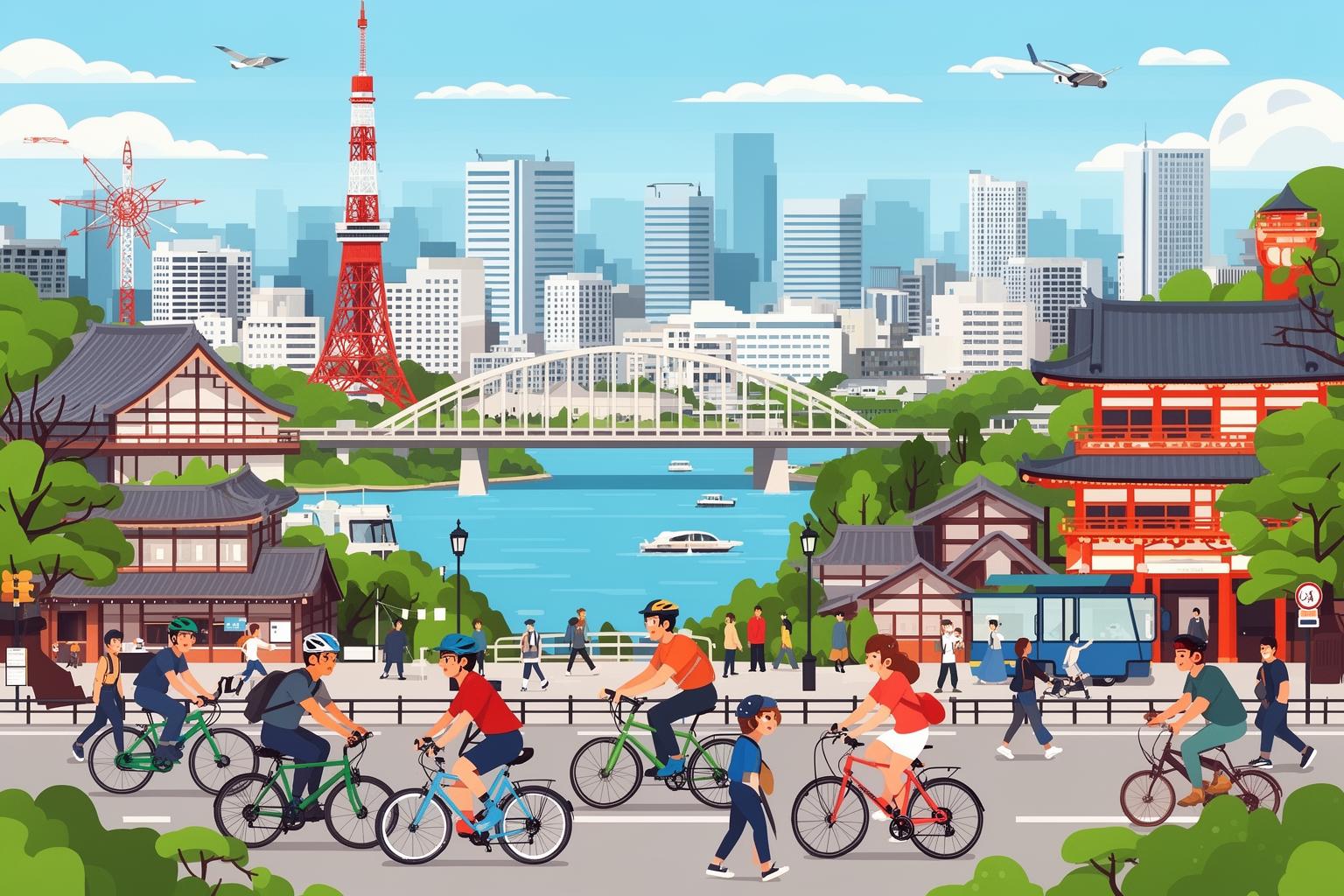
So, you’ve chosen to embrace the chaos and get yourself a bike. Congratulations. You’re about to explore the city in a way that’s simply impossible on foot or by train. You’ll uncover hidden temples, tiny coffee shops, and entire neighborhoods far off the beaten path. But before you dive in, it’s essential to be properly equipped—with both the right gear and the right mindset. Becoming a cyclist in Osaka is a journey, a process of adaptation. Here’s how to start off on the right foot, or rather, the right pedal.
Choosing Your Ride
Picking the right bicycle is key. While a sleek, multi-geared road bike might look tempting, it’s often not the best fit here. Such bikes are prime targets for theft, their thin tires don’t hold up well on the city’s uneven pavements, and they lack the crucial basket. The reigning champion of Osaka streets is the mamachari or a similar single-speed, functional city bike. These bikes are sturdy, dependable, and low-profile. They’re designed to be ridden upright, offering a comfortable position and a clear view of the upcoming chaos around you. An electric-assist version is a smart investment, especially if you live in hillier areas or plan to carry heavy loads. I suggest buying a solid, used bike from a local shop. It’ll probably have a few scratches already, so you won’t mind when it gets a few more in the urban jungle. It’s not about speed; it’s about durability.
Essential Gear (Osaka Style)
Once you have your bike, you need the right accessories. First, a loud bell. The tiny ping found on many bikes won’t do. You need a bell with a strong chirin-chirin! that cuts through city noise. Second, a sturdy lock. Bike theft is common, especially near train stations. A flimsy cable lock invites trouble. Opt for a heavy-duty U-lock or a thick chain. Third, and this is non-negotiable, a basket. Your bike isn’t for exercise; it’s your shopping cart, briefcase, and lifeline. You’ll use that basket every day. Lastly, ditch the umbrella. Be the change you want to see. Invest in a quality rain poncho. It shields both you and your basket, keeps your hands free on the handlebars, and instantly elevates you to the ranks of responsible rainy-day cyclists. It might feel awkward at first, but you’ll stay dry, safe, and morally superior.
The Zen of Cycling
Mastering cycling in Osaka is mostly a mental challenge. It means shedding your assumptions about how traffic should flow and embracing how it actually does here. Don’t resist the current; become part of it. Ride with confidence and purpose. Hesitation is dangerous. Make your intentions clear through your body language and your chosen path. Anticipate others’ movements. Observe the Mamachari Brigade and learn from the pros. Notice how they position themselves, time their entry into intersections, and claim space without aggression. There’s a zen to the chaos. Once you tap into it, cycling through Osaka transforms into something beautiful. You cease to be just a commuter. You become a participant in the city’s vibrant, chaotic, never-ending dance. You’re part of its pulse, part of its flow. And as you skillfully weave between pedestrians and parked delivery vans, ringing your bell with practiced authority, you’ll have a moment of clarity: you’re not just surviving Osaka—you’re beginning to understand it.