You made the move. You’re not in Tokyo anymore, Toto. You’re in Osaka. You’ve unpacked the boxes, figured out the maddeningly complex trash-sorting schedule, and you’re finally starting to feel a rhythm. Then, the flyer appears in your mailbox, a brightly colored sheet of paper full of energetic fonts and cartoon octopuses. It’s an invitation to the local chōnaikai summer festival. The neighborhood association. Your ticket, you think, to finally breaking through that invisible wall of polite but distant greetings. This is your chance to become part of the fabric of your new home. You’re filled with a mix of excitement and apprehension. But as you scan the listed food stalls—takoyaki, yakisoba, karaage—a cold knot of dread forms in your stomach. You’re a vegetarian. Or you’re gluten-intolerant. Or you have a serious nut allergy. Suddenly, this invitation to community feels more like a culinary minefield. How do you participate in an event centered entirely around food you can’t eat, without offending the kind, elderly neighbors who’ve spent all day rolling octopus balls and frying noodles? This isn’t about finding a vegan restaurant on an app; this is about navigating the intricate, unspoken social codes of hyper-local Osaka life, where a shared meal is the ultimate gesture of acceptance. Welcome to the real challenge of fitting in.
While you grapple with culinary challenges, exploring how embracing local jimo-kai gatherings can unlock the secrets of Osaka’s community life might just ease your transition.
The Chōnaikai: More Than Just a Block Party
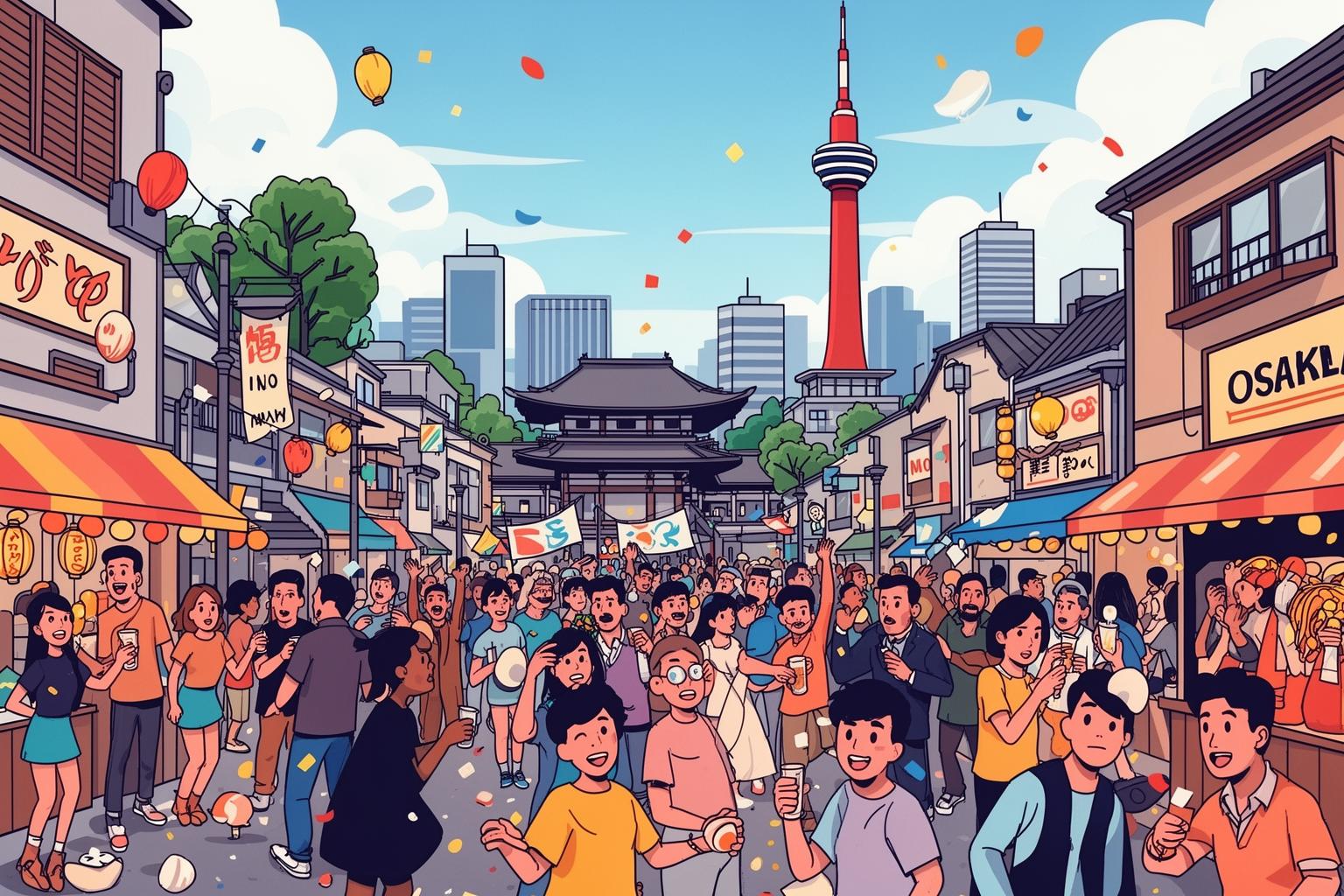
First, it’s important to understand what a chōnaikai truly is. For many foreigners, especially those from sprawling, anonymous Western cities, the idea is completely unfamiliar. It’s often translated as a “neighborhood association,” but that label feels bland and doesn’t convey the profound cultural meaning. It’s not just a group organizing bake sales or complaining about parking issues. The chōnaikai is the foundational unit of social organization in residential Japan. It traces back to a time when communities were genuinely self-reliant, handling everything from fire prevention and civil defense to caring for local shrines and coordinating festivals. In modern Osaka, its role has shifted somewhat, but its essential purpose remains: to foster a cohesive, supportive, and self-regulating community.
This isn’t Tokyo, where you might live in a large apartment complex for years without ever meeting your neighbors. Despite its metropolitan energy, Osaka is a city made up of villages closely intertwined. Residents hold strong loyalty to their local neighborhoods. The chōnaikai fuels that loyalty. It’s managed by a rotating group of local volunteers, typically older residents with deep ties to the area. They are the ones who check on you during typhoons, oversee the local garbage collection point, and know which children are preparing for high school entrance exams. They act as the social glue.
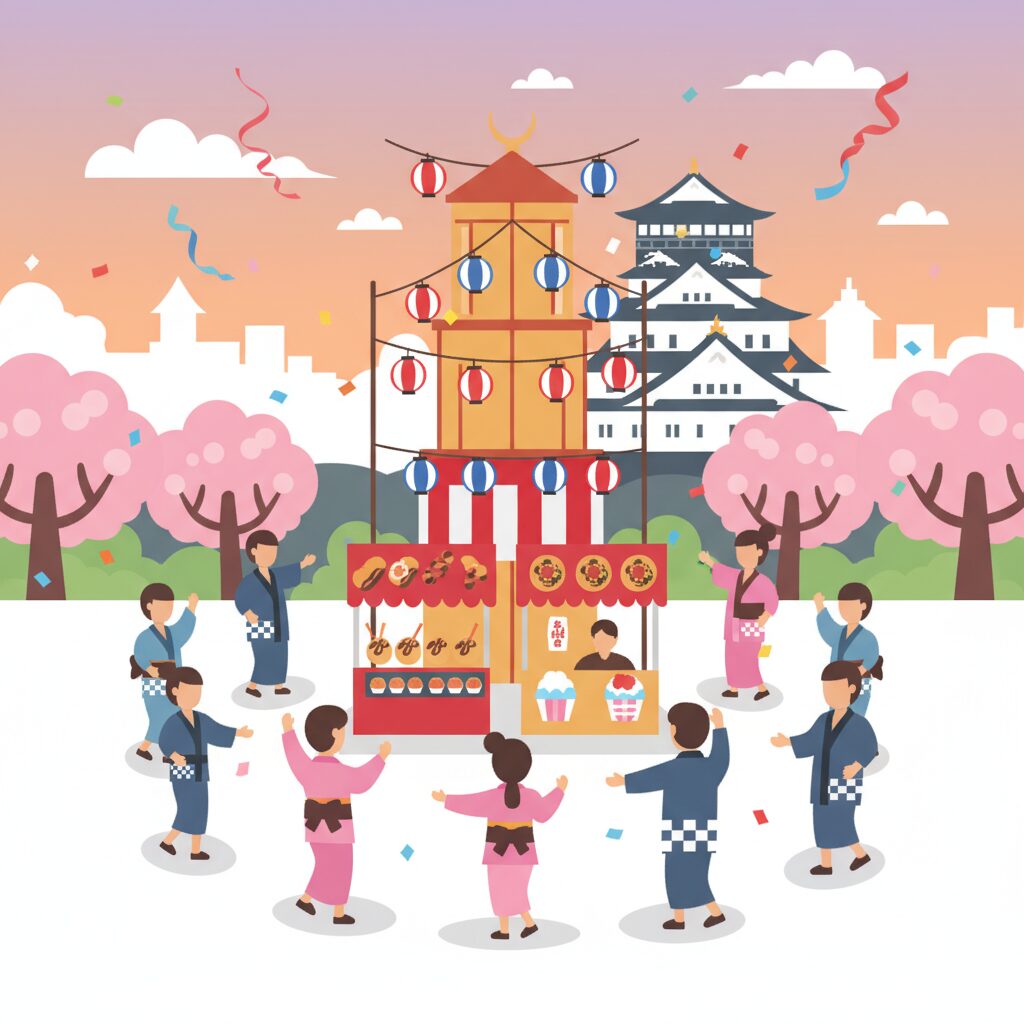
So, when they host a festival, it’s not a commercial event. It’s a profoundly communal occasion. The food isn’t made by professional vendors aiming for profit. It’s prepared by your neighbors. The woman serving yakisoba is the same person who owns the local flower shop. The man grilling frankfurters is the retired office worker living on the corner. Funds raised don’t go to a corporation but toward new lights for the local park or emergency supplies for the community storeroom. This context is crucial. Refusing food here isn’t like declining a free sample at a supermarket. It can feel as if you’re rejecting the community’s collective effort, their welcome, their very identity. The food isn’t just nourishment; it’s a symbol of belonging. Every bite affirms that you are part of the community. And that is what makes managing a special diet here so uniquely challenging.
Osaka’s Festival Food Landscape: The Usual Suspects
Step up to the folding tables and hand-painted signs of a chōnaikai festival, and you’ll be welcomed by a familiar, tempting aroma. These aren’t sophisticated, artisanal dishes; rather, they are comfort foods—the foundation of Osaka’s konamon (flour-based cuisine) tradition. They are inexpensive, cheerful, and geared for mass preparation by amateur cooks. Knowing what goes into these dishes is your first line of defense.
The Flour-Powered Trinity: Takoyaki, Okonomiyaki, Yakisoba
This trio forms the heart and soul of any Osaka gathering. They are ubiquitous and almost certainly off-limits to anyone with gluten intolerance. Let’s break them down.
Takoyaki (Octopus Balls)
The iconic Osaka street food: small batter balls filled with pieces of octopus and cooked in a special cast-iron griddle. The issue begins with the batter, a mixture of wheat flour, eggs, and importantly, dashi (stock). The toppings add another layer of complexity. The classic brown takoyaki sauce is a sweet and savory blend, usually based on soy sauce (containing wheat), along with vinegar, sugar, and various fruit and vegetable purees. Then there’s Japanese mayonnaise (which contains eggs), katsuobushi (dried, fermented bonito flakes, problematic for vegetarians), and aonori (green seaweed powder). For vegans, it’s a complete no-go. For those with gluten sensitivities, both the batter and sauce rule it out.
Okonomiyaki (Savory Pancake)
Often mistakenly called a “Japanese pizza,” which is far from accurate. This is a savory pancake made from a wheat flour batter blended with shredded cabbage, egg, and your choice of protein (usually pork belly or squid). Like takoyaki, the batter is the initial gluten obstacle. The dish is then generously topped with that same wheat-based okonomiyaki sauce, drizzled with mayonnaise, and sprinkled with bonito flakes. There’s nearly no way to safely adapt this for common allergies unless the stall offers a plain shio (salt) version without sauce, which is very uncommon at local festivals.
Yakisoba (Fried Noodles)
On the surface, this might seem straightforward—fried noodles. But the noodles themselves are wheat-based. They’re stir-fried on a large griddle with pork slices, cabbage, and bean sprouts, all coated in a Worcestershire-style sauce that almost always contains soy sauce. Occasionally, vendors may offer shio yakisoba (salt-flavored), which removes the sauce-based gluten, but you’re still stuck with the wheat noodles. For vegetarians, even removing the pork isn’t enough; the whole batch is cooked in pork fat, absorbing its flavor throughout.
Fried and Skewered: The Supporting Cast
Beyond the main trio, numerous other festival favorites come with their own hidden challenges.
Karaage (Japanese Fried Chicken)
Delicious, bite-sized pieces of marinated chicken, coated and deep-fried. The marinade typically includes soy sauce, ginger, and garlic—introducing gluten. The coating is usually a mix of potato starch (katakuriko) and wheat flour for extra crunch. The exact ratio is usually unknown. Some vendors might use only potato starch, technically gluten-free, but you can’t assume this at a chōnaikai stall run by volunteers. Cross-contamination is also a significant risk if the same fryer is used for other battered foods.
Furanku (Frankfurters)
A simple grilled hot dog on a stick. This may be one of the safer choices for those avoiding gluten if you skip the bun. However, caution is needed because Japanese sausages sometimes contain fillers with wheat or dairy, and the grill has likely been shared with sauce-covered items.
Kyuri Asazuke (Pickled Cucumber on a Stick)
Finally, a ray of hope for vegans! This is just a whole cucumber, lightly pickled in a salt brine and served on a stick. It’s refreshing, simple, and usually free from major allergens. It’s often your safest option, though not exactly filling.
The Dashi Deception: A Cultural Blind Spot
Here lies the greatest misunderstanding between Western dietary restrictions and Japanese cuisine: dashi. Dashi is the cornerstone stock in Japanese cooking, providing the subtle, savory umami flavor found in everything from miso soup to noodle broths to the batter of takoyaki. The most common dashi is made by simmering kombu (kelp) and katsuobushi (bonito flakes). And there’s the catch: dashi contains fish.
If you tell a vendor, “I’m a vegetarian” or “I don’t eat meat,” they often interpret that as “I don’t eat beef, pork, or chicken.” In traditional Japanese culinary thinking, fish is considered separately. It’s not classified as “meat” (niku). So, your kindly neighborhood grandmother might smile and reassure you that the okonomiyaki batter contains no meat because, to her, it doesn’t. The bonito flakes on top are just a garnish, like parsley. The fish-based dashi in the batter isn’t perceived as an animal product. This is not meant to mislead you but reflects a genuine cultural difference in food classification. You must be very specific. Saying “I don’t eat fish” (sakana wo tabemasen) helps, but you may need to clarify that you can’t have dashi (dashi ga dame desu), which might prompt a confused look. It’s like telling an American baker you can’t eat things made with water.
Communication Breakdown: How to Say “No” Without Shutting Down

Now comes the most challenging part. You’ve evaluated the food, you’re aware of what you can’t eat, and a kind neighbor is offering you a steaming plate of takoyaki with pride shining on their face. Everyone’s attention is on you. How do you decline this heartfelt act of kindness without offending them or appearing as a difficult, ungrateful foreigner?
This is a subtle social dance. A direct refusal, typical in the West (“No, thank you”), may come across as blunt or even rude here, creating an uncomfortable silence. The trick is not only to refuse but to handle the other person’s feelings by providing a reason for your refusal that doesn’t reflect on them or their cooking.
The Holy Trinity of Polite Refusal
There are three main strategies, often combined, to handle this situation with grace.
1. The Pre-emptive Apology
In Japan, apologizing serves as social lubrication rather than an admission of fault. Starting with “Sumimasen” (a versatile term meaning “Excuse me,” “I’m sorry,” or “Thank you”) immediately softens the refusal. It frames it as a regrettable situation for which you feel sorry, as if you’re apologizing for the inconvenience your presence causes.
Example: “Sumimasen, jitsu wa arerugii ga atte…” (“I’m sorry, but I actually have allergies…”) This phrase works wonders. It shifts the focus from “I don’t want your food” to “My body unfortunately can’t accept your food.” This isn’t rejection; it’s a health issue.
2. The Unquestionable External Authority
Personal preferences come off as weak. A vague “I can’t eat that” might invite questions or coaxing (“Oh, just try one! It’s delicious!”). What you need is a firm, external reason. The doctor’s orders are the most convincing.
Example: “Oisha-san ni tomerareterun desu.” (“The doctor has forbidden me from eating it.”) This functions like a royal decree in conversation. No one disputes a doctor’s command. It immediately ends the discussion and often brings sympathy rather than disappointment. They’ll nod understandingly and say, “Oh, that’s unfortunate; you must take care of your health.” You’ve turned a potential social awkwardness into shared concern for your wellbeing.
3. The Enthusiastic Diversion
While offering your polite, apologetic, doctor-supported refusal, it’s vital to simultaneously express your genuine excitement about the event. This is essential because you need to show that your inability to eat doesn’t mean lack of appreciation. Praise something else—anything.
Example: Shaking your head regretfully at the offered yakisoba, say, “Uwaa, oishisou! Hontou ni tabetain desu kedo… sumimasen. Demo, koko no o-matsuri, mecha nigiyaka de tanoshii desu ne!” (“Wow, that looks delicious! I really want to eat it, but… I’m sorry. But wow, this festival is so lively and fun!”)
Compliment the atmosphere, the music, the kids playing games. You communicate, “I love what you’re doing. I love this community. I’m so happy to be here. My inability to eat your food is just a small, sadly necessary detail in my overall happiness.” This reassures the person that their kindness hasn’t gone unnoticed, even if you can’t partake in the food itself.
Proactive Strategies: Don’t Be a Victim of the Food Stall
While mastering the art of polite refusal is important, the most effective strategy is to be proactive. You can set yourself up for success well before that plate of okonomiyaki is placed in your hands.
Eat Before You Go
This is the simplest and most effective approach. Never, under any circumstances, arrive at a Japanese food-centered event feeling hungry. When you’re full and satisfied, it becomes much easier to politely decline offers. Your willpower will be stronger, and your refusal will come across less as a desperate act of self-preservation and more as a calm statement of fact. Have a complete, safe meal at home before you even leave.
Bring Your Own (But Present It as Sharing)
Bringing your own food can be a social misstep if done awkwardly. Don’t simply pull out a Tupperware container of your own meal and eat in a corner. That suggests “I don’t trust your food” and creates a social barrier. Instead, bring something to share—a thermos of special tea, a bag of allergen-free snacks to offer others, or even a bottle of sake to contribute to the hosts. Frame it as a contribution, an omiyage (gift). That way, when you’re sipping your own tea or munching on your rice crackers, it appears as if you are simply enjoying the gift you brought for everyone.
The Ally System: Your Japanese Friend as a Cultural Interpreter
If you have a Japanese friend, neighbor, or partner, they are your greatest asset. Before the event, explain your dietary restrictions to them in detail. They can act as your social shield and interpreter. When someone offers you food, your friend can step in and explain using the perfect, nuanced Japanese you might struggle to express in the moment. “Ah, gomen-nasai, kono hito, komugi no arerugii ga aru kara…” (“Oh, I’m so sorry, this person has a wheat allergy…”). A Japanese person explaining it to another Japanese person carries significant weight and takes the burden entirely off you. They can navigate the social dynamics with ease you simply don’t have yet.
Why It’s All Worth the Hassle
Reading all this, you might feel tempted to just stay home. It sounds exhausting, stressful, and full of social risks. Why bother? Because the reward is tremendous. Showing up is more than half the battle. In a culture that values group harmony and participation, simply being present at the chōnaikai festival sends a strong message. You are making an effort. You are showing that you want to belong to the community.
Life in Tokyo can be professional and transactional. Osaka life, at its best, is profoundly communal. These local festivals are the crucibles where that community is built. It’s where you graduate from being the anonymous foreigner in apartment 201 to “Chris-san, the English teacher who lives down the hall.” It’s where you’ll have a tentative conversation with the elderly man who tends the local gardens, where you’ll watch neighborhood kids perform a dance they’ve practiced for weeks, and where you may, perhaps for the first time, feel that you truly belong.
Don’t let your diet become a barrier. See it as an opportunity. An opportunity to practice your Japanese, to learn the subtle art of Japanese communication, and to connect with your neighbors on a deeper level. Smile, be present, compliment the atmosphere, and sip your safe drink. Your efforts will be noticed and appreciated far more than you realize. In Osaka, participation is the only dish you really need to accept.