Step off the train at any station in Osaka, from the sprawling Umeda complex to a quiet local stop in the suburbs, and the first thing you’ll notice isn’t a landmark or a particular sound. It’s a sight. A veritable mountain range of bicycles. They’re crammed into designated parking lots, spilling out onto the sidewalks, chained to guardrails, and leaning against walls. This isn’t just a mode of transport; it’s the city’s lifeblood, its circulatory system. In Osaka, the bicycle isn’t a choice for the weekend warrior or the eco-conscious commuter. It’s the default setting. It’s the answer to the question of how to get from here to there, how to grab groceries, how to live. This city, more than any other in Japan, runs on two wheels and a bell. To understand the rhythm of Osaka, you have to understand its chaotic, liberating, and utterly essential bike culture. It’s a world away from the orderly procession you might imagine, a daily dance of pragmatism over politeness, and it reveals the true soul of this incredible city.
For those seeking a change from Osaka’s bustling bike culture, consider venturing toward Wakayama’s rejuvenating onsen retreats for a serene weekend escape.
The Kingdom of the Mamachari: Why Osaka Runs on Bicycles
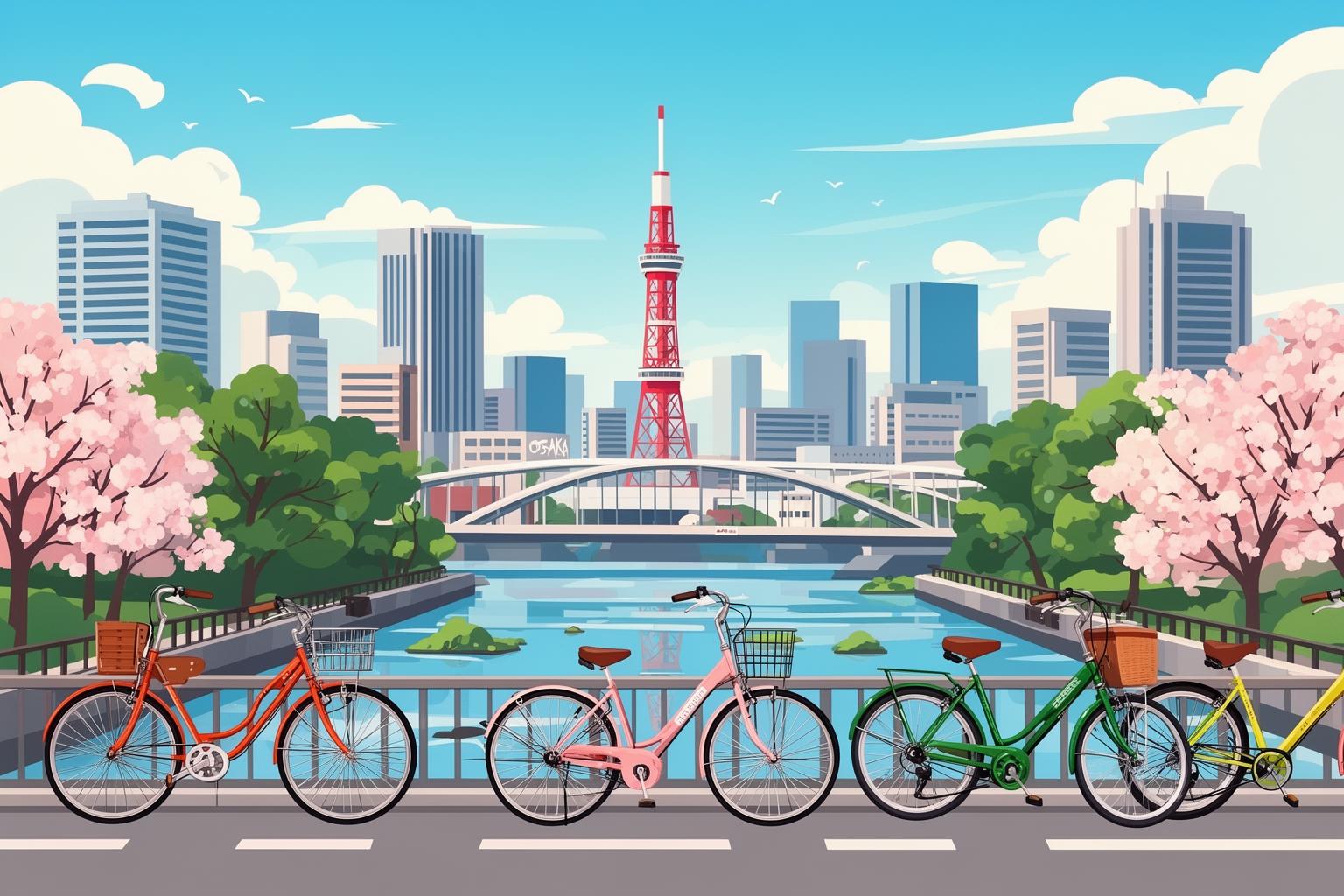
Before we plunge into the chaos, it’s essential to ask a fundamental question: why? Why is Osaka undeniably the capital of the utility bicycle, the powerful mamachari or “mommy’s chariot”? It’s not due to a single factor, but rather a perfect blend of geography, economics, and a distinct local mindset that makes two wheels the most practical way to navigate the city.
A City Made for Two Wheels: The Geographic Advantage
The simplest and most obvious reason is that Osaka is flat—remarkably, relentlessly flat. The city sits on a vast alluvial plain, a delta nourished by the Yodo and Yamato rivers. Unlike the hilly port city of Kobe to the west or the undulating terrain around parts of Tokyo, central Osaka is nearly devoid of inclines. You can pedal for miles without needing to change gears or breaking a sweat from steep climbs. This geographical blessing makes cycling accessible to everyone, from elementary school children to elderly residents running errands. The absence of physical obstacles eliminates the main barrier to casual cycling. It turns the bicycle from a sport accessory into a straightforward tool, a natural extension of your own feet that just happens to be much faster. This flatness also influenced the city’s design. The grid-like streets allow for easy navigation, but it’s the countless narrow side roads, shotengai shopping arcades, and maze-like residential alleys that truly define the city’s character. These are spaces where cars are inconvenient or outright banned, while bicycles glide effortlessly, connecting you directly to the core of each neighborhood.
The Gospel of “Mottainai”: An Economic Perspective
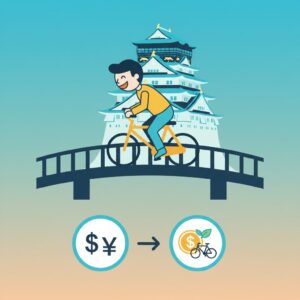
If flatness explains the physical aspect, the city’s economic outlook explains the spirit. Osakans are known for their practicality and strong value consciousness. This isn’t about being cheap; it’s about being wise with money. The local dialect has a term, kechi, often translated as stingy, but more accurately described as fiercely anti-waste. This philosophy comes from centuries as Japan’s merchant hub, where every yen was meticulously accounted for and frugality was admired. Now, think about the bicycle in this context. A reliable secondhand mamachari can cost as little as 5,000 yen. It needs no fuel, no costly insurance, and parking is frequently free (or at least regarded that way). In contrast, public transportation fares over 200 yen for a short subway ride, with monthly passes amounting to thousands. Car ownership is a financial drain, with taxes, maintenance, and steep parking fees. For short to medium trips, the bicycle is by far the most economically sensible option. It embodies the Osaka spirit: maximum efficiency at minimum cost. Why pay for a train to travel three stops when you can ride your bike for free, arrive just as quickly, and get some exercise? To an Osakan, any other choice would be mottainai—a dreadful waste.
Connected by Spokes: The Neighborhood Network
Beyond the practical reasons, there’s a social aspect. Riding a bike keeps you at street level. You’re not enclosed in a metal box or whisked underground in a subway train—you are in the city. You smell takoyaki cooking, hear shopkeepers calling out in the market, nod to neighbors walking their dogs. This fosters a strong sense of local connection central to Osaka’s identity. Though the city can feel like a sprawling, chaotic metropolis, it’s really a patchwork of tight-knit communities. The bicycle is the thread that weaves these communities together. It lets you move freely within a five-kilometer radius of your home, forming a mental map of your neighborhood—the best bakery, the quiet park, the hardware store with the friendly owner. This street-level engagement contrasts with life in Tokyo, where much revolves around large, impersonal train stations. In Osaka, life flourishes in the spaces between the stations, and the bicycle is your key to accessing it all.
The Upside: Unlocking the City’s Rhythm
Living with a bike in Osaka is not only practical but can also be truly enjoyable. It offers a level of freedom and spontaneity that’s difficult to find otherwise. It transforms your entire connection to the city, turning it from a collection of destinations on a map into a seamless, explorable environment.
The Ultimate Convenience: Door-to-Door Freedom
This is the top advantage, the one that makes all the drawbacks worthwhile. Imagine needing to visit the ward office, then the post office, and finally pick up some groceries. Using public transit, this means a multi-step process of walking to the station, waiting for a train, transferring at another station, and walking again—repeating for each stop. By car, it becomes a hassle of finding and paying for parking. On a bike, you simply go directly. You pedal from your doorstep straight to the front door of your destination. There’s no schedule to consult, no last trains to worry about, no transfers to manage. This door-to-door convenience is especially transformative for families. The mamachari, with its sturdy frame, front and rear baskets, and built-in child seats, is a triumph of practical design. It’s like a minivan on two wheels, efficiently carrying groceries, library books, and one or even two children. This freedom is addictive. Once you experience the effortless, smooth mobility a bike offers, you’ll find yourself leaving your train pass at home more often than not.
Beyond the Subway Map: The Joy of Discovery
Osaka is full of hidden gems. Quaint, atmospheric coffee shops, long-established artisan workshops, peaceful neighborhood shrines, and uniquely specialized tiny museums are tucked away in spots you’d never discover by sticking to the main routes. The subway map shows a tidy, simplified Osaka, but the real city is a wonderfully complex, intricate network. A bicycle gives you all-access to this hidden world. You can follow a whim, explore an intriguing alley, or wander along a canal. You’ll find places that aren’t in any guidebook. You’ll build your own personal map of the city, based on experience rather than transit lines. Riding along the Yodo River on a sunny day, venturing through the retro-futuristic Senri New Town, or cycling the covered shotengai at Tenjinbashisuji—Japan’s longest shopping street—creates unforgettable, deeply personal connections to the city.
Living on a Budget: Your Wallet Will Thank You
We’ve touched on the financial mindset, but it’s worth highlighting the real savings. For non-Japanese residents, especially students or those just starting out, the monetary relief can be significant. Suppose a monthly train pass for your commute costs 8,000 yen. Over a year, that totals 96,000 yen. A reliable bicycle, a solid lock, and a year’s worth of municipal parking fees (if you choose to be law-abiding) might only cost around 20,000 yen altogether. The savings are considerable. This goes beyond commuting. It affects your social life too. Meeting friends across town doesn’t cost 500 yen for a train ride each way. A trip to a larger supermarket with better prices is just a bike ride away. This financial freedom slashes a major source of daily stress and lets you spend money on truly enjoying life in the city instead of merely covering transport costs.
The Downside: Welcome to the Concrete Jungle Gym
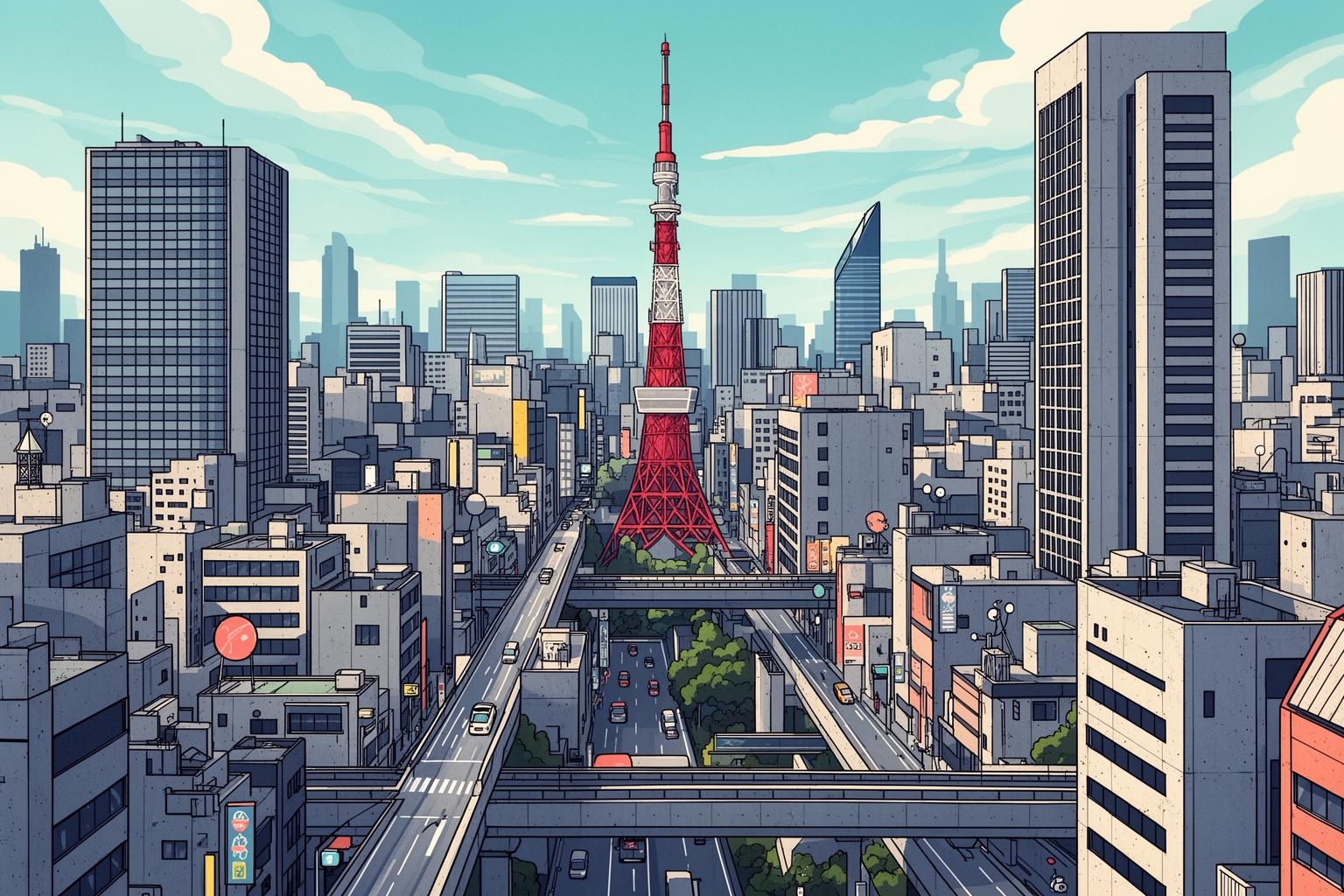
Certainly, it’s not all smooth sailing and savings. Cycling in Osaka involves a steep learning curve and a host of challenges that can be frustrating, bewildering, and sometimes genuinely hazardous. The city’s bike culture relies on a set of unwritten rules that often conflict with the official ones, creating a system of organized chaos that can perplex newcomers.
Sidewalks or Streets? The Great Gray Area
This is the core paradox of cycling in Osaka. Japanese law is clear: bicycles are classified as light vehicles and are meant to be ridden on the street, on the left side, following traffic flow. Yet, a quick look at any busy Osaka street reveals this rule is almost universally ignored. Most cyclists—from teenagers to grandmothers—choose to ride on the sidewalk. This isn’t rebellion; it’s a pragmatic adaptation to the environment. Osaka’s main roads are typically multi-lane arteries dominated by aggressive taxis, large buses, and impatient truck drivers. For the typical rider on a bulky mamachari, cycling in that traffic feels like a death sentence. So, the sidewalk becomes the default. But this creates new issues. Sidewalks turn into a shared, contested space. You’re no longer simply a cyclist but a navigator within a complex ecosystem of pedestrians, strollers, shop displays, and other cyclists emerging unexpectedly from alleys. The official blue signs that indicate which sidewalks permit cycling are often confusing and inconsistent. In reality, it’s a free-for-all, governed less by law and more by ongoing, high-stakes negotiation for space.
The Sound and the Fury: Deciphering the “Chari-Chari” Bell
Within this sidewalk environment, the bicycle bell serves as your primary form of communication. However, it’s not the gentle, tinkling “hello” one might use in a park. The Osaka bell sounds a sharp, insistent chari-chari-chari! It’s not a polite request; it’s a command. It roughly means “I’m behind you, I’m not slowing down, and you need to move aside immediately.” To newcomers, this can seem abrupt and aggressive. It contrasts sharply with Japan’s usual emphasis on harmony and indirectness. But this is Osaka—a city where communication tends to be more direct, reflecting its merchant culture’s need for speed and clarity in business. The bell embodies this straightforwardness. It prioritizes function over form. Learning to use it—and not taking offense when it’s used on you—is a vital part of adapting to local cycling culture. It’s a signal that you’re sharing a chaotic space and must stay alert. You don’t get upset; you just move.
The Great Disappearance: Navigating Bike Parking Purgatory
Once you’ve navigated the sidewalks and reached your destination, the challenge is far from over. Bike parking in Osaka is a city-wide dilemma. With the sheer volume of bicycles, legal parking spots—especially near train stations and busy commercial areas—are almost always full. This scarcity leads to widespread illegal parking, which is where the real problems arise.
The dreaded silver sticker
City officials frequently patrol busy areas, tagging illegally parked bikes with warning notices—usually a brightly colored paper or the infamous silver sticker around the frame or wheel. This notice grants a short grace period, sometimes just a few hours, to move your bike. If you don’t, it will be impounded. Finding your bike missing is a rite of passage for Osaka residents. It triggers a moment of sheer panic followed by the sinking realization of being towed.
The pilgrimage to the impound lot
Retrieving your bike is an ordeal. First, you must discover which impound lot holds your bike. These lots are scattered throughout the city in inconvenient, hard-to-reach places—under expressways, in remote industrial zones, miles from the nearest train station. You’ll need to call a number or check a website, provide your bike’s registration number (you did register it, right?), and locate the exact spot. Then comes what feels like a pilgrimage. You’ll arrive at a vast, soul-draining lot packed with thousands of abandoned bicycles. You’ll fill out paperwork, show ID, and pay a fine, usually around 2,500 yen. Only then will you be reunited with your trusty ride. The experience is designed to be just inconvenient and costly enough to discourage repeat offenses. It’s a harsh but effective lesson in the city’s struggle to maintain order amid two-wheeled chaos.
The Umbrella Samurai: Osaka’s Rainy-Day Daredevils
Rain escalates the already difficult world of Osaka cycling to a new level. You’ll witness a sight both terrifying and oddly impressive: the umbrella cyclist. People ride at considerable speed while holding a full-sized umbrella with one hand. This practice is extremely dangerous and technically illegal, leaving only one hand free for steering and braking. A sudden gust can turn the umbrella into a sail, pushing the rider into traffic or pedestrians. Yet, it’s a common sight. Why? It comes down to sheer pragmatism. Rain won’t stop anyone from getting to work or collecting kids. Wearing a poncho is seen as too cumbersome. So, riders master the one-handed umbrella technique. It perfectly reflects the local mindset: a readiness to accept calculated risk to get things done. It’s a fitting metaphor for Osaka itself—slightly reckless, undeniably efficient, and stubbornly unwilling to be delayed.
The Unspoken Code: How to Ride Like a Local
Surviving and thriving as a cyclist in Osaka demands more than merely knowing the official rules. It calls for an intuitive grasp of the unspoken code of the road (and sidewalk). It means becoming fluent in a non-verbal language of movement and intention.
Mastering the Osaka Swerve: A Lesson in Fluid Dynamics
Observe an experienced local cyclist navigating a crowded shopping arcade. They don’t move in a straight line—they flow. They make a series of subtle, fluid adjustments—a slight lean here, a gentle curve there—to weave through pedestrians without truly slowing down. This is the Osaka Swerve. It’s not about aggression; it’s about anticipation. You learn to read the crowd’s movements, predicting where a gap will open, noticing someone about to stop suddenly to look at a shop window. You don’t force your way through; you find the path of least resistance. It’s a skill that takes time to master, but once acquired, you can glide through the busiest places with surprising ease.
Reading the Air (and the Pavement): Situational Awareness is Essential
Your attention can’t be limited to what’s right ahead. You need full 360-degree awareness. You listen for the hum of an approaching electric bike, watch for car doors opening, and keep an eye on side alleys for other cyclists who invariably dart out without looking. You learn to make eye contact with pedestrians to ensure they’ve seen you. You develop an almost sixth sense for the city’s rhythm. Although this heightened awareness is draining at first, it soon becomes second nature. It’s the price you pay for the freedom cycling offers.
Rules are Suggestions, Physics is Law
The core principle of this unspoken code is simple: written traffic laws serve as guidelines, but the laws of physics are absolute. People run red lights if no cars are coming. They ride briefly on the wrong side of the road if it’s more convenient. They break all kinds of rules that are technically illegal. Yet, there’s a shared understanding that causing an accident is the ultimate failure. The aim is to reach your destination efficiently without colliding with anything or anyone. This creates a flexible, self-regulating system. You can bend the rules, but if you cause trouble, it’s your responsibility. This results-focused, highly accountable mindset is quintessentially Osakan.
A Tale of Two Cities: Cycling in Osaka vs. Tokyo
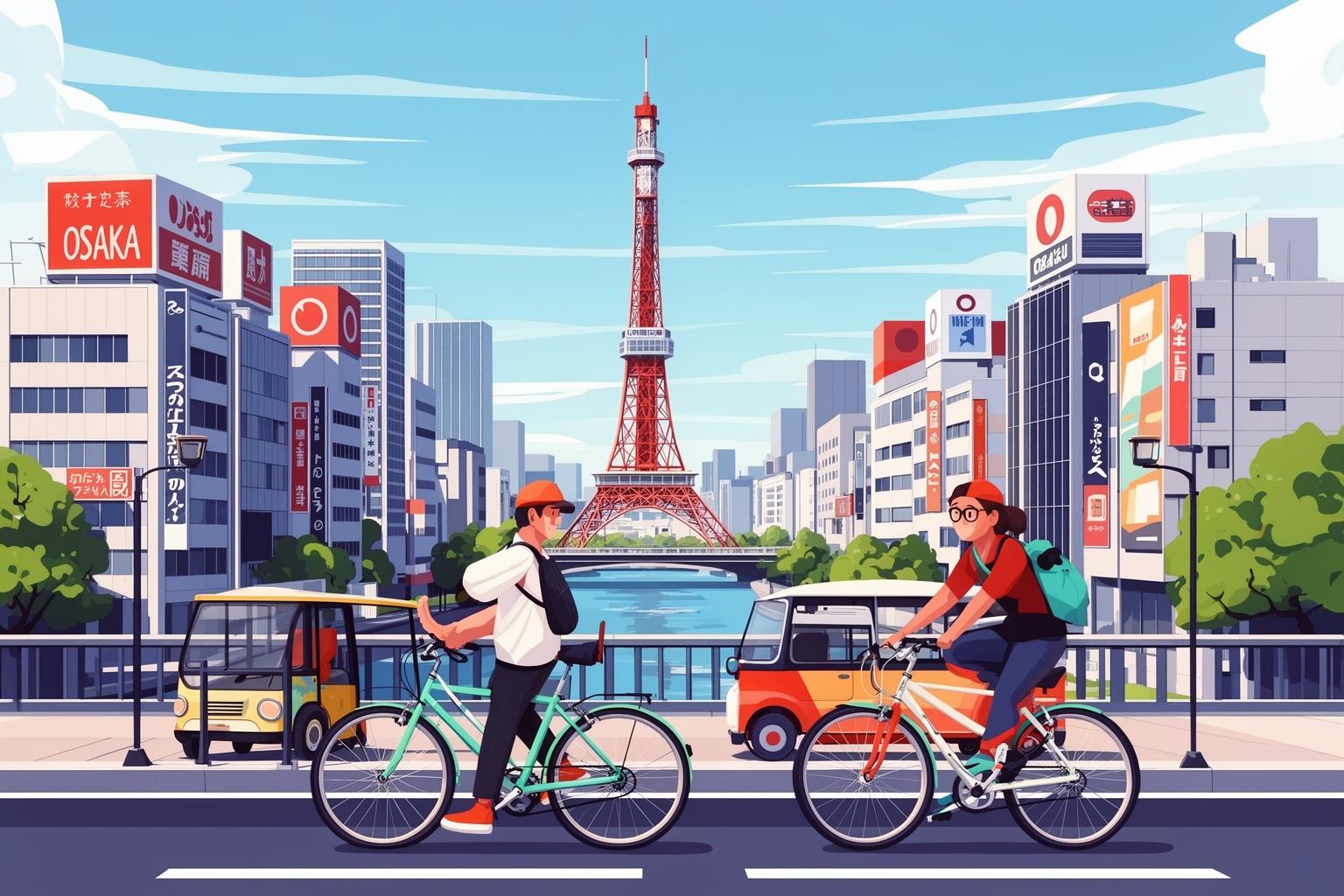
Comparing the cycling culture in Osaka with that of Tokyo highlights the distinctive character of each city. Though both are major Japanese metropolises, their approaches to two-wheeled transportation are strikingly different.
Tokyo’s Order vs. Osaka’s Organic Chaos
Tokyo generally feels more orderly. Where bike infrastructure exists, it is more often respected. There is a stronger inclination to follow rules, ride on the street, and park in designated spots. Cycling can seem more formal, a deliberate activity. While mamachari bikes are present in Tokyo, they don’t dominate the scene as much. In contrast, Osaka’s system feels entirely organic, developing from the bottom up, shaped by the daily habits and needs of its people rather than top-down urban planning. It is messy, chaotic, and sometimes inefficient, yet also resilient and deeply woven into everyday life. Tokyo’s system feels engineered; Osaka’s, evolved.
The Lycra Crew vs. The Grocery Getter
Differences also emerge in the types of bikes and riders. Tokyo features a more visible subculture of serious cyclists clad in lycra on expensive road bikes, treating cycling as a sport or a serious commute. They ride fast and stay on the roads. In Osaka, bicycles are primarily practical vehicles. The mamachari reigns supreme, followed by simple, single-speed commuter bikes. For many, it’s a means to run errands rather than race against the clock. Riders are likely dressed in work clothes, school uniforms, or casual attire. They aren’t “cyclists” in the stereotypical sense; they’re simply people using bikes. This underscores a wider cultural contrast: Tokyo as a hub of trends and subcultures, Osaka as a city rooted in the pragmatic, everyday realities.
Is It Worth It? Embracing the Two-Wheeled Lifestyle
Despite all the warnings about chaotic sidewalks, aggressive bells, and dreaded impound lots, you might be questioning whether getting a bike in Osaka is a good idea. The answer is a definite yes. To truly grasp this city, you need to experience it at street level, moving at the pace of a bicycle. Living here without a bike is like visiting Venice without riding a gondola—you’re missing the essential mode of transport that shapes the city’s character. Getting a bike is an act of immersion. The first time you successfully navigate a crowded shotengai, the first time you find a favorite café in a back alley, the first time you get home in ten minutes when the train would have taken thirty—these moments mark when you start to feel less like a visitor and more like a resident. Cycling in Osaka is a microcosm of the city itself. It’s a bit rough, doesn’t always follow the rules, and can be overwhelming at first. But it’s also incredibly efficient, full of life, and deeply human. It demands that you be present, aware, and directly engaged with the world around you. So, get the bike. Buy a good lock. Learn to swerve, brace yourself for the rain, and prepare to have your bike towed at least once. It is, without a doubt, the most authentic way to experience the beautiful, functional chaos of Osaka.