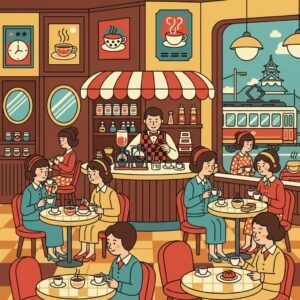
As someone who grew up in the relentless, forward-marching rhythm of Tokyo, my first real encounter with Osaka’s daily life felt like stepping into a different time signature. It wasn’t the neon of Dotonbori or the sheer scale of Umeda Station that threw me off. It was something far quieter, far more fundamental. It was a handwritten sign outside a dimly lit coffee shop, a place that looked like it hadn’t been redecorated since the 1970s. The sign read: “Morning Service: Drink price + 0 yen for toast, egg, and salad.” I read it again. And again. In Tokyo, you pay for what you get. You pay for the coffee, you pay for the toast, you pay for the space you occupy. The idea that a substantial breakfast would be offered as a mere ‘service,’ a complimentary bonus for the simple act of ordering a 450-yen coffee, felt not just generous, but economically suspicious. My Tokyo brain immediately started calculating the overhead, the profit margins, the sheer impossibility of the business model. It felt like a trick.
But it wasn’t a trick. It was an initiation. That humble ‘Morning Service,’ or simply ‘Morning’ as it’s known locally, is one of the most revealing daily rituals in Osaka. It’s far more than a cheap breakfast deal; it’s a window into the city’s soul. It’s an economic-social contract enacted every single day in thousands of neighborhood kissaten—the traditional, often family-run coffee houses that act as the city’s living rooms. Forget the sleek, minimalist cafes of Tokyo where laptops glow in anonymous silence. The Osaka kissaten is a different universe, one built on principles that can seem utterly foreign to outsiders. It’s here, over thick-cut toast and a simple boiled egg, that the true character of Osaka—its deep-seated pragmatism, its fierce loyalty to community, its unique definition of value, and its merchant’s spirit of competitive generosity—comes to life. To understand the Morning Service is to begin to understand why living in Osaka feels profoundly different from anywhere else in Japan.
This deep-seated pragmatism and merchant’s spirit of competitive generosity, which defines the city’s unique approach to value, is a fascinating parallel to the broader Kuidaore mindset that shapes daily life in Osaka.
The Anatomy of a Deal: What Exactly Is a “Morning Service”?
Before diving into its cultural significance, we first need to grasp the tangible elements of this ritual. A newcomer might dismiss it as just a breakfast combo, but its structure and unspoken rules are what make it distinctly Osakan. It’s a formula—but one that invites infinite, fiercely competitive variation.
The Foundational Formula: Your Coffee as a Down Payment on a Meal
The essence of the Morning Service is elegantly simple and, to outsiders, surprisingly generous. You order a drink—usually coffee or tea, priced between 400 and 600 yen—and with that, you automatically receive a small meal. The baseline, the absolute standard, is what I call the Holy Trinity of the Kissaten Morning: a thick slice of toasted shokupan (fluffy white bread), a hard-boiled egg (yude tamago), and a pat of butter or margarine accompanied by a small packet of jam.
Let’s linger on that toast for a moment. This isn’t the thin, fragile bread found in supermarkets. It’s unapologetically thick, often over an inch, with a satisfyingly chewy interior and a perfectly crisp crust. It makes a statement: “This is not a garnish. This is sustenance.” The egg is almost always pre-peeled for convenience, resting in a small dish, a humble protein-packed sphere of pure function. Occasionally, a small side salad appears—a few leaves of lettuce, a tomato slice, perhaps a cucumber sliver, dressed with sesame or vinaigrette. This entire plate, a complete and balanced breakfast, is delivered as an afterthought—a bonus included with your coffee. The menu price is for the coffee; the food is, in local terms, sābisu.
Here lies a key linguistic and cultural misunderstanding common among foreigners and even Japanese from other regions. The word “service” (サービス) in Japanese can mean “customer service,” but here it means “something extra for free,” a bonus or perk—like a shopkeeper tossing in a free candy with your purchase. Thus, the Morning Service isn’t a “breakfast set” as found in Tokyo cafes, where food and drink are bundled and priced together. Philosophically, it’s a free meal given simply for being a patron. This distinction is crucial. It shifts the exchange from a straightforward purchase to an act of hospitality and goodwill.
The Kissaten Arms Race: Competitive Generosity in Action
While the toast-and-egg combo is standard, it’s just the starting point. The real excitement begins when exploring various kissaten and witnessing what I call the Morning Service Arms Race. Osaka is a merchant city with competition in its DNA, but here it doesn’t show as cutthroat pricing or flashy advertising. In neighborhood kissaten, competition is a battle of generosity. Each shop owner seems to ask: “How much more can I give customers for the price of one cup of coffee?”
This leads to an astonishing variety of Morning Service offerings. One kissaten might replace the boiled egg with a fluffy scrambled egg or a small, elegant omelet. Another might include a small bowl of yogurt topped with fruit compote. Walk into a different shop and the toast may be upgraded to cheese toast, cinnamon toast, or even mini-pizza toast. The salad could become more elaborate, featuring potato or macaroni salad.
But the competition doesn’t stop there. It expands into entirely different food groups. It’s not unusual to find a Morning Service with a small bowl of udon or soba noodles. Others swap out toast for onigiri (rice balls). Some serve hot dogs, mini sandwiches, or even chawanmushi—a savory steamed egg custard usually found in formal Japanese dining. Every addition is a strategic attempt to outdo the kissaten down the street and earn a reputation for the best cospa (cost performance) locally.
This isn’t about luxury; it’s about abundance. It embodies the Osaka merchant’s ethos: give customers more than they expect, make them feel they’ve scored an incredible deal, and they’ll return. Loyalty isn’t built through fancy branding but by delivering consistent, overwhelming value. This daily competition keeps the Morning Service fresh, a lively and evolving expression of Osaka’s unrelenting drive to delight patrons by filling their stomachs.
The Stage for the Ritual: Deconstructing the Osaka Kissaten
To truly grasp the performance, you must first understand the setting. The Osaka kissaten lies worlds apart from the bright, airy, and often sterile atmospheres of modern global coffee chains. These establishments are time capsules—carefully preserved ecosystems that emphasize comfort, practicality, and familiarity over passing design fads. They form the essential backdrop that imparts genuine meaning to the Morning Service.
The Atmosphere: A Step Back into the Showa Era
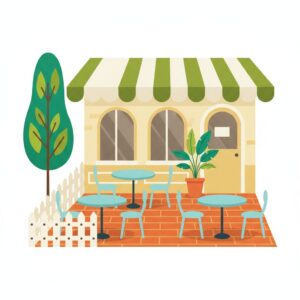
Entering a traditional kissaten feels like passing through a time portal. The lighting is usually dim, bathing the space in a warm, amber glow. Dark wood panels dominate the walls, with worn vinyl or velvet upholstering the booth seats, occasionally complemented by decorative stained glass. The air often carries a faint, sweet blend of old coffee, toasted bread, and in many traditional venues, the lingering scent of cigarette smoke—a relic of a bygone time, though this is changing with new regulations. These are not spots meant for quick Instagram snaps; they are places crafted for lingering.
The furniture is designed for comfort rather than style. Chairs tend to be plush, even if the fabric shows signs of wear. Tables are solid and functional, sometimes featuring a small, built-in tabletop arcade game from the 1980s, now silent and dark. The soundtrack of a kissaten is a gentle symphony of ambient noises: soft clinks of ceramic cups on saucers, the quiet rustle of newspaper pages turning, low murmurs of conversation among regulars, and the soothing hiss and gurgle of the coffee siphon behind the counter. This soundscape is meant to be calming, encouraging thought, conversation, or simple quiet reflection.
This contrasts sharply with cafe culture in cities like Tokyo, where designs are often minimalist and bright, featuring clean lines, light wood, and an emphasis on natural light. Music is carefully curated, furniture stylish, and the entire space optimized to present a specific visual brand identity. The aim there is frequently to create a beautiful yet transient environment. The Osaka kissaten, by contrast, stands as a testament to permanence—worn in by decades of daily use, a place that prizes the patina of age over shiny novelty. It physically embodies the city’s preference for substance over style.
The “Master” and “Mama”: The Guardians of the Community
At the core of every authentic kissaten are the “Master” (masutā) or “Mama” (mama), the owner-operators who embody the soul of the establishment. They are not merely baristas or managers; they serve as community pillars, confidants, and the orchestrators of daily rituals. Often a husband-and-wife team, they have likely run the shop for decades, making their presence as vital to the experience as the coffee itself.
Typically found behind the counter, the Master is a figure of quiet focus as he carefully brews coffee, often using a siphon or pour-over method. His movements are practiced, efficient, and unadorned. Though not overly talkative, he remains observant—knowing regulars by name, recalling their usual orders without prompt, and noticing when someone has been absent for a few days. His greeting, a simple “Maido” (a traditional Osaka merchant’s phrase meaning ‘thanks for your continued patronage’), is a small but meaningful acknowledgment of belonging.
The Mama often manages the front of the house, taking orders, serving food, and engaging in friendly banter with customers. She acts as the social lubricant of the space, remembering details about a customer’s family, health, or recent travels. Conversations are often peppered with the directness and humor characteristic of Kansai-ben, the local dialect. Customers might be gently teased about their necktie choice or their team’s latest baseball loss—not as rudeness but as a sign of intimacy, welcoming them as part of the kissaten’s extended family.
This dynamic creates an environment fundamentally different from the transactional nature of chain coffee shops. Starbucks staff are trained for efficiency and uniform politeness, while the Master and Mama are simply themselves. Their personalities define the shop’s character. They are not just service providers; they are hosts in their domain, with regulars as long-term guests.
The Unspoken Social Codes
Over time, a complex set of unspoken rules develops within the kissaten’s walls. Newcomers might initially feel intimidated, but these codes are easy to understand once you appreciate their purpose: preserving the space’s quiet harmony. Regulars often have unofficially designated seats—the corner booth, the stool at the counter. A wise first-timer will watch the flow before selecting a spot. There is an unwritten rule about noise levels; conversations remain at a respectful volume, allowing others to read or think peacefully. Most importantly, there is no pressure to leave. The Morning Service is not a loss leader meant to move customers in and out swiftly. Instead, it is an invitation. Once you order your coffee, the table is yours for as long as you need it. This gift of time and space, free from the expectation of further consumption, is perhaps the most valuable ‘service’ offered.
The Morning Assembly: A Cross-Section of Osaka Society
The people who gather daily for the Morning Service are far from being a random mix of individuals. They represent the neighborhood itself, forming a vibrant mosaic of the city’s social fabric. Watching the variety of people who fill these kissaten from 7 AM to 11 AM offers an anthropological glimpse into the authentic Osaka, well removed from typical tourist spots.
The Elderly Vanguard: Devoted Keepers of the Ritual
The most visible and steady group is the elderly. For many retirees, the daily visit to their nearby kissaten is as essential as breathing. They gather in small clusters, occupying the same booths every morning. These gatherings are more than casual meetups; they are crucial social lifelines and the neighborhood’s informal information network.
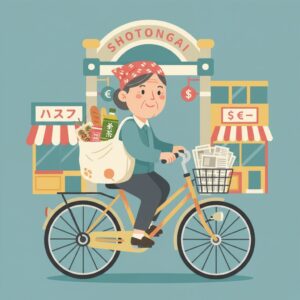
Listening to their conversations (or attempting to, through the dense Kansai-ben dialect) reveals the nuances of local life. They chat about mutual friends’ health, a neighbor’s daughter’s recent wedding, the rising cost of vegetables at the local shotengai (shopping arcade), and, with fervent enthusiasm, the performance of the Hanshin Tigers baseball team. The kissaten serves as their ‘third place’—a concept introduced by sociologist Ray Oldenburg to describe spaces outside home and work where informal public life unfolds. In a time when social isolation among the elderly is an increasing concern throughout Japan, these kissaten provide a vital community service. They are spaces for connection, reasons to leave the house, and shields against loneliness. The Morning Service offers an affordable entry into this daily social circle.
The Salaryman’s Pit Stop: Recharging Before the Workday
Another familiar figure in this morning scene is the salaryman. He is often seen sitting alone at the counter, a physical newspaper spread before him. For him, the kissaten is a brief moment of calm and preparation before the day’s demands. It is a transitional space between the commute and the office.
His goal is twofold: efficiency and value. Here, he can enjoy a hot coffee and a hearty breakfast for less than the cost of two onigiri and a canned coffee from a convenience store. This practical choice aligns perfectly with the Osaka mindset of maximizing value. Yet it’s much more than a cheap meal. It is a ritual—a twenty-minute pause to sit, collect one’s thoughts, and consume something thoughtfully prepared by another in a peaceful setting. This sharply contrasts with the typical Tokyo salaryman image, who more often grabs something from a conbini to eat hastily at his desk while his computer boots up. The Osaka version, even in solitude, maintains a sense of intention. It is a small act of self-care and civility before facing the pressures of corporate life.
The Local Business Owner’s Informal Office
Look closely, and you’ll also spot small clusters of men in work jackets or local shop owners engaged in quiet but serious conversations. For the many small and medium-sized enterprise (SME) owners who form the backbone of Osaka’s economy, the kissaten acts as an extension of their office. It is neutral ground for meetings, a networking hub, and a place to share information.
Deals are made, and partnerships forged over these 500-yen breakfasts. The atmosphere is more relaxed than in a formal meeting room, encouraging the kind of personal relationship-building that is vital to doing business in Osaka. Business here often depends less on corporate hierarchy and more on personal trust. The shared ritual of the Morning Service helps cultivate that trust. It signals, “We are part of the same community, we share the same values.” Conversations often flow naturally from business topics to local gossip and back, blending professional and personal matters in a way that epitomizes Osaka’s business culture.
A Tale of Two Breakfasts: How the Morning Ritual Defines the Osaka-Tokyo Divide
Beginning the day with breakfast offers one of the clearest windows into the deep-rooted cultural contrasts between Osaka and Tokyo. It’s not only about what people eat, but also how, where, and why they consume it. The difference between Osaka’s Morning Service and Tokyo’s typical breakfast scene exemplifies the cities’ diverging philosophies on value, community, and daily life.
Value vs. Aesthetics: The Fundamental Philosophical Divide
At its core, Osaka’s Morning Service celebrates cospa—cost performance. The central concern is quantitative: how much nourishment and satisfaction can one get for a single coin? The value is concrete, measurable, and unapologetically practical. It’s about a full stomach, a caffeine boost, and money saved. The presentation is neat and utilitarian, seldom artistic. The objective is to offer overwhelming, undeniable value.
In Tokyo, breakfast and cafe culture often operate on a different dimension of value. The focus frequently lies on aesthetics, brand experience, and specialization. A cafe in Omotesando or Daikanyama may charge 800 yen for a single-origin pour-over coffee and another 1,000 yen for avocado toast made with artisanal bread. Here, the value is intangible. It rests in the quality of the beans, the barista’s skill, the minimalist interior design, the photogenic appeal of the food, and the social status that comes from frequenting a trendy location. You’re paying as much for an experience and aesthetic as for the food and drink themselves.
This creates a compelling contrast. An Osakan might scoff at Tokyo’s avocado toast, saying, “I can get an entire meal for the price of that coffee!” Conversely, a Tokyoite might view the simple kissaten platter as lacking refinement or uniqueness. Neither viewpoint is inherently right or wrong, but their priorities are vastly different. Osaka values pragmatic abundance; Tokyo prioritizes curated experience. The Morning Service embodies the belief that the best things in life are not only free but also given freely as a sign of goodwill.
Community vs. Anonymity: A Social Framework
This philosophical distinction extends into the social roles of these spaces. The Osaka kissaten, sustained by the economic generosity of the Morning Service, functions primarily as a community hub. It is a place for ‘being known.’ The Master remembers your order. The Mama inquires about your family. Regulars exchange nods of recognition. It serves as a stage for daily, low-stakes social interaction. This explains the common saying that “Osaka people are friendly.” Their friendliness doesn’t exist in a vacuum; it is fostered and expressed within social structures like the kissaten, which encourage interaction and mutual acknowledgment.
By contrast, Tokyo’s cafes—especially the stylish ones and large chains—often serve the opposite purpose. They offer havens of productive anonymity. Perfect for digital nomads, students, writers, or anyone seeking to be ‘alone together,’ you can sit for hours with your laptop and headphones undisturbed. Interaction with staff is brief, polite, and transactional. This style of urban comfort offers the freedom of being an invisible presence in a busy city, catering to a lifestyle that is more transient, individualized, and less tied to a particular neighborhood.
So, while an Osaka kissaten focuses on strengthening community ties, a Tokyo cafe often provides a temporary escape from them. The affordability of the Morning Service is the economic foundation that makes the Osaka model work, eliminating financial barriers to daily social gatherings.
The Sound of the Morning: Kansai-ben in its Natural Setting
The linguistic atmosphere also underscores the difference. In a kissaten, you are surrounded by the lively, straightforward rhythms of Kansai-ben. You’ll hear the familiar “Maido!” from the staff and the classic merchant’s question, “Mokarimakka?” (Making any money?), typically answered with a neutral “Bochi bochi denna” (So-so, getting by). The language is rich with playful teasing, direct inquiries, and a general absence of the formal politeness (tatemae) common in Tokyo. This style aims to close social distance rather than maintain it, reflecting a culture that values frankness and warmth over formality.
Your First Morning Service: A Practical Guide for the Uninitiated
For any non-Japanese resident eager to genuinely experience the local culture of Osaka, taking part in the Morning Service ritual is essential. Stepping into a place that feels almost like a private club can be a little intimidating, but the experience is deeply rewarding. Here’s a guide for your first visit.
Finding the Right Spot: Look for the Weathered Signs
First, skip the major coffee chains. Although some offer their version of a morning set, they lack the true spirit of the tradition. You want to find an independent, owner-run shop, a kojinten kissaten. Watch for the telltale clues: a name often including the word “Coffee” or simply the owner’s surname; a faded, sun-worn plastic food model display case out front showcasing the Morning Service platter; and a handwritten menu on a blackboard or taped to a window. The more it looks like it hasn’t changed in decades, the more authentic the experience will likely be. These hidden gems are found tucked away on side streets, in covered shotengai, or on the ground floors of old residential buildings.
The Ordering Process: Keep It Simple
Once inside, don’t feel overwhelmed. The procedure is typically straightforward. Morning Service is usually offered from opening until around 10 or 11 AM. In most cases, you don’t even need to say “Morning Service.” Just order a drink—find the drink section on the menu and pick your choice. The classics are “Hotto Kōhī” (hot coffee) or “Aisu Kōhī” (iced coffee, often served with syrup and cream unless you specify “burakku” or “muto” for unsweetened). After ordering your drink, the food part of the Morning Service will come automatically. If there are multiple Morning Service options (such as a toast set or an onigiri set), the server will ask which you prefer. If your Japanese is limited, simply pointing at the menu or the food model works perfectly. The owners are accustomed to new customers and are usually very accommodating.
The Etiquette of Lingering: Enjoy the Moment
This is the most important, and perhaps the hardest, rule for people used to a fast-paced city lifestyle: relax. There’s no hurry. Morning Service is not fast food. Once your coffee and food arrive, the time is yours. Read a book, catch up on emails, or simply watch the neighborhood life around you. No one will bring the check or give you impatient glances to prompt you to leave. In fact, rushing out would be unusual. The unspoken understanding is that your 500 yen covers not only food and drink but a small lease on that cozy space for a reasonable amount of time. When you’re ready to leave, you usually take the check if it was left on your table or simply stand and pay at the register by the entrance. It’s often cash only, so be prepared.
More Than Toast: What the Morning Ritual Reveals About Osaka’s Soul
The Morning Service is a simple ritual, yet it carries deep cultural significance. It serves as a daily referendum on the city’s fundamental values. To participate in it is to experience Osaka on an instinctive level, far beyond what any travel guide could convey.
The Spirit of “Omake”: Embracing the Culture of the Extra
The entire idea of the Morning Service perfectly encapsulates Osaka’s culture of omake. Omake means ‘a little something extra,’ a free bonus given unexpectedly. You find it at the butcher in the shotengai when the owner adds a few extra slices of pork, or at a takoyaki stand when you receive an additional ball. It’s a gesture of goodwill that builds a human connection beyond mere transactions. It transforms customers into patrons, regulars. The Morning Service is the ultimate expression of omake. It says, “Thank you for your business. Here is a meal as a token of our appreciation.” This principle, deeply rooted in the city’s merchant DNA, fosters a strong sense of mutual loyalty between businesses and their communities.
Pragmatism Personified: A Symphony of Efficiency
The ritual also exemplifies Osakan pragmatism. It’s an incredibly efficient way of living. It combines breakfast, a caffeine boost, social interaction, and a third space all in one affordable package. It addresses several daily needs simultaneously. Why bother cooking breakfast at home, then going out for coffee, and then searching for a place to meet friends, when you can do it all at once for 500 yen? This straightforward, results-driven logic is quintessentially Osakan. It’s not about luxury or pretension; it’s about what works, what’s practical, and what offers the best value for both time and money.
A Resilient Tradition in a Changing World
Naturally, this beloved tradition faces challenges. The original Masters and Mamas are growing older, and few among the younger generation are willing to take on the demanding work. The steady expansion of global coffee chains and convenience stores provides a different sort of convenience that appeals to younger people. Each year, some cherished kissaten close their doors, taking with them a piece of the city’s living history.
Yet the kissaten tradition is proving resilient. A new generation of Osakans and visitors is discovering the nostalgic charm and calm comfort these places offer. Young entrepreneurs are even opening new kissaten that honor old customs while adapting to contemporary tastes. The essential appeal of the Morning Service—its exceptional value and its role as a community anchor—remains as strong as ever.
In the end, the Morning Service is more than just an inexpensive breakfast. It’s a quiet resistance to the impersonal, transactional nature of modern city life. It is a daily reminder that true value can be found in generosity, that community is built around shared tables, and that the finest ‘service’ a business can offer is a sense of belonging. To sit in an Osaka kissaten, with morning sunlight streaming through the window, a warm cup of coffee in hand, and a plate of ‘free’ toast before you, is to witness the city’s heart beating to a pragmatic, generous, and delicious rhythm.