We talk a lot about the “third space.” That magical place between the crushing obligations of home and the structured demands of the office. Tech evangelists in Silicon Valley sold us this idea packaged in reclaimed wood, exposed brick, and a monthly subscription fee. They called it co-working. They promised community, collaboration, and kombucha on tap. And for a while, we bought it. We bought the keycards, the designated hot desks, and the illusion of a new, flexible way to work. But here in Osaka, a city that has always moved to its own beat, a wry smile plays on the lips of the old-timers. They’ve had their third space for generations. It just smells less like venture capital and more like dark-roast coffee and stale cigarette smoke. This is the world of the kissaten, the traditional Japanese coffee shop, and it’s the original, unofficial, and arguably superior co-working space of Japan. Forget your minimalist aesthetic and forced networking events. The kissaten is Osaka’s answer to the modern workday: a space built on a foundation of pragmatism, unspoken rules, and the simple, beautiful transaction of buying time and solitude, one cup of coffee at a time. It’s a cultural institution that tells you more about this city’s soul than any castle or neon-lit street ever could. It’s where business gets done, where ideas are born, and where you can tap into the relentless, commercial heartbeat of a city that has always known the value of a good deal and a comfortable chair. This isn’t about finding a cute café for your Instagram feed. This is about understanding a cornerstone of daily life, a workspace woven into the very fabric of Osaka’s merchant identity.
Just as the kissaten offers a unique window into Osaka’s soul, understanding the city’s daily rhythms can also be found in its communal neighborhood sento.
More Than Just Coffee: The Kissaten’s Role in Osaka Society

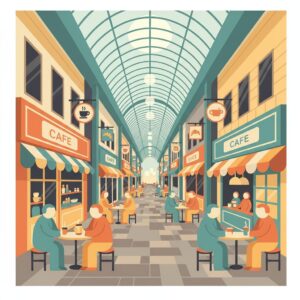
To those unfamiliar, a kissaten might appear as little more than an old-fashioned coffee shop. The chairs are often covered in worn burgundy or forest green velvet. The lighting remains consistently dim, casting a warm, amber glow through ornate, slightly dusty lampshades. The air is thick with echoes of countless conversations and the rich, almost syrupy scent of siphon-brewed coffee. Yet, to dismiss this as mere nostalgia is to miss its true purpose. In Osaka, the kissaten functions as a utility. It’s a practical tool, serving a much broader purpose than simple refreshment. At its heart, it is a semi-public, semi-private space you rent for a modest fee—a place that perfectly embodies the city’s practical, no-nonsense spirit.
The Unspoken Agreement: Your “Seat Fee” is a Cup of Coffee
In a sleek, modern Tokyo café, there is often a tangible sense of urgency. The design is minimalist, the stools are hard, and the atmosphere subtly urges you to finish your espresso and leave. Lingering feels like an imposition. In Osaka’s kissaten, the atmosphere is quite the opposite. The guiding principle is ichi-in ippai—one order per person. This isn’t a restrictive rule; it’s the foundation of a beautifully simple transaction. A cup of coffee, costing anywhere from 500 to 800 yen, isn’t just payment for the drink itself. It covers the space your body occupies. You’re paying for the table, the quiet ambiance, and the time you plan to spend there. The coffee is almost incidental; it’s the key that grants you access to your temporary workspace.
This idea is deeply embedded in Osaka’s merchant culture, a city that understands value. You give the owner business, and in return, they provide a refuge from the city’s hustle. There’s no awkwardness or fear of overstaying as long as this simple contract is honored. The masutaa, or shop master, understands this well. They aren’t just serving coffee; they’re managing a portfolio of small, temporary office rentals. Your laptop is not seen as a nuisance, but rather as proof their business model is working. You need a place to work, and they have one to offer. It’s a perfect, mutually beneficial relationship without the pretense found elsewhere. This straightforward, transactional hospitality is strikingly Osaka. It’s not cold, just clear—you know exactly where you stand, which can be deeply reassuring in a foreign country.
The “Morning Service” Phenomenon: An Osaka Economic Lesson
The Osaka spirit of otoku—getting exceptional value—is most evident in the custom of mōningu sābisu, or “morning service.” Enter nearly any kissaten before 11 a.m., order a cup of coffee, and you’ll likely receive a small feast along with it: a thick slice of toasted shokupan (milk bread) glazed with melted butter, a perfectly hard-boiled egg still warm, sometimes a small salad with sesame dressing or a little yogurt. All this comes at no extra charge beyond the coffee’s price. It feels like a gift, unbelievably generous. But it’s not charity; it’s smart business.
Common across Central Japan but perfected in places like Osaka and Nagoya, this practice is a masterstroke in attracting and retaining customers amid fierce coffee shop competition. For the kissaten owner, the cost of bread and an egg is minimal, but the value to the customer is immense. It turns a simple coffee break into a full breakfast, saving time and money. It creates a strong incentive to choose their shop over the competitor’s next door. Most importantly, it builds deep loyalty. You remember the place that gave you a free breakfast, you come back, and you bring others. This is more than friendliness; it’s a calculated, long-term investment in community and repeat patronage. It’s a way of saying, “I’m willing to take a small margin hit now so you’ll become a regular.” This is Osaka’s merchant mindset in action: a combination of apparent generosity and sharp pragmatism that values a customer’s lifetime worth over short-term gain. It contrasts sharply with global coffee chains’ à la carte approach, where every item is an upsell opportunity.
Navigating the Social Scape: You’re Not Alone, But You’re Left Alone
One of the greatest paradoxes of the kissaten is the sensation of being in a public space while enjoying near-complete privacy. The room may be filled with other patrons—elderly men reading horse racing forms, women engaged in quiet conversation, salespeople reviewing notes before client meetings—but an invisible barrier surrounds each table. You are part of a silent, collective effort, yet fundamentally left to your own devices. This delicate balance is what makes the kissaten such a powerful environment for focused work. It offers a low-level ambient stimulation that keeps you grounded without the distractions typical of a conventional office.
The Master as the Silent Guardian of Productivity
The entire atmosphere is curated and upheld by a single person: the masutaa. The master, often the owner, is the quiet conductor of this symphony of calm productivity. They move with an economy of motion perfected over decades, polishing glasses, refilling water, and operating the majestic siphon coffee makers that resemble laboratory equipment. Their role extends far beyond that of a barista. They are the guardians of the space’s unspoken rules.
The master’s presence imparts a subtle, calming authority. They rarely speak unless addressed, but their steady, quiet work sets the tone for the entire establishment. They ensure the music—usually soft jazz or classical—is played at the perfect volume. They know exactly when to bring you a glass of ice water, often before you even realize your last one is empty. They never rush you, but disruptive behavior is not tolerated. A phone call taken too loudly may earn a gentle yet firm glance. This isn’t the forced friendliness typical of chain café employees; it’s the quiet dignity of a craftsman tending to their workshop. Their service is the creation of an environment conducive to concentration. For the remote worker, the master is an unwitting, unpaid community manager, ensuring the unwritten social contract is respected, allowing you to immerse yourself in your work with the assurance that the space is being safeguarded.
The Soundscape of Focus: From Jazz Records to Salaryman Negotiations
The soundtrack of a kissaten is a unique kind of white noise that cannot be replicated. It’s a low, steady murmur that envelops the room. You’ll hear the gentle clink of ceramic against saucer, the rustle of newspaper pages turning, the soft hiss of the coffee siphon. In the background, a well-worn jazz record might be playing, the vinyl’s crackle adding yet another layer to the auditory texture. Occasionally, this ambient hum is punctuated by the low tones of a business negotiation at a nearby table. You may not understand the words, but you sense the rhythm of commerce, the subtle back-and-forth of a deal being made.
For many, this soundscape is far more conducive to focus than the dead silence of a library or the distracting chatter of a modern café. The quiet of a library can feel oppressive, making every keystroke sound like a gunshot. The lively pop music and loud conversations at a Starbucks can be jarring. The kissaten strikes a perfect middle ground. The sounds are human and organic, reminding you that you are part of a living city, yet they remain muted and respectful. It’s the sound of work, leisure, and life unfolding at a civilized pace. This productive hum allows your own thoughts to come forward. You are alone with your work, but not isolated. This environment fosters a unique meditative focus, where the gentle activity around you sharpens your concentration rather than disrupting it.
The Unwritten Rules of Kissaten Remote Work
While the kissaten can serve as the ideal remote office, it is not a space free of rules. These guidelines are seldom posted on the walls; instead, they are conveyed through subtle signals and a shared understanding. Mastering this etiquette is essential to successfully integrating into this environment and enjoying its benefits. It requires becoming an observer, learning to read the atmosphere, and grasping the silent agreements that govern the space. This skill is valuable throughout Japan, but especially important in traditional, owner-operated establishments where personal relationships and respect are paramount.
Reading the Room: Is This a “Laptop-Friendly” Spot?
Not all kissaten are equally welcoming to laptops. Some are small, smoky dens where older gentlemen quickly drink coffee and smoke while reading the paper. Others, particularly those near business districts or universities, have quietly evolved into hubs for remote workers and students. The key is to recognize the signs. Before entering, glance through the window. Do you see others using laptops? Are the tables large enough to accommodate a computer without crowding? Once inside, take a moment to observe the mood. Is it a high-turnover place with customers coming and going quickly, or are patrons settled in for longer periods? Does the owner greet you warmly or with caution?
Some establishments, aiming to preserve a traditional, conversation-focused atmosphere, display small, polite signs asking patrons not to use laptops. Respect this. Attempting to work there regardless is a major social misstep. The goal is to find a place where your presence as a worker fits the existing culture of the shop. This selection process itself is an education in the nuances of Osaka’s social fabric. You learn to distinguish between a community living room and a public office—two roles the kissaten can play, but rarely simultaneously in the same place. Finding your perfect kissaten office feels like being let in on a local secret.
The Etiquette of Lingering: How Long is Too Long?
Having paid your entry with a cup of coffee, how long does that allow you to stay? The answer is flexible, but the guiding principle is fairness. One 500-yen coffee doesn’t entitle you to an eight-hour workday. The unspoken rule is to renew your “rent” every two to three hours. This doesn’t mean you have to keep downing caffeine. Your second order might be a slice of cake, a glass of juice, or one of the surprisingly delicious comfort foods many kissaten serve, like a toasted sandwich or a plate of Napolitan spaghetti.
Placing a second order is a powerful social signal. It shows the owner, “I appreciate the value of this space and wish to continue our mutually beneficial arrangement.” It’s a gesture of respect for their business. In a city like Osaka, built on commerce and fair trade, this act is understood and valued. It’s not about avoiding a request to leave; it’s about proactively demonstrating your understanding of the unwritten agreement. By doing so, you move from being a potential nuisance to a welcomed, reliable customer. The owner will remember you, and your regular presence will be valued. This is how relationships form, and how you earn your place within the kissaten ecosystem. It’s a small price for a comfortable, productive, and character-rich workspace.
Power Outlets and Wi-Fi: The Holy Grail
Here, honesty is essential. Despite their charm and conducive atmosphere, many kissaten, especially older, traditional ones, are technological deserts. The two essentials for modern remote workers—reliable Wi-Fi and accessible power outlets—are often scarce. Don’t expect a Showa-era shop to have power strips at every table. More often than not, outlets are inaccessible or nonexistent. Wi-Fi may be present but slow and unsecured, or entirely absent.
This is the trade-off. You sacrifice the guaranteed connectivity of a Starbucks or co-working space for something less tangible: ambiance, character, and a connection to local culture. For the seasoned kissaten worker, this isn’t a dealbreaker; it’s a logistical challenge to be managed. You learn to arrive with a fully charged laptop, invest in a powerful portable battery, and rely on your phone’s hotspot for internet. This enforced self-reliance can be a hidden benefit. Without the lure of endless high-speed internet, you may find yourself less distracted and more focused. It encourages a more intentional and disciplined work style. The lack of amenities acts as a filter, weeding out those who require an optimized modern workspace and leaving space for those who value soul over speed, and character over convenience. This is everyday life: making small compromises, finding clever solutions, and appreciating what you have rather than lamenting what you do not.
The Soul of the Merchant City: Why Kissaten Culture is Pure Osaka
The lasting popularity of the kissaten as a de facto workspace in Osaka is no coincidence. It directly reflects the city’s distinctive cultural DNA. To grasp why this model flourishes here, you need to understand the foundational principles of Osaka itself: a city shaped by merchants, fueled by pragmatism, and deeply rooted in shōbai, the art and spirit of business.
Pragmatism Over Polish: Function Comes First
Step into a high-end café in Tokyo’s Omotesando, and you enter a temple of design. Every surface is curated, every item placed with aesthetic precision. The experience often centers more on visuals and brand than on comfort or practicality. Osaka, by contrast, operates on a different axis. The typical kissaten embodies function over form. Its decor might be dated, a charmingly worn relic from the 1970s or 80s. Furniture is chosen not for minimalist style, but for comfort. Chairs are deep and soft, meant for sinking into, not perching on. Tables are solid and wide, built to hold not only a coffee cup but also an ashtray, a newspaper, and the elbows of two people hashing out a business deal.
This is Osaka’s hallmark pragmatism in action. A space doesn’t need to be trendy; it must be useful. It needn’t be photogenic; it must be comfortable. The value of the kissaten lies not in its appearance, but in what it enables you to do. This emphasis on substance over style sets Osaka apart from Tokyo. Tokyo often focuses on presentation and maintaining an image. Osaka prioritizes getting the job done, making sales, and finding a good deal. The kissaten perfectly embodies this mindset: an unpretentious, highly functional tool for life and work.
A Center for Shōbai: The Business of Everyday Life
The word shōbai means business, but in Osaka it carries a deeper, more holistic connotation. It is the lifeblood of the city, the rhythm of daily interaction. For generations, the kissaten has served as the unofficial headquarters of shōbai. It is neutral ground, a third space where people from various companies and backgrounds meet on equal terms. Salespeople between appointments use them as mobile bases, catching up on paperwork and planning their next moves. Small business owners meet clients here, preferring the informal, relaxed setting to a stuffy office. Freelancers and consultants of all types use them as their primary workspace.
When you sit with your laptop in an Osaka kissaten, you are not an outlier. You are simply the latest in a long line of people who have employed this space for commercial purposes. You are tapping into a century-old tradition. The low murmur of conversation around you isn’t idle chatter; it’s the sound of the city’s economic engine running. Deals are being made, relationships forged, and information exchanged. The modern remote worker, equipped with global connectivity and digital tools, is merely a new player in this age-old game. That’s why it feels so natural. You’re not repurposing a space for work; you are using it exactly as it was always meant to be used.
The Opposite of Kikubari: A Different Kind of Consideration
Throughout much of Japan, especially Tokyo, social interactions are guided by kikubari, a form of anticipatory empathy. It’s the art of sensing others’ needs and responding without being asked. It’s a beautiful, sophisticated social grace, but for foreigners, it can also cause anxiety. There’s a constant worry about misreading subtle cues, about being an imposition, or about whether you should have left ten minutes ago. Osaka operates on a more direct, less ambiguous principle. Consideration here is less about subtle empathy and more about clear, transactional fairness. The social contract of the kissaten exemplifies this perfectly.
The deal is simple and transparent: you pay for your seat by ordering. As long as you don’t disturb others and continue to “pay your rent” at reasonable intervals, you are welcome. There’s no need to agonize over overstaying your welcome. The rules are clear. The owner won’t drop subtle hints; they will run their business and trust that you’ll uphold your end of the bargain. This straightforwardness can be incredibly liberating. It replaces social anxiety with a plain commercial relationship. This is the honesty of a merchant city. It may lack the delicate polish of Kyoto or the refined subtlety of Tokyo, but it offers refreshing clarity. You always know the deal—and in the world of remote work, knowing the deal is half the battle.
Your New Corner Office Might Smell Like Toast and Nostalgia
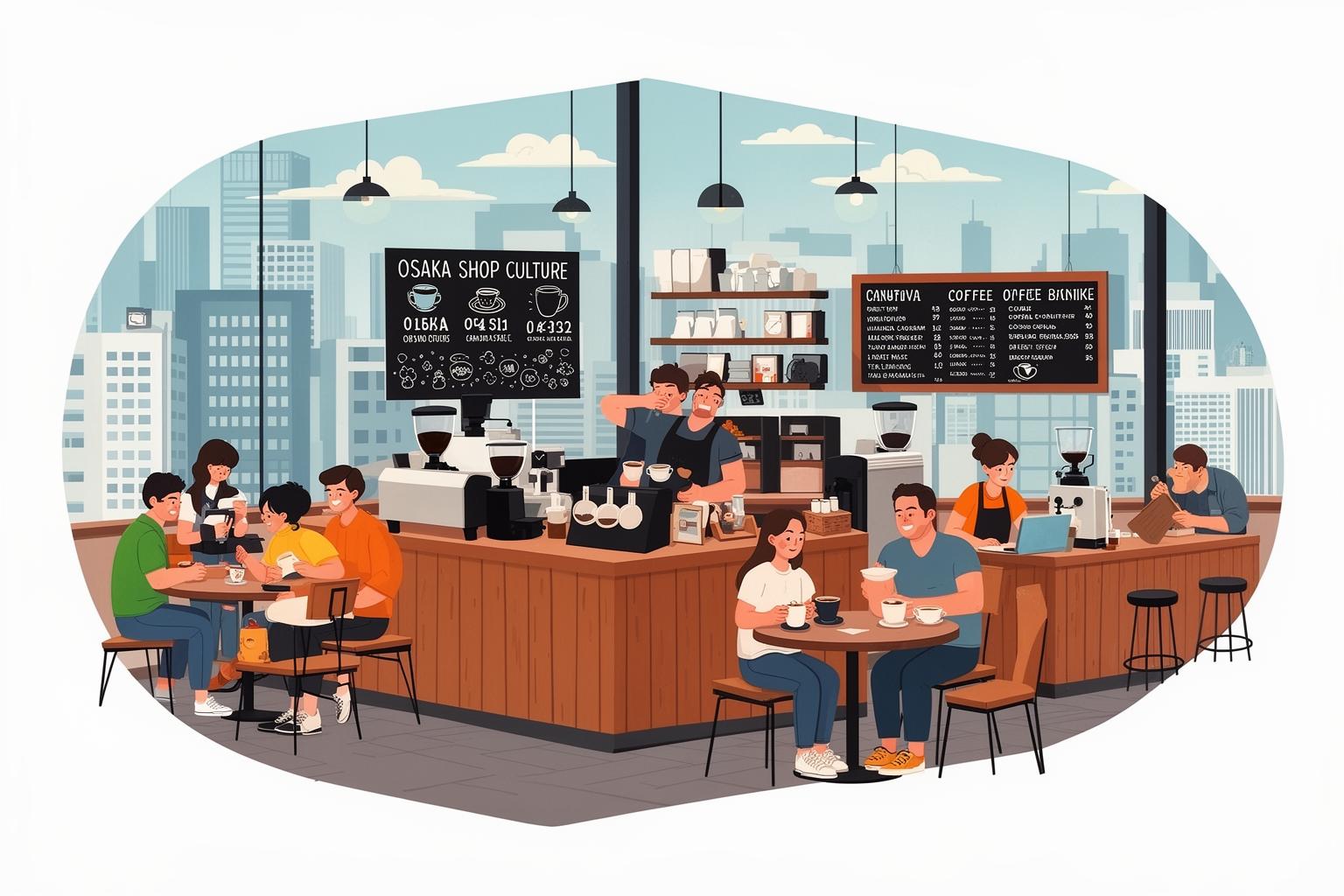
In the global race to shape the future of work, we are flooded with solutions promising hyper-efficiency, seamless connectivity, and curated communities. We are presented with minimalist pods, algorithmically optimized hot desks, and a vision of work that is sterile, clean, and stripped of its messy, human aspects. Yet, Osaka offers a compelling alternative. It suggests that the ideal workspace might not be a futuristic innovation, but rather a cherished relic—a place with worn velvet seats, the faint scent of tobacco, and a quiet master who knows your coffee order by heart.
The kissaten is more than just a workspace. It is an immersion into the very soul of Osaka—a living museum of the Showa era, a tribute to the city’s merchant spirit, and a lesson in pragmatism. Choosing a kissaten as your office means making a conscious decision to exchange guaranteed amenities for something far more valuable: a sense of place. You are not merely logging on; you are tuning into the rhythm of a neighborhood, taking part in a century-old tradition of commerce and conversation. You are finding your own quiet corner in a city that has long understood that the best business is done face-to-face, even if one of those faces is lit by the glow of a laptop screen. Forget the kombucha on tap. Your new corner office awaits—and it comes with free toast.