Walk through Tokyo, and you’ll see takoyaki. You’ll spot it at summer festivals, a novelty snack served in a little paper boat, something you eat once or twice a year. It’s a treat, a special occasion food. Then you come to Osaka, and you see it everywhere. Not just in the neon-drenched tourist hub of Dotonbori, but tucked under railway bridges, on quiet residential street corners, inside the bustling shotengai shopping arcades. Here, the little flour-and-octopus balls aren’t a novelty. They’re infrastructure. They’re the city’s ambient fuel source, a constant, comforting presence. This raises a fundamental question for anyone trying to decode this city: How can a place be so fiercely proud of something so incredibly cheap? The answer isn’t just about food. It’s about an entire philosophy of life, a pragmatic, no-nonsense approach to living that makes Osaka one of the most affordable and unique major cities in Japan. Forget the castles and the skyscrapers for a moment. To truly understand Osaka, you need to understand its relationship with ‘konamon’—the humble, flour-based foods that power its people. This isn’t a food tour; it’s a guide to the economic soul of a city that has always marched to the beat of its own drum, a rhythm set by the clatter of spatulas on a hot griddle.
Osaka’s knack for transforming everyday spaces into multifunctional community hubs even extends to work life, as exemplified by the city’s growing nomad working culture, where cafés double as practical venues for creativity and connection.
The Konamon Trinity: Takoyaki, Okonomiyaki, and the Art of Cheap Eats
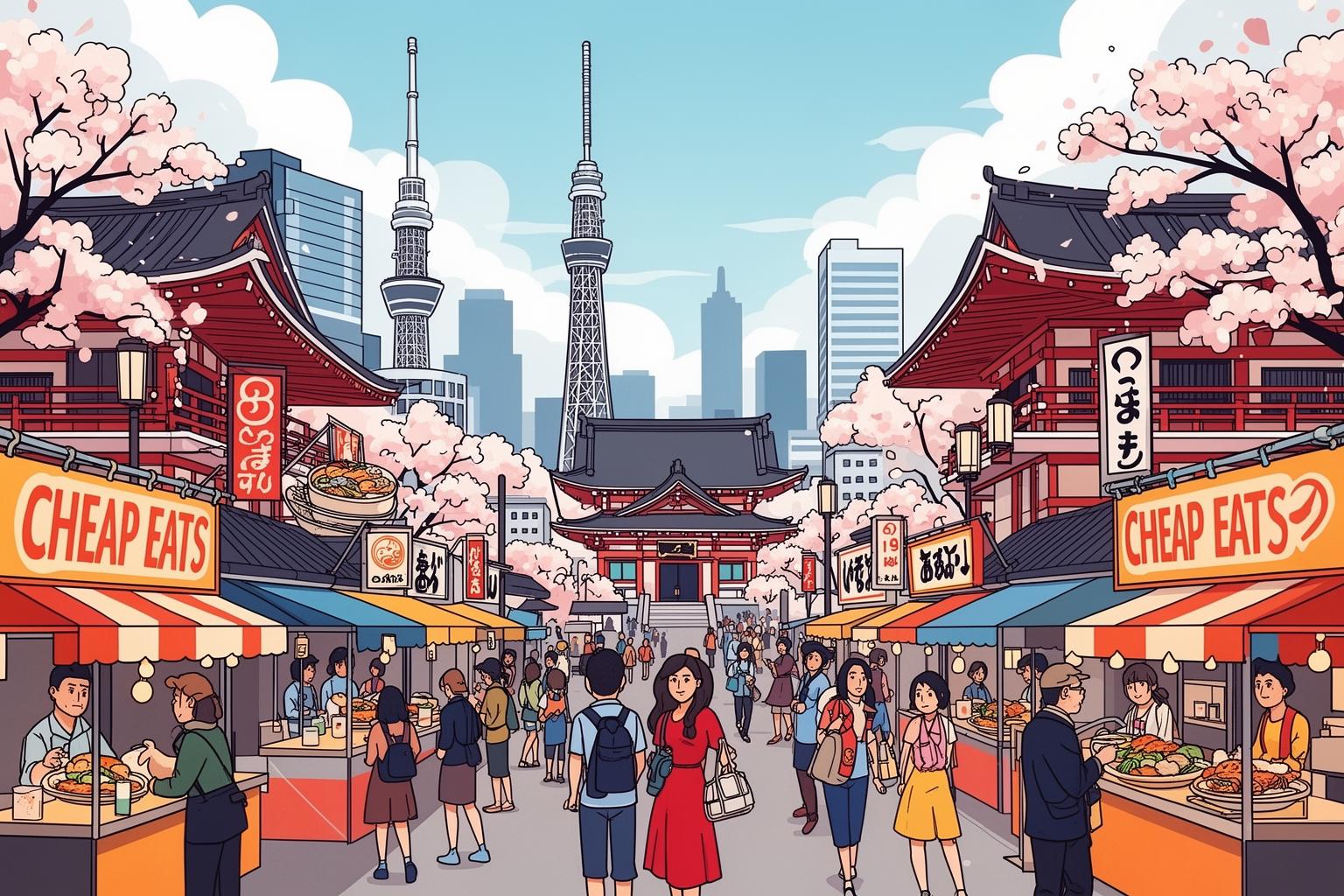
In Osaka, the daily diet’s foundation is not composed of elegantly presented kaiseki or delicately made sushi. Instead, it rests on a simple yet powerful base: flour and water. This is the realm of konamon, anchored by its three pillars—takoyaki, okonomiyaki, and udon—which hold the key to understanding the city’s character. These dishes stem not from imperial cuisine, but from merchant stalls and working-class homes. They are affordable, hearty, and endlessly adaptable, embodying the essential values of life in Osaka.
More Than Just Octopus Balls
To visitors, takoyaki appears as a simple snack: eight fried batter balls housing a piece of octopus, topped with sweet brown sauce, mayonnaise, and flakes of bonito fluttering in the heat. To Osakans, it represents a universe of possibilities. It’s a perfectly acceptable lunch when time is tight. It’s the essential fourth meal after a night of drinking, soaking up alcohol before catching the last train. It’s the highlight of a ‘takopa,’ a takoyaki party, where friends gather around a hot plate at home, experimenting with fillings such as cheese, kimchi, or sausage. Its affordability is key to its daily role—you can get a filling tray packed with calories for just a few hundred yen. Cheaper than a convenience store bento, and infinitely more soulful. Watching a vendor in action is a mesmerizing display of efficiency: two sharp metal picks flying across the pockmarked griddle, flipping dozens of balls with a wrist flick—a rhythmic, percussive dance of batter and steel. This is not delicate craftsmanship; it’s high-speed production focused on delivering hot, tasty food quickly and affordably. That efficiency is quintessentially Osaka.
Okonomiyaki: The “Whatever You Like” Philosophy
If takoyaki is the city’s favored snack, okonomiyaki is its soul food. The name itself declares the Osaka mindset: ‘okonomi’ means ‘what you like,’ and ‘yaki’ means ‘grilled.’ This savory pancake is a chaotic blend of flour, egg, shredded cabbage, and dashi, combined with additions like pork, squid, shrimp, or whatever is available. Many restaurants feature teppan grills built into the tables, where diners cook it themselves. This is a striking contrast to the chef-focused culinary traditions found elsewhere in Japan. There is no quiet reverence here; it’s loud, interactive, and messy. You receive a bowl of raw ingredients, spread it on the grill, and shape it with giant metal spatulas. The dish is fundamentally democratic—there’s no right or wrong way, only your way. This philosophy perfectly embodies the city’s character. Osaka values practicality and improvisation over rigid rules and formalities. Okonomiyaki is the edible expression of this spirit: a delicious, satisfying meal crafted from simple, inexpensive ingredients, infused with creative rebellion right in the batter.
Udon, the Unsung Hero
While Tokyo celebrates the delicate, refined flavors of soba, Osaka proudly champions udon. The udon noodles here tend to be softer, with a gentler chew, served in a broth of exquisite subtlety. Osaka’s dashi broth is lighter in color than that of Kanto, drawing deep umami from kombu seaweed and light fish flakes. It’s a warm, comforting embrace in a bowl. The quintessential Osaka udon dish, ‘Kitsune Udon,’ was invented locally. It features a simple bowl of udon topped with a large piece of aburaage (deep-fried tofu) simmered in a sweet and savory broth. That’s all. Deceptively simple yet deeply satisfying. Standing-only udon shops near every major train station allow workers to slurp a bowl in under five minutes for just a few hundred yen. Like its konamon relatives, udon offers maximum comfort and nourishment at minimal cost. It’s the people’s fast food, a tribute to a culture that believes a good meal needn’t be complicated or costly.
“Mokkari-makka?”: The Merchant’s Mindset and Cost Performance
To grasp why konamon culture holds such a pivotal place in Osaka, one must first understand the city’s history as Japan’s commercial center, often called the ‘tenka no daidokoro’ or ‘the nation’s kitchen.’ For centuries, goods from across the country passed through Osaka, shaping it into a city of merchants, traders, and artisans whose survival depended on their financial savvy. This background shaped a distinct local character, known for being straightforward, pragmatic, and driven by a single guiding principle: value for money.
The Doctrine of “Cost Performance”
In Japan, the term ‘cost performance,’ or ‘kosupa’ for short, is frequently used. While in most places it’s just one of many considerations, in Osaka it serves as a near-religious tenet. ‘Kosupa’ isn’t about cheapness—stinginess is frowned upon—but rather about securing the absolute best quality, quantity, or experience for what you pay. An Osakan might proudly share how they found an incredible lunch set for 700 yen, which included a main dish, rice, soup, pickles, and a small side. They’ll even travel to another neighborhood to buy from a butcher renowned for quality meat at fair prices. This mindset permeates everyday life. It’s a continuous, often subconscious calculation: Am I getting good value? Outsiders might mistake this for materialism or stinginess, but that’s a misunderstanding. For Osakans, securing good value is a point of pride—a demonstration of intelligence and resourcefulness. It’s not that you’ve been cheated; it means you’ve won the daily commerce game.
Why Tokyo Sees Osaka as “Cheap”
The ‘kosupa’ obsession highlights one of the clearest contrasts with Tokyo. The capital city follows a different value system, where branding, presentation, and status carry more weight. You might pay 1,500 yen for a small, elegantly plated pasta dish in a trendy Tokyo area because you’re paying for the ambiance, minimalist design, and fashionable vibe. An Osakan would view that as a poor value. Where’s the volume? Where’s the benefit? In Osaka, the emphasis is on the product itself. The restaurant might be a bit shabby, the service brisk and efficient rather than politely refined, but the food will be flavorful and the portions generous. A classic example is the ‘morning set’ at a local ‘kissaten’ (coffee shop). While a Tokyo café might charge a premium for a single-origin pour-over, an old-school Osaka kissaten serves a hearty coffee, thick toast, a hard-boiled egg, and sometimes a small salad, all for the price of the coffee alone. It’s not about aesthetic perfection; it’s about providing a hearty, worthwhile start to the day.
The Language of Value: “Nanbo?”
Osaka’s direct, transactional nature is embedded in its dialect, Osaka-ben. A common greeting among acquaintances might be ‘Mokkari-makka?’, meaning ‘Are you making a profit?’ A typical question when examining goods is ‘Kore nanbo?’, or ‘How much is this?’ In Tokyo’s more formal setting, this straightforwardness about money can seem abrupt or even rude. But in Osaka, it’s business as usual—a starting point for negotiation and relationship-building. In the bustling shotengai arcades, a little friendly haggling isn’t just accepted; it’s expected. It’s a form of communication, a playful exchange where buyer and seller engage in a spirited battle of wits. This openness about money is central to the culture, with less pretense and fewer roundabout ways of speaking. Life is a series of transactions, and the goal is to ensure they’re fair and beneficial. For foreigners who find the subtle, unspoken rules of other Japanese regions challenging, Osaka’s straightforwardness can be refreshing. Here, you generally know exactly where you stand.
Building a Life on a Konamon Budget: Practical Realities

The city’s emphasis on value is not merely a cultural trait; it reflects a noticeably lower cost of living, especially when compared to Tokyo. The konamon food culture is the most prominent example of this, yet it is part of a broader system of affordability that makes living in Osaka very manageable for students, artists, and anyone not earning a corporate salary.
The Supermarket vs. the Shotengai
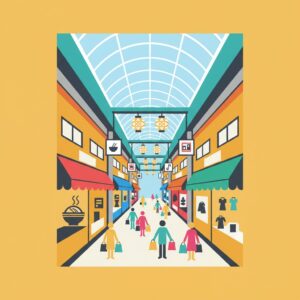
Although supermarkets exist in every Japanese city, Osaka’s true heartbeat lies in its ‘shotengai’—long, covered shopping arcades weaving through its neighborhoods. Arcades like Tenjinbashisuji, the longest in Japan, aren’t tourist spots; they serve as crucial economic hubs for local residents. Here, you’ll encounter a vast assortment of independent shops: butchers selling freshly ground meat, fishmongers showcasing the day’s catch, grocers piled high with seasonal vegetables, and small stalls offering homemade pickles and tofu. Prices tend to be notably lower than those at major supermarket chains, and the quality is excellent. Amid these vendors are, naturally, the konamon sellers. You can put together a complete, delicious meal for a fraction of the cost of a supermarket trip by picking up a few items from different stalls. Living near a lively shotengai fundamentally changes your approach to food and finances. It encourages daily shopping, building relationships with vendors, and engaging in a commerce system rooted in community rather than corporate logistics.
Rent, Transportation, and the Bottom Line
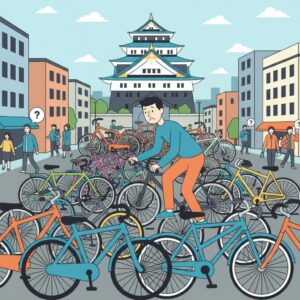
The savings go well beyond groceries. The most significant advantage for residents is housing costs. Rent in Osaka is, on average, substantially cheaper than in Tokyo. The amount spent on a small studio in a remote Tokyo suburb can afford you a larger one-bedroom in a convenient, central Osaka neighborhood. This difference is transformative: it reduces financial pressure and frees up disposable income for hobbies, travel, or savings. Transportation offers further savings. Although Osaka boasts a world-class subway and train system, its relatively flat and compact layout makes it ideal for cycling. Many locals rely on bicycles as their primary form of transport, saving thousands of yen monthly on train fares. When you combine affordable rent, the possibility of free transportation, and a food culture centered on incredibly affordable and tasty staples, daily expenses become much more manageable. It’s an integrated system where the philosophy of ‘kosupa’ is reflected in the city’s very infrastructure.
The Social Life of Cheap Eats
This culture of affordability also influences social life. In cities where going out often means high expenses, social activities can become limited or stressful. In Osaka, socializing tends to be spontaneous and inexpensive. “Let’s go grab some takoyaki” is a typical, casual invitation—an easy, low-cost way to catch up with friends that costs less than a cup of coffee. The previously mentioned ‘takopa’ is the quintessential Osaka house party: collaborative, entertaining, and extremely affordable. One person buys the batter mix, and everyone else brings fillings to share, turning a simple meal into a collective event. This low cost for social gatherings encourages more frequent and relaxed interactions. It’s less about showing status at pricey venues and more about simply enjoying each other’s company, fueled by good, affordable food. This makes it easier to build community and connect authentically, without the stress of financial expectations.
Beyond the Batter: What Konamon Teaches You About Osaka
To consider konamon merely as food is to completely overlook its significance. These simple, flour-based dishes serve as a window into the city’s history, economy, and collective character. They represent a daily affirmation of the values Osaka cherishes: practicality, community, and an unabashed appreciation for a good bargain.
A Culture of “Kuidaore” Without Breaking the Bank
Osaka’s most renowned slogan is ‘kuidaore,’ often translated as ‘eat ’til you drop.’ The common image linked to it is the bustling, flashy scene of Dotonbori, with its giant mechanical crabs and pufferfish lanterns. Tourists flock there, spending generously on well-known and often pricey meals. Yet, the true spirit of ‘kuidaore’ is found elsewhere. It resides in the residential areas, the shotengai, and the standing-only counters near train stations. Genuine ‘kuidaore’ isn’t about extravagant eating; it’s about a profound, lasting passion for food in all aspects, especially the delicious and affordable. It’s about enjoying hearty, satisfying meals every day without going broke. It celebrates flavor and abundance, driven by the principle of ‘kosupa.’ The authentic Osakan foodie isn’t the one who dines at a three-star restaurant, but the one who knows which elderly neighbor makes the best okonomiyaki with the crispiest base.
Flour-Bound Community
These small konamon shops in neighborhoods are more than mere eateries. They act as crucial community centers. The man flipping takoyaki beneath the tracks isn’t just an anonymous worker; he’s a neighborhood fixture who watches children grow, remembers your usual order, and shares gossip with other local shopkeepers. These small, owner-run businesses are the social adhesive of the city. They offer daily, low-key human connections that are increasingly rare in the impersonal atmosphere of large cities. This is the true origin of the stereotype that ‘Osaka people are friendly.’ It isn’t an abstract, inherent trait. It is a friendliness fostered by a city structure that promotes numerous small, daily interactions over takoyaki stands or okonomiyaki grills. It’s a community rooted in a shared love for simple, honest food and the people who prepare it. These shops serve as neighborhood anchors, offering stability and familiarity in a rapidly changing world.
So, Can You Really Live on Takoyaki?
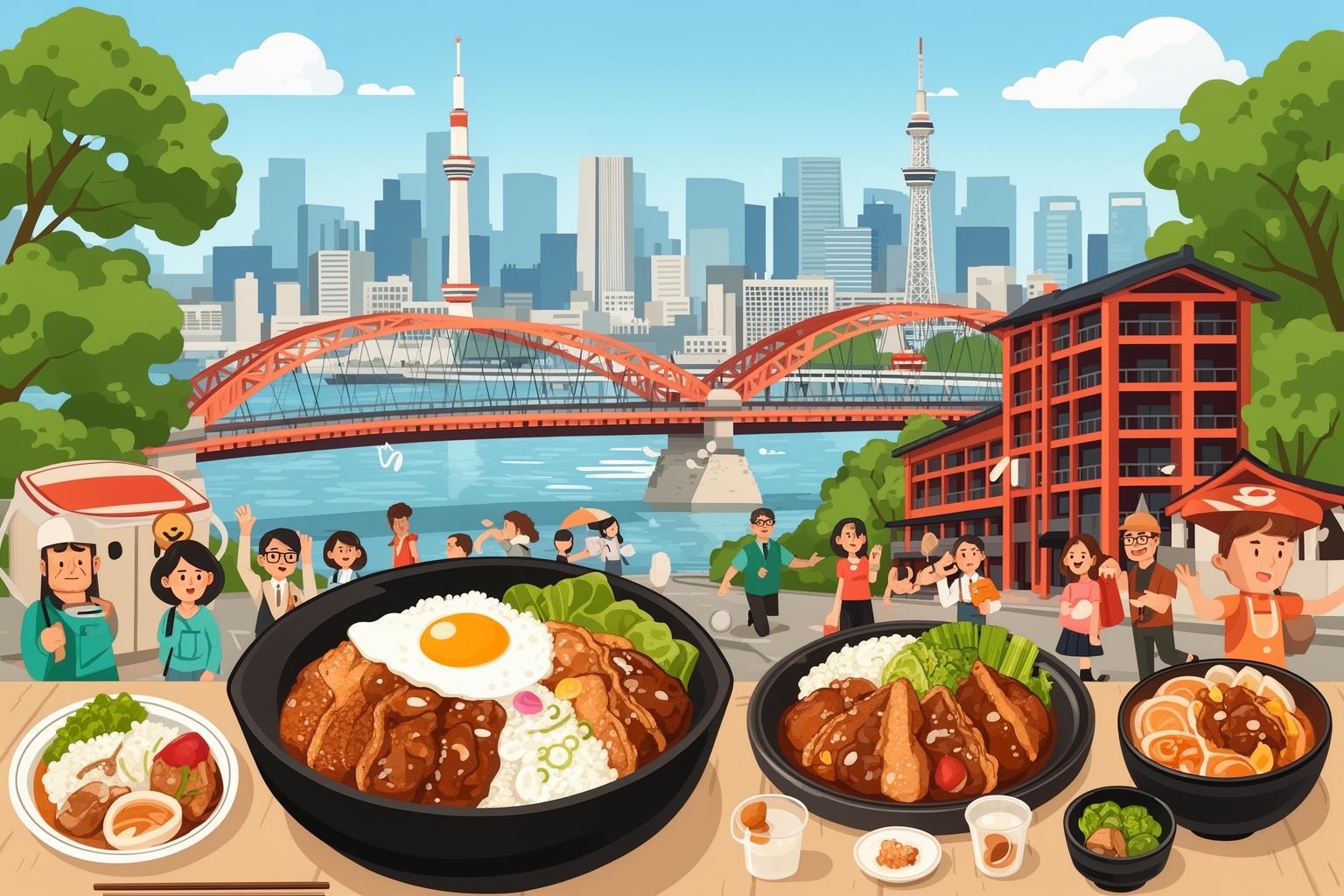
Returning to the central question, the answer is an emphatic yes. Not in a literal sense, of course—subsisting solely on fried flour would be a dreadful idea. But figuratively, “living on takoyaki” captures the essence of mastering life in this city. It means adopting the Osaka mindset. It means learning to value substance over superficial style. It means training your eyes to recognize true worth, whether in food, clothing, or a place to live. It means being straightforward and sincere in your interactions with others. It means realizing that community is built not in elegant boardrooms but over shared meals on cheap plastic stools. To live on takoyaki is to embrace the philosophy of “kosupa” and apply it to your entire life, finding joy and security not through extravagance, but through resourcefulness and practicality. The sizzle of batter hitting a hot, oiled griddle is the true soundtrack of Osaka. It’s the sound of a city that knows exactly who it is, what it values, and how to not just survive, but thrive, one delicious, affordable bite at a time.