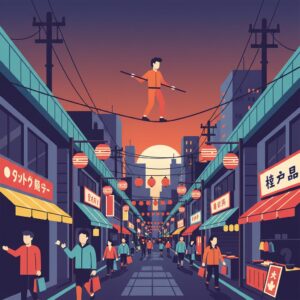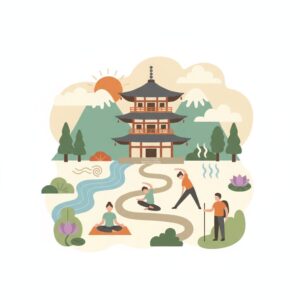
Osaka hits you like a shot of strong espresso. It’s a city that moves with a relentless, percussive rhythm, a place where business deals are sealed with a handshake and a booming laugh, and where the air itself seems to sizzle with the scent of grilling takoyaki and limitless potential. It’s loud. It’s direct. It’s a city that works hard and plays harder, a concrete arena of commerce and comedy. You see it in the determined stride of the salarymen crossing the Midosuji, you hear it in the boisterous greetings shouted across the Kuromon Market. Foreigners often get swept up in this whirlwind, thinking this high-octane energy is the beginning and end of the Osaka story. They see the neon glow of Dotonbori and assume the city’s soul is powered by electricity and ambition alone. But that raises a question that cuts to the core of understanding this place: where does all that energy go to recharge? When the hustle becomes too much, where does an Osakan turn? The answer isn’t found in another bustling entertainment district or a trendy cafe. Instead, they look south. They board a train at the chaotic heart of Namba Station, and in under two hours, they ascend into a world of mist, ancient cedars, and chanting monks. They go to Koyasan. This isn’t just a weekend trip; it’s a vital, unspoken ritual. It’s the city’s pressure release valve, a spiritual pilgrimage that reveals the profound and quiet flip side of the Osakan spirit. To understand why an Osakan goes to Mount Koya is to understand the deep, pragmatic, and surprisingly soulful rhythm of life in Japan’s kitchen.
When the city’s vibrant pace calls for a dose of irreverent humor to balance its more introspective retreats, this guide to Osaka’s high-speed nori-tsukkomi offers a lively glimpse into an equally essential facet of life in Osaka.
The Osaka Hustle and the Need for a Hard Reset
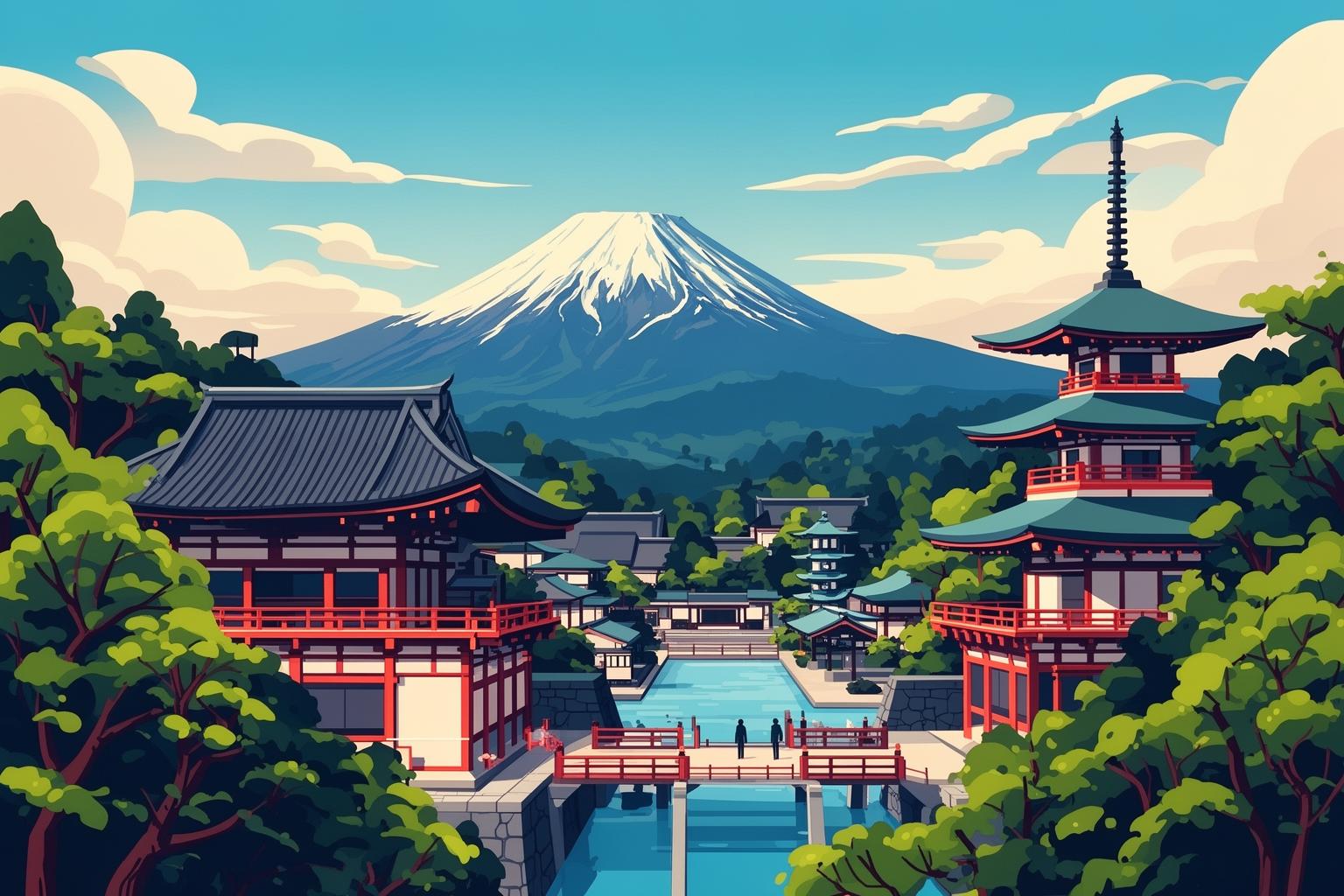
To understand the magnetic appeal of Koyasan, you first need to experience the relentless rhythm of a typical week in Osaka. This city wasn’t shaped by samurai or aristocrats; it was built by merchants, the shōnin class. That mercantile spirit runs deep, fostering a culture of pragmatism, efficiency, and a constant, subtle buzz of negotiation. Life here feels transactional—not in a cold sense, but in a direct, straightforward way. Communication favors clarity over subtlety, aiming to get straight to the point. Time equals money, and relationships are founded on mutual benefit and honest dialogue. This mindset powers the city’s economy, but it can also be draining. The workday in an Umeda skyscraper is a pressure cooker of goals and deadlines, delivered with that unmistakable Osakan bluntness that some find invigorating and others find harsh. There is no hiding—your performance defines you.
After work, the sensory onslaught continues. The commute home is a gauntlet of stimuli: the overlapping announcements at Osaka Station, the packed crowds on the Midosuji Line, the flashing and ringing pachinko parlors beckoning like sirens. Even leisure time is intense. A night out in Shinsaibashi feels like a full-contact sport, weaving through crowds, shouting over music, and dodging a barrage of advertisements. This isn’t a complaint; it’s the city’s lifeblood. Osakans thrive on this energy and feed off it. Yet no battery can stay at full charge forever. The result is a distinctive kind of exhaustion—a burnout less about silent despair and more about sensory overload. It’s a depletion not only physical but spiritual. When an Osakan says they need a break, it goes beyond wanting to sleep in. They mean a ‘hard reset’—a total system shutdown and reboot to clear the accumulated stress, noise, and obligations. This approach is fundamentally different from Tokyo’s. A Tokyoite might retreat to a stylish Hakone ryokan for a weekend of curated aesthetics and flawless service, a gentle unwind. An Osakan’s need is more primal. They aren’t seeking pampering—they want to be stripped down. They need to unplug completely, and Koyasan offers the most effective and accessible way to do just that.
Why Koyasan? The Pragmatic Spirituality of an Osaka Local
The choice of Koyasan is quintessentially Osakan—rooted in a blend of deep spirituality and practical logistics. First, there’s the undeniable convenience. The Nankai Koya Line runs directly from the bustling heart of Namba to the threshold of a sacred realm. For an Osakan who values kosupa (cost performance) in everything, from lunch deals to spiritual growth, this is hugely important. The journey itself becomes part of the transformation. The train rattles through dense suburbs before slowly climbing into the mountains. Concrete fades to green, city noise yields to the train’s rumble, and with each kilometer, you sense the pressure easing. The final cable car ascent is the symbolic last step, lifting you from the ordinary world into something ancient and tranquil.
This practicality also characterizes their approach to the experience. An Osakan doesn’t visit Koyasan with the abstract reverence of a scholar or the wide-eyed awe of a tourist. They come with intention. It’s a tool for mental and spiritual upkeep. A friend of mine, a real estate agent from Tennoji, puts it plainly: “My brain gets overloaded. Too many numbers, too many clients, too much noise. Koyasan clears it out. It works better than anything else.” This mindset reflects a broader cultural trait. While people in Tokyo might treat spirituality more philosophically or aesthetically, Osakans see it as a practical resource. Does it offer a tangible benefit? Does it improve your well-being? Does it help you face the coming week? If yes, then it’s worth it.
This is why shukubo, or temple lodging, is such a vital part of the Koyasan experience for locals. It’s not merely accommodation; it’s an immersive exercise in simplicity. You exchange a hotel bed for a futon on tatami mats. You trade a breakfast buffet for shojin ryori, the minimalist, elegant vegetarian cuisine of monks, where every ingredient is honored and nothing is wasted. You are awakened not by a smartphone alarm, but by the deep, resonant sound of a gong calling morning prayers. Joining the otsutome (morning ceremony) isn’t obligatory, but nearly every Osakan visitor participates. They sit in the chilly, incense-filled hall, listening to the mesmerizing chants of the sutras. They might not grasp every word, but they understand the effect. It’s a forced meditation, a moment when the ceaseless internal chatter of deadlines and worries is finally quieted by sounds that have echoed through these halls for over a thousand years. It’s a pragmatic trade-off: a bit of discomfort and discipline in exchange for deep peace.
Okunoin at Night: Confronting Life and Death, Osaka Style
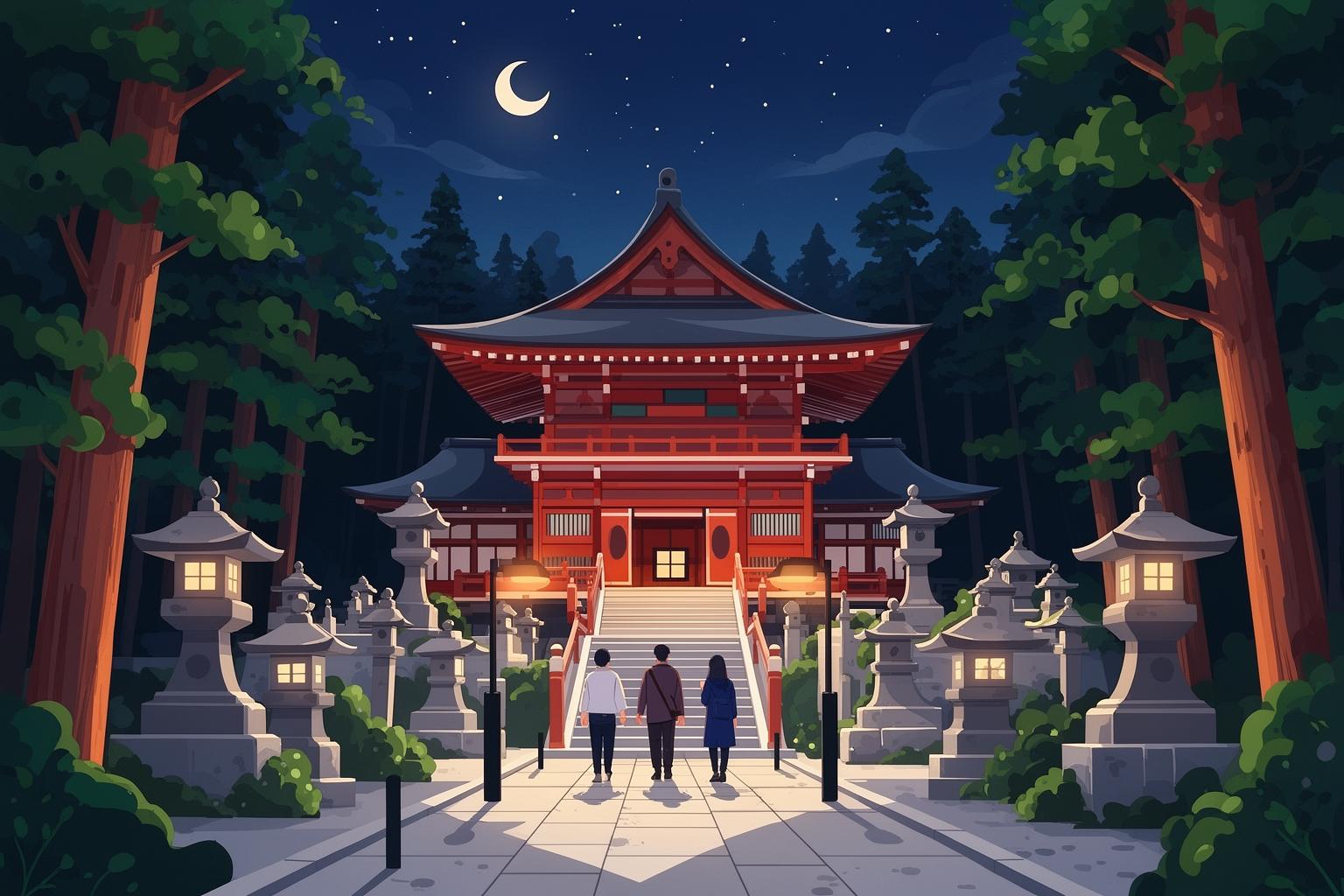
Nothing captures the Osakan connection to Koyasan better than a nighttime stroll through Okunoin cemetery. This isn’t a morbid tourist spot; it’s the spiritual core of the mountain, a vast two-kilometer path leading to the mausoleum of Kobo Daishi, founder of Shingon Buddhism. The way is flanked by towering, ancient cedar trees and over 200,000 tombstones and memorials, from feudal lords and renowned samurai to modern corporate leaders. By day, it is beautiful and solemn; by night, illuminated only by stone lanterns, it becomes transcendent.
An Osakan, often stereotyped as constantly focused on the present—making money, joking, enjoying food—might seem an unlikely person to take a contemplative night walk through Japan’s largest graveyard. But this is where that stereotype breaks down. Osakans hold a deep-rooted realism. They are grounded, resolute, and maintain a direct relationship with the essentials of life: work, family, food, money, and ultimately, death. They do not avoid it; rather, facing it is a source of strength. Walking the Okunoin path at night isn’t about ghosts; it’s about perspective. The air is cold and still, the only sounds are your footsteps crunching on gravel and maybe the distant hoot of an owl. You stand among silent, moss-covered graves of people who lived centuries ago. Their dreams, worries, victories, and defeats have all been absorbed by the forest.
For someone whose thoughts are tangled in the upcoming deadline of a quarterly report or a dispute with a business partner, this experience offers a potent antidote. It doesn’t instantly fix their problems but makes them feel smaller and more manageable. Gazing at the tomb of a legendary warlord who once led armies, you grasp the fleeting nature of your own struggles. It is a profound reality check. A Tokyoite might look for an escape that temporarily diverts from life’s harsh truths, perhaps in the curated elegance of an art museum or a stylish resort. The Osakan retreat often means facing reality directly, discovering a larger, deeper truth that puts their own life into perspective. It is a form of spiritual realignment—confronting the ultimate certainty of death to feel life’s chaos, vibrancy, and impermanence more keenly and appreciatively in the city below.
Beyond the Stereotypes: The Quiet Side of the Osakan Spirit
The most persistent cliché about Osaka is that its residents are all outgoing, loud, and humorous—a city of natural-born comedians. While there’s some truth to this—the culture prizes humor and straightforwardness as social glue—it reduces the city to a one-dimensional stereotype that outsiders often take as the full reality. They’re surprised when the quick-talking shopkeeper they bargained with in Amerikamura is later found sitting quietly in contemplation at a temple. They struggle to understand how a city that seems fueled by extroversion can harbor such a profound and accessible link to a deeply introverted place like Koyasan. Yet this duality is not contradictory; rather, it is the very heart of the Osaka character.
The journey to Koyasan physically mirrors this internal shift. Boarding the Nankai train at Namba, you might see groups of friends laughing, joking, and speaking swiftly in the Kansai dialect—unmistakably Osakan. But as the train ascends, a calmness settles over the carriage. The scenery changes, along with the atmosphere. When they step off the cable car into the cool, pine-scented mountain air, they become different people. The noise level lowers, the pace slows, and the focus turns inward. The ability to switch effortlessly between the boisterous market and the silent temple is a skill sharpened by the rhythm of life here.
Consider the Osakan persona as a practical tool for navigating a competitive and crowded environment. The humor, bluntness, and tsukkomi banter serve as a way to forge connections quickly, bypass formalities, and get things done. It’s a kind of performance that demands great energy. Koyasan is the place they retreat to when the act ends. It’s where they don’t have to be “on.” In temple lodging, there is no need for sharp comebacks. In meditation, silence speaks volumes. Here, they access a quieter, more introspective self—equally genuine, but less often revealed amid the city’s daily bustle. This is what foreigners frequently overlook. They see the lively exterior but miss the calm, resilient core. Koyasan is not an escape from who they are; it’s an escape to who they also are.
How This Translates to Daily Life Back in the City
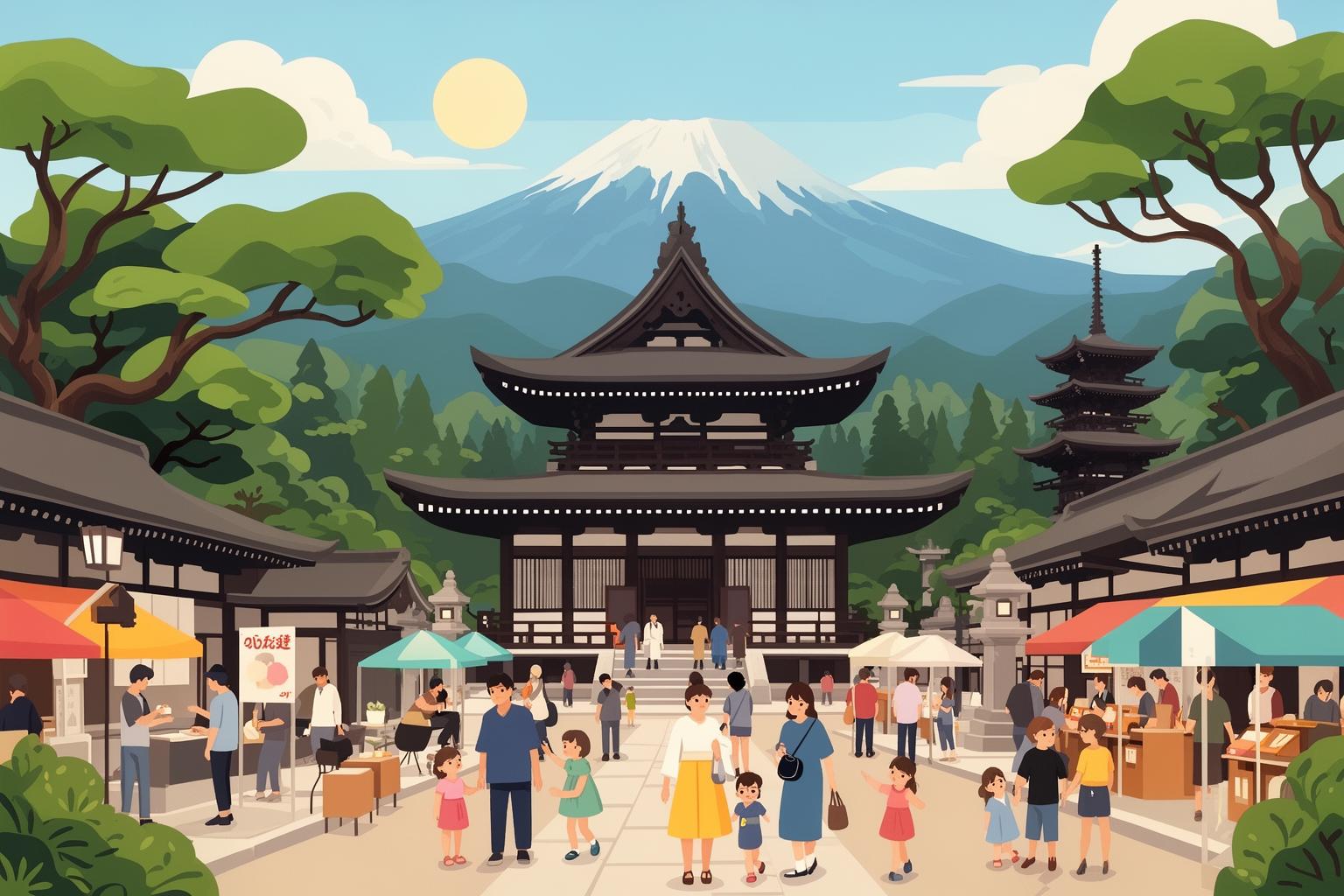
The pilgrimage to Koyasan is not an isolated experience that concludes when the train returns to Namba Station. Its impact travels back down the mountain, subtly weaving into the fabric of everyday life in Osaka. This reset is lasting; it restores a reservoir of calm and perspective that helps people handle the city’s relentless pressures. This spiritual upkeep is a vital element of Osakan resilience, an unseen asset enabling them to flourish in a setting that might overwhelm others. You can notice it in small, daily interactions if you know where to look.
It might appear in the surprising patience of a restaurant owner during the hectic lunch rush near Yodoyabashi. While moving with a distinctly Osaka efficiency, his manner remains calm and unshaken by the chaos. He is centered. You might sense it in the demeanor of a colleague returning to the office on a Monday after a particularly stressful week. Rather than being irritable, she is more focused, her directness softened by a fresh clarity. She may not even mention where she was, yet she carries the mountain’s tranquility within her. The experience offers a lasting mental and emotional anchor. When a deal falls through or a client proves difficult, the memory of walking through Okunoin and feeling connected to something vast and ancient can make the immediate challenge seem less overwhelming.
This repeated pilgrimage nurtures a distinct worldview. It enables Osakans to fully engage with the material world—the pursuit of profit, the enjoyment of worldly pleasures—without becoming wholly consumed by it. They know there is a place to cleanse it all away. This fosters a healthy detachment, an understanding that the daily hustle is only a part of a much broader existence. It is this balance, this effortless rhythm between the sacred and the profane, the noisy and the silent, that embodies the city’s soul. For anyone trying to grasp what life in Osaka truly feels like, look beyond the takoyaki stands and flashing lights. Look toward the mountains to the south. The secret to Osaka’s boundless energy lies not just in the city itself, but in the sacred silence it holds within reach—a silent promise that no matter how chaotic life becomes, a path to peace is just a train ride away.