So, you’ve landed in Osaka. Maybe you’ve just moved into your apartment, the boxes are still half-unpacked, and the silence is starting to feel a little too loud. Or maybe you’re weighing your options, staring at a map, trying to figure out if this city of flashing lights and sizzling takoyaki is the right place for you. You’ve heard the clichés, of course. “Osaka people are friendly.” “It’s cheaper than Tokyo.” “The food is amazing.” All true, to a degree, but these are just postcards. They don’t tell you how to navigate the day-to-day, how to crack the code of a conversation that moves at a hundred miles an hour, or how to turn a polite nod on the street into a genuine friendship. The biggest question for anyone starting a new life here isn’t about navigating the subway system; it’s about navigating the social one. How do you actually meet people? Not just contacts, not just acquaintances, but real, honest-to-goodness friends.
In Tokyo, the answer is often structured and somewhat formal. You join a club, you attend a networking event, you’re introduced through a colleague. It’s a process of careful, deliberate steps. But Osaka operates on a different frequency. It’s faster, more spontaneous, and infinitely more direct. And the epicenter of this social energy, the place where you can plug directly into the city’s chaotic, warm, and hilarious mainframe, is the humble language exchange cafe. Forget what you think you know about these places. They aren’t dusty classrooms filled with grammar drills. In Osaka, they are living, breathing social laboratories. They are community centers, third spaces, and proving grounds where the city’s unique communication style is on full display. This is where you’ll learn that “friendly” in Osaka doesn’t just mean polite smiles; it means being teased, asked shockingly personal questions, and being swept into a group of strangers’ dinner plans thirty minutes after you’ve met them. This is your guide to not just finding those cafes, but understanding them as a window into the soul of Osaka itself.
For a different kind of local immersion, consider unwinding at an Osaka neighborhood sento, another vital community space where the city’s true character is revealed.
The Social Arena: Why Cafes Here Feel Different

Before stepping into your first language cafe in Osaka, you need to recalibrate your social instincts, especially if you’re familiar with Tokyo. In Tokyo, social interactions often feel like a carefully choreographed dance. There’s a defined personal space, a set of polite conversational topics, and a slow, almost imperceptible warming-up period. A language exchange in Tokyo might include a courteous conversation about hobbies, travel, and the weather. You exchange pleasantries, practice some set phrases, and leave feeling like you’ve had a productive, albeit somewhat sterile, interaction. You could attend the same event for weeks and still only know your conversation partners on a surface level. It’s not cold exactly, but it is reserved—a system built on not imposing, maintaining harmony by keeping a respectful distance.
Osaka, however, throws that entire rulebook out the window. The moment you enter a language exchange cafe there, the atmosphere is noticeably different. It’s louder. The tables are closer together. People lean into each other’s space, laugh heartily, and talk over one another. There is no respectful distance; instead, there is immediate, lively engagement. An Osakan’s opening line won’t be, “Where are you from?” but rather, “Hey, your shirt is pretty loud, I like it! Are you American? You look like you play basketball. How much is your rent here? Is it expensive?” This isn’t rudeness; it’s an efficiency test. It’s Osaka’s way of fast-forwarding through boring small talk to get to the real stuff. The city was built by merchants, and that transactional, get-to-the-point mindset permeates its social culture. Why waste time on pleasantries when you could find out if the new person is actually interesting?
This initial shock can be jarring for foreigners. We’re often taught that asking about money, age, or relationship status is taboo. In an Osaka cafe, these questions are often the icebreakers. It’s a sign that they see you not as a fragile foreigner to be handled with kid gloves, but as a potential equal—someone who can handle a bit of directness. They’re trying to find common ground, a hook to hang a real conversation on. If you complain about your high rent, you’ve instantly bonded. If you laugh about a recent dating disaster, you show you don’t take yourself too seriously, which is a highly valued trait here. The goal isn’t to interrogate you; it’s to find a human connection as quickly as possible. The energy feels less like a polite tea party and more like a boisterous family reunion where you’ve just met all your cousins for the first time.
Decoding the Venues: Not All Cafes Are Created Equal
Once you’ve prepared yourself for the social intensity, it’s important to understand the landscape. The term “language exchange cafe” encompasses a wide range of establishments in Osaka, each with its own distinct subculture and unwritten rules. Picking the right one to match your personality is crucial for a positive experience. Generally, they fall into a few clear categories, and your experience will vary greatly depending on which door you enter.
The Structured Salon
These venues most closely reflect the “cafe” aspect of the name. Picture clean, well-lit spaces, often part of a small chain, with a clear system in place. Typically, you pay a flat fee for a set amount of time, which includes unlimited soft drinks from a machine. Upon arrival, staff will seat you at a table, usually mixing Japanese learners of English with foreign speakers of Japanese. There may be a timer, and after twenty minutes, a bell will ring, signaling a table rotation.
The atmosphere here is controlled, safe, and focused on genuine language practice. It’s an excellent starting point for beginners or more introverted individuals who feel anxious about initiating conversations. The structure does the work for you. The crowd tends to be younger—university students and young professionals—and conversations usually revolve around more traditional topics. Yet even in these structured settings, the Osaka spirit shines through. The teasing is a bit sharper, the laughter louder, and the questions more direct than in comparable Tokyo venues. It’s a great place to build confidence and get a taste of the rhythm of Kansai-ben without being thrown into the deep end.
The Casual Drop-In Hub
Here, things get more interesting and arguably more authentically Osaka. These are often independently owned cafes, sometimes a little cramped and cluttered, serving as a neighborhood living room. There’s no entry fee, but you’re expected to purchase a coffee or a beer. There’s no timer and no table rotation. You simply walk in, grab a drink, and find a seat. The challenge and opportunity here lie in making your own connections.
This might sound daunting, but in Osaka, it’s easier than you’d expect. The social norm at these spots is openness. It’s perfectly normal to join a conversation already in progress. You can simply pull up a chair and say, “Hey, what are you guys talking about?” More often than not, you’ll be warmly welcomed. These hubs attract a dedicated group of regulars—a fascinating mix of local artists, musicians, small business owners, and long-term foreign residents. Friendships form over weeks and months of showing up. The owner often plays a key role as a social connector, introducing newcomers and ensuring no one feels left out. These places feel less like a service and more like a community. This is where you might get invited to a barbecue, find a new bandmate, or receive a recommendation for a trustworthy mechanic. It’s life, not just language practice.
The After-Work International Bar
This category blurs the line between cafe and bar. Many international pubs in Osaka host a designated “language exchange night” once or twice a week. The format is very casual. Usually, there’s no fee, and the main activity is drinking, with language exchange as a convenient excuse. The atmosphere is loud, lively, and fueled by alcohol. The music pumps, and you’ll have to shout to be heard.
This is not the place for serious grammar study. It’s where you come to socialize, unwind, and practice your listening skills in a challenging environment. The crowd is diverse, including tourists, newly arrived English teachers, and Japanese office workers looking to relax. Conversations are brief, loud, and often hilarious. Because of the bar setting, social guards are lowered, and you’ll encounter Osaka directness in its rawest form. It’s a fantastic way to meet many people quickly, though connections can be fleeting. Still, it perfectly reflects Osaka’s work-hard, play-hard culture. The same salaryman who was bowing deeply to his boss just hours earlier is now passionately debating the Hanshin Tigers baseball team with a complete stranger from another country. It’s a place of social release and an unfiltered glimpse into the city’s nightlife.
The Rules of Engagement: Mastering Osaka-Style Communication

Understanding the venues is only part of the challenge. To thrive in an Osaka language cafe, you need to grasp the city’s distinctive communication style. It’s a complex blend of humor, directness, and performative interaction that can be completely confusing at first. However, once you begin to understand the underlying principles, you’ll find it to be one of the most engaging and rewarding ways to communicate.
The Comedy Duo: Boke and Tsukkomi
This dynamic is the fundamental basis of Osaka conversation. Rooted in traditional manzai comedy, the boke (funny man) and tsukkomi (straight man) roles are integrated into everyday speech. The boke says something silly, absurd, or a bit foolish. The tsukkomi replies with a sharp, witty comeback, often accompanied by a light tap on the arm or shoulder, to correct the absurdity. As a foreigner in a language cafe, you often become the default boke. You might misuse a word, state an obvious fact, or have an unusual cultural habit. An Osakan’s natural reaction is not to politely overlook it but to perform a tsukkomi.
For example, if you say, “Wow, takoyaki is hot,” an Osakan might instantly reply, “Atarimae ya! Of course it is! Did you think it was ice cream?” followed by a big laugh. This isn’t them mocking you. It’s a sign of affection—a verbal invitation to play. They treat you like a local, an insider who gets the joke. The worst response is to feel offended or embarrassed. The best approach is to embrace it. Laugh at yourself. Try making an even sillier boke comment. If you can learn to deliver a simple tsukkomi yourself—the most famous being “Nande ya nen!” (Why the hell! / What are you talking about!)—you’ll instantly earn their respect and affection. Mastering this dynamic is the key to unlocking true Osakan friendship. It shows that you recognize conversation here as a performance, a game to be played together.
Radical Honesty: The Art of the Direct Question
As mentioned earlier, Osakans value directness. They view ambiguity and vagueness as inefficient and sometimes even suspicious. In a cafe setting, this means you should expect questions that might seem invasive by Western or even other Japanese standards.
- “So, why are you still single?”
- “How much money do you make at your job?”
- “You look tired. Are you not sleeping well?”
- “Don’t you think that hairstyle is a bit strange?”
These questions are not intended to judge you. They serve as data points in the pursuit of genuine connection. Asking about your salary isn’t about assessing you; it’s about understanding your daily challenges and lifestyle. Asking about your single status isn’t criticism; it’s an invitation to discuss love, relationships, and shared human experiences. The key is to avoid getting defensive. Answer honestly, with humor. You can even turn the question back on them: “I make enough to buy this coffee! How about you? Are you rich?” This playful back-and-forth is part of the conversational dance. It’s a test of your personality. If you can handle their directness and respond in kind, you’ve passed. You’ve shown that you’re on their wavelength, ready for a genuine conversation that goes deeper than the surface.
More Than Words: Embracing Kansai-ben
You don’t have to be fluent in the local dialect, but showing an interest in using a few key Kansai-ben phrases will open doors like nothing else. Standard Japanese, the kind found in textbooks, can sound stiff and formal in Osaka. Using some local terms shows you’re engaging specifically with Osaka’s culture, not just a generic version of Japan.
- Use `meccha` instead of `totemo` for “very.”
- Use `honma` instead of `hontou` for “really.”
- Learn the soft negatives `ahen` or `hen` instead of `masen`.
- And, of course, the all-purpose exclamation of disbelief, `nande ya nen`.
When you try to use these words, even if you slip up, you’ll be met with delight. People will eagerly correct your pronunciation, teach you new words, and welcome you into their linguistic world. It’s a simple gesture of respect that yields huge social rewards. It says, “I’m not just a visitor here; I’m trying to be part of this place.”
The Next Level: Turning Cafe Friends into Real Friends
Meeting people in a cafe is one thing, but building lasting friendships that extend beyond those walls is quite another—and this is often where foreigners face challenges. How do you move from a fun, two-hour conversation to a genuine connection? In Osaka, that transition can be surprisingly quick and spontaneous, but you need to be ready to seize the moment.
The Spontaneous Invitation
In many cultures, making plans involves a back-and-forth process of scheduling, finding a convenient time days or even weeks ahead. In Osaka, however, spontaneity is the social lifeblood. The shift from cafe acquaintance to friend often comes through an immediate, casual invitation. As the cafe visit winds down, someone might say, “A few of us are going for ramen. Want to come?” or “We’re heading to karaoke, you should join!”
Your answer should almost always be “yes,” even if you’re tired or have other commitments. This is the opportunity. This is the test. Declining a spontaneous invitation, even for a good reason, can be misunderstood as disinterest. In Osaka’s fast-paced social scene, that chance might not come again. Saying yes, on the other hand, shows you’re game and that you belong in the group. This is how you get integrated into social circles. One evening of spontaneous ramen can lead to a weekend beach trip, which can turn into an invitation to a family dinner. You have to be willing to set aside your plans and just go with the flow.
Understanding Group Dynamics
Friendships in Osaka tend to be group-oriented. While you may connect with one person at a cafe, becoming their friend usually means becoming friends with their entire group. Be ready for group activities where conversations overlap, inside jokes fly across the table, and the atmosphere feels lively and a bit chaotic. Trying to hold a quiet, one-on-one conversation in the corner isn’t the norm. The expectation is that everyone takes part in the collective energy.
Sharing is also key. When you go out to eat, dishes are often ordered to be shared among everyone at the table. Everyone tries a bit of everything. Similarly, when it’s time to pay, there’s no exact splitting of the bill. Someone will typically say, “Okay, it was 12,000 yen, so that’s about 3,000 each,” rounding up or down for simplicity. Don’t pull out a calculator—just go with it. It’s about the shared experience, not precise accounting. This communal approach is fundamental to how social bonds are formed and maintained here. By fully participating, you show that you understand the unspoken rule: we’re all in this together.
The Nuances of Honne and Tatemae
Foreigners are often introduced to the concepts of `honne` (one’s true feelings) and `tatemae` (the public facade), and it’s commonly said that in Japan people rarely reveal their `honne`. While this may hold true in more formal or traditional settings, Osaka’s culture is known for blurring those lines. People are much more likely to tell you what they really think, for better or worse. That said, `tatemae` still exists—it just takes a different form.
In a language cafe, someone might playfully tease your favorite baseball team—that’s their `honne` showing in a socially acceptable, humorous way. However, if you ask for honest feedback on your Japanese skills, they might still say “You’re so good!” (`jouzu!`), even if you’re struggling. This is Osaka’s version of `tatemae`—a kind, encouraging politeness designed to spare embarrassment and keep the atmosphere light. Learning to tell the difference between playful, `honne`-based teasing and supportive, `tatemae`-based compliments is a subtle skill you’ll develop over time. The general rule is: if they’re teasing you, they like you; if they’re only offering polite compliments, you’re probably still an acquaintance. The goal is to reach a level of comfortable, honest back-and-forth banter where the distinction between `honne` and `tatemae` becomes an enjoyable game rather than a confusing barrier.
Your First Steps into a Larger World
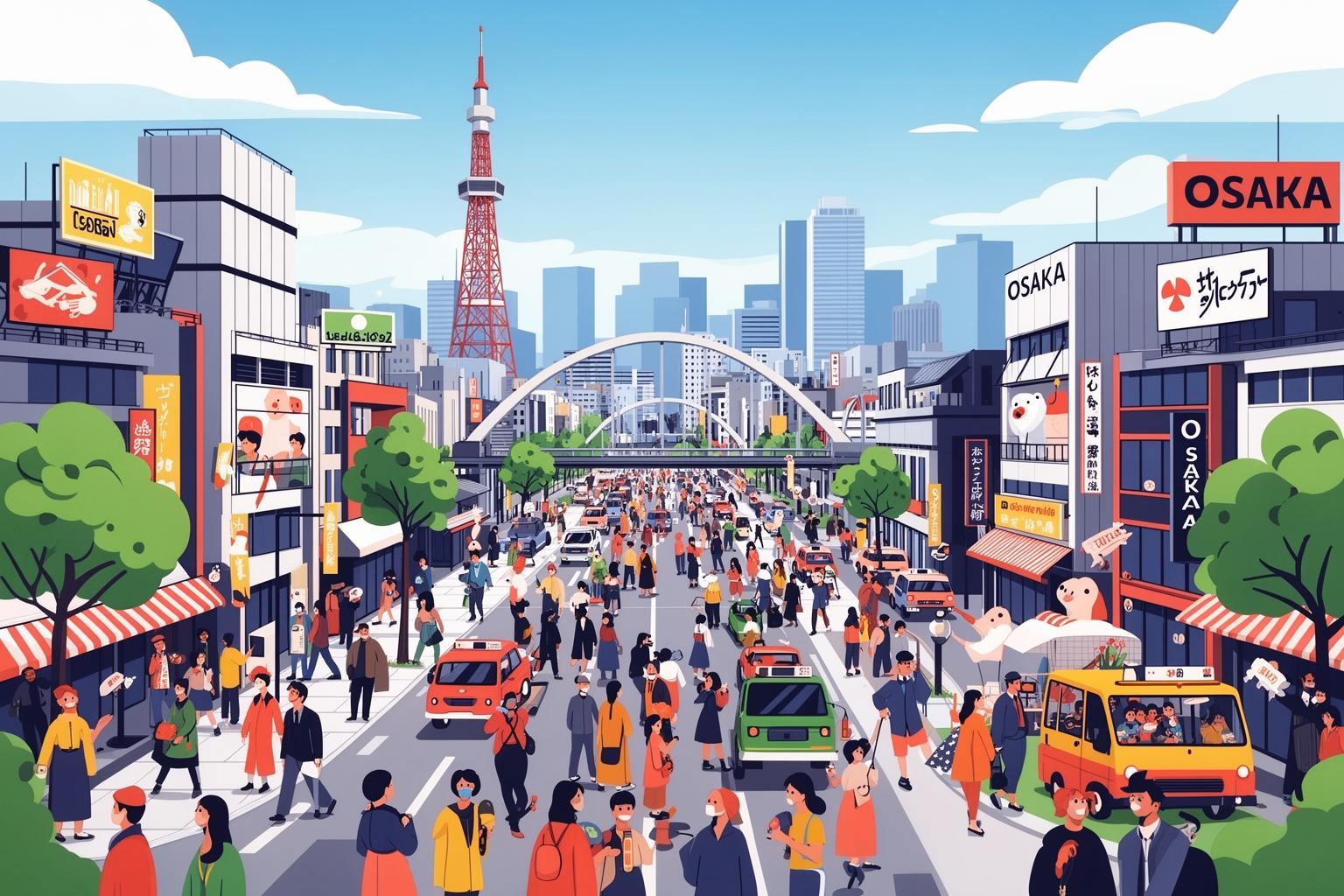
Walking into an Osaka language exchange cafe for the first time can feel like plunging into the deep end of a swimming pool. It’s loud, chaotic, and the rules are completely unlike what you’re accustomed to. Yet, it’s also thrilling. These places aren’t just for exchanging vocabulary lists; they serve as vibrant cultural classrooms. They are where you learn the flow of Osaka speech, the reasoning behind its bluntness, and the warmth hidden inside its boisterous humor.
Don’t enter aiming for perfect fluency. Enter with the goal of connection. Be ready to laugh at yourself. Prepare to answer personal questions. Stay open to spontaneous invitations that might disrupt your evening plans. Because here, a cup of coffee with a stranger is never just a cup of coffee. It’s a potential gateway to new friends, a new neighborhood, and a fresh understanding of what living here truly means. The people you meet in these cafes will become your guides, your confidants, and your partners in crime as you explore this amazing city. They will show you the proper way to grill okonomiyaki, the best team to support at Koshien Stadium, and the perfect comeback to a sharp tsukkomi. Forget the tourist maps and travel guides. The real Osaka is discovered in these conversations, in shared laughter over a misunderstood phrase, and in the moment when a table of strangers begins to feel like home.