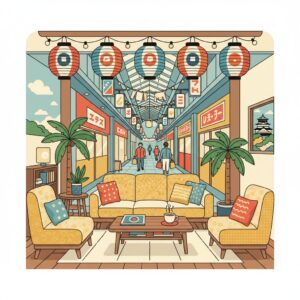
The first time I truly understood Osaka, it wasn’t at a castle or a famous food stall. It was in a cramped, slightly cluttered coffee shop in Tenma, a neighborhood that hums with the energy of a thousand tiny businesses. I’d just moved from Tokyo, where my cafe experiences were models of serene efficiency. You ordered from a sleek tablet, paid with a tap, and received a perfect, anonymous cup of coffee. The transaction was flawless, frictionless, and utterly forgettable. Here in Osaka, the owner, a woman with a booming laugh and a spectacularly loud shirt, squinted at my order. “Just a black coffee? Boring! You look like you need a bit of sugar today. I’ll make my special blend. And have a biscuit, you’re too thin!” She didn’t charge me for the upgrade or the biscuit. The transaction wasn’t the point; the connection was. It was my first lesson in Osaka’s shōnin katagi, the merchant spirit. This city was built by traders, sellers, and deal-makers, and that DNA doesn’t just live in the covered shopping arcades. It fundamentally shapes the city’s third places—the cafes, the bars, and now, the coworking spaces where modern commerce happens. It’s a mindset that values practicality, personality, and a good deal above all else, creating a landscape that can feel refreshingly human, if a bit bewildering, compared to the polished predictability of Tokyo. Understanding this spirit is the key to unlocking how daily life really works here.
This practical, deal-oriented mindset extends even to how locals approach their daily necessities, as seen in the unique strategies for navigating Osaka’s supermarkets.
The Unspoken Rule of ‘Kosupa’: Value Beyond the Price Tag

In Tokyo, you can sell a story, an aesthetic, a brand, or a minimalist vibe. A single, flawlessly presented strawberry on a plate can command an astronomical price because you’re paying for the artistry behind it. In Osaka, that approach doesn’t work. Here, the dominant principle is kosupa, a shorthand for “cost performance.” It’s not about being cheap—that’s a common misconception. It’s about undeniable, tangible value. An Osakan will gladly pay a premium, but you must justify what they receive in return.
This merchant-born pragmatism is reflected in the menus of every local café. The concept of “morning service” exemplifies this perfectly. In many independent coffee shops, ordering a coffee before 11 a.m. includes a thick slice of toast, a boiled egg, and sometimes even a small salad, all for the cost of the coffee alone. The reasoning is pure merchant logic: attract customers early, offer a small extra that costs very little to provide, and build loyalty that brings them back for lunch or with friends next time. The initial sale is a strategy for a long-term relationship. This sharply contrasts with Tokyo chains where you pay for every item, and asking for extra milk may be met with the cashier pressing a button.
This kosupa mindset directly influences the coworking scene as well. While Tokyo may have spaces featuring celebrity designer interiors or exclusive networking events, Osaka’s successful venues compete on practicality. Does the monthly fee include 24-hour access? Is the coffee machine stocked with quality beans, or is it instant sludge? How many pages can you print before extra charges apply? These aren’t just perks; they are key factors in the value equation. Members of Osaka coworking spaces are customers, yes, but also savvy investors of their monthly fees. They expect clear returns. A space offering unlimited free drinks, dependable Wi-Fi, and a few soundproof booths for the same price as a more stylish competitor down the street will win. The merchant spirit demands concrete benefits, not just abstract prestige.
The Relationship is the Real Currency
In much of Japan, service is characterized by a beautiful, precise, and often distant form of hospitality known as omotenashi. It revolves around anticipating a customer’s needs without them having to ask, delivered with flawless, scripted politeness. It’s admirable, but it creates a barrier between the server and the served. Osaka’s approach to service is different. It’s less about performance and more about conversation. It’s personal, inquisitive, and deeply rooted in the belief that a good business relationship is, simply put, a relationship.
The owner of your local café isn’t just a barista; they’re the neighborhood’s unofficial mayor, therapist, and gossip columnist. By your third visit, they’ll remember your order. By your tenth, they’ll know your profession, your thoughts on the Hanshin Tigers’ latest game, and whether you’ve fixed that leaky faucet yet. They’ll give your child a free cookie. They’ll hold a package for you if you’re not home. None of this is in a service manual. It’s the merchant’s instinct to entwine customers with the fabric of the business and the community. You stop being a line item on a sales report and become a regular, a jōren-san. The small talk isn’t mere filler; it’s the process of turning a one-time transaction into a steady, reliable source of income and support. They invest in you just as you invest in them.
This ethos translates powerfully to the coworking scene. A successful community manager in an Osaka coworking space acts less like a receptionist and more like a traditional merchant guild leader. They don’t just fix your Wi-Fi issues; they genuinely listen to what you’re working on. They’ll make introductions: “Ah, you’re a web designer? Tanaka-san over there is looking for someone to build a site for his new takoyaki stand. You two should connect.” This embodies the merchant spirit—facilitating trade, creating opportunities, and understanding that the collective success of members ensures the success of the space itself. It goes beyond providing a desk and a power outlet to fostering an entire ecosystem. In Tokyo, you might work alongside someone for a year without learning their name. In Osaka, the space itself is often designed to make that kind of anonymity almost impossible.
‘Akan yone!’ – The Pragmatism of Osaka’s Workspaces

There’s a fantastic, brutally honest phrase from Osaka: Akan yone! It roughly means “That’s no good!” or “That’ll never work!” It’s not said with ill intent, but as a quick, pragmatic judgment without any sugarcoating. If an idea is impractical, wasteful, or simply foolish, an Osakan will tell you straight. This mindset serves as the ultimate filter for business ideas and shapes the very design and functionality of the city’s cafes and workspaces. Flashy concepts quickly fade if they lack a practical purpose.
Function Over Frills
A cafe might have stunning latte art and furniture imported from Scandinavia, but if the chairs are uncomfortable for more than twenty minutes or there are only two power outlets in the entire space, locals will stop coming. Akan yone! The venue is meant for drinking coffee and relaxing or working, and if it fails at that basic function, the aesthetics mean nothing. The same principle applies to coworking spaces. You notice it in the small details. The most popular spots aren’t necessarily the most photogenic; they’re the ones offering a dozen types of phone chargers to borrow, chairs that prioritize ergonomics over iconic design, and lighting that reduces eye strain rather than just looking atmospheric on Instagram. The merchant’s logic is relentless: what problem am I solving for my customer? A beautiful but impractical space solves nothing, making it a poor deal—something Osakans intuitively recognize.
Honesty in the Offering
This practicality also fosters a communication style that can surprise outsiders. An Osakan business owner is more likely to give a straightforward “no” than a vague, polite dismissal. If you ask a cafe owner whether their cheesecake is low in sugar, you won’t get a hesitant or apologetic reply. You’ll hear a blunt, “Nope, it’s loaded with sugar. But it’s delicious.” This isn’t rudeness; it’s efficiency—the merchant’s respect for both your time and theirs. Why pretend a product is something it’s not? This honesty creates a different kind of trust—one built not on politeness but on reliability. When they say something is good, you believe it. This directness is often misinterpreted by foreigners and even other Japanese, who are more used to indirect, face-saving communication. But in Osaka, clarity is a virtue: the quickest route from question to answer, problem to solution, and stranger to trusted business partner.
Where Misunderstandings Happen: Directness vs. Rudeness
For those familiar with the layered politeness of Tokyo or the more reserved nature of Western interactions, Osaka’s communication style can feel like an abrupt plunge into cold water. The questions may come across as too personal, the humor overly sarcastic, and the business conversation surprisingly direct. A shopkeeper might comment on your clothing, a taxi driver may inquire about your salary, and a fellow customer in a café might lean over to offer an unsolicited opinion on what you should order. This is where the greatest cultural misunderstanding arises.
This behavior is seldom intended to be intrusive or disrespectful. It’s the Osaka method of breaking down barriers and quickly forming a human connection. From a merchant’s viewpoint, formality is inefficient. It slows the process of getting to know someone and evaluating a situation. Asking a straightforward question is a shortcut to understanding and a sign of interest and engagement. When a café owner jokes about you ordering the same item every day, they’re not criticizing; they’re recognizing you as a regular. They treat you like a neighbor, not just a faceless customer.
The common stereotype is that Tokyo is polite and Osaka is friendly. A more precise description is that Tokyo’s interactions are guided by social roles, while Osaka’s are shaped by personality. In a Tokyo café, staff act as the “barista” and you assume the role of “customer.” In Osaka, the owner is simply themselves and expects you to do the same. This can feel challenging if you’re not accustomed to it, but it’s also an invitation—an opportunity to let go of pretense and engage genuinely. The merchant spirit sees everyone as a potential partner, friend, or at least an interesting story. And the quickest path to that connection is simply to start talking.
Daily Life: Navigating the Merchant City’s Third Places

So what does all this mean for someone trying to build a life or career in Osaka? It means that choosing a cafe to work from or a coworking space to join is less about comparing amenities and more about finding the right people and the right vibe. It’s about learning to interpret the city’s unique social and economic signals.
Finding Your Spot
When searching for a place, look beyond the glossy website and polished photos. Visit in person and get a feel for the atmosphere. Is the owner actively engaging with customers or quietly working behind the counter? Are the people there collaborating and chatting, or sitting alone in silence? Ask direct questions like, “How fast is the internet, really?” or “Is it okay to take calls here?” A genuine Osaka spot will give you an honest answer. The best places often don’t make an impression from the outside but have invested in substance—a ridiculously comfortable chair, a surprisingly good lunch set, a community manager who truly cares—rather than flashy signage. Follow the principle of kosupa and you’ll discover the hidden gems.
Becoming a Regular
In Osaka, more than anywhere else in Japan, being a regular carries real significance. It represents the pinnacle of the merchant-customer relationship. Don’t hesitate to visit the same place often. Let the owner get to know you. Join in the conversation. Compliment their coffee. Ask for their recommendations. Once you cross the invisible threshold from “anonymous customer” to “regular,” the dynamic changes completely. You might get the occasional freebie, but more importantly, you gain a community anchor. Your cafe turns into a listening post, a networking hub, and a space where you’re not just paying for a seat but are genuinely welcomed. The transaction of buying coffee transforms into an unspoken membership in a small, local club. This is the charm of the merchant city: a reminder that every exchange is an opportunity for connection, and the best deals are those where both parties walk away with more than they gave.