You’re standing at a tiny takoyaki stall tucked into a corner of the Tenjinbashisuji Shopping Arcade. The air is thick with the savory smell of grilled octopus and dashi, the sizzle of batter hitting hot iron, and the rhythmic chatter of a city that never seems to take a breath. You’ve been in Osaka for a few months, and you’re starting to get the hang of it. You bravely decide to make a little joke in your still-developing Japanese. As the shopkeeper hands you your boat of scorching-hot takoyaki, you say, “Wow, this is so fresh, I bet the octopus was still swimming this morning!” You beam, proud of your witty observation. The shopkeeper, a woman with a perm that defies gravity and a smile that could melt lead, looks you dead in the eye. Her face turns serious. “Of course,” she says, nodding gravely. “I wrestled him myself at dawn in Osaka Bay. He was a tough one, but I won.” You freeze. Did you offend her? Was your joke a flop? Before you can stammer an apology, her face cracks into a huge grin, and she lets out a hearty laugh, lightly tapping your shoulder with her tongs. “Nande ya nen!” she bellows, the city’s unofficial motto, meaning something between “What the heck?!” and “Don’t be ridiculous!” “It’s frozen! But it’s the best frozen octopus you’ll ever have, I guarantee it!”
Welcome to Osaka. You’ve just experienced your first nori-tsukkomi. This isn’t rudeness, nor is it a sign that your joke failed. In fact, it’s the opposite. It’s a conversational handshake, a sign of acceptance, and the beating heart of daily communication in this vibrant, wonderfully chaotic city. It’s the invisible thread that weaves through interactions at shops, in offices, and over drinks at an izakaya. For anyone trying to truly understand what makes Osaka tick—how it feels fundamentally different from the reserved elegance of Tokyo—grasping this verbal dance is more important than knowing your way around the subway system. This is the city’s love language, and it’s spoken through laughter. Forget what you think you know about Japanese communication; here, the rules are written in the punchlines of a never-ending comedy routine.
For those who find Osaka’s riotous energy both exhilarating and exhausting, a visit to a local neighborhood sento—a favorite retreat among remote workers—can be the perfect way to recharge.
Deconstructing the Joke: What Exactly is Nori-tsukkomi?
To someone unfamiliar, an Osaka conversation can feel like a high-speed tennis rally where the ball itself is invisible. The rapid-fire exchanges, sudden bursts of laughter, and playful jabs all follow a distinct rhythm. At the heart of this rhythm lies a comedic structure derived from manzai, Japanese stand-up comedy rooted deeply in Osaka. While traditional manzai features two performers, its spirit thrives solo through nori-tsukkomi.
The Two-Step Rhythm: Nori and Tsukkomi
Think of nori-tsukkomi as a two-part conversational tactic. It’s a solo response to another’s remark, executed in the blink of an eye. The secret lies in understanding the two components.
First comes nori (乗る). The verb noru literally means “to get on” or “to ride.” Here, it means jumping on board with the joke or absurd idea. You don’t just agree; you fully embrace it, take the lead, and drive it over the edge. It’s the act of amplifying the silliness. For example, when you said the octopus was swimming this morning, the shopkeeper’s nori was to agree and top it with an even wilder tale: that she had personally wrestled the creature at dawn. This step often puzzles outsiders because the agreement seems so earnest that it appears the joke was missed altogether.
But that’s the trap. Just as you’re absorbing this new, absurd reality, the second part hits: the tsukkomi (ツッコミ). This word derives from tsukkomu, meaning “to thrust into” or “to poke.” It’s the punchline—the sharp, swift retort that shatters the fantasy just constructed. It jolts everyone back to reality. The shopkeeper’s “Nande ya nen! It’s frozen!” was the tsukkomi. It serves to say, “I went along with your ridiculous idea, but now I’m snapping us both out of it.” This contrast—the deadpan buildup followed by the sudden, cutting denial—is the source of the comedy’s brilliance.
The Holy Trinity of Osaka Comedy: Boke, Tsukkomi, and Nori-tsukkomi
To truly grasp this art, you must know the classic roles in Japanese comedy—a trio every Osaka child learns by immersion.
The Boke (ボケ) is the fool, the scatterbrain who says something silly, off-kilter, or plainly wrong. This can be intentional to set up a joke or accidental. In our takoyaki example, you, the customer, were the boke, making an absurd yet endearing statement, creating the comedic setup.
The Tsukkomi is the straight man, the one who corrects the boke, calling out their nonsense with a sharp, witty remark. In a classic manzai pair, if the boke says, “Look, the sun rises in the west today!” the tsukkomi immediately shoots back, “That’s the sunset, you idiot!” This straightforward exchange forms the basis of Japanese comedy.
Nori-tsukkomi is the evolved solo version. When one person hears a boke comment and, rather than correcting it right away, they enact a mini one-act play. First, they embrace and exaggerate the boke by agreeing (nori), then they instantly switch roles to become the tsukkomi and deliver the punchline. It’s a showcase of conversational dexterity, signaling that the person isn’t just listening but actively engaging with the dialogue. It’s a verbal performance, and in Osaka, it’s a fundamental form of social interaction.
Why Does This Happen? The Cultural Roots of Osaka Banter
This style of communication didn’t just emerge spontaneously. It is ingrained in the city’s identity, shaped by centuries of history that forged a distinct local character. To understand why Osaka is considered the capital of Japanese comedy, one must look back at its origins as a city founded on trade rather than government or aristocracy, unlike Tokyo (formerly Edo) or Kyoto.
A City of Merchants and Entertainers
Throughout much of Japan’s history, Osaka served as the nation’s kitchen, a central hub for commerce, finance, and logistics. It was a city of merchants (akindo), and succeeding as a merchant required more than just quality products. Charm, wit, and the ability to quickly establish rapport were essential. Business wasn’t merely a sterile transaction of goods for money; it was a human interaction. Humor acted as the ultimate icebreaker. A quick joke or a clever retort could ease a tense negotiation and foster a relationship that endured for generations. This spirit of service through entertainment, of bringing a smile to the customer’s face, remains vibrant today. The takoyaki vendor isn’t merely selling octopus balls; she’s offering a fun, memorable experience. The price includes both the food and the performance.
This commercial spirit cultivated a culture that prized directness, pragmatism, and a certain cleverness. It also fostered a deep appreciation for the performing arts. From Bunraku puppet theater to Kabuki, Osaka has long been a major entertainment center. From this environment emerged manzai, which became hugely popular in the 20th century. With comedy powerhouses like Yoshimoto Kogyo based in the city, generations of Osakans have grown up watching boke and tsukkomi duos on TV every day. It’s as natural to them as discussing the weather. The comedic patterns of manzai are not just stage conventions; they function as the default mode for social conversation.
Communication as Connection, Not Just Information
This represents perhaps the greatest cultural gap for newcomers, especially those used to Tokyo’s communication style. In many Japanese contexts, the main aim of conversation is the smooth, polite, and precise exchange of information while preserving harmony (wa). Often, the subtext outweighs the text itself.
In Osaka, however, the purpose is often different. The main goal of a chat can be the interaction itself—the sheer enjoyment of back-and-forth exchange. It is about creating a shared emotional experience, usually through laughter. An Osakan won’t just give you directions; they might tease you first for being lost before kindly providing perfect instructions. This playful teasing is not an insult. It signals that they see you, engaging with you as a fellow human being rather than an anonymous stranger. The nori-tsukkomi is the ultimate expression of this mindset. It means, “I hear your attempt at humor, I appreciate it, and I’ll build on it so we can share this moment.” It’s a collaborative act of fun. The joke is not a distraction from the conversation; it is the conversation.
Reading the Room: Spotting and Surviving Nori-tsukkomi in the Wild
Once you know what to watch for, you’ll start noticing nori-tsukkomi everywhere. It’s a constant, subtle undercurrent in the city’s soundscape. Recognizing it is the first step not only to surviving but actually enjoying these distinctively Osakan interactions.
Where You’ll Encounter It
This isn’t a rare occurrence limited to comedians. It’s part of everyday conversation.
You’ll hear it in the bustling shotengai (covered shopping arcades). Ask a butcher at Kuromon Market if the beef is good, and he might say, “Good? It’s so good, the cows line up to volunteer! … Nah, I’m kidding, but it is delicious. Try a sample.” That’s a nori-tsukkomi.
You’ll hear it at your local izakaya. Tell the master you’re very hungry, and he might reply, “So hungry you could eat the entire menu? I’ll start preparing everything! … Just kidding, what can I get you? The sashimi is excellent today.” That’s a nori-tsukkomi.
You’ll even find it in more formal settings, though toned down. In an Osaka office, if you arrive wearing a slightly flashy tie, a colleague might say, “Wow, heading to a wedding? You’re going to outshine the groom! … Just pulling your leg, it looks sharp.” The pattern is the same: exaggerate, then retract. It’s a way of giving a compliment while simultaneously easing any potential awkwardness with humor.
The Telltale Signs: How to Recognize a Joke
For foreigners, the deadpan delivery of the nori part can be genuinely confusing. But if you pay attention, there are subtle clues that reveal the joke.
The clearest sign is the sheer absurdity of the statement. If it’s too good, too wild, or too ridiculous to be true, it’s almost certainly the setup for humor. Osakans have a finely tuned sense for exaggeration, and they love to run with it.
Watch their eyes. Even if their face is serious during the nori, there’s often a playful sparkle in their eyes. It’s a barely noticeable hint that you’re being invited into a game. Their body language may also be slightly livelier than usual.
Listen to the tone. The nori is spoken with a straight face, but the tsukkomi that follows carries a different energy—warmer, louder, and filled with laughter. That sudden tonal shift confirms that you’ve just been part of a comedic routine.
Common Misunderstandings by Foreigners
The most frequent mistake is taking the initial nori literally. For example, believing the takoyaki vendor actually wrestled an octopus, only to be confused when she immediately denies it. This often leads to bewilderment, wondering if you misheard or if the person is being mean.
The second mistake is seeing the tsukkomi as hostile. A sharp “Nande ya nen!” or a light tap on the arm can seem harsh if you’re unaccustomed. But in Osaka, verbal and physical punctuation are part of comedic timing. It’s almost never genuine irritation. Rather, it’s a sign of familiarity. An Osaka local wouldn’t bother performing a nori-tsukkomi on someone they wanted to keep at a distance. If you receive this treatment, it means you’ve been accepted socially, even if only for a brief moment.
Your Turn to Play: A Beginner’s Guide to Participating
Grasping nori-tsukkomi is one matter; actively joining in is quite another. It may seem daunting at first, but embracing this conversational style is among the quickest ways to start feeling like a local. You don’t have to be a pro comedian, but you can definitely learn to play along.
Rule Number One: Don’t Take It Personally
This cannot be emphasized enough. If you become the target of a joke, or if your own joke gets twisted into a nori-tsukkomi, it’s actually a positive social cue. Just laugh along. A smile and a slight shake of the head make the perfect response. Showing you’re a good sport and that you “get it” will earn you instant points. Getting defensive or seriously correcting their exaggeration will only kill the mood and make things awkward.
The Easiest Entry Point: Playing a Good ‘Boke’
You don’t need to master the tricky art of tsukkomi to join in. In fact, as a non-native, you are ideally placed to be a great boke. Your job is to set up the joke for someone else to finish. This is the simplest and safest way to participate.
Lean into your foreignness. Make a playful, mildly exaggerated comment about Japan. For example, on a hot, humid day, you could sigh and say, “I’m melting… I think I’m turning into a bowl of ramen.” That’s a perfect gentle pitch for a nearby Osaka local to hit out of the park. They might reply, “Miso or shoyu flavor? We should get you some chopsticks!… Man, it really is hot today, isn’t it? Drink some water.”
By offering a soft boke, you’re inviting interaction and signaling that you’re game to play. This simple gesture can turn an ordinary exchange into a memorable, human connection.
Advanced Moves: Trying Your Own Nori-tsukkomi
This is the final boss level, best approached cautiously until you’re fully comfortable with the local flow. A poorly timed or badly delivered nori-tsukkomi can fall completely flat. But if you’re feeling bold, here’s how to go about it.
Start with close friends. If someone complains, “Ah, I have so much work, I’ll be here all night,” give it a shot. The nori part: “All night? You should just move in! We’ll get you a sleeping bag and a little stove.” Pause for effect. Then the tsukkomi: “But seriously, that sounds tough. Let’s grab a coffee when you’re done.” The key is to pivot back to sincerity. The joke shows you’re listening playfully, while the follow-up proves you genuinely care. This mix of humor and warmth captures the heart of Osaka’s charm.
The Ultimate Osaka Compliment: ‘Omonnai’
Here lies the great paradox of Osaka humor. If you make a joke and an Osaka native looks at you, smiles, and says, “Omonnai,” you might feel deflated. It literally means “Not funny.” Yet, in many cases, it’s actually a sign of affection. It’s a playful tsukkomi aimed at your joke. It means, “That was a terrible joke, but I appreciate your effort.” It’s a meta-joke. They’re gently teasing you for trying to be funny, which itself is a form of comedic participation. Being told you’re “omonai” means you’re in the game and on the field. The worst thing you can be in Osaka isn’t unfunny—it’s quiet, serious, and boring.
Osaka vs. Tokyo: A Tale of Two Comedic Cities
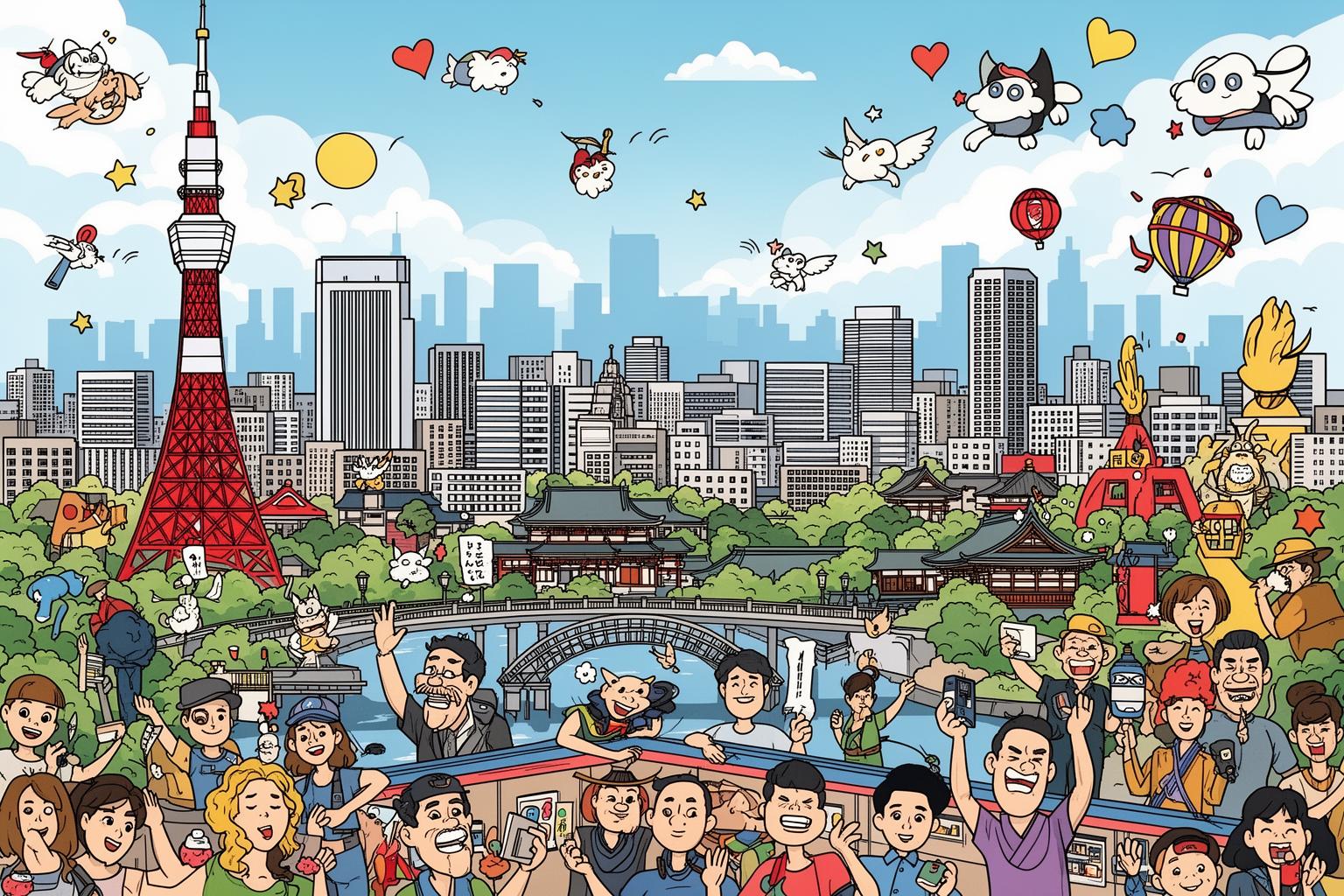
Nowhere is Osaka’s distinctive character more evident than in comparison to Tokyo. The difference in conversational style can be felt instantly as you step off the Shinkansen.
The Wall of Politeness
Try telling the same takoyaki joke at a stand in Tokyo: “This is so fresh, I bet the octopus was swimming this morning!” The typical response would likely be a polite, slightly puzzled smile, followed by a literal correction: “Ah, no, it’s high-quality frozen octopus.” They aren’t being rude; they’re being precise and courteous. They take your comment as a genuine question about the product’s freshness and respond with accurate information. The idea of turning a customer’s remark into a joint comedy act isn’t part of the usual social script. In Tokyo, interactions tend to be smoother, more predictable, and wrapped in a layer of polite distance (tatemae). In Osaka, people prefer to break through that distance with shared laughter.
Speed and Rhythm
The pace of life feels different, and this is reflected in speech. Osaka conversations are famously rapid, a whirlwind of overlapping sentences and quick comebacks. The boke-tsukkomi dynamic demands remarkable speed. There’s no time to pause and reflect; you must be ready to jump in immediately. This can be tiring for outsiders, but also thrilling.
Tokyo conversation, while not necessarily slow, generally allows for more space. There are more pauses, more moments of thoughtful silence. The rhythm is steadier, giving each person a turn without the playful interruptions typical of Osaka chats. This difference in rhythm influences everything. An office meeting in Osaka might be a loud, chaotic brainstorming session filled with jokes and challenges, whereas a Tokyo meeting is likely to be more structured and formal, with everyone speaking in turn.
The Punchline: Why Nori-tsukkomi is the Key to Osaka Life
Ultimately, nori-tsukkomi is far more than just a comedic formula. It represents a worldview—a social philosophy that values warmth over formality, connection over correctness, and shared laughter as the quickest way to bridge the gap between two people. It serves as Osaka’s immune response to the stiffness and reserve often found in social interactions elsewhere in Japan.
For a foreigner living in Osaka, learning to recognize and appreciate this conversational art is an essential step toward truly feeling at home. It’s the moment when you stop being puzzled by the takoyaki lady’s antics and begin laughing along with her. It’s when you understand that teasing from your colleagues signifies friendship, not mockery. It’s when you finally deliver a silly boke of your own, receive an instant tsukkomi in return, and feel a genuine spark of belonging.
Mastering nori-tsukkomi isn’t about becoming a comedian; it’s about learning to speak the language of the city’s heart. It’s about realizing that in Osaka, conversation is an opportunity not just to communicate but to play. And once you’re invited to join the play, you know you’ve become more than just a resident—you’re part of the vibrant, hilarious, and wonderfully human comedy of Osaka life.