Let me paint you a picture. You’re at a cozy little standing bar in Tenma, squeezed between a salaryman loosening his tie and a group of friends laughing uproariously. You’ve been in Osaka for a few months, your Japanese is functional, and you’re feeling pretty confident. You mention to the woman next to you that you love her leopard-print jacket. “Oh, this old thing?” she says with a grin. “All Osaka ladies are born wearing leopard print. It’s our skin.” You smile politely, a little confused. Her friend jumps in, deadpan. “She’s lying. We get it surgically attached when we turn twenty.” The whole group nods in serious agreement. You’re now completely lost. Is this a joke? Are they serious? Before you can formulate a response, the woman in the jacket playfully smacks her friend’s arm and yells, “Sonna wake nai yaro!”—No way that’s true!—and the entire bar erupts in a wave of warm, knowing laughter. You’ve just witnessed your first live-action, non-professional performance of nori-tsukkomi, and you didn’t even have to buy a ticket. Welcome to the real Osaka, where conversation is a contact sport, and the goal isn’t just to talk, but to create a shared moment of comedy, right here, right now.
This isn’t just some niche performance art. It’s the city’s linguistic lifeblood, the invisible rhythm that powers interactions from the fish market to the boardroom. For any foreigner trying to move past the tourist phase and truly understand the daily pulse of this city, cracking the code of nori-tsukkomi is more important than memorizing train lines or finding the best okonomiyaki joint. It’s the key to understanding why Osaka feels so fundamentally different from the rest of Japan. It’s a city that communicates through punchlines, a place where a shared laugh is worth more than a polite bow. Understanding this fast-paced give-and-take is your backstage pass to the heart of Osaka’s vibrant, chaotic, and endlessly entertaining culture.
Delving deeper into Osaka’s multifaceted local scene, you might find that learning to navigate its unique urban contrasts is much like balancing on a shotengai tightrope, where community spirit and everyday challenges intersect.
Decoding the Duet: What in the World is Nori-Tsukkomi?
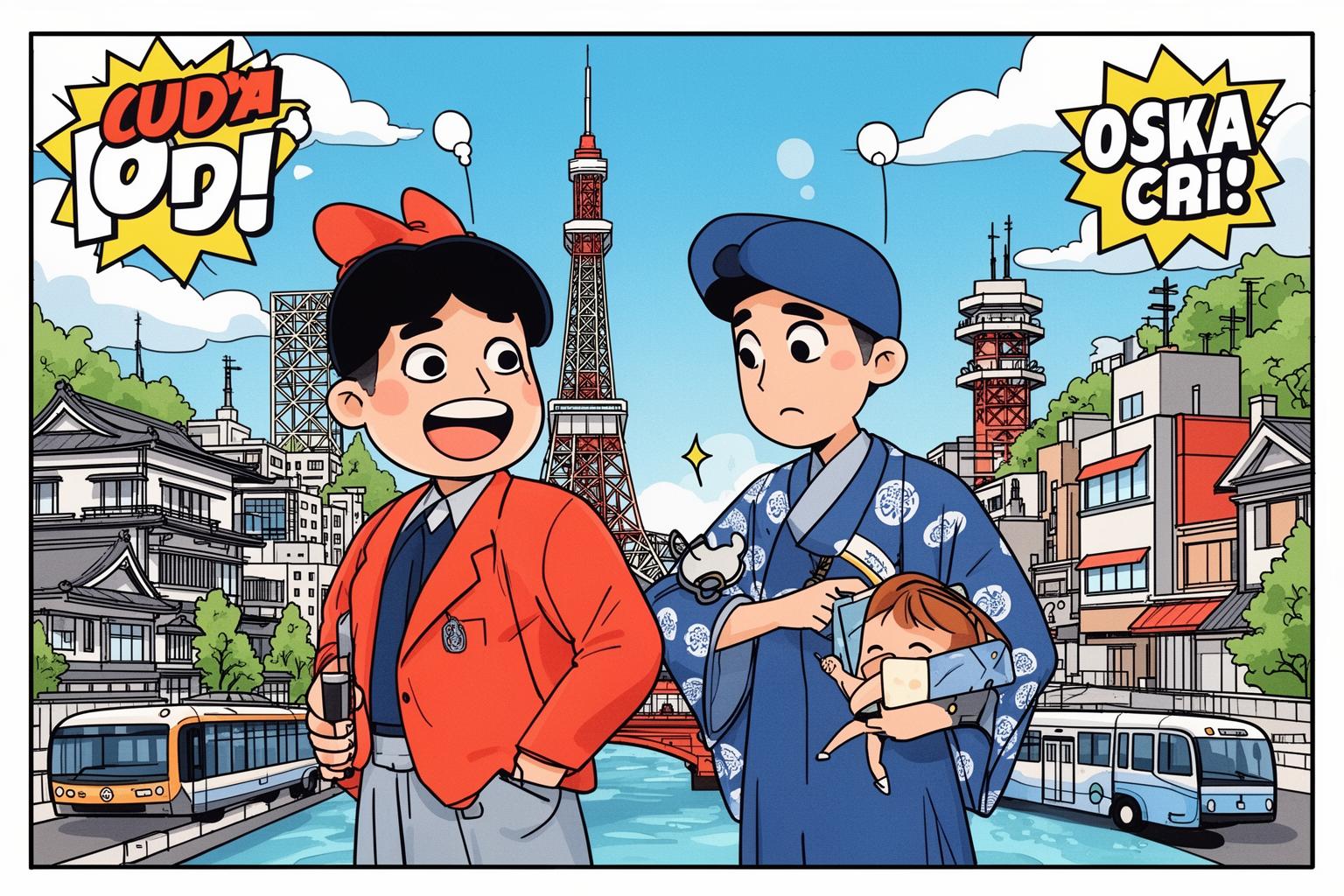
So, what exactly is this verbal dance that seems to flow so naturally among Osakans? At its essence, nori-tsukkomi is a two-part comedic structure that has stepped beyond the stage and taken over everyday conversations. It’s the driving force behind manzai, Japan’s well-known stand-up comedy style, but in Osaka, everyone is a potential comedian. Let’s explore the elements.
The Setup: Boke and Nori
First, there’s the boke (ボケ). This is the funny, airheaded character who says something absurd, exaggerated, or simply silly. They deliberately stray from logical conversation to create a joke. For example, they might look at a tiny plate of expensive sashimi and say, “This is enough to feed my whole family for a week!”
Here’s where non-Osakans might stumble. The usual polite response would be a quiet chuckle or a simple, “Oh, it does look small.” But in Osaka, that’s a missed chance. The expectation is for you to deliver the nori (ノリ). Nori means to “go along with” or “ride the wave” of the joke. It’s the improv rule of “Yes, and…” You don’t just recognize the absurdity; you enhance it. You accept the ridiculous premise and build on it. In response to the sashimi comment, a strong nori reply might be, “A week? You must have a family of hamsters! My family would need at least two plates!”
The Punchline: Tsukkomi
This is where the real magic happens. After everyone has joined in creating a playful bubble of imagination, someone has to burst it. That’s the tsukkomi (ツッコミ). The tsukkomi is the straight man who snaps everyone back to reality with a sharp, witty retort. They highlight the absurdity that everyone just accepted. This punchline provides the release. In the sashimi example, the original boke might suddenly switch roles and say, “なんでやねん! (Nande ya nen!) We’ll be hungry in five minutes! Order more!” This process of setting up a joke, inviting others to play along, then delivering the punchline yourself is the classic nori-tsukkomi move.
The tsukkomi often comes with a light, theatrical tap on the arm or shoulder. It’s not meant to be harsh; it’s like a punctuation mark. A physical exclamation point that signals, “The joke’s done, now laugh.” This entire exchange—boke setup, nori agreement, and tsukkomi punchline—can unfold in ten seconds. It’s a fast-paced back-and-forth that values quick wit and timing over politeness or formality.
The City as a Stage: Finding Banter in the Wild
Once you recognize the pattern, you begin noticing it everywhere. It’s not just for drinking with friends; it’s a public service. Daily life in Osaka unfolds as an endless string of comedic sketches, with everyone playing a role.
The Shopkeeper’s Banter
Visit any shotengai (shopping arcade) like Shinsaibashi-suji or Tenjinbashi-suji. Grab a t-shirt. The middle-aged woman running the store might approach and say, “That one? Only movie stars buy that. You must be famous.” This is a boke tease. A simple “No, I’m not” ends the conversation. The Osaka style is to nori. You go along with it. “Oh, you recognized me? I’m trying to keep a low profile.” You accept the premise. Now she has the perfect setup for her tsukkomi. She laughs heartily, maybe swats the air toward you, and says, “Aho ka! If you were famous, you’d be in a department store! Now, that’ll be 2,000 yen.” In that brief exchange, the transaction becomes an interaction. You share a laugh. You’re no longer just a customer; you’re part of her day, and she’s part of yours.
The Compliment Bounce
In many cultures, especially in much of Japan, the typical reply to a compliment is modesty and deflection. If you tell someone in Tokyo their bag is nice, they’ll probably say, “Oh no, it’s old and cheap.” This is a form of polite social distancing. In Osaka, a compliment is a conversational pitch ready to be knocked out of the park. Compliment an Osakan man on his shoes. He might scrutinize them mock-seriously and declare, “These aren’t shoes. They’re custom-built Italian speed machines. I can outrun the train in these.” He’s thrown you the boke. It’s your turn to nori. “Wow, really? Can you fly in them too?” you might ask. He grins, a sparkle in his eye, then delivers the tsukkomi: “Don’t be ridiculous! For flying, you need the deluxe model. Now, let’s grab a drink.” The compliment is just the opening to start the routine, a way to create an instant, playful connection.
The Communication Chasm: Osaka vs. Tokyo

This conversational style may be the most significant cultural distinction between Osaka and Tokyo. It goes beyond accents or culinary tastes; it reflects a deep philosophical difference regarding the purpose of communication itself. In Tokyo, communication often emphasizes harmony, indirectness, and maintaining one’s public image (tatemae). The aim is to share information smoothly without creating conflict. Conversations are measured, with pauses between words carrying as much weight as the words themselves. A joke is seen as a special occasion, a break from routine.
In Osaka, communication values connection, directness, and expressing one’s true feelings (honne), often through humor as a form of release. The objective is to shorten the distance between people as quickly as possible. A conversation without laughter feels somewhat sterile and sad. Here, jokes aren’t exceptions; they are the norm. This is why people from Tokyo may sometimes view Osakans as loud, brash, or even somewhat aggressive. They aren’t accustomed to conversations that require such lively, performative engagement.
On the other hand, Osakans can perceive Tokyo’s communication style as cold, distant, and excessively formal. A friend from Kobe once remarked, “Talking to someone from Tokyo is like playing catch with someone who just lets the ball drop. In Osaka, we throw it back—and try to add a little spin.” This difference is significant. When an Osakan playfully insults you, they aren’t being rude—they’re extending friendship, inviting you into their inner circle where formalities no longer matter.
A Non-Native’s Survival Kit for Osaka Banter
Alright, so you’re convinced. You want to join the game. But where do you begin? It can be intimidating. The speech is rapid, the slang thick, and timing is everything. Don’t worry. You’re not expected to headline at the Namba Grand Kagetsu comedy theater. The key is simply to show that you understand the rules and are willing to play along.
Rule One: You Don’t Need to Be the Star Comedian
Take it easy. No one expects a foreigner to deliver a perfectly timed, razor-sharp tsukkomi in flawless Kansai-ben. The pressure is off. Your main role is to be a good audience and an eager participant. The easiest and most effective thing you can do is master the nori. When someone says something ridiculous, just agree with them—enthusiastically. Your Japanese doesn’t have to be perfect. A simple “Hontou desu ka?! Sugoi!” (“Really?! Amazing!”) with wide eyes is often enough to show you’re in on the joke. By playing along, you validate their humor and show you’re on their wavelength.
Rule Two: Equip Yourself with a Few Key Phrases
While you don’t need an extensive arsenal, knowing a few basic tsukkomi phrases is like holding cheat codes to Osaka life. These are your go-to punchlines.
- なんでやねん! (Nande ya nen!): The undisputed king of Osaka expressions. It means “Why the heck?!” or “What are you talking about?!” It fits almost any situation where something doesn’t make sense. It’s friendly, iconic, and instantly marks you as someone who gets it.
- アホか! (Aho ka!): This means “Are you an idiot?!” and might be an insult elsewhere, but in Osaka comedy, it’s a term of affection. Used among friends with a smile, say it when someone’s boke is especially silly. It’s a verbal pat on the back that says, “That was a good one, you dummy.”
- そんなわけないやろ! (Sonna wake nai yaro!): A softer option meaning “There’s no way that’s true!” It’s a great, safe choice for calling out an exaggeration without being harsh.
Drop one of these at the right moment, and you’ll be met with surprise, delight, and instant acceptance.
Common Misunderstandings for Foreigners

Navigating this new realm of comedic communication can result in some classic cross-cultural misunderstandings. Recognizing these common mistakes is half the battle.
Mistake 1: Assuming They’re Mocking You
This is the most common error. An Osakan shopkeeper jokes about your shirt. Your coworker shares a ridiculous story about you. Your initial reaction might be to feel targeted or ridiculed. In fact, it’s quite the opposite. They are including you. In Osaka culture, teasing signifies affection and acceptance. They feel close enough to joke with you. If they were being strictly polite and formal, it would mean you’re still an outsider. When they start teasing, it’s your unofficial welcome. They’ve accepted you as one of their own.
Mistake 2: Taking Everything Literally
Osaka culture requires an attentive listener. You need to watch for the wink, grin, and subtle tonal shifts that indicate the conversation has entered the “joke zone.” If your neighbor tells you his tiny poodle won a sumo wrestling tournament, your reply shouldn’t be, “But dogs can’t be sumo wrestlers.” A logical, factual response derails the humorous flow. The right answer is to ask, “What was his wrestling name?” You must be willing to step into their imaginative world briefly before all of you return to reality with a laugh.
Mistake 3: Dreading the Word ‘Aho’
As noted, the meaning of ‘aho’ is unique here. While the rest of Japan leans toward using ‘baka’ for ‘idiot,’ usually as an insult, Osaka has made ‘aho’ its own. It’s versatile. Yes, it can be an insult, but in friendly banter, it’s a badge of honor. It’s the affectionate way to tease a friend’s silliness. If someone calls you ‘aho’ with a laugh, smile and call them ‘aho’ back. You’ve just reached a new level in your Osaka friendship.
More Than Just a Laugh: The Soul of a City
Why did this distinctive communication culture flourish here? Nori-tsukkomi is more than just an amusing habit; it directly mirrors Osaka’s history and spirit. This city has always been one of merchants, not samurai or bureaucrats. In the lively marketplace, success relied on your ability to quickly build rapport, be clever, haggle, and charm others with your personality. Sharp wit and a good sense of humor were valuable business tools. This fostered a culture that prizes quick thinking, practicality, and a personal touch over strict formality.
This comedic exchange is also a form of highly efficient communication. It serves as a way to express disagreement or highlight a flaw (tsukkomi) without the lengthy, face-saving rituals common elsewhere. It’s straightforward but softened by humor. This approach lets people share their true feelings (honne) openly because the comedic frame makes it feel less confrontational.
At its core, nori-tsukkomi is about community. It acts as social glue. Each time this small routine unfolds, it strengthens a bond. It’s a brief, shared performance that says, “We’re on the same team. We understand each other.” It’s how strangers on a train platform can feel like old friends for a moment. It fuels the city’s famed friendliness. Osaka’s warmth comes not just from people talking to you, but from inviting you to co-create—a joke, a story, a moment of shared laughter.
Living in Osaka is like having a front-row seat to the best show in town, and the best part is you’re invited on stage. You don’t need to be a professional. You don’t need a script. You just have to be willing to catch the setup, join the joke, and appreciate the timing of a perfect punchline. So next time someone tells you something utterly unbelievable with a straight face, don’t be confused. Just smile, play along, and get your Nande ya nen! ready. You’re not just having a conversation; you’re speaking Osakan.