You’re standing in a supermarket aisle in Osaka, staring at a wall of soy sauce bottles. Dark, light, extra-fermented, dashi-infused—the choices are dizzying. You grab one that looks familiar. Suddenly, a hand darts in front of yours, and an older woman, a complete stranger, shakes her head with theatrical dismay. She grabs a different bottle, shoves it into your hand, and says in a thick, rapid-fire Osaka-ben, “こっちや、こっち!その醤油は煮物に向いてへん!” which translates to, “This one, this one! That soy sauce isn’t for simmering!” Before you can even stammer out a thank you, she’s gone, vanished back into the flow of shoppers. You’ve just had your first real taste of Osaka, and it wasn’t food. It was an encounter with osekkai.
This is a city that doesn’t just exist around you; it actively involves you, whether you’re ready for it or not. Forget the polite, invisible bubble you might be used to in other parts of Japan, especially Tokyo. Osaka operates on a different frequency, a wavelength of direct, often unsolicited, and deeply ingrained neighborly intervention. It’s a place where the social fabric is woven not with silent deference but with chatter, advice, and a level of casual meddling that can feel like a warm hug one day and a baffling invasion of privacy the next. This isn’t just about being “friendly”—it’s a complex social contract written in invisible ink. For anyone trying to build a life here, learning to read that ink is the key to understanding the city’s soul. It’s the difference between merely living in Osaka and truly feeling like a part of it. This guide is your decoder ring for the beautiful, chaotic, and utterly human phenomenon of Osaka’s osekkai culture.
Embracing Osaka’s spirited friendliness means not only adapting to its spontaneous osekkai but also learning the unspoken counter code of standing bars that subtly shapes everyday interactions.
The Anatomy of Everyday Meddling
Osekkai is often translated as “meddlesome” or “nosy,” but that overlooks the essential element: kindness. It is a proactive, often unsolicited form of help grounded in a sincere, though sometimes awkward, sense of community responsibility. It’s not malicious, nor intended to embarrass you. It stems from the belief that allowing a neighbor to make a mistake quietly is the greater discourtesy. This mindset is evident everywhere, transforming ordinary daily routines into opportunities for social interaction.
The Shotengai: Your Neighborhood Proving Ground
The covered shopping arcades, or shotengai, serve as the vibrant lifeblood of local life in Osaka and are the primary environment for osekkai. These are not sterile, impersonal malls but living ecosystems of small, family-run shops where proprietors have known their customers for generations. As a newcomer, you become a fresh face, a curiosity, and a potential recipient of a flood of well-intended advice.
When you approach the butcher to buy pork for tonkatsu, before you can speak, the butcher’s wife might lean over the counter, assess you from head to toe, and declare, “You look tired today! You should make ginger pork instead. It’s better for your circulation. Here, I’ll give you the right cut.” She’s not simply selling meat; she’s offering a remedy, inserting herself into your dinner plans and well-being without hesitation.
At the tofu shop, the elderly man might inquire where you’re from. After you answer, he’ll quiz you about your Japanese skills, your job, and whether you’re married yet. It’s not an interrogation; it’s an initiation. He’s positioning you on the neighborhood map. Next week, he’ll remember you. The following week, he’ll ask if you enjoyed the tofu and suggest a different way to prepare it. This is how relationships develop here—through a slow, steady stream of personal questions and unsolicited advice.
The Unspoken Rules of the Garbage Station
Nowhere is the divide between Osaka’s communal mindset and a foreigner’s expectation of privacy more visible than at the local garbage station. In most places in Japan, sorting trash is a complex yet anonymous civic duty: you follow the rules, set your bag out on the correct day, and it disappears. In Osaka, your garbage is a public declaration, and your neighbors are the judges.
If you put your burnable trash out on a plastics day, don’t expect a polite note from the city. Expect a direct intervention. A neighbor might spot you, approach, point at your bag and then to the calendar with a stern but kindly look. “Today is plastics,” they’ll say as if it’s the most obvious fact in the world. They might even open your bag to help you re-sort it on the spot. For many foreigners, this feels humiliating, like being scolded for a private fault. But in the Osakan worldview, you’re not making a private mistake; you’re disrupting the harmony of shared space. Their intervention isn’t about shaming you but about steering the community back on course. They are fixing a problem—and you happen to be the source. The goal is a clean garbage area, and individual feelings come second to that collective aim.
The Commuter Train Classroom
Even the relatively anonymous environment of a commuter train is not exempt from osekkai. If your backpack is open, someone will tap your shoulder to point it out. If your English textbook has a typo, the passenger beside you might lean over and correct it with their own pen. If your child is fussy, a grandmotherly figure might appear from a few seats away, offering a small rice cracker or candy along with a repertoire of funny faces.
These interventions are swift, efficient, and come with no expectation of anything in return. They are brief bursts of social responsibility. The person who tells you that you have a thread hanging from your coat isn’t trying to start a conversation; they are identifying and addressing a small, fleeting problem in their immediate surroundings. Letting you walk around with an open bag or loose thread would mean tolerating a minor imperfection in the world that is easily corrected. And in Osaka, a problem fixable with a few words is a problem that should be fixed—immediately.
The Great Divide: Osaka’s Directness vs. Tokyo’s ‘Reading the Air’
To truly understand the essence of osekkai, you need to contrast it with Tokyo’s dominant social currency: kuuki wo yomu, or “reading the air.” This is the unspoken, almost intuitive ability to sense a social situation and respond in the most harmonious, non-disruptive manner possible. In Tokyo, ideal social interactions tend to be smooth, indirect, and carefully avoid confrontation or potential embarrassment at all costs.
A Tale of Two Cities: Asking for Directions
Picture yourself lost in Tokyo. You approach someone on the street for directions. That person will likely be extremely polite, listen attentively, pull out their phone to check the map, and then offer precise, careful instructions. They will bow, and the entire interaction will be efficient, respectful, and confined within clear social boundaries. They aim to help you solve your problem with minimal personal intrusion.
Now, imagine the same situation in Osaka. You ask a middle-aged woman for directions to a restaurant. Her first response might be a loud, “Eh? That place? It’s not that good!” She’ll then tell you about a much better, cheaper, and more authentic spot just two blocks away. As she explains, another passerby—a man walking his dog—might overhear and jump in with, “No, no, no, the best okonomiyaki is over there. My cousin runs the shop.” Suddenly, you’re no longer just asking for directions; you become the moderator of a lively public debate about the neighborhood’s best lunch place. They might even offer to walk you there, chatting along the way about your hometown, your job, and your thoughts on the Hanshin Tigers baseball team. In Tokyo, you receive information. In Osaka, you get an opinion, a conversation, and possibly new dinner plans.
The Social Logic of Intervention
This difference arises from a fundamental disagreement about what constitutes a social nuisance, or meiwaku. In Tokyo, causing someone to lose face or creating an awkward situation is considered the primary form of meiwaku. Therefore, pointing out a flaw in a stranger—even something as minor as a tag sticking out of their shirt—could embarrass them. The harmonious choice is to stay silent, to pretend you don’t notice. The responsibility lies with the individual to maintain their own appearance.
In Osaka, the logic is reversed. The greater meiwaku is allowing someone to remain unaware. Letting a person walk around with a tag sticking out reflects poorly on the community as a whole. It signals a collective failure to look out for one another. Thus, the direct, verbal correction is not seen as aggression but as social upkeep. A brief moment of potential awkwardness is a small price to pay for solving the issue. This reflects the philosophy of a merchant city, where pragmatism and efficiency often outweigh delicate social rituals. A problem is recognized, a solution proposed, and life moves on. There’s no time for “reading the air” when there’s a deal to be made or a community to maintain.
This straightforwardness is often misunderstood by foreigners—not as rudeness but as a different, more engaged form of politeness. It’s a social code that values collective well-being over individual, isolated comfort.
How to Live With and Love Osekkai
Grasping the concept of osekkai is one thing; managing it in daily life is quite another. It demands a mental shift, a readiness to be somewhat more open and less guarded than you might typically be. Your responses will shape your neighborhood experience and decide whether these encounters feel like an endearing quirk or an ongoing irritation.
The Art of a Gracious Reception
Generally, the proper way to respond to an act of osekkai is with a simple, sincere “arigato gozaimasu” (thank you). When someone corrects how you sort your recycling, offers cooking tips, or alerts you that your bike tire is low, they are giving you a small gift of their attention and experience. Accepting it gracefully is the easiest and most socially rewarding approach. A bright smile along with a thank you acknowledges their effort and signals that you understand the unspoken rule: we look out for one another here.
At times, a slightly more apologetic tone is appropriate. If you’ve made a clear social mistake, like incorrectly sorting your trash, a quick “sumimasen” (excuse me/I’m sorry) followed by “arigato gozaimasu” is the perfect response. It admits the error while appreciating the correction. Such humility goes a long way in an Osaka neighborhood, showing that you’re eager to learn the local customs.
What if you don’t want the help? Politely declining can be delicate. A blunt “no, thank you” (kekkō desu) may come off as cold or dismissive. A gentler approach uses softening language. Something like, “Ah, daijōbu desu, arigato gozaimasu” (Ah, it’s okay/I’m fine, but thank you) works well. This recognizes the offer while gently asserting your independence. The key is to smile and keep a friendly tone; your body language often speaks louder than words.
Decoding the Different Types of Meddling
Not all osekkai is the same. It’s important to distinguish between the various motivations behind these interventions.
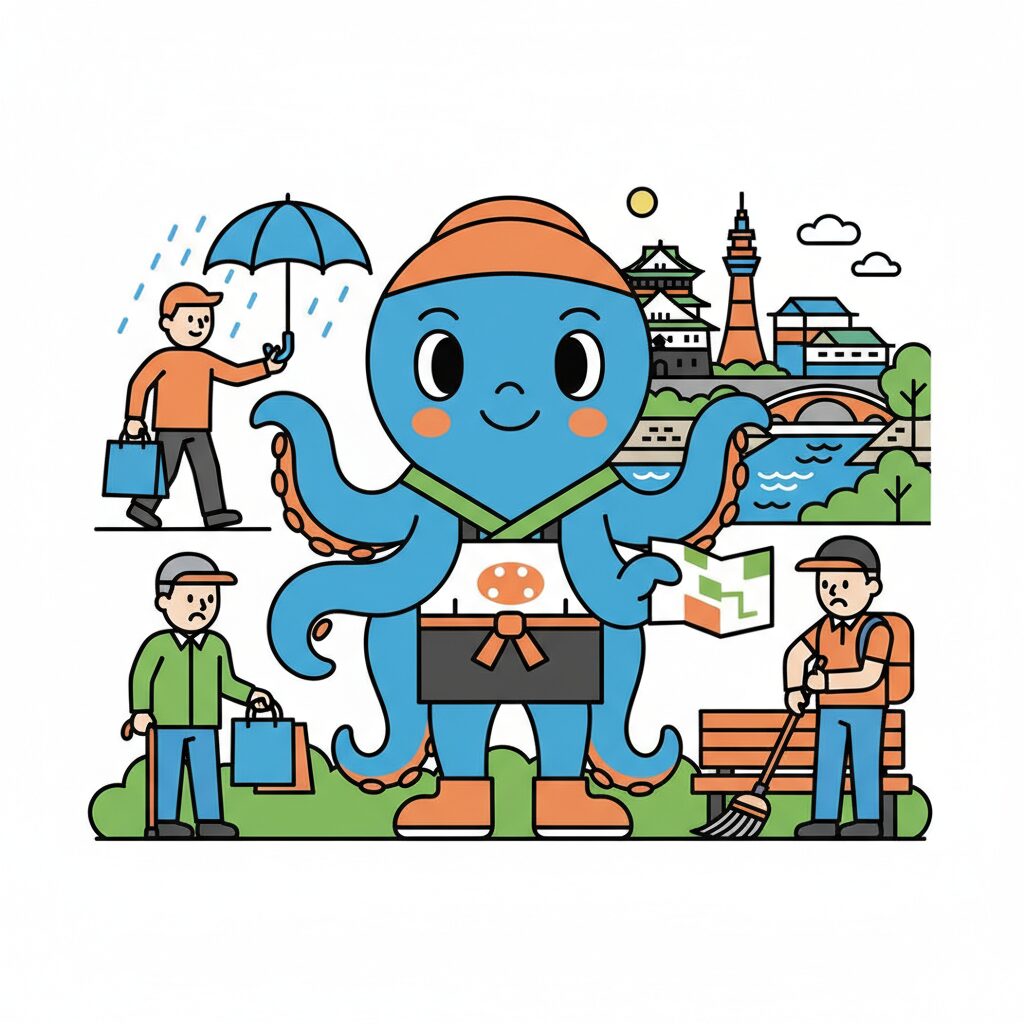
Genuine Care: This is the most common type. The elderly woman warning you it might rain so you should take an umbrella, or the shopkeeper telling you which fish is freshest today. This reflects pure community spirit in action, with no agenda other than to be helpful.
The Teaching Moment: Often coming from older residents toward younger people, including foreigners. When a neighbor instructs you on the “correct” way to sweep your front pavement or explains the local shrine’s intricate social calendar, they’re passing on knowledge. They see it as their duty to properly welcome you into the community. It can feel a bit patronizing, but the intention is usually to help you fit in.
Information Gathering (aka Nosiness): Sometimes questions about your job, family, or rent are simply that—questions. Osaka locals are famously curious and want to know who their neighbors are and their stories. While it may feel intrusive, it’s seldom malicious. It’s part of a social process of assessing and understanding those you share a space with. Responding vaguely but cheerfully is an entirely acceptable approach.
The Business Pitch: Be aware that in the shotengai, osekkai can sometimes precede a sales pitch. The butcher advising on dinner also hopes you’ll buy his best pork cut. The fruit seller giving your child a free mandarin hopes you’ll purchase a whole bag. This represents Osaka’s merchant spirit—combining genuine friendliness with savvy business tactics. It’s usually harmless but good to recognize its dual purpose.
The Other Side of the Coin: When It Becomes Overwhelming
It wouldn’t be fair to portray osekkai solely as a charming, positive element of Osaka life. Sometimes it crosses a line and feels truly intrusive or judgmental. The neighbor who comments every time you have visitors. The stranger who openly criticizes your parenting style in public. The landlord who appears to know too much about your daily schedule.
This is the downside of a tight-knit community. The same network that offers support can also feel like surveillance. In these moments, it’s important to remember you’re entitled to boundaries. You can be polite but firm. You can shorten conversations. You can deflect personal questions with non-committal answers and swiftly change the subject. You don’t have to sacrifice your own comfort entirely for neighborhood harmony.
However, choosing your battles is crucial. Reacting with anger or visible frustration to minor osekkai will likely isolate you more than solve the problem. It may label you the “difficult foreigner” who doesn’t understand how things work. Learning to let small things go while gently setting limits on bigger issues is a delicate balance every long-term resident must master.
The Unspoken Social Contract
Ultimately, osekkai represents more than just a collection of quirky social customs. It stands as visible proof of an unspoken social contract in Osaka. The understanding is this: in exchange for a degree of your personal privacy, you become part of a community that genuinely looks out for you. Your neighbors will notice if your newspapers begin to pile up. The local shopkeeper will ask if you’re feeling alright if you haven’t visited in a few days. People will offer help without you needing to ask.
This sharply contrasts with the anonymity found in many large global cities, including Tokyo, where you can live for years without ever speaking to your neighbors. In Osaka, achieving that level of isolation is nearly impossible, for better or worse. The cost of admission to this safety net of casual, communal care is that you must also accept its intrusions. You must accept the advice, the questions, and the occasional meddling. You must accept that your life is not entirely your own but part of a larger, interconnected, and very talkative whole.
Living in Osaka is an immersive experience that challenges your ideas of public and private space, politeness and rudeness, community and individuality. The constant, low-level hum of osekkai serves as the city’s background music. At first, it may sound like noise—jarring, confusing, and even irritating. But if you stay long enough and learn to listen closely, you might begin to hear the melody within it—a tune of connection, shared responsibility, and a deeply human desire not to face life alone. Within that rhythm, you may just find the true heart of this wonderfully complex city.