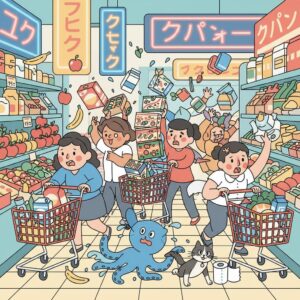
The first thing you learn about Osaka is the grid. The endless, pulsing, electric grid of the city. From the train window, it’s a blur of concrete and steel, a landscape of right angles and tangled wires that hums with a relentless, commercial energy. Living here, you feel it in your bones. The press of the crowds in Umeda, the rumble of the Midosuji line under your feet, the constant soundtrack of shop jingles and bicycle bells. It’s a city that runs on forward momentum, a place built for business, for getting things done, for making a deal. And on a Friday afternoon, after a week of navigating that grid, you feel an undeniable pull. A need to break free, to find a different rhythm. This is where the weekend road trip comes in, a sacred Osaka ritual. But forget what you might imagine about grand getaways. We’re not talking about meticulously planned excursions to five-star resorts or serene temple stays in Kyoto. That’s too formal, too stiff. The Osaka escape is something rawer, more spontaneous. It’s about getting in a car, picking a vague direction—maybe south towards the misty mountains of Wakayama or east into the ancient heartland of Nara—and just driving. The true destination, the anchor of this entire experience, is a place you’ve probably driven past without a second thought: the Michi no Eki, the humble roadside station. It’s far more than a rest stop. It’s a cultural embassy, a farmer’s lifeline, and the most honest window you’ll ever find into the soul of Kansai, the region Osaka calls home. To understand the Michi no Eki is to understand the unspoken logic of Osaka life itself.
For travelers embracing both adventure and a taste of local urban life, discovering Osaka’s underground cafes can offer the perfect mix of relaxation and productive escape.
The Osaka Escape Mentality: Beyond the Concrete Grid
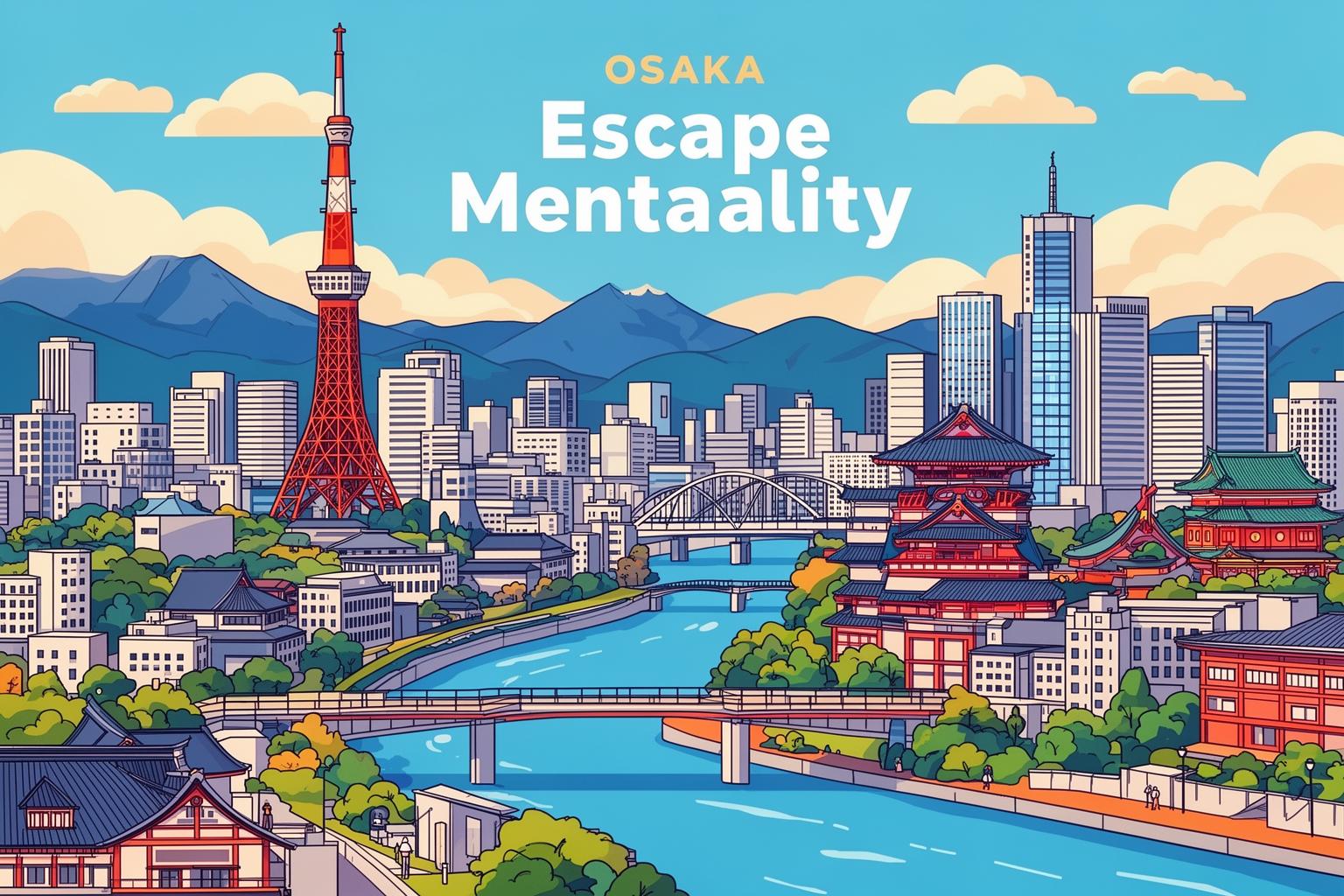
To truly understand why the Michi no Eki holds such importance, you first need to experience the city itself. Osaka is a merchant’s town, built on flat, reclaimed land. It’s a practical city, not one focused on aesthetics. Its layout is logical, and the architecture is functional. Life unfolds at street level, within the shotengai shopping arcades and the cozy, bustling izakayas. There’s a vibrant, chaotic humanity to it all, though it can sometimes feel overwhelming. The summer air grows thick, noise is ever-present, and unobstructed horizons are rare to find. This environment fosters a distinct kind of craving, a deep-rooted need for something honma—a term that roughly means ‘real’ or ‘authentic,’ yet holds much deeper significance here. It represents a longing for things that are straightforward, sincere, and grounded.
Here, the Osaka mindset sharply contrasts with that of Tokyo. A Tokyoite planning a weekend trip might research the top ryokan in Hakone, book a specific train, and outline a schedule packed with museums and cafes. It often becomes an exercise in curation and sophistication, designed to impress by being seen in the right places. Osaka’s approach, however, is fundamentally different. It’s fueled by impulse. You wake up on a Saturday, see the sun shining, and someone says, “Ikou ka?” (Shall we go?). Plans are loose, destinations flexible. The objective isn’t to reach a polished tourist spot, but simply to get out—to watch the city fade in the rearview mirror as roads begin to wind and the scenery turns green. It’s about the freedom found in the drive itself.
This spontaneity reflects the very character of Osaka. Life here is less about strict, long-term planning and more about seizing the moment, about responding spontaneously. It’s a city of entrepreneurs and traders who rely on their instincts and intuition. That same impulse extends to leisure. Why waste a beautiful day? Why overthink it? Just go. The car becomes a bubble of freedom, a temporary escape from the pressures of the urban grid. The Michi no Eki isn’t simply a stop along the way; it embodies the tangible goal of this impulsive quest for authenticity, the place where the concrete finally yields to earth.
What Exactly is a Michi no Eki? (And Why It’s Not a 7-Eleven on the Highway)
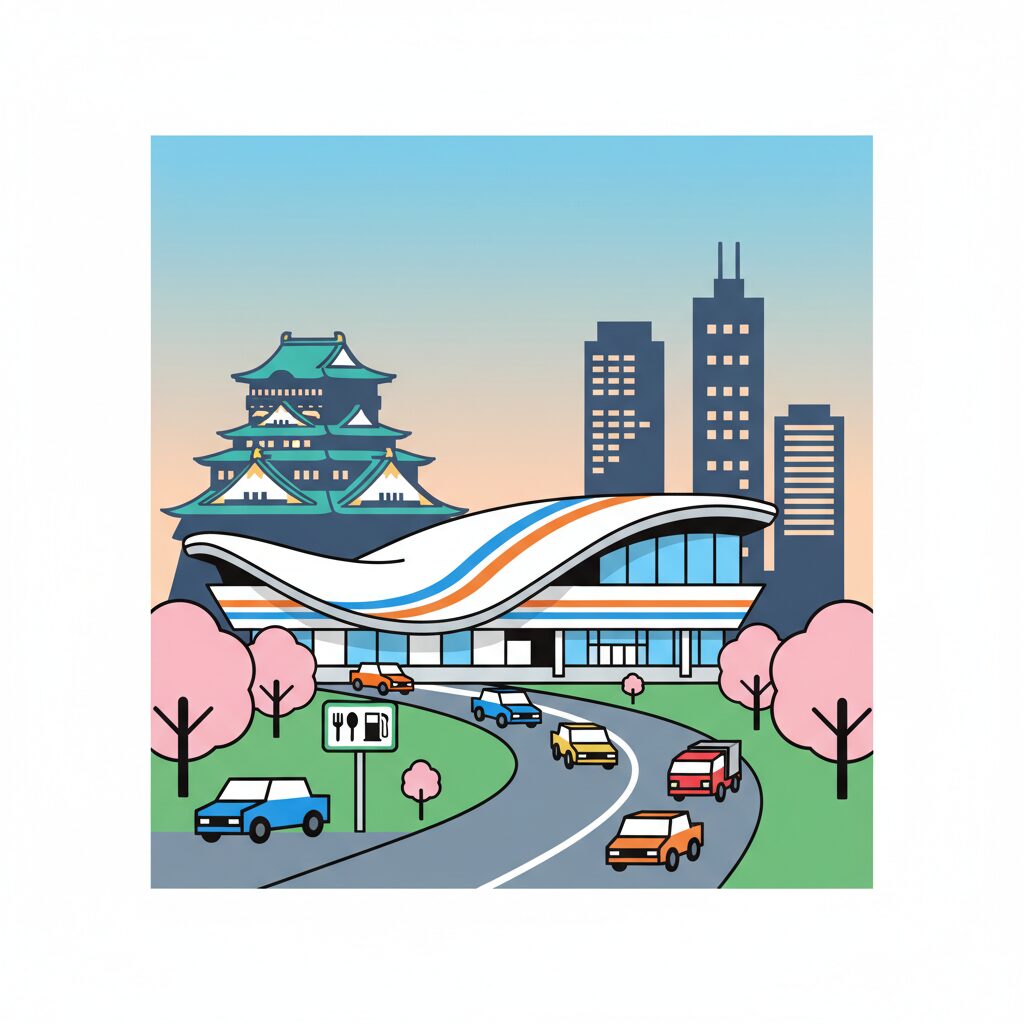
A foreigner might mistake the sign for a Michi no Eki as just another convenience store or gas station commonly found along Japanese highways. This is the first and most fundamental misconception. A Michi no Eki is truly something else entirely. These are government-designated “roadside stations,” created in the 1990s with a clear goal: to breathe new life into rural areas, showcase local culture and products, and offer drivers a safe, clean place to rest. They serve as community centers cleverly disguised as rest stops. While each Michi no Eki is unique, they nearly always share a few key features that make them special.
The Heartbeat: The Farmers Market (Chokubaijo)
This is the soul of the Michi no Eki. The chokubaijo, or direct-sales market, is where local farmers sell their fresh produce directly to customers. Upon entering, you’re greeted by the earthy scent of fresh soil and ripe fruit. The shelves are stocked not with perfectly uniform, plastic-wrapped vegetables from national distributors, but with the day’s harvest straight from nearby fields. The carrots might be crooked, the tomatoes might show some blemishes, and the daikon radishes can be humorously oversized. This is produce with character. Importantly, nearly every item has a small, handwritten label identifying the farmer, often accompanied by a photo. This isn’t an anonymous sale. It’s a personal connection. You’re not just buying a cucumber; you’re buying Mr. Yamamoto’s cucumbers, grown just a few kilometers away. This fosters a strong sense of trust and community, creating a direct link between urban buyers and rural growers.
The Fuel: The Local Cafeteria
Forget about fast food chains. The Michi no Eki’s restaurant is typically a simple, no-frills spot run by local women — the beloved obachans of the neighborhood. The menu reflects the culinary identity of the region. In Nara’s mountains, you might be served kakinoha-zushi (persimmon leaf-wrapped sushi). Along the Wakayama coast, it could be a humble rice bowl topped with freshly caught shirasu (whitebait). Inland in Hyogo, you’ll find hearty udon noodle soup flavored with local mountain vegetables. The food is sincere, satisfying, and deeply connected to the area. It’s the kind of home-style cooking made with ingredients sourced directly from the neighboring market. Dining here means tasting the local terroir, fueling your journey with the very essence of the land you’re traveling through.
The Portal: The Information and Souvenir Corner
Every Michi no Eki features an area stocked with free maps, brochures on local sights, and details about regional events. This isn’t the glossy, tourist-focused material typical of major train stations. It’s usually locally created, highlighting small museums, hiking paths, or community festivals you won’t find in guidebooks. It serves as a genuine gateway to deeper exploration of the area. The souvenir, or omiyage, section is equally revealing. Instead of mass-produced keychains, you’ll discover jars of jam made from local berries, bottles of distinctive soy sauce from century-old breweries, handcrafted items, and packages of regional snacks. Buying here isn’t just picking up a souvenir; it’s taking home a piece of the local economy and culture, directly supporting the people who define the region.
Reading the Osaka Mindset at the Produce Section
If you truly want to grasp the Osaka mindset, spend twenty minutes observing shoppers at a Michi no Eki farmers market. It’s a lesson in the city’s core values, all unfolding amid heaps of fruits and vegetables. The exchanges here offer a snapshot of Osaka’s unique commercial and social culture.
The Art of Value, Not Just Low Prices
Osakans are often labeled as money-obsessed, summed up in the common greeting “Mokari-makka?” (“Are you making a profit?”). Outsiders frequently misinterpret this as stinginess, but that’s a misconception. The real Osaka focus is on value. It’s about maximizing what you get for your yen. In a supermarket, this might mean spotting a bargain. At a Michi no Eki, the calculation is subtler. An Osaka shopper might skip perfectly shaped, normally priced tomatoes in favor of a bag of “imperfect” ones, rich in flavor and sold for less. They see the cosmetic blemish not as a flaw, but as a chance. They’re not being cheap; they’re being clever. They know true quality isn’t about looks. This pragmatic, value-oriented mindset forms the foundation of Osaka’s merchant culture. Why pay extra for a fancy label when the genuine article, a little rough around the edges, is far superior?
The Thrill of the Hunt and the Power of a Good Story
Shopping here is entertainment, a treasure hunt. Shoppers genuinely delight in their discoveries. You’ll spot people holding up enormous shiitake mushrooms or oddly shaped gourds, calling family members over to admire them. There’s joy in finding something unique, something you won’t see in the sterile aisles of a city supermarket. This sharply contrasts with Tokyo’s shopping culture, where prestige and brand names often guide choices. In a high-end Tokyo depachika, fruit is flawless, pricey, and displayed like jewelry. In Osaka, the prize is the oddly shaped but incredibly sweet melon the farmer discounts for you. It comes with a story. You can return to your Namba apartment and tell friends about that giant daikon radish you bought for 300 yen—and that story carries more value than any perfectly packaged luxury item. It’s about experience, not just presentation.
Communication is Direct and to the Point
Notice the conversations. There’s no polite hesitancy. An Osaka shopper approaches a staff member, holds up an unusual vegetable, and asks, “Kore dou yatte taberuno?” (“How do you eat this?”). Or they consult other shoppers: “Kono mikan, amai?” (“Are these mandarins sweet?”). The communication is straightforward, practical, and lacks the layers of formal politeness common elsewhere in Japan. This isn’t rudeness; it reflects a cultural preference for clarity and directness. The aim is to gather information and make an informed choice. This forthrightness defines Osaka speech and interaction. People say what they mean and value honesty in return. The Michi no Eki is a place where this practical communication style flourishes.
The Soft-Serve Ice Cream Litmus Test
Every great cultural institution has its own rituals, and at Michi no Eki, one of the most cherished is the soft-serve ice cream. It may seem trivial, but it serves as a surprisingly accurate gauge of the regional spirit and the adventurous tastes of Osaka road-trippers. Each station features a unique soft-serve flavor, almost always inspired by a local agricultural specialty. This goes beyond simply offering a sweet treat; it’s a point of pride and a creative, delicious way to highlight the area’s identity.
Forget vanilla, chocolate, and strawberry. Here, you find soy sauce soft-serve in a town renowned for its shoyu breweries. Wasabi soft-serve is available in a region famous for its mountain streams where the pungent root grows. Common flavors include sweet potato, black bean (kuromame), fig, and mikan orange. Choosing and tasting one of these unusual flavors is an essential part of the experience—a low-stakes adventure for your palate. For an Osakan, the decision is straightforward. Faced with a sign advertising Umeboshi (pickled plum) flavored ice cream, the response isn’t hesitation but curiosity. “Might as well give it a try!” It’s about embracing novelty and the experience. You eat it, debate whether it really tastes good, and return home with a story to share. It becomes a piece of neta—material for a funny anecdote or conversation. This playful, dive-in spirit is pure Osaka. The city loves to laugh, be entertained, and not take itself too seriously. Trying a strange ice cream flavor perfectly captures that willingness to break from the norm for the sake of a memorable experience.
How Michi no Eki Culture Defines the Osaka-Kansai Relationship
From a high-rise in Osaka, it’s easy to forget that the city doesn’t exist in isolation. It is the dense, urban core of the broader Kansai region, a dynamic ecosystem of prefectures, each with its own unique character. Osaka functions as the mouth, the commercial center that consumes and trades. Meanwhile, the surrounding areas—the rolling tea fields of Kyoto prefecture, the sacred mountains of Nara, the fruit orchards of Wakayama, and the fertile farmland of Hyogo—form the body that sustains it. A weekend drive to a Michi no Eki is a journey through this anatomy, serving as a tangible reminder of the deep, symbiotic relationship between the city and its countryside.
The Michi no Eki acts as a bridge, blurring the often-clear boundary between urban and rural life. When you buy a bag of rice directly from a farmer, you’re not just a consumer; you’re engaging in the local economy. You see the faces of the people who grow the food that ends up on your table in Tennoji or Shinsaibashi. This cultivates a strong sense of connection and mutual reliance. The relationship between Osaka and its neighbors feels more immediate and intimate than, for instance, the connection between Tokyo and the expansive Kanto plain. Just an hour’s drive from the neon chaos of Dotonbori can bring you to a quiet village nestled among rice paddies. The change is sudden and striking.
In this light, the Michi no Eki serves as an embassy for these rural communities. It proudly showcases their identity, offering a space for them to present their finest products directly to their urban neighbors. For the residents of Osaka, it provides a chance to reconnect with the land, to be reminded of the seasonal rhythms that 24/7 city life often erases. You can’t buy freshly harvested bamboo shoots in October, nor ripe strawberries in August. The Michi no Eki upholds this natural calendar, anchoring you in the reality of the seasons. It is a pilgrimage from the artificial environment of the city to the authentic heart of the region, reinforcing the ties that bind Kansai together.
A Practical Guide for Your First Michi no Eki Trip
Starting your own Michi no Eki adventure is easy, but approaching it with the right mindset and tools will elevate it from a simple drive to an authentic cultural experience. Here’s how to enjoy it the Osaka way.
Go Early, Go Hungry
This is the golden rule. The most dedicated shoppers—local grandmothers who know exactly what they want—arrive as soon as the doors open. By lunchtime, the best, most interesting, and freshest produce is often gone. Arriving early signals your seriousness and serves as a silent gesture of respect for the farmers and their hard work. Equally important: come with an empty stomach. The local cafeteria is a vital part of the experience. Plan to have lunch there. Don’t just browse; fully immerse yourself in the station’s food culture.
Bring Cash and a Cooler Box
While bigger Michi no Eki may accept credit cards, many individual farmers and small vendors operate on a cash-only basis. This is a grassroots economy, so carrying plenty of cash is crucial. The cooler box is another must-have. Bringing one in your trunk shows your intent: “I’m here to buy.” It marks you as an experienced Michi no Eki explorer. You’ll need it to safely carry your treasures—fresh vegetables, handmade tofu, local fish, or a bottle of unpasteurized sake—back to the city. It’s a practical item that also signals your appreciation for the quality of these goods.
Embrace the Detour
Avoid overplanning your route. The true joy of a Michi no Eki road trip lies in its spontaneity. Choose a general direction but stay alert for the distinctive brown-and-green road signs pointing to different stations. Let them guide you. One of the best parts of the trip is discovering a small, charming station you never knew existed. This is the opposite of a tightly scheduled, checklist-style tour. It’s about welcoming the unexpected, being open to wherever the road takes you. This flexible, go-with-the-flow attitude is central to how Osakans enjoy their leisure time.
Learn the Local Lingo of Appreciation
You don’t need fluency in Japanese, but knowing a few key phrases helps bridge cultural gaps and shows your enthusiasm. While browsing the market, a simple “Oishisou!” (“That looks delicious!”) will brighten any vendor’s day. When you see the prices, an appreciative “Meccha yasui!” (“Wow, that’s so cheap/such a good deal!”) shows you understand and respect the value offered. These small expressions prove you’re not just an observer but an engaged participant who truly gets what this place is about.
In the end, a trip to a roadside station is much more than hunting for cheap vegetables or a quirky ice cream flavor. It’s a weekly, seasonal ritual that reveals the character of Osaka and its people. It uncovers a side of the city you won’t find in its busy urban core: a deep appreciation for authenticity, a keen eye for value, a love for a good story, and an unbreakable bond with the surrounding land. It’s where the city’s relentless commercial drive finds balance in the quiet, cyclical rhythms of the countryside. To understand why an Osakan will happily drive for hours just to buy a specific brand of homemade pickles or freshly milled rice, you need to appreciate their reverence for the honma. This is a quality that can’t be mass-produced. You find it in a simple wooden stall on a winding mountain road, often accompanied by a handwritten note and the farmer’s smiling photo taped to the bag. That connection, that honest, straightforward exchange, is the key to understanding life in Osaka far beyond the city lights.