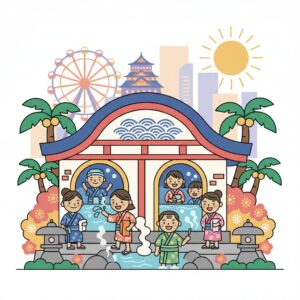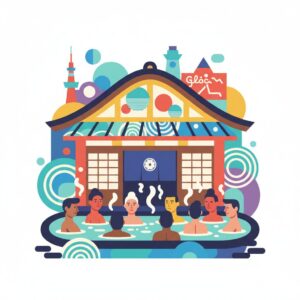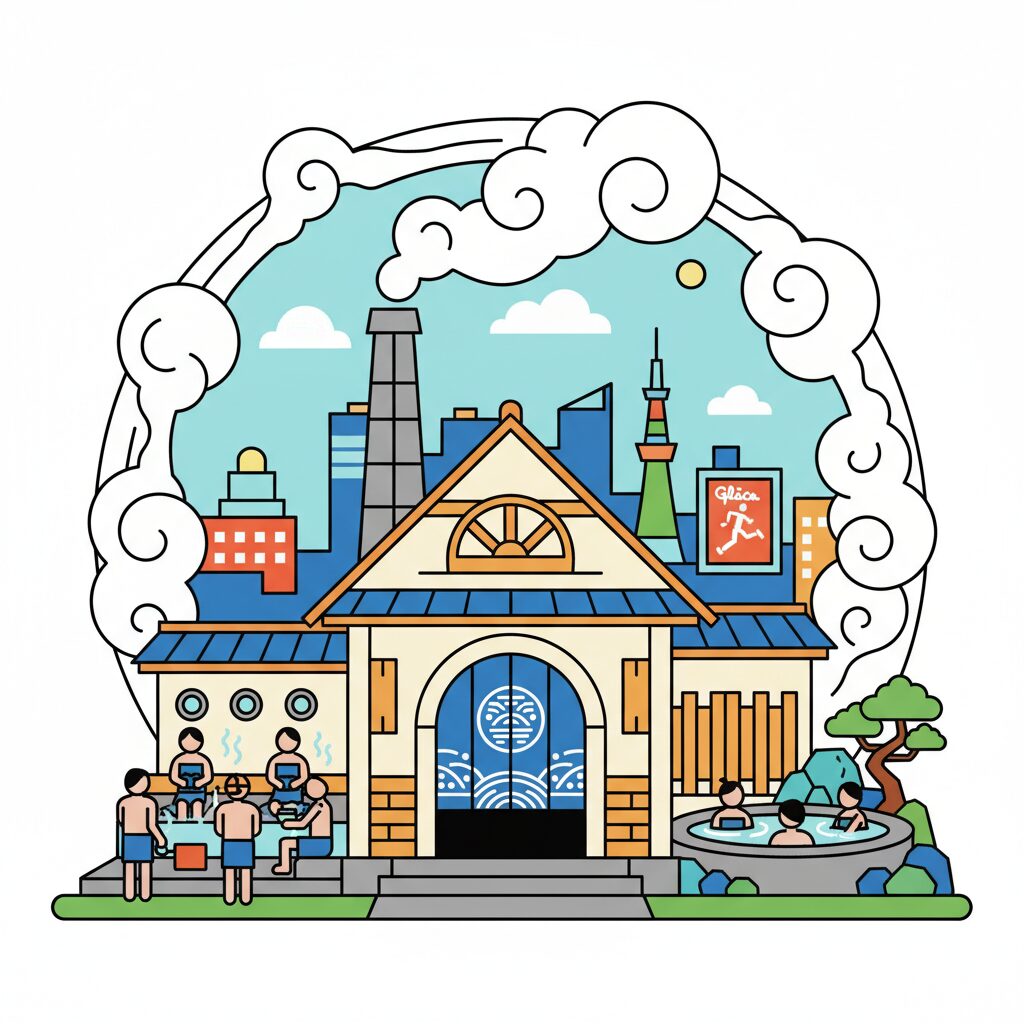
The steam hits you first, a warm, humid cloud smelling of soap and cedar. Then come the sounds. The rhythmic slosh of water from wooden buckets, the sharp clatter of plastic stools on tiled floors, and a chorus of voices—deep, rumbling laughs and high-pitched chatter, all bouncing around in the local Kansai dialect. This isn’t a serene, meditative onsen experience you see in travel brochures. This is an Osaka neighborhood sentō, a public bath, and it’s one of the most honest, unfiltered windows into the city’s soul. When I first moved to Osaka, I thought of a sentō as just a place to get clean, a relic from a time before every apartment had its own shower. It felt like a utility, a function. I couldn’t have been more wrong. In Tokyo, a public bath can be a place of quiet, individual ritual. In Osaka, it’s the community’s living room, just with a lot more water and a lot less clothing. It’s here, in these unassuming neighborhood spots, that you can truly understand the concept of “hadaka no tsukiai”—naked communion. It’s where the city’s famous warmth isn’t a stereotype, but a tangible, steaming reality. Forget the guidebooks for a moment. To understand daily life here, you need to grab a small towel, find your local bathhouse, and dive in.
These intimate public baths not only serve as everyday essentials but also nurture vibrant social connections, a role further explored in local sentō community experiences that capture Osaka’s unique neighborhood spirit.
The Unspoken Rules of the Neighborhood Bath
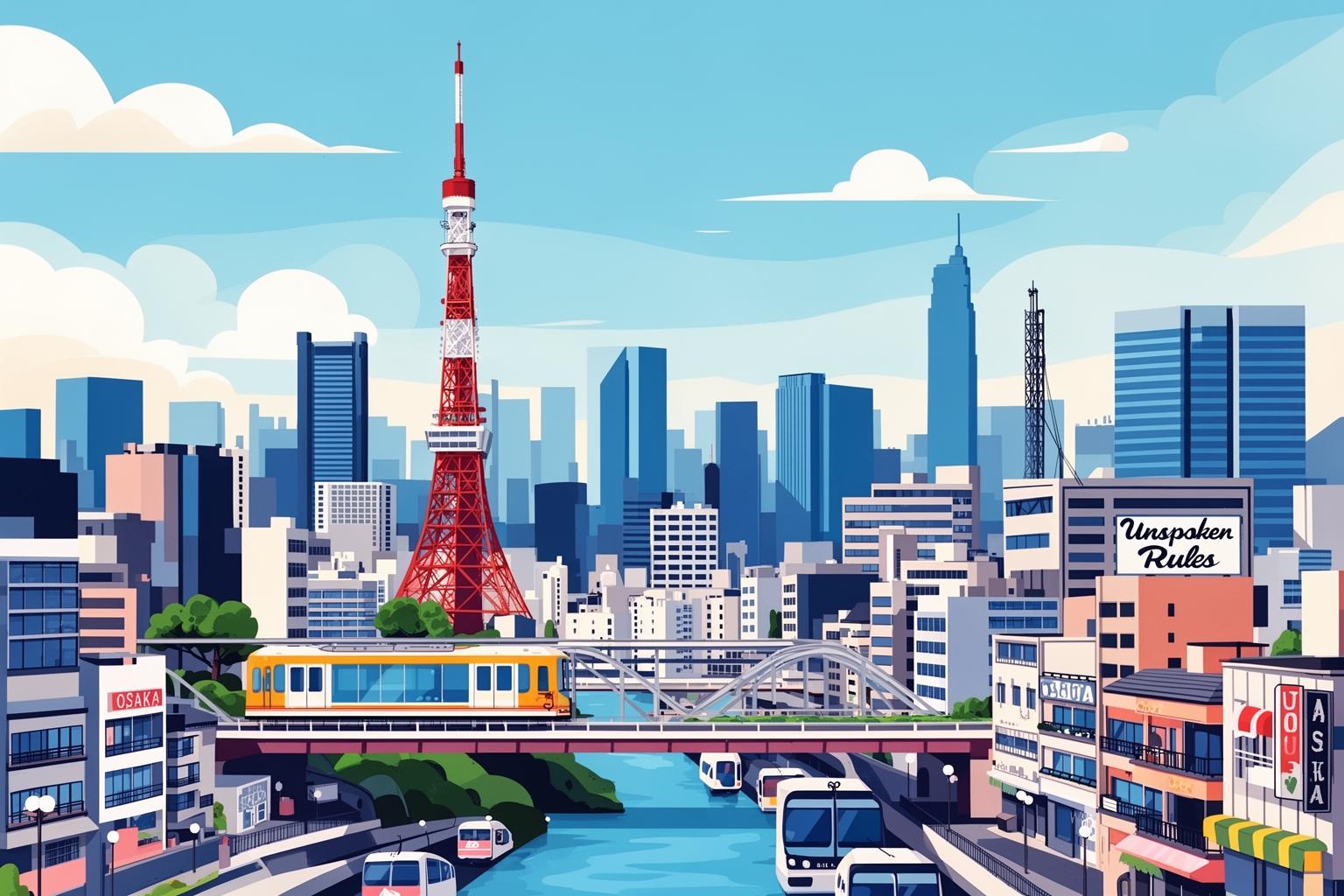
Every newcomer quickly grasps the basics: wash thoroughly before entering the main tubs. It’s simple hygiene, common throughout Japan. However, the Osaka sentō operates on a deeper social code—a set of unwritten rules that reveal much about the local mindset. It’s less about strict etiquette and more about a shared, practical rhythm. One of the first things you’ll notice is the process for claiming a washing station. In a more reserved city, you might politely wait for a spot to become available. Here, you take your small washbowl, soap, and stool, and place them directly in front of an unused faucet. That’s your spot. You can then proceed to the sauna or tub, confident your place is marked. It’s not aggressive; it’s an efficient, mutually understood practice that values flow over formality. It’s Osaka’s pragmatism in action—everyone needs to wash, so let’s get it done without unnecessary hesitation.
Then there’s the soundscape. While a Tokyo bath might be filled with respectful silence, an Osaka sentō buzzes with conversation. Quiet is the exception, not the norm. An elderly woman, an `obachan`, might casually remark on the brand of shampoo you’re using. A man might ask where you’re from while you relax in the jet bath. This isn’t viewed as intrusive. It’s a form of connection, a way of saying, “We’re sharing this space, this moment.” It’s the conversational parallel to Osaka’s famous `ame-chan` culture, where grandmas offer candy to strangers. The interaction itself is what matters.
All of this ties into the local interpretation of `hadaka no tsukiai`. The phrase, meaning “naked communion” or “naked friendship,” suggests breaking down barriers. Elsewhere, this might be a special occasion, a vulnerable moment reserved for company retreats or close friends. In an Osaka sentō, it’s an everyday, ordinary reality. Without suits, uniforms, or brand-name clothes, a company president and a construction worker are simply two men soaking in hot water. This setting fosters a directness and lack of pretense that is distinctly Osaka. People’s words are as plain as their bodies, leading to conversations that are honest, sometimes blunt, but always rooted in a shared humanity.
More Than a Bath: The Sentō as a Social Hub
The true spirit of the neighborhood sentō isn’t always found in the steamy bathing area. More often, it lies in the `datsuijo`, the changing room. This space functions as much more than just a place to get dressed and undressed. It acts as the neighborhood’s analog social network, an essential hub for information and connection. After the bath, the ritual isn’t to quickly dry off and leave. People linger, sitting on worn wooden benches, sometimes wrapped only in a towel, fanning themselves in front of a large, buzzing television. More often than not, it’s tuned to a Hanshin Tigers baseball game or a lively `manzai` comedy show, offering a communal focal point for cheers and conversation.
Even the simplest amenities become parts of this social ritual. The classic glass-bottle vending machine plays a key role. Buying a cold bottle of fruit milk or coffee milk and sipping it, one hand resting on the hip, is a shared cultural rite of passage. It signals relaxation and being part of the flow. Nearby, the old-fashioned mechanical weighing scale with its large dial is in constant use. People step on, announce their weight with a groan or a laugh—“Up another kilo!”—and invite playful teasing from others. This simple, universal moment of vulnerability breaks the ice and fosters camaraderie.
This is where the neighborhood’s pulse is measured. The changing room serves as a clearinghouse for local news and gossip. You’ll hear which stall at the market has the best daikon today, who in the apartment building down the street isn’t feeling well, or catch a heated debate about a local politician’s latest move. For many elderly residents, this daily check-in acts as a critical social safety net—it’s how people look out for one another. This sharply contrasts with the efficiency and anonymity often seen in urban life elsewhere. In the Osaka sentō, you’re not an anonymous face in the crowd; you’re a neighbor, and your presence—or absence—is noticed.
The Cast of Characters: Who You’ll Meet at an Osaka Sentō
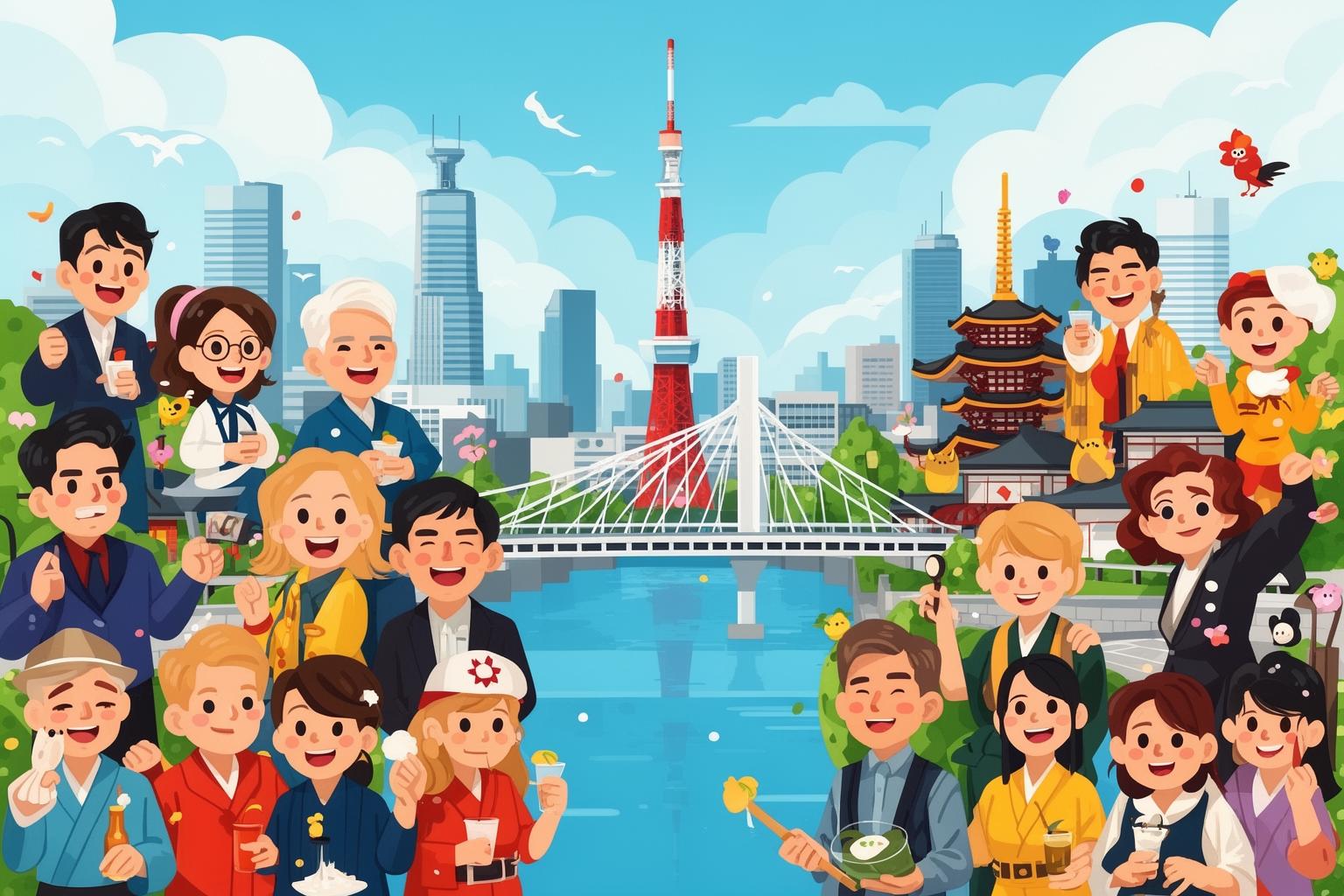
Spend enough time in any neighborhood bathhouse, and you’ll begin to recognize the familiar cast of characters, each embodying a different aspect of Osaka’s spirit. They serve as the living pillars of this distinctive communal space. You’ll quickly spot the `Sentō Nushi`, the Master of the Bath—usually an elderly man or woman who has followed the same bathing routine, at the same time, every day for the past fifty years. They know everyone’s name, the ideal temperature for each bath, and the unspoken rules of etiquette. They rarely need to speak; a quiet glance is enough to signal a newcomer not to splash. They are the community’s anchor, the silent authority who preserves the harmony of the space. If you’re adventurous enough to try the `denki buro`, the electric bath with its tingling current, the Nushi might be the one to offer a knowing nod of encouragement.
Then there’s the Gossip Queen, the genial `obachan` with a booming voice who holds court from her favorite spot in the changing room. She is the neighborhood’s central source of information, sharing news about births, sales at the local `shotengai` (shopping arcade), and who’s dating whom. To a foreigner, she often becomes the first point of contact, her genuine curiosity overcoming any language barrier. She’ll ask where you’re from, what you had for dinner, and how you’re handling the humidity, all delivered in a rapid-fire Kansai dialect that’s both confusing and warmly inviting.
One of the most revealing sights is the presence of tattooed regulars. In much of Japan, tattoos remain heavily stigmatized and are explicitly banned in gyms, pools, and onsen. It’s a rule that can feel exclusionary. But in many of Osaka’s old-school neighborhood sentō, especially in working-class districts, a full back piece or intricately sleeved arms are simply part of the scenery. No one bats an eye. This isn’t an official policy of inclusion; it reflects a deeper, more pragmatic “live and let live” attitude. The sentō belongs to the neighborhood, and if you’re part of it, you’re welcome. This quiet acceptance says a lot about Osaka’s character—less focused on appearances and more concerned with the substance of community.
Why Sentō Culture Thrives in Osaka
The enduring strength of sentō culture in Osaka is no mere accident of history; it directly reflects the city’s core values. The public bath serves as a perfect microcosm of the Osakan mindset, shaped by centuries of commerce, pragmatism, and a strong local identity. Above all, the city prioritizes pragmatism over polish. Traditionally, many older homes and apartments in Osaka were built compactly, often lacking private baths. The sentō wasn’t a luxury—it was a daily necessity. This origin ingrained a no-nonsense, function-first attitude into its essence. An Osaka sentō isn’t trying to be a spa. It’s about offering a damn good, scalding hot bath and a place to connect. The tiles may be cracked and the lockers rusted, but the water is hot and the conversation warm. This emphasis on substance over style is quintessentially Osaka.
This also ties into Osaka’s history as Japan’s merchant capital. In a world driven by business and trade, personal relationships and trust—`ninjo`—were the ultimate currency. The sentō became a crucial place for building these informal networks. When you’re literally scrubbing someone’s back, formal hierarchies vanish. The local vegetable stand owner and his customer become equals. This fostered a culture where direct, person-to-person connections are valued above rigid social structures. That spirit endures. The sentō remains a space where community bonds are formed and maintained, not through formal introductions, but through shared vulnerability.
Finally, the sentō acts as a powerful counterpoint to the anonymity of modern urban life—a phenomenon felt perhaps more keenly in the sprawling metropolis of Tokyo. Life in a huge city can be isolating. The neighborhood sentō provides a built-in remedy. It’s a third space, distinct from home and work, that encourages a certain level of low-stakes social interaction. In Osaka, being an active part of your local community isn’t a quaint ideal; it’s a practical part of daily life. The sentō is one of the main places where this community is enacted, strengthened, and celebrated every single day. It’s a loud, steamy, and vital rejection of urban loneliness.
A Foreigner’s Guide to Fitting In (and Making Friends)
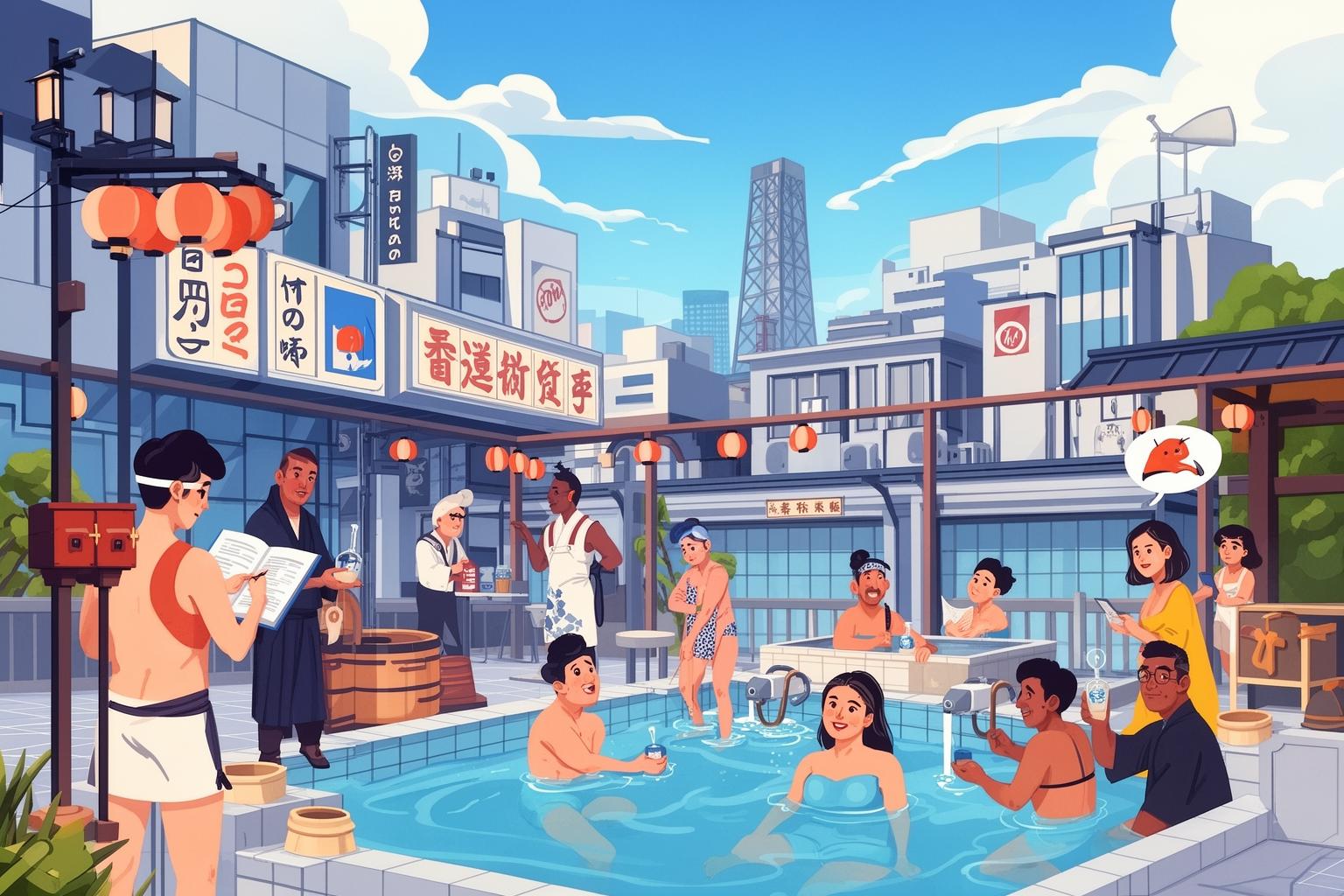
Navigating the social nuances of an Osaka sentō for the first time can seem daunting, but fitting in is easier than you might expect. It’s less about mastering complicated rules and more about showing a willingness to engage with the community’s rhythm. During your first few visits, simply be a quiet observer. Notice how the regulars move, where they place their belongings, and how they interact. The basic etiquette is universal—wash before soaking—but the local flow is something you pick up gradually.
Learning a few key phrases makes a big difference. A simple `Maido!`—a distinctive Osakan greeting that means something between “hello” and “thanks for your business”—to the person at the front desk, the `bandai`, instantly shows your effort to blend in. When leaving, saying `Osaki ni` (“I’m leaving ahead of you”) to those around you is a common courtesy. Regarding gear, you have two options. Most sentō sell a `tebura setto` (“empty-handed set”) containing a small towel, soap, and shampoo, perfect for your first visit. However, the true sign of a regular is their personal `kago`, a small plastic basket holding their preferred toiletries. Moving up to your own `kago` is a subtle rite of passage.
Accept the possibility of feeling awkward. As a non-Japanese person, you might attract some curious looks, and someone may try to talk to you. Don’t worry. A simple smile and a nod are often enough. If an `oji-san` (older man) starts a conversation you don’t understand, a polite “`Sumimasen, nihongo amari wakarimasen`” (“Sorry, I don’t really understand Japanese”) is completely fine. In Osaka, the effort to communicate is often appreciated more than fluency.
The most important step to building a connection, however, comes after the bath. Don’t just dry off and rush out the door. This is a key moment. Head to the vending machine, buy a bottle of coffee milk, and sit down in the changing room. Stay for five or ten minutes. This simple gesture non-verbally signals your openness to interaction. It turns you from a customer using a service into an active participant in the community. Then, a casual comment about the weather—”`Atsui desu ne?`” (“It’s hot, isn’t it?”)—from another bather can grow into a genuine conversation and eventually a familiar face to greet on your next visit.
The Fading Light and Enduring Spirit
It would be disingenuous not to admit a somber truth: the neighborhood sentō is a dying tradition. Across Japan, these cherished bathhouses are shutting down at a troubling pace, casualties of an aging population and the convenience of private bathrooms. Each faded `noren` curtain lowered for the final time marks the disappearance of a small world, a community hub that no sterile gym or impersonal café can truly replace.
Yet, if there’s any place where the sentō’s spirit will endure until the very end, it’s in Osaka. The communities centered around these baths are fiercely devoted, their roots deeply embedded in the neighborhood. They are more than just patrons; they are guardians of a legacy. They understand, almost instinctively, that what’s at stake is far beyond a simple bathing spot. It’s the loss of a space where generations unite, where neighbors watch out for each other, and where the shared ritual of hot water creates bonds that a more private, isolated world cannot duplicate.
The steam may be thinning in certain areas, and the iconic Fuji-san murals may be fading from the walls. But the essence of the sentō survives in the very heart of Osaka’s social fabric. It lives in the casual conversation between strangers at a takoyaki stall, in the helping hand extended to an elderly person on the street, and in the fundamental conviction that community is not an abstract idea but something built daily through small, shared human interactions. The sentō is not merely a building; it is a philosophy. It’s where you wash away the grime of the day and, in doing so, shed your anonymity. It’s where you stop being a stranger, an outsider, or a tourist, and begin to simply become a neighbor.