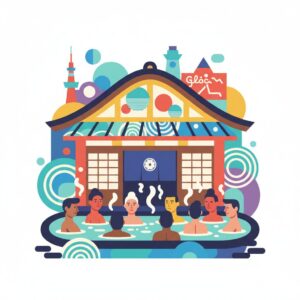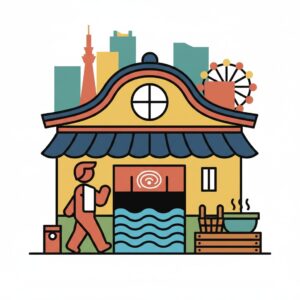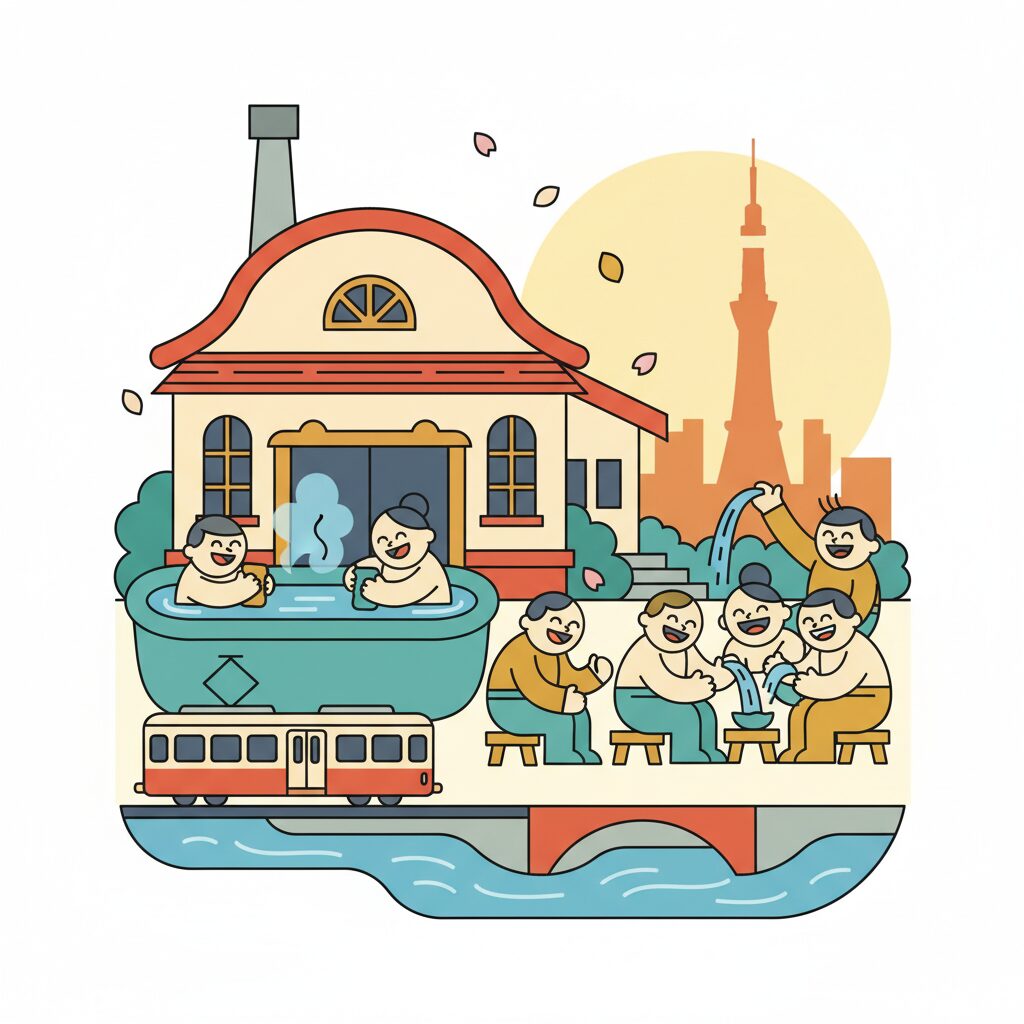
So you’ve landed in Osaka. You’ve navigated the glorious chaos of the train system, you’ve found an apartment that isn’t the size of a postage stamp, and you’ve even figured out the impossibly complex trash separation schedule. You’re starting to feel like you belong. But then a question hits you, maybe as you’re standing in your own perfectly functional, if slightly cramped, unit bath. You walk past a building in your neighborhood, a place with a short, fabric curtain called a noren hanging over the door, a warm, steamy light glowing from within, and the character ゆ (yu, for hot water) displayed prominently. It’s a sento, a public bathhouse. And you wonder, in an age where every home in Japan has a shower and a tub, why on earth do these places still exist? Who is going? And what are they doing in there?
This isn’t a tourist question. It’s a living-here question. And in Osaka, the answer tells you almost everything you need to know about how this city breathes. Forget the polite, reserved distance you might have experienced elsewhere. The sento is the city’s living room, its unfiltered social media feed, its therapeutic confession booth. It’s where the unspoken rules of Osaka life are practiced in their most fundamental form. To understand the sento is to understand the soul of Osaka’s neighborhoods, a soul built on pragmatism, directness, and a fierce sense of community that operates on its own terms. This isn’t about sightseeing; it’s about seeing how society works when the suits and social masks come off. Literally. It’s where you graduate from being a resident to being a neighbor. And your journey into that world starts right here, in the heart of a local neighborhood.
To truly embrace the daily rhythm of Osaka, consider exploring other local institutions like the city’s famously vibrant supermarkets.
The Sento as Osaka’s Living Room: More Than Just a Bath
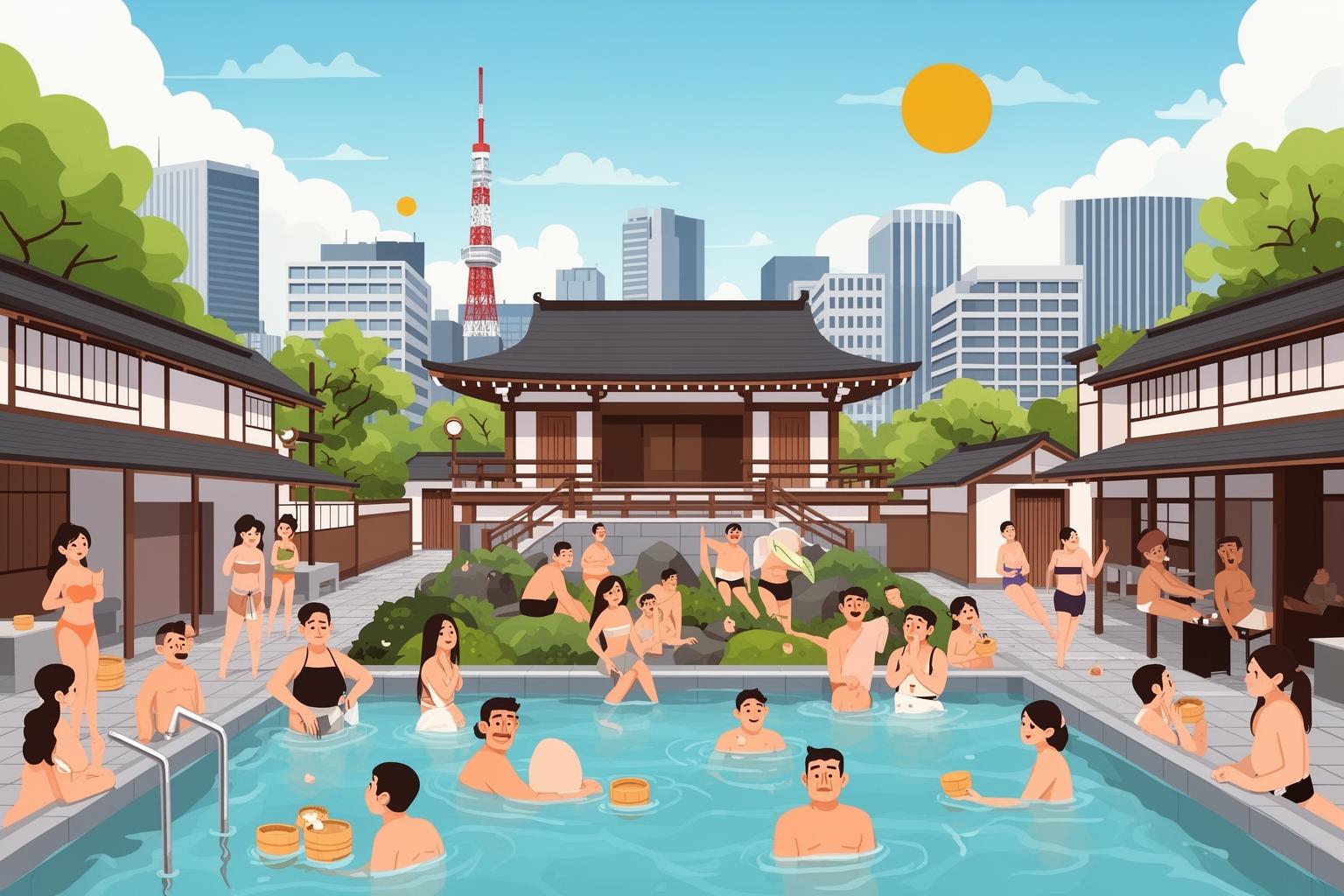
First, let’s address the obvious. On a practical level, the sento continues to thrive because most Japanese apartments, especially the older ones typical in densely packed Osaka neighborhoods, have bathrooms that are functional but far from luxurious. The tubs are deep yet small, meant for a quick soak rather than a leisurely stretch. For the price of a fancy coffee, the sento offers a magnificent, spacious tub where you can stretch out your legs, a sauna to sweat away the day’s stress, and high-pressure jets to soothe tense shoulders. For Osakans, a culture obsessed with cost-performance, this makes perfect sense. It’s a straightforward value calculation: why splurge on a bigger apartment with a fancy bath you use once daily when you can pay a few hundred yen for access to a bathing haven just down the street?
But that’s only the surface. The deeper reason the sento persists, the reason it’s so deeply embedded in daily life here, is social. Sociologists call it a “third place”—a setting that’s neither home nor work, where community forms. In Tokyo, that third place might be a quiet, stylish café or a curated bookstore. In Osaka, it’s a steamy, bustling bathhouse. It’s where generations mingle and social hierarchies dissolve. You might see an elderly man with intricate, faded tattoos soaking beside a young father teaching his toddler to count, who in turn sits next to a salaryman recovering from a grueling day at the office. They’re all simply neighbors sharing the same warm water. This shared experience creates an invisible bond, a casual intimacy that underpins Osaka’s famously tight-knit neighborhoods.
Why the Sento Survives in a Modern World
Its survival isn’t just about nostalgia; it’s about contemporary usefulness. Consider a young person living alone in a small apartment. The sento offers a brief escape from solitude, a place to feel part of something larger without the pressure of formal socializing. For the elderly, the daily walk to the sento serves both as physical exercise and as their main social interaction of the day. It’s a wellness check, a chance to gossip, and an antidote to loneliness all at once. The owner at the front desk—the bandai—knows everyone’s name, who’s been ill, who has a new grandchild. It acts as an informal neighborhood watch and support system.
This reflects a core element of the Osaka mindset: a blend of fierce independence and profound interdependence. People treasure their privacy at home, yet understand that a strong community improves life for all. The sento embodies this balance. It’s a place where you can be alone with your thoughts while surrounded by the comforting, anonymous presence of neighbors. This contrasts with Tokyo, where public spaces often feel transient and interactions transactional. In an Osaka sento, connections feel lived-in, comfortable, and refreshingly direct. The air is thick not just with steam, but with shared history and a collective sigh of relief at the day’s end.
The “Hadaka no Tsukiai” Philosophy: Osaka Style
There’s a Japanese phrase, hadaka no tsukiai, literally meaning “naked communion” or “naked relationship.” It captures the idea that when you remove clothes—the business suits, brand labels, uniforms—you also shed social status and pretenses. You meet as equals. While this idea exists throughout Japan, it resonates especially in Osaka. This city was built not by samurai and aristocrats, but by merchants. Status here was less about lineage and more about business savvy, street smarts, and the strength of your relationships. A direct conversation was valued over ornate, indirect speech; a good deal mattered more than a fancy title.
This merchant spirit thrives in the sento. Conversations you overhear are a true slice of Osaka life: two small business owners grumbling about rising costs; a group of older women swapping tips on the cheapest daikon radish of the week; men dissecting every play from last night’s Hanshin Tigers game with passionate expertise. It’s raw and unfiltered. People complain loudly, laugh heartily, and offer unsolicited advice liberally. This can feel jarring if you’re used to Tokyo’s more reserved social etiquette, where conversations between strangers are rare and hushed. In an Osaka sento, you’re not an anonymous stranger; you’re a fellow bather granted temporary entry into the community’s ongoing dialogue. It’s the city’s unwritten rule: in the bath, we’re all in this together.
Navigating the Unspoken Rules: Your Practical Guide to Sento Etiquette
Alright, so you’re ready to take the plunge. You’ve gathered your small towel, a bar of soap, and some yen. But standing outside the noren curtain, a wave of nervousness might hit you. What if I do it wrong? What are the rules? The good news is the rules are simple and all revolve around one core principle: respect for the shared space and the people in it. This isn’t a performance; it’s a ritual. And once you catch the rhythm, it becomes second nature.
The Entrance: From Shoes to Tickets
Your journey starts at the entrance. The first thing you’ll notice is a wall of small lockers, the getabako. This is where you leave your shoes. Find an empty locker, slip your shoes inside, and take the wooden token or key. Be careful not to bring outside dirt into this clean space. Right away, you’re partaking in the initial act of communal respect. Holding that simple wooden key, often marked with a number, feels like holding a ticket to another world.
Next, you’ll approach the reception counter, called the bandai. In traditional sento, this is a high, elevated platform where the owner sits, with views into both the men’s and women’s changing rooms (privacy thoughtfully maintained, of course). In more modern places, it’s just a simple front desk. You’ll either pay the fee directly to the attendant or, more commonly in efficiency-minded Osaka, buy a ticket from a vending machine. The price is usually set by the local government, making it a truly democratic experience. A CEO pays the same 490 yen as a student. At the counter, you hand over your ticket and maybe pick up a small towel or soap if you forgot yours. A simple greeting like “Konnichiwa” is always welcomed. You might get a gruff nod or a warm smile, but either way, the exchange is quick and straightforward. This is Osaka: no fuss, no wasted time. You’re here to bathe.
The Changing Room (Datsuijo): The First Test
You’ll pass through another curtain into the changing room, the datsuijo. This is a semi-sacred space, a transition zone between the outside world and the inner sanctum of the baths. The air here is humid, smelling of soap and aged wood. You’ll see rows of lockers or, in older spots, simple wicker baskets on shelves. These baskets reflect the neighborhood’s high level of trust. People leave their wallets and phones in them without hesitation.
Now comes the part that causes the most anxiety for newcomers: undressing. The rule is simple: you take everything off. No swimsuits, no shorts. The sento is not a swimming pool. The reasoning is purely hygienic; cotton and other fabrics can introduce dirt and soap residue into the pure bath water. Everyone is naked, and because of that, nobody cares. It’s the great equalizer. The only thing to be self-conscious about is staring. Don’t do it. Avert your gaze and focus on your own business. You’ll notice regulars move with calm, confident ease. This is their space.
You will have two towels. A large one for drying off after the bath, which stays in your locker, and a small, thin one, often about the size of a large washcloth. This small towel is your multi-tool. You’ll use it to scrub your body in the washing area. As you walk from the changing room to the bathing area, you can use it for a touch of modesty, holding it loosely in front of you. But once you’re in the bathing area, its purpose is solely for washing.
The Bathing Area (Yokujo): The Core Ritual
Sliding open the glass door to the bathing area, you’re met with thick steam and the echoing sounds of splashing water and conversation. The tile floors are wet, the air warm, and the sight of large, steaming pools is instantly calming. But do not, under any circumstances, get directly into the tubs. This is the single most important rule of the sento—one that, if broken, will earn you a sharp correction from a regular.
The Kakeyu and Washing Area: The Cardinal Rule
Before doing anything else, you must wash. Near the bathing area’s entrance, you’ll find large barrels of warm water with ladles, called the kakeyu. You take a ladleful of water and pour it over your lower body to adjust to the temperature and rinse off. After that, you head to the washing stations. These are rows of low faucets, each with a small plastic stool and bucket. You take a stool, sit down before a faucet, and wash your entire body thoroughly with soap. Hair, body, everything. You’re scrubbing away the dirt and grime of the outside world before entering the pure, communal waters. This act is the philosophical heart of the sento experience. You’re not just cleaning yourself for your own benefit; you’re ensuring the water remains clean for everyone after you. It’s the ultimate act of social consideration.
Watch the regulars. They have this down to a science. They lather, scrub vigorously, and then rinse completely, making sure no soap bubbles stay behind. A key etiquette point here is to be mindful of your neighbors. Try not to splash them with your water. The faucets are low for a reason—it helps contain splashing. If you see an Osaka obachan (auntie or older woman) giving you a side-eye, you’re probably splashing. She might even say, “Chotto, anata!” (“Hey, you!”). Don’t take it personally. She isn’t rude; she’s protecting the communal space. In Osaka, directness is a form of care. It’s more efficient than letting you break the rules out of ignorance.
The Art of Soaking: Tubs, Temperatures, and Timing
Once you’re squeaky clean, you’re finally ready to enter the tubs. This is your reward. The main tub, the shuyoku, is generally large and kept at a comfortably hot temperature, around 40-42 degrees Celsius (104-108 F). Ease yourself in slowly. The first minute can be intense, but then a wave of relaxation washes over you. This is a place for quiet contemplation or hushed conversation. No swimming, no roughhousing.
Your small washcloth should never enter the bath water. It’s considered unclean. So where do you put it? Most people fold it neatly and place it on their head—which also helps prevent dizziness from the heat—or leave it on the bath’s tiled edge. Look around, and you’ll see a sea of men and women with tiny towels perched on their heads. It’s an iconic sento image.
Beyond the main bath, there are often other options. There’s usually an atsuyu, an extra-hot bath for the brave. There will almost certainly be a mizuburo, a small tub of shockingly cold water. The ritual is to heat up in the sauna or hot tub, then take a brisk, invigorating plunge into the cold water. It’s a jolt to the system said to be great for circulation. And then there is the uniquely Japanese—and particularly beloved in Osaka—denkiburo, or electric bath. This tub has low-voltage electrical currents passing between two plates. As you sit between them, your muscles tingle and contract. It’s a strange, slightly painful, yet oddly addictive sensation. Watching old men grimace with pleasure in the denkiburo is a classic slice of sento life.
Post-Bath Relaxation: The Second Act
When you’ve had your fill of soaking, the ritual isn’t over. Before returning to the changing room, you’re expected to quickly towel off your body with your small, damp washcloth. The goal is to avoid dripping water all over the datsuijo floor. Once again, it’s about consideration for the shared space. You leave your stool and bucket rinsed and tidy for the next person.
Back in the changing room, you grab your large, dry towel and properly dry off. This is when the second phase of the sento experience begins: relaxation. The datsuijo often doubles as a small lounge. You’ll find benches, maybe a few old massage chairs, a large mirror for grooming, and, most importantly, a collection of vintage-style refrigerators stocked with drinks. The quintessential post-sento drink is milk, served in an old-fashioned glass bottle. Coffee milk and fruit milk are the most popular choices. There’s something incredibly satisfying about popping the paper cap and downing a cold bottle of milk after a hot bath. It’s a tradition that spans generations.
This is also where the community aspect kicks into high gear. People linger. They’ll stand around in their underwear, fanning themselves, watching the baseball game on the wall-mounted TV, and chatting. This is where the real neighborhood news is shared. It’s relaxed, unhurried, and deeply communal. You’re no longer just a customer; you’re part of the post-bath club.
Reading the Room: The Social Dynamics of an Osaka Sento
Grasping the physical etiquette is one thing; understanding the social dynamics is what truly enables you to integrate. The sento serves as a microcosm of Osaka society, and learning to read the room here will benefit you in all aspects of life in the city.
Communication, Osaka Style: Direct, Practical, and Full of Humor
While silence is valued in many parts of Japan, in an Osaka sento, it’s just one of several options. You are by no means required to engage in conversation, yet starting a talk is remarkably easy. A simple remark about the weather (“Kyo wa atsui desu ne” – “It’s hot today, isn’t it?”) or the water temperature can quickly evolve into a full conversation. This contrasts sharply with Tokyo sento, where a similar attempt might be met with a polite but conversation-ending nod.
Osakans communicate with surprising efficiency and directness. They get straight to the point, asking where you’re from, what brings you to Osaka, and your thoughts on the Hanshin Tigers. This isn’t intrusive; it expresses genuine curiosity. There’s also a constant undertone of humor. Osaka-ben, the local dialect, is known for its playful and rhythmic nature, perfectly suited for the gentle teasing and witty replies (tsukkomi) common in casual chat. If an older man jokes about how long you lasted in the hot bath, the best response is laughter and a playful comeback. Embracing this style of humor is a quick path to acceptance.
The Regulars (Jouren-san): The Heart of the Sento
Every sento has its community of regulars, the jouren-san, who are the institution’s lifeblood. They arrive at the same time each day, use the same locker, and favor particular washing spots. They are the unofficial custodians of the sento’s culture. As a newcomer, your role is to observe and respect this ecosystem. Avoid placing your belongings at a spot that appears “claimed” (marked often by a personal soap basket). Be mindful of the traffic flow around the tubs.
Becoming a regular is a gradual, natural process that starts with recognition. After a few visits, the owner at the bandai may nod at you, and other regulars will begin to notice your face. Consistency is key. If you keep coming back week after week, you gradually shift from being a guest to part of the scene. A nod can turn into a greeting, which may lead to a brief chat in the changing room. Before long, you might find yourself discussing the price of cabbage. This signals your acceptance. It’s a quiet, subtle progression—community in Osaka is built not through grand invitations but through shared routines and steady presence.
Common Misunderstandings Among Foreigners
There are several areas where foreign visitors often feel uneasy, and it’s helpful to address them directly. One is tattoos. Traditionally in Japan, tattoos are linked to the yakuza, or organized crime. For this reason, many onsen (hot spring resorts) and fitness centers ban them. However, local neighborhood sento often differ. Especially in Osaka, known for its live-and-let-live attitude, rules tend to be more relaxed. You will likely see older men sporting traditional Japanese tattoos. The unspoken rule often concerns the tattoo’s nature and the wearer’s demeanor. Small, modern tattoos rarely cause concern. For heavy tattooing, it can be ambiguous—some places are fine, others may politely request you to leave. The best approach is to look for signs at the entrance and enter with humility. If you are respectful, quiet, and follow bathing etiquette, you will seldom encounter issues. It’s less a moral judgment than a way to maintain a comfortable atmosphere for all guests.
Another common worry is discomfort with nudity. This reaction is natural for those from cultures where nudity is uncommon. But it’s important to realize that in a sento, nudity is entirely non-sexual and ordinary. It’s simply the bather’s uniform. The worst thing you can do is act uneasy. Staring, hiding, or being furtive draws more attention than calmly moving around with quiet confidence. Everyone is in the same situation, there to relax and cleanse, not to judge bodies.
Lastly, the language barrier can be intimidating. Don’t let limited Japanese proficiency deter you. The sento’s rituals are mainly physical and observable. You can learn what you need just by watching. Simple greetings, a smile, and a respectful bow go a long way. Osakans, in particular, appreciate any effort to speak their language, no matter how imperfect. They value the friendliness and effort more than grammatical accuracy.
The Sento as a Window into Osaka’s Soul
When you step out of the sento and into the cool night air, your skin tingling and your body relaxed, you experience a renewal that goes beyond mere cleanliness. You’ve taken part in a ritual that connects you to the deep, underlying rhythms of the city. The sento is more than just a bath; it’s a living museum of Osaka culture.
Pragmatism and Value: The Merchant’s DNA
The entire sento experience embodies Osakan pragmatism. The fixed, low price. The no-frills efficiency at the entrance. The multi-purpose use of the space for both hygiene and social bonding. It all reflects a culture that values practicality and good value. For the price of a single coin, you gain health benefits, entertainment, and community access. This concept of otoku, or getting great value, lies at the heart of the Osaka mindset. It’s not about being cheap; it’s about being clever. The sento is among the smartest, most efficient social inventions ever created, and Osakans instinctively recognize and appreciate this.
Community Over Conformity: Why Osaka Feels Different
Most sento are small, family-run establishments passed down through generations. They are not slick corporate chains. The owner lives upstairs or nearby. Their identity is closely tied to the well-being of the neighborhood. This fosters a strong, grassroots sense of community unlike the more top-down, anonymous atmosphere of megacities like Tokyo. In Osaka, your identity is often linked to your neighborhood—your local shotengai (shopping arcade), your favorite Okonomiyaki joint, and your local sento. These places are the glue that holds the community together. They operate not by rigid rules, but through shared understanding and mutual respect. That’s why Osaka feels more personal and grounded than other large cities. The social fabric is woven on a human scale.
A Fading Tradition? The Future of the Sento
It would be remiss not to acknowledge that the sento tradition faces challenges. Across Japan, hundreds shut their doors each year. The reasons are many: aging owners with no successors, a shrinking base of elderly regulars, and soaring fuel costs for heating water that strain the business model. Every neighborhood has a story of a beloved sento that closed, leaving a gap in the community.
Yet there are hopeful signs of revival. A younger generation, weary of digital isolation, is rediscovering the sento as a place for genuine connection. Innovative entrepreneurs are renovating old bathhouses, preserving their beautiful architecture while adding modern touches like craft beer on tap and art installations. These “designer sento” draw new, younger visitors and breathe fresh life into the tradition. The pandemic, in an unexpected way, highlighted their value as spaces for mental and physical well-being—a safe and affordable local refuge. The sento is evolving and adapting to the 21st century, just as Osaka itself always has.
Stepping into a sento for the first time feels like being let in on a secret. In an age of curated digital personas and managed social interactions, the sento offers something radically simple and deeply human. It’s a place where you can be completely yourself, stripped of all pretense, and accepted. It teaches that community isn’t built on grand gestures, but through the quiet accumulation of small, shared moments—a nod across a steamy room, a shared laugh in the changing area, the simple act of washing your back before entering the water for everyone’s benefit.
So, find the sento in your neighborhood. Step through the noren. Fumble with the shoe locker. Brave the nudity. Wash before you soak. And listen. Listen to the quiet sounds of the neighborhood at rest. In the echo of water and the murmur of Osaka-ben, you’ll find more than a way to warm up on a cold night. You’ll find the warm, beating heart of the real Osaka.