The first time it happened, I was genuinely baffled. I was maybe three months into my new life in Osaka, still navigating the city with the wide-eyed caution of a newcomer. I’d stepped into a small, family-run fruit shop in the sprawling, covered labyrinth of a local shotengai. In Tokyo, an interaction like this was a predictable ballet of hyper-politeness. A chorus of high-pitched “Irasshaimase!”, a transaction handled with reverent silence, and a bow so deep you’d think I was royalty buying a single apple. So when the old woman behind the counter in Osaka looked at the three persimmons I placed before her, squinted, and said in a gruff Kansai dialect, “Just three? Are you on a diet or something? You’re skinny enough!”, I felt a jolt of pure confusion. Was she… insulting me? Was this some kind of passive-aggressive sales tactic to get me to buy more? I mumbled a polite, Tokyo-style apology, paid, and fled, my face burning with a weird mix of shame and bewilderment.
It took me months, maybe even a year, to understand that this wasn’t an insult. It was an invitation. It was the opening bell for a type of social interaction that defines this city, a conversational routine that is as essential to Osaka as takoyaki and the Hanshin Tigers. This is the daily banter of the shotengai, the local shopping arcades that serve as the arteries of neighborhood life. These are not just places of commerce; they are stages for a performance of community, a lively, unscripted play where the lines between customer, neighbor, and friend are delightfully, intentionally blurred. For anyone coming from the formal, structured social landscape of Tokyo, or indeed from most Western cultures, this world can feel abrasive and chaotic. But once you learn the rhythm and the rules, you realize it’s the key to understanding the true soul of Osaka—a city that values human connection over protocol, a good laugh over dignified silence, and a brutally honest piece of advice over a polished, empty pleasantry. This isn’t just about shopping. This is about belonging.
To truly appreciate this unique social fabric, it’s helpful to understand the broader context of humor and social expectations in Osaka.
The Transaction is Just the Beginning: Deconstructing the Shotengai Greeting
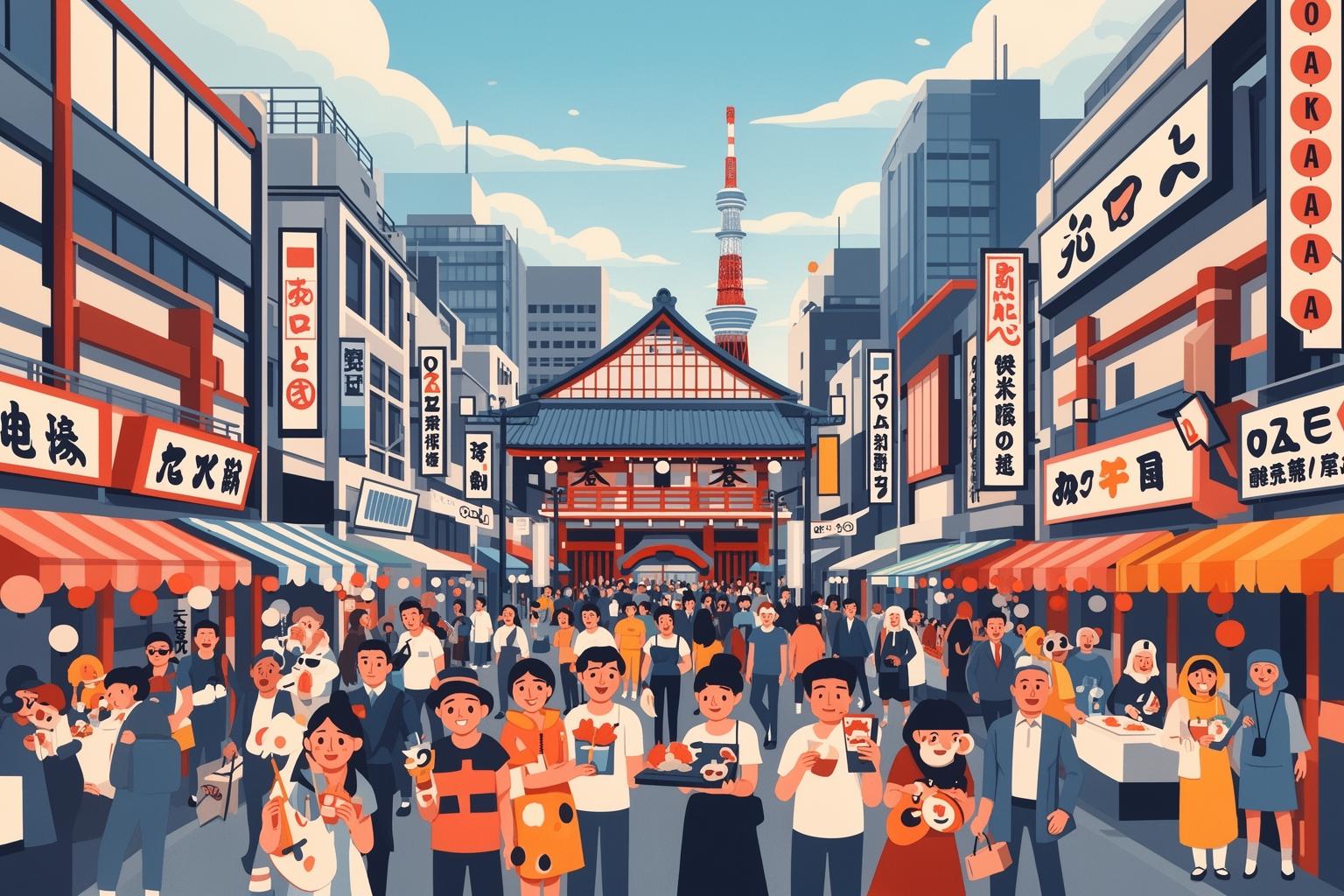
To truly understand the essence of shotengai communication, you must first unlearn everything you know about Japanese customer service, especially the version presented to the world. The polished, almost robotic perfection of a Tokyo department store—the synchronized bows, the impossibly cheerful greetings—is an art form designed to maintain respectful distance. It temporarily elevates the customer to a godlike status, creating a smooth, frictionless, yet ultimately impersonal experience. The Osaka shotengai, however, flips this script entirely. Its aim is not to create distance but to eliminate it. The interaction doesn’t start with a formal welcome but with a casual, ongoing recognition of a shared existence.
“Maido!” and “Oki ni!”: More Than Just “Thanks”
Step into a shop in Tokyo, and you’ll be greeted with a crisp, high-energy “Irasshaimase!”—a formal, standardized “Welcome!” It’s a broadcast, not a conversation, requiring no response; in fact, replying can feel slightly awkward. This is the sound of a system running smoothly. In an Osaka shotengai, the greeting sounds quite different. It’s a low, rumbling “Maido!” from the butcher, his hands still busy with a cut of pork. The word literally means “every time” or “always.” It’s a shortened form of “maido arigatou gozaimasu,” meaning “thank you for your continued patronage.” But its deeper function isn’t to welcome a first-time visitor; it acknowledges a regular, a familiar face, a community member. It says, “I see you. You were here last week. You’ll be here next week. We’re in this rhythm together.” It’s a statement of continuity. When I first heard it, I felt like an impostor—I hadn’t been here “every time.” But soon I realized it was an optimistic invitation, welcoming me into the fold. By saying “Maido!”, the shopkeeper assumes you’ll become a regular, immediately including you in the community circle.
Likewise, when you leave, the usual “Arigatou gozaimashita” is often replaced with a warm, lilting “Oki ni!” This is a softer, more personal phrase. While “arigatou” is a formal expression of gratitude, “oki ni” feels more like “I appreciate ya!” or “Thanks a bunch!” It carries emotional weight and a personal touch that the formal expression lacks. It’s the kind of phrase you’d use with a friend who did you a favor. These language choices are deliberate. They form the foundation for a different kind of relationship, transforming the interaction from a sterile economic exchange into a moment of genuine human recognition. The shopkeeper is not just a vendor but a constant presence in your daily life, and their language reflects that.
The Opening Salvo: Weather, Health, and Family
In Tokyo’s formal retail world, the first verbal contact after the initial “Irasshaimase!” is almost always “Nani ka o sagashi deshou ka?”—”Are you looking for something?” This is a functional, business-focused question. In an Osaka shotengai, the business can wait. The human check-in comes first. The true opening line is almost always a comment about the shared environment or your personal condition. “Kyou wa ee tenki ya naa!” (“Great weather today, huh!”) or its opposite, “Mushiatsui naa, you taeru wa” (“It’s muggy; amazing you can stand it”). This isn’t mere small talk; it’s a way to establish common ground. We’re both here, feeling the heat, under the same sun. We share this experience. It’s an immediate equalizer.
From there, it often becomes more personal, and this is where many non-Osakans feel uncomfortable. The vegetable seller might notice you’re buying ingredients for a stew on a hot day and ask, “Are you feeling alright? Not catching a cold, are you?” The tofu shop owner, a woman I’ve bought from for years, once greeted me with, “Ah, Mia-chan, you cut your hair! Looks lighter! Trying to get a new boyfriend?” For an American, such personal questions from a shopkeeper can feel intrusive. My hairstyle and love life seem irrelevant to a tofu purchase. But in the shotengai, they are. Your life provides the context for the purchase. The shopkeeper isn’t just selling tofu; she is caring for her neighbor. She’s checking in. These questions signal familiarity and concern. Without them, you remain an outsider. When they begin to ask about your work, family, or why you look tired, it means you’ve been accepted. It’s their way of saying, “Your life is part of the life of this street, and we’re paying attention.”
The Art of the Tsuttsukomi: Playful Jabs as a Love Language
If personalized greetings serve as the gateway to Osaka’s conversational style, then the next step is grasping its core: a relentless, playful, and often baffling form of banter rooted in Japanese stand-up comedy. This is where Osaka truly stands apart from the rest of Japan. It’s the origin of the stereotype that Osakans are “funny,” but it’s not that everyone is a comedian—rather, the fundamental structure of their everyday conversations is comedic. Mastering this social dynamic is the single most important skill for anyone wishing to feel at home here.
Understanding Manzai in Daily Life
To grasp the banter, you need to understand manzai. Manzai is a traditional style of Japanese stand-up comedy, closely linked with Osaka, performed by a duo. There’s the boke (the funny man), who says or does something absurd, silly, or out of place, and there’s the tsukkomi (the straight man), whose role is to highlight the absurdity, often with a sharp retort or a playful smack on the head. The humor arises from this rapid exchange of absurdity and correction. In Osaka, this style isn’t confined to the stage. It’s alive in the fish market, the butcher shop, and the pharmacy. Everyday conversation is a continuous, improvised manzai routine, and everyone is expected to take part.
Here’s a real example from my local shotengai. An elderly woman is eyeing some high-end cuts of tuna at the fishmonger.
Woman (boke): “Wow, this looks incredible. I bet if I ate this, I’d live another ten years!” Fishmonger (tsukkomi): “Obaa-chan, at your age, if you eat that, you might not even make it home for dinner! It’s too rich for you! Get the mackerel instead; it’s better for your blood pressure.”
In Tokyo, this exchange would be unimaginable. A shopkeeper insulting an elderly customer’s health and dissuading her from buying the expensive product? That would likely prompt a serious complaint. But here, the woman laughed heartily, as did everyone within earshot. The fishmonger’s tsukkomi wasn’t an insult—it was an affectionate performance. It was his way of saying, “I know you, I care about you, and I’m comfortable enough with you to tease you this way.” By setting up the ridiculous premise (the boke), the woman invited the jab. They were playing their roles perfectly. The ensuing transaction was warm and friendly. The shared laughter was the true social currency being exchanged.
This occurs constantly. If you hesitate even briefly, the shopkeeper might say, “What’s wrong, did you forget what your wife told you to buy? Don’t worry, I’ll just give you what she wanted.” If you buy only one onigiri, they might quip, “Just one? Did you lose your job or something?” It’s an unending flow of playful jabs. The aim isn’t to offend but to engage—to spark a moment of shared amusement amid an ordinary day.
“Nande ya nen!”: The Ultimate Expression of Comedic Disbelief
At the heart of the tsukkomi toolkit is the iconic Osaka phrase, “Nande ya nen!” On the surface, it means “Why?!” or “What the hell?!” but its use is far more subtle. It is the quintessential response to a boke—a verbal exclamation signaling, “What you just said is absurd, and I’m calling you out on it.” It is almost never uttered in genuine anger. Instead, it’s a tool of comedic performance.
Imagine you ask a fruit vendor the price of a mango. He looks you straight in the eye and says, “For you, five thousand yen” (about $35). The typical Tokyo response might be quiet shock or a polite, “Ah, sou desu ka…” (Oh, is that so…). The Osaka response is an immediate, sharp “Nande ya nen!” This isn’t an accusation of overpricing; it’s a recognition of the joke. You’re telling the vendor, “I see your boke, and I’m playing the tsukkomi.” He will then laugh, tell you the real price, and your social bond is strengthened. Together, you’ve successfully completed a manzai exchange.
Foreigners can learn to use this too. When the butcher teases you for buying chicken again with, “Don’t you ever eat beef?”, a well-timed, good-natured “Nande ya nen!” will earn a hearty laugh. It shows you understand the social game. You’re not simply a passive customer; you’re an active participant in the local culture. In a city that prides itself on wit, demonstrating you can take a joke and return one is a powerful sign of integration.
Reading the Room: When Is a Jab Just a Jab?
For outsiders, the boundary between playful teasing and genuine insult can appear dangerously thin. How can you tell when it’s a joke? The key is to look beyond the words and read the context. The tone is never truly harsh. The eyes always sparkle with a smile. It’s a performance aimed at you and anyone else listening. The goal is shared laughter, never personal embarrassment.
The biggest mistake foreigners make is taking it personally. If you respond with offense or silence, you shut down the interaction. The shopkeeper immediately switches to formal, polite Japanese, and you fail the unspoken social test. They were inviting you to play, but you declined. The best approach is to embrace it. Laugh at yourself. That is the ultimate sign of confidence in this culture. If the shopkeeper says, “You’re buying a lot of sweets today, getting chubby!” and you hold your stomach and reply, “I know! I can’t stop!” you’ve just earned their respect. You’ve shown you’re not fragile and don’t take yourself too seriously—an essential virtue in Osaka.
The Economy of Honesty: “That One’s No Good Today”

Beyond the theatrical banter, there exists another conversational pattern in the shotengai that can be just as startling to outsiders: a level of blunt honesty that seems to contradict all conventional salesmanship wisdom. This isn’t about teasing; it’s a pragmatic and straightforward approach to business that values the long-term relationship over a single short-term sale. This is where the merchant spirit of Osaka truly shines.
Brutal Advice as a Sign of Trust
I’ll never forget my first experience with this. I was at my local fishmonger, pointing to some beautiful sea bream (tai). “I’ll take two of those, please,” I said. The owner, a weathered man with hands like leather, examined the fish, then looked back at me. He shook his head. “Nah, don’t get that today,” he said gruffly. “It’s okay, but not great. The horse mackerel (aji) just came in this morning. It’s much better. And cheaper.” I was stunned into silence. A vendor telling me not to buy something, and suggesting a cheaper alternative instead? This simply didn’t mesh with my experience of capitalism. In a supermarket, every item is presented as perfect, desirable, and ready for purchase. The system is designed to sell you whatever’s on display, regardless of its relative quality.
But the shotengai operates on a different logic. The fishmonger doesn’t see me as a one-time customer. He sees me as a neighbor who will come back tomorrow, and the day after, for years to come. His reputation is his most valuable asset. If he sells me a mediocre piece of fish, I might not complain, but I’ll remember. My trust in him will diminish. By steering me away from a subpar product, even at the cost of a sale, he is making a long-term investment. He is saying, “You can trust my judgment. I am your personal curator of fish. I won’t let you eat poorly.” This brutal honesty stands as the highest form of respect. He respects me enough to tell me the truth, and he trusts me enough to know I’ll appreciate it and return for it. It’s a deeply pragmatic style of customer service, rooted in the realities of a close-knit community where your word counts.
Price, Value, and the Elusive “Omake”
The Osaka approach to pricing is also more fluid and relational. While outright haggling is less common than in other parts of Asia, a conversational dance around value is very much alive. The phrase “Chotto makete” (“Give me a little discount”) is a classic part of the shotengai vocabulary. Saying it isn’t merely about saving a few yen. It’s another form of engagement, a playful tug-of-war that strengthens the relationship. The shopkeeper might sigh dramatically, say you’re driving them out of business, and then knock a small amount off the price with a wink. The interaction itself is the main point.
More common and cherished, however, is the culture of the omake—a little something extra given for free. It is the physical expression of the “Maido!” spirit. You buy five tomatoes, and the woman at the vegetable stand tosses in a sixth. “Omake!” she says with a smile. You purchase some minced pork from the butcher, and he adds an extra spoonful to the package. “For service!” he grunts. This isn’t a calculated “buy five, get one free” deal. It’s a spontaneous, personal gesture of goodwill. It’s the shopkeeper’s way of saying, “Thank you for being you. Thank you for coming here.” An omake is never expected. It is a gift, a small surprise that turns a simple purchase into a warm human interaction. It’s a tiny act of economic generosity that yields great social returns. It reinforces the idea that this isn’t a zero-sum game. We are helping each other. Your prosperity, in the form of a good meal, is linked to mine, in the form of your continued patronage.
The Shotengai as a Social Safety Net
The constant chatter, teasing, personal questions, and honest advice all come together to create something far greater than just a marketplace. The shotengai serves as a vital, informal social safety net for the neighborhood. Amid the hyper-modern, often isolating environment of a Japanese metropolis, the shotengai stands as a bastion of old-fashioned, village-style community. It’s a place where people are seen, heard, and acknowledged.
“Where Have You Been?”: The Community Watch
In the vast anonymity of Tokyo, it’s entirely possible to live and pass away in your apartment without your neighbors ever knowing your name. The convenience store clerk who serves you daily knows nothing more about you than your favorite brand of coffee. This anonymity can be liberating, but it can also be deeply isolating. The Osaka shotengai offers a powerful remedy to this. Here, your daily habits are noticed. The shopkeepers act as the unofficial gatekeepers and guardians of the neighborhood.
If Mrs. Tanaka, who has purchased her daily block of tofu from the same shop every afternoon for forty years, fails to show up for two days in a row, the tofu seller takes notice. She may mention it to the butcher next door. “Have you seen Tanaka-san? She hasn’t come by.” The butcher might respond he hasn’t seen her either. By the third day, someone might ask a neighbor in her building to check on her, or even contact the local community center. This isn’t gossip; it’s a low-tech, high-touch neighborhood watch system. Your presence matters. Your absence creates a small ripple in the fabric of the community. Although this may feel intrusive to those used to urban privacy, for many elderly people living alone in these neighborhoods, it is a literal lifeline. Knowing your absence will be noticed offers a profound sense of security that no high-tech alarm system can match.
Sharing Information, Gossip, and Life
Long before social media existed, the shotengai was the neighborhood’s news feed. It remains the most reliable and trusted source of local information. It’s where you learn which elementary school is holding its sports day this weekend, that a new ramen shop with a great reputation is opening on the next block, or that the city plans to repave the street next month. This information flows naturally through everyday conversations. A question about what to cook for dinner might lead to a tip on a sale for daikon radish, which might then spark a chat about the upcoming summer festival.
Yes, there is gossip, too. You’ll hear about whose son is getting married and whose daughter is causing trouble. But it’s rarely spiteful. It’s part of the rich fabric of shared lives. It’s the human-scale data that transforms a group of buildings into a true community. To be a regular in a shotengai is to have access to this stream of information. You are no longer just an anonymous resident; you become an informed member of the neighborhood, connected to the lives around you through the simple, repeated act of buying your daily bread, fish, and vegetables.
Navigating the Banter as a Foreigner: An Outsider’s Guide
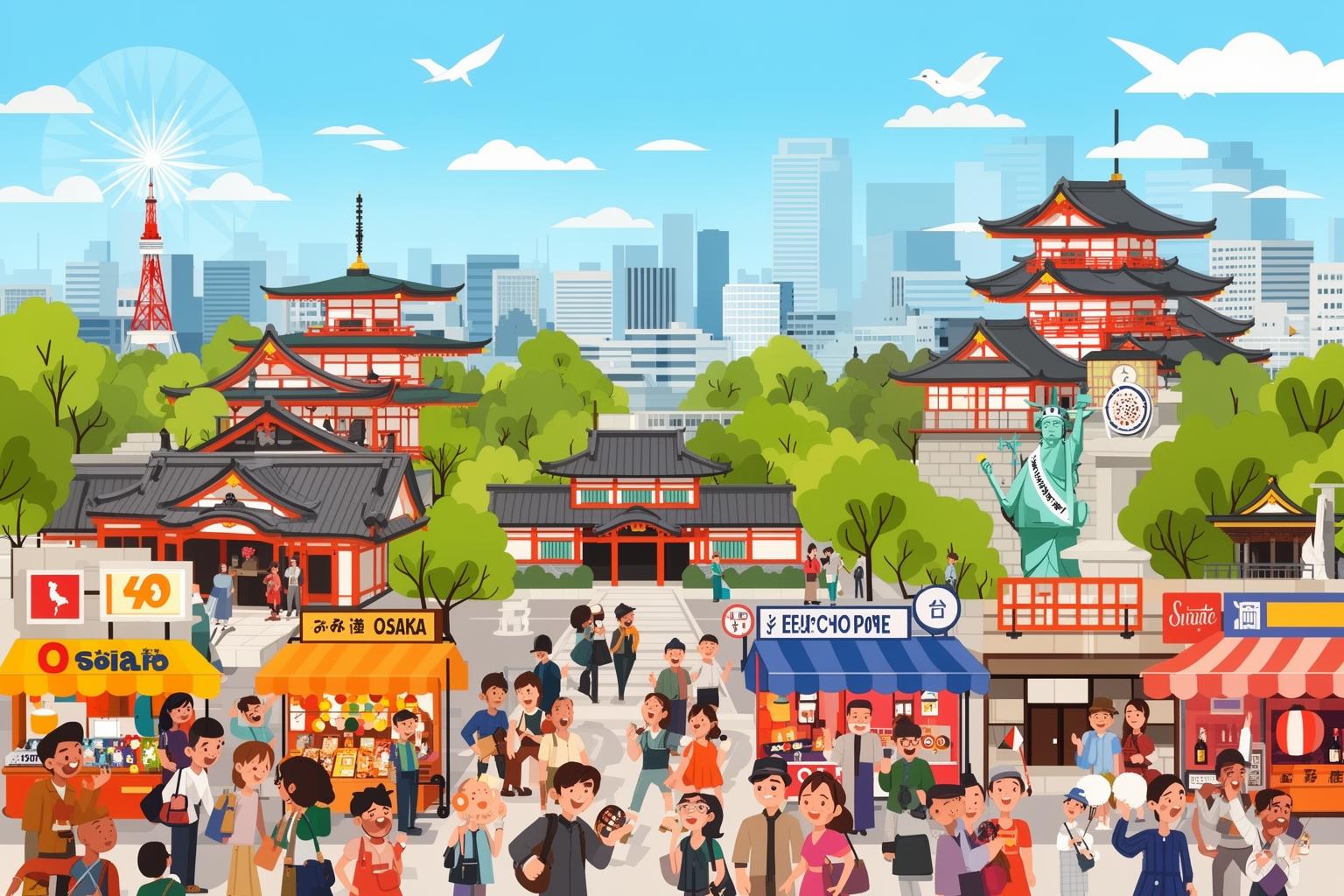
For a foreigner, stepping into the whirlwind of fast-paced dialect, inside jokes, and personal teasing can feel intimidating. It’s easy to feel like you’re at a party where you don’t know anyone and can’t follow the humor. But breaking into this world is easier than it looks. It calls for less linguistic perfection and more of a shift in attitude: moving from defensive politeness to a willingness to be playful and vulnerable.
The Initial Test: Are You Ready?
When a shopkeeper throws that first jab—commenting on your Japanese skills, clothes, or food choices—it’s almost always a test. They’re probing to see what you’re made of. Implicitly, they’re asking, “Can you hang with us? Do you get our way?” The worst response is to get flustered or offended. A stiff, textbook reply like “Sumimasen, yoku wakarimasen” (“Excuse me, I don’t really understand”) instantly ends the test. The walls of politeness go up. They switch into “foreigner handling mode,” becoming overly polite, simple, and distant. You’ll get your groceries, but miss out on a genuine connection.
The right response is to show you’re game. You don’t need a clever comeback in flawless Kansai-ben. A simple, sincere laugh often works best. A smile and nod signal you grasp the spirit of the exchange, even if you don’t catch every word. This shows you’re not fragile and are open to this type of communication. Passing this test is the first and most important step. Once they see you can take a joke, the door opens and the real fun begins.
Your Go-To Phrases: Building a Conversational Toolkit
While attitude matters more than vocabulary, keeping a few key phrases handy can greatly speed up your acceptance into the shotengai community. Using Osakan phrases shows you’ve made an effort to learn their culture. Here are a few essentials:
- “Meccha oishii!” (Super delicious!): Use this enthusiastically when praising food. It’s simple, positive, and shows appreciation.
- “Moukarimakka?” (Are you makin’ money?): A classic, almost cliché, Osakan greeting for shop owners. It’s a bit cheeky and always gets a smile. The usual reply is “Bochi bochi denna,” meaning “So-so, getting by.” Never say business is great; a humble, self-deprecating answer is key.
- “Honma ka?” (Really? / For real?): A perfect playful expression of disbelief. When the butcher claims his croquettes are the best in Japan, a skeptical “Honma ka?” makes a great tsukkomi.
- “Akan!” (No good! / Can’t do it!): A versatile, strong word. Use it jokingly in response to teasing. For example: “You should buy five of these!” “Akan! I have no money!” It’s a gentle way to say “no” that fits right into the banter.
Perfect pronunciation isn’t the goal—it’s the effort that matters. Trying their language and rhythm shows respect and a desire to meet them on their terms. They’ll be delighted by your efforts and often help, correct, and teach you more.
From Stranger to “Itsumo no Hito” (The Usual Person)
The journey of joining a shotengai has clear stages. At first, you’re just kyaku-san (customer). As they get familiar with your face, you become gaikokujin-no-kyaku-san (the foreign customer). That’s progress. You’re now a recognizable character.
But the true goal is to become itsumo no hito—the usual person, the regular. This status comes when you’ve shown up consistently, passed the banter test, and proven you’re part of the neighborhood’s daily life. You’ll know you’ve arrived when they start getting your order ready before you ask. When they save the best cut of fish for you because they know you’re coming. When the conversation stops revolving around you being a foreigner, and shifts to shared lives: “How was your trip home?” “Did your son pass his exam?” That’s when you’re no longer an outsider—you’re part of the community.
Why This Matters: The Soul of Osaka in a Shopping Bag
It might be easy to brush this off as a charming yet ultimately trivial local quirk. However, the conversational routines of the shotengai are much more than that. They are the living, breathing expression of Osaka’s history and identity. This city was built by merchants, not samurai. In the commercial world, relationships, trust, and quick-witted negotiation were essential for survival, rather than strict adherence to a feudal honor code. The culture born from this history is pragmatic, irreverent, and deeply human.
In a Japan that often feels restricted by formality and the pressure to maintain surface harmony (tatemae), the shotengai stands out as a place of refreshing directness. It is a space where people can speak their minds, tease one another, and connect on a genuine, unfiltered level. For foreigners grappling with the nuances of Japanese politeness, the shotengai can be an eye-opener. Here, the rules are straightforward: be friendly, be authentic, and don’t take yourself too seriously.
Grasping the daily banter is to understand the city’s operating system. It reveals a culture that values community over anonymity, relationships over mere transactions, and shared laughter over silent, efficient service. It explains why Osaka feels so distinct from Tokyo—less polished, perhaps, but more grounded, more approachable, and in many ways, more resilient. Living in Osaka is not just about securing an apartment and a job. It’s about finding your place within a community. More often than not, that journey starts with a confusing, wonderful, and utterly essential conversation over a handful of vegetables in the local shotengai.