Welcome to Osaka. You’ve probably heard the stories. It’s the city that moves to a different beat, a place where the volume’s turned up and the social walls are a little lower. Maybe you moved here from Tokyo, seeking an escape from the polite, unspoken distance that defines so much of life there. Or maybe you came straight to Kansai, drawn by the promise of a Japan that was more direct, more vibrant, more… human. And yet, you might find yourself standing in the middle of it all, surrounded by energy but feeling completely outside of it. Making genuine friends in Japan, real connections that go beyond surface-level politeness, can feel like an impossible task, no matter which city you’re in. The rules are different, the cues are subtle, and the fear of saying or doing the wrong thing can be paralyzing.
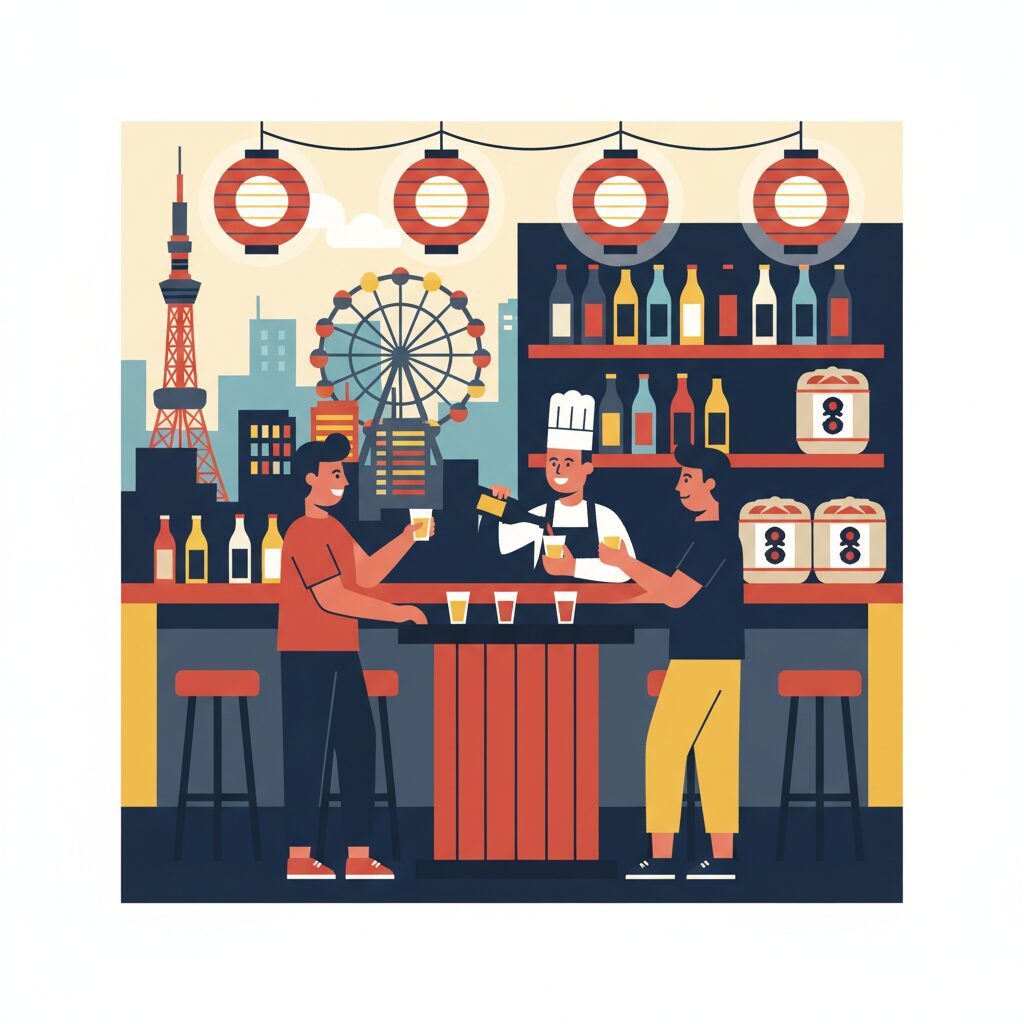
But in Osaka, there’s a key. A cheat code, almost. It’s a place that’s loud, crowded, and smells of grilled skewers and cheap, strong booze. It’s the tachinomi, the standing bar. These are not just places to drink. They are social laboratories, community centers disguised as watering holes, and arguably the single best place to understand the soul of this city. Forget quiet cafes and formal meetups. The path to connecting with Osaka runs straight through these bustling, sometimes grimy, always lively establishments. Here, the physical closeness is intentional, designed to break down the very barriers you’ve been struggling with. This guide isn’t about the best food or the cheapest drinks. It’s about how to walk into one of these rooms as a stranger and walk out feeling a little more like you belong. It’s about learning the rhythm, the language, and the heart of Osaka, one shared drink at a time.
If the exuberance of Osaka’s standing bars ever feels overwhelming, you might find it refreshing to experience some quiet productivity in traditional kissaten for deep work.
The Tachinomi Paradox: Crowded Rooms, Open Doors
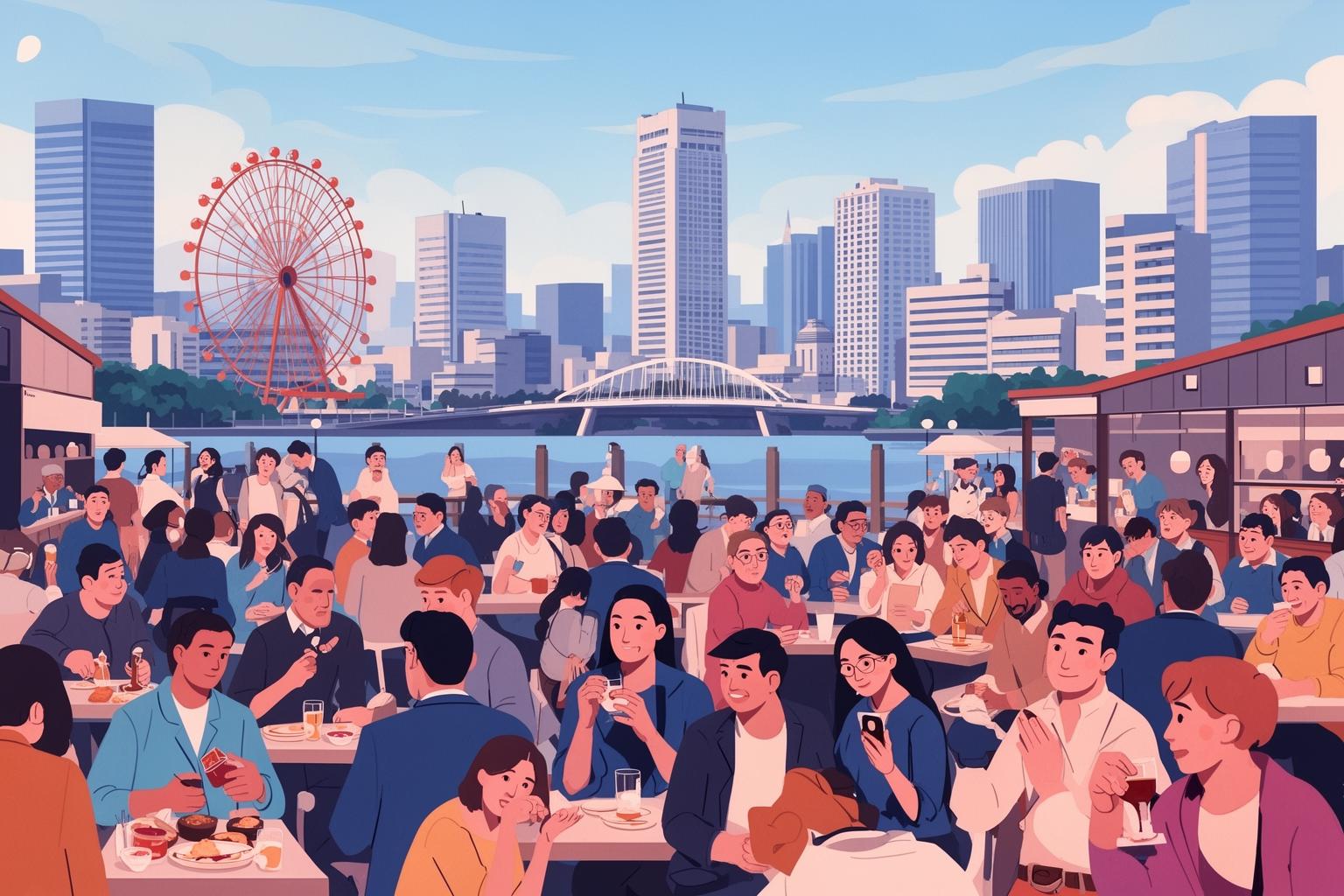
Step into a classic Osaka tachinomi on a Tuesday night. The first sensation isn’t a warm welcome; it’s a surge of noise and bodies. The air is dense with cigarette smoke and the sizzle of something frying. You find yourself shoulder-to-shoulder with salarymen in loosened ties, old-timers sipping sake, and young couples sharing a plate of karaage. There are no chairs. There are no private tables. There is only ‘the counter,’ a shared wooden slab that acts as the room’s gravitational center, accompanied perhaps by a few overturned crates or high tables. Personal space is a forgotten luxury.
This isn’t a design oversight; it’s the whole point. In Tokyo, izakayas often feature a maze of private booths and partitioned tables. The design is meant to insulate your group from others. You exist in a bubble, and interacting with the table next to you would be considered a social faux pas. The Osaka tachinomi is the exact opposite. It’s an open-plan social experiment. The lack of seating and cramped quarters push you into a collective experience. You can’t help but overhear the conversation beside you. You have to ask someone to pass the soy sauce. Your elbow brushes against a stranger’s as you raise your beer. This enforced intimacy is what unlocks the social atmosphere. People don’t come to a standing bar for a quiet, private drink. They come because, on some level, they are open to the chance of a spontaneous encounter. The establishment itself grants you permission to talk to strangers. The paradox is that the busiest, most chaotic rooms often have the widest open doors.
Decoding the Osaka Social Code: It’s Not Friendliness, It’s “Nori”
You’ll hear the cliché a thousand times: “Osaka people are so friendly.” While that’s not untrue, it’s dangerously simplistic. It overlooks the active, participatory nature of Osaka’s social culture. A better word, one that truly captures the essence of interaction here, is nori (ノリ). There’s no perfect English equivalent. It’s a blend of vibe, rhythm, energy, and a shared willingness to play along. It’s the invisible current running through a conversation, and learning to feel it matters more than memorizing Japanese phrases.
Nori is when the old man at the end of the counter tells a ridiculous story about his youth, and everyone, including the bar master, jumps in either to build on the joke or playfully call him a liar. Nori is when you order a strange-looking dish and the person next to you leans over and says, “You’re brave!” and you reply with a laugh, “I have no idea what it is!” It’s an improvisational dance. Having good nori means you can slip into the rhythm. You don’t have to be funny or clever; you just have to be present and willing to participate. You show you’re on the same wavelength. A simple laugh, a raised eyebrow, a nod of agreement—all are ways of showing you’ve got the nori. In Tokyo, social currency is often based on politeness and not imposing. In Osaka, it’s based on engagement and contributing to the collective atmosphere. They’re not just being friendly to you; they’re inviting you to join the performance.
Your Tachinomi Toolkit: The Unspoken Rules of Engagement
Alright, so you get the theory. But how do you actually put it into practice? Walking into a packed bar can be intimidating. Here’s a practical toolkit to get you started.
Choosing Your Spot
Not all standing bars are created equal. They exist on a spectrum. On one end are the weathered, Showa-era joints where the same group of men has been drinking every night for forty years. These can be tough to break into. On the other are newer, shinier tachinomi catering to a younger, more diverse crowd. As a beginner, aim for something in the middle—a place that looks busy but not exclusive. Neighborhoods matter. Tenma is the undisputed king, a sprawling labyrinth of bars where the sheer variety means you’ll find something that fits. Kyobashi offers a grittier, more local, salt-of-the-earth experience. Ura Namba, the cluster of alleys behind Namba Grand Kagetsu, is a bit more modern and trendy, often a good starting point for foreigners.
The Opening Move
This is the part everyone overthinks. You don’t need a witty pickup line. The environment provides the pretext. The easiest way in is through food and drink. See someone eating something that looks delicious? Catch their eye and ask, “Sore, oishii desu ka?” (Is that good?). It’s simple, non-threatening, and opens the door for them to talk about what they’re enjoying. Another classic is commenting on the bar itself: “Koko, itsumo konde masu ne.” (This place is always crowded, isn’t it?). This establishes common ground. You’re both here, sharing this experience. A pro-level move is to use a touch of Osaka-ben. When you arrive or order, instead of a standard greeting, try a cheerful “Maido!” (まいど). It roughly means “Thanks for your business, as always” and is a classic merchant greeting. Using it instantly marks you as someone making an effort to fit in. You’ll almost always get a warm smile in return.
The Art of “Tsukkomi”: Responding to Osaka Banter
Osaka’s communication style is deeply rooted in its comedy tradition, specifically manzai. This two-person comedy act consists of a boke (the funny one who says absurd things) and a tsukkomi (the straight man who points out the absurdity). This dynamic plays out constantly in everyday conversation. As a foreigner, you will often be cast, good-naturedly, in the role of the boke. Someone might joke about your terrible chopstick skills, your strange Japanese accent, or a stereotype about your home country. This is not an insult. It is a social invitation. It’s a test to see if you have nori. The wrong response is to get defensive or offended. The right response is to play the tsukkomi role. The quintessential tsukkomi phrase is “Nande ya nen!” (なんでやねん), which means something like “What the heck!” or “Don’t be ridiculous!” Saying it with a laugh and a light shove is the perfect way to show you’re in on the joke. This playful back-and-forth, this verbal sparring, is a sign of affection. If they’re teasing you, it means you’ve been accepted into the conversation.
The Economics of Socializing: Why Tachinomi Work in Osaka
We can’t discuss standing bars without mentioning money. A major reason this culture flourishes in Osaka is due to how incredibly affordable it is. This is the home of senbero—a blend of sen-en (1,000 yen) and berobero (drunk). The concept of getting a few drinks and a snack for around ten dollars greatly lowers the social barrier to entry. There’s no need to commit to an expensive, multi-course meal. You can stop by a tachinomi for twenty minutes, have a beer and a skewer of chicken, and then decide whether to stay or move on.
This economic flexibility encourages a culture of bar-hopping, or hashigo-zake. An evening’s enjoyment isn’t about settling in one place but rather drifting from one venue to another, sampling the atmosphere, food, and people at each spot. This fluid, transient nature means the social scene is always changing. The group you’re chatting with at 7 PM could be entirely different at 8 PM. This system, rooted in Osaka’s practical, merchant-city heritage, is ideally suited for spontaneous social interactions. It’s about maximizing value—not only for your wallet but also for your social life. It’s an efficient, low-risk, high-reward way to meet people.
What Foreigners Often Get Wrong
Navigating this new social environment, it’s easy to make mistakes. However, they’re usually not the ones you might expect. Here are some common misunderstandings foreigners often face.
Confusing Teasing with Rudeness: This is the most important point. When an elderly man asks if you eat hamburgers every day, he’s not being xenophobic. He’s offering you a conversational opening, an easy setup for a boke/tsukkomi exchange. Recognize it for what it is: a clumsy but well-meaning attempt to connect. Embrace it, laugh, and you’ll win them over quickly.
Expecting Instant Deep Friendship: The connections formed at a tachinomi counter are often brief. The aim is to enjoy the moment for the next hour, sharing an experience rather than establishing a lifelong bond. While lasting friendships can develop, there’s no initial pressure. Appreciate the conversation for what it is. If you click, great; if not, you’ve still had a pleasant time.
Overanalyzing the Language Barrier: Your Japanese doesn’t need to be perfect — sometimes it’s better if it isn’t. Mistakes can bring humor and spark conversation. Enthusiasm and a willingness to try matter far more than flawless grammar. Someone with basic Japanese and lively nori will enjoy themselves more than a fluent speaker who is reserved and stiff.
Forcing the Conversation: Although the setting is open, you still need to read the room. Not everyone is there to talk; some just want a quiet drink after a long day. Look for cues: open body language, people scanning the room, groups laughing together. Don’t push your way into a closed-off discussion. Let the bar’s natural flow bring you into interaction — it almost always will.
A Tale of Two Cities: Why This Usually Doesn’t Happen in Tokyo
If you’ve spent time in Tokyo, this whole social dynamic may feel foreign. The difference is fundamental. In Tokyo, urban social etiquette largely revolves around respecting boundaries and keeping polite distance. The city’s density requires this; to cope, people build invisible walls. Speaking to a stranger on the train or in a bar is rare, and can even arouse suspicion. The unwritten rule is, “I won’t bother you if you don’t bother me.”
In Osaka, the rule is different. It’s, “We’re all in this together, so let’s have some fun.” Osaka’s history as a thriving merchant center, where being outgoing and quickly building relationships was necessary for survival, has ingrained this attitude into its culture. The tachinomi culture is a modern expression of that. It’s a place that intentionally breaks down the walls Tokyo carefully erects. It’s not that Tokyoites are cold; the default social setting there is ‘private.’ In Osaka, the default in places like tachinomi is ‘public.’ This single perspective shift changes everything.
Beyond the Bar: From Drinking Buddy to Actual Friend
So, you’ve had an enjoyable evening—laughing, sharing stories, and practicing your “Nande ya nen!” But how do you transition from a fun, fleeting encounter to a genuine, lasting friendship? This is the final and most challenging step.
First, understand how to interpret the phrase “Mata kondo” (また今度), or “Let’s do this again sometime.” While it can be sincere, it often serves as a polite way to say goodbye. The key is to notice specificity. If someone says, “I’m going to a concert next Friday, you should come!” or “My friend’s bar is just around the corner, let’s go!”—that’s concrete. That’s a real invitation.
Still, the single most effective approach is simply to become a regular. Don’t try to conquer every tachinomi spot in Osaka. Instead, find one or two you genuinely like and keep returning. Go on the same night each week. The bar master, the taisho, will begin to recognize you. They’ll greet you with a nod, then a “Maido!“, and before long, they’ll start introducing you to other regulars. You’re no longer a tourist or a transient. You’re part of the furniture. You’re a member of this small, informal community. This is where fleeting conversations turn into inside jokes, drinking buddies start asking about your work and life, and true friendships are formed. It takes time and consistency, but it’s the most natural and rewarding way to build a social life here.
Ultimately, the Osaka tachinomi is more than just a spot to grab a cheap drink. It’s a training ground for understanding the city’s heart. It teaches that communication is more than words; it’s about rhythm and shared energy. It shows that closeness isn’t just physical, but emotional. And it proves that even in a country sometimes seen as reserved, there are places where the gap between stranger and friend is no wider than the wooden counter you’re leaning on. All you have to do is show up, be open, and be ready to join the beautiful, chaotic dance.