
You’re in Osaka. The city thrums with a relentless, infectious energy. It’s a place of dazzling neon, booming announcements, and the clatter of a million conversations happening all at once. It’s a city that pulls you into its current, a sensory overload that’s both thrilling and exhausting. And if you’re trying to live here, to build a life or a career, you eventually ask the question that feels almost impossible to answer: In a city this loud, where can you possibly go to hear yourself think? Your mind might jump to a sleek, minimalist co-working space in Umeda or a quiet corner of a global coffee chain. But the real answer, the truly Osakan answer, lies hidden in plain sight, down a narrow backstreet, behind a curtained door that hasn’t changed in fifty years. It’s the kissaten.
A kissaten is a traditional Japanese coffee house, a living relic from the Showa Era (1926-1989), and it is the absolute antithesis of modern hustle culture. These are not places of fast Wi-Fi and frantic typing. They are sanctuaries of dark wood, vinyl booths, and the slow, deliberate drip of siphon coffee. To an outsider, they might seem dated, smoky, and perhaps a little intimidating. But to understand the kissaten is to understand a fundamental, often overlooked, aspect of Osaka’s soul. It’s a place where the city’s chaotic energy recedes, replaced by an atmosphere purposefully built for concentration, contemplation, and the kind of deep work that our hyper-connected world has made nearly impossible. This isn’t just about finding a quiet table; it’s about plugging into a different rhythm, an analog mindset that reveals how Osaka truly functions beneath its boisterous surface.
Exploring how these nostalgic kissaten offer a retreat for deep work, one might also appreciate the role of local sentō community hubs in illuminating another layer of Osaka’s cultural tradition.
The Illusion of Speed: Deconstructing the “Hustle” in Osaka
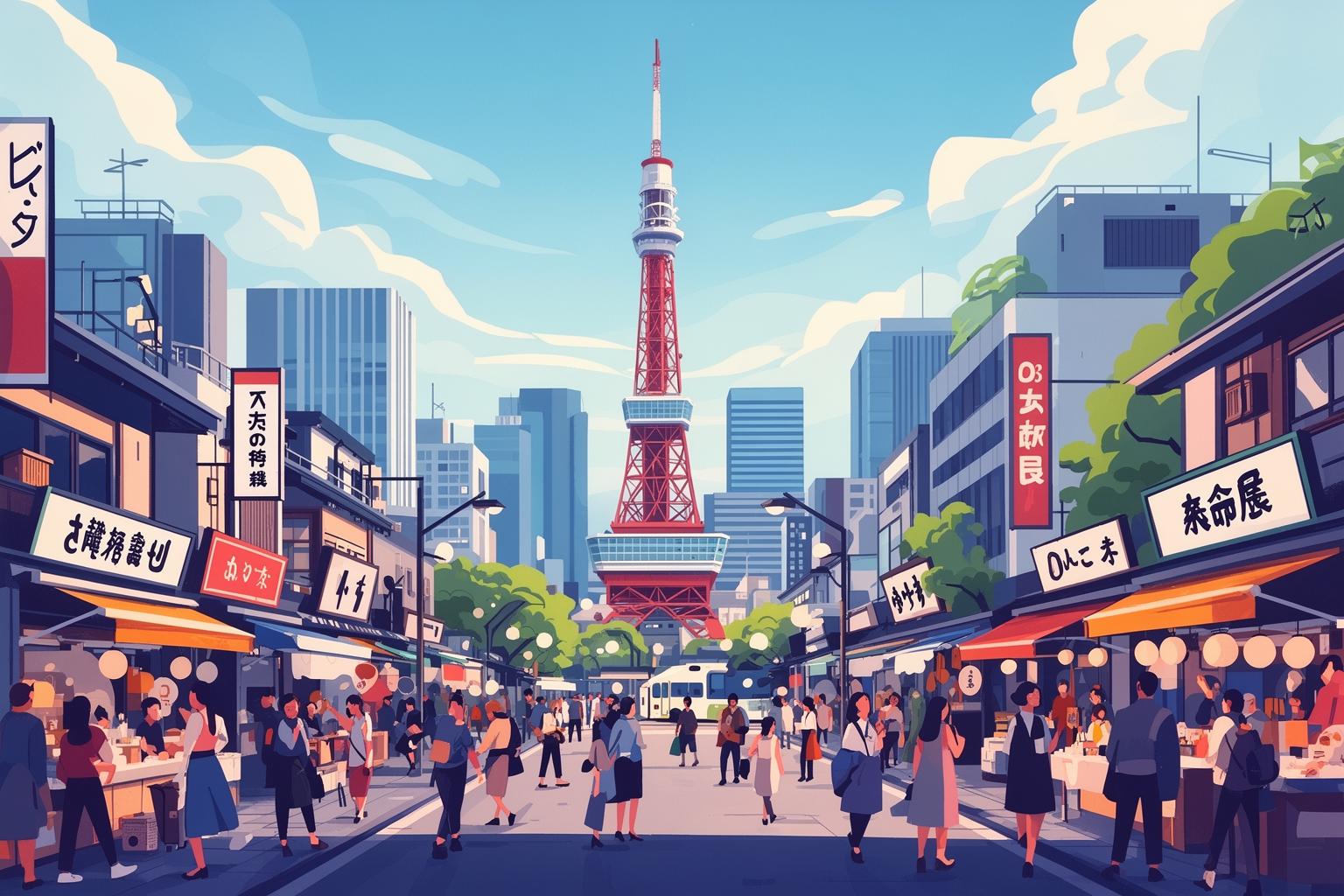
Foreigners often arrive in Osaka expecting a slightly more relaxed version of Tokyo, but what they encounter is something completely different. The stereotype is of a city constantly in motion. Merchants at Kuromon Market call out their greetings, cyclists weave skillfully through crowds of pedestrians, and train stations are overflowing with people. This sense of speed is real, yet frequently misunderstood. Osaka’s hustle is largely commercial and social. It’s the vibrant energy of the marketplace, the lively exchanges between shopkeepers and customers, the quick-witted humor shared among strangers. It’s an energy centered on people.
This contrasts sharply with Tokyo’s corporate hustle, where speed feels more impersonal and systematic, driven by deadlines and strict schedules. In Tokyo, you sense the pressure of time; in Osaka, you feel the rhythm of the people. This difference is important because it allows another mode of existence to thrive just beneath the surface. Osaka’s residents recognize the value of a good deal and the significance of business, yet they also deeply appreciate taking a moment to pause. The city’s true rhythm isn’t a sprint; it’s a dynamic balance between fast and slow.
The kissaten embodies this slower, more intentional pace. It serves as a deliberate contrast to the noise of the shotengai (shopping arcade) just outside. Entering one feels like stepping into a pocket of suspended time. These establishments weren’t designed for rapid turnover or maximizing profit per square foot. They were created as sanctuaries. They reflect a fundamental Osaka value: the belief that genuine business, creativity, and thought need you to slow down, sit, and observe. While the city’s surface is about selling takoyaki at lightning speed, its soul understands that good ideas, like good coffee, cannot be rushed.
What a Kissaten Is—And What It Isn’t
To truly make the most of a kissaten for deep work, you need to grasp its essence. It functions based on cultural principles that are vastly different from the global coffee chains found on nearly every street corner. It is a place with its own logic, etiquette, and purpose.
Not Your Typical Starbucks
Forget everything you associate with modern cafe culture. There are no seasonal pumpkin spice lattes, no baristas misspelling your name on disposable cups, and no upbeat pop music intended to boost productivity. Instead, stepping into a kissaten offers a complete sensory immersion into a bygone era. The first thing that strikes you is the aroma: a rich, intense scent of dark-roast coffee, often accompanied by the faint, persistent trace of tobacco from decades ago (and occasionally today). The air carries a sense of history.
The decor reflects Showa-era aesthetics: dark wood paneling on the walls, floors covered in worn tiles or faded carpets, and seating made up of plush, low-backed booths upholstered in burgundy velvet or cracked brown vinyl. The lighting is almost always dim, originating from ornate, sometimes dusty lamps with softly yellowed bulbs. If music plays at all, it is typically quiet, thoughtful jazz or classical melodies, often from a vintage stereo system. The only other sounds are the gentle clink of ceramic against saucers, the rustle of newspaper pages, and the soft hiss of a coffee siphon. This atmosphere isn’t accidental. It’s carefully crafted to slow your heartbeat, calm your mind, and shield you from the outside world. The aim isn’t to energize you with sugar and caffeine for a quick burst but to offer a steady, unchanging refuge where your thoughts can take center stage.
The Master’s Realm: The Unspoken Social Contract
Central to every kissaten is the “Master” (masutā). This person, often both owner and operator, is more than just a barista; they are the silent custodian of the space. Dressed neatly in a crisp shirt and sometimes an apron or vest, the Master moves with quiet, practiced precision. They may not welcome you with a loud “Irasshaimase!” like in a ramen shop. Instead, you might receive a simple nod or a gesture toward an open seat. Don’t mistake this for coldness—it is a sign of respect for the serene atmosphere they maintain.
The experience follows an unspoken social contract. When you order a single cup of coffee, typically costing between 500 and 800 yen, you’re not merely paying for the drink. You’re effectively renting the space. That single purchase grants you the right to occupy your table for an extended period—an hour, two hours, sometimes longer. There’s no pressure to order more, no subtle clearing of your table to hurry you out. The Master understands your purpose: whether to read, write, think, or simply escape. Your role is to honor the sanctuary. This means no loud phone conversations, speaking quietly if you’re with someone, and while laptops are usually allowed, frenetic typing is discouraged. You are a guest in their domain, part of a shared environment of tranquility. This embodies a distinctly Osakan approach to business: rooted in mutual respect and fair exchange rather than strict rules and maximizing turnover. You support their livelihood, and in return, they provide something increasingly rare and precious: a place for uninterrupted contemplation.
The Architecture of Deep Work: Why Kissaten Design Fosters Focus
The physical and atmospheric design of the classic kissaten appears almost perfectly suited for deep work, long before the term was popularized. These spaces intuitively understand what many modern office designers overlook: that true focus demands a particular set of environmental conditions that actively resist distraction.
The “Analog” Advantage: Escaping Digital Distraction
One of the most striking—and initially frustrating—aspects of many kissaten is the intentional absence of modern conveniences. Wi-Fi is uncommon. Power outlets are often missing or awkwardly positioned. For today’s remote workers, this might seem like a significant drawback. Yet for those seeking deep work, it proves to be a hidden benefit. The lack of internet access is a feature, not a flaw. It cuts the digital cord, blocking the constant flood of notifications from emails, social media, and messaging apps that continually break our focus.
This enforced disconnection fosters an environment of “monotasking.” Without the option to mindlessly scroll through feeds, the only choice is to concentrate on the task at hand. Your laptop becomes a device for writing or coding, rather than a gateway to the entire internet. Your notebook serves as a space for brainstorming, not a phone stand. The kissaten effectively creates a pre-internet bubble amid a hyper-modern cityscape. It compels you to draw on your own cognitive abilities, nurturing a depth of concentration rarely attainable in a typical café, where digital distractions are just a click away. It is the ultimate productivity hack, crafted from wood and velvet instead of code and algorithms.
A Universe of One Table
Consider the usual layout of a modern café or co-working space: large, open-plan areas with long communal tables. These designs aim to encourage energy and collaboration but often result in an environment filled with constant peripheral distractions. You see every person who enters, overhear bits of multiple conversations, and sense people moving around you. It’s a setting that keeps your mind alert.
In contrast, the kissaten is built to offer privacy within a public setting. The presence of high-backed booths, wooden dividers between tables, and thoughtfully placed decorative screens creates a network of intimate micro-environments. Even when crowded, you often feel as if you are in your own private bubble. The dim lighting intensifies this effect, focusing your attention on the small pool of light illuminating your table. You remain aware of others’ quiet presence—the rustle of pages, the soft murmur of voices—but these form a soothing ambient backdrop rather than a direct disruption. This architecture of seclusion lets you lower your social defenses and fully commit your mental energy to your work. Each table becomes its own universe, a tiny island of focus amid a sea of shared calm.
Osaka vs. Tokyo: A Tale of Two Coffee Cultures
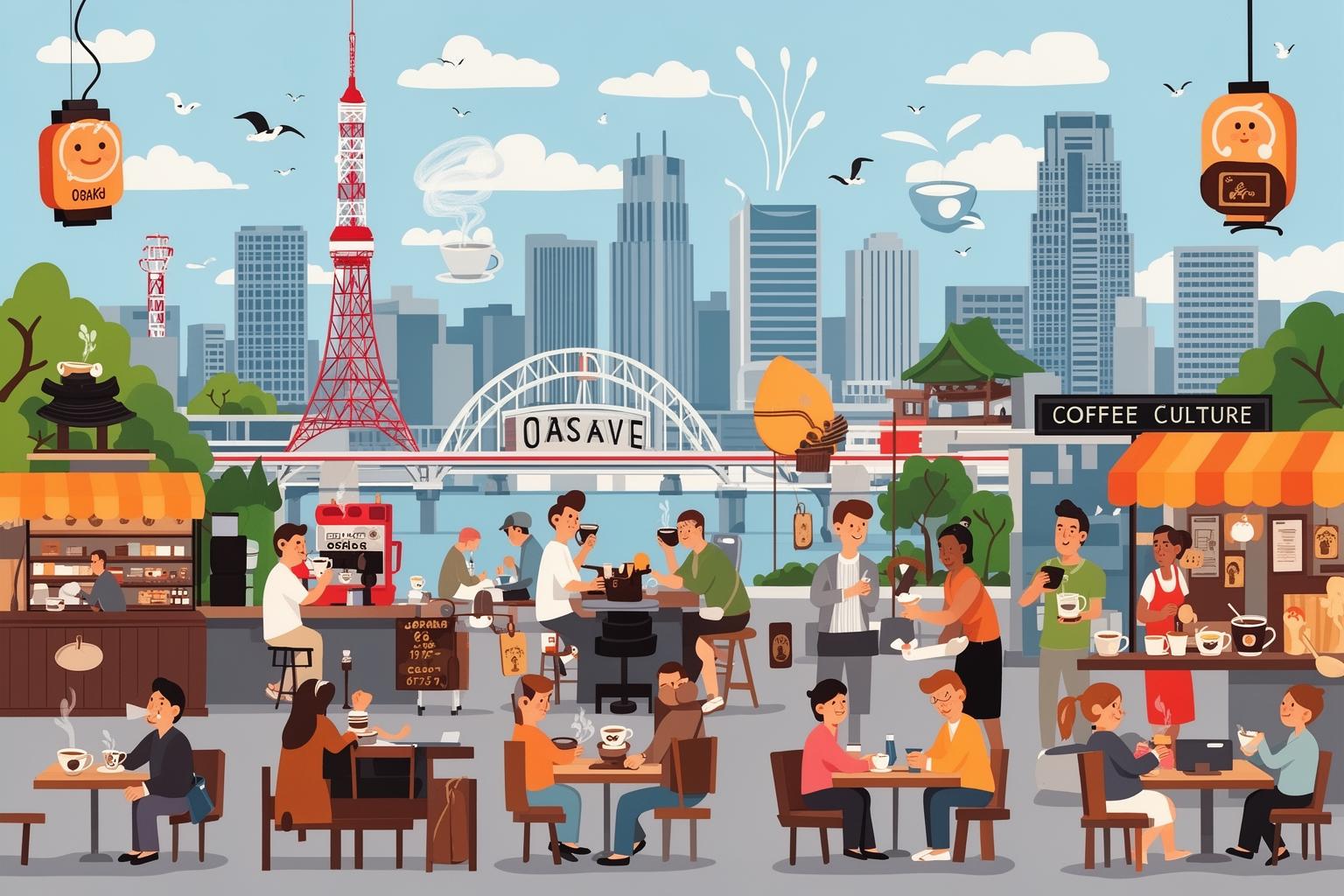
Nowhere is the distinctive character of Osaka’s kissaten scene more evident than in comparison to Tokyo. While both cities host traditional coffee shops, the philosophies behind them and their roles within the urban landscape differ greatly, revealing a fundamental contrast in the mindsets of Japan’s two largest metropolitan areas.
Tokyo’s Efficiency vs. Osaka’s “Maido” Mentality
Tokyo’s cafe culture, much like the city itself, is heavily shaped by trends, branding, and efficiency. The city is filled with numerous stylish, minimalist cafes that frequently appear in magazines. They are visually appealing, serve excellent coffee, and cater to a specific type of urban professional: someone seeking a chic, functional space for focused work sessions lasting about an hour before moving on to their next appointment. The experience tends to be transactional—you get your coffee, complete your work, and leave. It’s clean, efficient, and somewhat impersonal.
In contrast, Osaka’s kissaten culture is grounded in the concept of “Maido” (まいど), a traditional Osaka greeting meaning “thanks for your continued patronage.” This phrase connotes familiarity and long-term relationships. Kissaten aren’t designed to capitalize on fleeting trends; they cater to regulars (jyouren, 常連). The Master might not know your name initially, but they will come to recognize your face, usual order, and preferred seat. Their business model focuses not on high volume or rapid turnover, but on loyalty and stability. Patrons have frequented the same kissaten for decades—whether for morning coffee, midday work breaks, or a quiet spot to read the newspaper. This transforms the venue from merely a commercial space into an informal community hub, a ‘third place’ integral to daily life alongside home and office. It reflects Osaka’s emphasis on human connections over impersonal systems. Here, you are not just a customer; you are a part of the place’s fabric.
The Persistence of the Past
This contrast also reveals how the two cities relate to their own histories. Tokyo is a city defined by constant, relentless renewal. Buildings are demolished and rebuilt at remarkable speed, with neighborhoods often changing character entirely within just a few years. It is a forward-looking city, sometimes at the expense of its past. While this fuels Tokyo’s dynamism and excitement, it can also impart a sense of transience.
Osaka, though certainly modern and evolving, maintains a more tenacious connection to its past. A deeply rooted pragmatism in Osakan culture poses the question, “If it still works, why change it?” The remarkable endurance of many Showa-era kissaten exemplifies this mindset. These establishments persist not merely out of nostalgia but because they continue to fulfill an essential role. They offer a valuable, much-needed service: a quiet, stable place for people to gather, relax, and reflect. In a city that prides itself on practicality, the kissaten repeatedly proves its worth. Its longevity stands as a testament to the Osakan belief that some things—a good cup of coffee, a peaceful environment, a familiar face—are timeless assets not to be discarded lightly in the name of progress.
A Practical Guide to Using Kissaten for Work
Adopting the kissaten as your preferred workspace involves a slight change in mindset along with some practical know-how. Once you get the hang of the rhythm and etiquette, you’ll gain access to one of the most productive and distinctly Osakan experiences the city offers.
Finding Your Spot
Kissaten are found throughout Osaka, but some neighborhoods are especially rich in options. Nakazakicho, with its maze of narrow alleys and beautifully preserved old buildings, is packed with artsy, retro kissaten that feel like stepping onto a movie set. The lively, gritty area around Tenma Station conceals dozens of no-frills, Showa-era spots cherished by locals. Even in the ultra-modern commercial hubs of Umeda and Namba, legendary kissaten can be discovered hidden in the basements of old buildings or tucked away down quiet side streets, providing an immediate refuge from the bustling crowds. Keep an eye out for telltale signs: faded, stylized katakana signs, a glass display near the entrance showcasing waxy plastic food models (shokuhin sanpuru), and a dim, somewhat mysterious doorway that hints at a world apart from the bright, noisy street.
Kissaten Etiquette for the Modern Worker
Getting around a kissaten is easy once you understand the unspoken rules. First, always order at least one item per person. The classic choice is “blend coffee” (burendo kōhī), but tea, juice, or cream soda work too. Sip your drink slowly; there’s no need to hurry. As long as you have a drink on the table, you’re welcome to stay. Be considerate of your physical and sound presence. Avoid spreading your belongings over multiple seats, and if you need to take a call, step outside. The main rule is to maintain the calm atmosphere, not disrupt it. A key point for many foreigners is smoking: many traditional kissaten still allow smoking throughout the venue (zen-seki kitsuen). If you don’t smoke, look for a kinen (禁煙) sign indicating non-smoking, or be ready to peek inside and judge the air quality before settling in. Lastly, carry cash. Many of these old-school establishments remain cash-only, a final bastion against the digital era.
Beyond Coffee: The “Morning Service” and Napolitan Spaghetti
One of the finest examples of Osaka’s practical, value-focused culture is the kissaten’s “Morning Service” (mōningu sābisu). Usually served until about 11 AM, this set menu offers, for the price of a single cup of coffee (or slightly more), a thick slice of toasted bread (shokupan), a hard-boiled egg, and occasionally a small yogurt or salad. It’s a generous, incredibly affordable breakfast that has sustained the city’s workers for generations. For a midday meal, try classic kissaten dishes like “Napolitan” spaghetti (a comforting ketchup-based pasta with sausage and peppers), curry rice, or a filling sandwich. These are not gourmet meals; rather, they’re the culinary equivalent of a cozy blanket—simple, nostalgic, and perfectly matched to the kissaten’s warm, unpretentious vibe. Together, they complete the experience, making it not just a workspace but a place for simple, old-fashioned care.
The Soul of the City in a Coffee Cup
Ultimately, the kissaten is far more than just a coffee shop. It serves as a living museum, a community hub, and a productivity engine all at once. It perfectly encapsulates Osaka itself: a city with a loud, energetic, and occasionally abrasive exterior that hides a warm, human-centered, and deeply thoughtful core. It unveils the city’s inherent duality—its capacity to balance the frantic pace of modern business with the profound importance of slowing down.
The enduring presence of the kissaten speaks volumes about the Osaka mindset. It stands as a testament to a culture that prioritizes relationships over transactions, substance over style, and practicality over fleeting fads. In a world constantly demanding more—more speed, more connectivity, more noise—the kissaten offers a radical alternative. It offers less. Less distraction, less pressure, less noise. In doing so, it creates space for greater focus, creativity, and clarity.
So, the next time you feel overwhelmed by the vibrant chaos of Osaka, resist the urge to seek refuge in the familiar glow of a global chain. Instead, wander down a side street, look for a worn sign, and push open the door to a local kissaten. Order a coffee, open your notebook, and let the outside world fade away. You won’t just find a better place to work—you’ll discover the true, hidden rhythm of Osaka, one slow, deliberate, and wonderfully productive sip at a time.