Friday night in Osaka hits different. It’s not just the end of a work week; it’s a city-wide exhale, a collective loosening of the tie. The air in Umeda thickens with the sizzle of takoyaki and the rumble of a million conversations spilling out of izakayas. Down in Namba, the neon lights of Dotonbori don’t just reflect off the canal; they seem to vibrate with a kinetic energy, a promise of release. You feel it in your bones. This city runs on a high-octane blend of ambition, commerce, and a relentless forward momentum. It’s intoxicating. It’s also completely exhausting. And that raises the real question for anyone living here: in a city that never seems to power down, how do Osakans actually, truly, recharge? The answer, for many of us, doesn’t lie in a quiet weekend at home. It lies just a short train ride south. It lies in Wakayama. This isn’t a travel guide telling you what to see. It’s a deep dive into why we go. It’s an explanation of the Osaka psyche, revealed by where we choose to escape. Wakayama is our city’s essential counter-melody, a place of raw nature and quiet tradition that keeps the urban symphony of Osaka from becoming pure noise. To understand why an Osakan needs the deep forests and steaming onsen of the Kii Peninsula is to understand the soul of the city itself.
Complementing Wakayama’s serene escapes, exploring an Osaka sentō community reveals another vital layer of how locals find balance amid the urban rush.
The Osaka Pressure Cooker and the Wakayama Release Valve
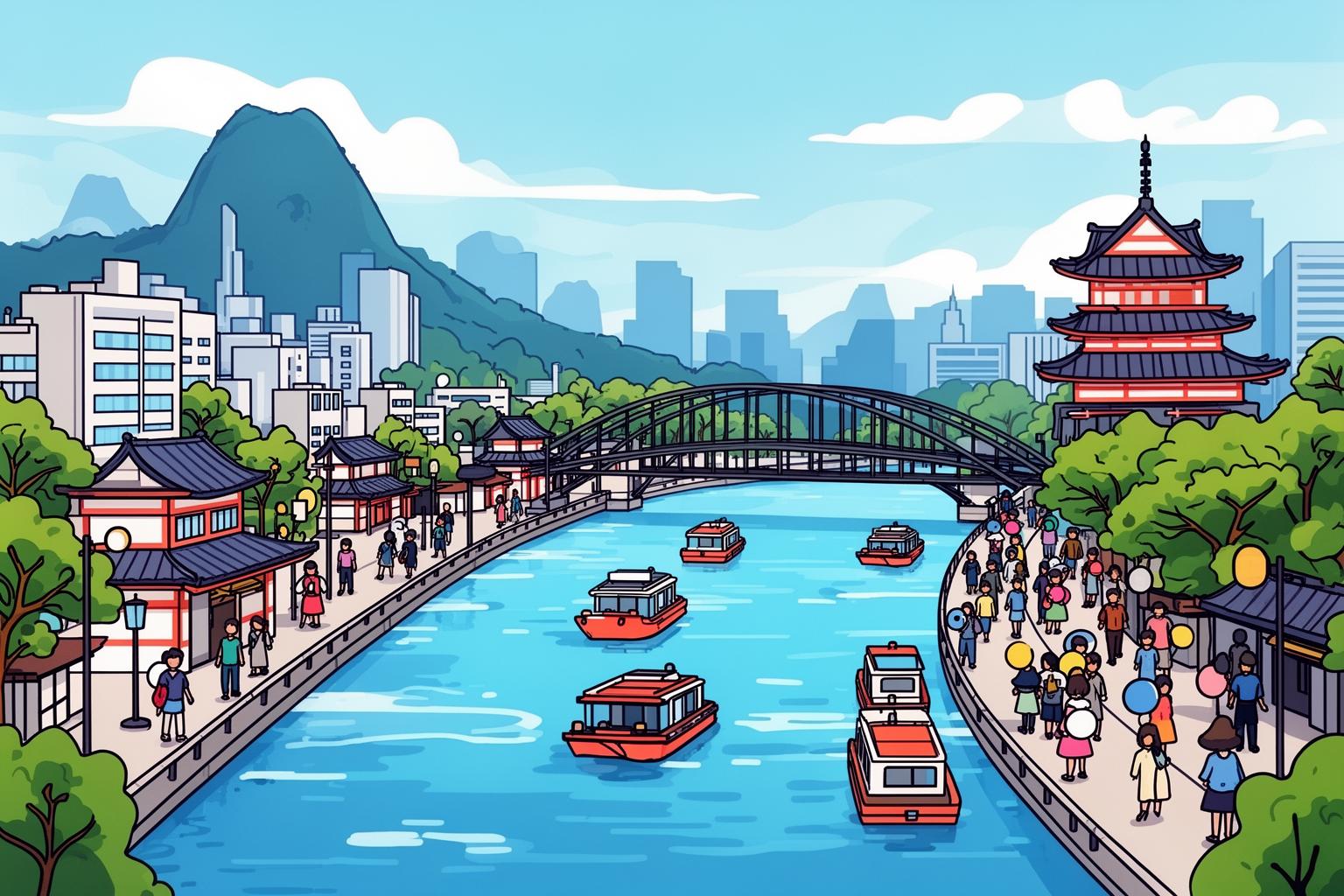
Living in Osaka feels like being part of a finely tuned machine constantly operating at 110 percent. The days blur together in a whirlwind of motion and sound. It’s the rhythmic beat of the station attendant’s announcements on the Midosuji Line, a familiar chant that becomes the city’s heartbeat. It’s the clatter of plates and bursts of laughter at a standing bar beneath the tracks in Tenma, where strangers bond over cheap beer and grilled skewers. It’s the overwhelming flood of Shinsaibashi’s shopping arcades, a stream of people flowing beneath a canopy of signs and speakers. We thrive on this energy. Our identity is built around it. But no one can maintain that pace indefinitely. The city is a pressure cooker, and by week’s end, the internal gauge is deep in the red. A foreigner might assume the solution is quiet contemplation, a Zen-like retreat into stillness, but that’s more typical of Tokyo or Kyoto. Here, we counter fire with another kind of fire.
Why “Doing Nothing” Isn’t the Osakan Way to Relax
For an Osakan, relaxation is rarely passive. The notion of spending a weekend meditating in a minimalist hotel room feels… inefficient. Why remain still when you can actively flush the system? Our reset is physical and visceral. It means replacing the city’s barrage of sensory input with something more primal. We exchange the screech of train brakes for the rush of a mountain river in Ryujin. We swap the aroma of grilled meat and stale cigarettes for the crisp scent of cedar and damp earth along the Kumano Kodo trail. It’s substitution, not elimination. An Osakan doesn’t power down; they reboot. This process is often rigorous. A long, sweaty hike up a mountain path isn’t a burden; it’s the purpose. Physical exhaustion silences mental noise. Concerns about next week’s sales targets or a tense meeting fade as your entire focus centers on burning thighs and the next step on centuries-old stones worn smooth by pilgrims. The reward is physical as well: the warming, soul-soothing waters of a natural hot spring, an earned prize. It’s a full-body experience designed to leave you tired but cleansed, inside and out. It’s a hard reset—not a gentle fade to black.
The Gospel of “Kospa”: Why Wakayama Wins Every Time
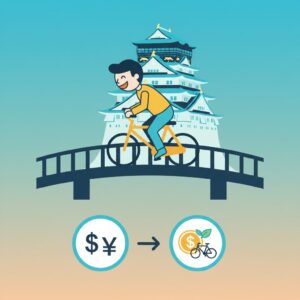
At the core of this philosophy lies a concept held almost as scripture in Osaka: `コスパ` (kosupa), or cost performance. This isn’t about cheapness. Being cheap means compromising quality for price. `Kospa` means maximizing value—getting the absolute best return on your investment of time, money, and energy. By this measure, Wakayama is unbeatable. For an Osakan planner — which usually means a quick Friday afternoon chat rather than a detailed itinerary — the reasoning is simple and sound. First, time. From the heart of Namba, you can reach a wild Pacific coastline or the trailhead of an ancient pilgrimage path in about 90 minutes, so you don’t waste half your weekend just traveling. Second, money. A round trip on the Nankai Line is affordable. You’ll find incredible, locally run minshuku guesthouses and onsen offering genuine hospitality without the inflated prices of better-known tourist spots. Third, and most importantly, the experience. Access to UNESCO World Heritage trails, legendary hot springs, and some of Japan’s freshest seafood comes with unbeatable value. A weekend in Kyoto might involve navigating crowds and paying a premium for atmosphere. A trip to Tokyo’s nearby escapes like Hakone can feel like a staged performance of stylish relaxation. Wakayama is different—raw, unpretentious, delivering pure nature and renewal. For an Osakan, that’s simply good business.
Trading Concrete Jungles for Ancient Forests
The physical journey from Osaka to Wakayama serves as a vivid metaphor for the mental shift that takes place. It represents a tangible release from the urban hustle, a slow unwinding you can observe through the train window. The trip itself acts as a form of therapy—a deliberate choice to leave behind familiar chaos and step into a landscape governed by seasons and tides instead of deadlines and train timetables. This transition is more than a change in scenery; it’s a recalibration of your entire inner rhythm.
The Nankai Line: A Lifeline to Nature
The Nankai Electric Railway line starting from Namba Station is far more than mere infrastructure; it’s a pathway to escape, a vital conduit that carries city dwellers out into the wilderness and back renewed. Your journey begins deep in the heart of Osaka’s most bustling entertainment district. Namba Station is a maze filled with noise, crowds, and commerce. But as the train departs, a transformation begins. The densely packed city buildings give way to the sprawling residential areas of southern Osaka, then the industrial sectors of Sakai. Almost suddenly, concrete fades away. You spot the first green patches—tiny vegetable gardens nestled between houses. Buildings shrink, the sky broadens. Soon you pass rolling hills, thick bamboo groves, and shimmering rice fields. By the time you cross the Kinokawa River into Wakayama, the air itself seems changed. You can smell earth and sea. For Osakans on this train, this journey is a shared, silent ritual. Loud conversations fade. People gaze out the window, watching the city’s grasp relax. It’s a collective exhale, a gradual release of pressure, kilometer by kilometer.
Kumano Kodo: More Than a Hike, a Complete Reset
When discussing nature in Wakayama, the Kumano Kodo must be mentioned. To outsiders, it may appear as a simple network of hiking trails. Locally, it holds much deeper meaning. This UNESCO World Heritage pilgrimage route comprises ancient paths that have linked sacred shrines for over a millennium. For many modern-day Osakans, the pilgrimage isn’t necessarily religious; the spirituality lies in the experience itself. It’s about the profound sensation of walking on moss-covered stones once tread by emperors, samurai, and countless pilgrims throughout centuries. It’s about feeling dwarfed beneath towering, thousand-year-old cedar trees that form a silent, green cathedral. The physical challenge is daunting: steep trails, uneven stone steps, and oppressive summer humidity. Yet this difficulty is exactly the purpose. It strips all else away. You forget your job, focusing on your breath. You set aside social worries, concentrating on each step. This enforced mindfulness is deeply transformative. It humbles you and connects you to a history far older and vaster than your daily concerns. It casts the frantic, ego-driven pace of city life into stark, necessary perspective. When you return to Osaka, you are not only rested but refocused—reminded that there are rhythms and forces far greater than the 24-hour news cycle.
The Onsen as an Unspoken Social Contract
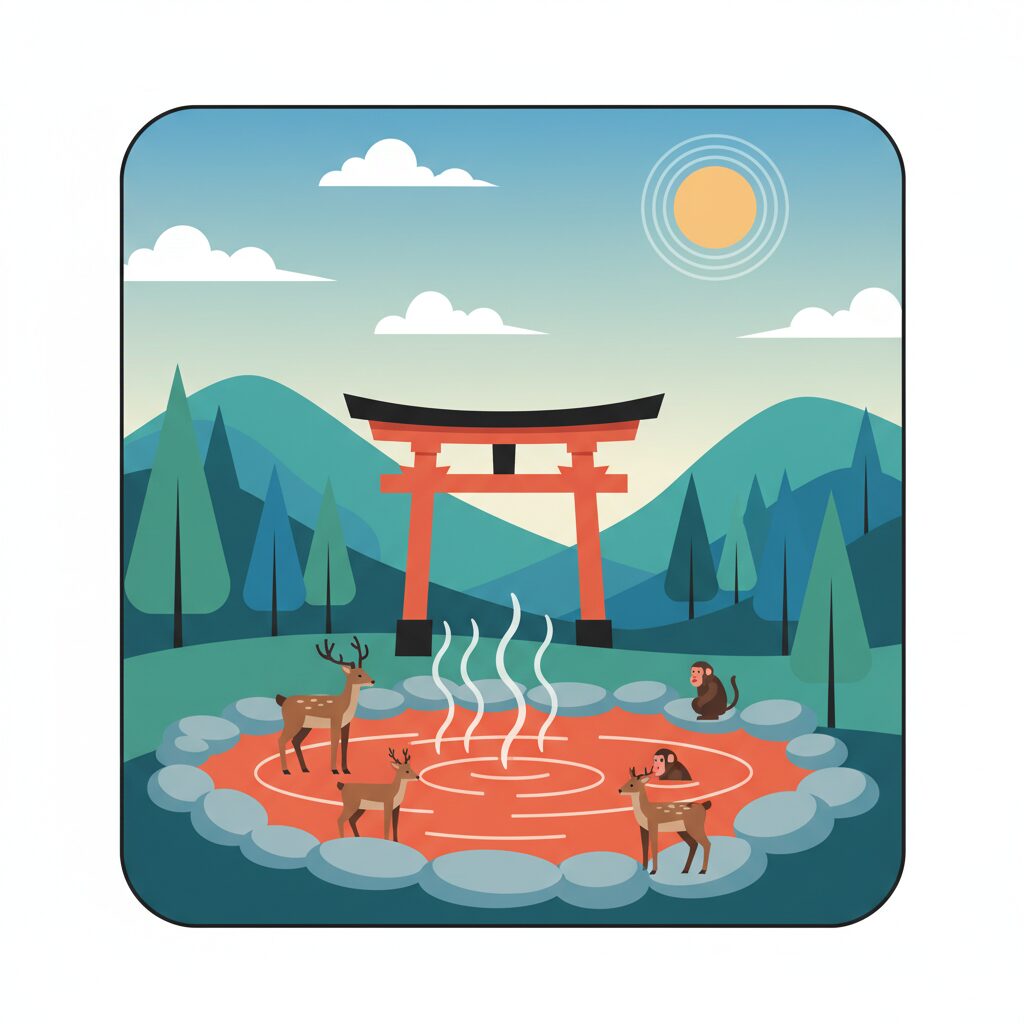
After a long day of pushing your body along the trails, the onsen (hot spring) becomes the ultimate reward. Yet, the role of the onsen extends far beyond being just a hot bath to soothe aching muscles. For foreigners, it can be a daunting experience, a ritual wrapped in intricate rules. For Japanese people, especially hardworking Osakans, it is a vital part of the social fabric. It’s a space where the rigid hierarchies and stresses of daily life temporarily fade away, fostering a unique sense of communal intimacy and release.
More Than Just a Hot Bath
In an onsen’s changing room, you leave behind everything: your clothes, your watch, your phone, and most importantly, your social status. Inside the bath, bare and equal, the CEO of a major trading company and the owner of a small ramen shop are simply two men soaking in hot, mineral-rich water. All external signs of success and identity vanish. This is a profound idea in a society as structured as Japan’s. In Osaka, a city obsessed with business and negotiation, this leveling effect is especially significant. The onsen offers neutral ground, a shared space of vulnerability where usual masks can be set aside. There’s an unspoken rule of quiet respect—you don’t discuss business. Instead, you engage in small talk about the weather, the quality of the water, or sit peacefully in silence, listening to the water gently lap against the stones. It’s a form of non-verbal communication and connection rarely found elsewhere. It’s a reset not only for the body but also for the social self, a reminder of the shared humanity beneath our professional roles.
The Shirahama vs. Ryujin Onsen Debate
The variety of onsen in Wakayama also mirrors the practical, results-driven Osaka mindset. We don’t just visit “an onsen”; we pick the right one for the occasion. The choice between two well-known spots, Shirahama and Ryujin, perfectly exemplifies this. Shirahama is one of Japan’s oldest and most famous onsen resorts, situated on a beautiful white sand beach. It’s large, lively, and packed with big hotels, seafood restaurants, and family attractions. This is the go-to for Osakan groups seeking a vibrant, all-inclusive getaway. It’s the high-`kospa` option: you get the onsen, the beach, excellent food, and a festive atmosphere all in one spot. It’s rejuvenation paired with fun. Conversely, Ryujin Onsen lies deep in a remote mountain valley by a picturesque river. It’s celebrated as one of Japan’s three “Bijin-no-yu,” or “Hot Springs of Beauty,” prized for its silky, skin-softening waters. Reaching Ryujin requires effort—the journey is long and winding. There are no large hotels, only traditional family-run ryokan. The attraction here is complete immersion in nature and tranquility. This is the choice for the truly burnt-out Osakan, the person seeking total disconnection. Choosing Shirahama or Ryujin isn’t about which is “better”; it’s a diagnosis. It’s asking, “What kind of tired am I this week? Do I crave the ocean’s energy and a lively crowd, or the deep silence of the mountains and the water’s healing touch?”
Refueling the Osakan Way: From Ocean to Table
An Osakan’s love for food extends far beyond the prefectural border. The city’s unofficial motto is `食い倒れ` (kuidaore), meaning “eat until you drop,” and this mindset travels with us wherever we go. A visit to Wakayama isn’t just about nourishing the soul with nature; it’s about indulging in the extraordinary bounty of both land and sea. But the way we approach food there differs from what you might expect. It reflects our overall attitude: straightforward, unpretentious, and focused on quality right from the source.
Forget Kaiseki – It’s All About the Maguro
While a stay at a Kyoto ryokan might conclude with an elaborate, multi-course kaiseki meal—a stunning and artful celebration of seasonal ingredients—the Osakan style in Wakayama tends to be simpler and heartier. We’re not after culinary poetry; we want bold, memorable flavors. The perfect example is Kuroshio Market at Wakayama Marina City. Several times daily, they stage an event where a huge, freshly caught bluefin tuna (`maguro`) is sliced expertly before an audience. It’s part performance, part education, and pure Osaka. There’s no pretense—just a display of skill and a tribute to an extraordinary ingredient. Immediately after the show, you can purchase glistening cuts of that very tuna to eat on the spot as sashimi or sushi. The `o-toro` (fatty tuna) simply melts in your mouth with a richness no fancy sauce could enhance. This is what we long for: undeniable quality so fresh it requires no embellishment. It’s authentic food, embodying the Osaka merchant’s philosophy—source the best product directly and serve it without unnecessary fuss. Why complicate perfection?
The Sunday Night Train Home
The trip back to Osaka on a Sunday evening tells its own story, just like the outbound journey. The lively Friday vibe on the Nankai train has shifted to a peaceful, satisfied weariness. Passengers are sun-kissed, slightly sore from hiking, and deeply relaxed. Faces that had been taut with city stress 48 hours before now appear loose and serene. Nearly everyone carries something—not cheap souvenirs but treasures. A bag of tiny, intensely flavorful Aridagawa sansho peppers. A jar of locally crafted Kinzanji miso. A bottle of premium soy sauce from a historic Yuasa brewery. And, naturally, packages of `umeboshi` (pickled plums), Wakayama’s most renowned specialty. These aren’t mere keepsakes; they’re provisions—tangible pieces of Wakayama’s natural bounty that will nourish us throughout the week. It’s the ultimate manifestation of `kospa`: the benefits of the trip don’t end when you step off the train. The flavors of Wakayama linger in our home kitchens, a reminder of the balance regained and a prelude to the energy we’ll need to embrace the glorious, demanding chaos of Osaka once again.
The Necessary Balance
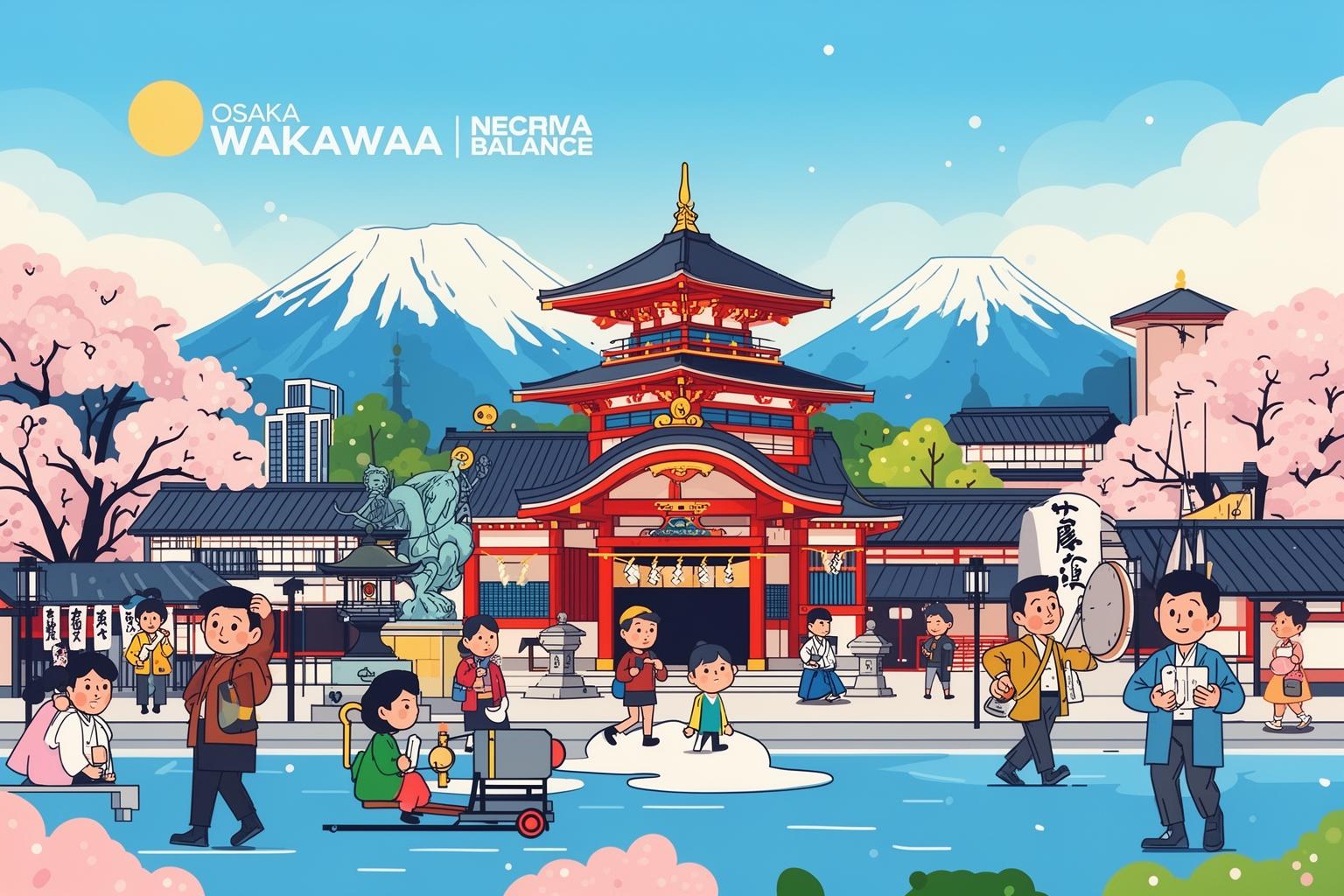
To view Osaka solely as the neon-lit streets of Dotonbori or the hectic tempo of its business districts is to capture only part of the story. It’s like examining a finely tuned engine without recognizing the cooling system that prevents it from overheating. Wakayama serves as that cooling system. The regular journey south to its ancient forests, healing waters, and wholesome food is not a luxury for Osakans; it’s essential. It forms a fundamental rhythm of life here. It unveils an aspect of the Osakan spirit often overshadowed by stereotypes of being loud, humorous, and money-driven. It reflects a deep, grounding bond with nature, respect for tradition, and a practical awareness that relentless energy must be tempered with profound rest. Grasping this dynamic—the weekly cycle between the urban intensity of the city and the raw serenity of the peninsula—is key to understanding how Osaka functions. We don’t escape the city because we dislike it. We escape so we can return, renewed and ready to embrace whatever challenges the week may bring.