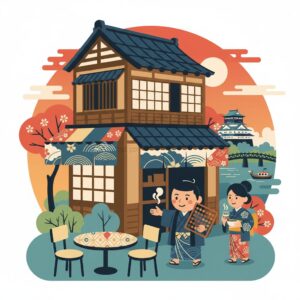
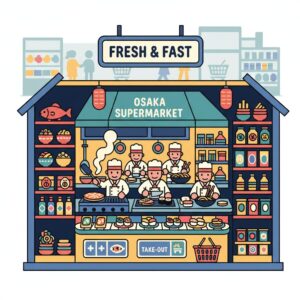
The first time you step out of a gleaming, silent Japanese supermarket and into the covered chaos of an Osaka shotengai, the contrast is a physical shock. The air, thick with the scent of grilled eel and fried croquettes, is a world away from the sterile, conditioned atmosphere of the chain store. Shouts of irasshaimase aren’t looped recordings but raw, throaty invitations from vendors. Bicycles, piloted by determined grandmothers, weave through the throng with terrifying precision. For many foreigners, the initial impression is one of charming, perhaps overwhelming, antiquity—a relic of a bygone era, a place to buy cheap vegetables before retreating to the modern comforts of a condominium. But to see the shotengai as merely an old-fashioned shopping venue is to fundamentally misunderstand Osaka. These covered arcades are not just the city’s arteries; they are its communal living rooms, its social safety nets, and the most authentic stages upon which the city’s unique character is performed daily. They are the answer to the question, “What are Osaka people really like?” To grasp life here, you must first grasp the unwritten rules and unspoken rhythms of these vibrant corridors. They are less about commerce and more about connection, a concept that feels increasingly distant in the hyper-efficient, anonymous urban landscapes of other major cities like Tokyo. This is where the soul of the merchant city resides, not behind glass in a museum, but out in the open, haggling over the price of mackerel.
To truly understand how this merchant spirit extends beyond the shotengai, consider how it shapes the city’s modern cafe and coworking scene.
The Unspoken Currency of Conversation
In a typical Tokyo supermarket, a transaction exemplifies efficiency. Barcodes are scanned, the exact total is shown, payment is made, and a courteous, formulaic thank you is given. The entire exchange might be wordless, conducted through screens and scanners. In an Osaka shotengai, however, the transaction is often the least significant part of the interaction. It serves merely as a pretext for the main event: conversation. Here, talking is as valuable as yen. When you purchase your fish, the fishmonger doesn’t just wrap your sea bream; he asks why you didn’t come by yesterday, notes that you seem tired, and inquires if your daughter passed her exams. The woman at the fruit stand will remember your preference for Fuji apples and save the best ones for you, all while sharing gossip about the new restaurant opening at the arcade’s end. This isn’t just small talk; it’s the process of integrating a person into the community’s fabric. It acts as a daily, informal census of the neighborhood’s well-being. This behavior stems from Osaka’s history as a city of akindo, or merchants. For centuries, business here was conducted not through contracts and corporate policies, but through relationships and trust. A good merchant knew loyalty was built not on the lowest price, but on the strength of human connection. That legacy persists. The ongoing banter, teasing, and unsolicited advice are all part of a social contract. By engaging, you are no longer an anonymous consumer—you become Tanaka-san’s customer, the foreigner learning to cook nimono, a familiar face in the crowd. This sharply contrasts with the deliberate anonymity that often characterizes life in Tokyo, where maintaining respectful distance is the typical social norm. In Osaka, silence marks you as a stranger; participating in banter means you belong.
The Art of the ‘Make’
One of the clearest expressions of this relationship-based commerce is the culture of omake, often shortened to ‘make’ in casual conversation. This is the practice of a vendor giving a little something extra for free. It’s not a planned sale or a loyalty-point reward; it’s a spontaneous gesture. You buy five potatoes, and the shopkeeper adds a sixth, saying, “Here, a little extra for you.” You purchase a block of tofu and might receive a small piece of fried tofu alongside it. A foreigner might misinterpret this as a random act of kindness or a discount tactic, but it is far more subtle. An omake is an acknowledgment of the relationship. It’s the vendor’s way of saying, “I see you. I appreciate you choosing my shop over the many others.” It rarely happens on a first visit, but rather after you’ve become a regular, exchanged a few words, and established a basic familiarity. It’s a reward for your social investment in their business. This delicate dance is quintessentially Osaka. It turns a simple purchase into a reciprocal act of goodwill, reinforcing the community bonds. It’s a small but powerful reminder that in this city, value is not always something measured on a receipt.
A Living Archive of Urban History
As a historian, I find shotengai far more captivating than pristine castles or meticulously maintained temples. These arcades are not carefully designed architectural wonders; rather, they serve as living, breathing archives of Osaka’s modern history, having developed organically in response to the needs of the community. Many trace their origins to the chaotic, lively yami-ichi (black markets) that emerged during the desperate years following World War II. They served as lifelines, supplying goods and a sense of normalcy when both were in short supply. That legacy remains palpable in their very design—the narrow alleys, the dense clustering of small, family-run businesses, and the notable absence of corporate uniformity. Walking through a shotengai feels like reading the timeline of a city. You might spot the elegant, tiled facade of a Showa-era tea merchant from the 1950s squeezed between a brightly lit drugstore and a mobile phone repair shop. You’ll notice hand-painted signs with peeling paint proudly advertising a business that has been selling kamaboko (fish cakes) since well before your parents’ time. Even the infrastructure itself—from the style of arched roofs to the patterns of paving stones—reveals stories of different eras of prosperity and renovation. This layered, sometimes disorderly visual history marks a key distinction from Tokyo. While Tokyo continuously replaces the old with the new and spectacular, Osaka tends to patch, adapt, and build upon what already exists. This imparts a palpable sense of historical continuity; the city feels lived-in, not eternally under reconstruction. The shotengai stand as prime examples of this philosophy, preserving not only old buildings but old ways of life, all while evolving with the present. They testify to the city’s resilience and its pragmatic, unpretentious character.
The Anatomy of an Arcade
By observing the types of shops clustered together, you can grasp the ecosystem of a neighborhood. Every classic shotengai features a familiar cast of characters. There’s the butcher, the fishmonger, and the greengrocer, forming the holy trinity of the Japanese dinner table. There’s the tofu shop, often accompanied by its own small factory in the back, where freshly made, still-warm blocks of tofu can be purchased. The wagashi (traditional sweets) shop offers confections that change with the seasons. There’s the somewhat dusty kimono store, a relic of a more formal era, now perhaps selling more casual cotton yukata. And then there’s the pharmacy, whose staff often act as informal neighborhood health consultants. This collection of specialists contrasts sharply with the one-stop-shop model of the modern supermarket. Life centered around a shotengai follows a different rhythm—a short walk to various vendors, each skilled in their particular craft. This arrangement fosters both expertise and pride. The fish seller knows everything about what’s in season, how to prepare it, and what it pairs best with. That specialized knowledge, coupled with the willingness to share, is fundamental to the service. It’s a way of life that values deep expertise over broad convenience—a subtle but meaningful feature of the Osakan mindset.
The Social Safety Net Woven from Daily Interactions
Beyond commerce and history, the shotengai serves a vital, often unseen role: it acts as the neighborhood’s primary social safety net. In an age where urban loneliness is increasingly a concern, and in a nation with a rapidly aging population, the tightly knit relationships within an arcade offer an extraordinary layer of protection. The vendors act as unofficial guardians of the community. They know the daily habits of local residents with remarkable accuracy. They know that Suzuki-san, an elderly woman living alone, buys one block of tofu and a single leek every morning around ten. If she doesn’t show up for two days, the tofu maker doesn’t just wonder; he checks with the fishmonger to see if anyone has seen her. If no one has, a call might be made, or a neighbor might be asked to check in. This informal network has saved lives. It is a powerful, natural form of community watch that no security camera or gated neighborhood can match. This sharply contrasts with life in a massive apartment complex in a large city, where you might not even know the names of those on your own floor. While anonymity can be comforting to some, it can be dangerously isolating for others. In an Osaka neighborhood centered around a shotengai, true anonymity is hard to come by. This may feel intrusive to a foreigner used to privacy, but for many, it offers deep reassurance. It means people are looking out for you, whether you ask them to or not. It’s the sense that if you drop your wallet, someone will sprint half a block to return it—not out of abstract morality, but because they recognize your face and know you’ll be back tomorrow.
Why ‘Cheap’ in Osaka Means More Than Just Price
One of the first things anyone learns about Osaka is that it’s considered ‘cheaper’ than Tokyo. This is often understood in purely economic terms—lower rent, less costly food. However, the Osakan concept of value is much more nuanced and is best appreciated within the context of the shotengai. The city’s merchant heritage has cultivated a culture that is highly skilled in, and deeply values, a good deal. Yet a ‘good deal’ isn’t just about the lowest price on a tag; it encompasses the entire experience of the transaction. This is where the practice of nebiki (price negotiation) plays a role. To a foreigner, haggling might seem confrontational or impolite, perhaps an attempt to cheat the vendor. In Osaka, it is often a form of communication, a playful exchange. In certain shops, especially those selling items without fixed prices, light-hearted negotiation is part of the ritual. It’s a test of wit and a sign of engagement. Asking, chotto makete? (“Can you give me a little discount?”) with a smile is not offensive; it’s an invitation to interact. The vendor might laugh and reduce the price slightly, or joke that they are already losing money at their rates. Either way, a connection is formed. This flexible approach to pricing is unthinkable in Tokyo, where prices are fixed and the system is strictly followed. In Osaka, relationships can sometimes take precedence over the system. This philosophy goes beyond negotiating prices. It’s about a sense of perceived value. Receiving a generous omake, getting genuinely helpful cooking tips, or simply sharing a laugh with the shopkeeper—all contribute to the value of the purchase. Customers will remain loyal to a store for years, even if a supermarket down the street is a few yen cheaper, because the overall value they receive is greater. It is a more human, holistic, and ultimately more rewarding form of capitalism.
The Shotengai as a Stage for Osaka’s Personality
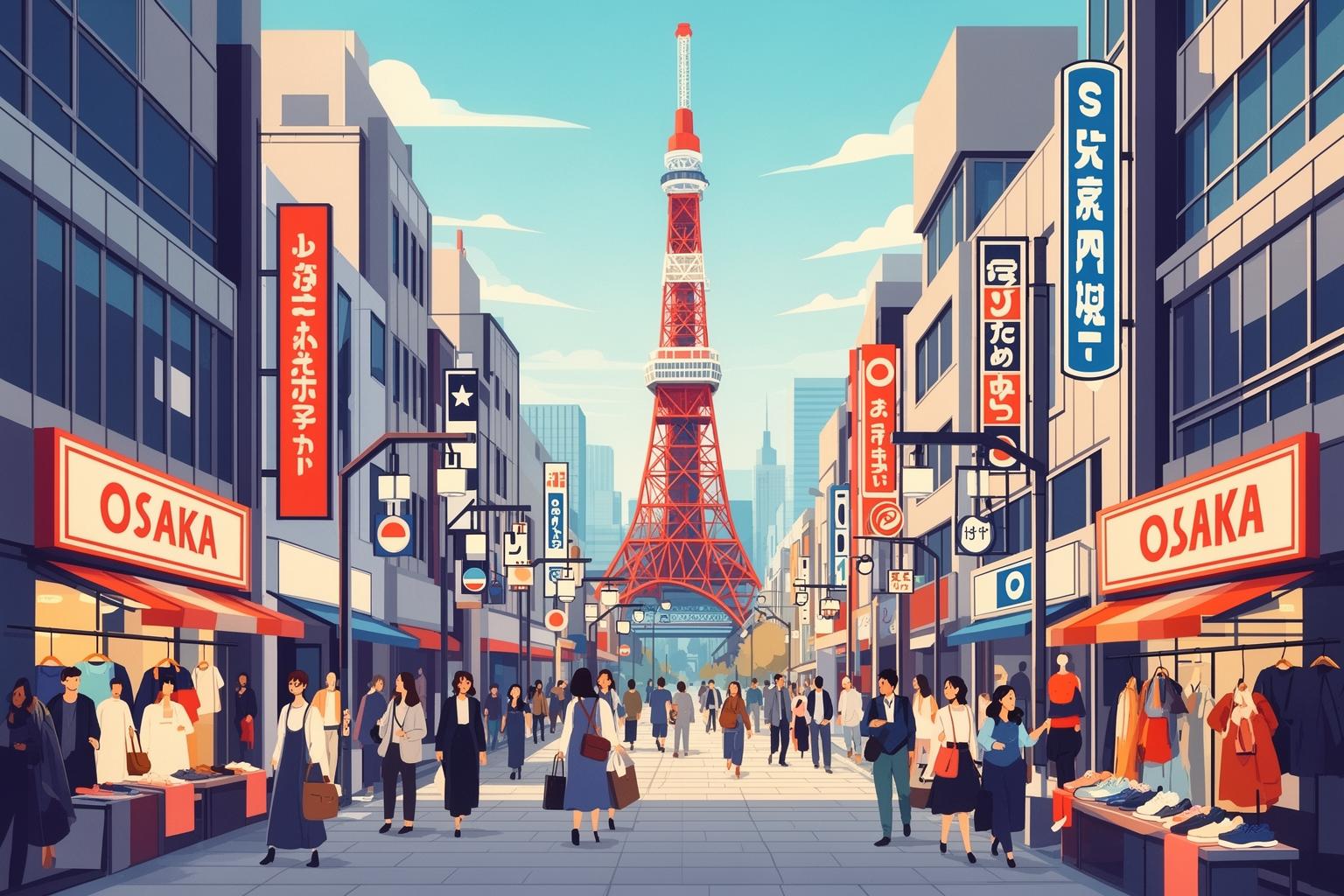
To grasp the quintessential Osaka personality—loud, direct, humorous, and pragmatic—spend an afternoon sitting on a bench in a bustling shotengai. This is the stage of Osaka life, and the show never stops. The environment itself molds the people. In a crowded, noisy, and fast-moving arcade, there’s no space for the subtle, layered indirectness often found in communication elsewhere in Japan. You have to speak clearly to be heard, both literally and figuratively. The language you encounter is not the polite, standardized Japanese of a Tokyo department store but the vibrant, colorful, and straightforward Osaka-ben. The rapid-fire conversations, quick jokes, and sharp, witty comebacks (tsukkomi) form the soundtrack of the arcade. This bluntness can be surprising to outsiders. A shopkeeper might candidly remark on your Japanese skills or your choice of purchase. This is rarely meant as a critique. It’s simply a more efficient way to communicate, breaking down barriers quickly to build a familiar rapport. It’s a mindset that values honesty—sometimes brutally so—over polite pretense. This environment shapes a certain kind of person: resilient, observant, quick-witted, and not easily offended. They excel at reading the room and adapting instantly. This is the character forged in the heat of commerce, where sharpness and friendliness were essential for survival. It explains why Osaka people are often described as ‘friendly.’ It’s not a passive, gentle friendliness. Rather, it is an active, involved, and engaging friendliness that invites—and sometimes insists—you join the conversation.
Living in Osaka means learning the city’s distinctive rhythm, and that rhythm is born in the shotengai. These arcades defy the notion that modern life must be efficient, impersonal, and sterile. They stand as proof that a city’s true wealth lies in the strength of its communities and the richness of everyday interactions. For anyone thinking of making this city home, my advice is simple: look beyond the shiny high-rises and automated ticket gates. Find the nearest covered arcade, no matter how small or weathered. Buy a freshly fried croquette for a hundred yen. Listen to the debates and laughter. Observe the intricate dance between vendors and regulars. This is not a tourist spot; it is a masterclass in living in Osaka. It’s here, in these wonderfully human, chaotic, and vital pathways, that you’ll discover whether the heart of this city beats in sync with your own.