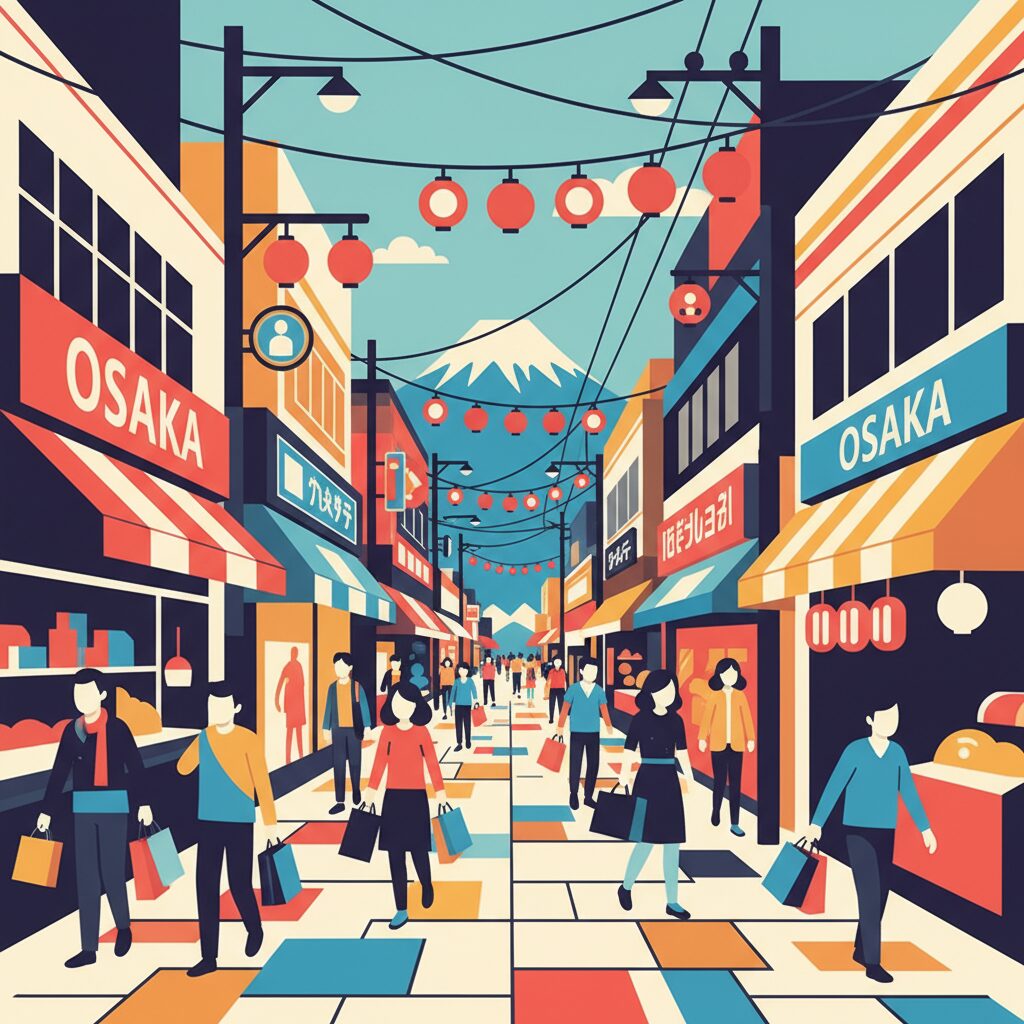
So, you’re thinking about life in Osaka. You’ve probably seen the pictures, maybe even walked through one yourself. A long, covered arcade, a river of people flowing between stalls piled high with shimmering fish, pyramids of vibrant vegetables, and shops selling everything from bitter green tea to garish pachinko parlor prizes. This is the shotengai, the neighborhood shopping street, and in Osaka, it’s more than just a place to buy groceries. It’s the city’s circulatory system, its loud, beating, and unapologetically human heart. The question that hangs in the air, thick as the smell of grilled eel, isn’t whether you should visit one. The real question, the one that defines your entire daily existence here, is whether you should live by one.
In Tokyo, life often revolves around the pristine, efficient ecosystem of the train station. Everything you need is there, neatly packaged within a sprawling complex of department stores, chain restaurants, and immaculate underground passages. It’s convenient, predictable, and, let’s be honest, a bit sterile. Osaka plays a different game. Its soul isn’t in the Umeda or Namba stations, as massive as they are. It’s out in the neighborhoods, under the faded plastic awnings of a thousand shotengai. To choose to live near a shotengai is to reject the anonymous efficiency of the modern metropolis and plug yourself directly into the raw, chaotic, and deeply traditional current of Osakan life. But here’s the honest truth they don’t put in the glossy brochures: that current can either be invigorating or exhausting. It can feel like a warm, communal embrace or a suffocating, noisy fishbowl. Before you sign that lease on the apartment just above the tofu shop, let’s talk about what you’re really signing up for. This isn’t a guide to finding the best takoyaki. This is a survival guide for living in the heart of the storm.
To truly understand this unique rhythm of daily life, consider how the local kissaten offer a window into the city’s soul beyond the bustling shotengai.
The Pros: Embracing the Human-Scale Chaos
The Unbeatable Convenience Factor: Your Extended Pantry and Kitchen
Forget the weekly trek to a massive, soul-draining supermarket, pushing a huge cart under harsh fluorescent lights. Living near a shotengai completely transforms how you relate to food and shopping. Your refrigerator shrinks—not because you must, but because you choose to. Why stock up for a week when the freshest ingredients in the city are literally just thirty seconds from your front door, often reachable without even crossing a street? It’s a lifestyle centered on immediacy. You decide what to cook for dinner on your way home, not days in advance.
Your daily routine adopts a gentle, flowing rhythm. You don’t simply buy groceries; you craft your meal with a team of specialists. You visit the yaoya-san (greengrocer), a small stall where the owner, a woman whose hands are worn from years of handling daikon, points out the sweetest tomatoes of the day. Then, the fishmonger, the sakanaya-san, expertly slices sashimi to order, his long knife a silver blur. He knows you well, asks about your day, and suggests, “The mackerel is perfect for grilling tonight.” He’s not just selling fish; he’s helping shape your dinner. Next, there’s the tofu vendor, operating from a simple counter with blocks of fresh, wobbly tofu resting in cool water, and the butcher who knows you prefer your pork thinly sliced for shabu-shabu. Every exchange is a warm, human connection.
This closeness fosters a wonderful spontaneity. Run out of soy sauce mid-cooking? Just slip on your sandals and head out. Unexpected guests? The tempura shop will have a fresh batch of crispy fried shrimp and vegetables ready. This convenience transforms your lifestyle. Your small kitchen is no longer a limitation but a finishing station. The entire shotengai becomes your pantry, your larder, your personal team of expert chefs. It’s a hyper-local, on-demand system that big-box stores simply can’t match. You’re not just a consumer; you’re an active participant in a vibrant food culture.
The Sound of Life: More Than Just Noise
In a quiet Tokyo suburb, the loudest sounds might be cicadas chirping or a distant train rumbling. But living near a shotengai, your world fills with a constant, evolving symphony of human activity. It begins in the morning, not with an alarm clock, but with the metallic clatter of steel shutters being rolled up, echoing through the arcade like a city-wide wake-up call. Soon, the shouts begin: “Irasshaimase!” (Welcome!), a chorus from every shopfront. “Maido, ookini!” (Thanks, as always!)—the quintessential Osaka farewell. These calls are rhythmic, practiced—urban birdsong.
As the day progresses, the soundtrack intensifies. The sizzle and pop from the takoyaki stand, the steady thump-thump-thump of the butcher chopping meat, the cheerful, repetitive jingle of the supermarket enticing you in, and the chatter of elderly ladies sharing local gossip over pickled plums. Bicycles with jingling bells weave through the crowds, delivery carts clatter across the tiled floors. This isn’t the harsh, aggressive noise of sirens and traffic; it’s the sound of a community alive and moving. It’s audible proof that you’re in the heart of life.
For some, this might be aural chaos. But for many who choose this lifestyle, it’s comforting. It reassures you that you’re not alone. The ambient sound becomes a kind of white noise, a blanket signifying vitality and normalcy. Osakans, especially, cherish this sense of genki—energy, liveliness, spirit. Silence can feel lonely, stagnant, even gloomy. A bustling shotengai, in all its noisy glory, is the epitome of genki, a constant, visceral reminder that you belong to a living, breathing organism. You don’t just hear the neighborhood; you feel its pulse.
Built-in Community: You’re Not Just a Face in the Crowd
Here lies the truth behind the common Osaka cliché: “the people are so friendly.” It’s not that Osakans are naturally kinder or more outgoing than Tokyoites. The friendliness you experience in a shotengai is functional—born from proximity and repetition. It springs from the environment itself. In a huge Tokyo apartment complex, you could live for years without knowing your neighbor’s name. You’re just an anonymous unit in a vertical filing cabinet. In a shotengai, anonymity is impossible.
The woman at the fruit stand sees you daily. She knows you buy bananas every Monday. She notices when you get a haircut. The dry cleaner asks about your recent trip. The elderly lady at the tea shop remarks, “Working late again tonight?” It’s not nosiness, exactly, but a web of casual recognition—a low-stakes, frequent social contract. You are seen; your presence acknowledged. For a foreigner, often invisible or isolated in Japan, this can be a powerful remedy to loneliness.
This familiarity blurs the line between commerce and social interaction. A purchase is rarely just a transaction. It’s an excuse to check in, exchange a few words, nurture the social fabric. This is the Osakan way. The relationship with the regular customer matters the most. You’re not merely a source of income; you’re uchi no okyaku-san—one of our customers—a term that conveys belonging. Over time, you cease to be “the foreigner living on the third floor” and simply become part of the neighborhood. They might not invite you in for dinner, but they will notice if you haven’t been around for a few days. In a vast megacity, that simple act of being noticed feels like coming home.
The Economics of Common Sense: Where Value Trumps Prestige
Let’s discuss money. Osakans are known for being careful with their cash. This is different from being cheap (kechi), a term they dislike. The goal is to be frugal (ken’yaku) and savvy. Osakans pride themselves on never overpaying and always getting the best value for their yen. The shotengai exemplifies this philosophy.
While luxury department stores sell perfect, blemish-free mangoes at exorbitant prices, the fruit stand in the shotengai offers boxes of slightly imperfect but delicious oranges for a fraction of the cost. The butcher often has daily specials on cuts that need to be sold quickly. The vegetable vendor offers “わけあり” (wakeari – “with a reason”) produce—crooked cucumbers, oversized carrots—that tastes just as good but costs much less. This is practicality in action. Why pay for looks when you’ll just chop everything for a curry?
This value-driven mindset fosters a culture of omake, the little extras a shopkeeper throws in free of charge. Buy three croquettes, and the vendor might slip in a fourth with a wink, saying, “Kore wa saabisu” (This one’s on the house). It’s not a formal discount but a gesture, a reward for your loyalty, a reinforcement of connection. This small bonus feels like a personal victory, proof of your savvy shopping and relationship-building skills. Living near a shotengai means daily opportunities to practice this art of practical economics. It’s a game—finding the best deal, the freshest goods, and the warmest interaction—a game Osakans have mastered over centuries.
The Cons: When the Charm Wears Thin
The Flip Side of “Lively”: There’s No Off Switch
That comforting symphony of life we mentioned? Well, at 6:30 AM on a Saturday morning when you’re trying to sleep in, it sounds far less like a symphony and much more like a construction zone. The shotengai doesn’t care about your weekend lie-in. The day begins when the first delivery truck rumbles down the arcade, its backup beeper echoing off the walls, and the first shopkeeper slams open their metal shutters. The noise isn’t optional; it’s an unavoidable part of the experience.
If your apartment window faces the arcade, your life is exposed to public view. Privacy becomes a luxury you can no longer afford. You’ll find yourself instinctively ducking when you walk past your own living room window while undressed. You’ll hear every argument, every drunken song, every crying baby from the apartments opposite. You’ll hear the late-night revelers stumbling home from the izakaya downstairs, as well as the early-morning chatter of vendors setting up their stalls. There is no bubble of silence. It’s a constant, relentless stream of sensory input.
For those who work from home, this can be especially challenging. Concentrating on a complex task or taking a professional video call becomes a game of chance. Will the fishmonger start shouting his daily specials the moment your boss asks a critical question? Probably. The shotengai runs on its own schedule, with no regard for yours. That vibrant, genki atmosphere that feels exciting when you’re in the mood can become oppressive and intrusive when all you want is a moment of peace and quiet. It’s an extrovert’s paradise and a potential introvert’s nightmare.
The Unspoken Rules of the Village
That close-knit community, where everyone knows your name, has a darker side. It’s the side where everyone also knows your business. Living in a shotengai community is like living in a small village, with all the charm and scrutiny that entails. You are constantly and passively observed. Your comings and goings never go unnoticed.
The rules of social conduct are unwritten but strictly enforced. The most frequent point of conflict is garbage sorting. Mess up the complex system—burnables on Monday, plastics on Wednesday, cans and bottles on Friday, but only after rinsing and removing labels—and you won’t just receive a notice from the city. You’ll get the quiet, disappointed look from the elderly woman running the tobacco shop. She saw you. They always see. Gossip, or uwasa, travels through the arcade faster than an egg sale. Who you bring home, what time you come in, how you dress—it’s all potential fodder for the neighborhood grapevine.
As a foreigner, you are often under an even brighter spotlight. You are the novelty, the outsider. Minor cultural missteps that would be overlooked in an anonymous apartment building might become local legends here. The time you wore your house slippers into the arcade, the time you tried to pay with a credit card at the cash-only fruit stand—these stories will be told. This isn’t necessarily malicious. It’s just the natural dynamic of a close community. But it creates subtle pressure to conform, to perform as the “good foreigner” at all times. The feeling of constant surveillance can be exhausting, and the freedom to be messy, imperfect, and anonymous is largely surrendered at the shotengai’s entrance.
The Battle Against Time: Aging Infrastructure and Demographics
Take a close look at the faces behind the counters in your local shotengai. You’ll see many kind smiles, but also plenty of wrinkles. Many of these shops are family businesses handed down through generations. But the current generation is often the last. Their children have moved to the cities, taken office jobs, and show no interest in waking up at 4 AM to run a fish stall. The shotengai is facing a demographic crisis.
For every bustling, thriving shop, you’ll see two or three with their shutters permanently closed, a faded sign the only remnant of what once was. For a tourist, this might appear as charming, rustic decay. For residents, it’s a slow-motion tragedy. The friendly old man who ran the best butcher shop retires, leaving his store empty for years. The little shop selling handmade rice crackers closes its doors forever. With each closure, the shotengai loses a piece of its soul and usefulness. The convenience factor erodes. You might have to walk to the next neighborhood for good tofu or rely on the supermarket after all.
The infrastructure itself is often dated. The buildings can be drafty, poorly insulated, and sometimes fail to meet the latest earthquake resistance standards. While the arcade roof shelters you from rain, it can trap humid summer heat, turning the street into a sweltering greenhouse. The charming retro aesthetic can sometimes be just a polite way of saying “hasn’t been updated since the 1970s.” You’re buying into a world that is beautiful and alive, but also fragile and slowly fading. The vibrant community you love today might be a shadow of its former self in a decade.
The Inconvenience of Tradition
Despite its convenience in proximity, the shotengai lifestyle is full of the inconveniences of tradition. We live in a 24/7 world of digital payments and on-demand services. The shotengai does not. Most of its small, independent shops remain stubbornly, defiantly cash-only. Your wallet, which may have seemed an obsolete relic, becomes your most vital accessory again. Frequent trips to the ATM become routine.
The rhythm of the shotengai is decidedly old-fashioned. The butcher might close at 5 PM, just as you finish work. The bakery might be inexplicably closed every Tuesday and the third Wednesday. The fishmonger takes a long lunch break from 1 to 3 PM. You cannot impose your modern schedule on the shotengai; you must adapt to its pre-war business hours. This requires planning and foresight that feel foreign in our era of instant gratification. You can’t just assume something will be open when you need it.
This devotion to tradition means juggling multiple systems. You might buy your vegetables from the local stall, but still need to visit the supermarket for milk, cheese, and toilet paper. You get prescriptions from the tiny pharmacy in the arcade but visit a larger drugstore for specific cosmetics. Life becomes a patchwork of errands, a constant navigation between old and new worlds. It’s a trade-off: you gain specialization’s charm but lose the efficiency of one-stop shopping. For some, it’s a delightful, mindful way to live; for others, it’s simply a hassle.
Osaka vs. The World: Decoding the Shotengai Mindset
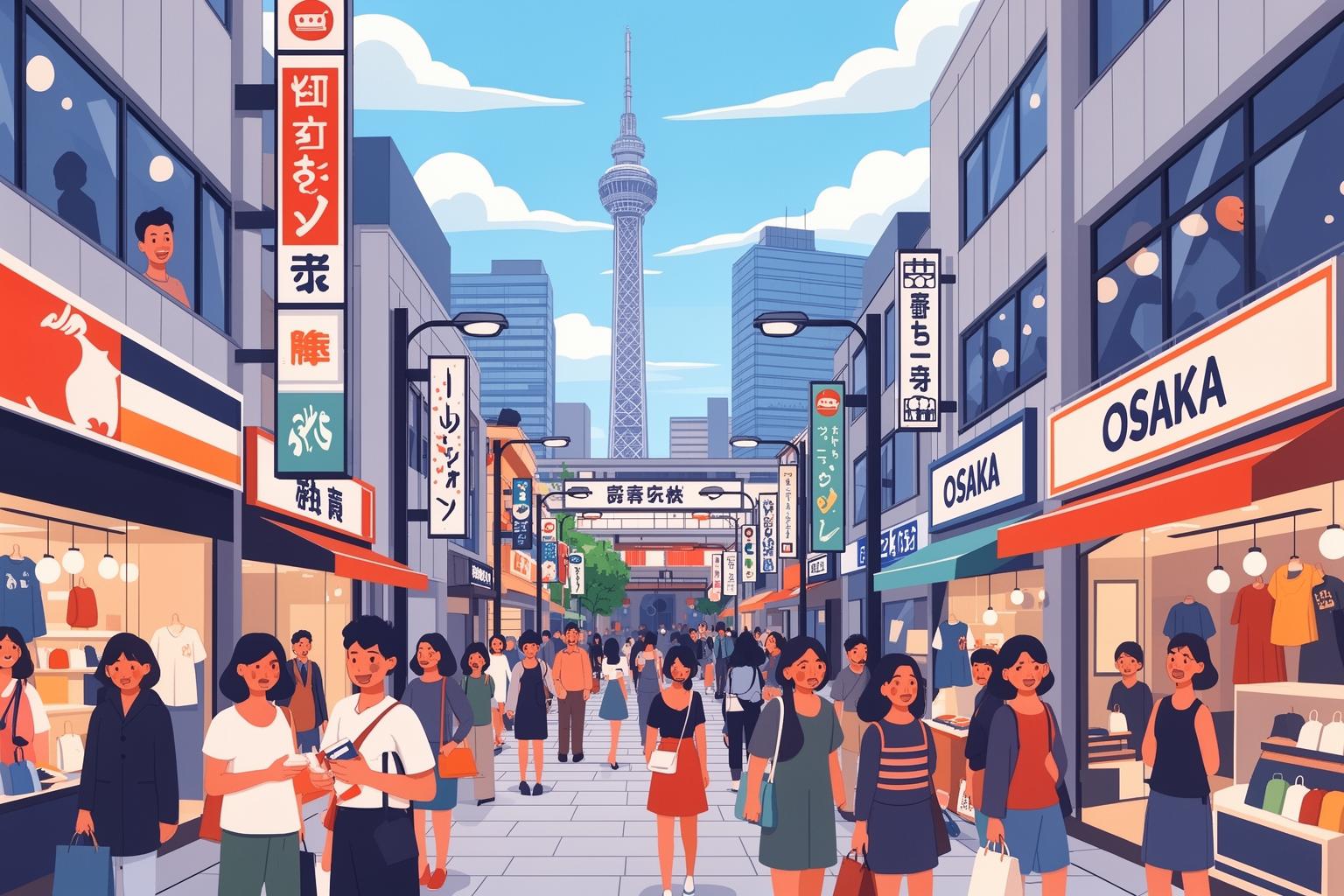
The Merchant’s DNA: Business is Personal
To truly grasp the shotengai, you must understand Osaka’s history. Unlike Tokyo, which developed around the samurai and the imperial court—a culture rooted in hierarchy and formality—Osaka grew as a city of merchants, the shonin no machi. For centuries, it was Japan’s commercial center, where rice was traded and fortunes were built. This merchant spirit is woven into the city’s very essence, and the shotengai is its purest manifestation.
In Tokyo, customer service is often a polished performance of polite yet distant efficiency, aimed at ensuring a smooth, frictionless transaction. In Osaka, the transaction is merely the opening line of a conversation. Business is personal. The shopkeeper is more than a clerk; they are a proprietor, an expert, and a distinct personality. They ask what you’re preparing for dinner not just out of friendliness, but to offer genuine advice. “Ah, for nikujaga? You’ll want this cut of beef; it has better marbling. And slice the onions thicker.”
This personal touch is a form of marketing. They cultivate relationships, making sure you return not only for product quality but also for the quality of interaction. They remember your preferences. They build trust. This is the origin of the omake culture—it embodies that personal relationship. This can be surprising for those accustomed to the cool anonymity of other cities. The Osakan shopkeeper is engaged. They have opinions. Their personality is part of the product. You’re not just buying a fish; you’re buying a fish from Tanaka-san, who shared a funny story about his grandson last week.
“Akan” and “Eeyan”: The Language of Practicality
Listen to how people speak in the shotengai, and you’ll hear the merchant’s mindset in every phrase. The Osaka dialect, or Osaka-ben, is known for its directness and emotional expressiveness, contrasting sharply with the famously indirect and subtle standard Japanese spoken in Tokyo.
Two words are key: akan and eeyan. Akan means “no good,” “won’t work,” or “don’t.” It’s a clear, unequivocal refusal. If you request something unreasonable, you won’t receive a polite, “That might be a little difficult…” (sore wa chotto muzukashii desu ne…). Instead, you get a quick, “Akan!” It’s not intended to be rude; it’s meant to be efficient. It saves everyone time. There’s no room for ambiguity when running a business.
On the other hand, eeyan is a flexible expression of approval. It can mean “That’s great!” “Nice, isn’t it?” or “Go for it!” It’s a warm, immediate endorsement. When the fruit seller holds up a perfect melon and says, “Kore, eeyan!” he’s offering his genuine, expert opinion. This linguistic straightforwardness reflects a practical worldview focused on quick, clear judgments. Is this a good deal? Is this product high quality? Yes or no. Good or bad. Eeyan or akan. It cuts through the layers of politeness that often obscure meaning elsewhere in Japan. In the shotengai, people say what they mean, because in business, clarity is paramount.
The Misunderstanding of “Friendly”
Let’s return to that loaded word: “friendly.” Visitors often interpret casual questions and comments from shopkeepers as signs of personal warmth and friendship. While it is warm, it’s important to understand its role. The friendliness of the shotengai is not an invitation into someone’s private life; it is a form of public social maintenance.
Think of the shotengai as a shared front yard. The frequent greetings, small talk about the weather, and comments on your groceries are ways of acknowledging each other’s presence in this shared space. It’s a verbal signal that says, “I see you. You’re part of this ecosystem. We are in this together.” It reinforces the community’s unspoken rules and keeps social interactions smooth. The elderly woman isn’t necessarily trying to be your best friend; she’s fulfilling her role as a neighborhood elder, a custodian of the communal space.
For foreigners, understanding this distinction is crucial to prevent disappointment or confusion. If you interpret every casual interaction as the start of a friendship, you might feel let down when it doesn’t develop further. But if you view it as a form of social belonging, a sign of acceptance into the neighborhood’s daily rhythm, it becomes deeply comforting. The “friendliness” of Osaka is less about individual emotion and more about a collective, pragmatic commitment to sustaining a lively, functional, and human-scaled community. It’s the merchant’s social contract, expressed broadly in everyday life.
The Verdict: Is the Shotengai Life for You?
So, we return to the central question: Do you take the plunge? The truth is, there’s no simple answer. Choosing to shape your life around a shotengai is not like deciding between a high-rise and a low-rise. It is a fundamental decision about what you value in your everyday life. You’re exchanging the sterile, predictable convenience of the 21st century for a messier, more chaotic, but arguably more human way of living.
You’re trading anonymity for recognition, silence for a symphony of life, and frictionless transactions for meaningful, if sometimes complicated, relationships. It’s a swap of privacy for community.
Who is this life suited for? It’s for the person who feels energized by the hum of human activity, not drained by it. It’s for the cook who delights in the daily discovery of fresh, seasonal ingredients and the stories behind them. It’s for the individual who feels lonelier in a silent, anonymous apartment block than in a crowded, noisy street. It’s for someone who values connection, however fleeting, over isolation, and who believes the best way to understand a culture is to immerse themselves in its daily, unpolished rhythms. It’s for the person who doesn’t mind carrying cash and who finds charm in a shop inexplicably closed on a Tuesday.
Who is this life not for? It’s not for the light sleeper, the privacy-obsessed, or anyone who needs complete quiet to function. It’s not for the ruthlessly efficient planner who wants to finish all their shopping in one place within thirty minutes. It’s not for those who bristle at unsolicited comments from strangers or who feel uncomfortable with the constant, low-level social performance that comes from being a known figure in a small community. It’s not for the tech-forward individual who prefers to pay for everything with just a tap of their phone.
Ultimately, living by a shotengai is a commitment. It’s a choice to let your life be shaped by the rhythms of your neighborhood, to adapt to its hours, customs, and people. It’s a deep dive into what makes Osaka so distinct from Tokyo—its celebration of the pragmatic, the personal, and the perpetually energetic. It won’t always be easy, and it certainly won’t be quiet. But if you’re willing to make that trade, you won’t just be living in Osaka. You’ll be part of its beating heart.